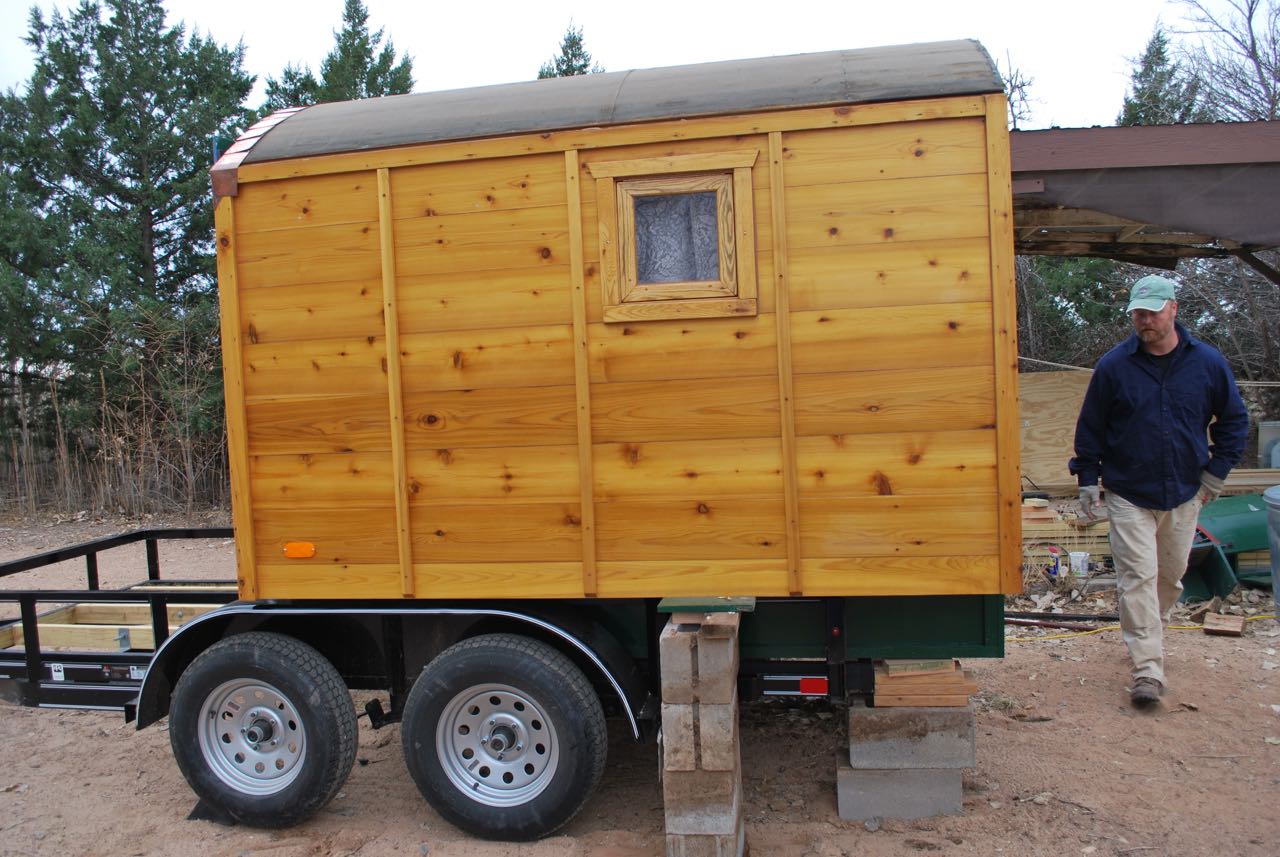
Fitting Out and Fixing Problems, Vardo Remodel Part 9

Sink, seating, and storage galore – I’m finally moving onto the luxuries that make this addition what it is meant to be; essentially moving some outdoor activities and living indoors with more amenities and easier foul-weather living.

DSC_0114
Copper mixing bowl drilled for a drain.

Beginning with a little sink re-purposed from an old copper mixing bowl set –  This one was the middle size and fit the area perfectly.  I’m certainly not taking credit for the idea as I took this freely from Mick’s vardo.  The bowl is a perfect size for some personal hygiene, tooth-brushing, etc. while on the road while the bigger cleaning can still be done outside with the old washtubs and in the future, with an outside shower.

Drilling the hole – I was concerned about this step as there were several things that could go wrong; hole placement, dented bottom, rough fit, and so on.  In the end I did my best to find the exact center with a tailor’s tape, from the outside, and marking the location with an awl. I then flipped the bowl over, set it up in a scrap board, and while holding it with my feet used a hand brace with a Forestner bit to slowly cut the hole.  This worked surprisingly well and required only a little sanding and smoothing before moving on.

The bowl is not very heavy copper so I was concerned about the solder strength at the joint.  There should not be much real strain on it but to ensure a larger surface area to sweat the solder, I sleeved the short pipe with a heavy coupling.  I flowed the solder deep into the sleeve before attaching to the so they should be united forever now.

DSC_0113
Pipe and coupling soldered in place.

Some serious tugging and testing leads me to believe this is a solid joint.
DSC_0113 (5)
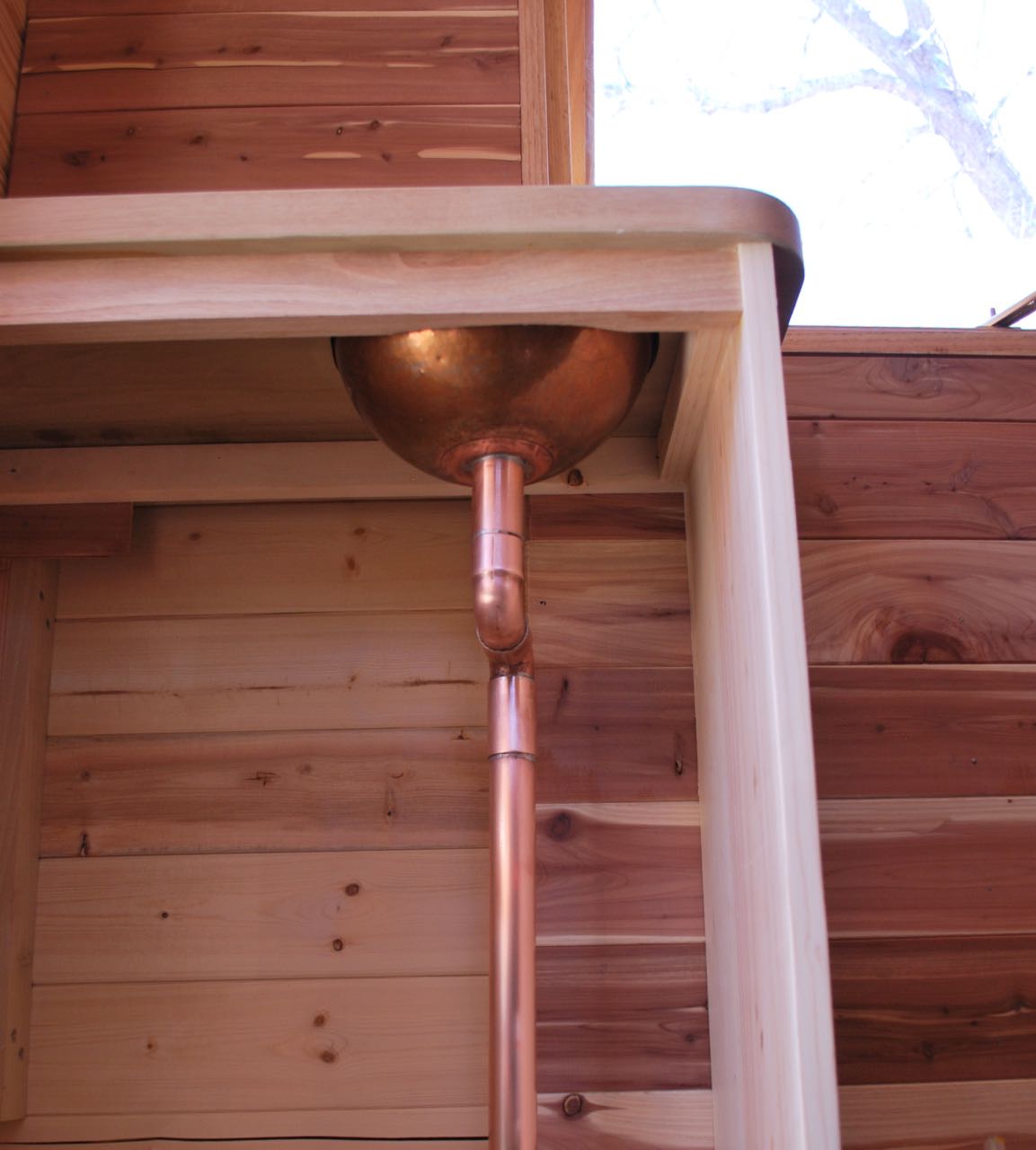
View of the plumbing from below.

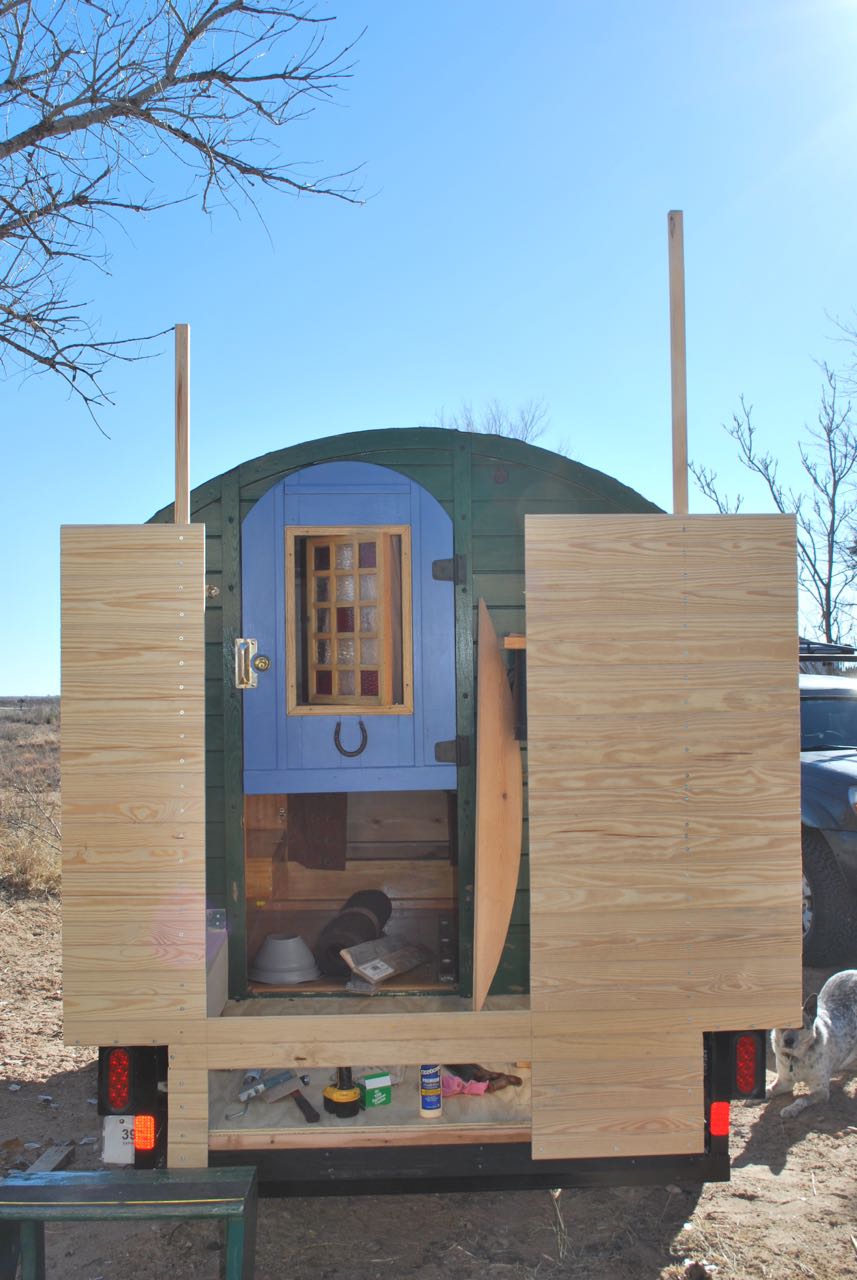
A couple elbows and a short run of pipe completed the plumbing “system” and installation was a breeze.  A small shelf to hold a couple Dr. Bronner’s bottles and a towel bar will be added soon to complete the set-up.  The storage area to the left was sized to hold the beautiful new copper cistern during travel.  The cistern will live outside in the kitchen area when encamped.

A note of caution – Although not really discussed here, the oak-framed windows are visible in some of the images.  These were recently added and are glazed with Lexan for its light weight and excellent strength.  Keeping the weight low is still a major priority, even in the addition and, if you are building something like this, remember: EVERY SINGLE POUND COUNTS!  Fasteners, glass, hardware, accoutrements; they all add up and will be paid for in the final weight.  If I could build everything with oak and walnut and hickory for durability, I would.  However, the weight will add danger in towing, lower the fuel efficiency and have a cumulative effect on the overall structure.
DSC_0114 (3)
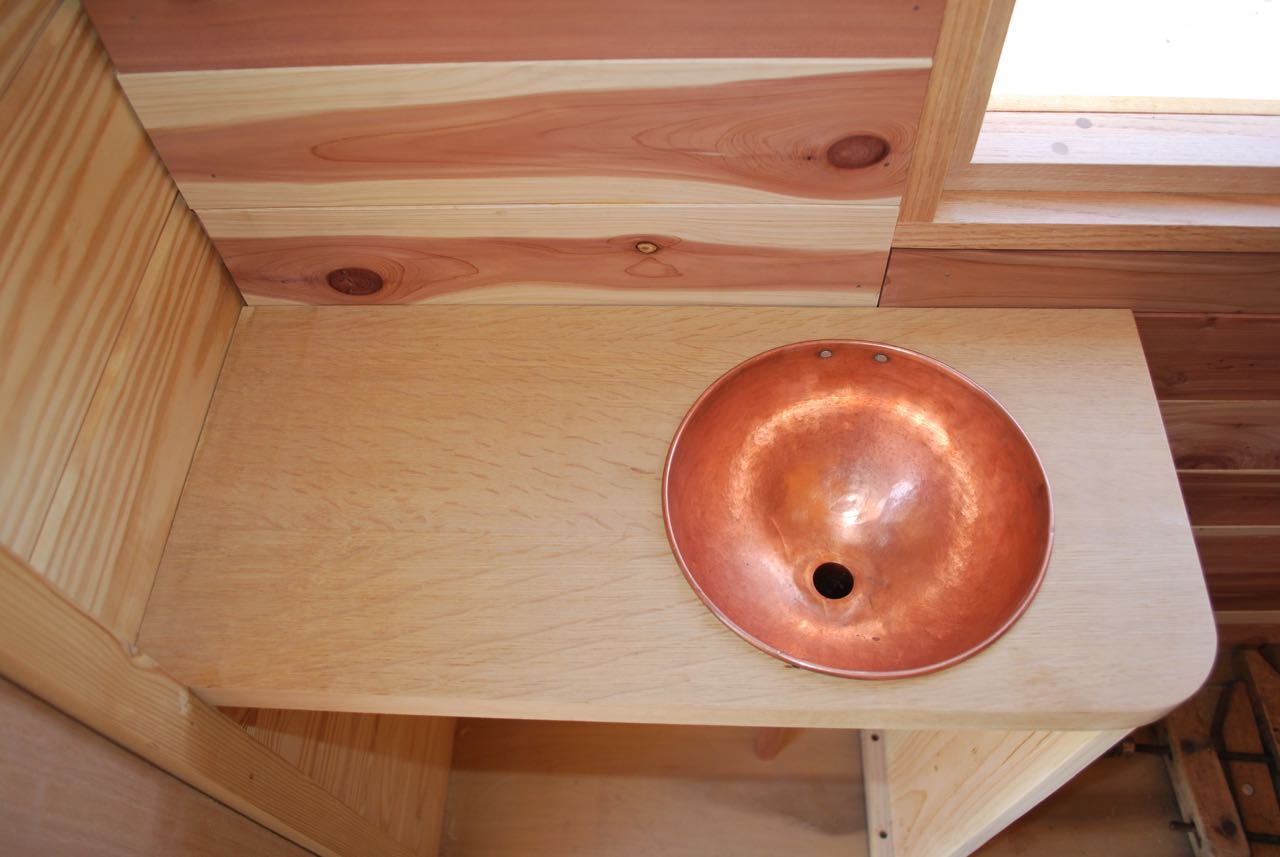
Looking down the drain.

The sink was fitted into place and a outflow pipe seated in the hole drilled by the same Forestner bit used in the bowl.  This counter is a re-purposed old office desk top from the 1930s or 40s that I’ve had for many years.  It is a white oak laminate over a red-oak core (when things were built to last).  A couple passes through the planer yielded a beautiful and sturdy surface to work with.  The rest of the desk top was turned into the large counter on the starboard side that will be included in the next post.

DSC_0115 (2)
The Samovar in position for washing and the shaving mirror in it’s new place.

This old Samovar was a lucky find for us and fits the location perfectly.  It’s high pedestal provides clearance that would otherwise need to be created with some sort of shelf.  Otherwise, it’s simply a beautiful and functional piece.

DSC_0113 (6)
The new bench and a smattering of varnish.

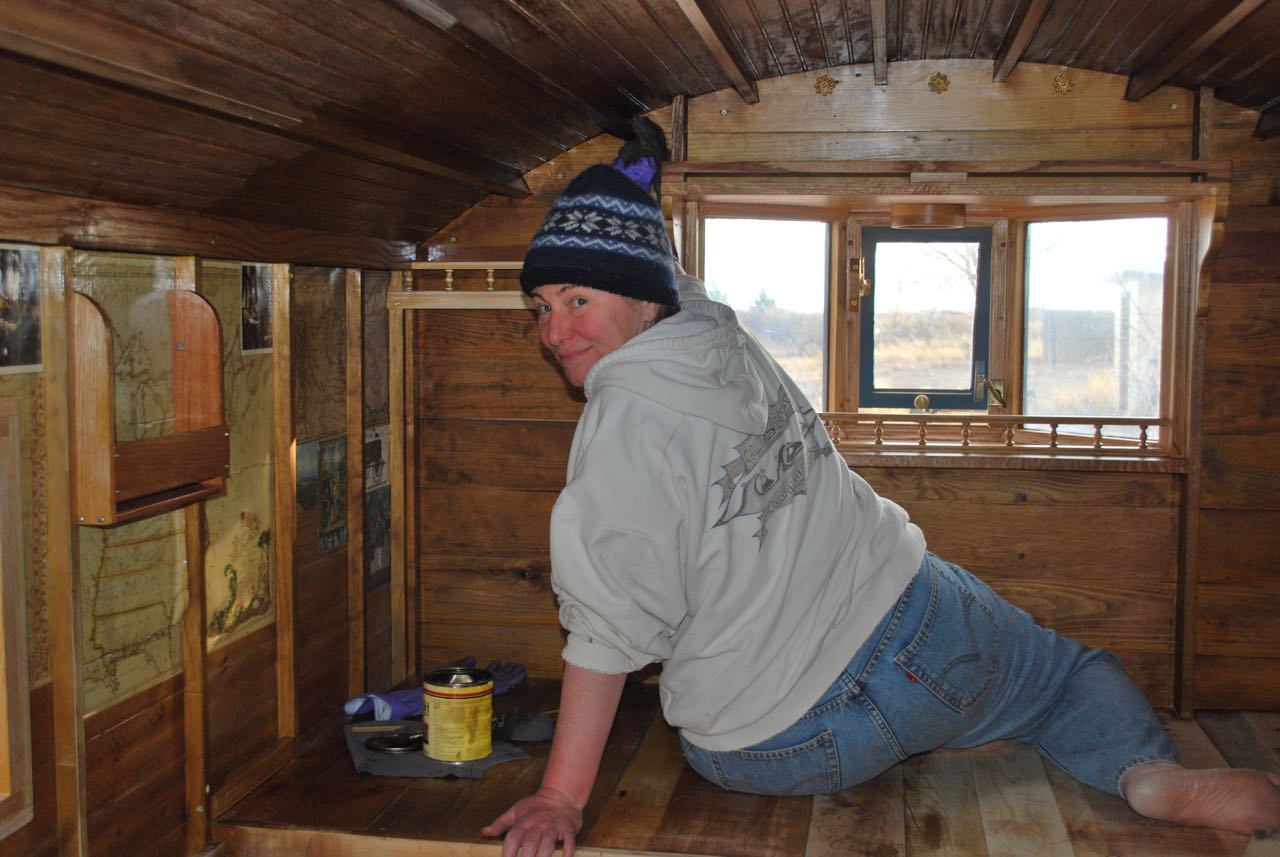
The next step was to create a small bench with the idea that this would give room when two or more people were inside as the floor space is limited in the main cabin.  This area will serve as something of a mud room for the rest of wagon.  The hinges were an Ebay find of solid brass under a hundred or more years of varnish and tarnish.  I think Stacey really enjoyed making these shine again.  This wood is some very solid pine reclaimed from an antique child’s desk and again, a planer made short work of cleaning it up for use.

DSC_0115 (3)
Side bench.

I would have preferred the seat to be a little deeper for comfort but didn’t want to interfere with the traffic-way through the door.  Nobody wants a shin-buster in such a small space.

DSC_0114 (5)
There cannot be enough storage space in such a small accommodation.

The bench provides another small storage compartment for items that may need to be readily accessible; it’s not large but every bit counts.
DSC_0117 (3)
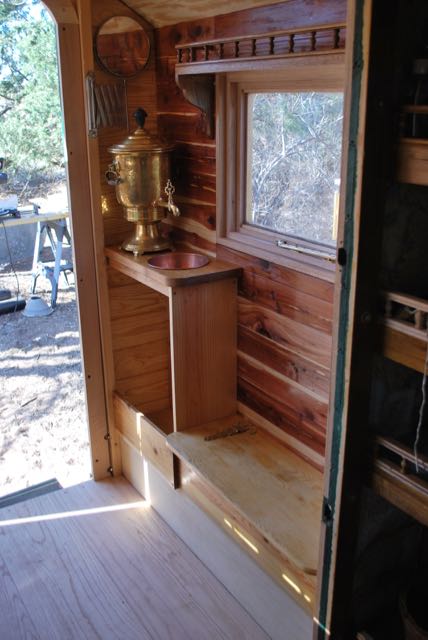
An overview of the new area.

It’s always difficult to get a clear picture of arrangements in such a small space but this shot from the main cabin gives a general impression of the area and the relative size the new window.

For Part 1 of the rebuild/addition then CLICK HERE.
On to Part 10! (Coming soon)

Door and Frame, Vardo Remodel Part 8

Every home needs a door.  It’s a tricky bit that must fit well, open and close easily, provide some security, and hopefully, look good doing it.  

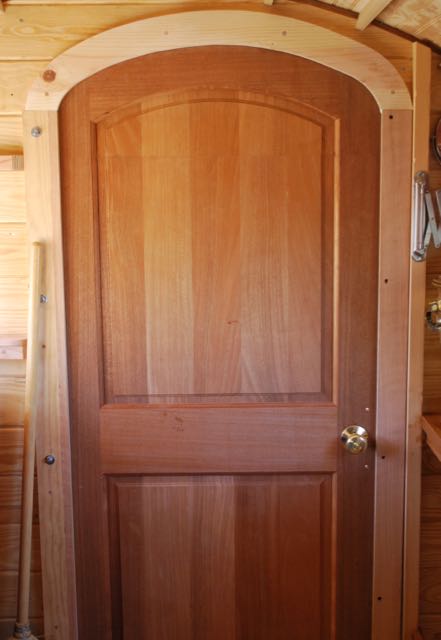
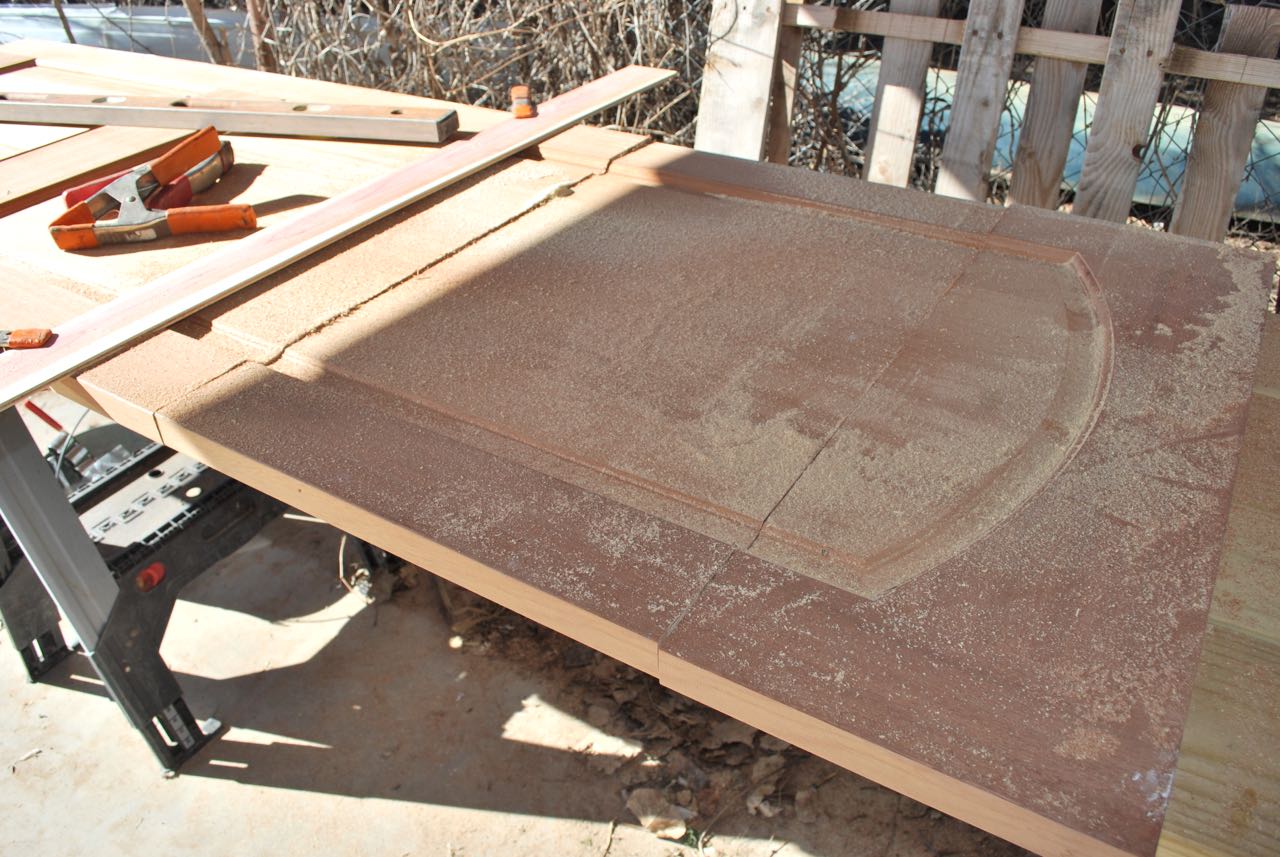
We found a mahogany, two-panel door at the Habitat Re-Store in Lubbock a couple months ago and since the price was right ($10), we bought it.  It was clearly well-made and I suspect it ended up at Habitat due to a largish scratch near the bottom on one of the rails.  The only down-side for me was it’s height.  At 94″ (2.38 m), it was far too tall for a simple,  tiny vardo.  I knew I had to cut it down and was willing to risk the $10 as it went to a good cause either way.  I suspected the panels were solid but, as is usual with this type of door, the rails and styles would be laminate over pine (or similar).  I had not initially considered a professionally made door but the final selling point was the nice arch-shape to the top of the upper panel.  It was an arc that I could match when came to finishing the door.

DSC_0032 (2)
Some stressful cutting; 20 inches removed.

The circular saw seemed the obvious choice for a long, straight cut like this so I set up a board as a guide and went at it, taking a full 20 inches out of the middle.

Matching the glue surface.

The top was then folded down for planing to get a precise fit for gluing surface.  This part took a lot of fidgeting and tweaking to get it correct over the entire run, but I achieved it in the end with only a little frustration and some muttering.

Clamping it back together.

To hold it all together, I decided to use polyurethane Gorilla Glue. I don’t use this for much but it can make an extremely strong and waterproof bond.  A couple very long screw completed the hillbilly engineering and I was confident with the result.  With the loss of 20 inches from the middle, the grain no longer lined up perfectly, but at a short distance, it isn’t very noticeable.  Hey, it’s a $10 solid mahogany door after all.  Talk about some good and frugal recycling.

Top arc is cut and the glue line looks pretty clear here. It's a lot less noticeable in real life.
Top arc is cut and the glue line looks pretty clear here. It’s less noticeable in real life and will be less so as the door darkens with age.

I cut the top of the door to match the arc of the inset panel and I think it’s a great match for the curves of the wagon.  But now, it came down to making a door frame, after the fact, to match the new door shape, compound arc and all.

Square hole, round door.
Square hole, rounded  door.  A scrap of wood was secured to hold the door in position while fitting and marking for the frame.

Obviously, the hole for the frame was the next step; requiring another stressful free-hand cutting job.

Matching the arc in the opening.
Matching the arc in the opening.  There is hope for the new door.

Cutting and sanding complete, it was time to build up the frame from oak to provide stiffness and stops to seal the interior.  Fortunately, outside of a couple fierce storms, the weather has been extremely clement this winter, making for good working conditions.

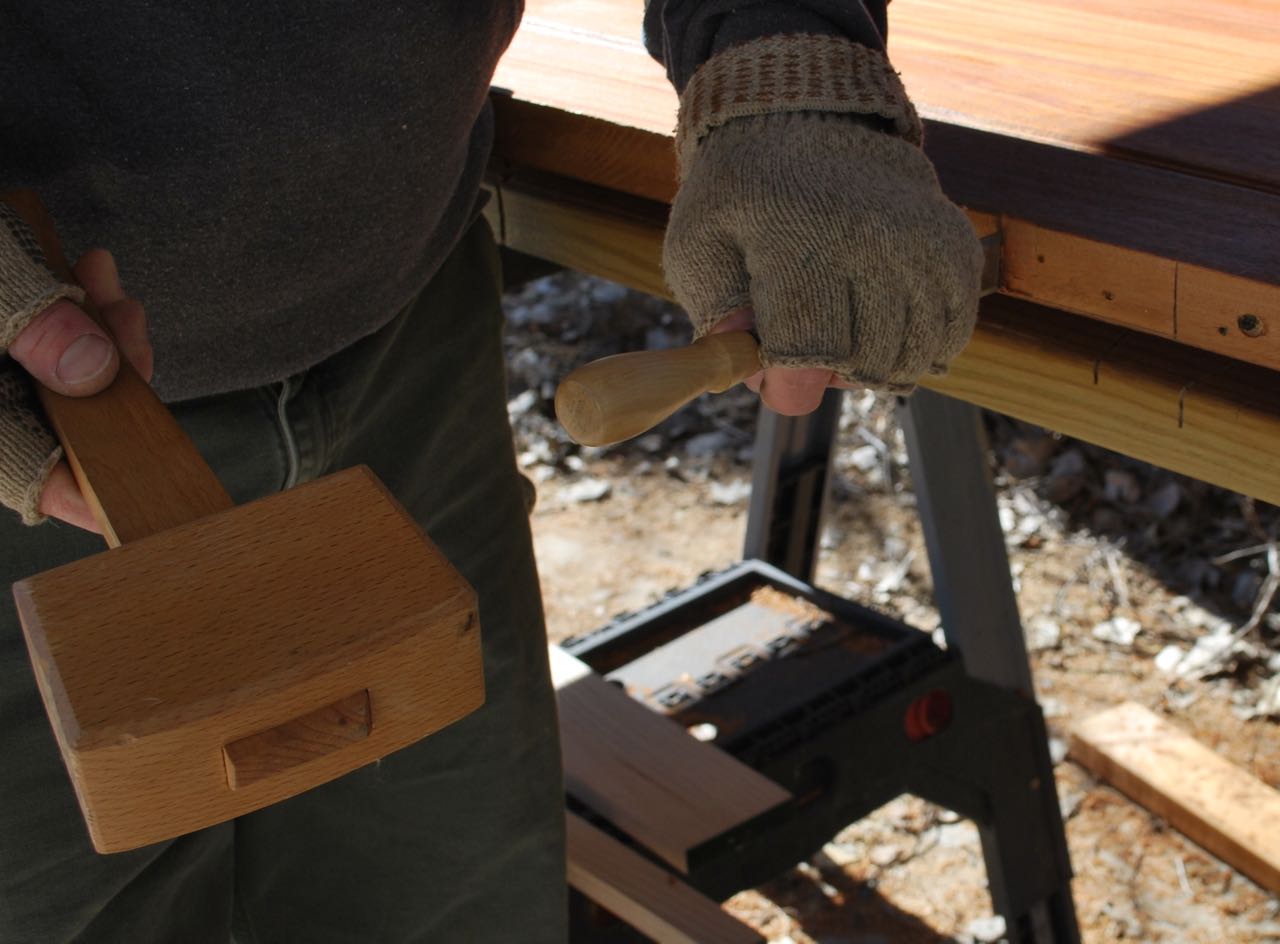
Mortising for the hinge.
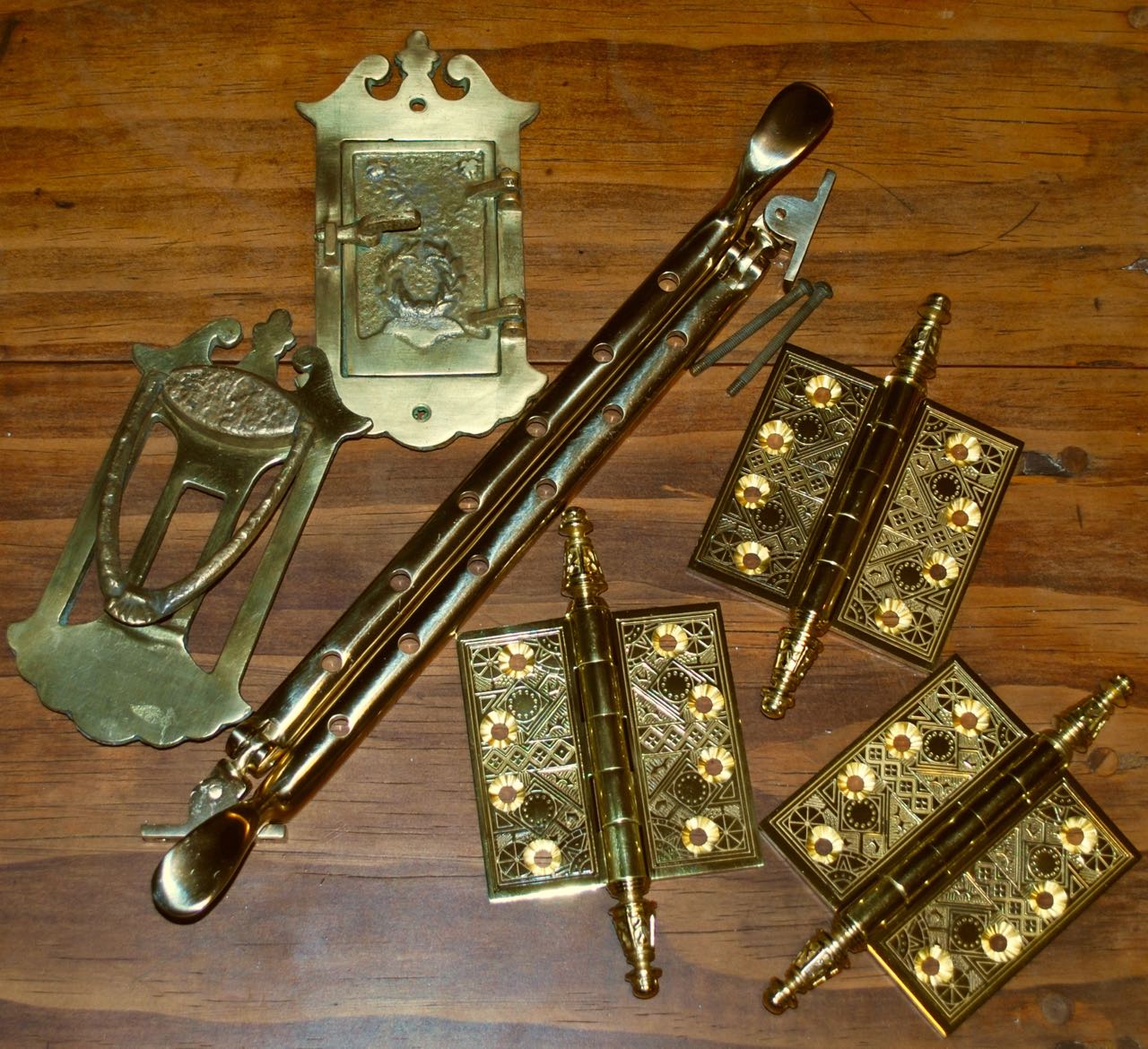
A smattering of new and old hardware.

I both got lucky and splurged a bit on new hardware.  The hinges are real beauties and very sturdily built. There is no perceptible play in them whatsoever and they operate very smoothly.  I went with a 19th century Eastlake pattern from House of Antique Hardware in Portland, Oregon.  Great stuff, great service, just too much to choose from.

DSC_0031 (2)
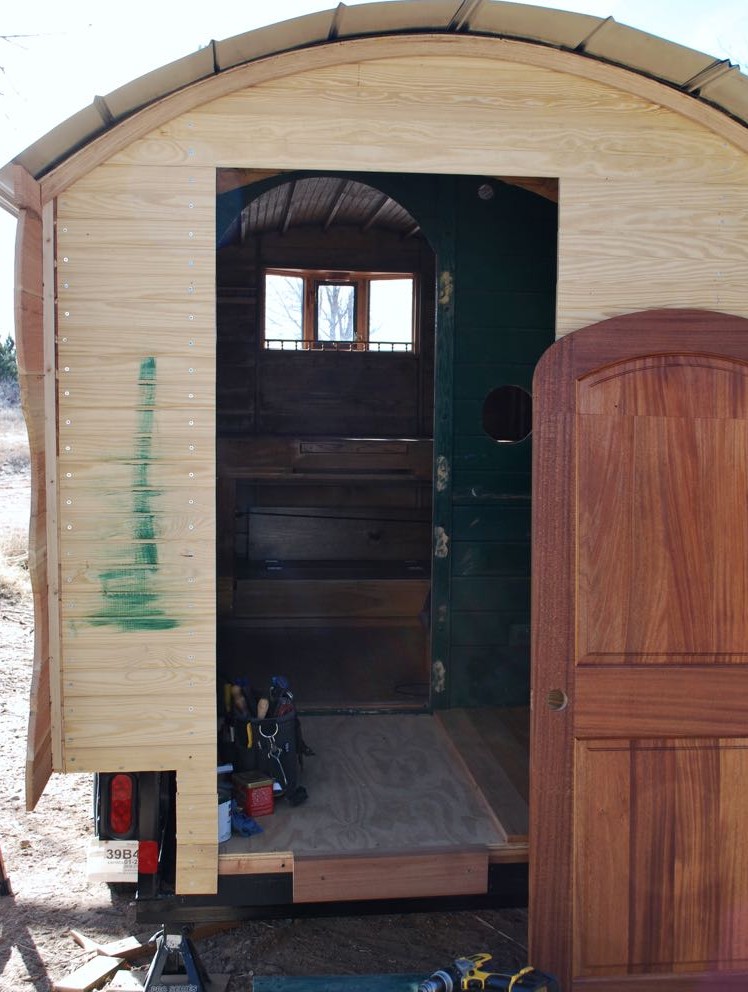
The door is nearly fitted into it’s final position in this photo. High quality hinges not only look nice but function so much better than the cheap, temporary ones they replaced.

I’ll admit that this tricky bit of framing isn’t perfect but is far better than I could have hoped for and suits us fine.  A small speakeasy grill will complete the door and even serve as a small vent when necessary.

DSC_0032 (3)
Eastlake style.  Notice the beauty of the natural mahogany next to the oak.
DSC_0033 (4)
Test-fitting the new hinge mortises.  I just couldn’t pass these beauties up.  Still some finishing work to be done on the door but without an indoor shop, something had to be in place.

There are lots of small steps that still need to happen but at least there a door in the hole.

DSC_0118 (4)
Piecing together the door jamb and frame.

There is a lot more to report and I’ll get it posted as soon as I can.  Great things are afoot and I can even see a distant light at the end of the tunnel.

For Part 1 of the rebuild/addition then CLICK HERE.

Or on to PART 9.

Real World Construction

I saw this on Tumblr and absolutely couldn’t pass it up.  All I can find about this image is that it comes from the famous Farm Security Administration photos documenting the depression.

October 1937. "Old school bus. Williams County, North Dakota." Medium-format negative by Russell Lee for the Farm Security Administration.
October 1937. “Old school bus. Williams County, North Dakota.” Medium-format negative by Russell Lee for the Farm Security Administration.

This appears to have started life as another wagon, maybe even a delivery van or bus but has been repaired beyond recognition.  I did a reverse image lookup and found a larger version (shown here).  Comments on THIS PAGE indicates it started as a Studebaker School Bus but was probably converted into a dwelling.

Click the photo for full-size image.

Progress is slow but steady, Vardo Remodel Part 7

The weekend was cold, I was tired (read lazy), and other things had to be attended to so this update is just baby steps in the big scheme.

DSC_0031 (1)
Inspired by the true pinnacle of Victorian wagon design.

Although mine is a purely pragmatic build, I wanted an homage to the classic Dunton Reading wagon.

Suffolk_Reading_Wagon_1887

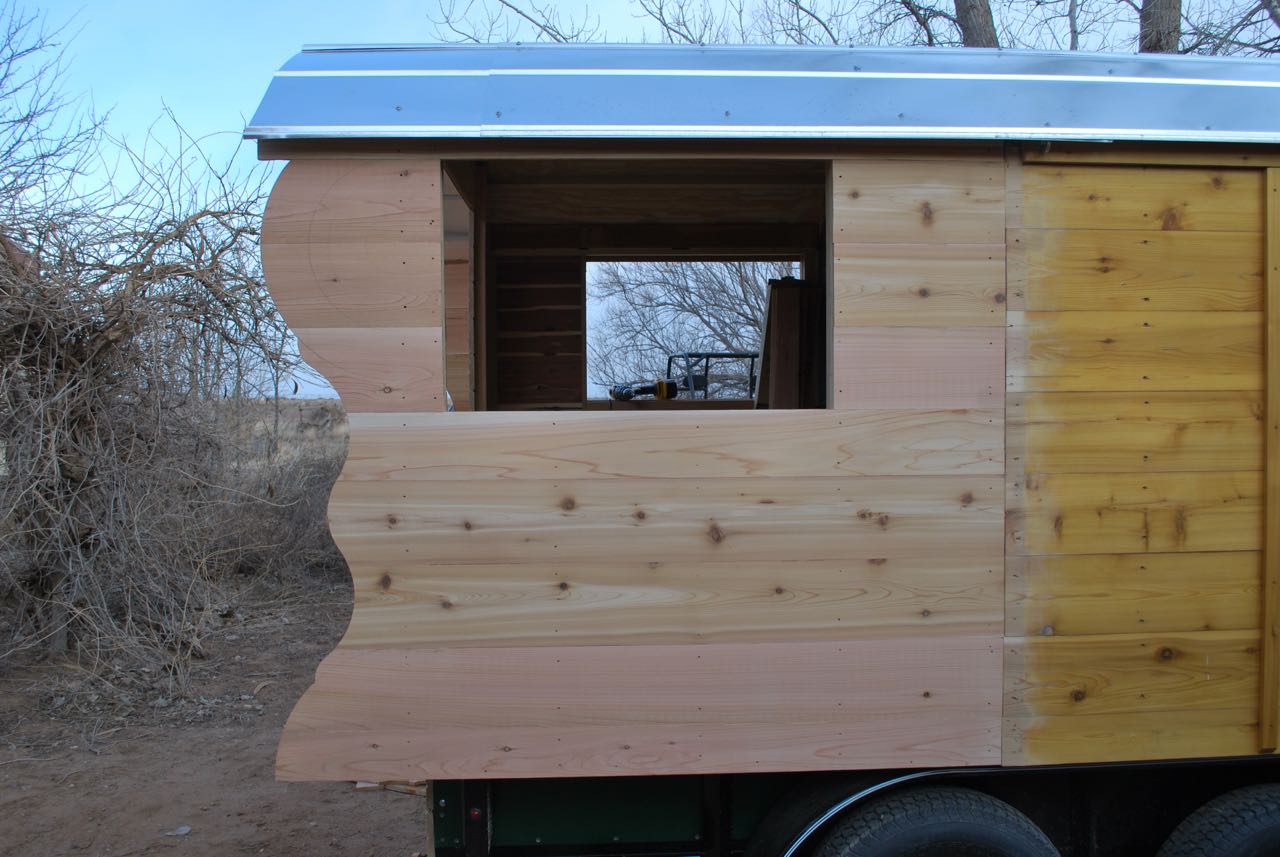
Taking a plain profile and giving it simple compass curves jazzes up the entire look, or so I hope.  If you notice the roof, there is a seam.  This is not a measuring error but the result of switching to off-the-shelf roofing steel.

DSC_0033 (1)
Sanding and finishing still required.

We wanted large windows for light and ventilation in the new room.  This one looks big enough to sell tacos and coffee from.

DSC_0034 (1)
I think I am liking where this is going.

I plan to take a day off work this coming week for important business in the afternoon.  However, if the weather holds, I should get a few hours under my belt for significant progressWe made what I think is an interesting decision about cabinetry which may be surprising.  Also, I am re-purposing a couple old desk tops as counters and I hope they look as good as I imagine they will.

Dreaming of travels to come...
Dreaming of travels to come…

If you are looking for Part 1 of the rebuild/addition then CLICK HERE.

On to Part 8!

Detailed to the Last Dollar

desk4

Not a pretty little Victorian-style caravan here today but a sturdy, well-thought-out modern living accommodation for someone looking to escape the mortgage anchor most of us have felt.

Here is an extremely well-documented van conversion into a very frugal but comfortable micro house created in 38 days from 2014-2015.  Sean (the builder) has done a remarkable job of tracking nearly every aspect of this life-changing event from the decisions that made this happen, to getting rid of everything that didn’t work in his 60 square foot dream, to purchasing and building his version of the perfect live-in rolling home.  There’s even a downloadable spreadsheet of the expenses incurred and great details for those seeking some real “how-to” guidance.

Sean’s blog takes us from the emptying and selling of THIS:

house

To the purchase and planning of THIS:

And through the entire build and beyond:

first-night2

It’s a remarkable journey and I thank him for sharing this with the world.  If you don’t have time or want just a quick overview, watch the short video:

And the entire write-up can be found here at:

F*ck the Banks, I’ll Build My Own Damn House


Tying it all together, Vardo Remodel Part 5

DSC_0002 (6)
Diving into the next stage of construction.

All earthly structures begin with a foundation of some sort, even living wagons. In our case, the trailer frame is the earth, the ledge and subfloor serve as the foundation upon which, all is built.  I proposed to attach the new section pretty much the same way and addition is connected to a house, by supplementing the structure at the joining lines and creating “nailers” to provide fastening surfaces for the new wood.

DSC_0001 (8)
With an afternoon that included a 30 degree temperature drop, an unexpected rain shower changing to freezing rain changing to snow we had to switch gears, tarp up the project, and retreat indoors. New Mexico in the winter!

Going back to the day job for the week left me with only limited work times.  No real workshop means no light and submitting to the ever-changing weather.  This became the perfect time to make lumber from the piles of miscellaneous scrap and recycled boards I have been hoarding the past couple years.  This is boring work and requires a lot of noisy time with the table saw and planer but yields a lots of free, well-seasoned lumber for building great things.

DSC_0004 (5)
Building up the back wall.

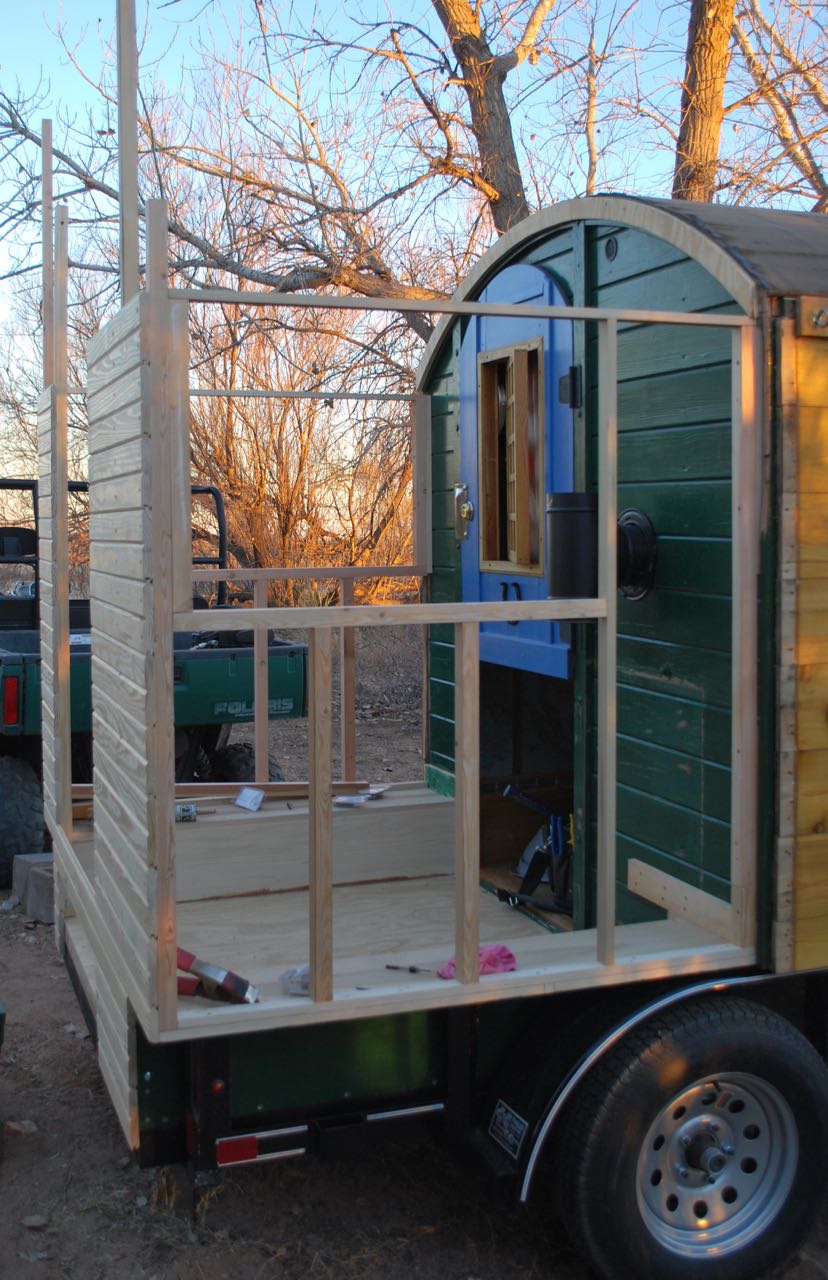
It’s satisfying to begin seeing real progress, even if it’s only just a shell going up.  Pre-cut tongue-and-groove pine makes for easy work at this stage.  The sad old door is being kept in place to help shelter the interior from unforeseen weather.  We hope to get the bedroom area cleaned up, repairs made, and some re-varnishing done in the coming weekend.

DSC_0006 (5)
Framing out the plan.

Corner posts were secured and, unlike the first edition of the build, framed walls were created and await their double layer skin.  I took this opportunity to mock-up the arch from plywood and test fitted it against the existing wall.  Finally, it feels like real progress.

If you are looking for Part 1 of the rebuild/addition then CLICK HERE.

On to Part 6!

Man Powered Vardo

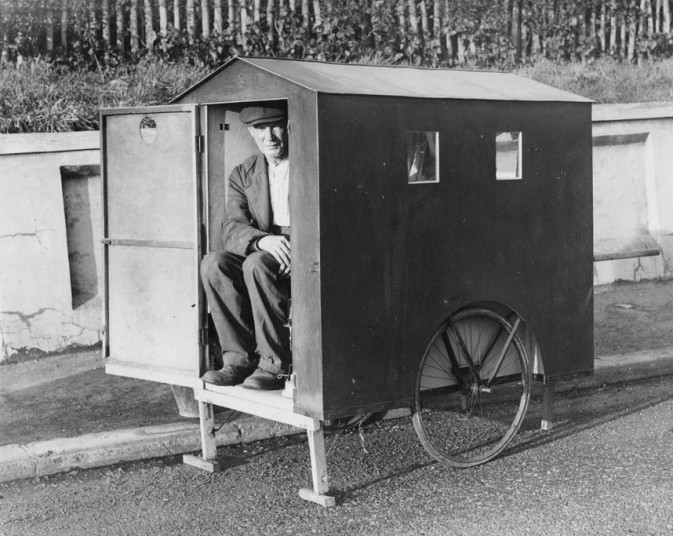
A desperate man with some ambition and the gumption to not be beaten can make himself a man-powered vardo (I’m thinking of you, Jim).  An alternative to homelessness with a minimum of skills and materials.

WeatherheadCaravan

In 1935 David Weatherhead, an unemployed shipyard worker from Sunderland, toured the county (England) looking for work in this one man caravan which he designed and made himself. From the Telegraph (UK).

Picture: Fred Morley/Fox Photos/Getty Images

“Give me a long enough lever and a place to stand and I will move the Earth” Remodeling the Vardo, Part 4

I had a plan, and it involved leverage.

Taking the Biggest Step of All; Transferring the old vardo to the new trailer.

Now that I was confident that the box was going to hold up under the stress of the transfer I was ready to slip the trailer under the body.  It was a whole lot less dramatic than I was afraid it would be, and that was a good thing.

And here we are; naked, and a little afraid.
And here we are again; naked, and a little afraid.

With the vardo teetering on it’s blocks we prepared to slide the trailer under it. For safety sake, we did this by hand to decrease the chance of bumping the structure or blocks.  Because of the layout of the tail light assembly and fenders we couldn’t just suspend the entire body and make the transfer in one run.

DSC_0006 (4)
Taking the strain with the Hi-Lift jack in order to move the blocks around the frame.

I used the Hi-Lift jack to easily support the body while we shifted the blocks around.  I wanted to get the trailer as far under as possible to ease the final move.

DSC_0009 (4)
Step three, after moving the blocks around the light assembly.

I was feeling pretty accomplished at this point and we were nearly ready for the final push.

DSC_0010 (4)
As far as it goes.

Since there were only two of us, we greased the rails under the vardo body to limit the friction while pushing.  This made a huge difference and allowed us to slide it into place with relative ease.

DSC_0020 (3)
Looking on in slight amazement that it actually worked.

You can see that everything possible was stripped off the body to lighten the weight including the metal roof, stove-pipe, and door.  Bolts were used to secure the body to the frame but I’ll likely add a couple more steel straps as we near completion.

DSC_0013 (2)
Ready to move on.

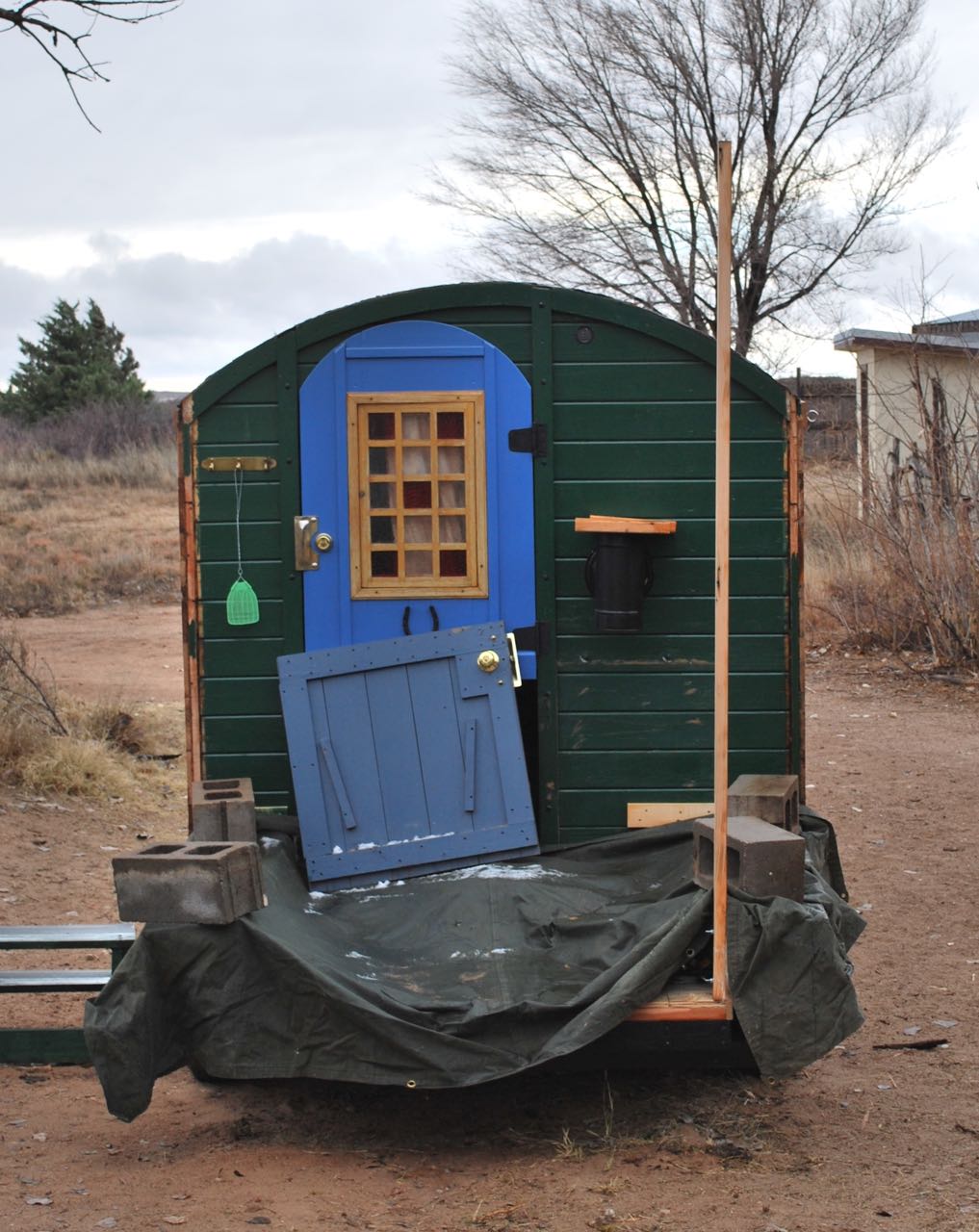
I intend to make the addition look as seamless as possible and to keep the same aesthetic in the addition.  For me, it’s a modern living accommodation informed and inspired by the late Nineteenth Century caravans and Sheepherder wagons.  They were ultra-modern in their time but had a certain warmth, comfort, and hand-made quality that most modern day RVs lack.  Even on a small budget, a solid, warm, and safe home can be built by nearly anyone.

If you are looking for Part 1 of the rebuild/addition then CLICK HERE.
Onward to Part 5!