This seemed too good to pass up. 

Tag: travel
Historic Caravan Image of the Day (H.S.)
 John Harris-Stone, M.A. on the road in Britain ca.1910s. Living the idyllic life.
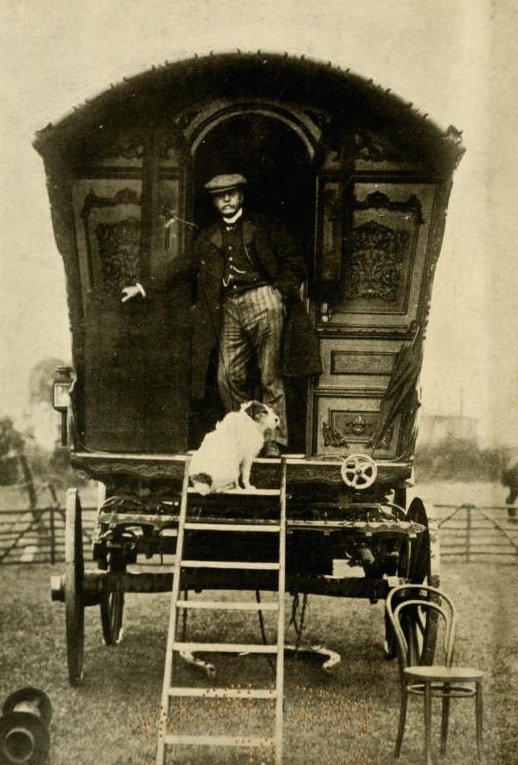 Mr. Harris-Stone and dog setting up camp. Chimney, removed for travel, in the lower left foreground.

Scooter Rickshaw
Yes, I love the scooters. Here’s an interesting setup I found via Tumblr at Scooterscene. Probably not for high-speed use but still, a remarkable little taxi.

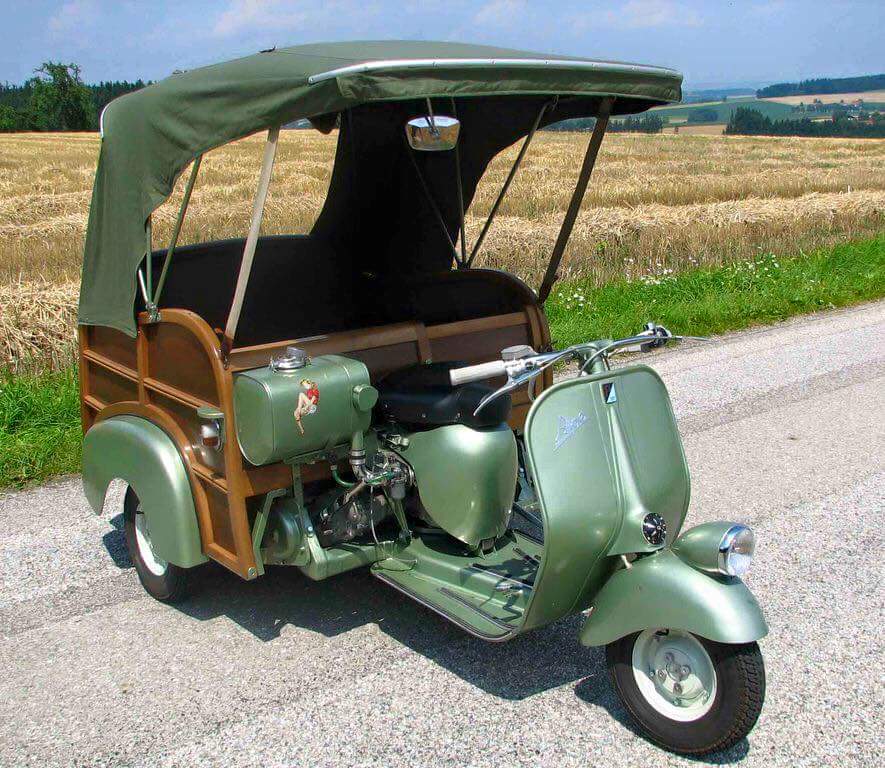 I would love to learn more about these little guys.
Blast Off with this Homemade Atomic Age Rocket Camper
Home-built camper fans will probably really appreciate this remarkable future-retro monstrosity. Conceived, designed, and built by Bill Guernsey while recovering from a broken back, it took two years to complete. Follow the link below to the short write-up on the Makezine Blog or click here to straight to the Instructable: http://www.instructables.com/id/Rocket-Camper-Revealed/


Travel Essentials
This is part of an ongoing theme to document travel and camping gear that has served me over the years. These will be mirrored on the Traveler’s Gear page as I get them up.
As a traveler, primitive technologist, peaceful survivalist, affected provincial, long-time Idler, and sometime field scientist I find the necessity for a shoulder bag to carry essentials. I have two size shoulder bags as well as various backpacks, brief cases, and messenger bags that have served me well over the years walking thousands of miles on survey and in my travels.
 I made this bag a few years ago based on an 18th century gentleman’s shooting bag. If you are interested to see it’s construction, it is documented HERE. Carried by naturalists, sportsmen, and explorers, this small compartmentalized bag keeps the essentials handy. Sturdy 10-12 oz vegetable tanned leather from Hermann Oak means that this bag will serve many decades without fear of damage from wear.
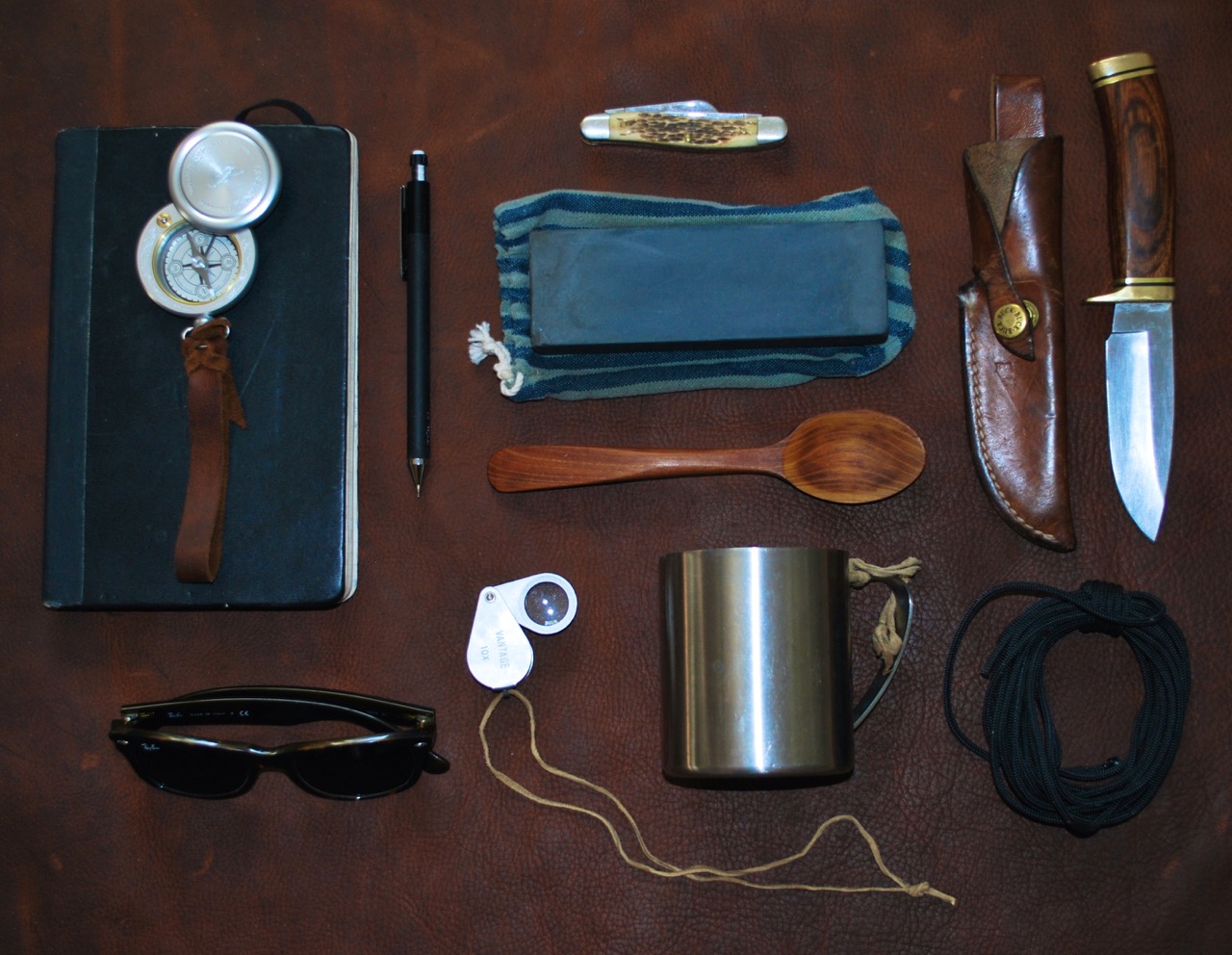
Since I was eleven, I have been infatuated with mountain man style wilderness survival. It was, by far, my favorite merit badge as a Boy Scout. The merit badge book taught about the old idea of a “possibles” bag carried by early explorers that we now think of as a survival kit. Although the above is far from a complete survival kit, this little bundle, with the addition of a water bottle, gets me through many long days of travel and field work. Additional items include: lighter, flashlight, bandanas, and some first-aid essentials. However, traversing the wilderness, or even through civilization, means more than having the right stuff handy, being dressed properly is probably even more important. After years of walking in the wilderness I have learned the same lessons that our forefathers did; the importance of being well shod and covered with a proper hat.
Those topics will be covered down the trail.
Sibley Tent, an Early Review

A tent has been invented by Major H. H. Sibley, of the army, which is known as the “Sibley tent.” It is somewhat similar to the Comanche lodge, but in place of the conical frame-work of poles it has but one upright standard, resting upon an iron tripod in the centre. The tripod can be used to suspend cooking utensils over the fire, and, when folded up, admits the wooden standard between the legs, thereby reducing the length one half, and making it more convenient for packing and traveling.
This tent constituted the entire shelter of the army in Utah during the winter of 1857-8, and, notwithstanding the severity of the climate in the elevated locality of Camp Scott, the troops were quite comfortable, and pleased with the tent.
In permanent camps the Sibley tent may be so pitched as to give more room by erecting a tripod upon the outside with three poles high and stout enough to admit of the tent’s being suspended by ropes attached to the apex. This method dispenses with the necessity of the central upright standard.
When the weather is very cold, the tent may be made warmer by excavating a basement about three feet deep, which also gives a wall to the tent, making it more roomy.
The tent used in the army will shelter comfortably twelve men.
Captain G. Rhodes, of the English army, in his recent work upon tents and tent-life, has given a description of most of the tents used in the different armies in Europe, but, in my judgment, none of them, in point of convenience, comfort, and economy, will compare with the Sibley tent for campaigning in cold weather. One of its most important features, that of admitting of a fire within it and of causing a draught by the disposition of the wings, is not, that I am aware, possessed by any other tent. Moreover, it is exempt from the objections that are urged against some other tents on account of insalubrity from want of top ventilation to carry off the impure air during the night.
Randolph Barnes Marcy, The Prairie Traveler: A Handbook for Overland Expeditions, with Maps, Illustrations, and Itineraries of the Principal Routes between the Mississippi and the Pacific, 1859.
Early Motor Caravans
We live in an age of motor vehicles. Few of us could consider, for safety if nothing else, taking to the roads in a horse drawn vehicle. When the automobile seemed here to stay, caravanners in Europe adapted to the new technology.
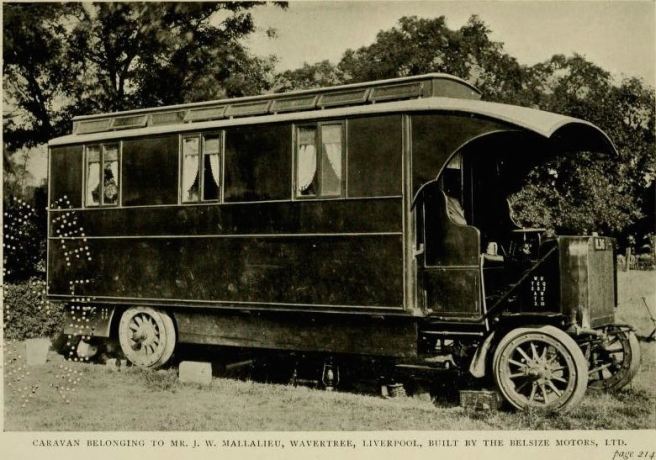 The earliest models look essentially like their horse-drawn cousins, just stuck onto a truck chassis. In this era, I suspect they were topping out at 35 mph.
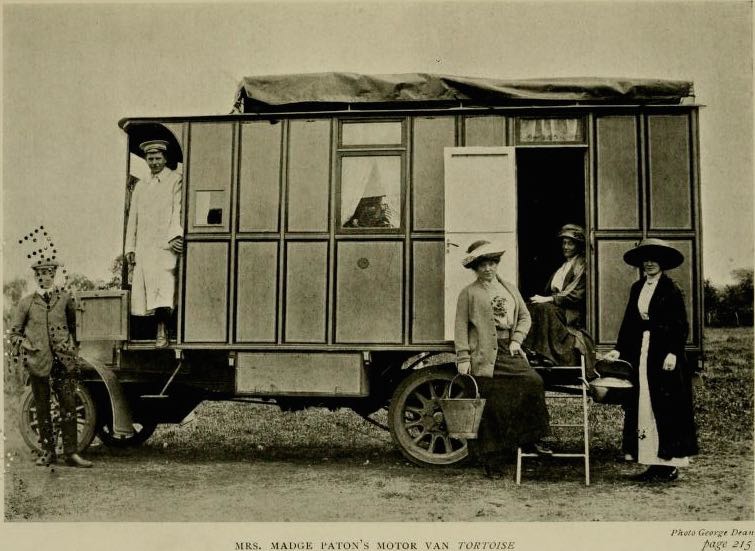 This is the earliest side-door design I have found which changes the dynamics of the interior layout. Note that in the vehicles above, the driver is still fully exposed to the elements. A far cry from our modern experience. Note the “driving coat” worn by the pilot of this beauty.
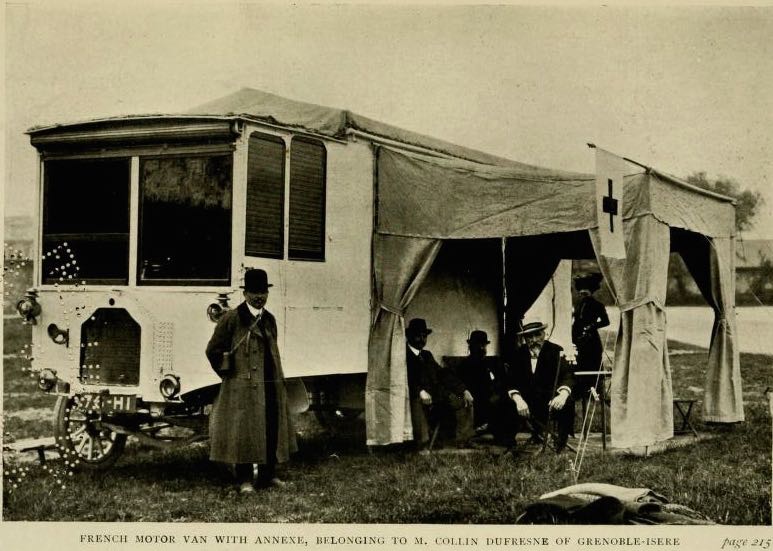 This French innovation has boxed-in the driver’s compartment making it suitable for foul weather. Still, I would be worried about those huge, non-safety glass windows.
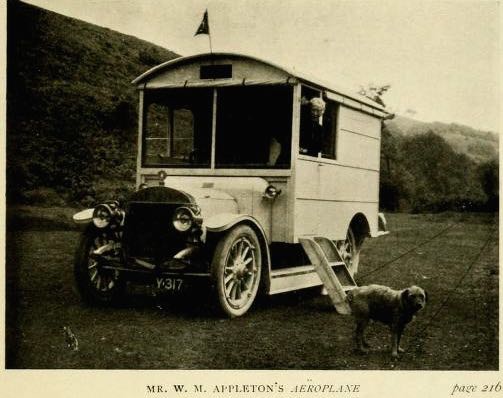 And finally, a very practical little design; the AEROPLANE. A cute little beast. I could not find the floor plan for this one but there is a section profile to help the would-be builder:
 This style fold down seat/bed is exactly what I had in my first Ford pickup camper. Simple and practical. Maybe these early designs will inspire more modern builders to dive in and get their build on. Keep it simple, keep it light.
Another Great Design
From Casual Turtle Campers
Peter at Casual Turtle Campers has come up with a great new design in a minimalist caravan. I have posted his earlier work here a couple times and this new design is worth a look.. This model looks like it would work well as a base camp for one or two people who don’t need a substantial kitchen or keep the cooking gear in the tow vehicle. The low profile will certainly appeal to people who drive lower vehicles as well.

It has his signature roof-line as found on his other designs. The compound curved roof is a nice, artistic touch.

I wouldn’t be able to do it justice so here’s the description that Peter sent along:
The Hatchling – Here’s a new model that I’ve been wanting to build for a while. It’s sort of in the size and tradition of a teardrop, but in Casual Turtle Campers style – dead simple, cedar, domed roof, lots of windows, etc. In fact, it’s quite a bit roomier than most teardrops – and by leaving the entire trailer area as living space, the cabin feels damn near palatial! Not really, but it is a nice little space that two people and a couple dogs could be perfectly comfortable in.
As an unsolicited build, I had planned to insulate and finish out the interior myself – but then I thought it might appeal to someone looking for either a dead simple, lightweight little camper, or someone looking for a project. One could add nothing to it and have a very comfortable, capable, simple camper – or features could easily be added to their desires – storage, gear hooks, bed platform, etc. And I’m perfectly happy to discuss building out an interior for someone.


Here are some of details… It’s built on a very nice, custom 5’x8′, fully boxed trailer frame with 13″ tires from a great manufacturer here in northern Colorado. The cabin’s frame is mostly western Hemlock, with Western red cedar siding. The bottom of the cabin has a 90 mil PVC membrane covering, and the roofing is a fully adhered, 60 mil, ivory-colored TPO membrane – thermally welded at the seams. It has four opening windows with screens, and two large fixed windows (forward bulkhead and door) for pretty good through-visibility. It weighs 840 lbs, with about 110 lbs of tongue weight. There are more specifications/details on the website –casualturtlecampers.com.


I really like this camper, and I can see using it just as it is – or with a more developed interior. Either way, its a great platform for someone looking to get into a very easily towed, comfortable, unique little camper. At 840 lbs, this model could work with a wide variety of tow vehicles. The forward bulkhead is short enough (66″) to tuck in well behind most crossover and small SUVs. I even towed it around town with our little Subaru Impreza.


I’m 6’2″ and 195 lbs, for scale. As a shell version, the walls and roof assembly are left open, showing the OSB roof deck’s bottom side – though it could easily be insulated and closed in. If anyone has any thoughts/ideas/questions please email me at casualturtlecampers@gmail.com. I’d be happy to discuss this camper or something similar/different that you might be interested in. And I’m also happy to discuss full or partial delivery from Fort Collins, CO for a rather nominal, mileage-based fee.
Thanks for having a look – and please share it with anyone you think might find it interesting. I’m tentatively calling this model the Hatchling, but any other ideas for a model name would be welcome, too!
Price – $6,250
And he obviously has good taste in literature:
“I had to go alone…a kind of casual turtle carrying his house on his back.” – John Steinbeck, from Travels With Charley.
Awesome House-Car of the 1920s
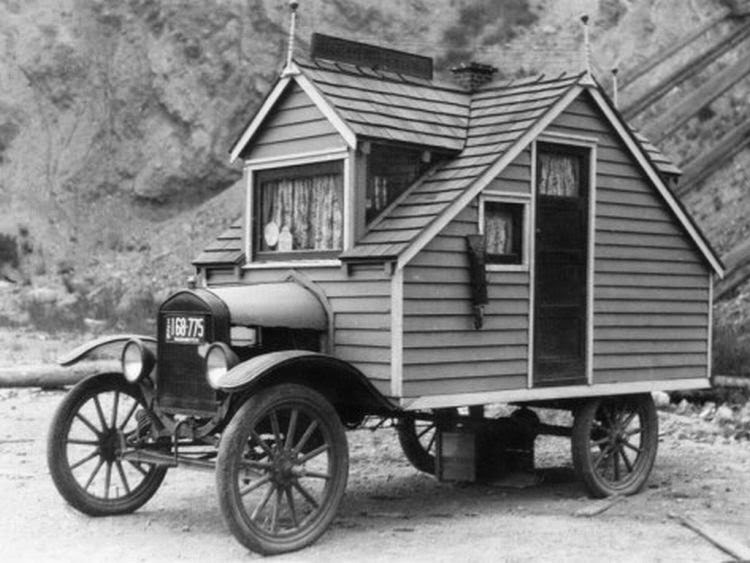
Found on the Vintage Everyday blog. It is thought to be from circa 1926 and is a real beauty. It has some nice details as well. The sign on the roof, lightning rods, and even a little chimney. A great solution of one facing homelessness but still had the car. Possibly a nightmare to drive?
Edwardian Camp Equipment
This is a re-post from an earlier entry. Say what you will about British imperial policy of the 19th and 20th centuries. They certainly worked out minimalist travel with a fair amount of style and comfort on a very personal level. These old catalogs give some great ideas for camp living.
From The Army and Navy Co-operative Society Store, London 1907
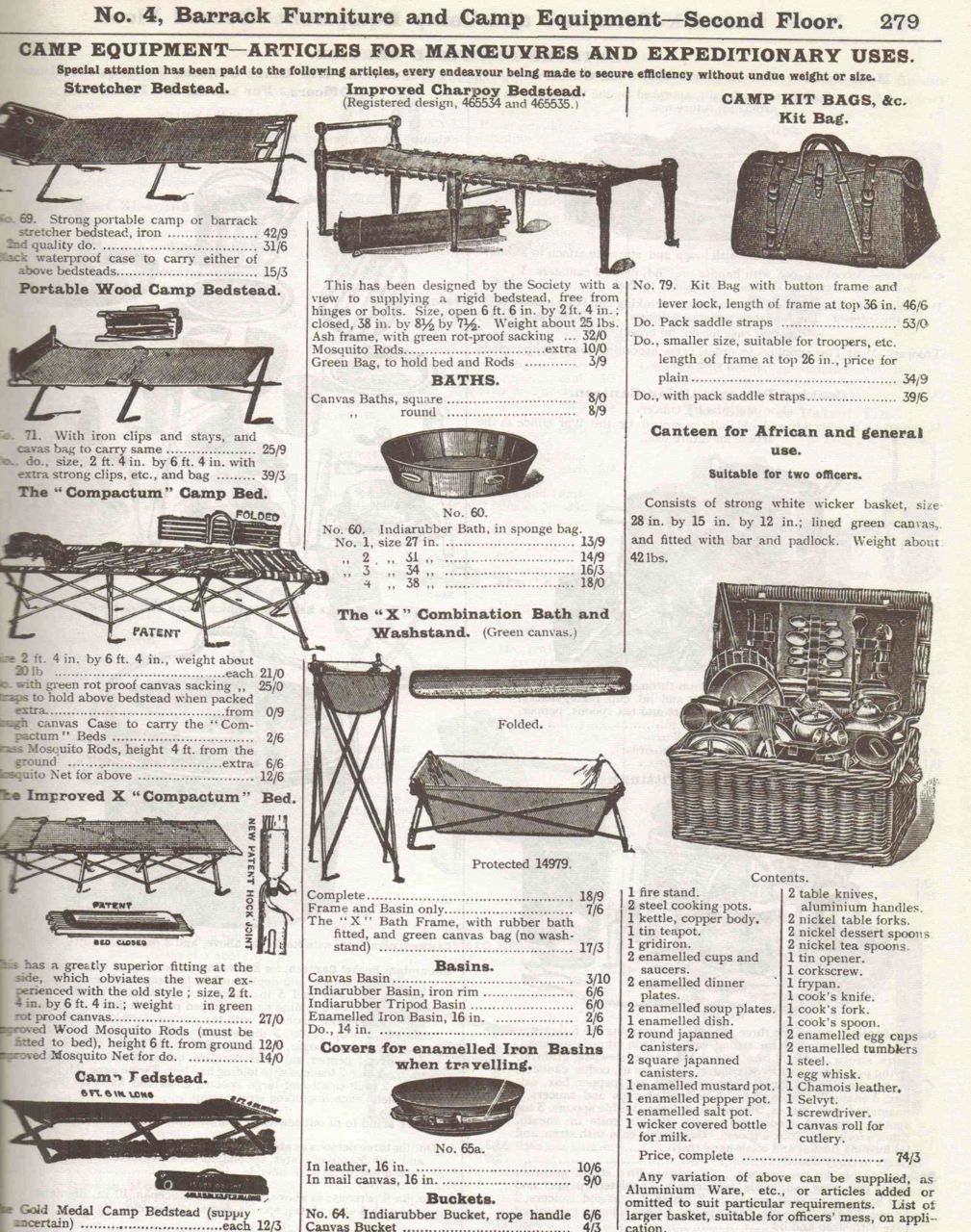


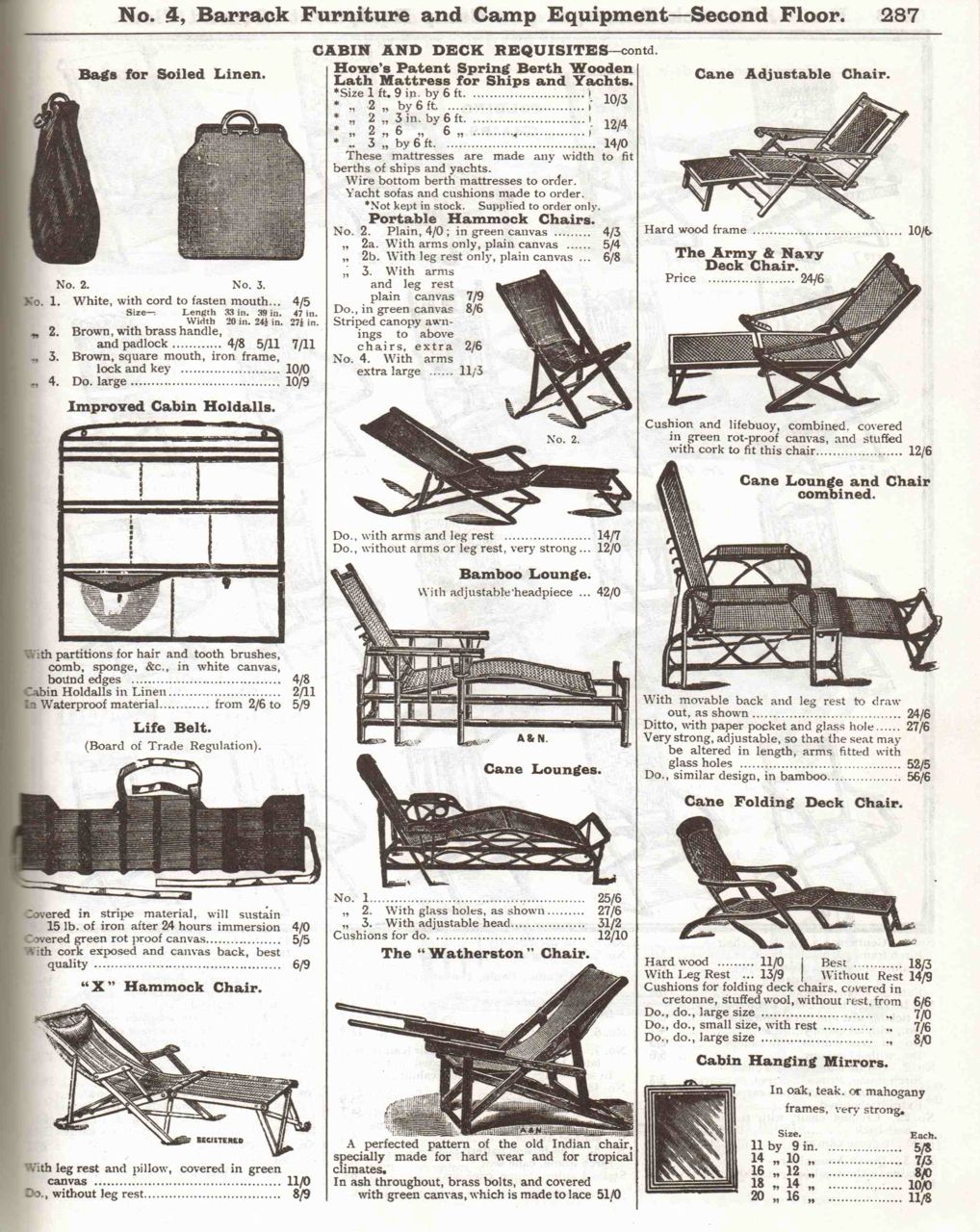

 There are some excellent items here that should give some inspiration for fabricating some classic and classy gear. From an era before the activity of “camping” was fully segregated from “regular living”.
Much more of this to come…
 Preindustrial Craftsmanship