Sheep camps from Wyoming from the Wyoming Tales and Trails webpage. Great photos and some good information concerning everything “western.”
I could spend much of my life like this!
A self-contained base camp in a sheep wagon provides a cozy home on the prairie.
A beautiful culmination of cultures a innovations created this iconic American living arrangement. We can learn a lot from these designs today.
The Wyoming Tails and Trails website contains a lot of other information about western history along with more than 100 photos. Have a look around and get a feel for the old west.
I say Vardo because that’s really what it is. You can sense that the presenter of this show isn’t too familiar with true rolling homes, caravans, vardos, or whatever you want to label them but his enthusiasm is real. I like this home a lot but there is too much gymnastic restructuring for my taste. I’m probably just lazy. I’m not knocking his aesthetic or design though; they are spot-on. Mr. Tagami fit a lot of useful ideas together to create a wonderful living space. Several of these innovations are being integrated into my future plans.
If you haven’t seen this yet, here’s a video detailing one of his creations and the happy owners who inhabit it.
A beautiful, dark, wintery day spent in the Vardo, getting things in shape and spending some quality time reading led me to thinking about shooting a few photos. The place is a bit unkempt but I think it shows how the space is used in real life.
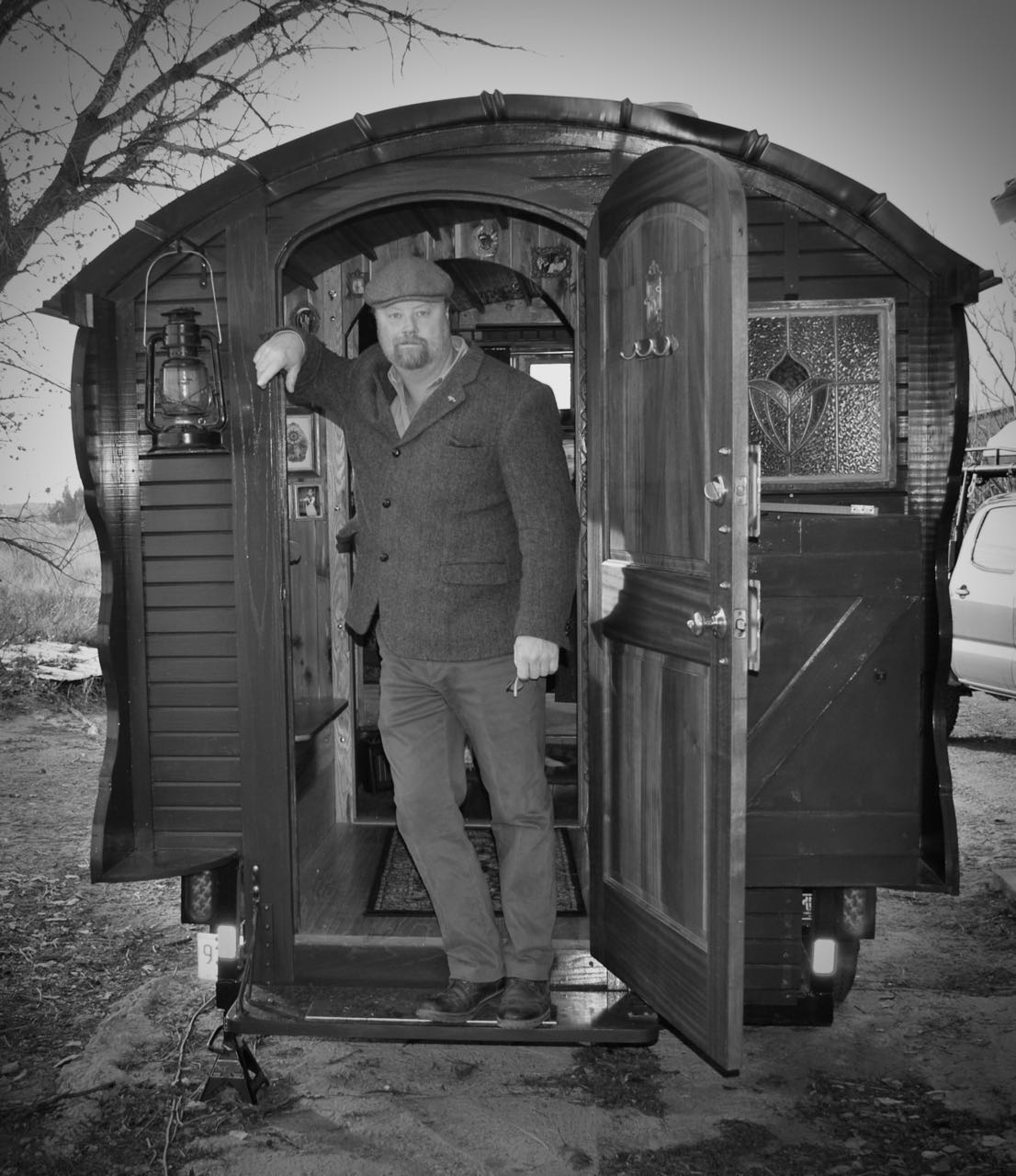
The hearth corner with miscellaneous junk piled on the surfaces. This is the view from where my head lies on the bed.A lot of wood types were used throughout the build as some was recycled and some was purchased based on availability. We are out beyond the end of the realm so supplies are limited. The small photo over the door is my grandparents who played a major role in my upbringing.The samovar corner with sink in place. The wood for this built-in comes mostly from an old (pre-war) desk that had seen better days. They used excellent materials that I really didn’t want to discard so I’ve been hanging onto them for several years now. The mirror is more useful that I would have ever thought and fits the space perfectly. The Samovar is strapped in by a belt connected to the wall and Stacey provided a cute octopus hook for wash cloths and other things. I’m just finishing the windows so they have yet to be varnished.Copper sink made from a french mixing bowl (thanks to Mick for the idea).A view aft from seated on the bed. I won’t lie, cutting all the cedar was not pleasant to conform to the arc but it ultimately turned out fairly successful. Apparently, I was trained well back in my life as a carpenter.My view of the stained glass window from bed with a small candle lantern next to it.Cluttered corner. Things are slowly finding their homes.The dog, trying to figure out what I’m up to but staying close to the heater. She climbs underneath the master bed when it’s time to sleep for the night.
I have not been entirely idle on the vardo project but have not had time to post here. Work life has been eating up my spare time with travel, and fun though that may be, it means nothing else gets done outside the work day. Cutting a hole in my nice, dry roof haunted me for several months but with the aid of a high-temperature silicone stove-pipe flange, I was ready to dive in. I didn’t want to remove the roofing panels so the cutting was difficult. I did what I could with the circular saw and gnawed the rest out by hand with a chisel. Not pretty, but it worked in the end. Then it was just a matter or cutting a hole through the steel and cleaning it up with a file.
The ugly hole. Fortunately it will be hidden.
I created a cover for the hole from an old, solid copper serving platter (see photo below) that looks nice, and will cover the ugly. The gap between the layers was filled with stove gasket insulation.
Matching up old, very old, and new pieces to make the connection. The offset was used so that the pipe lands between the purlins.
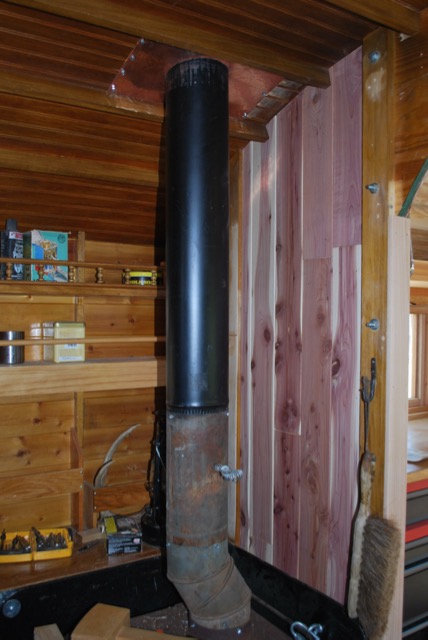
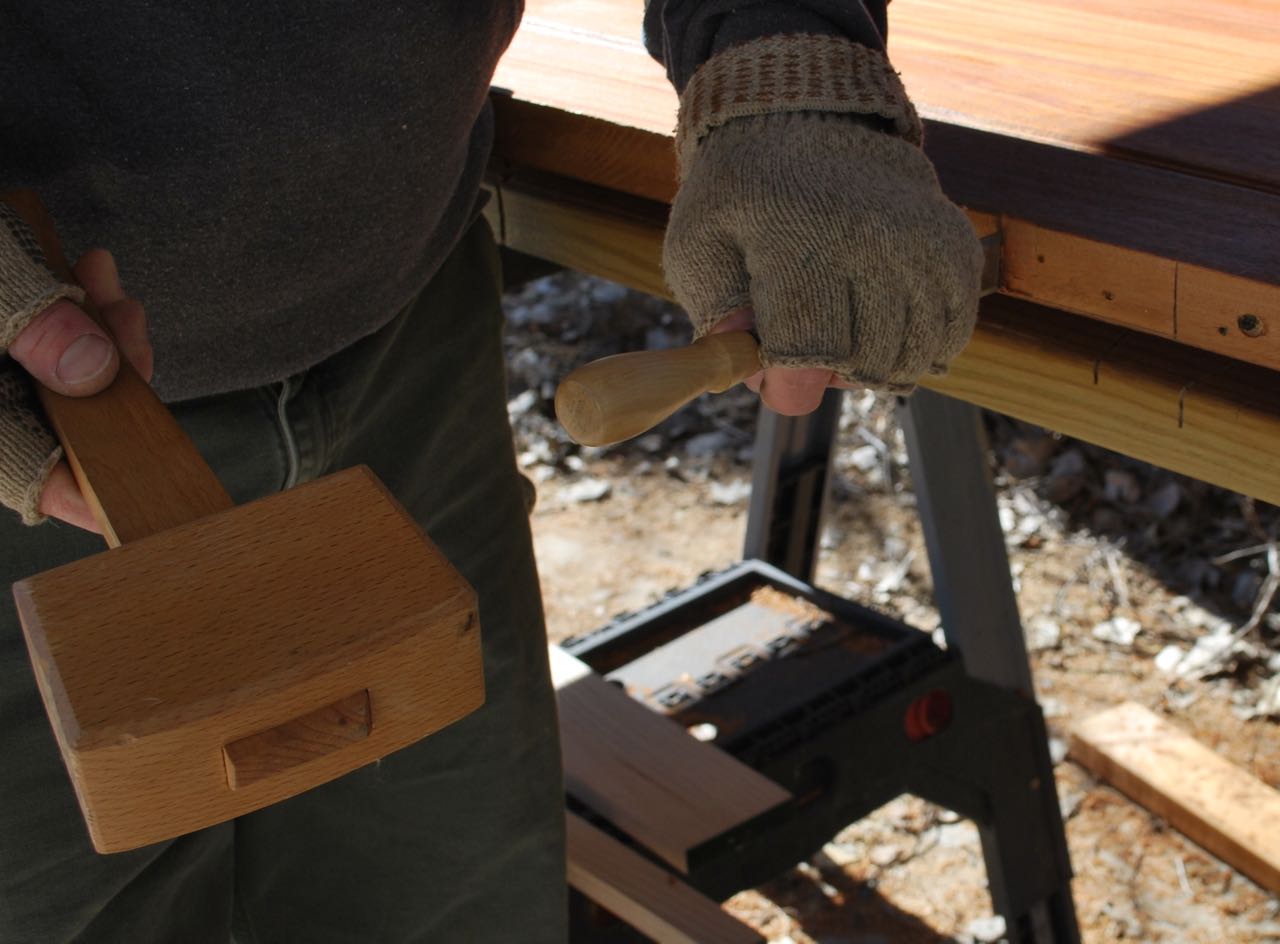
The upper pipe will get a coat of high heat paint while the lower portion will get stove polish along with the stove itself. In the background, the new juniper paneling is visible. Otherwise, the place looks like a wreck. The mallet is handy to solve all measurement problems.
The silicone flashing isn’t as ugly as I feared but still hope to pretty it up with copper sometime.
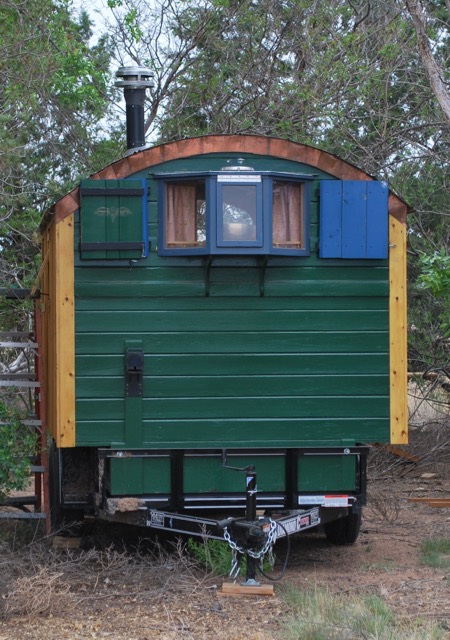
Learning from experience, I created this new chimney setup so that the outside pipe could be easily removed, if necessary, for off-road travel. I will probably shorten the pipe by a few inches as it sticks up fairly high. Once this was completed, I could get back to the good stuff.
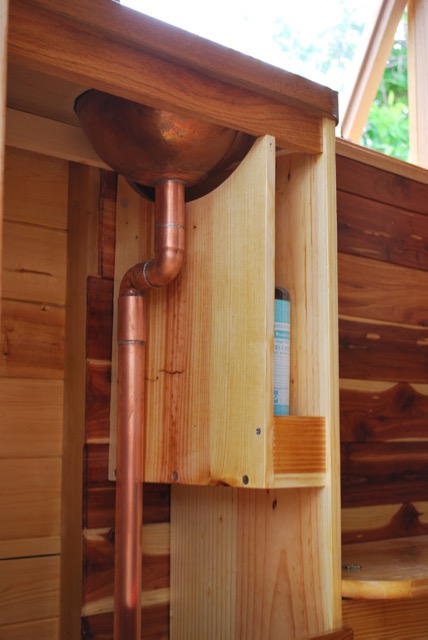
Sink area with a new-purpose-built soap holder.
In order to maximize storage space a small shelf was created to hold soap. The size was determined by a standard Bronner’s soap bottle and it holds two comfortably.
A little carpenter’s geometry.
Some scraps from the wood pile were recovered and planed down to rejuvenate them for use. Nothing fancy here, just utility.
The large under storage area is designed to hold the beautiful copper cistern from the tinker Robins.
Everything in the area has another coat of varnish so as soon as create a method of securing the Samovar, the washing-up area will be complete.
First coats of varnish on the oak.
Finally, I have begun varnishing the floor. The new oak contrasts with the old but will darken soon enough.
Sink, seating, and storage galore – I’m finally moving onto the luxuries that make this addition what it is meant to be; essentially moving some outdoor activities and living indoors with more amenities and easier foul-weather living.
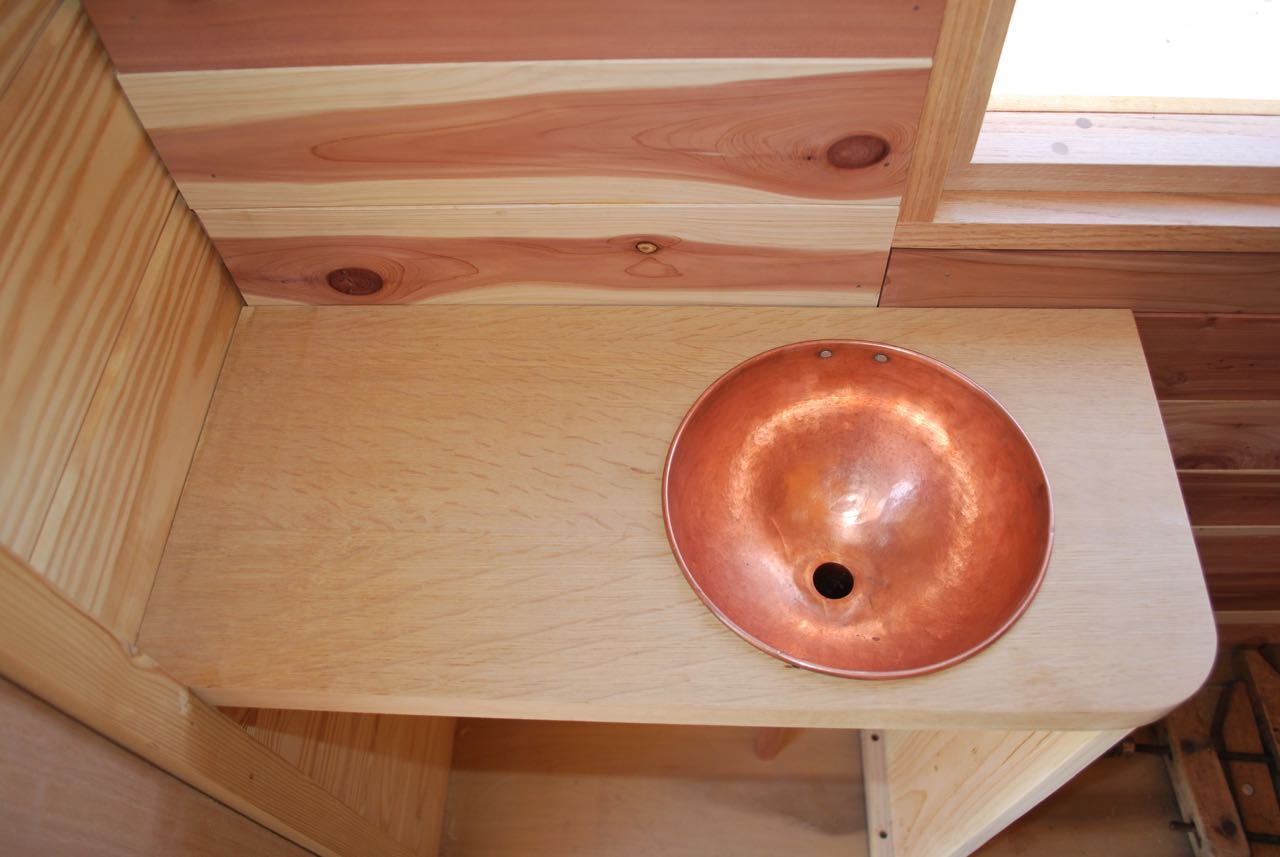
Copper mixing bowl drilled for a drain.
Beginning with a little sink re-purposed from an old copper mixing bowl set – This one was the middle size and fit the area perfectly. I’m certainly not taking credit for the idea as I took this freely from Mick’s vardo. The bowl is a perfect size for some personal hygiene, tooth-brushing, etc. while on the road while the bigger cleaning can still be done outside with the old washtubs and in the future, with an outside shower.
Drilling the hole – I was concerned about this step as there were several things that could go wrong; hole placement, dented bottom, rough fit, and so on. In the end I did my best to find the exact center with a tailor’s tape, from the outside, and marking the location with an awl. I then flipped the bowl over, set it up in a scrap board, and while holding it with my feet used a hand brace with a Forestner bit to slowly cut the hole. This worked surprisingly well and required only a little sanding and smoothing before moving on.
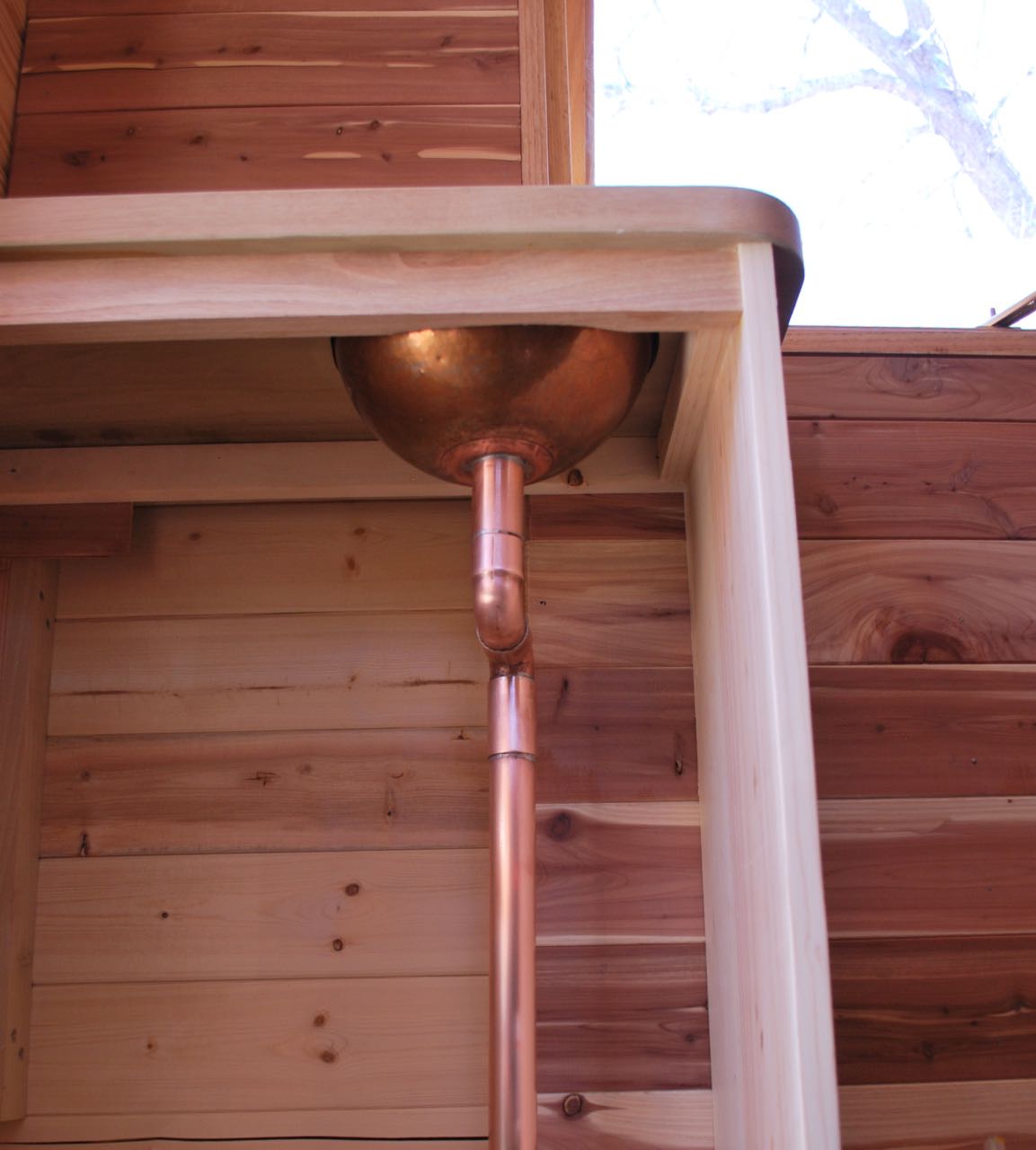
The bowl is not very heavy copper so I was concerned about the solder strength at the joint. There should not be much real strain on it but to ensure a larger surface area to sweat the solder, I sleeved the short pipe with a heavy coupling. I flowed the solder deep into the sleeve before attaching to the so they should be united forever now.
Pipe and coupling soldered in place.
Some serious tugging and testing leads me to believe this is a solid joint.
View of the plumbing from below.
A couple elbows and a short run of pipe completed the plumbing “system” and installation was a breeze. A small shelf to hold a couple Dr. Bronner’s bottles and a towel bar will be added soon to complete the set-up. The storage area to the left was sized to hold the beautiful new copper cistern during travel. The cistern will live outside in the kitchen area when encamped.
A note of caution – Although not really discussed here, the oak-framed windows are visible in some of the images. These were recently added and are glazed with Lexan for its light weight and excellent strength. Keeping the weight low is still a major priority, even in the addition and, if you are building something like this, remember: EVERY SINGLE POUND COUNTS! Fasteners, glass, hardware, accoutrements; they all add up and will be paid for in the final weight. If I could build everything with oak and walnut and hickory for durability, I would. However, the weight will add danger in towing, lower the fuel efficiency and have a cumulative effect on the overall structure.
Looking down the drain.
The sink was fitted into place and a outflow pipe seated in the hole drilled by the same Forestner bit used in the bowl. This counter is a re-purposed old office desk top from the 1930s or 40s that I’ve had for many years. It is a white oak laminate over a red-oak core (when things were built to last). A couple passes through the planer yielded a beautiful and sturdy surface to work with. The rest of the desk top was turned into the large counter on the starboard side that will be included in the next post.
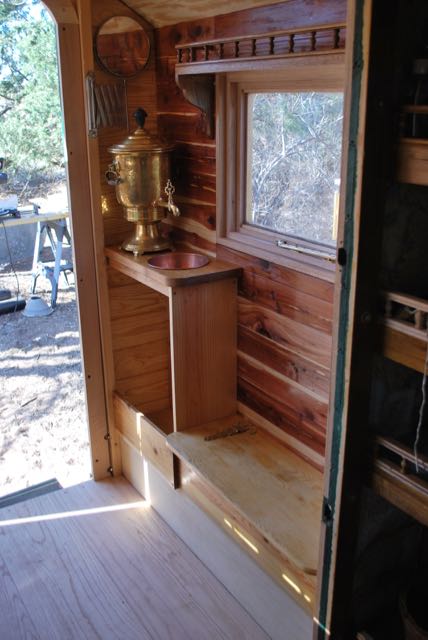
The Samovar in position for washing and the shaving mirror in it’s new place.
This old Samovar was a lucky find for us and fits the location perfectly. It’s high pedestal provides clearance that would otherwise need to be created with some sort of shelf. Otherwise, it’s simply a beautiful and functional piece.
The new bench and a smattering of varnish.
The next step was to create a small bench with the idea that this would give room when two or more people were inside as the floor space is limited in the main cabin. This area will serve as something of a mud room for the rest of wagon. The hinges were an Ebay find of solid brass under a hundred or more years of varnish and tarnish. I think Stacey really enjoyed making these shine again. This wood is some very solid pine reclaimed from an antique child’s desk and again, a planer made short work of cleaning it up for use.
Side bench.
I would have preferred the seat to be a little deeper for comfort but didn’t want to interfere with the traffic-way through the door. Nobody wants a shin-buster in such a small space.
There cannot be enough storage space in such a small accommodation.
The bench provides another small storage compartment for items that may need to be readily accessible; it’s not large but every bit counts.
An overview of the new area.
It’s always difficult to get a clear picture of arrangements in such a small space but this shot from the main cabin gives a general impression of the area and the relative size the new window.
For Part 1 of the rebuild/addition then CLICK HERE.
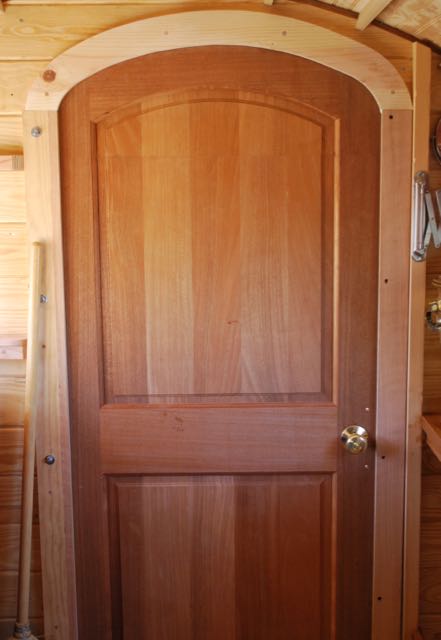
Every home needs a door. It’s a tricky bit that must fit well, open and close easily, provide some security, and hopefully, look good doing it.
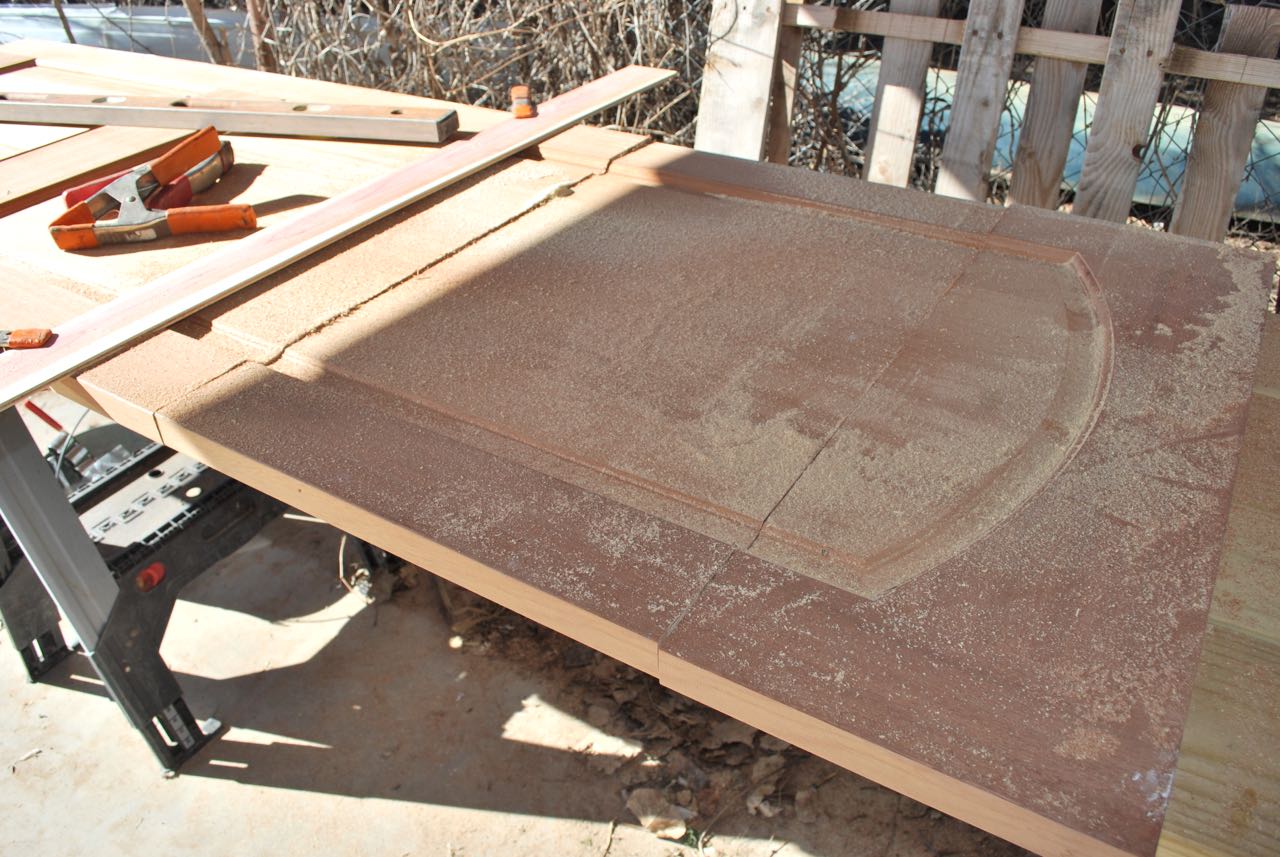
We found a mahogany, two-panel door at the Habitat Re-Store in Lubbock a couple months ago and since the price was right ($10), we bought it. It was clearly well-made and I suspect it ended up at Habitat due to a largish scratch near the bottom on one of the rails. The only down-side for me was it’s height. At 94″ (2.38 m), it was far too tall for a simple, tiny vardo. I knew I had to cut it down and was willing to risk the $10 as it went to a good cause either way. I suspected the panels were solid but, as is usual with this type of door, the rails and styles would be laminate over pine (or similar). I had not initially considered a professionally made door but the final selling point was the nice arch-shape to the top of the upper panel. It was an arc that I could match when came to finishing the door.
Some stressful cutting; 20 inches removed.
The circular saw seemed the obvious choice for a long, straight cut like this so I set up a board as a guide and went at it, taking a full 20 inches out of the middle.
Matching the glue surface.
The top was then folded down for planing to get a precise fit for gluing surface. This part took a lot of fidgeting and tweaking to get it correct over the entire run, but I achieved it in the end with only a little frustration and some muttering.
Clamping it back together.
To hold it all together, I decided to use polyurethane Gorilla Glue. I don’t use this for much but it can make an extremely strong and waterproof bond. A couple very long screw completed the hillbilly engineering and I was confident with the result. With the loss of 20 inches from the middle, the grain no longer lined up perfectly, but at a short distance, it isn’t very noticeable. Hey, it’s a $10 solid mahogany door after all. Talk about some good and frugal recycling.
Top arc is cut and the glue line looks pretty clear here. It’s less noticeable in real life and will be less so as the door darkens with age.
I cut the top of the door to match the arc of the inset panel and I think it’s a great match for the curves of the wagon. But now, it came down to making a door frame, after the fact, to match the new door shape, compound arc and all.
Square hole, rounded door. A scrap of wood was secured to hold the door in position while fitting and marking for the frame.
Obviously, the hole for the frame was the next step; requiring another stressful free-hand cutting job.
Matching the arc in the opening. There is hope for the new door.
Cutting and sanding complete, it was time to build up the frame from oak to provide stiffness and stops to seal the interior. Fortunately, outside of a couple fierce storms, the weather has been extremely clement this winter, making for good working conditions.
Mortising for the hinge.A smattering of new and old hardware.
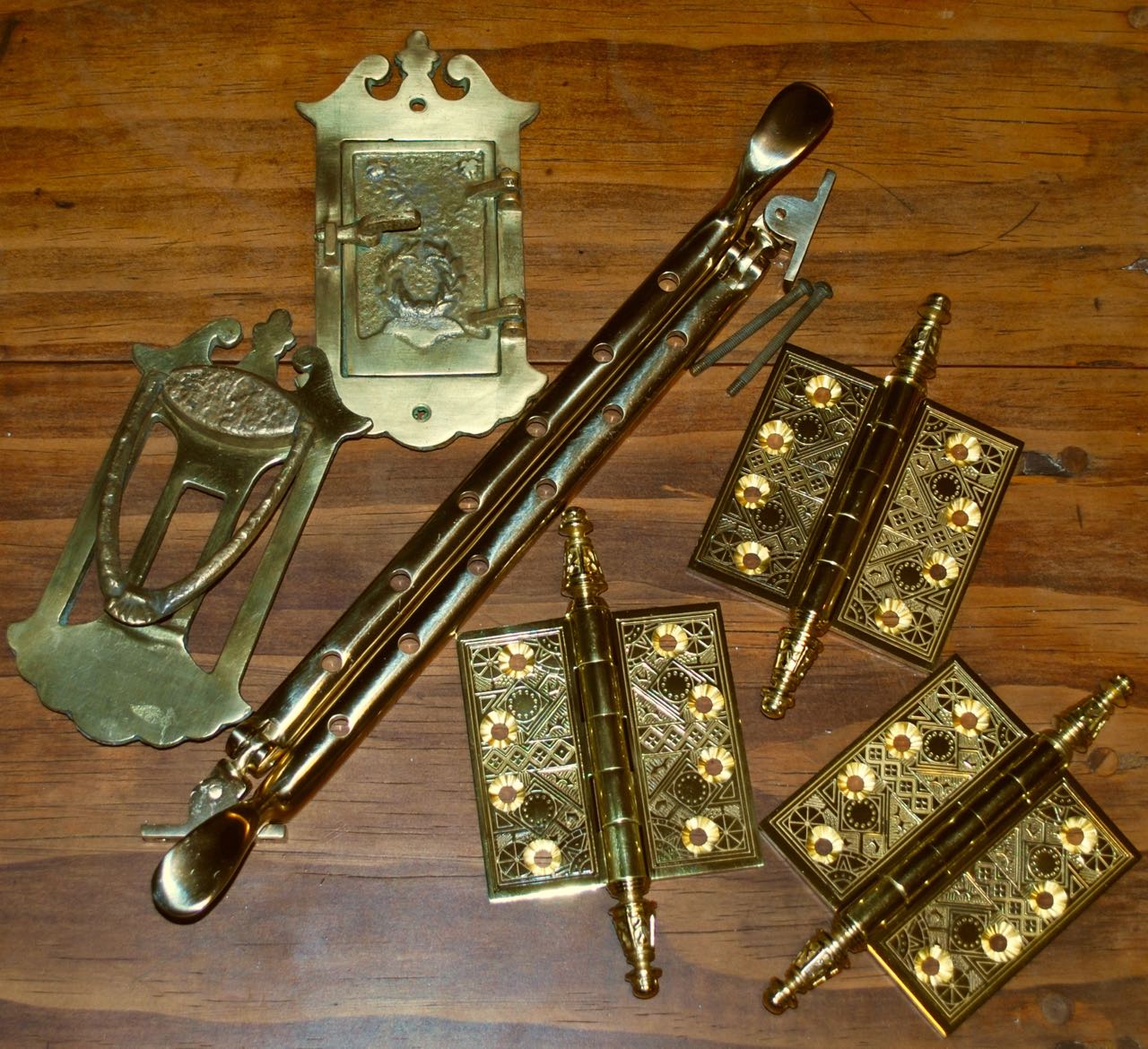
I both got lucky and splurged a bit on new hardware. The hinges are real beauties and very sturdily built. There is no perceptible play in them whatsoever and they operate very smoothly. I went with a 19th century Eastlake pattern from House of Antique Hardware in Portland, Oregon. Great stuff, great service, just too much to choose from.
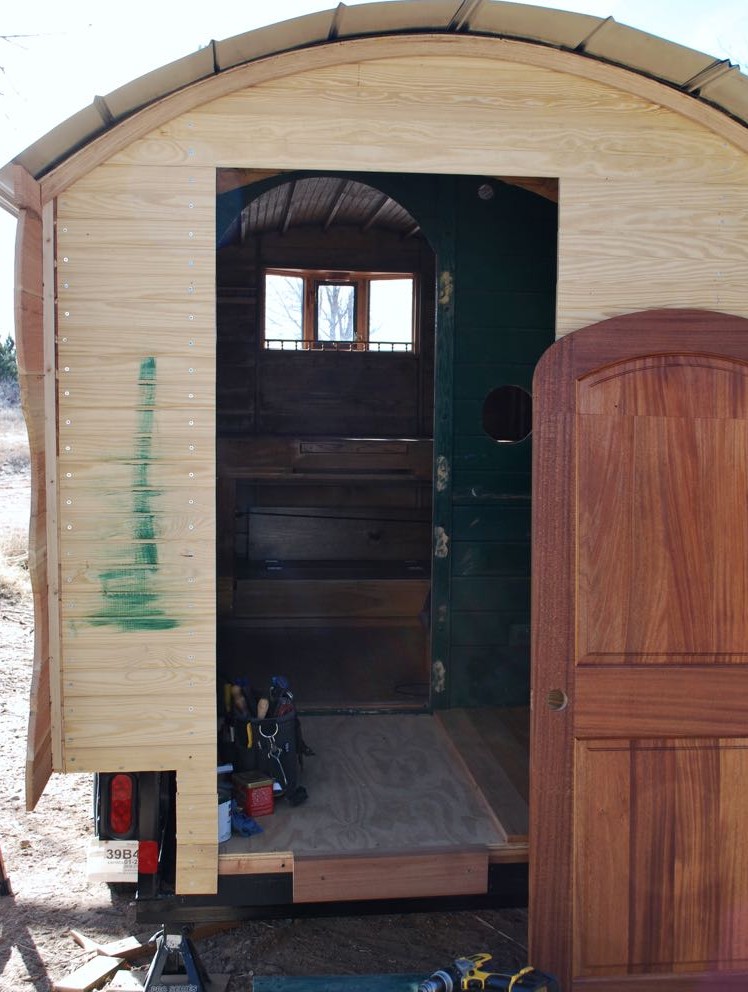
The door is nearly fitted into it’s final position in this photo. High quality hinges not only look nice but function so much better than the cheap, temporary ones they replaced.
I’ll admit that this tricky bit of framing isn’t perfect but is far better than I could have hoped for and suits us fine. A small speakeasy grill will complete the door and even serve as a small vent when necessary.
Eastlake style. Notice the beauty of the natural mahogany next to the oak.Test-fitting the new hinge mortises. I just couldn’t pass these beauties up. Still some finishing work to be done on the door but without an indoor shop, something had to be in place.
There are lots of small steps that still need to happen but at least there a door in the hole.
Piecing together the door jamb and frame.
There is a lot more to report and I’ll get it posted as soon as I can. Great things are afoot and I can even see a distant light at the end of the tunnel.
For Part 1 of the rebuild/addition then CLICK HERE.
I saw this on Tumblr and absolutely couldn’t pass it up. All I can find about this image is that it comes from the famous Farm Security Administration photos documenting the depression.
October 1937. “Old school bus. Williams County, North Dakota.” Medium-format negative by Russell Lee for the Farm Security Administration.
This appears to have started life as another wagon, maybe even a delivery van or bus but has been repaired beyond recognition. I did a reverse image lookup and found a larger version (shown here). Comments on THIS PAGE indicates it started as a Studebaker School Bus but was probably converted into a dwelling.
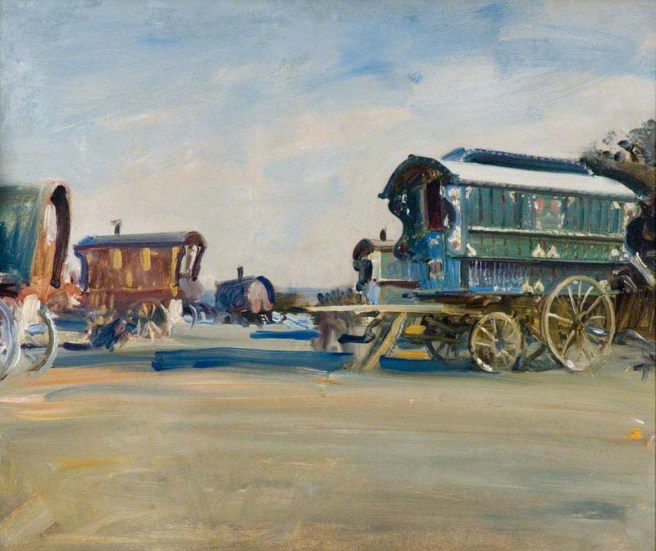
Copyright The Munnings Collection at The Sir Alfred Munnings Art Museum.
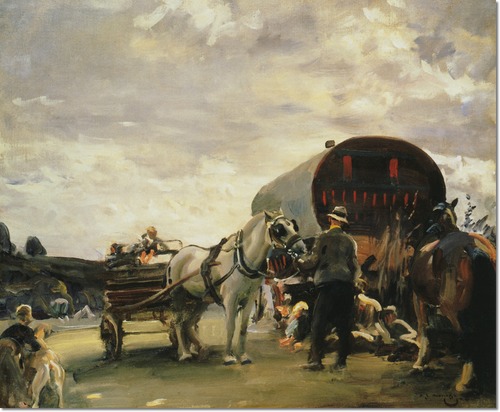
Here are a couple final Alfred Munnings images of Romani caravans in an English countryside. As a keen observer, he definitely caught the important details of each type of caravan and the essentials of camp life. The watercolor above is somewhat unusual for Munnings as it shows no animals, people, or campfire.
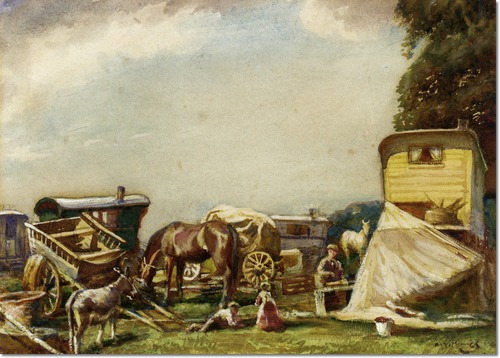
Alfred Munnings.
Above is a rarely shown rounded square-top among other carts and caravans with livestock milling about. The variety detailed in these historic images should be helpful for those desiring to design and build a similar living accommodation. The previous post gave a glimpse of Laura Knight’s work on the subject and her subjects are remarkably detailed and informative.
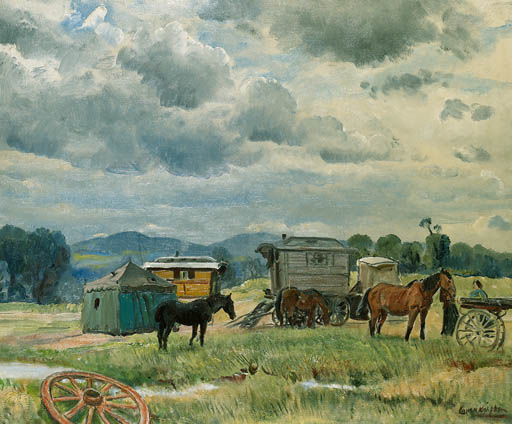
Gypsy Camp, ca 1938, Dame Laura Knight.
This is one of my favorite scenes of a camp in the countryside; two beautiful ledge wagons and a marquis tent in a field. I could picture this in a high parkland of the Rocky Mountains. Many people don’t know that the outlier tent, awnings, and tarps are almost ubiquitous with the old caravans. This allows for a very flexible and expandable living arrangement or a sheltered kitchen area.
Young Gypsies 1937, Dame Laura Knight.
If you look closely at the sketch above, you can see that this is the same encampment from another angle, focusing on the kids at play. It looks like a fine way to grow up.
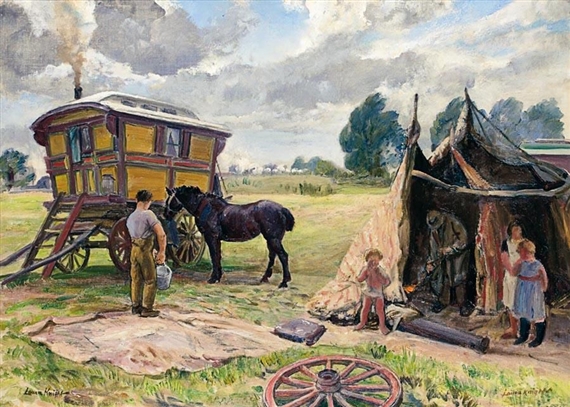
Gypsy Wagon and Tent, Dame Laura Knight, 1962.
And finally, another favorite of mine. I suspect it’s the same little yellow wagon next to the sketchiest bender tent ever. Probably a makeshift shelter for work or cooking. A wagon wheel in the foreground seems to await repair while the kids look on. Note the size of these caravans relative to today’s “needs” and remember that whole families lived and were raised this way.
If you missed the previous post about historic caravans in art go HERE or check out a whole page of images I have curated HERE.
These images might whet the appetite for summer days, picnics, an caravanning off into the great unknown; or it might just be a bunch of pretty pictures if the former isn’t your cup of tea. Anyway, these are generally labelled and classed as Gypsy images although we know that this is often seen as an offensive word to many Romani (Roma, Romany, etc.), I don’t think it was intended this way in many cases. For that matter, when not applied to an actual people, the word gets thrown around in art, aesthetic style, dance, music, and many other ways. I have only known a few “Gypsies” in my lifetime and that was the term used; maybe out of simplicity, maybe just as resignation to the common language. But enough of this digression, enjoy the paintings. There will be more to come.
Dame Laura Knight, Gypsy Caravans, 1935. LONDON.- Trinity House.
“Knight … bucked trends through depicting liminal sites, such as circuses and gypsy settlements, from the very beginning of her career. An example of this is her delightful work Gypsy Caravans (1935).”
The caravans depicted above are the Rolls-Royce’s of their day; highly ornamented Reading Wagons with mollycrofts, awnings, windows, and fine paint work. They would catch they eye of any artist. I am particularly fond of the domestic scene around the hearth; laundry being done and hung out to dry in the background.
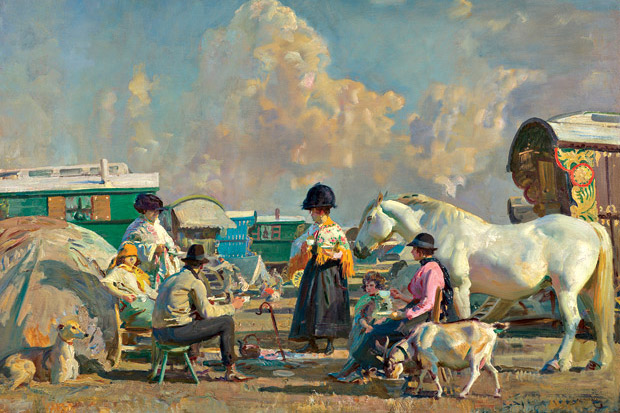
The paintings below are by Sir Alfred Munnings (1878-1959), a British artist who made many beautiful watercolor paintings of horses, encampments, and caravans. What better, more colorful, and dynamic subject matter? “Alfred Munnings’s biography states that he clearly considered himself accepted among the gypsies when he was able to persuade several of the older women to bring out the brilliant shawls, boldly coloured aprons, and flamboyant ostrich feathered hats that were special occasion wear for the women.”
Sir Alfred Munnings.
The ubiquitous fire hook and kettle rest as the true center of this scene. Everyone is done up in the Sunday best at Epsom Downs. We see all kinds of accommodations from a bender tent to various quality of living wagon. And no camp is complete without a lurcher (dog) and the milk goat.
Munnings became president of the Royal Academy and was made a Knight of the Victorian Orderwhile Dame Laura Knight (1877-1970) served on a panel of European judges for an international exhibition at the Carnegie Institute and was appointed as an official artist for the Nuremberg War trials for her technical abilities. In other words, good documentary artists.
Sir Alfred Munnings.
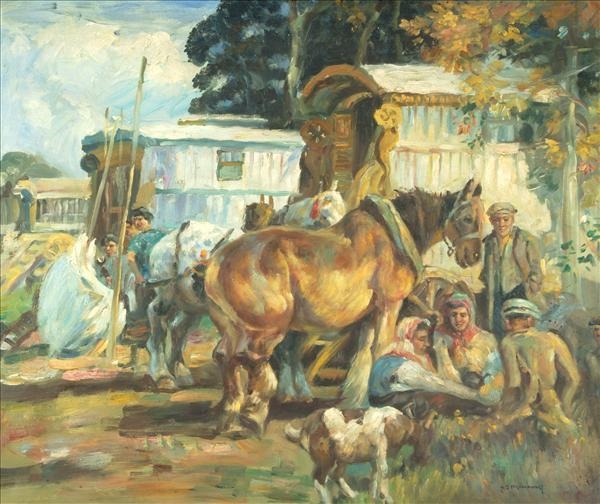
Travellers and their goat gather ’round the morning tea. I envision Mick’s garden will look like this once Jim and I get our ‘vans parked for the summer.
Gypsy Life, the hops pickers, Sir Alfred Munnings..One of my favorites. So much going on here and a great color scheme.


 A self-contained base camp in a sheep wagon provides a cozy home on the prairie.
 A beautiful culmination of cultures a innovations created this iconic American living arrangement. We can learn a lot from these designs today.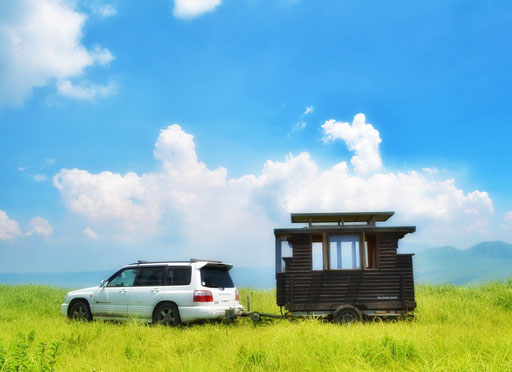


















 Preindustrial Craftsmanship