In a spin about fletch wrapping

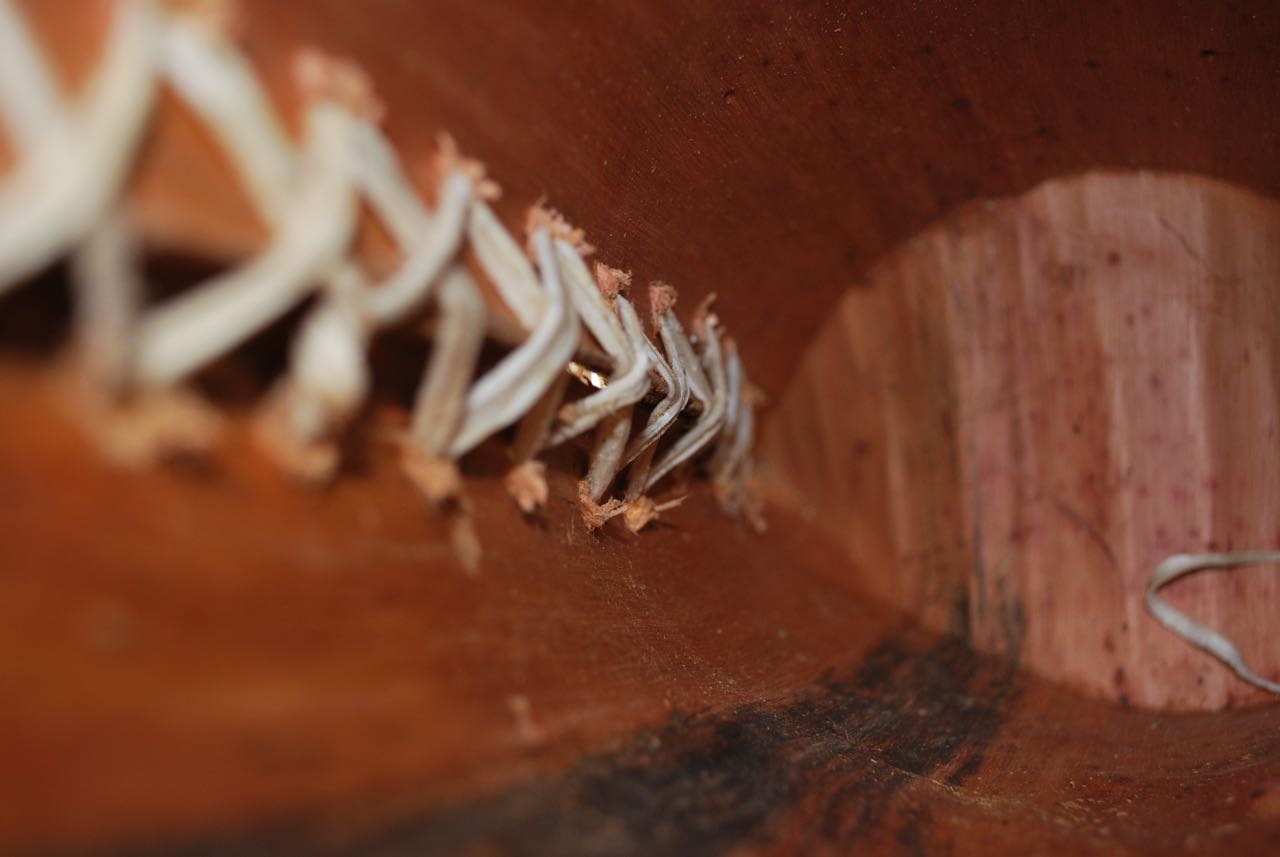
arrow_anatomyFinding “handedness” in archaeology… using the fletching of arrows as an example. As a professional archaeologist AND primitive technologist I am very skeptical when someone claims they can determine which hand of a maker is dominant on an ancient tool or weapon. One reason for the distrust is that the archaeologist may not have experienced creating the object in the same way the original maker did. I think the Leatherworking Reverend has a valid point in the following article (and not just because it affirms my own experiences).

Wayne Robinson's avatarThe Reverend's Musings

At most find-sites that have arrows there will be a non-equal mix of S- and Z-wrap on the bindings. The dig report will assert that left-handed fletchers were responsible for those that aren’t the majority direction arrow binding, probably without mentioning whether it’s the Z- or S- that they are talking about. I can’t find where it was written down the first time, but it has been repeated until it became lore. Consider the Ötze website:

According to technical archaeologist Harm Paulsen, the two arrows could not have been fashioned by the same person. The fletching shows that one was wound by a left-hander and the other by a right-hander.

and the Mary Rose Trust:

Hopkins (1998) studied 408 shafts from chest 81A2582 (O9) and recorded that, in every case, the binding thread had been wound in a clockwise direction from the tip end of the shaftment (ie, the portion of the arrow…

View original post 279 more words

Pack Basket

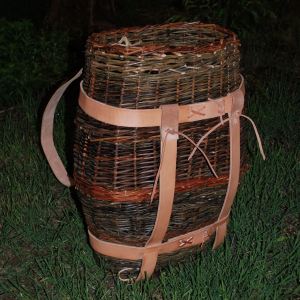
In a fit of energy I got around to putting proper and better shoulder straps on my pack basket made last summer.  The pack is willow and the leather work is approximately 10 oz. Hermann Oak harness leather.

Once the leather ages a bit they will be beautiful and rustic-looking.

Horace Kephart Days: The Revival of Classic Camping

Sounds like a great time. Wish I were there!

Survival Sherpa's avatarSurvival Sherpa

Guest post by Kevin Bowen

Horace Kephart Days: The Revival of Classic Camping - TheSurvivalSherpa.com

First off, I must thank Todd Walker for the opportunity to write this piece for his blog. He really wanted to attend Kephart Days this year but an even more important event took place the same weekend that required his attendance, the birth of a beautiful, healthy grandson. Congratulations good buddy!!!

I first met Todd online about a year or so ago and then had to chance to meet up with him and Bill Reese at one of the Workshop in the Woods classes, hosted by primitive expert/teacher/author, and all around great guy, Scott Jones. If you regularly follow Todd’s blog, you have been introduced to Scott already. Since then, I have garnered a great respect for Todd’s attitude, an affinity for his ideas and work ethic, and more than anything, a love for his friendship. It’s truly an honor to help him out…

View original post 2,589 more words

Tools of the Bowyer

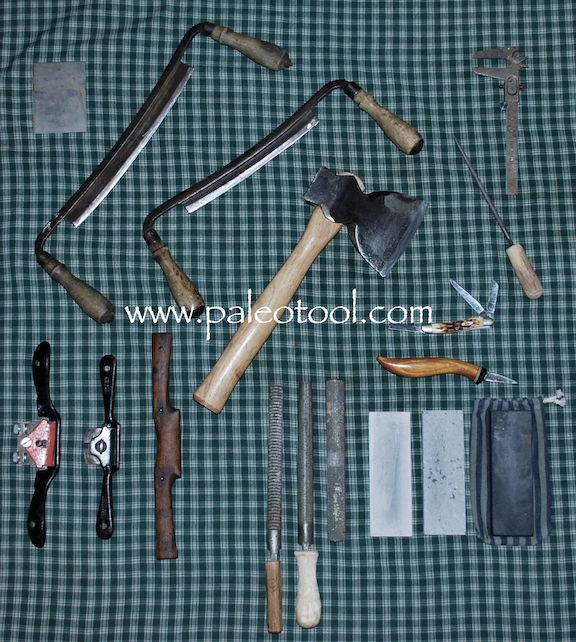
I have been working on a bow-making tutorial for quite a long time now.  Trying to be as explicit as possible while not dumbing everything down is a tricky narrative to follow.  Just gathering the appropriate images of the process is time-consuming and difficult but truly, a good image is worth a thousand words.

bowyertools
The basic hand tools used on bow making.


Making Connections with Kindred Spirits

The Internet is neither good nor bad.  It is just a repository of information like a giant disorganized library that is constantly in flux.  Like a library, it is a tool and like a library it can be a meeting place.  Probably the two best things about having an Internet presence is the vast amount of knowledge that can be shared or learned and the bringing together of like-minded individuals that would have never met otherwise.  I have had meaningful discussions and comments from all over the world about this oddball and eclectic blog and I would like to share a recent email of a connection made through the website from Rob Hanson of Evenfall Studios.  This, for me, sums up the heart of the message; “It makes me feel less solitary, as we are not the most common demographic these days.”

Hi George,

I enjoy your blog, and your approach to making and living. Thanks for sharing it.

Dick Proenekke lived in remote Alaska and made his cabin at Twin Lakes as well as much of whatever else he needed with tools that didn’t require power. Sure it was out of necessity, but I like that he didn’t make a big deal out of it. He just did what he needed to live, knowing the season to complete this was short. Dick was maybe somewhat of an uncommon adventurer in the late 1960’s, but 75 years prior, he would have been much more a common man in the western states.  Hours of our day in pre-industrial time were spent like Mr. Proenneke’s, assuring we had our life in order. Prepared for living life as it comes. It was everyone’s daily do.

I make hand tools for a living. I make pre-industrial tools, sort of. Probably developed in the early period of sloyd. Shooting boards, sawing and drilling tools, sharpening tools. I don’t do this because I intend to be pre-industrial, I do it because the premise of these tools is still amongst a “best method” approach to making things. Industrialization didn’t necessarily improve the possible outcomes, and so the relevance of these tools today is still alive.

I sort of got lucky. My Grandparents on both sides of the family were born very early in the 20th century and brought up on dairy farms. This was in the Pacific NW about 30 years after settling there began, so there was a lot of frontier knowledge in both sides of the family. Everything was still really old school. One great granddad had been in furniture making before coming to the west coast. He taught my granddad a lot that was passed on. This granddad had only daughters, so he waited a while longer for grandsons. Anyway, both grandfathers and dad were always independent makers, and I got a front row seat. They were hybrid. They did use power tools too, but their original skills were hand tools, and often they would choose the hand tool over the powered one.

The thing was, it was never as much about the tools as it was about having the skill and doing a good job when you make. It was inspirational to me and eventually after other careers, I had the opportunity to be a toolmaker and I took it. As a Toolmaker, I understand that this is about tool acquisition for many of my clients – they aspire to have a working shop. My deeper hopes are always in that the tools I make inspire them to be able to make what they envision and do so more directly. It’s one thing to have a tool, and another to become skilled with using it. Then you can “see” things in your mind’s eye and just make them.

I like that you have “made” with your hands and tried it out, made adjustments and evolved what you build while using tools that are the means to the end. This is the real process behind how things evolved. People read your blog and think oh, that’s how you do that, I could do that! They begin to get a taste for what they didn’t know they could do and they like it. This is inspirational. Once you have the skills that create craftsmanship, no one can take them from you. You could parachute into anywhere and scab up tools. Tools from ordinary things. Make shelter. Fire, food. things you’ll need, all with skill because you understand how to wield the tools. This is more between the head and the hands than in the environment. I hope that makes sense.

I think you probably understand our ancestors given your profession, and I like that you have endeavored to understand them in your hands as well as your head. It’s the physical understanding that is hardest to convey. Experiential knowledge. It isn’t imparted from reading about it, you have to do, or live it. Post Industrial life has perhaps blurred this connection to our past. Your blog shows people this and how rewarding it can be to reconnect. I hear from a lot of people who want to get reconnected, and it’s an enriching endeavor.

Paleotool has shared a lot of cool philosophy and stuff.  Stuff isn’t the loss for a better word.  Stuff, as in the physical examples of all sorts of pre-industrial life, and people are trying to get their hands around it. Trying to do it. They can leave their televisions and still be able to do. You are helping people leave their couch and go “live” instead of “watch” life. It’s cool!

Not everyone can do what Dick Proenneke did, or even do what you have done and are doing, because they may be afraid, or their life path won’t currently accommodate it so completely, but they get to try a leg up. You have piqued their interests. Trying a bit on allows them to grow, and it lights them up. I lit up when I saw what you were doing too. I have a busy business, and so free time is minimal, but I do get to work with my hands in craftsman skills and do what I love, so thanks for being another who uses the skill and lives a life you can love. It makes me feel less solitary, as we are not the most common demographic these days.

If you have time and you like, my website is at www.evenfallstudios.com.  Check the menus because there is a lot there. I have a blog and an online library with old books on making from all the old craft and trade ways. If you have time, I’d love to hear back from you sometime.

Best,

Rob Hanson, Evenfall Studios
evanfallheaderHave a look at the beautiful tools at Evenfall Studios but even more importantly, don’t miss the articles or immense library of downloadable books assembled there.  Thank you Rob!

Early Style Camping Gear

Some of my camping gear mostly inspired by the period from 1745-1812, prior to major industrialization.
Some of my real-life camping gear mostly inspired by the period from 1745-1812, prior to major industrialization.

Starting in the upper left and moving more-or-less clockwise: small tomahawk, portmanteau, stoneware jug, braided buckskin cord, patch knife, buckskin bag for brass sundial compass, wool bonnet (tam o’shanter), trade bead necklace, small gourd for salt, pewter beer mug (could possibly hold water too), canteen gourd, Knife River flint blades, needle case and bone needles, strike-a-light and char-cloth box, wooden bowl and spoon, buckskin bag, bone handled eating knife, waterproofed leather bag, bark tanned belt pouch, buckskin neck bag containing spare fire kit, net shuttle holding hemp line, sewing kit in buckskin bag, wooden needle case with needles, argillite pipe with buckskin bag, fine hemp line, extra blanket pin, belt, pampooties (ghillie shoes), bamboo container containing larger bone awls and other bone tools, in the center, shoulder bag.

Bark Basket

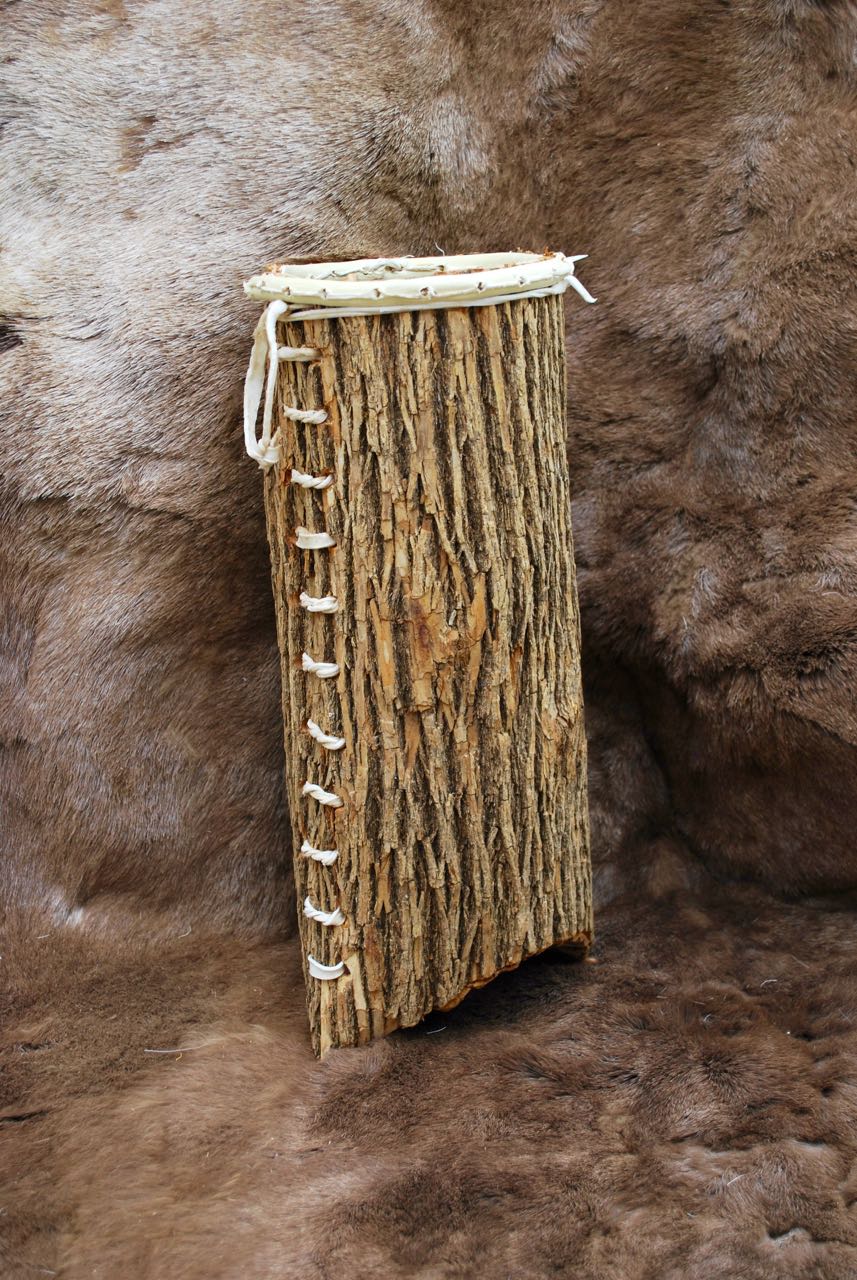
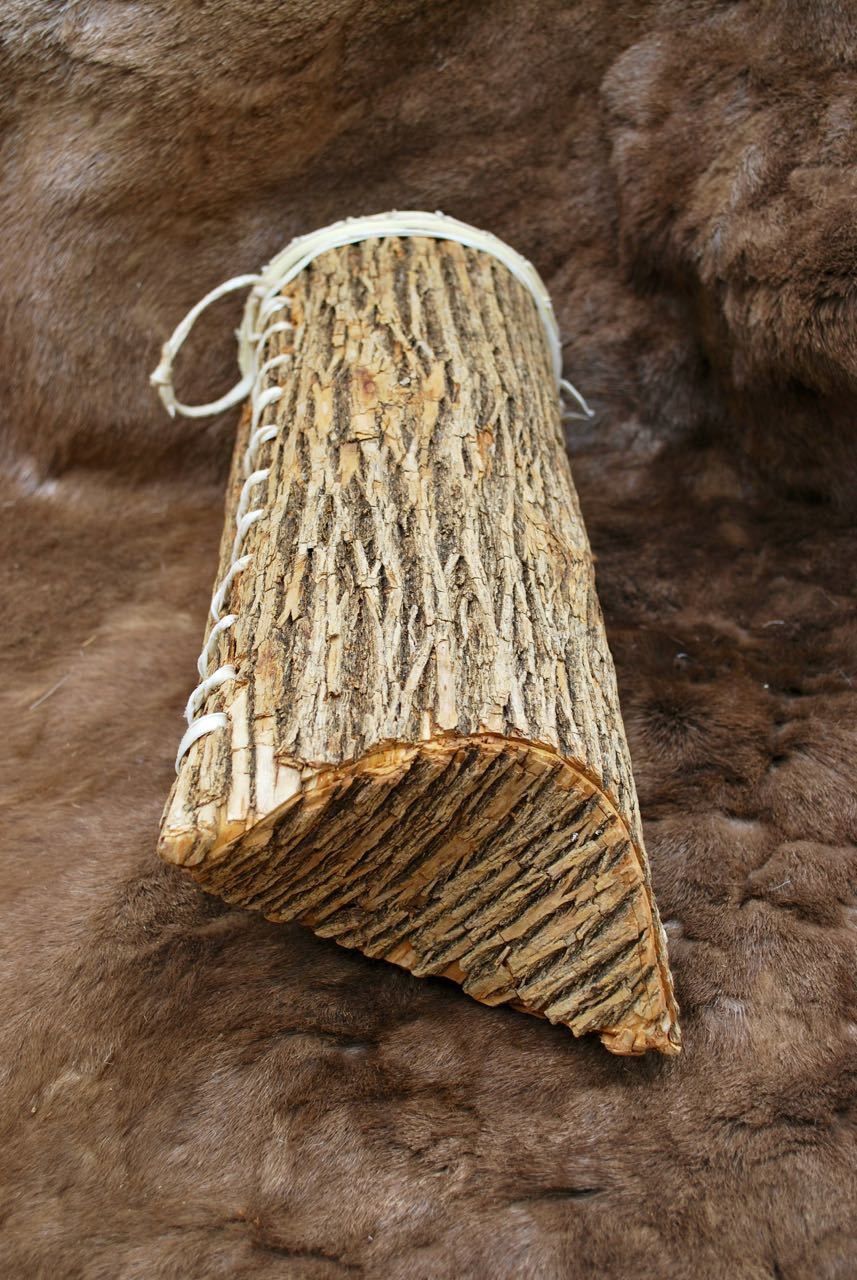
Bark - 1While sorting staves in the barn a long section of bark separated from a quartered trunk.  While this one is not from one of the usual species used for bark containers I decided to give it a try.  Bark is used as a raw material for making water resistant hats, bowls, quivers, and other containers far back into the mists of time.  From at least as far back as Mesolithic Europe to Pre-Columbian America, this type of “basket” has made it’s way into the human tool kit.  While this is not a tutorial proper, I took a few photos of the finished product.

Bark - 3The body is made from the whole bark of Osage orange (Maclura pomifera) and sewn with rawhide from deer.  The rim is constructed from a mesquite shoot split, steamed into a hoop, and sewn with rawhide.

Bark - 4It’s not perfect and probably won’t last forever as bark can be fairly brittle over a long time but will serve to hold some demonstration goodies for quite a while.

Bark - 2Have a look at a simple tutorial for a similar container by Ken Peek HERE.

Sharpening is a Simple Act

Thank you Paul Sellers for stating an obvious but nearly lost truth.  There are far too many needless and complicated gizmos, devices, and “new technologies” for a 2,500 year old task.  Clever marketers have figured out that we can blame our laziness and impatience on our tools and not ourselves.

Maybe I am speaking out of turn as my tools are always for from perfect. 

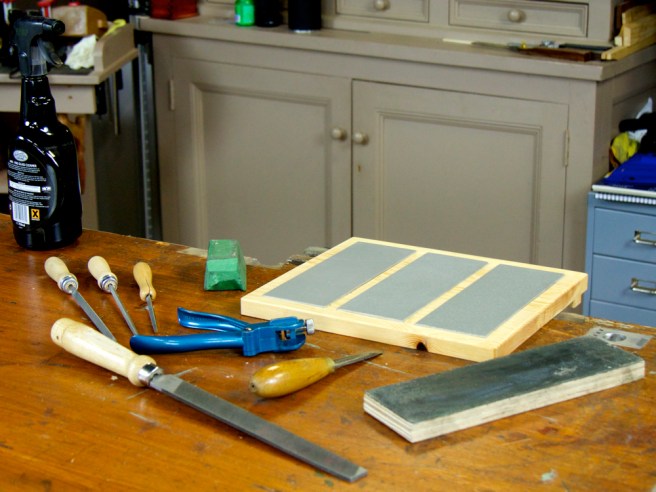
Catalogs are full of overpriced specialty devices designed to do the seemingly impossible; polish a sharp edge onto a piece of steel.  I realize now that I was very fortunate.  I learned to use a file and whetstone as a very young child.  I even learned about setting saw teeth and how to use the hard straight razor stone.  Before there were special stones to resurface a stone, we simpletons used a hard, sandy, and flat concrete surface before graduating on to sandpaper stuck to a sheet of glass.

Some of the best sharpeners I know still do virtually everything with Arkansas whetstones and some very-fine emery paper.  One thing to remember though; you have to actually do it.  If you don’t regularly keep things sharp, it only becomes more of a chore and takes more time.  I think the old idea of spending a few minutes before you begin work of sharpening and stropping is a wise idea.

If you use tools, consider a real pair of Arkansas whetstones.  Here’s a couple of sources to try:

NewAddBoone

stonelogo3In the mean time, head over to Paul Sellers’ excellent as usual blog for his take on sharpening as well.  Notice his very simple set-up.

Paul Sellers' Sharpening System.
Paul Sellers’ Sharpening System.


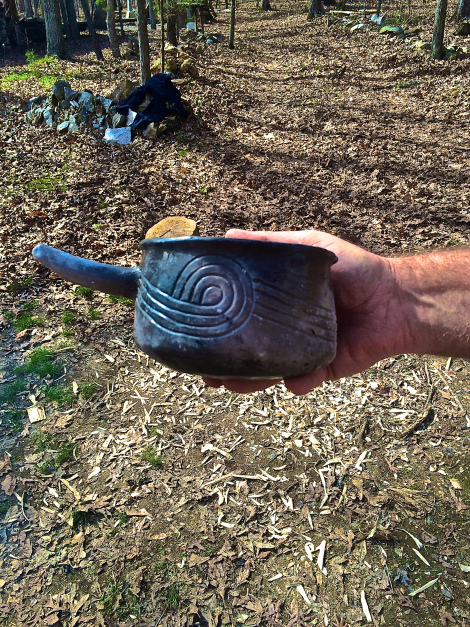
Making Containers via Primitive Process Pottery

I wanted to re-blog this excellent post about functional pottery construction from “Survival Sherpa”. I’m no great pottery maker but appreciate the craft for sure. Have a look.

img_1348 img_1419

Survival Sherpa's avatarSurvival Sherpa

by Todd Walker

Making Containers from Primitive Process Pottery - www.TheSurvivalSherpa.com

Coffee drinkers like myself usually have a favorite mug or cup. My all-time favorite “tankard” developed a crack and DRG trashed it. A sad day indeed!

My sob story may seem petty, but there’s nothing trivial about not having a way to “contain” stuff. Think of all the ways you use containers daily. Then imagine all your modern containers being gone… poof, no more. Welcome to the Stone Age!

Here’s what else disappears with your containers. Your ability to…

  • Cook stuff without skewering it on a stick
  • Collect, disinfect, transport, and drink water
  • Raise plants and livestock
  • Store food without stuffing it in an animal stomach
  • Dispose of waste
  • Personal hygiene
  • Ferment food and drink
  • Make medicinals
  • Gather food
  • Keep stuff clean
  • Organize stuff
  • etc., etc., etc….

This is why containers are king! 

After attending a local two-day primitive pottery class, my respect and appreciation for the humble container grew…

View original post 1,005 more words