
I like the closed, round toes on this one. From http://huaracheblog.wordpress.com/.
Adventures of an Imperfect Man In Search of a Handmade Life

I like the closed, round toes on this one. From http://huaracheblog.wordpress.com/.
Handmade and bespoke shoes have become an interest of mine over the years. Starting with moccasins and graduating to other variation led me to the realization that even with a great deal of leather and sewing experience, shoemaking is a complex and underestimated art in our culture. Of course, cheap shoes are readily available to just about any income level in the industrial world. But if you have moral objections to the devastating effects corporate shoe companies (not to mention the clothing industry in general) and like the idea of being able to provide well made shoes for yourself, there is at least some information available. On that note, I am glad to keep finding more and more craftsmen making handmade shoes available. Unfortuntely, many are prohibitively expensive for the average worker but hopefully more will become available as demand calls (or the international infrastructure collapses from its own greed).
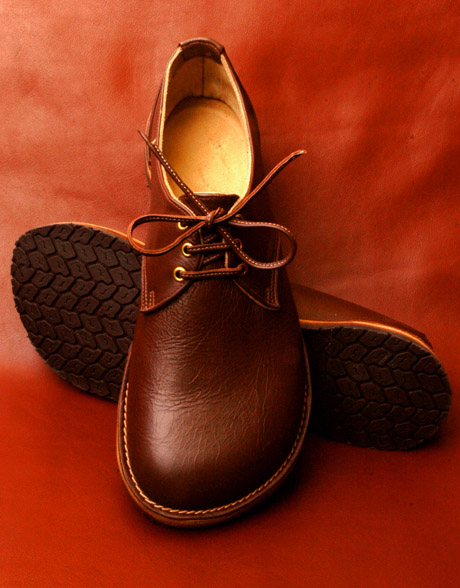

This pair is made by a shoemaker in Mid Wales. I have no idea of cost but all of her information is on her website. The gallery shoes a good variety of stitch-down type shoes and an interesting design she calls a shandal. Click the image to navigate to her site in a new tab or window.
 If you prefer more historical or high end classic designs Sarah Juniper makes everything from Roman Period through modern shoes and boots. There are some great looking lasted boots and other fine shoes here. Click around her website to find lots of good stuff. I would love to learn from a master like Ms. Juniper.
 NP Historical Shoes: This couple makes beautiful historic shoes for reenactors in Europe. Awesome work and very inspiring.
I think a look at simpler, pre-industrial shoes can help us who are struggling to relearn this uncommon art.

The left, as it is, finished. A great learning project. The pattern making is slowly improving.
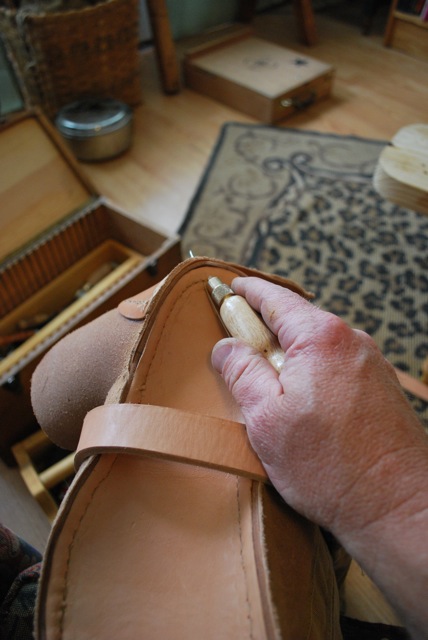
Stitching down the sole.

Turning the upper.

Drying before finishing the upper. Next will be attaching the outer sole and heel.
Coming soon…
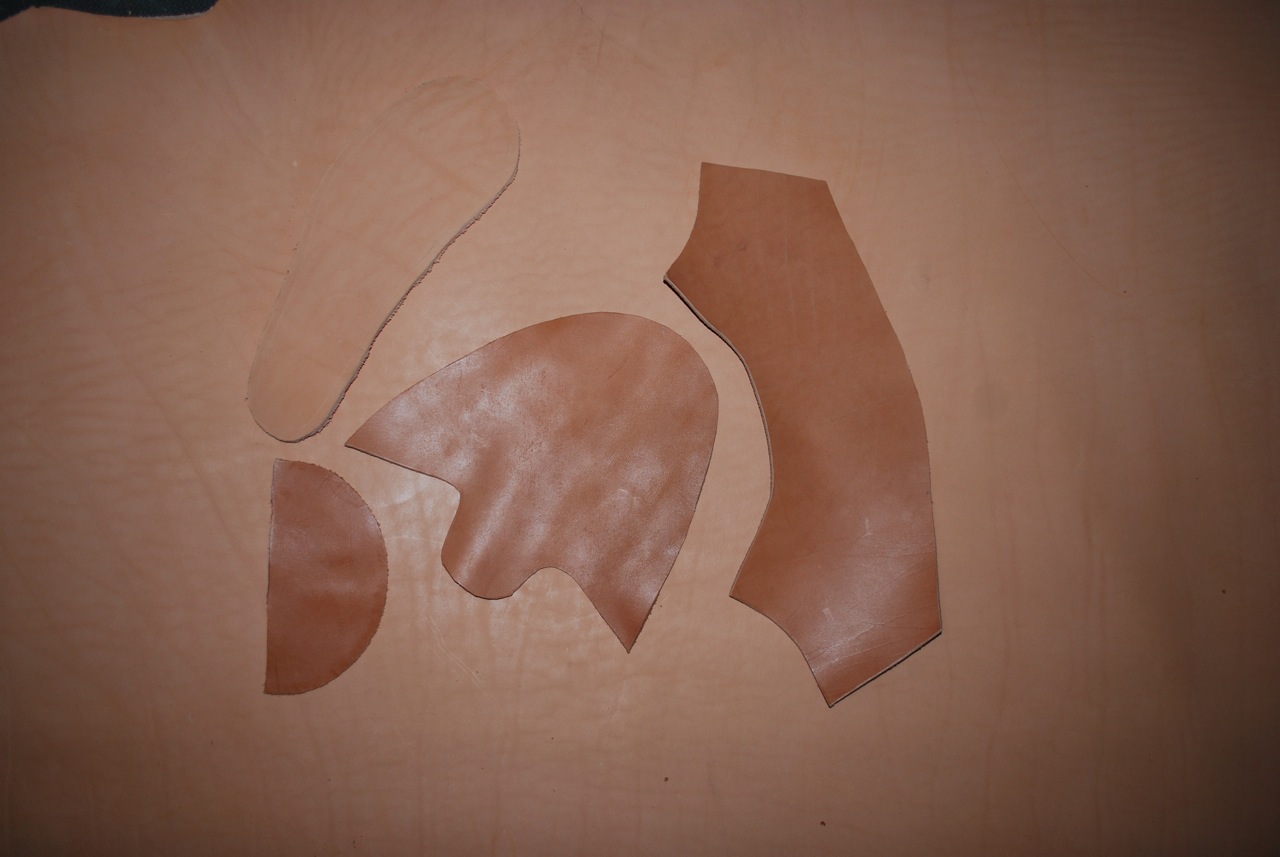 Too busy sewing to post!
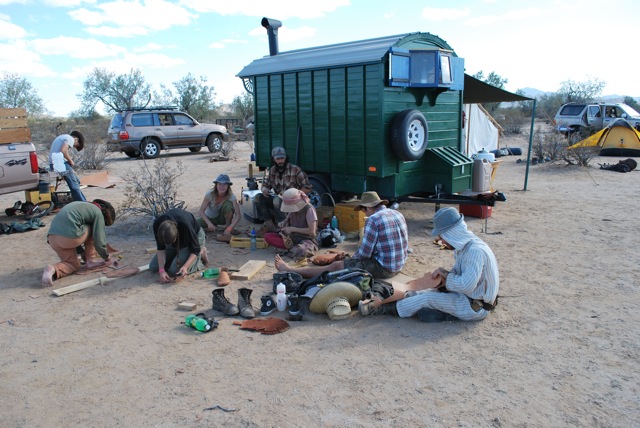
A few photos of the vardo in the desert at this year’s Winter Count. Along side the usual survival skills, I also taught another simple shoe class.
 Click the photo to see more uploaded images of the little vardo in action.
This ghillie shoe class was busy again and I think we had about 16 participants. It’s always more work for the students than I think it will be as many have not had much experience working and cutting leather. I think they all came out great though.

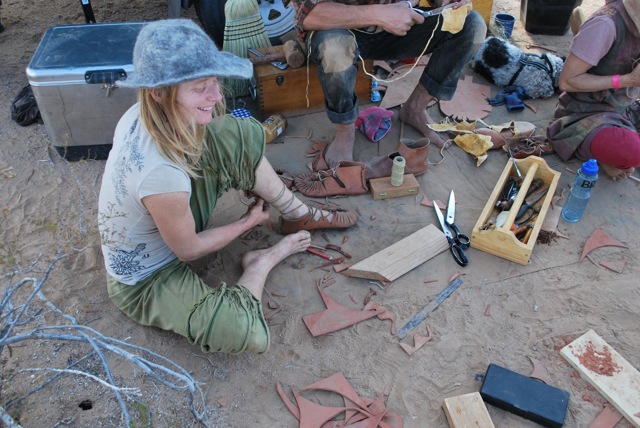
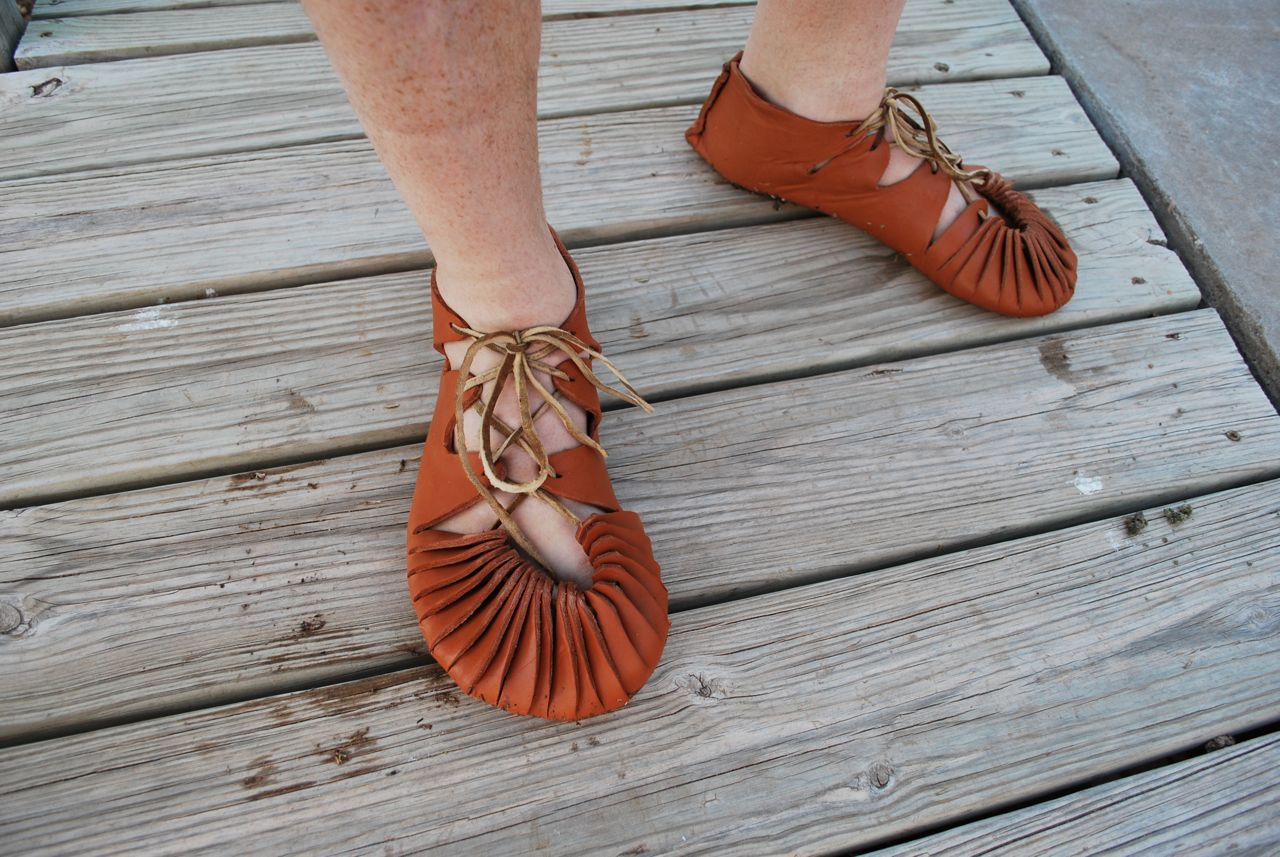
Some new yucca fiber sandals. One narrow leaf yucca, after processing, will easily yield one large pair of sandals and straps. Ethnographically and archaeologically, we know this type was worn in northern Mexico, the American southwest, and California. After wearing these and the plaited style, I think the loose fiber provides more padding for rough terrain and better protection against most thorns.
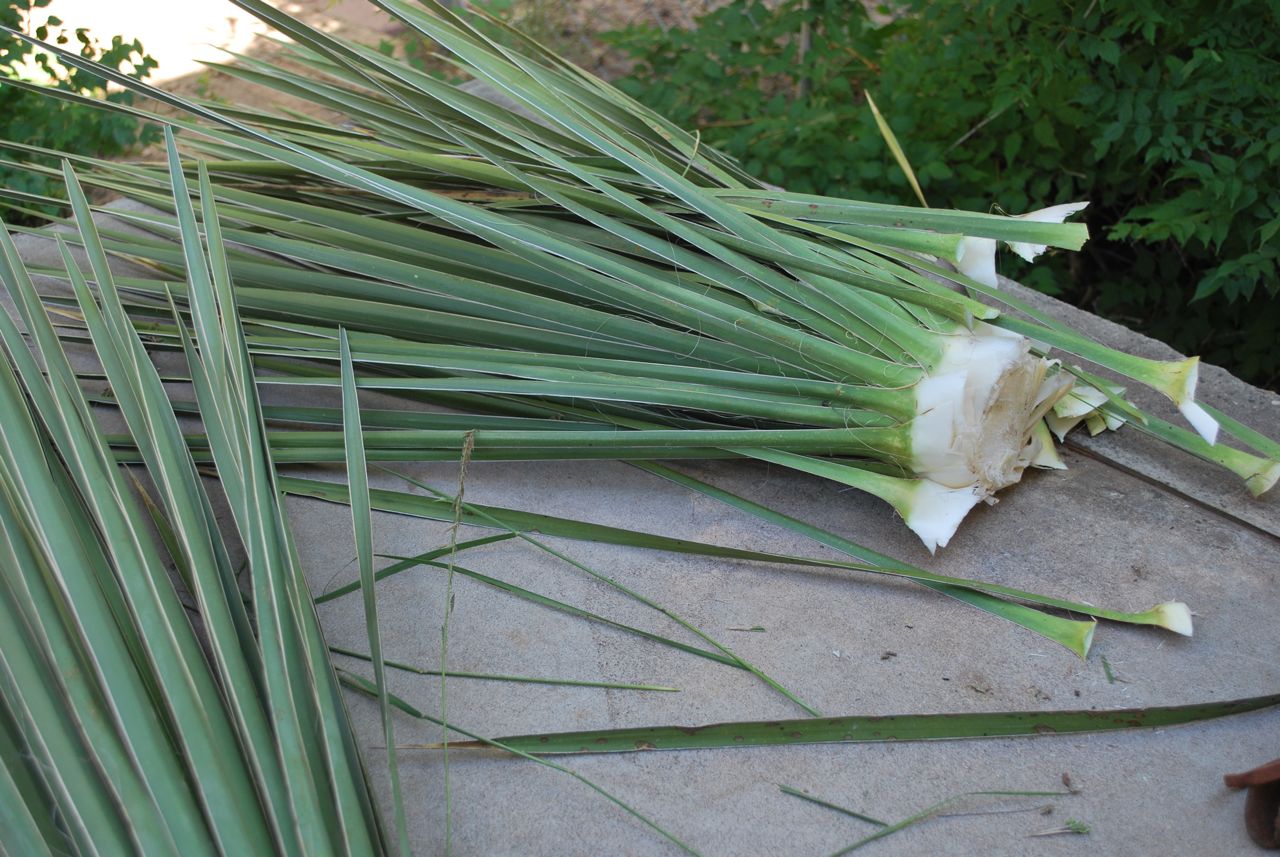


I still prefer my bison rawhide sandals for running and walking. They provide more protection against sharp rocks and thorns. However, the yucca are extremely quiet, especially on hard ground, and much easier to procure than bison.
This is a link to other shoes and sandals I have experimented with. I will get more up in time.
I am all about the DIY. After making a pair of sandals for Winter Count this year (I arrived with only work boots) I got re-interested in making shoes. I have made many moccasins for woods walking, especially when I was into mountain man and F & I re-enactment and decided to make some new ghillies. I like these because there is almost no sewing and I think they are cool. Much of Europe wore a variation of this theme for millenia. I then took it as a veritable sign when I saw this on the Instructables web page: http://www.instructables.com/id/Viking_shoes/. Even though these are listed as Viking style, I think they are commonly associated with their Celtic cousins in Scotland, Wales, and Ireland. And they are very nearly the same as Roman carbatina. Essentially, a basic European shoe.
I made a set of these many years ago with a little instruction from an acquaintance and they were great. These new ones are a little more thought out and I will likely make a better pair based on what I learned here. Click photos for larger picture.




 Preindustrial Craftsmanship