Looking Back at the Horse

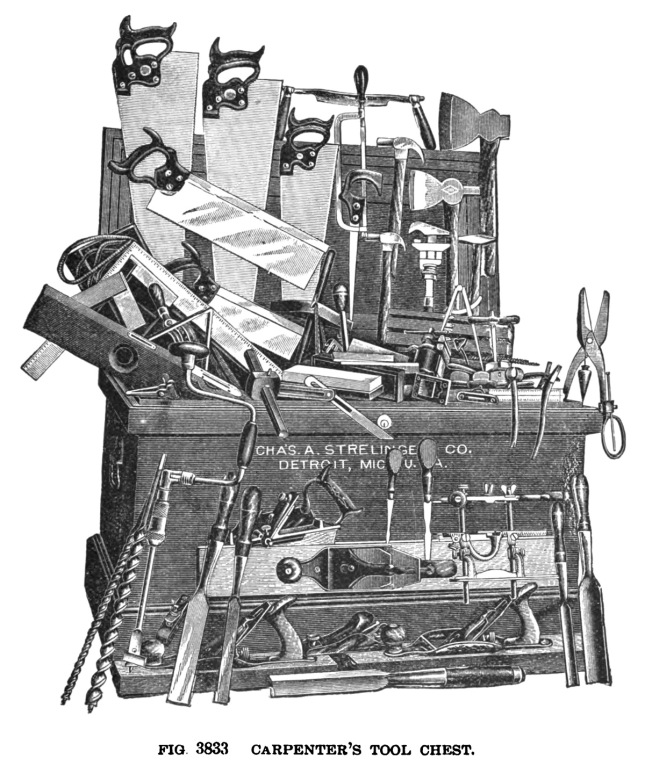
Tools and work benches always create lots of discussion and bring out opinions.  I am re-posting a couple pictures that feature my bodger horse as it has created a few new comments.  This horse has been slightly modified over the years but is essentially the same as when it was made 5 or 6 years ago.  For most of what I do, this tool is just about perfect.  Comments are always welcome.

h1When I built this one, I had a full-size, long-bed truck.  Now, driving a smaller vehicle, I am considering re-engineering the whole thing to break down for packing.  If I stayed in one place regularly, this wouldn’t be a problem but I use it for teaching and demonstrations and is a little gangly to pack as is.  She traveled over 4000 miles with me this summer to a reenactment/demonstration and helped me teach a small woodworking class for a week.

h2Even though this one is just fine and went together quickly, the next time I build one I intend to fancy it up with some fancy joinery.

DSC_0126A work horse like this becomes the center of the portable workshop and can serve many purposes.

bodger15As I make modifications, I will update on this page as information on shaving horses is limited, even in the age of the internet.

 

Save

Occupation, Wood Turner ca. 1425

75-Amb-2-317-18-v.tifStill gathering old images of tools, occupations, and craftsmen.  Now I just need time to edit and post them in a sensible way.  To kick off this series, it’s a wood turner and his lathe from the early 15th century (German).  I think the artist may have neglected to show the tool rest here.

This one goes out to Kiko, Mick, and Veloja for their recent enthusiasm for the foot-powered lathe.

Willow Pack Baskets!

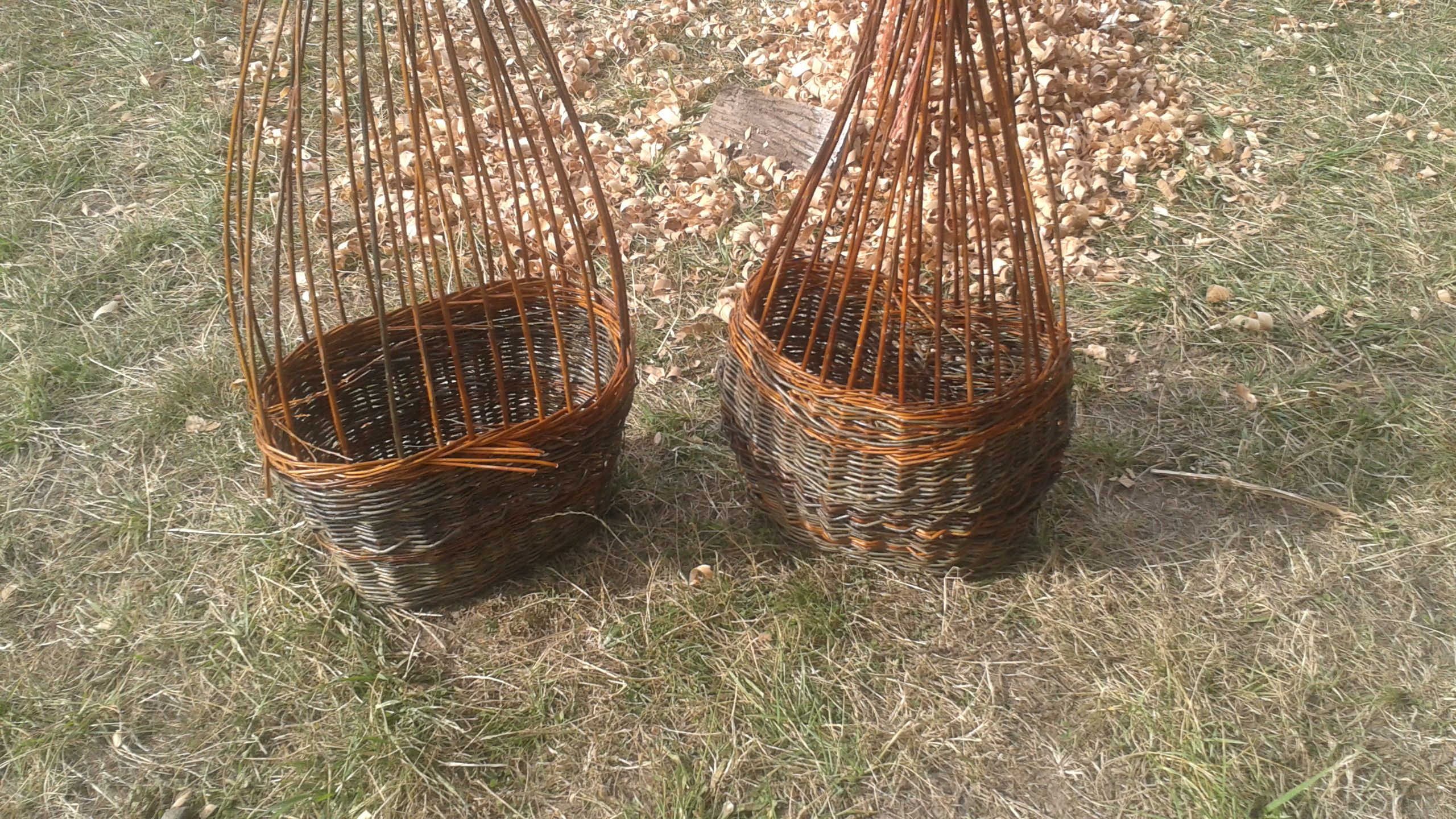
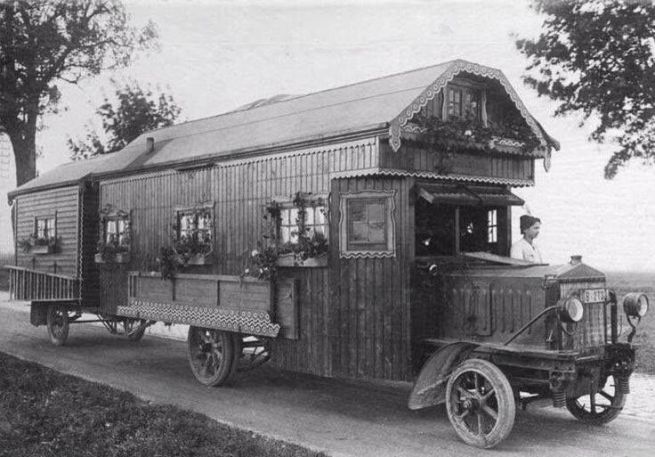
Bridgette and I worked on some willow basketry last week at the Echoes in Time gathering in Champoeg, Oregon.  We spent the week with our friend Mick and his family with his fantastic vardo.

20140720_083456

I have wanted a new pack basket for quite a while and the great Oregon basketmakers provided some excellent materials for the class.  I only had eight students for the frame-saw class I was teaching so I was able to work in some baskets around the teaching schedule.  I would have loved to document the whole process but I am such a novice that it would have taken three times as long and disrupted the flow of the basket in ways I wasn’t prepared to deal with.

20140721_175636Here is the first round of basket making including the base, addition of spokes, and working with weavers.  The various colors come from the different willows harvested at different times.  For those truly interested in the weave, this basket consists primarily of wales and rands with the addition of a rim and a foot to protect the bottom.

PackBasketsI’ve made a few other basketry projects under good instructors but this is, by far, my biggest effort to date.  I really hope to dive into this craft more deeply sometime in the future.  Enough for now, back to Making stuff (right after my nap).

Did Eremotherium laurillardi Supplement its Diet with Sea Weed?

Hmm. I like. Our Sloths are quite a mystery to me.

markgelbart's avatarGeorgiaBeforePeople

Eremotherium laurillardi, a species of giant ground sloth, apparently was abundant along the Georgia coast during the Sangamonian Interglacial (~132,000 BP-~118,000 BP).  Fossils of this species have been found at 7 of the 9 known coastal fossil sites of Pleistocene Age. It was really a spectacular beast growing as large as 18 feet long and weighing 6000 pounds.  When it sat on its haunches, it was even taller than a mammoth.  It disappeared from the state when the climate turned colder, probably some time between ~75,000 BP-~30,000 BP.  The fossil record is too incomplete to determine exactly when this species succombed to the cold in this region.  Eremotherium continued to exist in South America until the end of the Pleistocene.  Two other species of ground sloths  were better adapted to the cold and likely lived in Georgia as recently as 11,000 BP.  Jefferson’s ground sloth (Megalonyx jeffersonii) and Harlan’s…

View original post 489 more words

Travel In Your Home

Love it. What a cool design.

TidiousTed's avatarRetrorambling


867_travel3

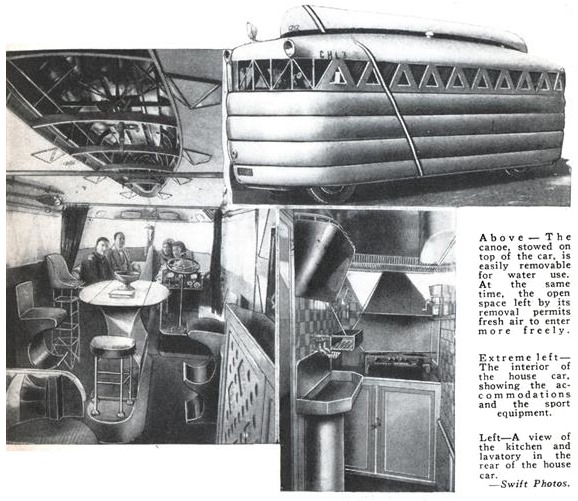
The French inventor, Loubet, who holds a record number of patents on practical sporting and traveling equipment, has recently demonstrated the latest of his constructions for the benefit of people who like to travel and take their homes with them.

867_travel2
Built along airplane construction principles, on the chassis of a light auto truck, the frame is very light, containing thousands of small pieces of wood glued and nailed together, then covered with panelling, canvas and paint. The home is streamlined and houses four persons easily with all accommodations. The car is 24 feet long and weighs about 3,500 lbs. At the top of the page is a general view of the car home; on its top is a canoe (full size), which is easily removed for use.

The photo at the left of the page was taken from the kitchen; in the center, where the men are sitting, are two…

View original post 44 more words