Here is a great little instruction set on how to make a European Medieval-style belt bag. You see these in paintings and illustrations on just about every traveler. Not only will you come out with a nice bag but it is a fine and simple introduction into leather working and sewing. All makers need to start somewhere and this might be the right project.
During the Middle Age was common carrying small items like coins, keys, inside pouches or purses attached to the belt.
There are many archaeological and iconographical documents, you can search for your favorite patterns, but there is a model that in my opinion, is one of the best for a bushcrafter.
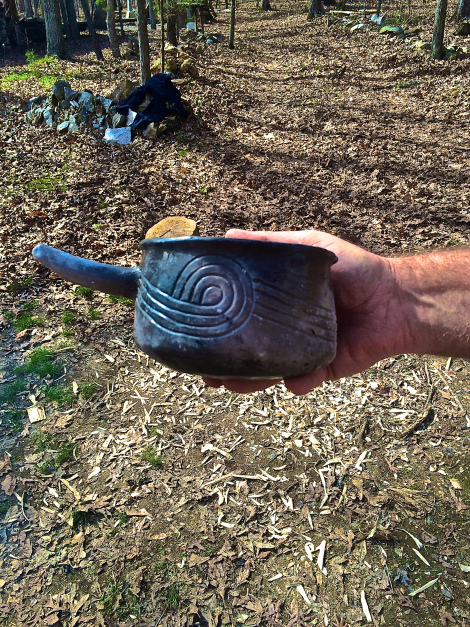
I wanted to re-blog this excellent post about functional pottery construction from “Survival Sherpa”. I’m no great pottery maker but appreciate the craft for sure. Have a look.
Coffee drinkers like myself usually have a favorite mug or cup. My all-time favorite “tankard” developed a crack and DRG trashed it. A sad day indeed!
My sob story may seem petty, but there’s nothing trivial about not having a way to “contain” stuff. Think of all the ways you use containers daily. Then imagine all your modern containers being gone… poof, no more. Welcome to the Stone Age!
Here’s what else disappears with your containers. Your ability to…
Cook stuff without skewering it on a stick
Collect, disinfect, transport, and drink water
Raise plants and livestock
Store food without stuffing it in an animal stomach
Dispose of waste
Personal hygiene
Ferment food and drink
Make medicinals
Gather food
Keep stuff clean
Organize stuff
etc., etc., etc….
This is why containers are king!
After attending a local two-day primitive pottery class, my respect and appreciation for the humble container grew…
Starting as a field scientist in the heady days when men were men and GPS was not available to common civilians, I learned my way around a compass pretty well. I thought I knew something coming out of Boy Scouts but putting those skills to the test mile after mile in order to locate a distant waypoint or build a map by hand honed those skills and etched them indelibly on my brain. Friendly competition arose amongst colleagues testing our pace and compass work over miles of rough ground in the eastern woodlands. The West is easy in comparison with open forests, plains, and grand vistas for taking long sightings. To this day, I generally prefer a pocket compass to a GPS and if I could choose only one, it would be one of these wireless beauties.A surveyor’s sighting compass can just about perform miracles in the right hands and my trusty Brunton Pocket Transit, after all these years, still finds it’s way into my field bag for big jobs. Get a compass, learn to really use it. Keep it handy, and you may never be truly lost.
This is part of an ongoing theme to document travel and camping gear that has served me over the years. These will be mirrored on the Traveler’s Gear page as I get them up.
As a traveler, primitive technologist, peaceful survivalist, affected provincial, long-time Idler, and sometime field scientist I find the necessity for a shoulder bag to carry essentials. I have two size shoulder bags as well as various backpacks, brief cases, and messenger bags that have served me well over the years walking thousands of miles on survey and in my travels.
I made this bag a few years ago based on an 18th century gentleman’s shooting bag. If you are interested to see it’s construction, it is documented HERE. Carried by naturalists, sportsmen, and explorers, this small compartmentalized bag keeps the essentials handy. Sturdy 10-12 oz vegetable tanned leather from Hermann Oak means that this bag will serve many decades without fear of damage from wear.
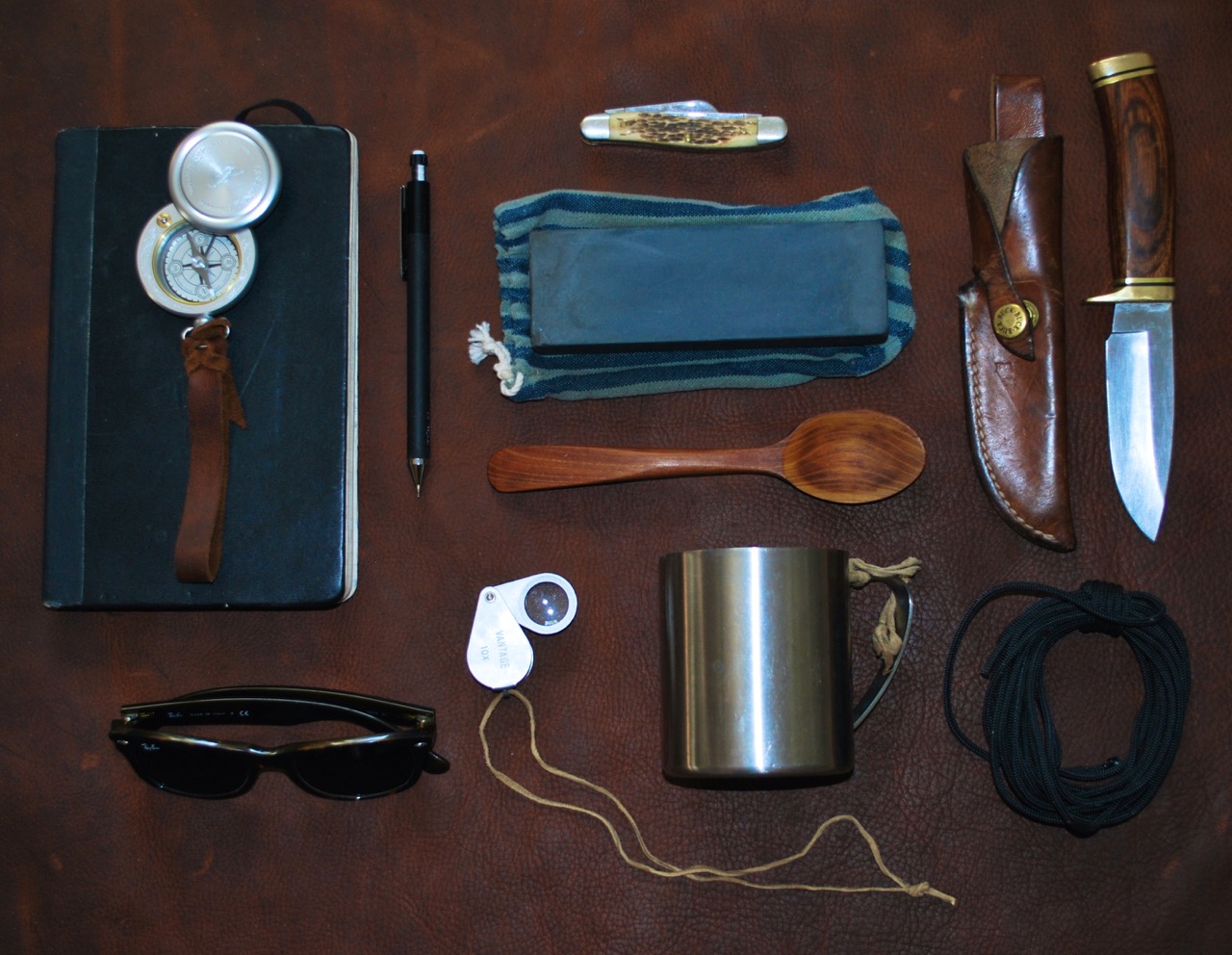
This is most of the contents from the above bag; mostly things I don’t like to be without. Clockwise (more-or-less) from the upper left: Brunton pocket compass with signal mirror, Moleskine notebook, pencil, folding knife, whetstone with bag, belt knife, wooden spoon, 550 paracord, insulated mug, hand lens, sunglasses.
Since I was eleven, I have been infatuated with mountain man style wilderness survival. It was, by far, my favorite merit badge as a Boy Scout. The merit badge book taught about the old idea of a “possibles” bag carried by early explorers that we now think of as a survival kit. Although the above is far from a complete survival kit, this little bundle, with the addition of a water bottle, gets me through many long days of travel and field work. Additional items include: lighter, flashlight, bandanas, and some first-aid essentials. However, traversing the wilderness, or even through civilization, means more than having the right stuff handy, being dressed properly is probably even more important. After years of walking in the wilderness I have learned the same lessons that our forefathers did; the importance of being well shod and covered with a proper hat.
Learn them, use them. I understand that some folks are topologically challenged but knots are always a great skill to have under one’s belt. Learn ’em. Have someone teach you. Carry a bit of rope and practice until they come naturally. Teach your kids! I suggest learning the dozen or so from the Boy Scout Handbook. That is really all most people will ever need.
More Historic Minimalists – religious wanderers from the East
Wandering Monks part 1 – The Buddhist monks that travel much of the year throughout Asia are about as minimalist as one can reasonably get. Early Buddhist monks were instructed to own, as based on the Pali Canon, a very simple set of eight items. Things have, of course, changed over time and religious wanderers have changed with it.
outer robe
inner robe
thick double robe for winter
alms bowl for gathering food and eating
razor for shaving
needle and thread for repairs
belt
water strainer for removing impurities from drinking water
Everything thing else was communal or gifted to them, including food.
Wandering Buddhist Monks part 2 – Things have changes in the past 2,500 years and the natural hardships of a traveler’s life warranted a few additions to an allowable kit of possessions. A revised and more modernized version adds a few more necessities (not everyone is up to the task of living in real poverty or misery; also, the communities of non-mendicants have some expectations about cleanliness, etc.). So in addition to the above eight possessions, the monks carry:
Bowl
Three robes, inner, outer, and warm
Bathing cloth
Umbrella, some sects mention a small tent as well
Mosquito net
Kettle for water
Water filter
Razor
Sandals
Small candles
Candle lantern
It should be remembered, these monks were part of a Sangha (intentional community of Buddhists) so there were communal objects for the rainy season when they weren’t traveling and there is a long tradition of charity towards holy men that we no longer practice in the West (other than tax exemption for churches and the National Football League).
Wandering Buddhist Monks part 3 – Of course, the world changes and the esoteric lifestyle adapts with it. Modern Buddhist mendicant monks might carry a few extra things in order to live reasonably within the modern world. This becomes a very realistic list for the modern traveler. Over many centuries, it became apparent that being acceptable and able to fit into society in general was an important thing. Good appearance, cleanliness, and preparedness helps one not be a burden on the community. I understand the need to fit-in and remain incognito when appropriate. After all, isn’t that what our daily costumes achieve?
Later realists again modified the kit of the wandering Buddhist mendicants in eighttypes of personal utensils or belongings (adapted, in part from RAHU website, Singapore). There are a total of 8 necessary requisites of the Buddhist monk garments and utensils. I big part of the teachings of the Buddha are concerned with an intentional, non-harmful, and simple life.
Mantle Robe – Traditionally made by the acolyte himself, but may also be a gift.
Sarong (Sabong) – This is a simple, unadorned under garment and is worn 24 hours a day.
Cotton Belt or Girdle
Shoulder Scarf – It is a long thick brownish-yellow scarf and regarded as a monk’s multipurpose cloth and is generally large enough to use as a blanket in winter. During a long trip or visit, this thick Sangkati can be folded and used as a cushion.
Black Alms Bowl with Lid
Razor
Needle and Thread
Water-strainer
In addition the initial eight things, some items have been added, not just for survival, but for the comfort and convenience as monks might find themselves as guests in a temple, in major cities, suburban settings, or the wilderness.
Three amenities are added for convenience: undershirt, a small bathing loincloth for modesty, and a bath towel. One cannot be filthy in a tight, modern setting.
Bedding – Still considered luxury items for the monk: grass mat, pillow, blanket, mosquito net, and a cushion for sitting.
Necessities for the traveler: hand bag (for carrying all this stuff), handkerchief, knitted hat, palm leaf fan, umbrella (for sun as much as rain), and sandals.
Eating utensils: Dish, Bowl, Spoon & Fork, Hand Towel, A set of Food Trays containing plates and bowls, Tiffin Carrier.
Hygiene and cooking – Drinking water must be cleansed of dirt and germs. This is critical for good health. Water is the only thing a monk can freely ask for or take as needed. In that vein, several other tools are allowed and encouraged: stove, pot for boiling water, mug for hot water/tea, water glass, water jug/bottle, tea kettle, Thermos bottle for ice or hot water as needed.
Toiletries – Buddhist monks should be clean and have pleasant personalities. They need some necessary objects, the same as other people water container, soap, soap container, tooth brush, tooth paste, body towel, tissues, spittoon, medicinals.
Domestic Objects: These items should be available to help monks in case of emergency. lantern or electric lamp, flash light, alarm clock or watch.
The latter list is a very complete list of real essentials. Having a codified list to pack from can be comforting, just like the lists the Boy Scouts still make for High Adventure programs. Looking at a little knowledge gained by our predecessors goes a long way.
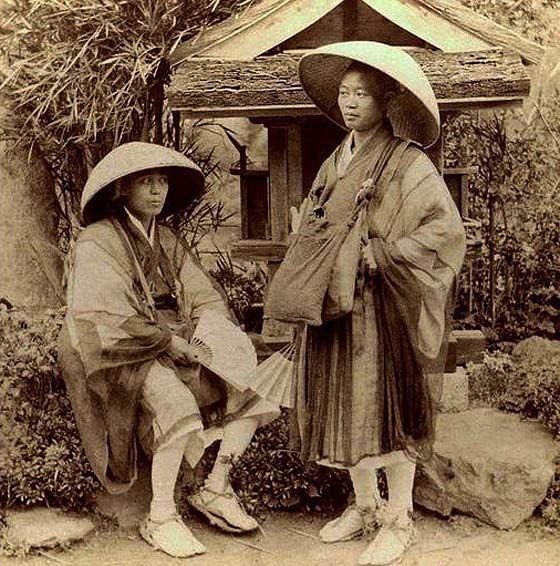
Pilgrims on Pilgrimage – Vasily Perov (1834-1882)
Why did I choose the Buddhists specifically for this example? Europeans have our own traditions, just without as much documentation. We’re a free-form lot. These folks certainly can sleep rough as need arose on a holy pilgrimage and don’t appear to be overburdened with stuff.
Matthew, Mark, and Luke all report that Jesus taught his disciples; “If you wish to be complete, go and sell your possessions and give to the poor, and you will have treasure in heaven”.
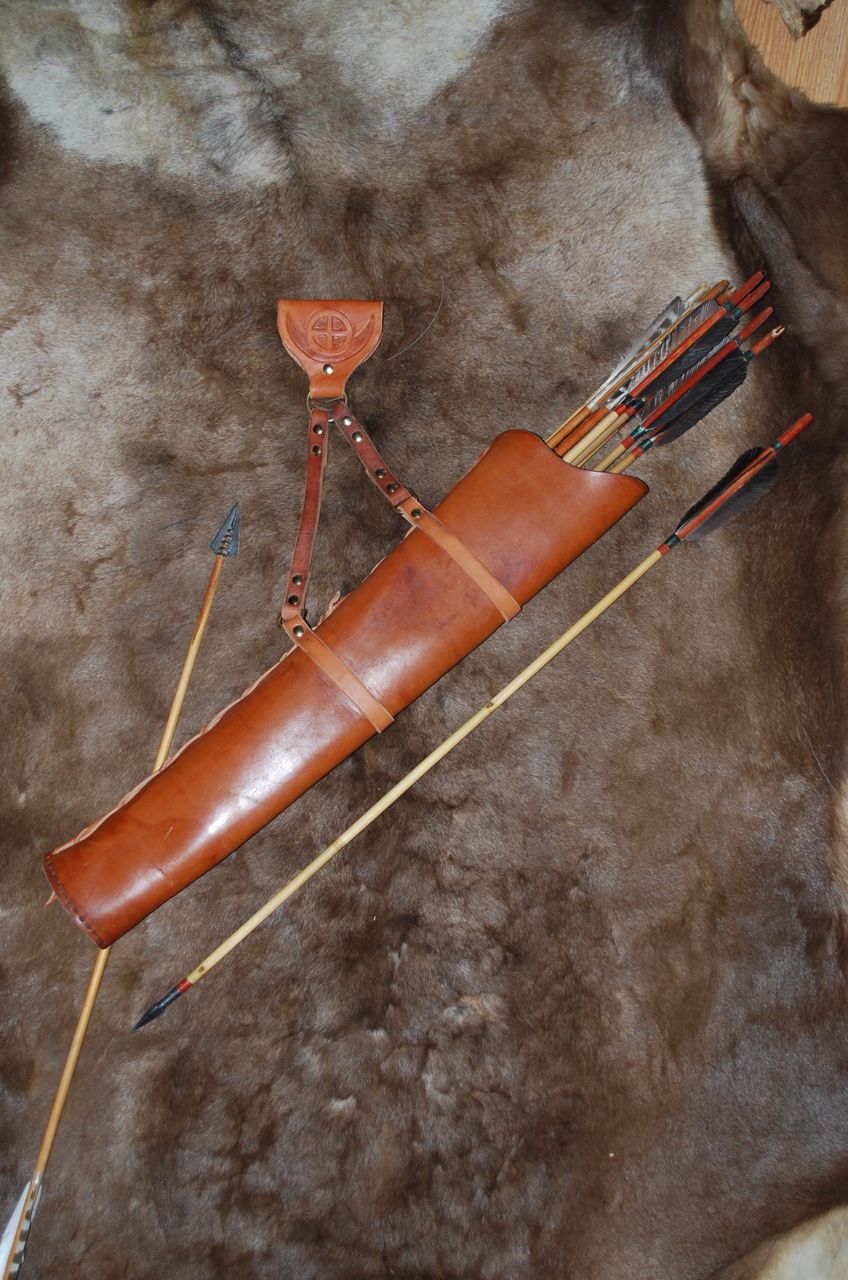
Finished up the quiver. It’s been unfinished for at least a year and this weekend finally saw some completion. It’s a time for closure on unfinished projects.
For this project I moved my little operation into the living room of the house. Creating sawdust and wood chips for the dogs to track around in their boredom is a real bonus. But, on to the show…
Making a Bucksaw for carpentry, bushcraft, or just because they’re cool.
The little bucksaw I built last winter had never been “finished” even though I’ve been using it for a while now. Having a few hours to spare I pulled out the knives, rasps, and scraper and decided to finish this once and for all before getting down to the next project.
The curves are merely aesthetic and can be ignored completely for a serviceable saw (if you can live with it).
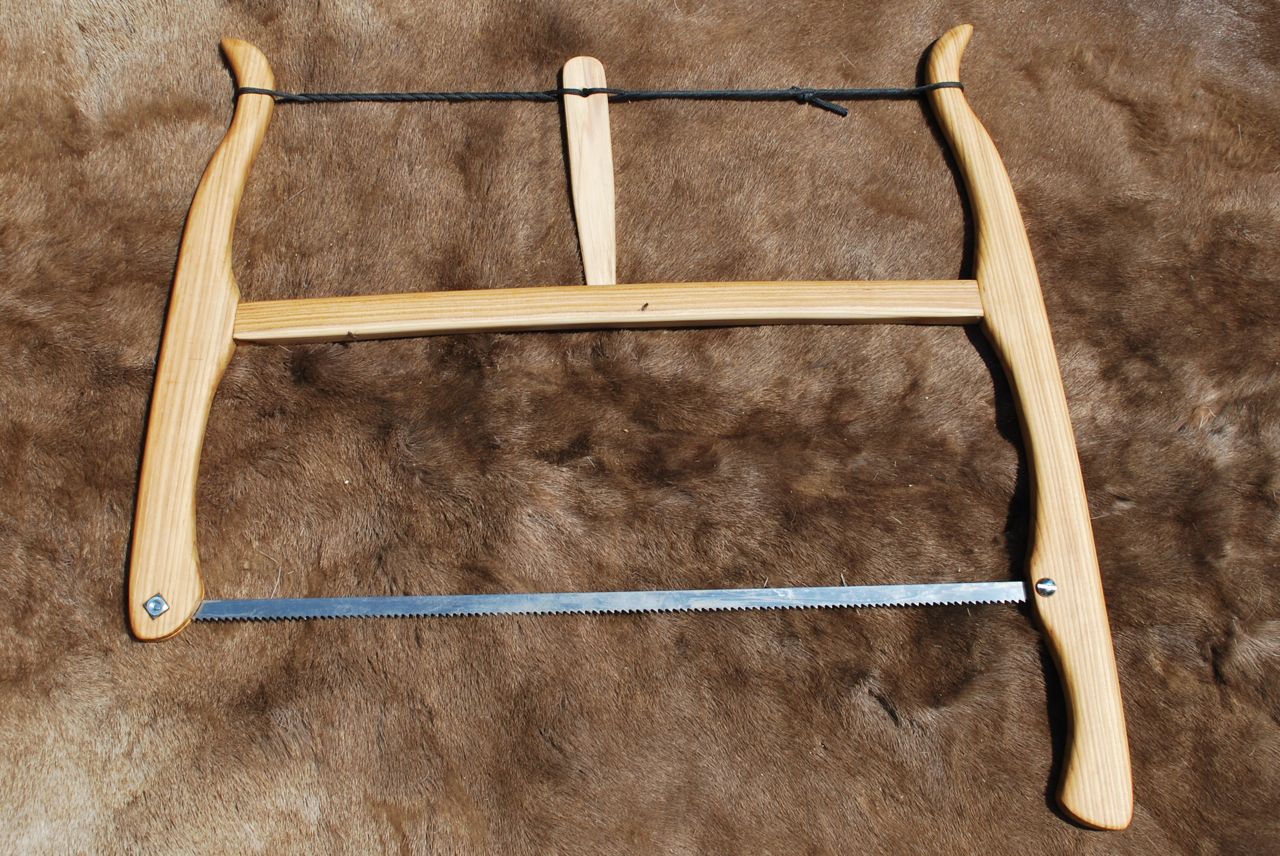
I hope to put this together soon as a sort of “Instructable” for making frame saws, buck saws, and turning saws but for now, this will have to do. Although common enough for the last couple millennia, frame saws have lost their place in the tool kits of carpenters and craftsmen, having been replaced by sabre saws, band saws, and the like. There is a lot of beauty in the old design and a serviceable saw can be built in a short time with very few tools. In fact, the one pictured here cost about $4 for the partial band saw blade, maybe a dollar for the screws and a few bucks for the long-toothed firewood blade. The lumber was created from a less-than-perfect bow stave; a well-seasoned shagbark hickory bodged down to about 7/8″ thick. The genius of this design is that it allows for an extremely thin blade to be stretched very tight for ease of work and a very clean cut.
A file for cutting (top), a store-bought 20″ bow saw blade (middle), and a band saw blade ready to be cut (bottom).
A new, high quality band saw blade can be purchased for under $14 from a decent hardware store. The above is a Delta brand 1/2″ blade with 6 teeth-per-inch (TPI) and is only 2/100ths of an inch thick. That makes for very little waste which can be especially valuable when working harder to acquire materials like antler or bone.
Band saw blades are made in a continuous loop and are great for what they do but the first thing we need is to break the loop. The metal is extremely hard, and fairly brittle which works to our advantage. The edge of a sharp bastard file, like that pictured above can be used to score cross the blade. You don’t need to cut all the way through, but just make a solid scratch across the surface. Then the blade can be snapped by hand, making sure to not put any unnecessary bends in the blade. Drilling the holes in the ends is the tough part. As I said, the metal is very hard so, either you can use a punch to make a starter spot and drill through as is (but this will severely dull most drill bits), or the ends can be gently annealed in a forge or with a torch and drilled soft.
Here are all the components of the new buck saw with the new linseed oiled surface glaring in the sun. The tensioner can be made from any strong cord (in this case 550 paracord), but any strong line can be built up or bailing wire will work (but is a little low-class and ugly and difficult to remove quickly). The spreader bar (the horizontal piece) is morticed into the legs but is not fastened by anything other than the tension on the whole system. Thus, the whole saw can be taken down in a few seconds and stuck into a toolbox or backpack for easy travel.
Above is the assembled saw under tension and ready to cut. A good question was already asked as to “why the spreader is curved in this case?” Because this was made from real wood, split with and axe, following the grain. I could have worked to straighten it for looks but I like the fair curve it created and, as it has no bearing on the function, left it as is.
Hope this helps anyone wanting to make a saw like this. Maybe I can offer this as a short, one day class at Rabbitstick or Winter Count soon.
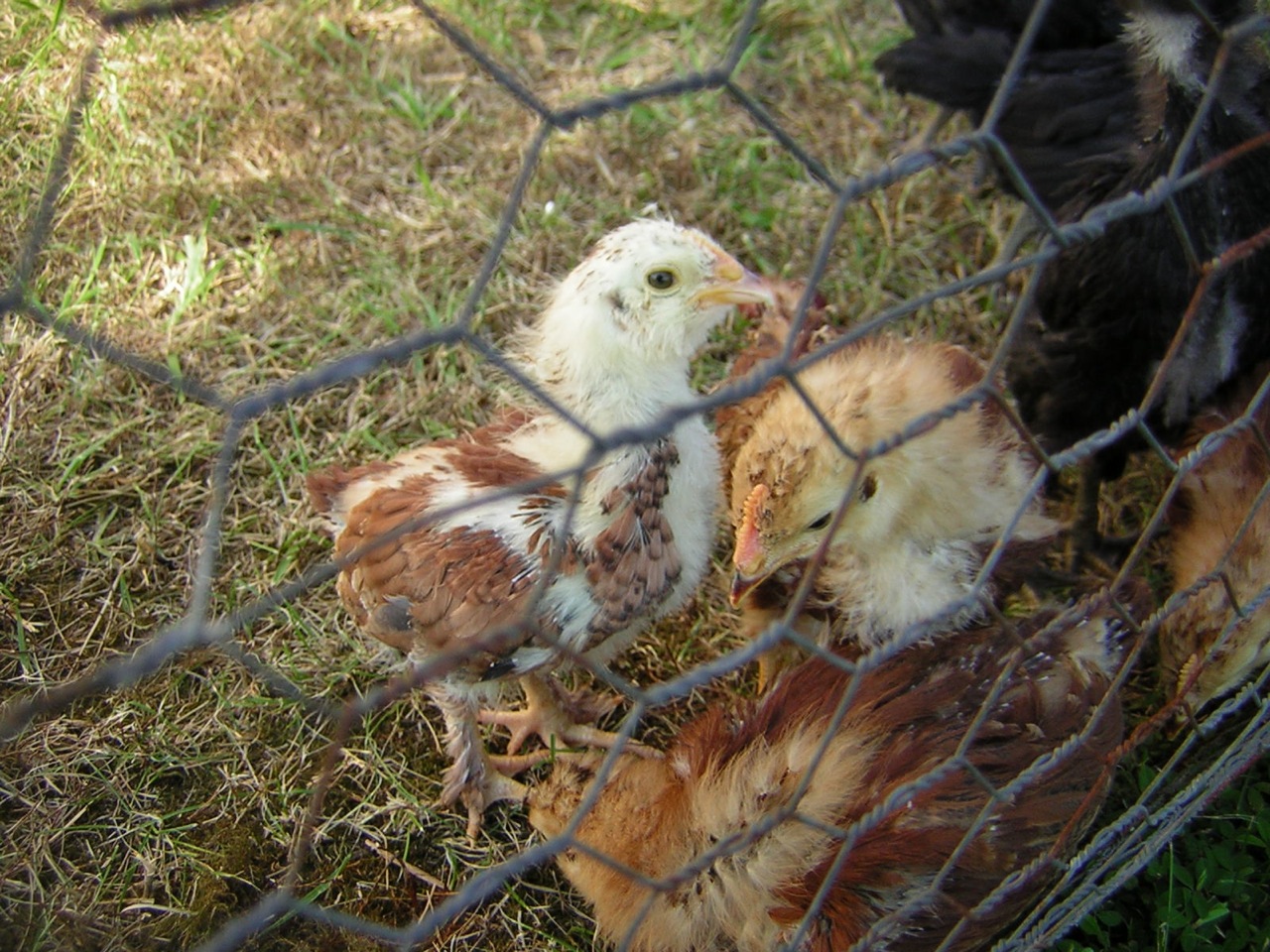
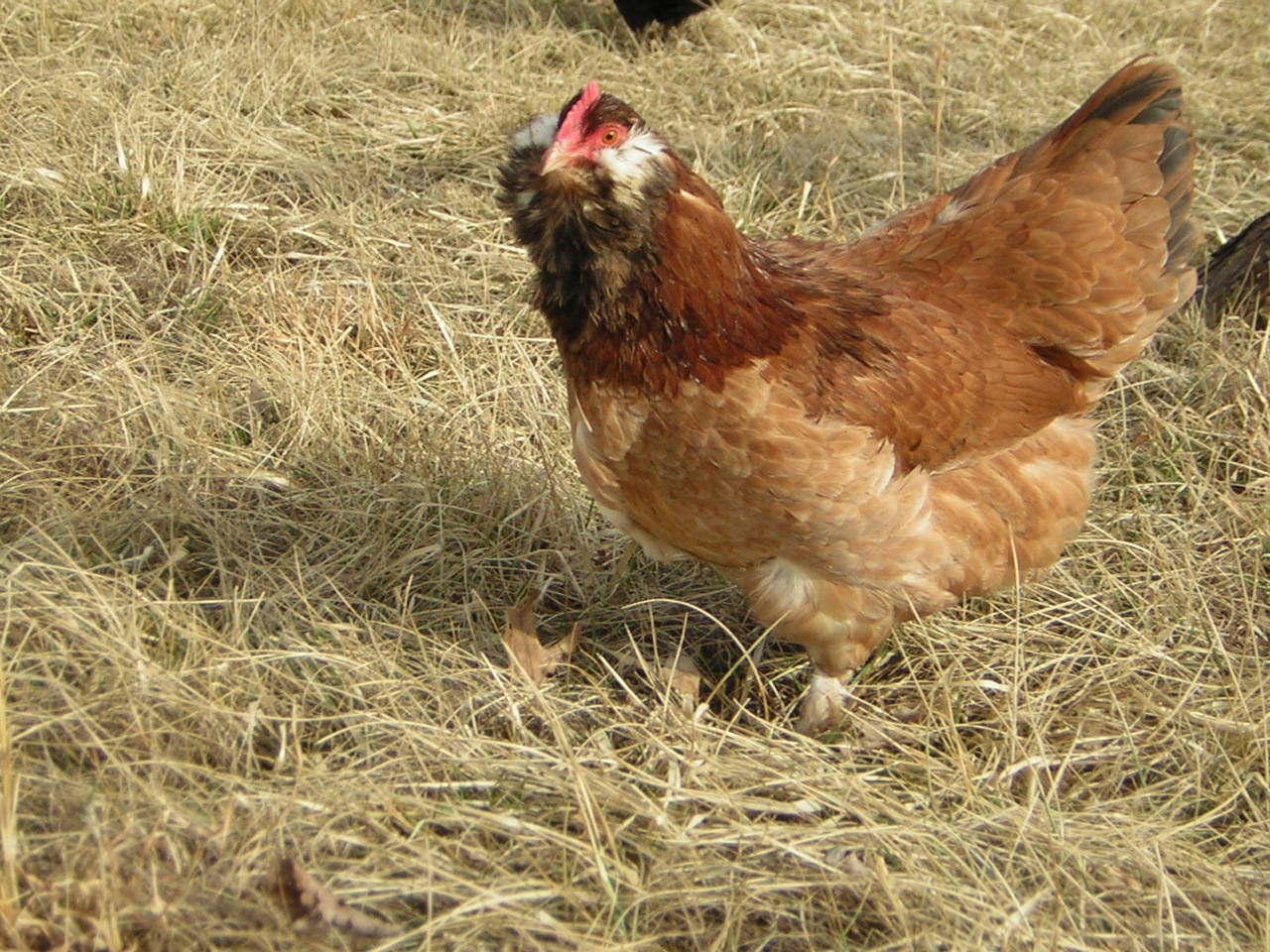
I’ve been lucky as a chicken owner for quite a few years. Very few have been stolen by predators, and we’ve had very little illness. Right now, with a dozen chickens both old and young, I get between three and six eggs per day with the occasional bonanza of eight. That is, if I can keep the Gopher Snakes out. I catch the snakes when I can and take them a few hundred meters away and hope they find new homes to rob. With limited free-ranging in a pretty poor environment they cost me no more than $10-$20 per month and a few minutes work every day. In the winter, they need a bit more tending, especially to keep the water unfrozen. I can’t see how suburban America has so lost it’s way that there is a fight to keep chickens in your own yard. I recently heard a politician refer to them as “gateway livestock”.
I love my dogs, but to hear people speak of chickens as annoying, smelly, and dangerous is ridiculous. Dogs bark, and often attack people (which are the jobs we bred them for) so the double standard is apparent.
If you have lived with chickens, you know how excellent they are at virtually eliminating small vermin; especially ticks, grasshoppers, crickets, and even the occasional mouse or snake. They are wonderful pest control, especially around the perimeter of the garden and their manure is a potent garden additive.
Maybe not as cuddly as a dog or cat, they are certainly part of our history for thousands of years. If you are considering chickens for eggs or meat, they are a simple, inexpensive investment that takes little time or money and are a great addition to the household food supply. Mine survive well on kitchen scraps including almost daily doses of broccoli stems, carrot tops, fruit peels, and even chopped weeds from the garden. They work better than composting for most waste.
They come in many varieties, builds, temperaments, and fortes, but nearly all will help out the small homesteader.
Lynx is certainly one of the coolest people I know. An amazing person on so many levels. Here is a 53 minute documentary (mostly in French) about her lifestyle and teaching. Very well done and I’m glad, on the web.


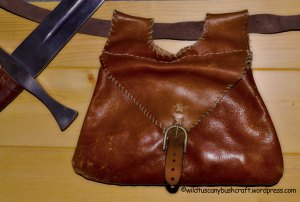 Old style bushcraft: a medieval possible pouch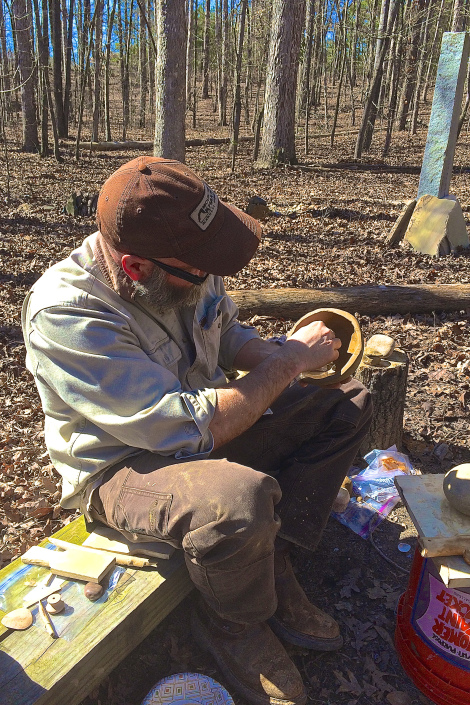









 Preindustrial Craftsmanship