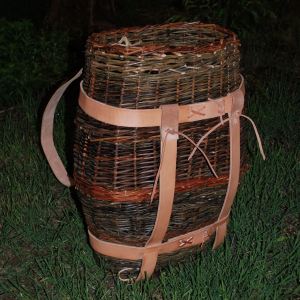
In a fit of energy I got around to putting proper and better shoulder straps on my pack basket made last summer. The pack is willow and the leather work is approximately 10 oz. Hermann Oak harness leather.
Willow pack basket I made several years ago. The straps were obviously new then.
Once the leather ages a bit they will be beautiful and rustic-looking.
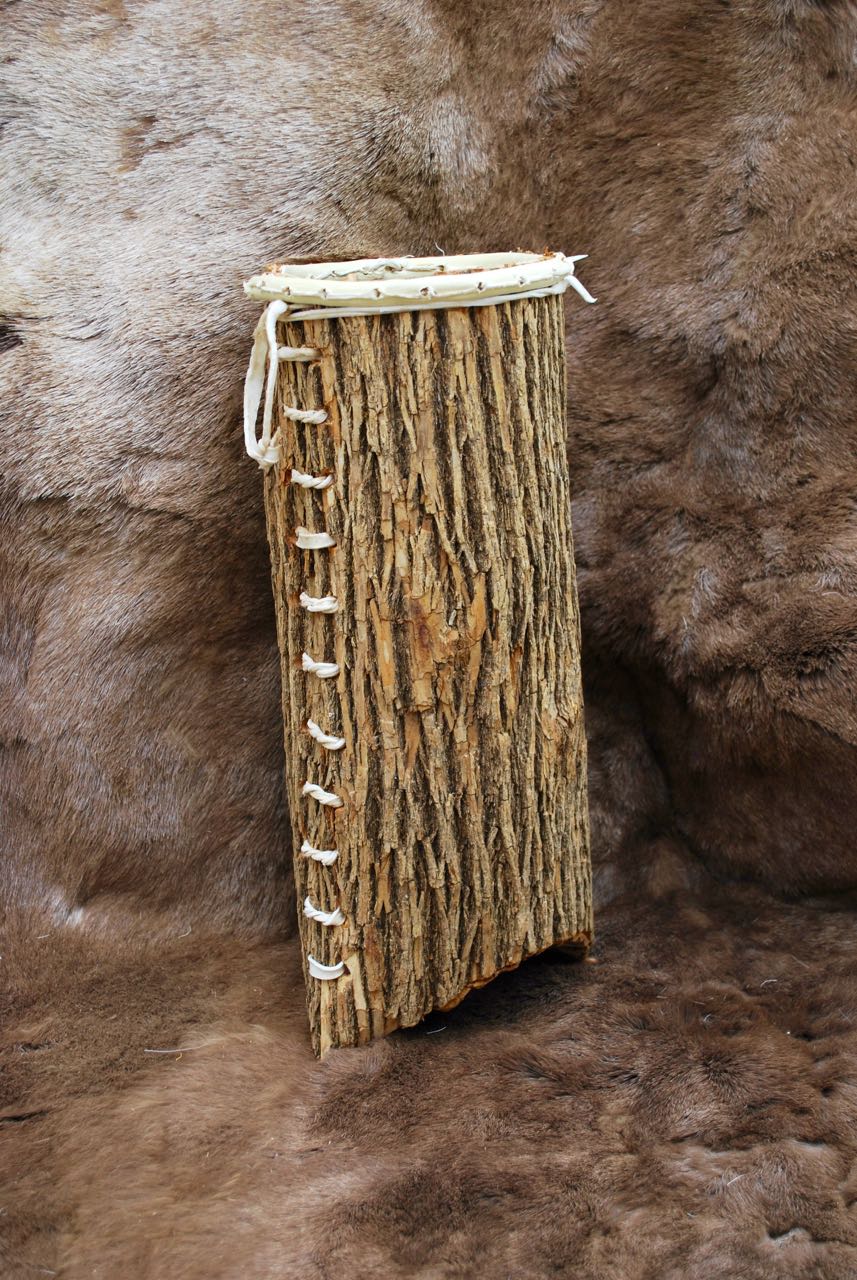
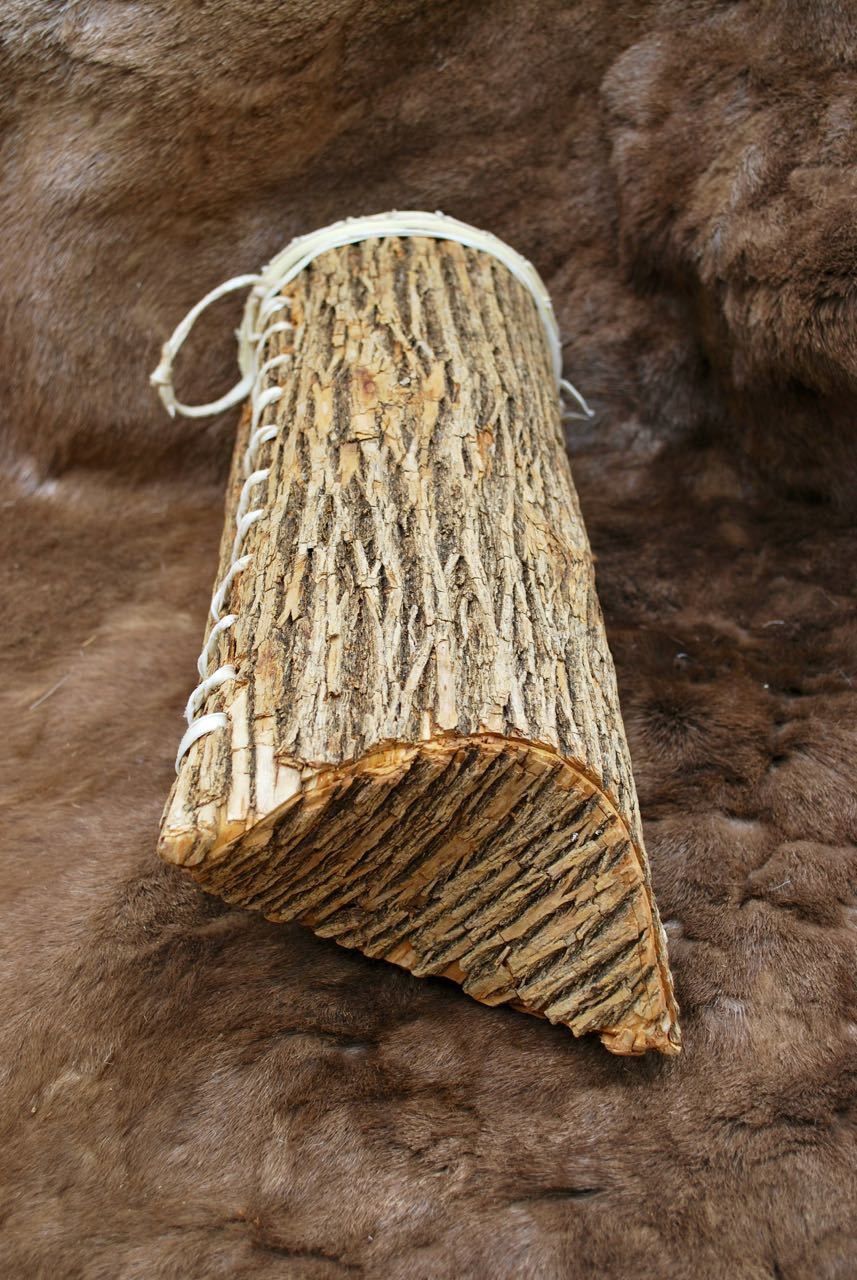
While sorting staves in the barn a long section of bark separated from a quartered trunk. While this one is not from one of the usual species used for bark containers I decided to give it a try. Bark is used as a raw material for making water resistant hats, bowls, quivers, and other containers far back into the mists of time. From at least as far back as Mesolithic Europe to Pre-Columbian America, this type of “basket” has made it’s way into the human tool kit. While this is not a tutorial proper, I took a few photos of the finished product.
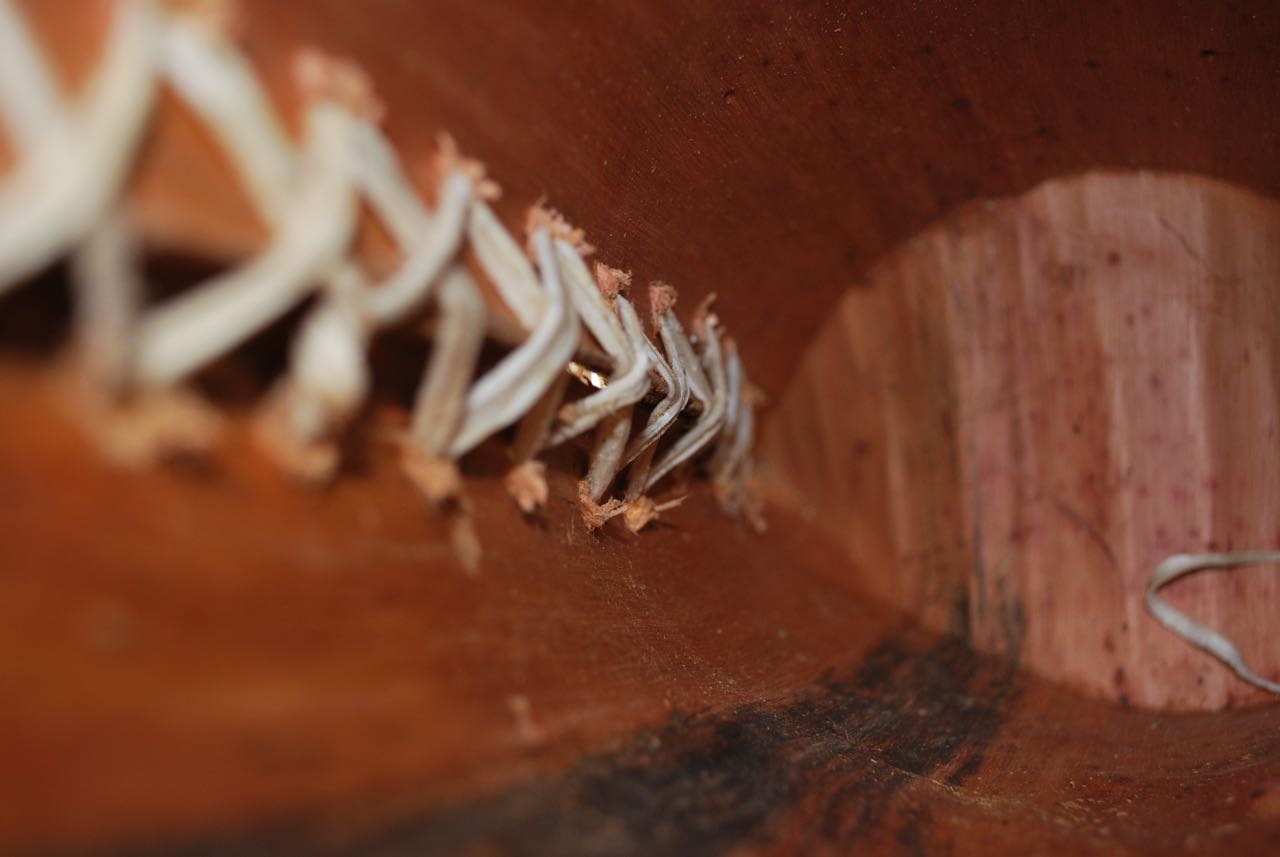
The body is made from the whole bark of Osage orange (Maclura pomifera) and sewn with rawhide from deer. The rim is constructed from a mesquite shoot split, steamed into a hoop, and sewn with rawhide.
It’s not perfect and probably won’t last forever as bark can be fairly brittle over a long time but will serve to hold some demonstration goodies for quite a while.
Have a look at a simple tutorial for a similar container by Ken Peek HERE.
He has a decent re-wilding/survival rant blog that leaves you wanting more. How can you not like a guy with a road-kill squirrel puppet? He doesn’t post much but what he does is well-done.
While you’re out that way, have a look at to get in on the conversation:
I wanted to re-blog this excellent post about functional pottery construction from “Survival Sherpa”. I’m no great pottery maker but appreciate the craft for sure. Have a look.
Coffee drinkers like myself usually have a favorite mug or cup. My all-time favorite “tankard” developed a crack and DRG trashed it. A sad day indeed!
My sob story may seem petty, but there’s nothing trivial about not having a way to “contain” stuff. Think of all the ways you use containers daily. Then imagine all your modern containers being gone… poof, no more. Welcome to the Stone Age!
Here’s what else disappears with your containers. Your ability to…
Cook stuff without skewering it on a stick
Collect, disinfect, transport, and drink water
Raise plants and livestock
Store food without stuffing it in an animal stomach
Dispose of waste
Personal hygiene
Ferment food and drink
Make medicinals
Gather food
Keep stuff clean
Organize stuff
etc., etc., etc….
This is why containers are king!
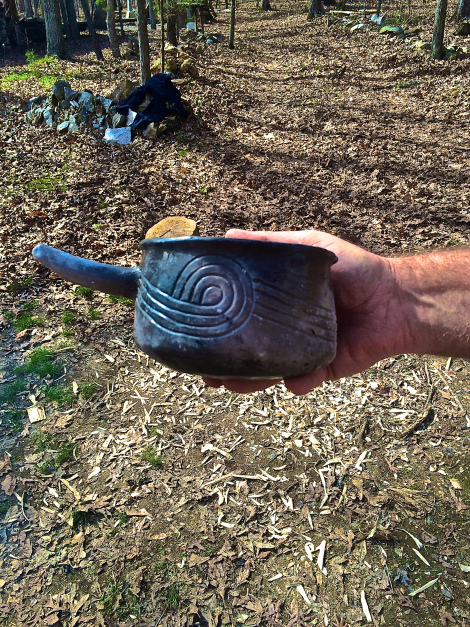
After attending a local two-day primitive pottery class, my respect and appreciation for the humble container grew…
Yucca fiber processing is an ancient art. I first became interested in yucca fiber in my time at The Clovis Site (an important archaeological site on the high plains of New Mexico). People have used yucca for ages past in every form. From raw leaves, to finely spun yucca yarn, the leaves have been used in every form. The book Treading in the Past: Sandals of the Anasazi showcases many excellent examples of yucca fiber in all forms as used in sandals. Yucca is also used for cordage, bags, nets, and really anything fiber related.
I start by chopping down a yucca plant. I happen to have access to narrow leaf yucca. All I use is an ax. The difficulty with yucca is the pointed tips, so I begin by gathering the leaves up, holding them up with one hand, leaving the base of the plant exposed. With the other…
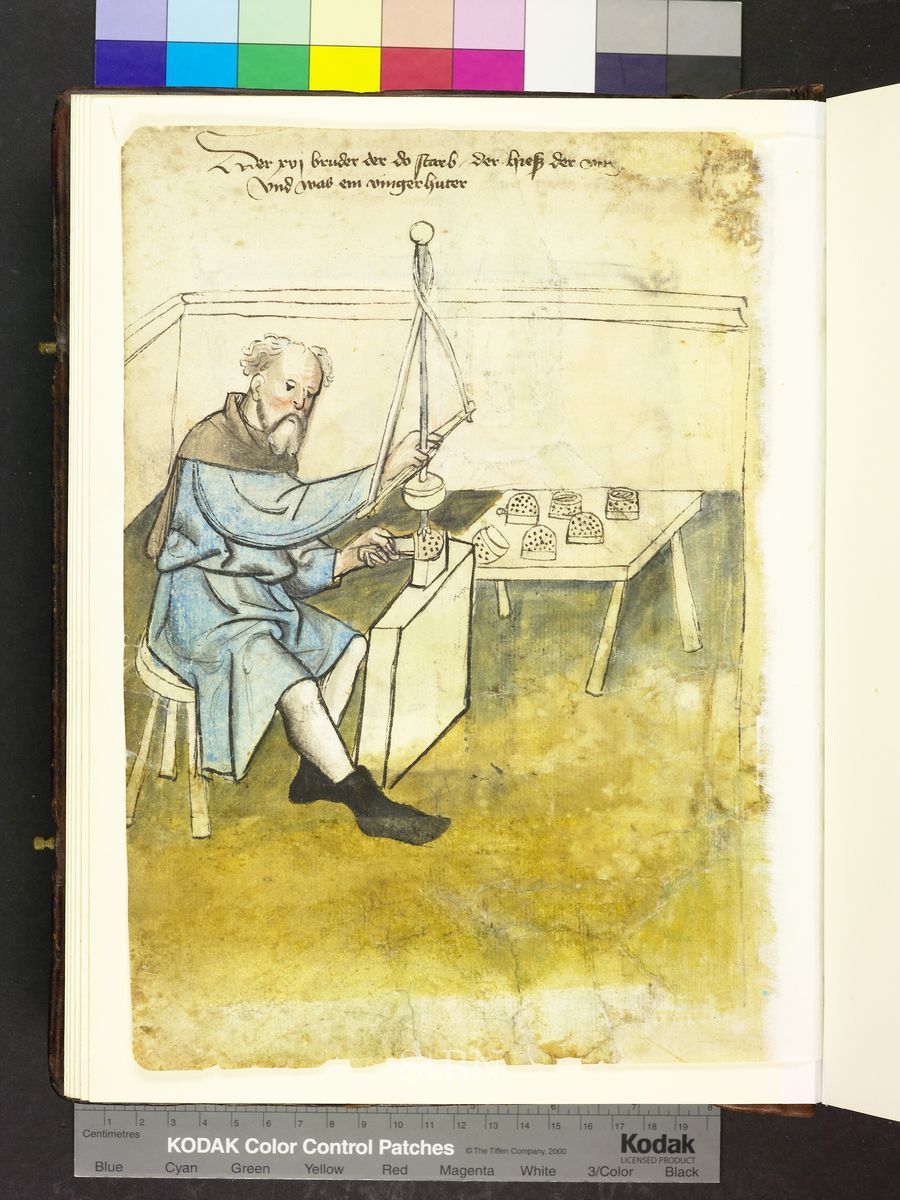
The pump drill goes way back in time. At least into Dynastic Egypt and probably well beyond. Drills like these are made from perishable materials so we only have the drill bits and generally do not know to what they were attached. From and archaeological point of view, it’s a bit like trying to decipher a battle by looking at the spent bullets.
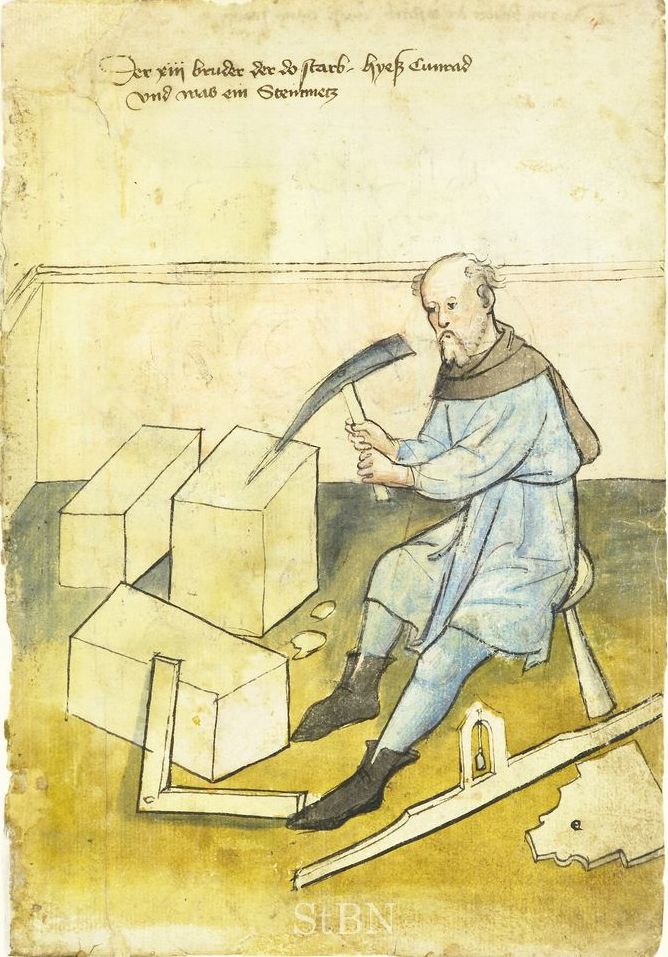
Again, this one is from 1425. The caption says he is a vingerhuter which I think would now mean thimble-maker. Any help with this will be appreciated. These things look more like wine strainers or little colanders to me. Anyway, the important part to see is the awesome pump-drill and the small block on which he is working.
The next image is a stone mason at work. I’m not a stone worker myself but I’m intrigued by a couple of his tools.
Not only does he have nice square and template but is sitting near his sightinglevel. In the days before spirit levels, this involved a little plummet hung in an arc on a straight edge. A bit like a sophisticated winding stick. Oddly enough, no dividers are visible to round out the trio of masonic symbolism.
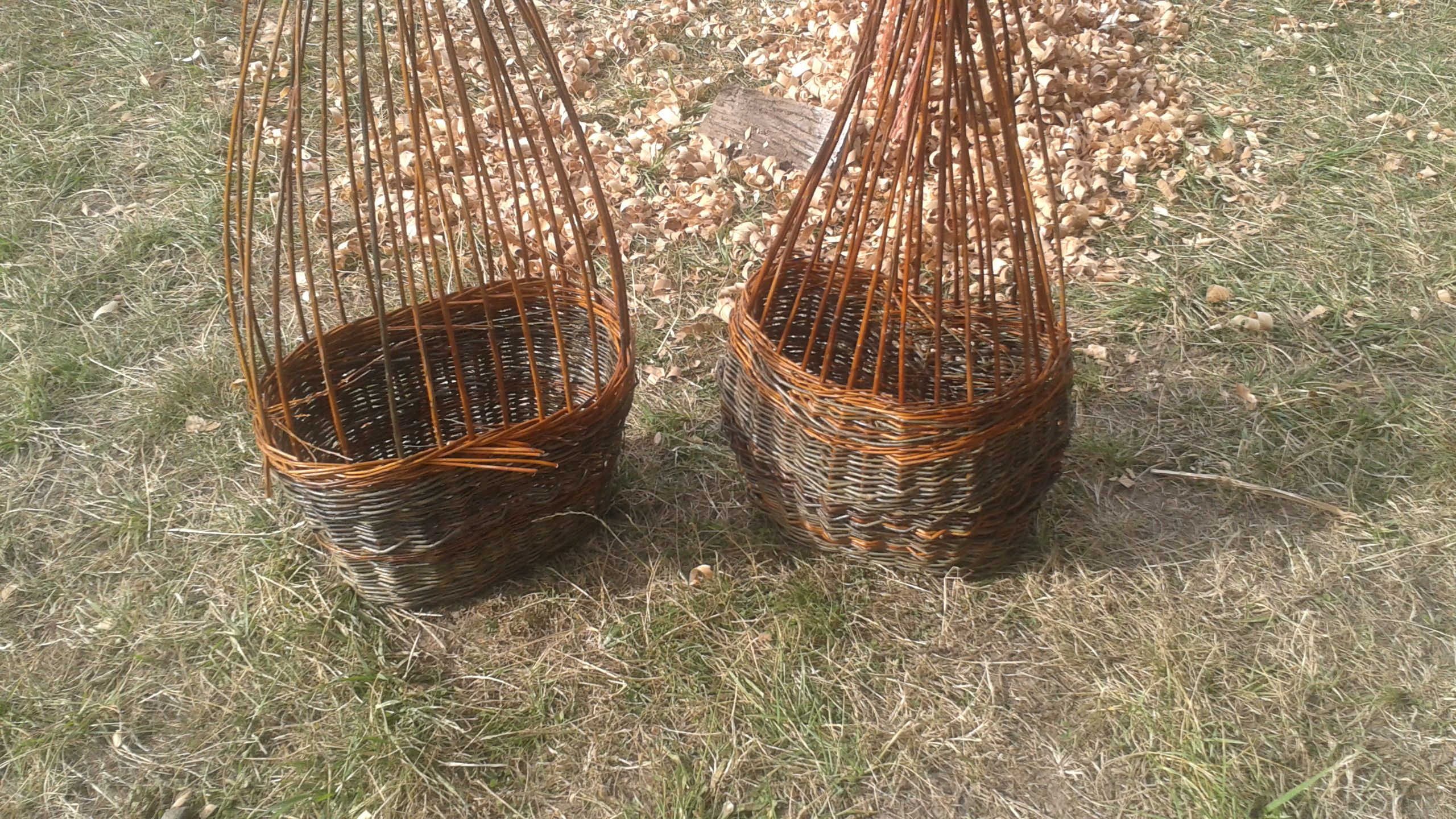
Bridgette and I worked on some willow basketry last week at the Echoes in Time gathering in Champoeg, Oregon. We spent the week with our friend Mick and his family with his fantastic vardo.
I have wanted a new pack basket for quite a while and the great Oregon basketmakers provided some excellent materials for the class. I only had eight students for the frame-saw class I was teaching so I was able to work in some baskets around the teaching schedule. I would have loved to document the whole process but I am such a novice that it would have taken three times as long and disrupted the flow of the basket in ways I wasn’t prepared to deal with.
Here is the first round of basket making including the base, addition of spokes, and working with weavers. The various colors come from the different willows harvested at different times. For those truly interested in the weave, this basket consists primarily of wales and rands with the addition of a rim and a foot to protect the bottom.
I’ve made a few other basketry projects under good instructors but this is, by far, my biggest effort to date. I really hope to dive into this craft more deeply sometime in the future. Enough for now, back to Making stuff (right after my nap).
Something to keep in mind when learning a new skill.
A Primitive Technology Disclaimer.
I firmly believe that in Preindustrial Societies, the onus of learning was on the pupil. Anyone who wants to succeed will find a way to learn.
Real learning is an active endeavor. We learn best by carefully observing and doing. There will be failures. There will be frustration and tears. Not everything will be obvious nor will the reason for every step be readily apparent. It is not the duty of the teacher to drag every unwilling pupil along nor argue every point to their satisfaction every step of the way. Failure is not something to fear but is something to learn from. If you don’t like the teacher or the methods, either suck it up or find another teacher.
“A good meal ought to begin with hunger.” French Proverb.
All animals need to eat. All the time. As humans, we eat every day if we are lucky. An average Westerner will have about 275,000 meals in a lifetime, not including snacks, munchies, and other nibbles. Once upon a time, we all caught, gathered, and ultimately made food for ourselves and our families. If we had some extra, we might have provided for the needy, the unlucky, or even the lazy. If we were entrepreneurial, we might have even exchanged our food for other stuff or services we needed. We cook our food to release nutrients, to make it easier to digest, and ultimately, to make it more delicious. After all, “A clever cook can make good meat of a whetstone” Erasmus.
…or so they say.
Throughout our evolution here on Earth, food never came from an assembly line or even a grocery store. As time went on, we could choose to put some effort into our cooking and make delicious stuff. For this we developed cooking apparatus beyond the simple fire and we adapted just about every food into some sort of cooked dish. As true meat-loving omnivores, humans eat just about anything. “If it has four legs and is not a table, eat it!” Cantonese proverb.
Enough digression, on to some minimalist cooking!
Every cowboy, Boy Scout, and classic camper in North America knows the amazing versatility of the cast iron Dutch Oven. Why “Dutch” you say? Well, those clever craftsmen from the Netherlands perfected sand casting for vessels such as this in the 17th Century and by the first decade of the 18th Century the English copied them perfectly and the name stuck (at least in England and America).
This was not even remotely a new design for cookware, just a new material. A heavy thermal barrier to spread heat and hold a high temperature without drying out the food is a useful innovation. Moving farther afield you can find kindred spirits around the globe serving the same purpose including the Bedourie, the potjiekos, Sač oven, and theNabemono.
The clibanus or Roman clay Dutch oven.
Over on the British Museum Blog Sally Grainger has been writing about her experiments with, among other things, the Roman clibanus (a.k.a. clay Dutch oven). I had no idea that the rimmed lid for holding coals was such an ancient innovation but, of course, it makes perfect sense. Our ancestors were cooking on coals every day after all. There seem to be many variants on this design but the example here is something of an inverted version of our modern oven. The entire lid lifts off to expose the tray or shallow bowl lower portion. This makes for a serving vessel as part of the cooking apparatus.
Just like it’s modern counterpart, an oven like this can be used to cook a wide variety of dishes, from meats, to stews, to breads.
The descendents of this style oven may be seen in the tajine and it’s cousins found all around the Mediterranean, especially in North Africa.
And finally, a relatively simple project for the primitive camp.
A simple, slab-built portable grill could be a useful addition to one’s camp kitchen. Perfect for cooking a Mediterranean meal of shish kebabs and perfect for simple meals anywhere. Recent archaeological work has brought this back to light.
Replicated souvlaki pan from Mycenae ca. 3,500 B.P.
These are a relatively recent discovery in that their use is finally understood. Experimental archaeology is a great thing. Sometimes we can readily predict the answer we know to be correct, but sometimes the process teaches us something and clears up misconceptions lost to time. In this case, a type of artifact called a souvlaki tray of ancient Mycenae (Crete). These date to a period from over 3,200 years ago. These are rectangular ceramic pans that sat underneath skewers of meat, and are generally discovered in fragments. Prior to experimentation, archaeologists were not sure exactly how these were used, whether placed directly over a fire, catching fat drippings from the meat, or if the pans would have held hot coals like a portable barbeque pit. Attempting to cook on them directly over a fire proved useless, as the clay was too thick to allow efficient heat transfer, however, placing coals in the pan made an efficient hibachi-like portable grill.
C. Grocock, and S. Grainger 2006. Apicius: a Critical Edition with Introduction and English Translation. Totnes: Prospect Books. Grainger, S. 1999 Cato’s roman cheesecakes: the baking techniques, Milk: beyond the dairy, Proceedings of the Oxford Symposium on food and cookery, Prospect books Totnes, pp.168-178.
Online:
The Medieval Spanish Chef – Looking for a perfect peacock recipe or interesting ways to cook a horse? Have a few extra rabbit hearts and don’t know what to do with them? Check out Suey on her blog for some really interesting, well-researched Medieval recipes.
Ancientfoods – Exploring the origins and history of food&drink around the world.










 Preindustrial Craftsmanship