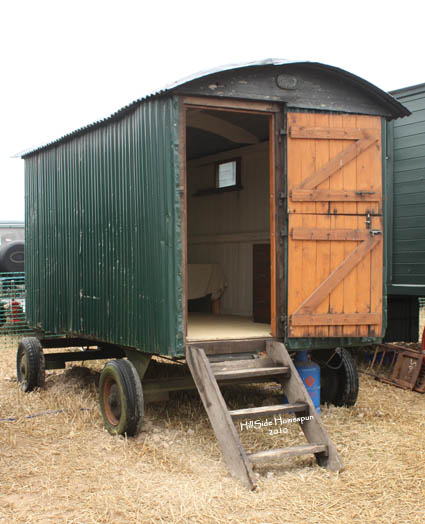
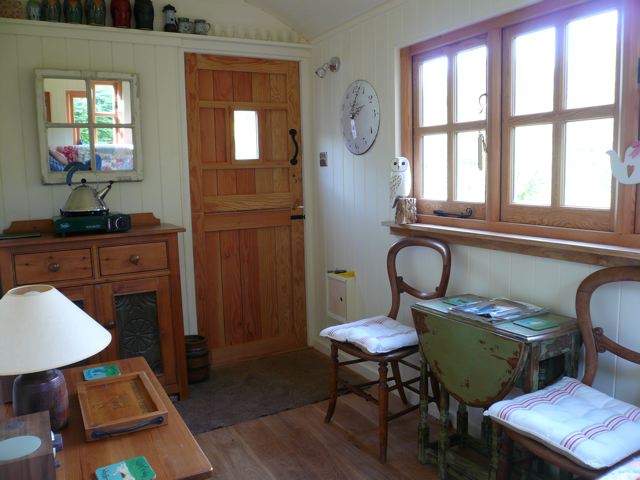
Old time shepherd’s huts aren’t really in the same class as vardos or showmen’s wagons as they aren’t really for long distance travel. These great little portable homes are dragged around to new pastures and are ideal for guest houses, studios, and weekend homes. These are generally simple affairs consisting of a room and a few built-ins. The old models often included a lamb cage under the bed platform and little else. As they don’t travel far they are often furnished with regular home furniture.
Several makers are still professionally building these. Have a look at…
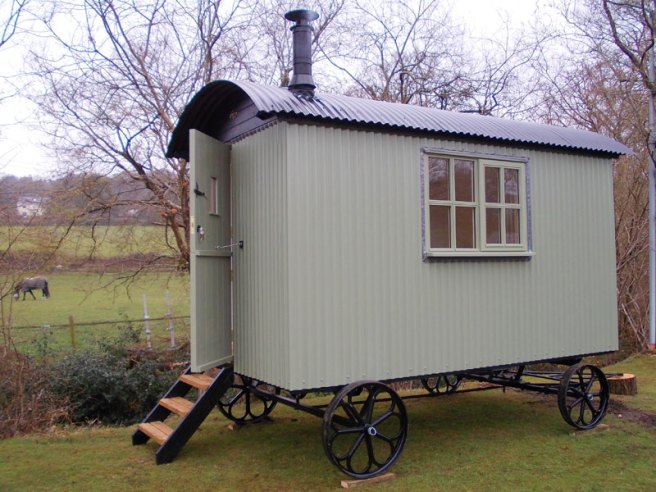
One appealing part of the design is the practicality. Many classic huts are covered in corrugated iron and painted making for easy upkeep against the changing weather. A far cry from high maintenance varnished wood.
A good feature I have noticed is the nearly ubiquitous transom vent in the peak. I have considered this myself as a matter of security on warm nights and am not surprised it was thought up long before me.
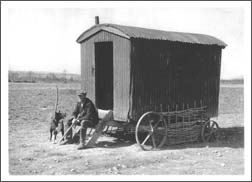
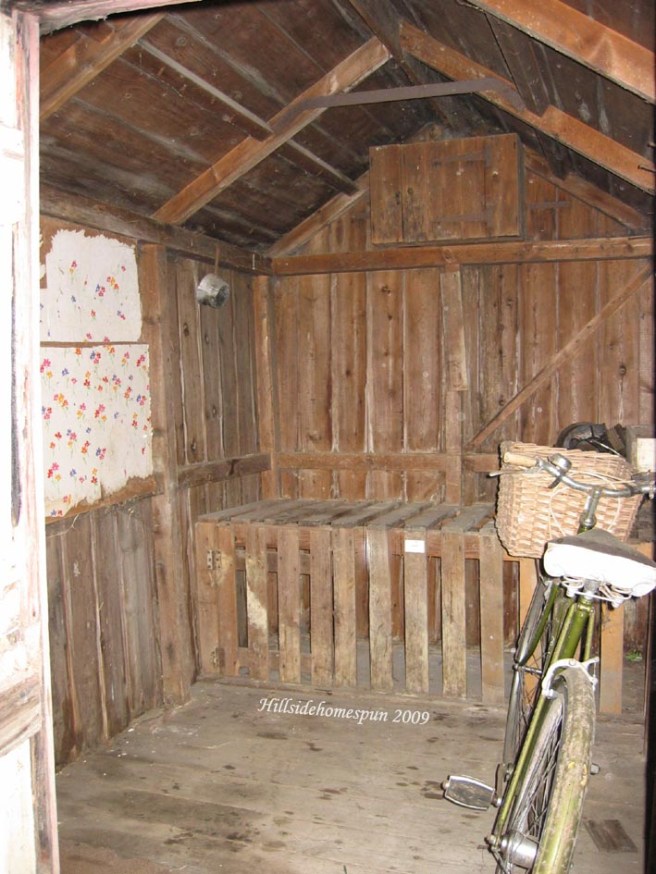
Above is a classic hut with lamb cage intact. Apparently these were used for all sorts of storage when lambs weren’t penned inside. The top of the rack held a mattress for the shepherd and the hut was generally fitted with a wood stove.
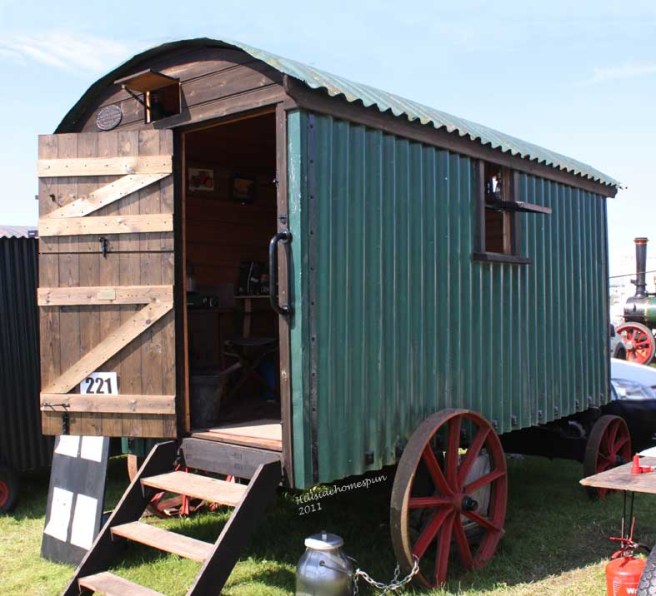
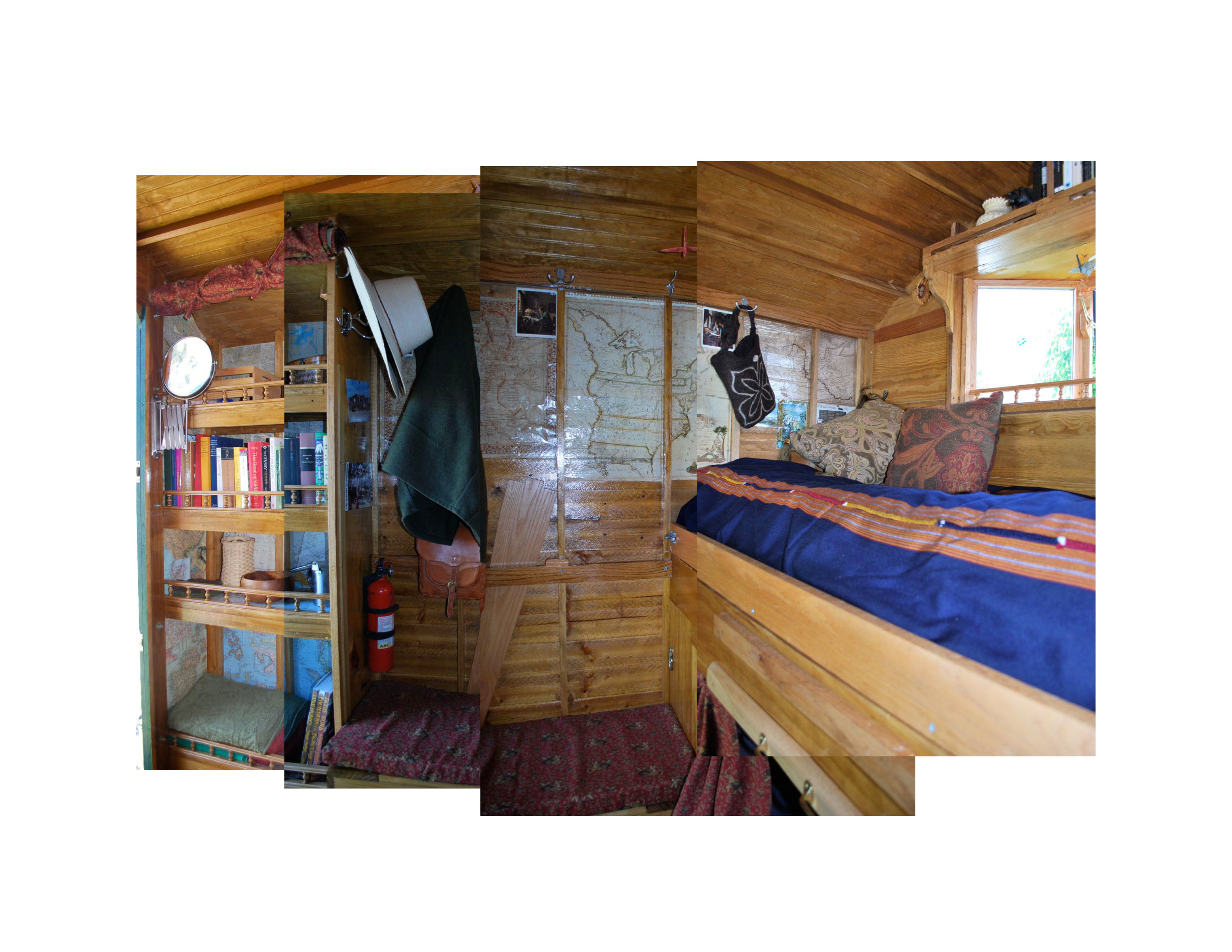
By far, the best examples I have found on the web are at Plankbridge Hutmakers. Above is a typical exterior and below, an exquisite modern interior.
Have a gander at their site for a load of great images and information.
The Bay Area Maker Faire was bigger and more interesting than I thought possible. I have rarely been so busy in my life as the eighteen or so hours I stood and talked about the Vardo. There were many interesting and interested people who thoroughly examined every aspect of the wagon. As it was built on a whim and shoestring budget, I’m not proud of every inch of my workmanship. I never thought it would be displayed for public scrutiny but it was received with great enthusiasm. When I dove into this project I thought it likely that it would be looked at as some crazy art project but it seems there is a core of like minds who long for a micro traveling home with a certain amount of style and aesthetic.
Spiffed Up.
Knowing that loads of people would be poking around in the wagon meant a bit of cleaning and spiffing up was in order. Most of the interior received a fresh coat of varnish and most personal things were stowed away. It was sad that I couldn’t actually stay in the wagon as it was on display but the grant helped cover the cost of a nearby hotel.
Our Station.
Location, location, location. The obvious place for a low tech micro home is between the underwater robotics and the universal charging station. The Faire is so chaotic, I don’t think it really mattered but I think our setup would have been more at home in the Homegrown Village area. As it was, the Vardo was an interesting Low Tech display amidst all the electronics. There was generally a line of five to ten people all day, both days to file in and around the Vardo, hear my explanation and ask loads of questions.
How It Came to Pass. Thanks ESURANCE.
The nifty sign created for the display. They said it, it must be true.
Packed Up and Absorbing the Eclipse.
Closed up, ready to hitch to the truck I noticed all the eclipse shadows filtered through the leaves onto the Vardo. What timing.
I have loads of photos I’ll put up shortly when I make some sense of them. All in all, if you are a MAKER OF THINGS or even just a dreamer, the Maker Faire is worth a visit.
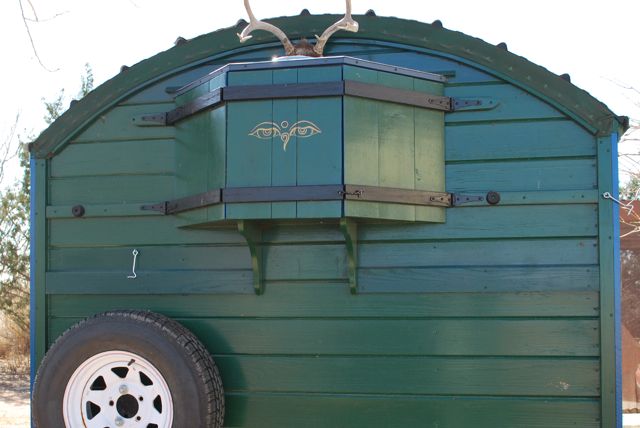
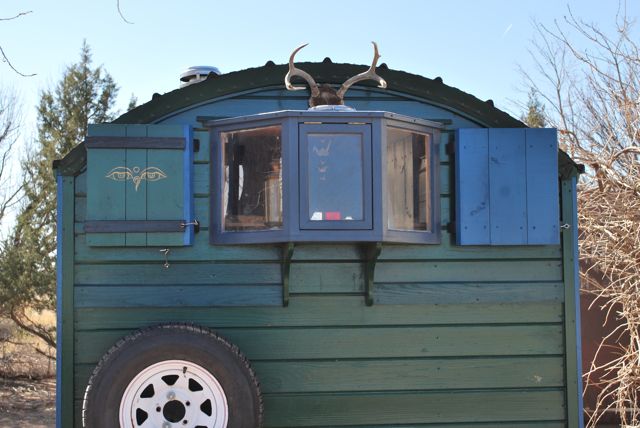
I wanted to put up photos of the travel shutters. As the windows face forward, they take a real beating on the road. After solving the issue of covering three sides, the construction was pretty simple. Being small, I was able to knock these together from scraps around the barn.
Simple but effective. These should protect the windows from most flying debris.Normal open position. There are rubber bumpers behind each to prevent the bumping sound in high winds.
Updated: Last weekend I finally finished the leatherworker’s tool tote. It took time to figure out what needed to be included and handy. Since the leather straps are fairly specific to the tool they hold, it pays to get it right. The original post is here: https://paleotool.wordpress.com/2011/10/26/tool-tote/
It may not look exciting but it is a great boon to have handy, easy to access tools.
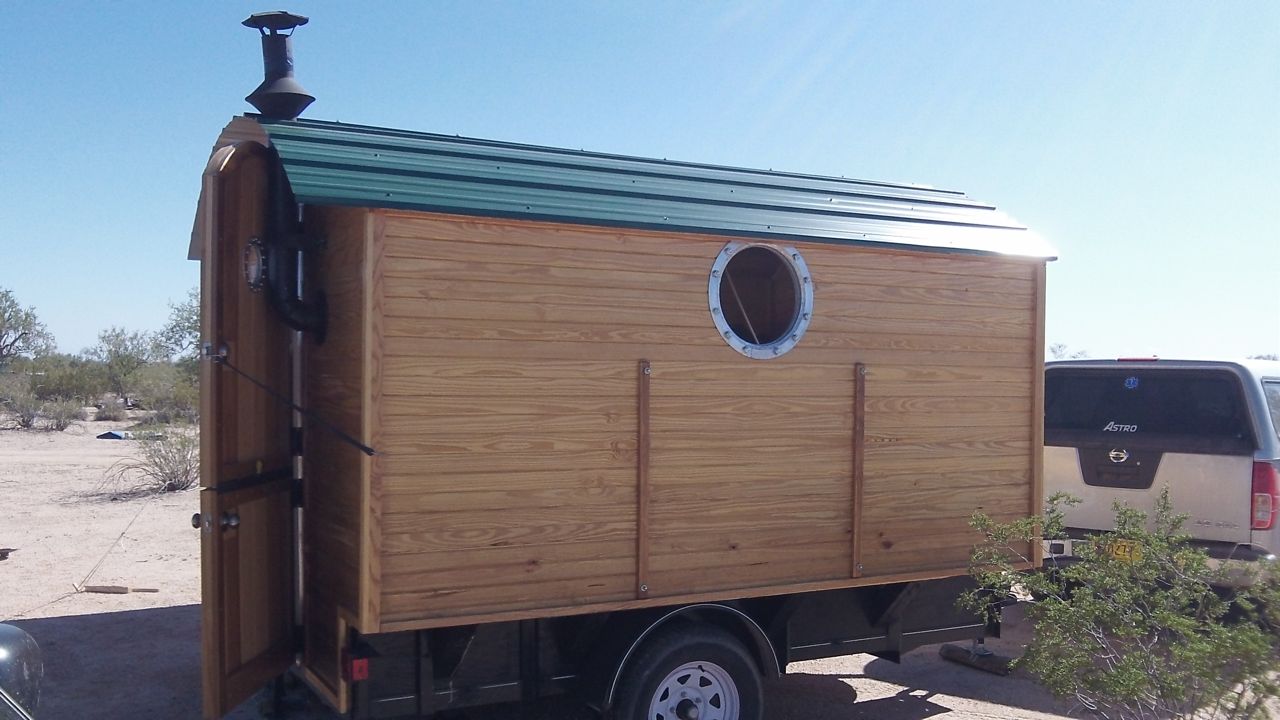
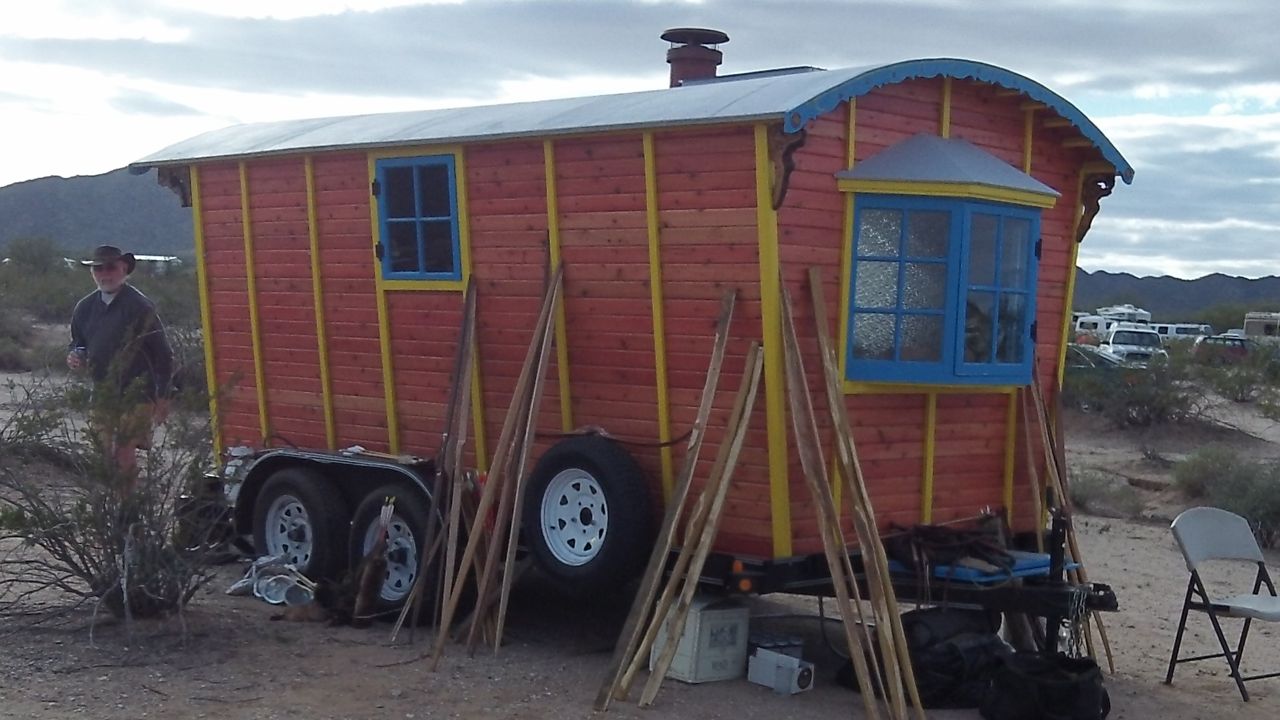
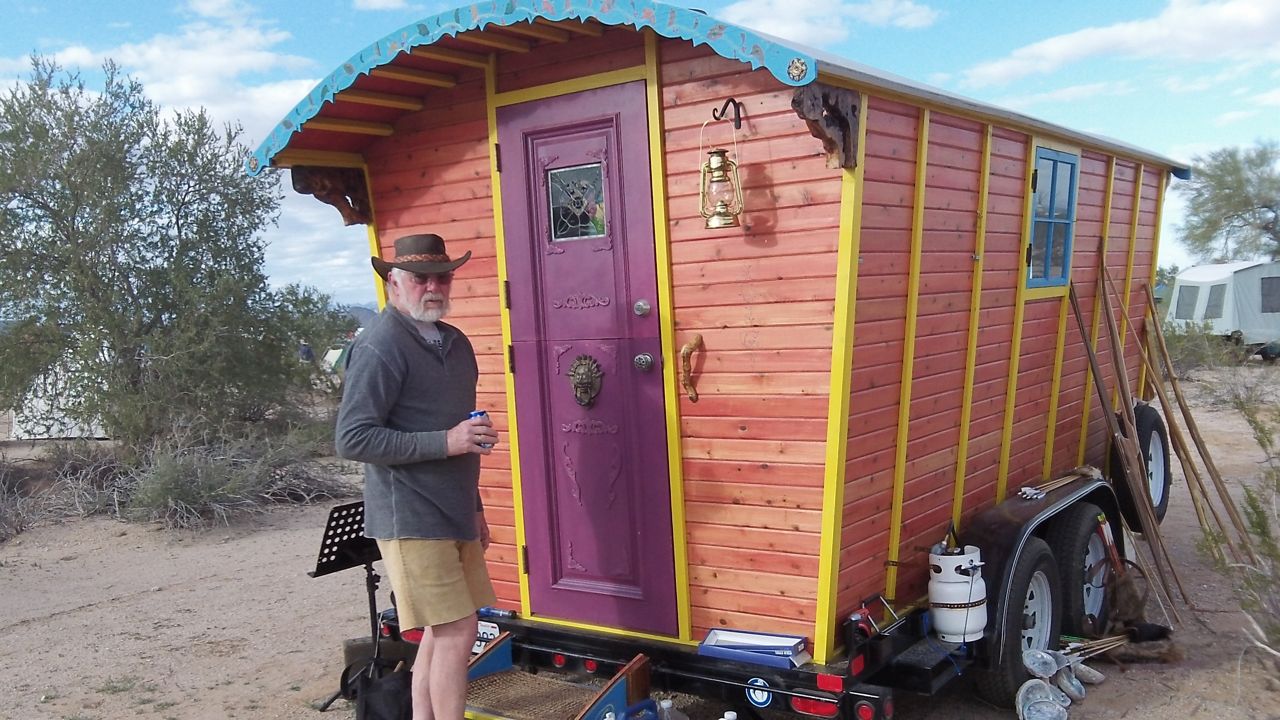
Here are a couple new Vardos found in the Arizona desert this February.
Jack’s wagon, nearly complete inside. I helped him build the main structure in my driveway last summer and he has been trimming it out ever since. It essentially the same design as mine (with a few logical improvements) and lengthened by two feet.
The portholes were purchased from a ship salvage company and add a cool nautical look. This one is ten feet long (3 m) and feels very spacious inside.
Paul’s wagon is a beauty but I suspect weighs quite a bit. The tandem trailer alone might outweigh my little rig. This one is 14 feet (4.25 m) long and could host a small dance party inside.
The color scheme and interesting details really make this one stand out in the crowd.
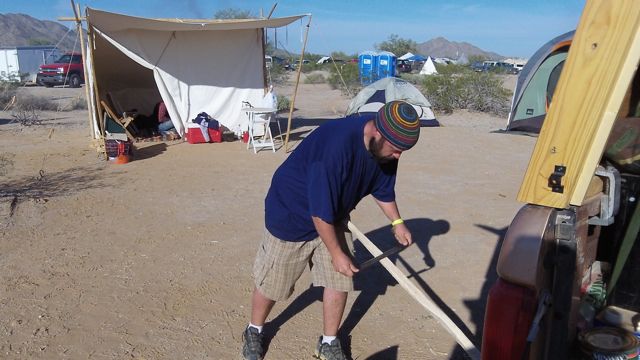
Thanks to those who participated in our bow making class this year. I failed to get many photos so if anyone would be willing to share theirs with me, I would be most grateful. Email me at zcoyotez (at) yahoo.com.
We made very traditional flat bows. This is a straight-forward, predictable design that is easy to tiller and makes a fine shooter.
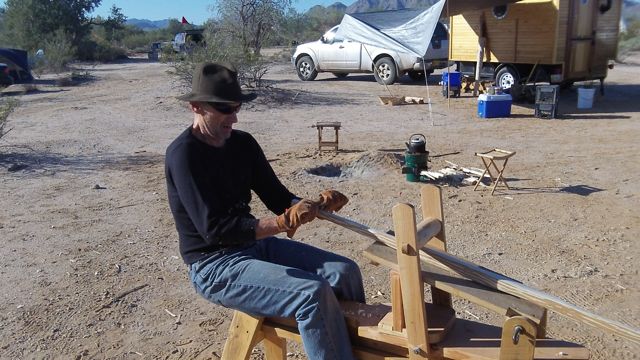
I use a minimum of tools, relying primarily on the axe, drawknife, and spokeshave for the heavy work with rasps and cabinet scraper for finishing.
It is a little more difficult to teach such a hands-on skill to groups, as opposed to individuals, but the class seemed to go very well. The point was not to just make a bow but to learn enough of the concepts that everyone in the class should be able to go home and make more without much guidance. A key to the success is using good staves to begin with. There is enough to learn without added problems of twists and knots in the raw material.
All of the bows were successful and I hope will bring happiness for years to come.
The winds slowed, the killer dust settled and I was able to get back to the bow. A few minutes with the power planer took the rough shape down to a nearly finished product. The calipers are useful and can save a lot of guesswork when making the same style bow over and over.
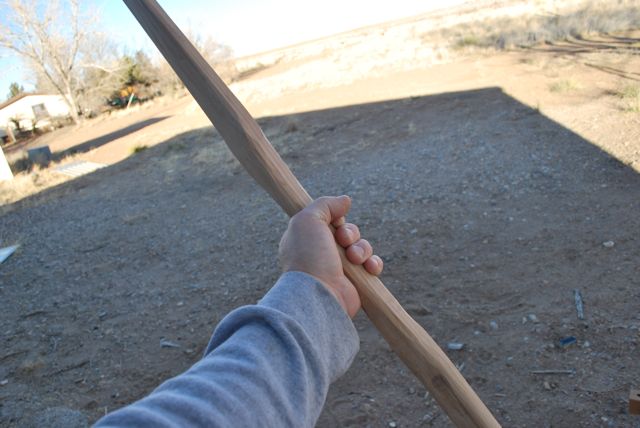
Above, the bow seen in its near-final form.
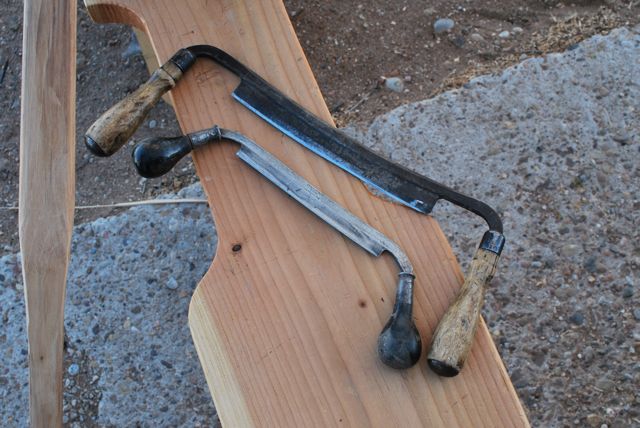
Despite the great labor savings that come from the power tools, wood is very organic and has character therefore need some finer, more controllable tools. These are the two draw knives I use the most.
I took the limbs down til there was some little flexibility. Probably in the 100 pound range but still too sketchy to put a string on. As the day was drawing late I decided to rough out the grip and central riser area. Surprisingly, this takes quite a bit of time as it needs to fit the hand well, and look pleasing. It is difficult to get it “just right” in all dimensions as a tiny variance takes away from the symmetry of the piece. This part is purely about looks.
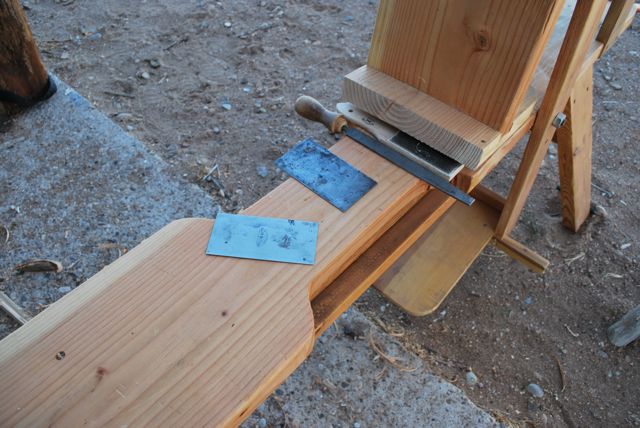
Once the knife work is done, its time to move to the cabinet scraper. Here are the two I use. To keep a good sharp edge I switch between the two as one dulls. The larger one is a standard Stanley cabinet scraper and the smaller is a Garlick of England. The English one is much harder steel but more difficult to get a good edge when sharpening. With them are the bastard file and file brush used to touch up the edge.
I hope to find time for the finish tillering sometime this week.





 Have a gander at their site for a load of great images and information.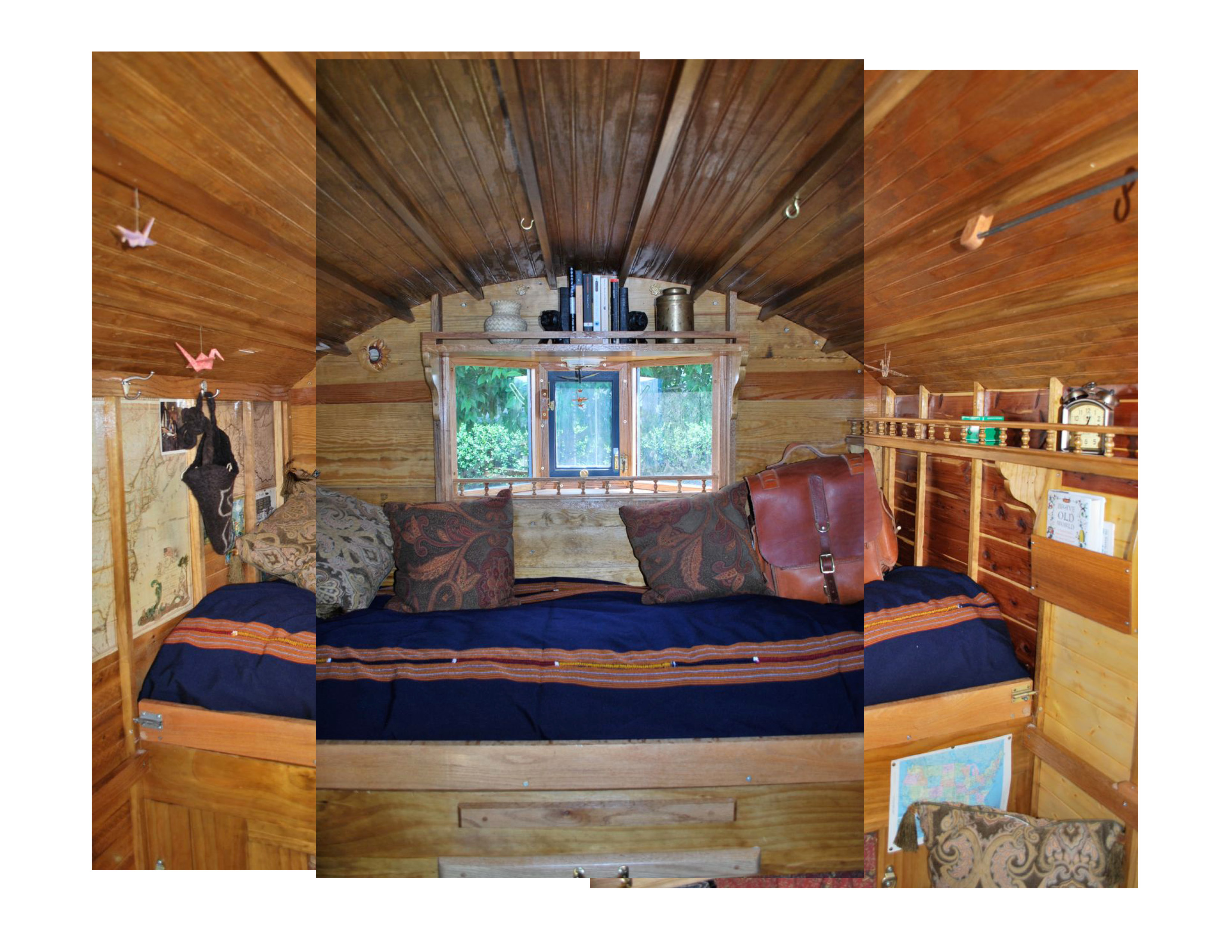









 Preindustrial Craftsmanship