jumping once again on the Bowl Lathe bandwagon

Peter Follansbee is up to more good stuff…

practice

pfollansbee's avatarPETER FOLLANSBEE: JOINER’S NOTES

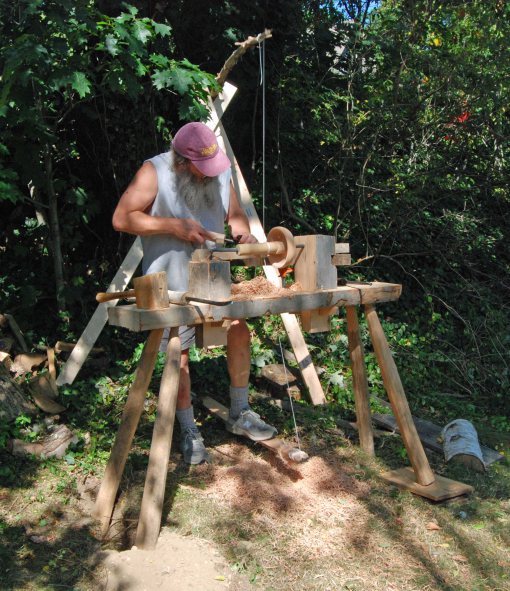
 I took a break from basket making last week to finally build myself a dedicated lathe for turning bowls. Mine is based on the ones we used when I was a student this spring in Robin Wood’s bowl-turning course at North House Folk School in Grand Marais, MN. http://pfollansbee.wordpress.com/2014/06/05/bowl-class-tip-of-the-iceberg/

I think I first saw this style of lathe in the book Wood and Woodworking in Anglo-Scandinavian and Medieval York, by Carole A. Morris (York Archeaological Trust/Council for British Archeaology, 2000), then in the work done by Robin Wood and others…

First off, I jobbed out the long slot cut in the 3″ thick beech plank. I traded Michael Burrey some carving work for his labor – I coulda done it, if I wanted to…

bench slot

Then came boring the hole for the legs. Legs like these angle out in two directions; to the side, and to the end. I mark…

View original post 339 more words

A Couple More Medieval Tools

When I say Medieval…

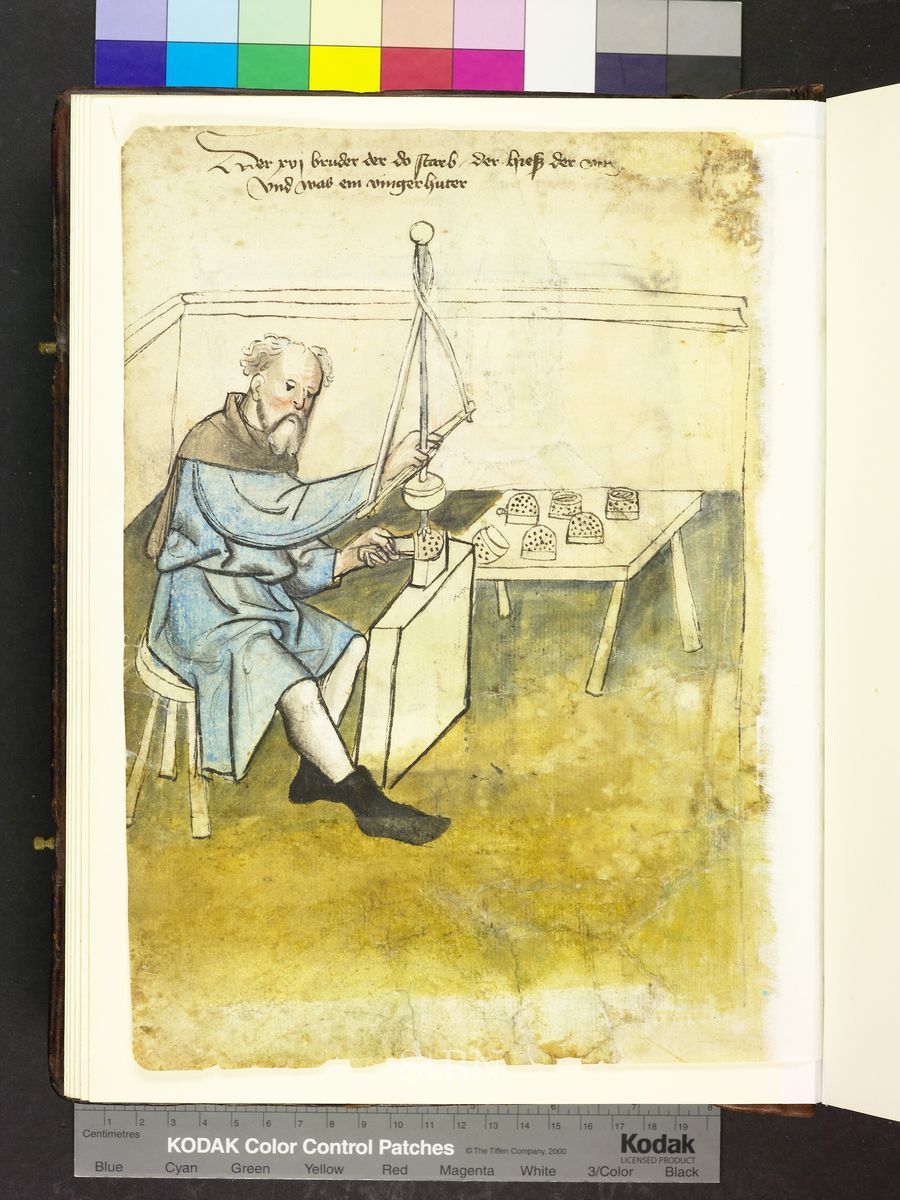
The pump drill goes way back in time.  At least into Dynastic Egypt and probably well beyond.  Drills like these are made from perishable materials so we only have the drill bits and generally do not know to what they were attached.  From and archaeological point of view, it’s a bit like trying to decipher a battle by looking at the spent bullets.

75-Amb-2-317-5-v.tifAgain, this one is from 1425.  The caption says he is a vingerhuter which I think would now mean thimble-maker.  Any help with this will be appreciated.  These things look more like wine strainers or little colanders to me.  Anyway, the important part to see is the awesome pump-drill and the small block on which he is working.

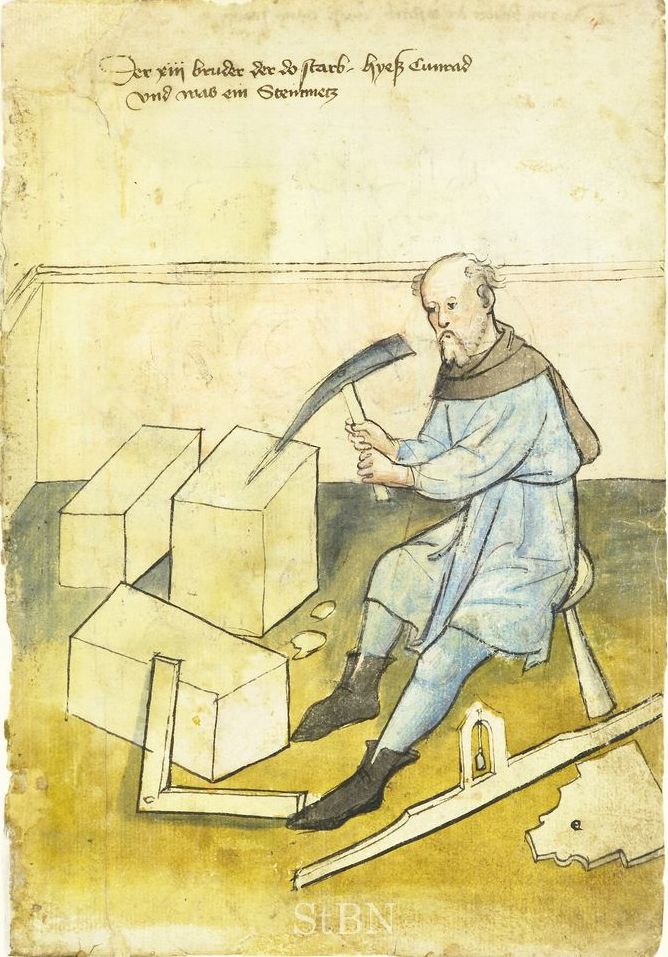
The next image is a stone mason at work.  I’m not a stone worker myself but I’m intrigued by a couple of his tools.

75-Amb-2-317-4-r.tifNot only does he have nice square and template but is sitting near his sighting level.  In the days before spirit levels, this involved a little plummet hung in an arc on a straight edge.  A bit like a sophisticated winding stick.  Oddly enough, no dividers are visible to round out the trio of masonic symbolism.

Carpenter, 15th-16th Century

Prior to power sawmills and corporate lumber production, much of the carpenter’s project time was filled with simply making trees into boards. Most illustrations I have found of preindustrial carpenters feature someone hewing, planing, or chiseling with the occasional scene of sawing a board to length or width.

An image is just as much about what is chosen for inclusion as that is left out.

I love to ponder the details of old illustrations and paintings to really see what the artist was trying to show us. These images are no doubt biased in what they choose to show; and for good reason. There is a semiotic tradition in Medieval illustration to choose certain symbols to denote specific trades or historical characters and it should be remembered that the illustrators are not necessarily experts with the trade they are depicting.

75-Amb-2-317-21-r.tif
If I were to let my hair and beard grow out a bit, I think I could pass for this guy.

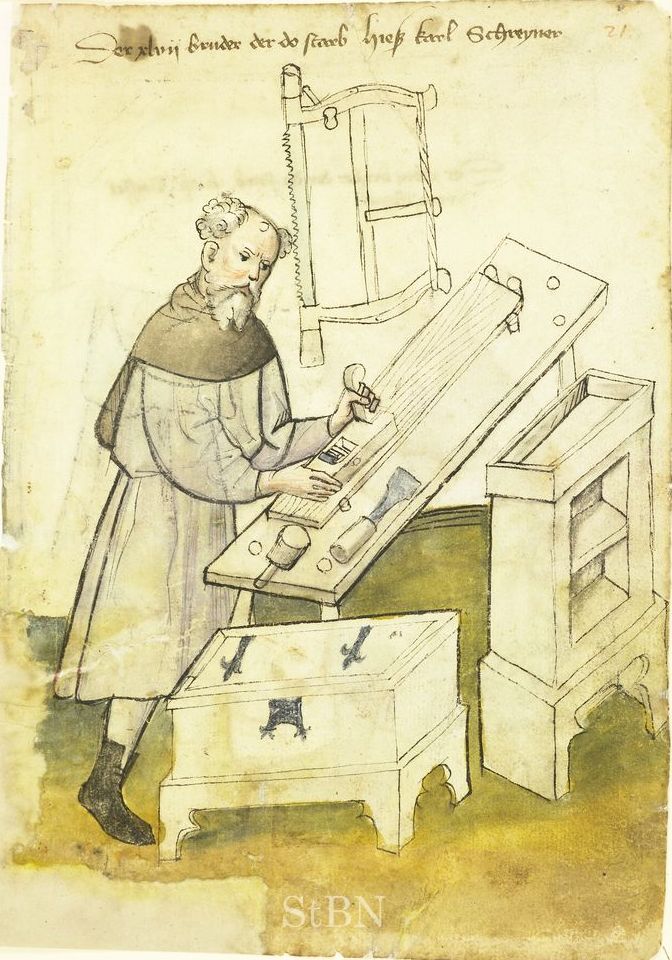
Here we have the same carpenter from a previous post dated to around 1414.

The foreground holds a familiar skirted six-board chest with iron hinges and an escutcheon plate around the presumed locking mechanism. Either he is building these or perhaps it holds his tools. Beside it is a nice little cabinet of similar construction. He is working on a simple European bench with through-tenon legs, popular since the later Iron Age. His board is secured simply by four bench dogs.

Only four hand tools are shown. The frame saw, plane, chisel, and mallet. No doubt his dividers, straight edge, and winding sticks are in the box.

75-Amb-2-279-12-v.tif

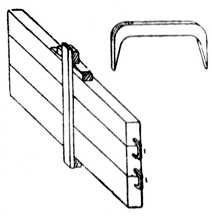
Just for fun, here’s another carpenter from about a hundred years later hewing a board to size with a bearded broad-axe. The work sits on a pair of saw horses with the typical tenon legs. Also, note the iron dogs used to secure the board to the horses. Living in the era of screw clamps, we don’t use these as much but they are still occasionally found holding boards while being glued like so:

clamping dogs

And finally, a late 16th century carpenter cross-cutting a plank. I like this image as it depicts more tools, though in less detail. Chisels, hammers, and a square hang on the wall, a plane sits in the background, and the broad-axe sits on the floor next to the hewing stump. The frame saw hasn’t changed at all. I don’t know if the supprt under the board is unique but it appears to be stepped to hold planks at graduated levels. Pretty nifty if you ask me. And finally, a couple of details about the clothes; I love the sagging stockings and the patched elbow of his shirt. Definitely dressed for work.

75-Amb-2-317b-50-r.tif

Looking Back at the Horse

Tools and work benches always create lots of discussion and bring out opinions.  I am re-posting a couple pictures that feature my bodger horse as it has created a few new comments.  This horse has been slightly modified over the years but is essentially the same as when it was made 5 or 6 years ago.  For most of what I do, this tool is just about perfect.  Comments are always welcome.

h1When I built this one, I had a full-size, long-bed truck.  Now, driving a smaller vehicle, I am considering re-engineering the whole thing to break down for packing.  If I stayed in one place regularly, this wouldn’t be a problem but I use it for teaching and demonstrations and is a little gangly to pack as is.  She traveled over 4000 miles with me this summer to a reenactment/demonstration and helped me teach a small woodworking class for a week.

h2Even though this one is just fine and went together quickly, the next time I build one I intend to fancy it up with some fancy joinery.

DSC_0126A work horse like this becomes the center of the portable workshop and can serve many purposes.

bodger15As I make modifications, I will update on this page as information on shaving horses is limited, even in the age of the internet.


Save

Occupation, Wood Turner ca. 1425

75-Amb-2-317-18-v.tifStill gathering old images of tools, occupations, and craftsmen.  Now I just need time to edit and post them in a sensible way.  To kick off this series, it’s a wood turner and his lathe from the early 15th century (German).  I think the artist may have neglected to show the tool rest here.

This one goes out to Kiko, Mick, and Veloja for their recent enthusiasm for the foot-powered lathe.

Adding Windows

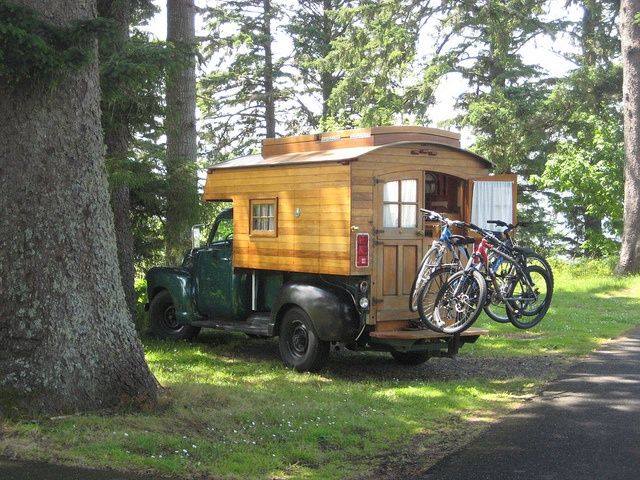
Finally, I’m getting around to adding side windows to the Vardo.  I’ve wavered for a long time as to whether this was what I wanted.  In the end, the ventilation and view won out.  Many decisions needed to be made.  What kind of opening, size, materials, etc.  In the end, I chose reclaimed oak as it is very stable, strong, easy to work with, and looks good.
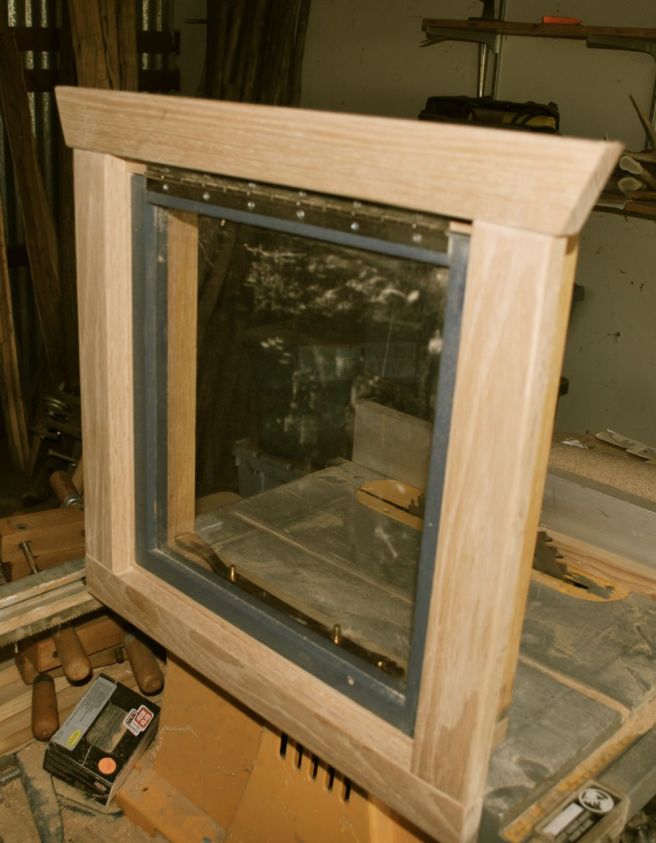
window03This isn’t a high-tech, double-glazed thermal window.  It is a simple square frame of oak around a Lexan pane with a simple, chromed piano hinge and a nice brass casement window mechanism.
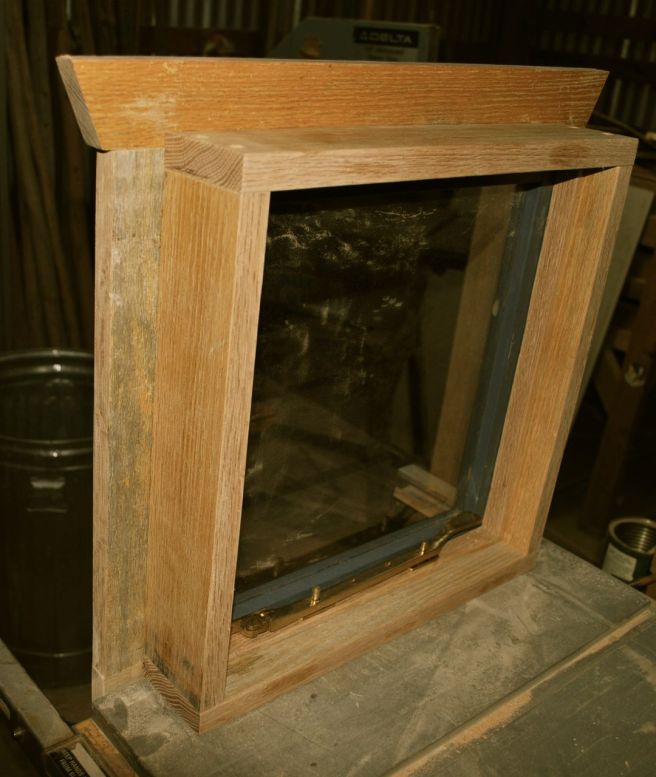
window02The discolored oak is visible here as I didn’t bother to remove the patina from the parts that will be invisible once installed.

I am sometimes criticized here for not giving enough of the remedial steps when building something new… So here it goes:

How to install a window into your Vardo.
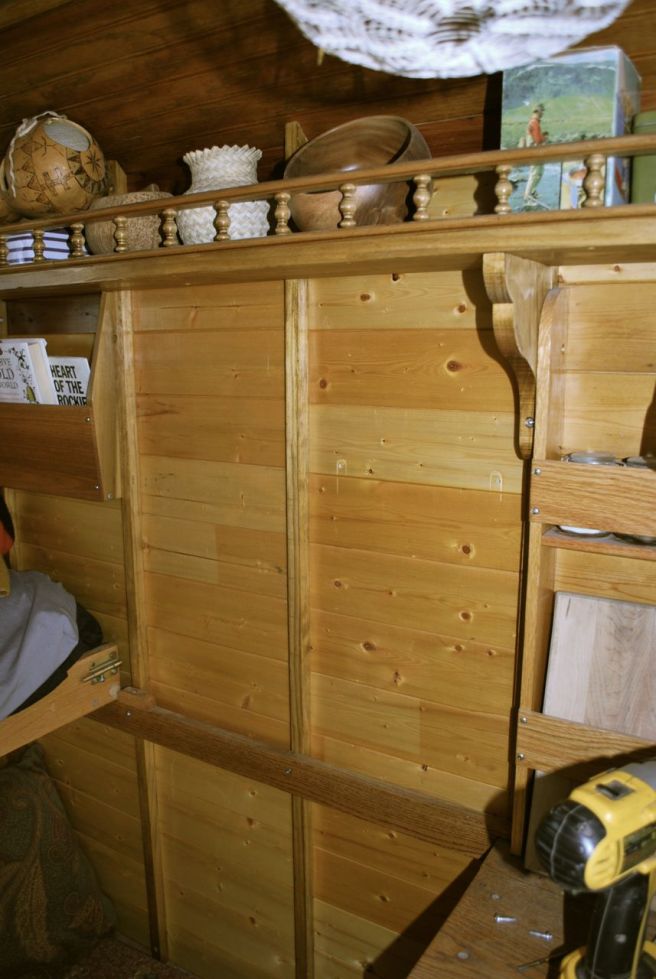
window04First, choose where the window will be placed.  I have kept this spot in mind from the beginning and have kept it free of shelves and cubbies.   I decided to center the window on the structural stud.

I knew where the window needed to be located on the inside, but finding the exact placement on the outside wall can be difficult.  In order to find the point on the outside wall, I drilled a small hole where the top center of the window should be.  Why did I need to do this?  Because the cutting from the outside smooth wall is far easier and less messy (keeping the sawdust mostly on the outside).

Using the hole as a marker, a line was created to layout the opening.

A framing square was used to square up the other three sides of the opening.  The circular saw was used, making a plunge cut (using two hands) as deep as possible, following the guide lines.

The nature of the circular blade prevents the saw from cutting into the corner so a hand-saw was used to finish up.
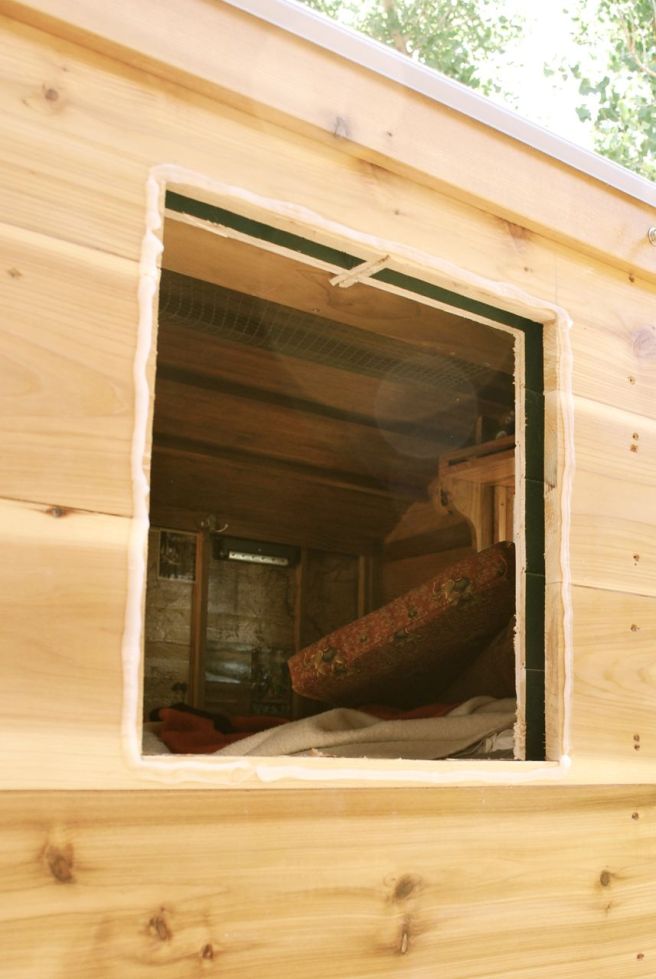
window15After a dry fitting to check the size, silicone caulk was applied to seal out water and the window was inserted.
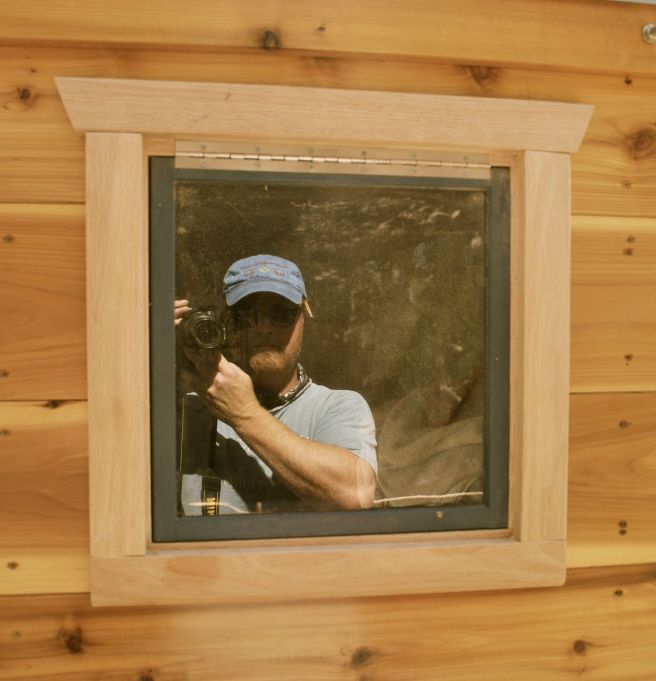
window14Having a look at the new window.

Checking the functionality.  Interior framing is not yet complete here.

Next step… making the shutter.