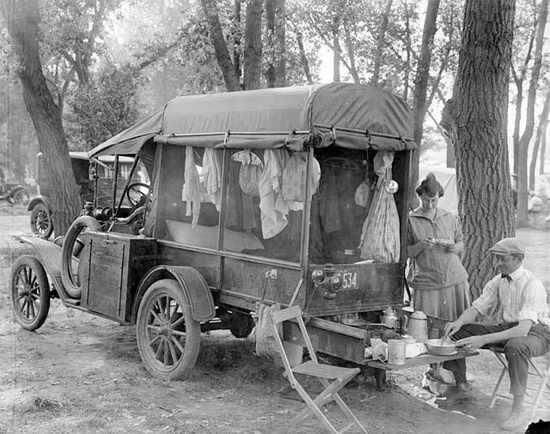
Here’s a very early camper vehicle. Side boxes for storage, slide out drawer for a work surface, kitchen, and table. Simple framing holds up mosquito netting and closes down with roll-up canvas walls.
Adventures of an Imperfect Man In Search of a Handmade Life

Here’s a very early camper vehicle. Side boxes for storage, slide out drawer for a work surface, kitchen, and table. Simple framing holds up mosquito netting and closes down with roll-up canvas walls.

“Here is the test of wisdom,
Wisdom is not finally tested in schools,
Wisdom cannot be pass’d from one having it to another not having it,
Wisdom is of the soul, is not susceptible of proof, is its own proof,
Applies to all stages and objects and qualities and is content,
Is the certainty of the reality and immortality of things, and the excellence of things;
Something there is in the float of the sight of things that provokes it out of the soul.Now I re-examine philosophies and religions,
They may prove well in lecture-rooms, yet not prove at all under the spacious clouds and along the landscape and flowing currents.”
In under ten minutes! Well, watch it being done anyway. Here’s a well-edited and excellent overview building a vardo from the ground up. I don’t know this guy at all but I love the video. I think it’s Canadian (for you Jim).
Please give comments or insights below.
 Here are a few interesting trailers from the Golden Age. I hesitated to post these some time ago as I could not rediscover the website they came from. I try my best to attribute images to their source. Tools like Pinterest and Tumblr are great but the data is easily stripped away.
 This is interesting stuff but I wish we had a glimpse inside these creatures “in use.” It’s easy to stage a photo but I appreciate it when we can see how the space is actually used.
 The awning or tent is the best addition you can make to your Vardo home. Look for more great vintage images here on the Old Picture of the Day Blog.

I love these old sheep camps. There are many on ranches from New Mexico to Idaho and beyond in old sheep and cattle country. They aren’t highway capable but it seems they could provide a real housing alternative for low-income minimalists. For many of us, living this way would be far better than a housing complex or apartment.

I took a fair amount of design inspiration from these wagons but added a bit of class along the way. I wouldn’t mind having a cook stove like this one though.

Off-the-shelf or build it yourself? I love these details in hand-built structures. This stove pipe cap has a classy look.

A short piece about Lorna’s wagon can be found here on the Tiny House Blog.
 There’s a new edition to the fleet of designs coming from Peter Pavlowich at Casual Turtle Campers. The unique, curved roof lines really make his work stand out in the crowd and I’m glad to see it again in his newest model. For me, this design melds the aesthetics of the early motor caravans with modern tastes.
 It’s a simple cabin design with a convertible table top bed setup that looks like it will work great for one or two people and answers all the basic needs of shelter on the go.
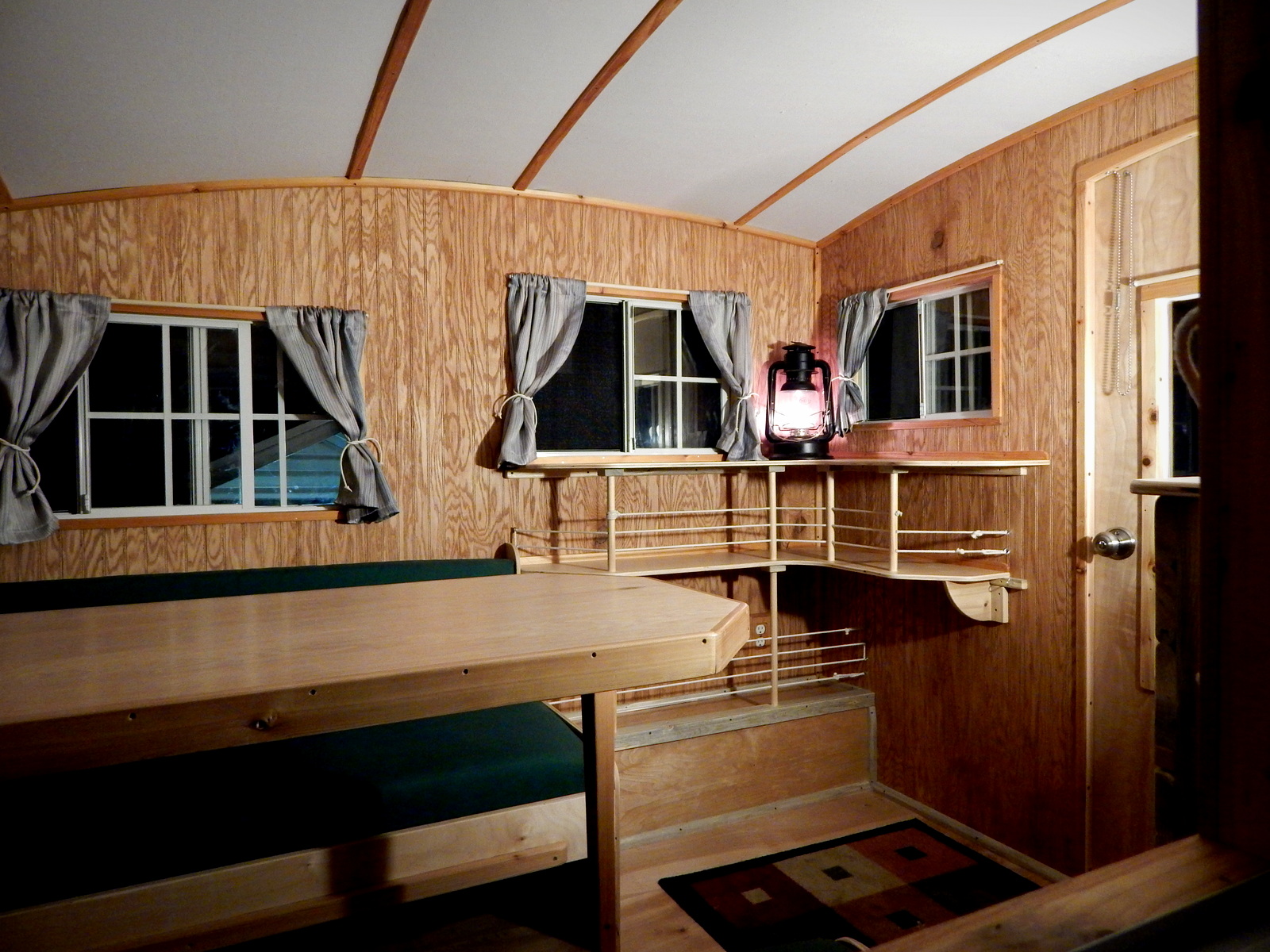 I heard from Peter (the owner and builder of Casual Turtle) last week and I think he can describe it best:
“Hey George-I thought I’d pass along a few shots of a recent build. This one was for a gentleman here in Colorado – the model I call the Terrapin. We went with a pretty full interior arrangement on this one. He opted for no painted surfaces (which I usually do), so we incorporated several different species on the cabin’s interior – oak, birch, cedar, and beetle-killed ponderosa pine – so it wasn’t a one-tone wood overload. It weighed in at 1,300 lbs, max headroom around 5’9″, and it goes down the highway just great.”
 It’s compact, lightweight, and is filled with windows to enjoy the great outdoors in any weather. It would be great to see this after the new owner settles in, decorates it to his personal taste, and gives it a “lived-in” look after a few thousand miles.

“Casual Turtle Campers was founded on the belief that wood is good, small can be comfortable, and that there is still room for simplicity in this increasingly complex world. “


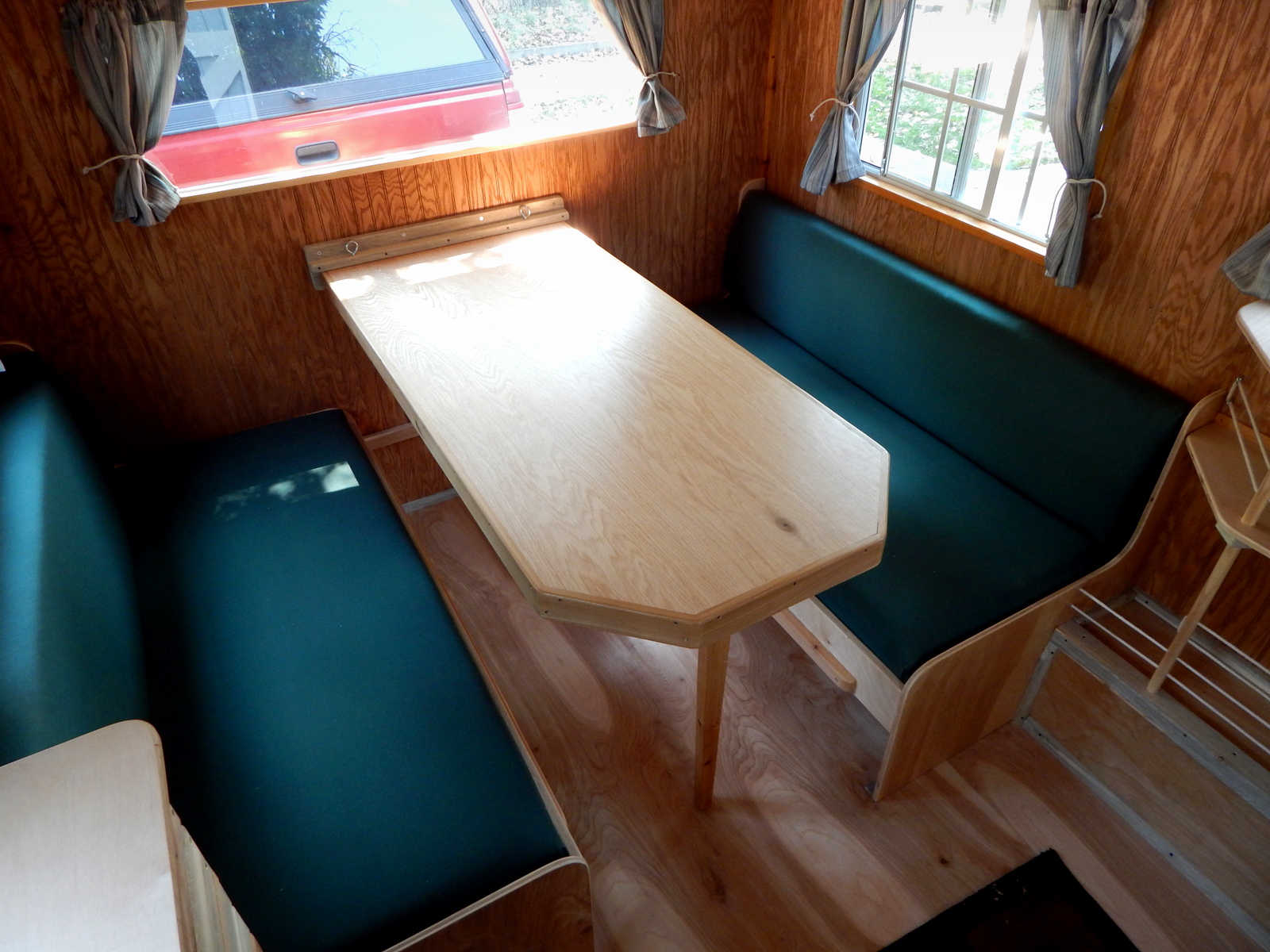 I enjoy the simplicity of this design. It reminds me a bit of the “canned ham” campers of the 1950s and is not overly complicated by cabinetry and appliances. The wood exterior fits in with the natural world in a way that shiny, white aluminum could never do, making it seem more at home in the woods than in the RV park. This would make a perfect base camp for hunting, fishing, or just gazing at the mountains.
 Here’s a little about Peter and his company from his web page:
“The idea for Casual Turtle Campers was conceived by Peter Pavlowich in the summer of 2010. On a road trip to Colorado, he noticed an abundance of truck campers but a profound lack of variety or style. As a Wood Construction and Design graduate from the University of Idaho, he believed he could design and build a simple and attractive alternative to the big, heavy, white boxes that he seemed to see everywhere. Over the next few years, Peter slowly and methodically brought together ideas and drew up plans for what would eventually become the designs for Casual Turtle Campers.
He very happily lives in Fort Collins, Colorado with his wife, Lindsey, and their dog/shop foreman, Moxie. We love when people stop by – just get in touch!”
Have a look at this and his other work by clicking the link below. Tell him I sent you! It’s not really worth anything but tell him anyway. GTC.


“I had to go alone…a kind of casual turtle carrying his house on his back.” -John Steinbeck, from Travels With Charley.


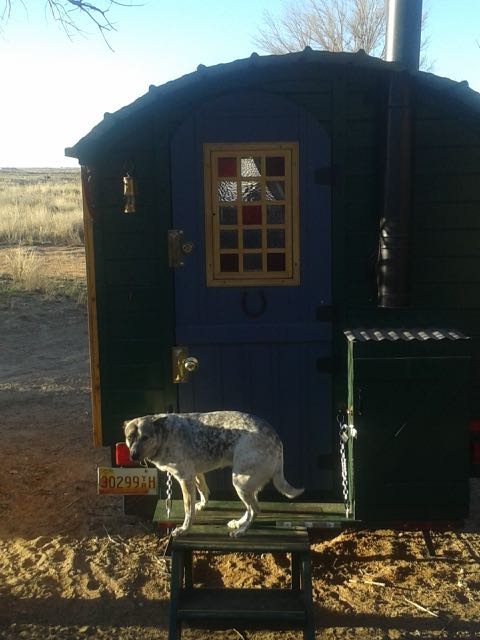
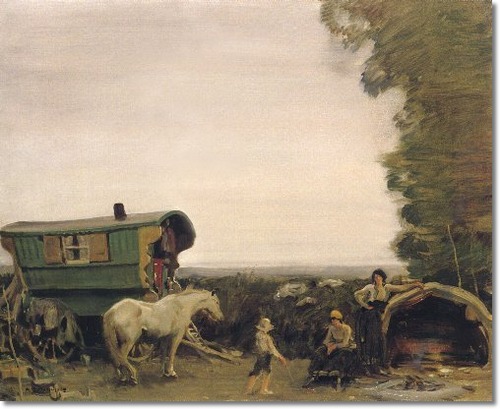
Some important facts about caravan living before the ultra-modern RVs came along that may help people understand some of the choices I have made about my own wagon:




Then as today, a conscientious traveller uses a fire pan to prevent scorching the earth by the roadside. Mine is an old plow disk.


And finally, above are a few examples of outside extensions added to late 19th century caravans across Britain exhibiting the functionality of canvas to extend the living space in less-than-perfect weather.
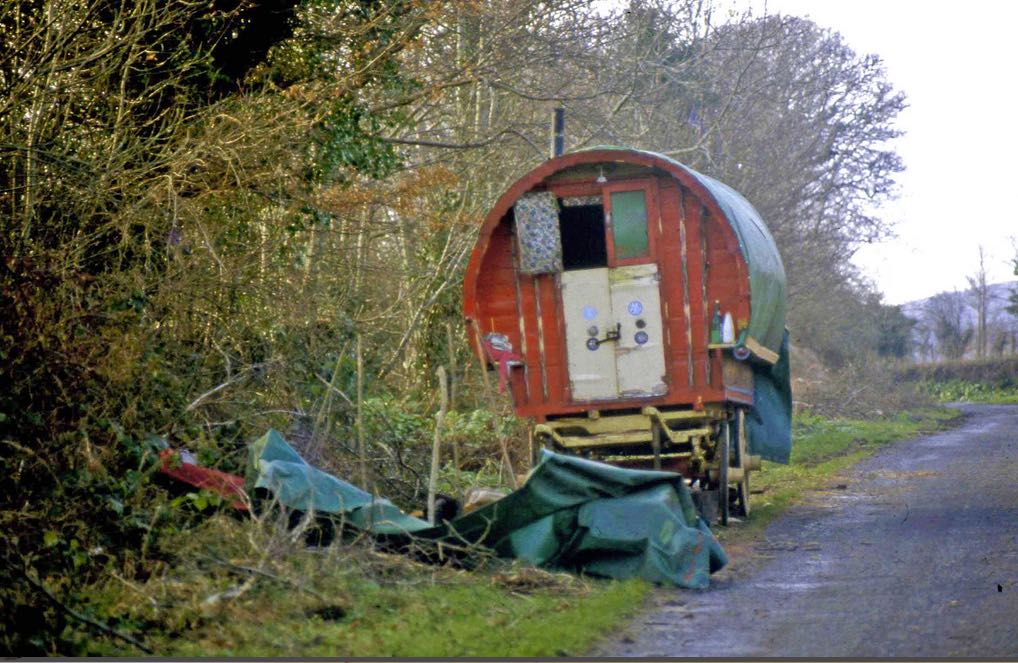
 Just why the hell not?
 Preindustrial Craftsmanship