
A Saw horse or a full-size workbench, for Hobbits?
 Living where I do, without a proper workshop, I have moved to a more portable setup. Along with this, I have pared down by letting go a number of cumbersome tools. However, a flat, solid surface is sorely missed.

I find myself working on the seat of the shave-horse or on top of saw horses quite a bit with my small table-saw serving as a layout table (when the project is small enough). And yes, I do miss the full-size table saw for ripping long boards.
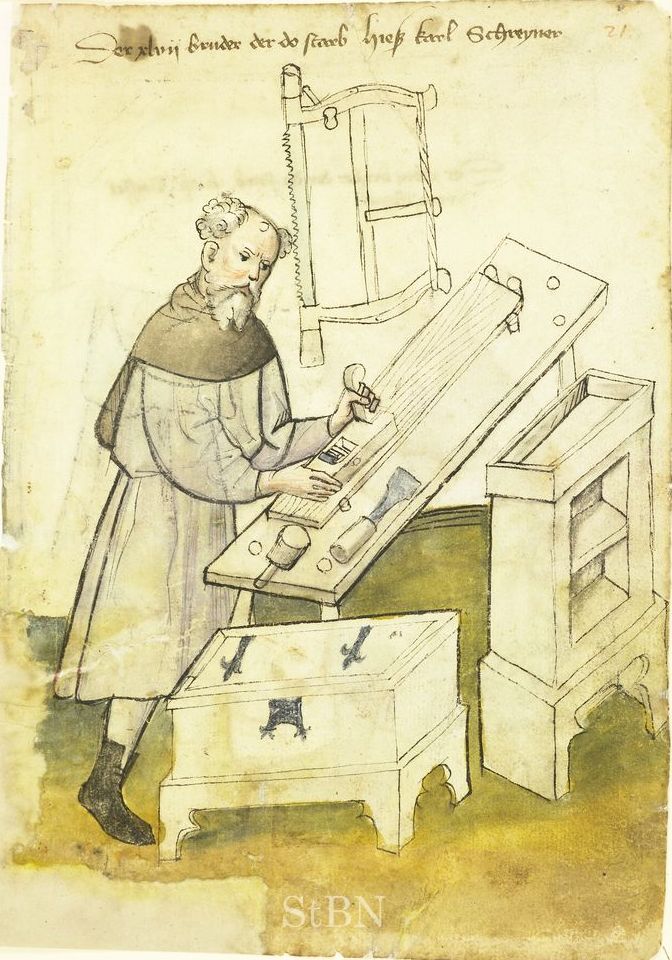
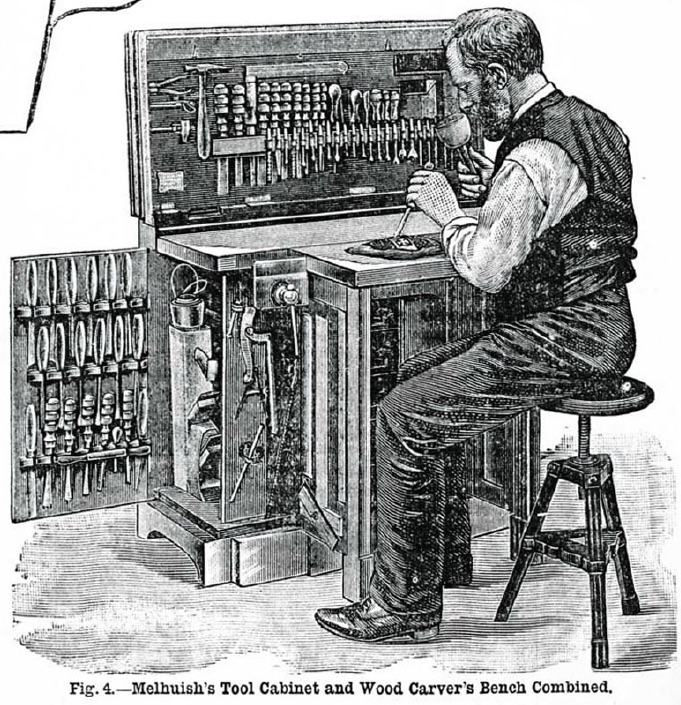
A little over a year ago I began scheming for a small, pre-industrial-style setup. Something an itinerant carpenter or bodger would be likely to use. It needed to be easy to move and store but provide a solid clamping and layout surface. I wanted it at the same height as my shave-horse so that they will work in concert for large projects. So, when my friend Mick gave me a thick, rough-sawn maple board last summer, I decided it was to become the top of a new saw bench.
First, before the mail comes flooding in;
there is no perfect formula for a saw bench! For thoughts about height, look here: “A Proper Saw Horse.”
There are some wrong and right things to do, but all in all, there are as many combinations as there are woodworkers. Much depends on what you make and how you work. I am 6’1″ and after much changing and experimentation, I use 22″ tall benches for hand work.

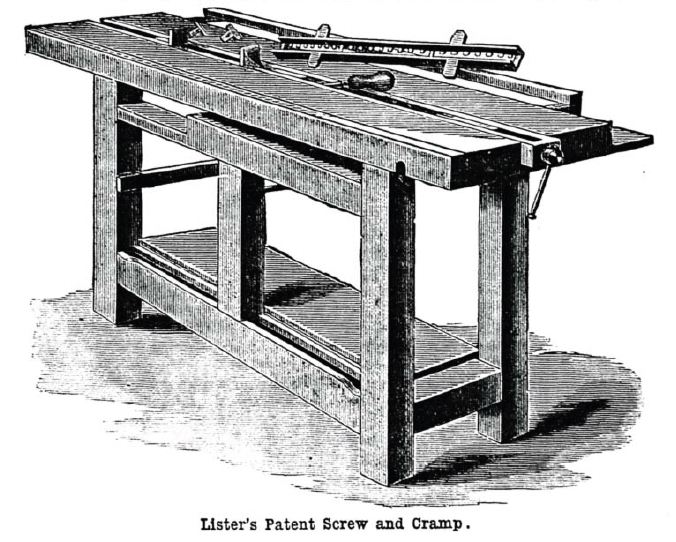
For what it’s worth, here is the bench I came up with last weekend. It maybe grew a little too much, trying to more than a saw horse, but still not a Roubo.
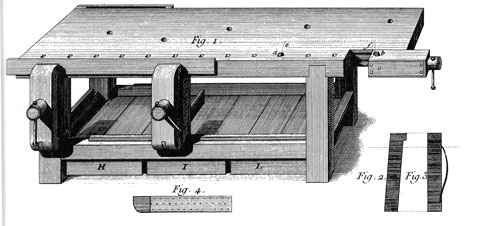
Materials: All of the materials for this project, other than lag bolts and a few stainless steel screws, came from the scrap pile; all recycled lumber except the top which came from Mick. Legs and bracing are constructed from oak while the till bottom is dimensional pine from an old shelf. The legs are splayed at 12 degrees in both dimensions. Dog holes for stops and holdfasts will be added soon. The little vise was a last minute addition as it’s never a bad thing to have too many ways to hold things. This increased the project price to just over $20 US.

Had I considered the vise sooner I probably would have positioned the legs to place it closer to the left end but this will due. The little hardware till on the top will hold those wily drill bits and pesky chisels looking for an escape as well as corralling screws, pencils, and marking knife. More work will be done, and I’m considering a second till near the bottom of the legs to store the shooting board and bench hook as well as a safe place to set a saw while working outdoors.
Comments and criticisms are certainly welcome and more information about this project will be forthcoming in the near future.





 Preindustrial Craftsmanship