They are everywhere right now. He must get some rain down that stove pipe.

Adventures of an Imperfect Man In Search of a Handmade Life

They are everywhere right now. He must get some rain down that stove pipe.

I love these old sheep camps. There are many on ranches from New Mexico to Idaho and beyond in old sheep and cattle country. They aren’t highway capable but it seems they could provide a real housing alternative for low-income minimalists. For many of us, living this way would be far better than a housing complex or apartment.

I took a fair amount of design inspiration from these wagons but added a bit of class along the way. I wouldn’t mind having a cook stove like this one though.

Off-the-shelf or build it yourself? I love these details in hand-built structures. This stove pipe cap has a classy look.

A short piece about Lorna’s wagon can be found here on the Tiny House Blog.
Here are a few classic Sheep Camps from the Wyoming Tales and Trails webpage. There are some great photos and some good information on their web page. I personally took a lot of inspiration from these resourceful and low-cost housing solutions.


There’s a lot of other information and photos of western history here too. Have a look around.


I have posted quite a few images and links to classic old-time sheep camps here over the years. If you travel the small byways of the Mountain West you will still see plenty of old sheep camps in use or parked around ranch houses today. But the sheep camp isn’t just a thing of a past generation, they are still being rebuilt, restored, or made in shops for modern use.
 If you aren’t sure how this differs from a modern RV, you may not be alone. However, there are some subtle but significant differences. First of all, the sheep camps tend to be built much more sturdily than their recreational cousins and almost always have a wood stove for heat due their use in remote mountains. The over-built bodies and heavy-duty frames allow them to be dragged into all sorts off-road locations without damage. As a working accommodation they tend to be more spartan than many new RVs.
 Note the traditional wheel arrangement on the model above. This type of running gear allows the wagon to be pulled into any location and is always set-up. No need for jacks if you can find a relatively level patch of ground. However, if the wagon is to be primarily pulled on the highway, a more modern configuration adds to their towability as seen below.

 The layout is classic (I modeled my layout, in part, on this style wagon) with the bed across the back and a stowaway table. The people at Timberline Range Camps, who create the wagons pictured here, have preserved the classic features in a fully modern “camp”.

I get no endorsement from them but please go and check out their work.
Tiny sink, lots of storage, and a two burner stove are perfect for a couple working folks or an cold weather hunting camp.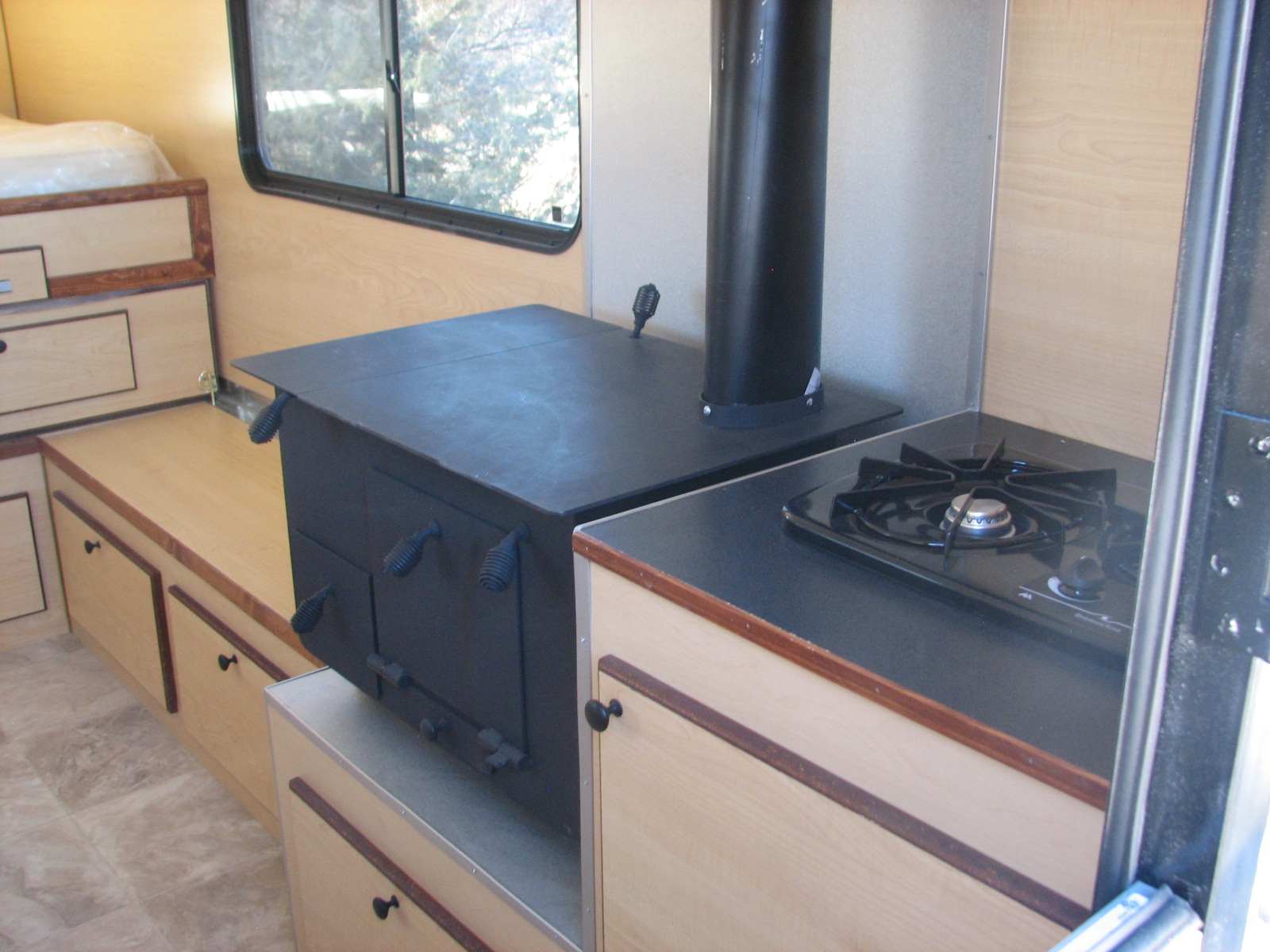
Nothing fancy required in an off-grid home like this.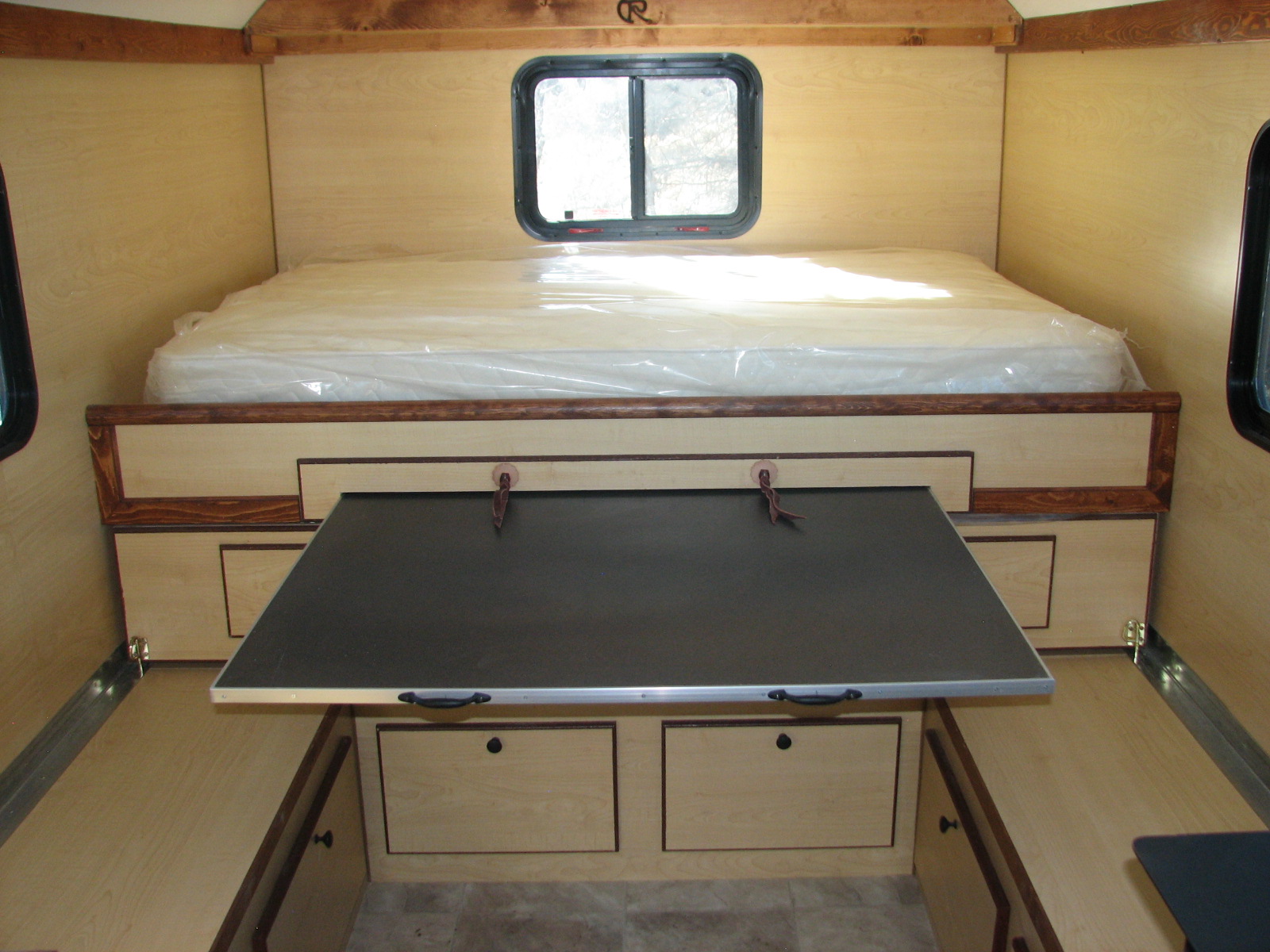 Although the wagons have grown in size to accommodate the modern worker I appreciate their dedication to simplicity. One of the coolest features, I think, is the bed-under-the-bed.
 The lower bunk slides in and out as a drawer to completely stow away with a minimum of wasted space when not needed. If you want the vardo-caravan-sheep camp lifestyle but cannot bring yourself to build it, explore the many options of the modern builders. This is just a small sample of what they offer, check out their web page and blog to see many more photos: http://sheepcamps.com/
Many considerations concerning floor plans and general layout have come my way over the years. I am compiling as many as possible to post here. To start things off, here is the iconic Reading Waggon by Dunton’s (note: two “g’s” in the older British spelling).
 This design is truly the classic. When one sees this, it cries of the open road and Gypsy Wagons. It is Henry David Thoreau’s Walden cabin on wheels. The wide rear axle and narrow front carriage was the best of compromise for agility, weight, and worthiness on and off road. This design is worth a potential builder scrutinizing in detail for it’s perfection of design. A mollycroft roof, high clearance, well-proportioned windows, and solid design make this ideal for the rolling home.
 On the downside, kite walls (out-sloping) add some difficulty when working on interior shelves and cabinets. Also, as noted for over a hundred years, the mollycroft can weaken the roof and ultimately increase the chance of leaks. A small price to pay maybe but something to keep in consideration.
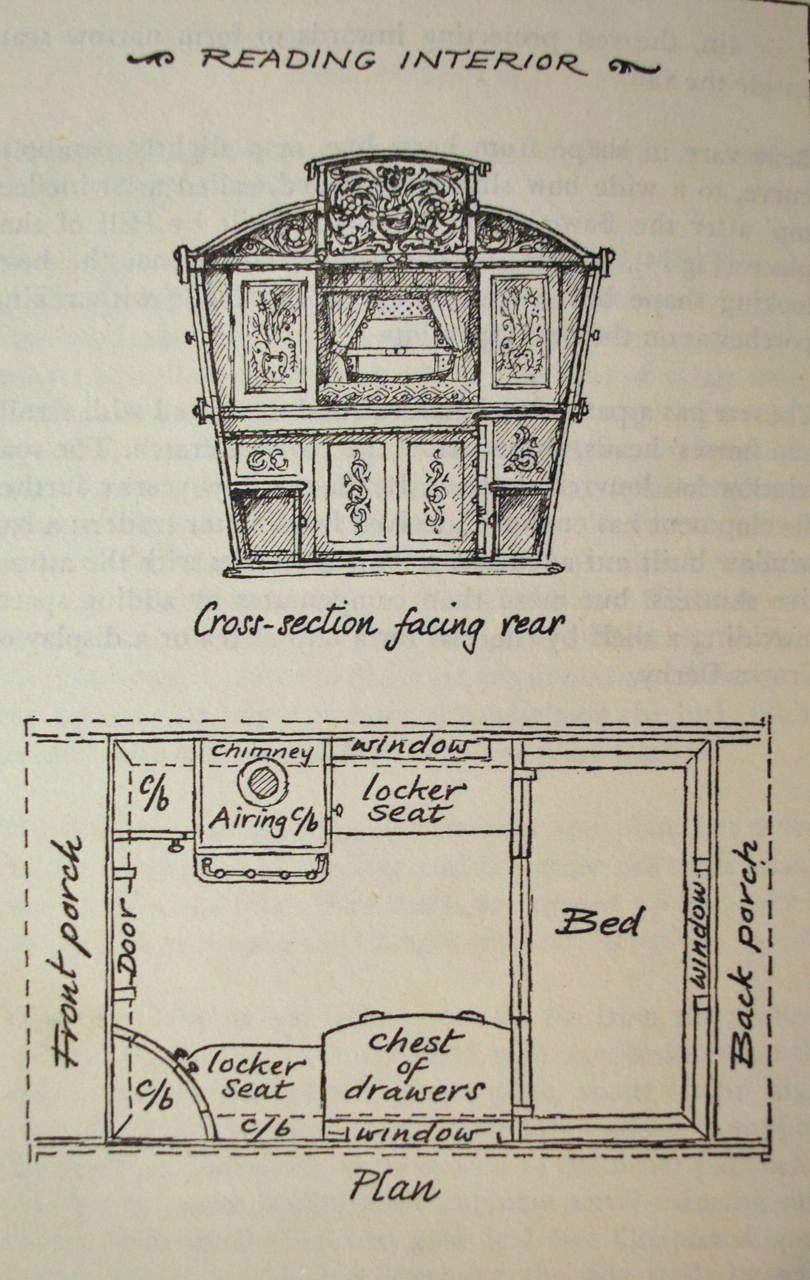 The classic caravan at this period included a full chest of drawers and a fairly large stove, limiting seating to a largish space on the stove side and a small dressing seat next to the dresser. Although we read of dozens of children being born and raise in this design, the real layout seems to be based on the couple. Kids will make due.
All images above are taken from The English Gypsy Caravan, currently out of print.

This post is a re-cap of the Vardo build. I get questions about this project at least three times per week and I think it has inspired a few other people to make the leap. I still consider it a work in progress even though it is four years old and has 18,000 miles under it. New and improved ideas are being added right now but maybe this will help somebody get started.
 After the sketch-up, start making parts. This was a momentous occasion for me.
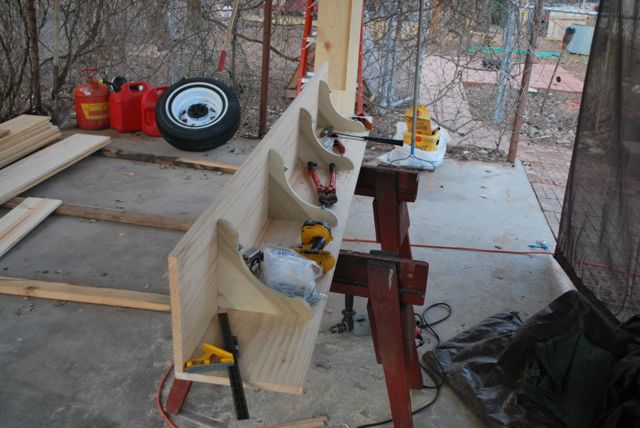 Assembly begins. Mild panic sets in; “will this work?” and “am I crazy to dive into this?”
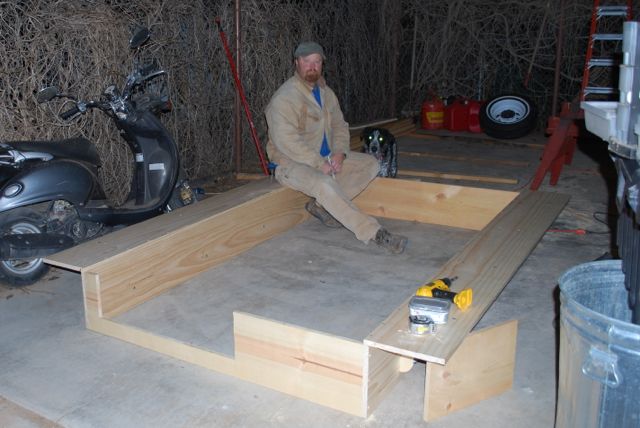 At this point, I took some time to ponder. “Is the size and layout really going to work?”
 Attaching the ledge to the prepared frame.
 Build, build, build. Using a window of good weather in January.
 Even relatively easy details, like door placement and size, were still up for change.
 Finally, I can get a real sense of scale.
 I fell in love with the design once the box was built.
 Working alone means lots of clamps.
 Gawkers were willing to take pictures.
 The bed framing becomes integral to the structure.
 Seats were designed and tested for size and functionality.
 The first storage is done.
 Wood is good!
 The shell becomes complete.
 Now for the details.
 Temporary window inserted for a quick trip to the desert.
 Quick coat of paint and off we went.
 A little living helped bring together the details.
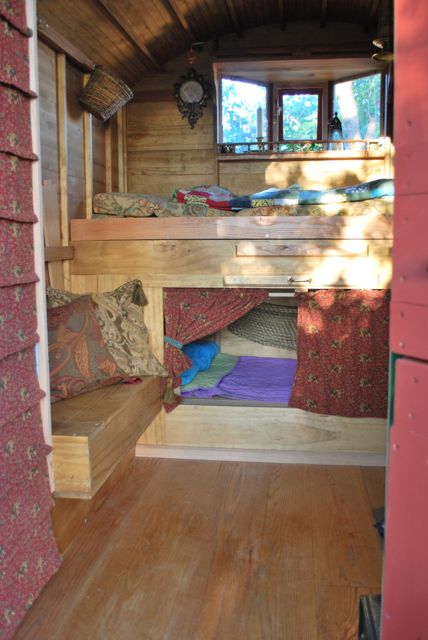 Spending time in the space gives an idea of where things are needed.
 Finish work is a process, not an event.
 The Vardo becomes a home.
 A safe and cozy nest on the road.
 Still far from done, I took her cross-country anyway.
 Things began to come together after a few thousand miles travel.
 Finishing touches are added constantly.
 As are safety details.

 Still making changes and additions four years down the road.
More big changes are happening and I hope to get up some new information very soon. I think an important fact that this project showed was that, for a relatively low-budget, and a little patience, a little home can be built over time but still be usable along the way. I didn’t wait for every last detail to be completed before putting this house to good use or I’d still be waiting today.
 Another web find.


 Preindustrial Craftsmanship