Summer before last, the girl decided to branch out from just turning our yuccas into cordage. After being inspired to make natural clothes by constructing a cattail hat, she decided to make a yucca skirt roughly modeled on the elderberry skirt example in Paul Campbell’s book Survival Skills of Native California.
The completed skirt. The buckskin shirt isn’t usually tucked in but is here show the top of the skirt.
In the past we have cleaned the fibers both by retting and by cooking. The cooking is far faster so she spent a couple days stewing and cleaning the leaves for the project. The resulting skirt was from a single large narrow-leaf yucca. To make it fuller, it would take about twice this much fiber. This is an excellent project that I think would translate well into other materials and could result in a cape, blanket, or even shelter.
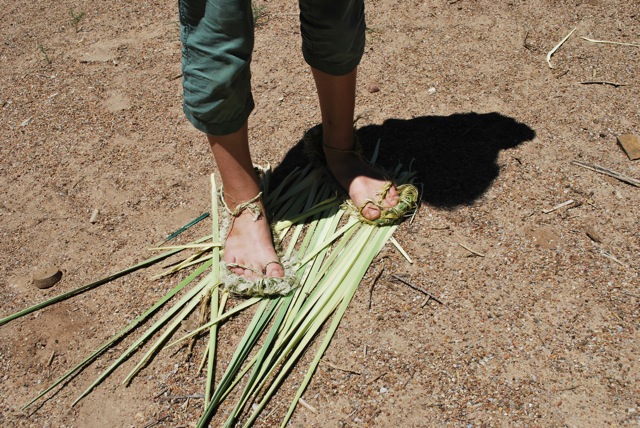
To top it off, here are a pair of yucca fiber sandals to complete the outfit.
These aren’t the fanciest pair but were quick and easy. One pair can take almost as much fiber as a skirt. Next time, I’ll try to document the process in a “how to” format.
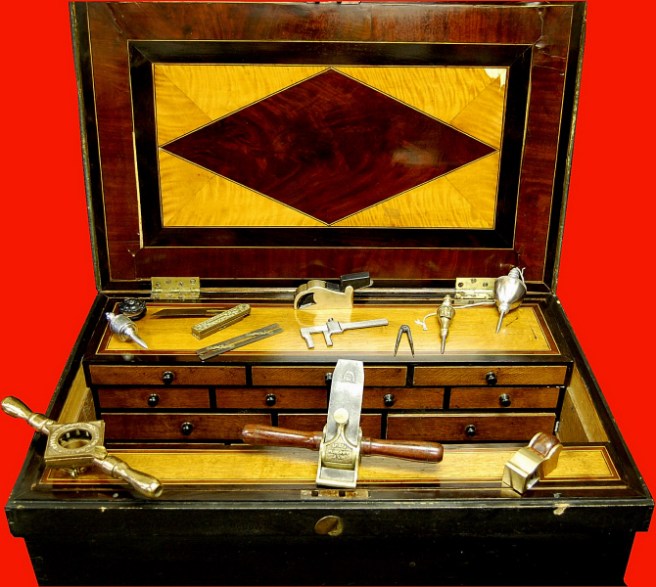
If you love beautiful tools (if you don’t, you should) there is a remarkable web page devoted to some remarkable historic tools. I hope to see these in person someday. I hope I get to Michigan or find him on the road sometime. He’s got a pretty amazing paint job on the trailer too.
Click the ship plane to open the museum in a new window.
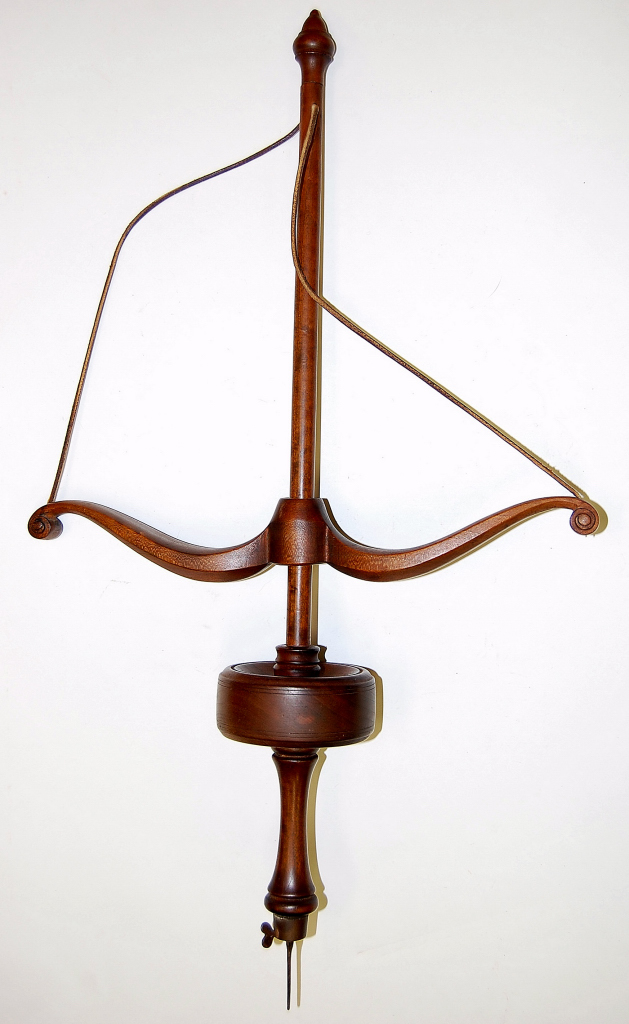
I really like this drill. I think I need to make one.
The culture of off-beat primitive technology gatherings has grown and morphed into many forms around the continent and I suspect, around the world. Certainly, when I was a school kid, I didn’t know of anything approaching the types of gatherings we enjoy today. I guess the closest thing we had were Larry Dean Olsen’s practical book on outdoor survival and some near-mystical writings by Tom Brown. A little later I found Bradford Angier’s How to Stay Alive in the Woods which made survival in the far reaches seem completely possible with just a little skill and knowledge.
There was actually about a decade where I thought that a few of my friends and I were about the only people practicing “survival” skills, foraging, friction fire building, making bows and spear-throwers, and eating wild foods. There were rumors of things out west. There were re-enactors living primitive if only for a weekend. Rumors of some big meeting in Idaho, but no one seemed to know how to find out more (this was before the INTERNET!).
In the mean time I read more ethnographies, more archaeology and technology papers. I combed 100 year old issues of Nature, Proceedings of the Royal Society, Antiquity, and other views of people from different times and places. My personal research took me into archery, boomerangs, spear-throwers, fire making, blowguns, music, shelter, and hide working, to only name a few. It wasn’t until I was lucky enough to find the Society of Primitive Technology, then in about its fifth year, that I felt things really coming together in a community situation. People are social animals and real survival only works in a community.
The generation growing up now has much more information to draw upon from experimental archaeologists, outdoor survival schools, adventure programs, and people who have actively pursued a life outside the norm of consumerism as a way of life.
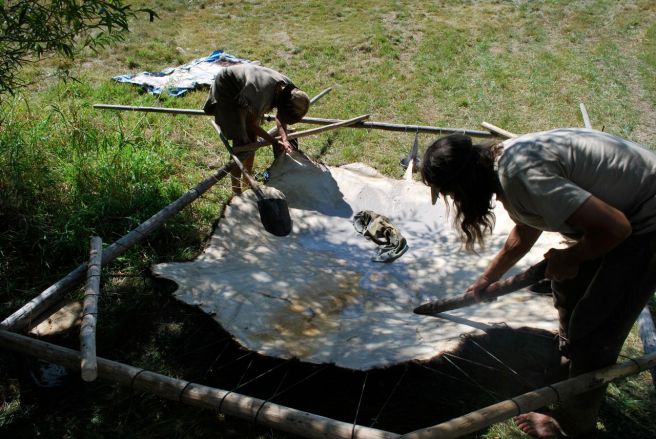
Hide scraping is a community effort. Rabbitstick 2009.
The two big gatherings associated with the Society are Rabbitstick near Rexburg, Idaho and Winter Count near Maricopa, Arizona. Each are week-long instructional gatherings that teach various survival, primitive, and other off-grid skills. Participants and instructors are probably the most diverse cross-section of people one could ever find assembled in one place.
A pottery class firing at Winter Count 2011
A small but interesting primitive skills gathering is the Bois d’Arc Rendezvous in southwest Missouri. While working on some archaeological projects in the region, I was lucky enough to meet up with Bo Brown and Don Brink, who really made this event happen over the years. This event has a slightly different feel than other gatherings as it is partnered with a knap-in*.
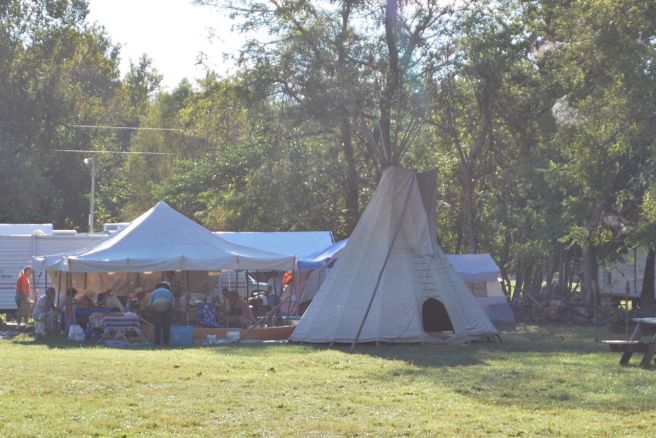
Bois d'Arc Rendezvous
The Echoes in Time gathering is held for five days in July near Salem, Oregon. This is a fairly structured workshop/class-type event with a daily schedule. I think some people respond better to this than other events where classes come and go and have an amorphous schedule. Although I know many of the participants, I cannot speak firsthand about Echoes as I have not made it to this event (yet). Meals are not provided but there is a communal kitchen area and cooking may be done in camp on a portable stove.
Tools from Winter Count 2011. Click the image to go to Jeff Damm's excellent photo collection of past events.
The Buckeye Gathering is a newcomer to the scene but seems to be heading for greatness out in California. One of its unique qualities is its close tie to the Native community. It is held at the YaKaAma Indian Education and Development center about 90 minutes north of the San Francisco Bay area.
The central arbor at Buckeye.
Firefly Gathering: This is another relatively new one and luckily for many, it is near the east coast. I have not been to this one either but it is on my short list of things to do in the near future. Its in a beautiful part of the world and I wish them well.
Earthskills’ Rivercane and Falling Leaves Rendezvous. These folks put on two major events each year in spring and fall out in northern Georgia. It is pretty huge and even offers hot showers for participants. The instructor list is extensive and impressive. Check them out if you live in the area or can get to the eastern seaboard for a great vacation.
If you are interested in “primitive” skills, homesteading, wilderness survival, or just crafting things to make your life better, consider an immersion in one of these events. Then, if something really catches your fancy, there are many instructors and schools out there that will take you farther in a direction you may want to go.
*For some odd reason, knap-in folks don’t tend to mix with the other “primitives” although most of us primitive types are at least fair-to-middling knappers ourselves. I think that the deep-seated reason is about process versus product. Many knappers I know are mostly interested in the product as a object d’art whereas the archaeologists and primitive technologists are more concerned with the process and functionality. A secondary reason may have to do with image. The primitive technologists and survival-types are often a little rough around the edges for polite society and may even fall so far as to be considered an all-out bush hippie**.
**Bush hippie – def. “Hippie” person who lives rough on the margins of consumer society. Often sporting re-purposed or handmade clothing possibly made from buckskin. Hair is plentiful and the cranial portion often in the form of dreadlocks.
Bone fish hooks made in the last week. I have made a few in the past but NEVER fished with them. They are plentiful in Village contexts along the Missouri River, all over Europe, and many other contexts. It seems to have taken several millennia in some areas to add barbs or drilled ends. I will make a couple more styles and various sizes and hope to try out my kit sometime when I get back to water. The cord is a two-strand agave made from only four individual elements.
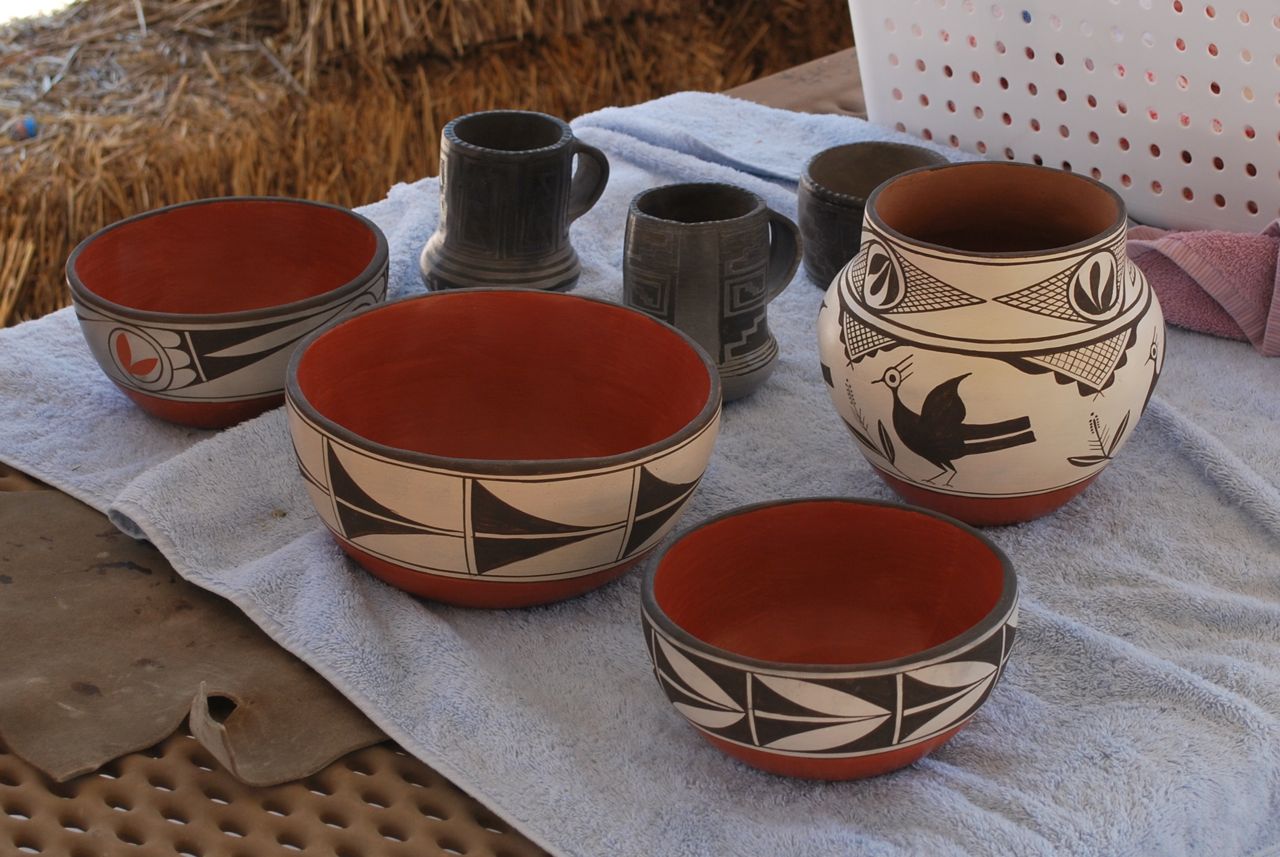
Ulysses Reid came down to our Prehistory Days event this weekend showing his art. He is an excellent potter from Zia and was able to have a small firing on some nearby property after the days activities. Despite the 110 degree heat, about 150 people turned out to learn about flint knapping, fiber arts, prehistoric hunting, plant foods, spear throwing (atlatl), and other skills.
Here are some Inuit style snow goggles carved from juniper (Eastern Red Cedar). I have made a few pair in the past but keep giving them away. It is much more difficult to get a good fit on the face than most people imagine. They need to fit well, be comfortable, and allow good visibility without touching the eyelashes or other moving parts around the eye. I am currently copying another, more intricate pair from Boas’s Central Eskimo. A truly great ethnography, full of images and very well written.Small carving projects like this are a great way to utilize scraps from the wood pile.
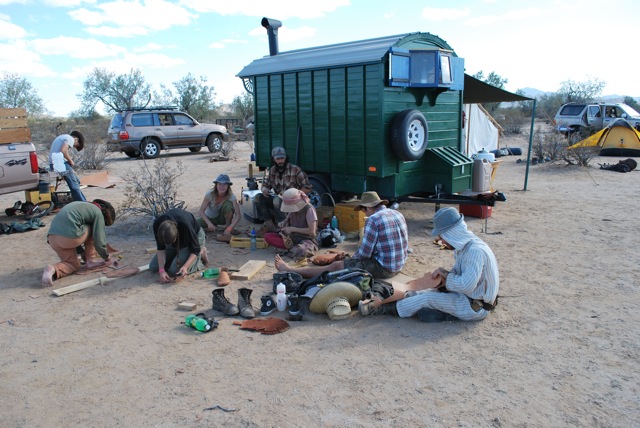
A few photos of the vardo in the desert at this year’s Winter Count. Along side the usual survival skills, I also taught another simple shoe class.
Click the photo to see more uploaded images of the little vardo in action.
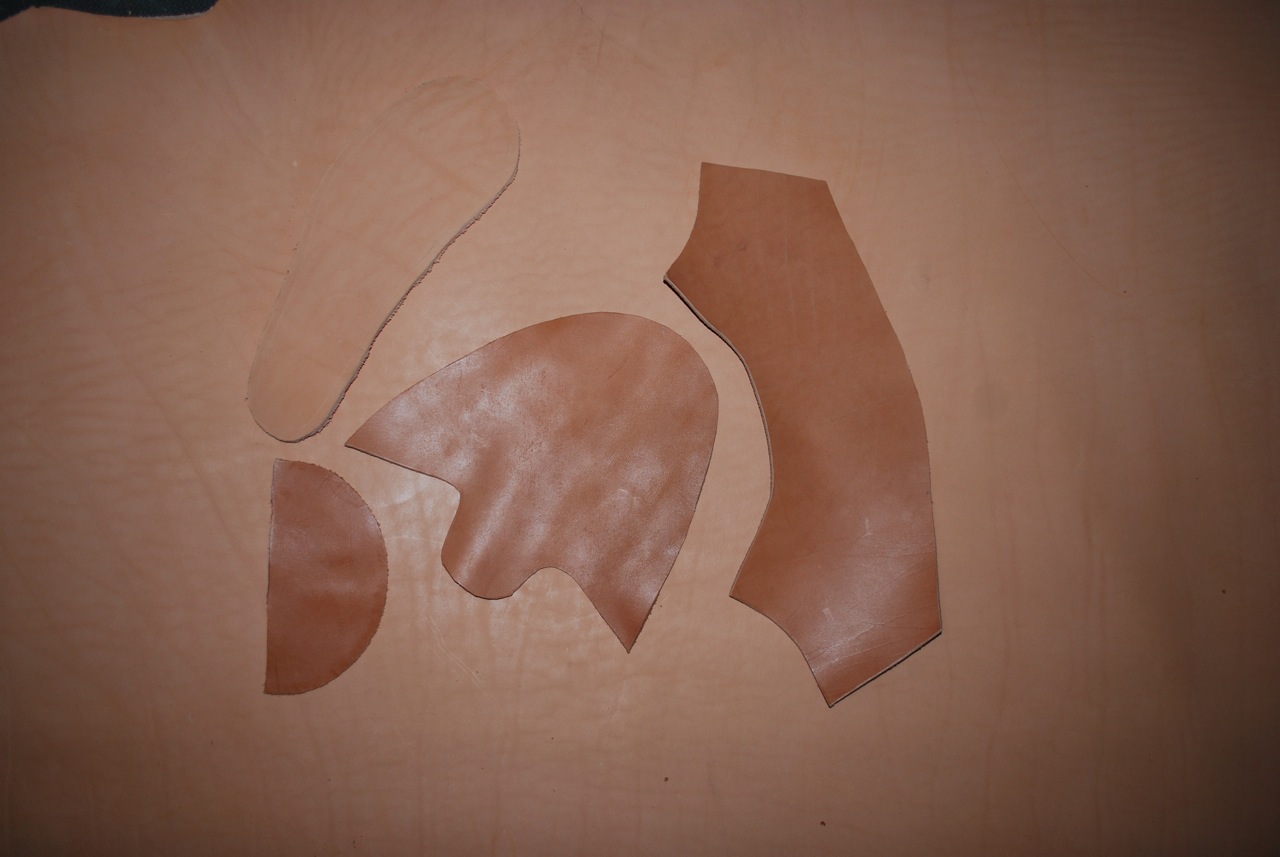
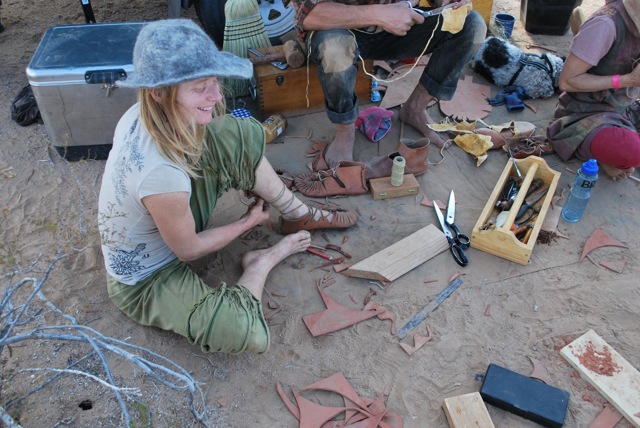
This ghillie shoe class was busy again and I think we had about 16 participants. It’s always more work for the students than I think it will be as many have not had much experience working and cutting leather. I think they all came out great though.

 Summer before last, the girl decided to branch out from just turning our yuccas into cordage. After being inspired to make natural clothes by constructing a cattail hat, she decided to make a yucca skirt roughly modeled on the elderberry skirt example in Paul Campbell’s book Survival Skills of Native California.
 These aren’t the fanciest pair but were quick and easy. One pair can take almost as much fiber as a skirt. Next time, I’ll try to document the process in a “how to” format.







 Preindustrial Craftsmanship