Here’s another excellent video of Robin Wood, wood turner and traditional craftsman. Visit his website to learn more about this remarkable man and his admirable career choice. As he explains, his job is easy to describe while so many careers are just about impossible to explain what one does and we create fancy titles to describe what we do all day.
There’s been a noticeable increase in crafted products over the last 5 years.
From Artisan Bread, Chocolate and Beer to handcrafted bicycles, bags and belts. Crafts have been celebrated in books, documentaries and Design fairs. Artists like Joana Vasconcelos have adopted crafts such as crochet and lace for their chosen media, and even graffiti has taken a crafted turn with new techniques in stenciling and knit-bombing. With significant developments in progressive crafts such as digicraft, many industrial designers are also turning to craft values instead of the traditional industrial ones.
But why is it that in today’s increasingly technological culture is there also such a strong crafts vibe?
A successful exhibition titled POWER OF MAKING at the V&A in London recently celebrated this craft resurgence and presented some reasons for it. A few of the exhibiting artists, designers and craftspeople like Ji Yong-Ho and Demakersvan have already…
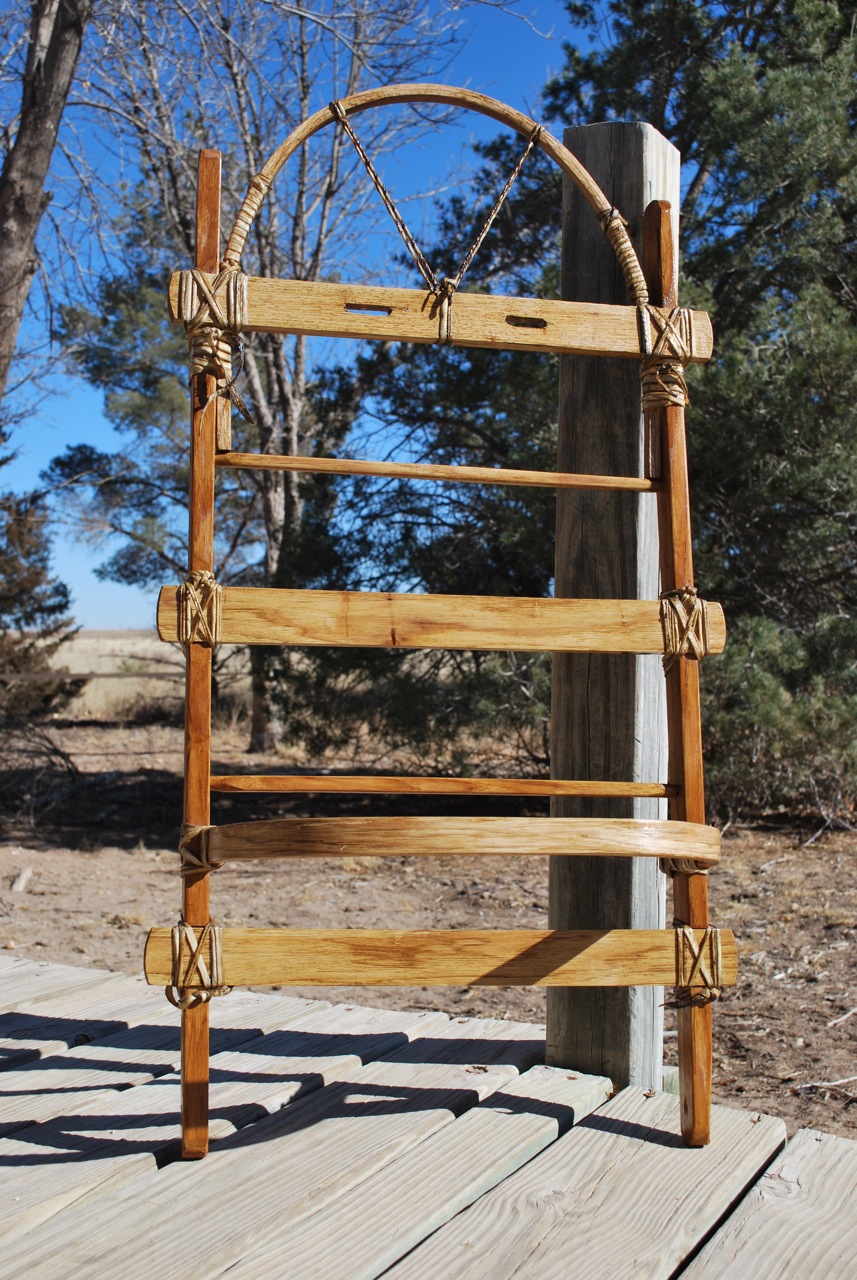
Here’s a detailed photo of the naked frame with an initial coat of oil & pine-tar coating. This will weatherproof the whole thing and make the rawhide less appealing to critters (I caught my dog licking one of the lashings this morning). This mixture is about 60% boiled linseed oil and 40% Stockholm pine-tar, an ancient coating used on just about everything in pre-industrial northern Europe. It should dry in a day or two and be ready for a second thin coat later in the week.
Learning from the past is important and I sometimes think about this from a design perspective. Can we learn from old traditional designs, or techniques and apply them to modern design? Is all primitive design and technology inferior?
I believe that at the very least learning about old ways can provide us with food for thought, a comparison to our new directions and if necessary can inform any necessary adjustments to our course and design thinking.
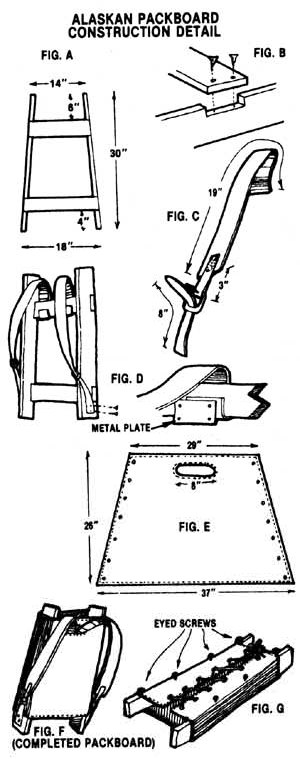
External frame backpacks are interesting not only of their more versatile modularity, but also because the structural component of the pack is clearly visible and offers a great opportunity to any designer wanting to explore structural innovation. Designing compelling structural elements from diverse materials such as wood, aluminium, or even carbon fiber is something I think most designers live to do.
Every designer and their creativity draws from all forms of knowledge and inspiration…
One of many projects happening around here this yule-tide season. A new classic-style rucksack is being sewn, much leatherwork is occurring, and this pack frame is being finished. The wood is shagbark hickory (Carya ovata) made from a bowstave section and some other scrap from the pile. All was split before finishing so the grain is perfectly aligned with the lumber. This made for easy steam bending. As I was working from many examples but no actual plan, there was a lot of mock-up and tweaking of the design to fit my size and intended needs. There’s no metal in the construction. The freight bar and cross members are half-lapped and lashed with rawhide. The bar is also pegged to prevent slipping under load. More to come as it gets finished and field tested.
Here’s a few older frames I could find around the ‘net:
As a craftsman of sorts, I understand that making a “one-off” of something does not imply expertise and replication builds a real understanding of the object being produced. However, this is certainly not my first leather working or shoemaking project but a major improvement on a theme. The lasts I purchased earlier in the year on Ebay have finally been used to actually make a shoe so I documented the process as it came along last week; mistakes and changes included in the process. While searching for huarache construction, I have only been able to find the simplest tire sandal designs and many links to “barefoot” running sandals. I recently found the Huarache Blog and scoured it for inspiration and design secrets from real huaracheros in old Mexico.
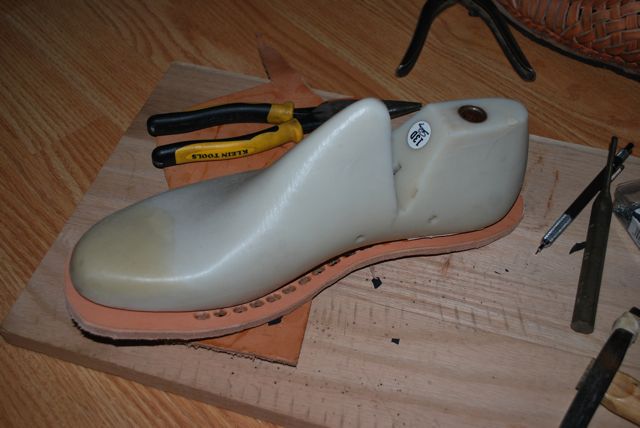
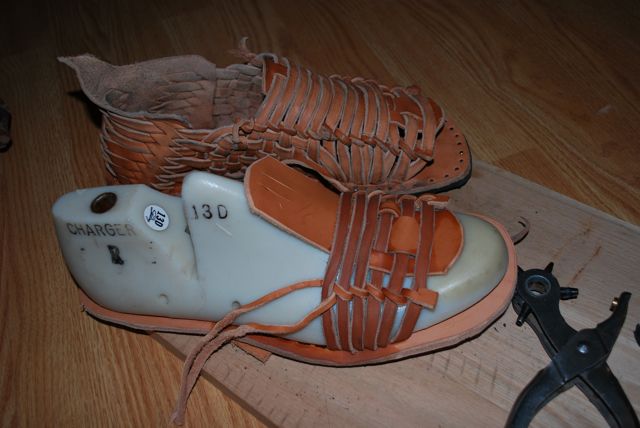
Sole cut out, punched for strapping and nailed to the last.
The lasts shown here seem to fit me well but are an Oxford dress shoe style, I think, meaning they run a little long in the toe. New lasts are pricey (ca. 50 euros/70 US), but I think it will pay in the long run to invest in a better design for myself and those people I might make shoes for.
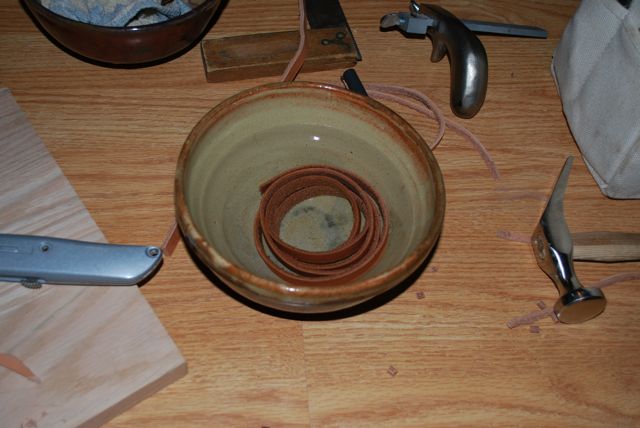
Wetting out the first strap.
I didn’t show the strap cutting process as there is little to be learned about that. My fancy new Osbourne strap cutter can be seen in the upper right of this photo
Since this project was experimental, I used scrap leather, meaning I could only get about three foot (one meter) straps. In future, I’ll probably use 6 foot or longer pieces (2+ meters).
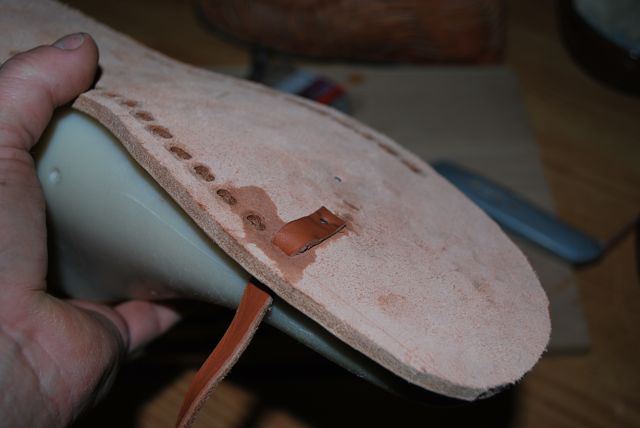
Nailing the strap to the last.
Pre-punched holes in the mid-sole and away we go. A little tallow on the straps helps cut the friction of the leather but ended up being not worth the trouble.
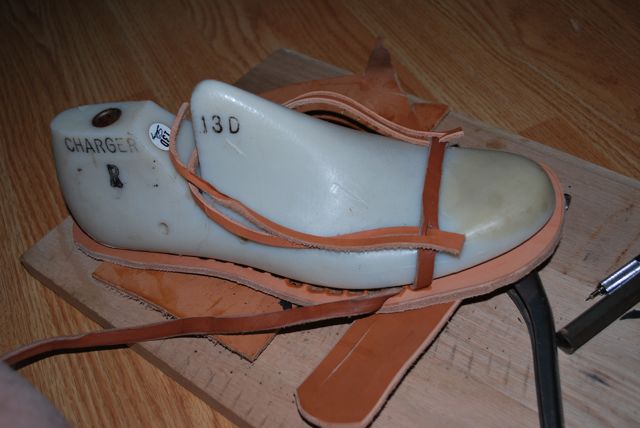
Placing the twining thong.
This is a signature of the style I chose. The vamp or tongue-like piece was later removed as I didn’t like the way it looked. I’ll experiment more with that later.
Lacing and twining.
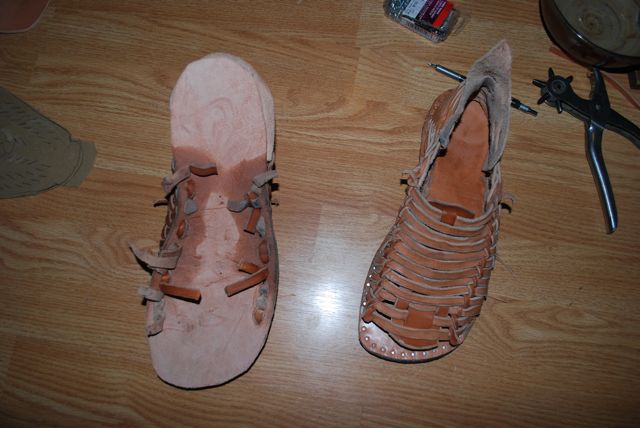
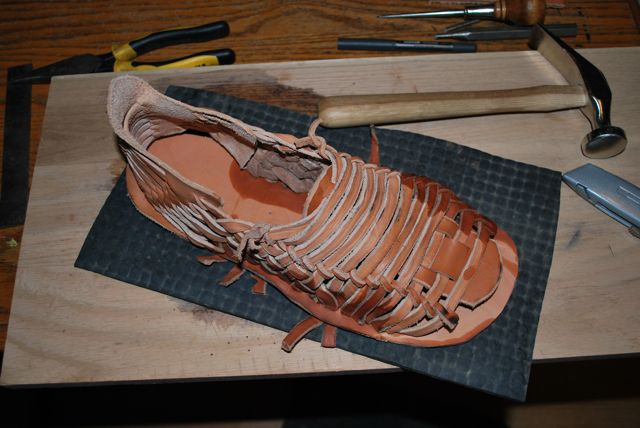
Unlike normal, I completely finished the first shoe and removed it from the last to check size and shape to determine any major changes that would need to be made.
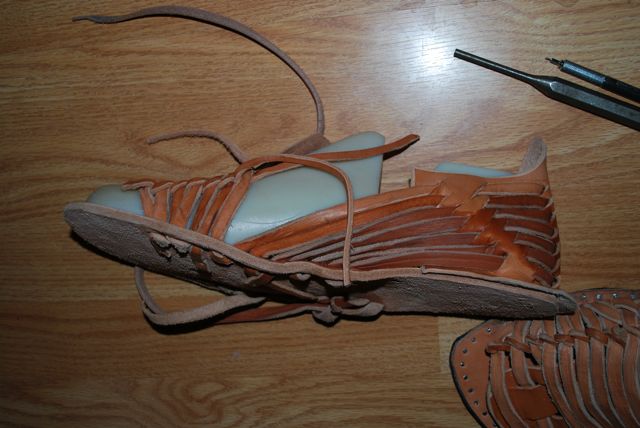
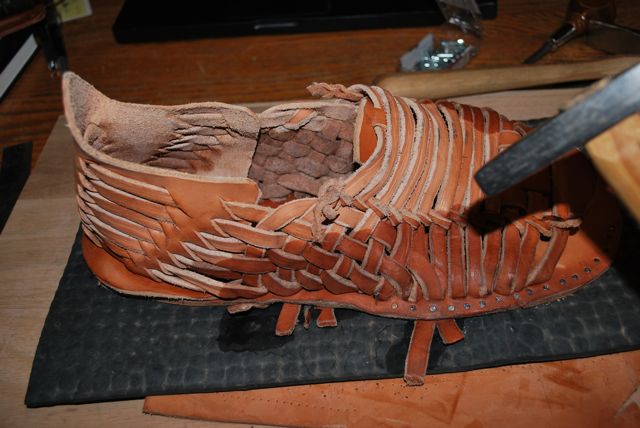
Heel added and lacing up the back. I think this step shows the evolution of the strap sandal to the modern huarache.
The straps running under the mid-sole look like a problem here but are ultimately skived down, wetted, and hammered flat.
Straps ends as added in. Longer straps would lessen the ends here.
I used simple wire nails to attach the soles but sewing would work too.
Ends to be trimmed and skived, and a finished sole.
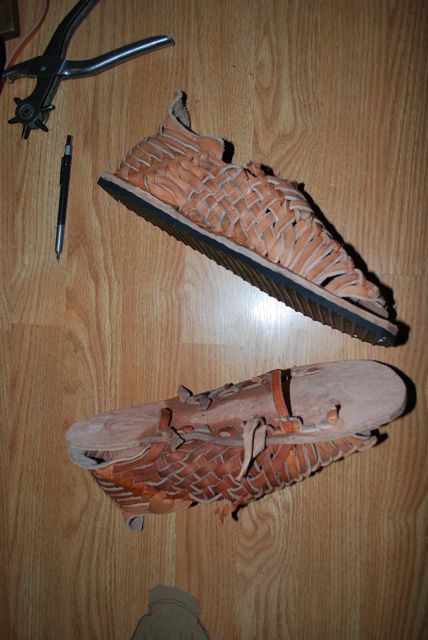
Pulled from the last, they actually matched. I don’t know why I was surprised but that made me happy.
Preparing to nail the sole.
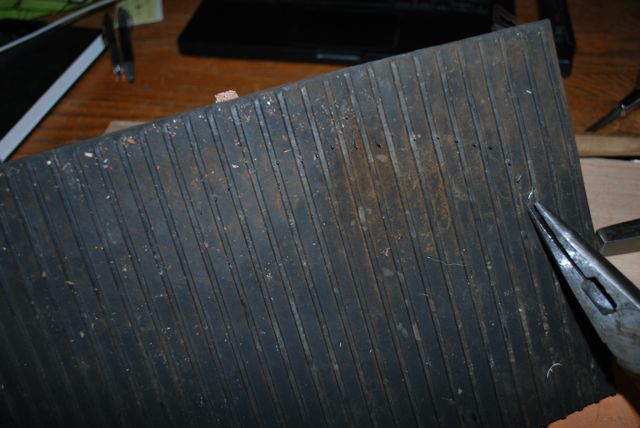
This method is fast and efficient, and I suspect rather tough. The nails are pressed through the leather and rubber into a thick leather scrap below. Otherwise, you would need to pry it up from the work board.
Nailing the sole.Bending the nails in preparation for clinching.
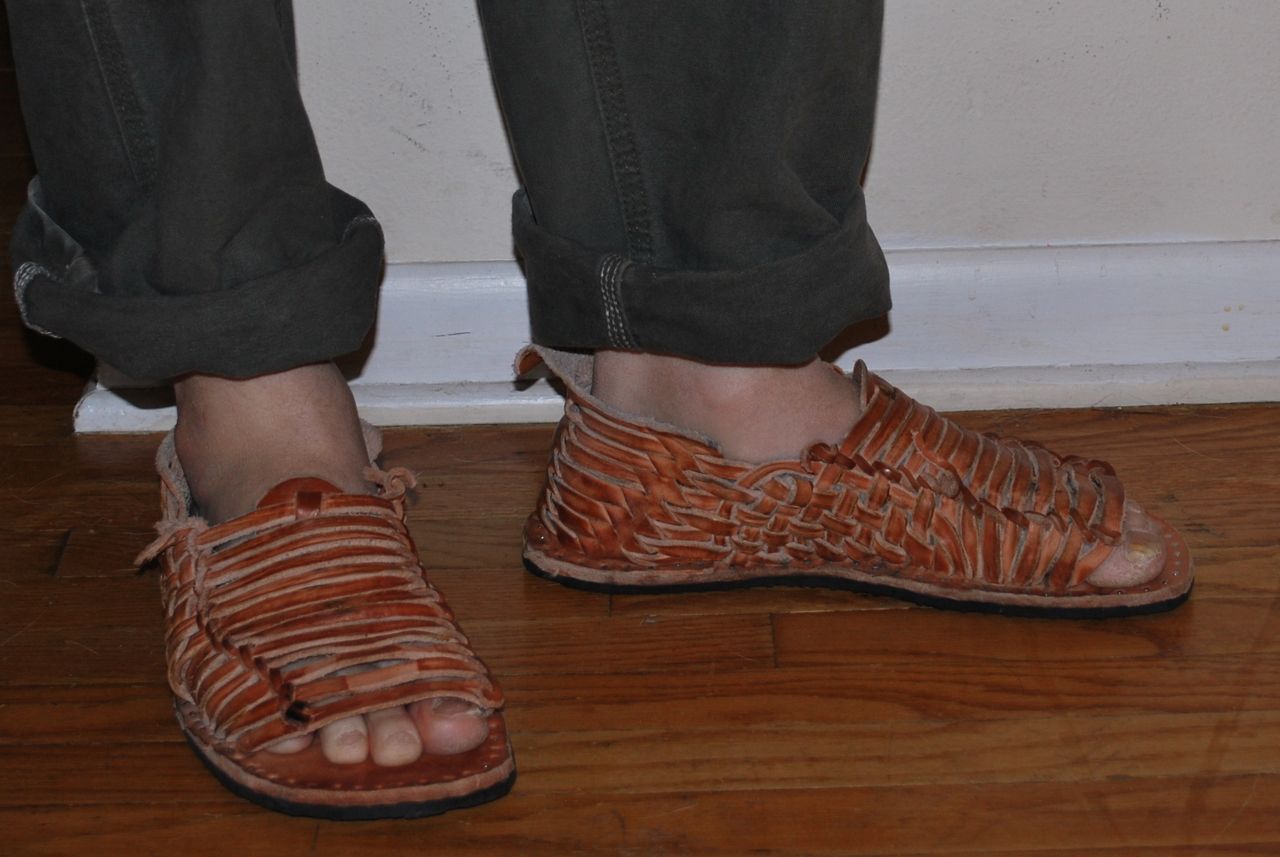
The nails are bent over (inward) to prepare to “clinch” them. There are no photos of this part of the process but this was done by setting the shoe back upright on a small anvil and hammering the nails down tight with a punch. The pre-bending causes the nail to curl inward and back up into the sole. Voila! The Huaraches below have about five miles of hiking on them now and they’re beginning to have some character.
Huaraches you say? Do tough guys wear such things? In an era of cheap, slave-made garments, its easy to forget how self-reliant our ancestors were for such things as raiment. I include this excellent photo of Capitan Alcantar I found on the Huarache Blog as a great historical image of a man of action wearing his huaraches and ready for war.
Click the image for more historic photos like this.








 Preindustrial Craftsmanship