Maybe not the most exciting project to document but a vital one. My F-S knife needed a sheath and I’ve been too busy lazy to make one. Well, I finally got down to business and got it done.
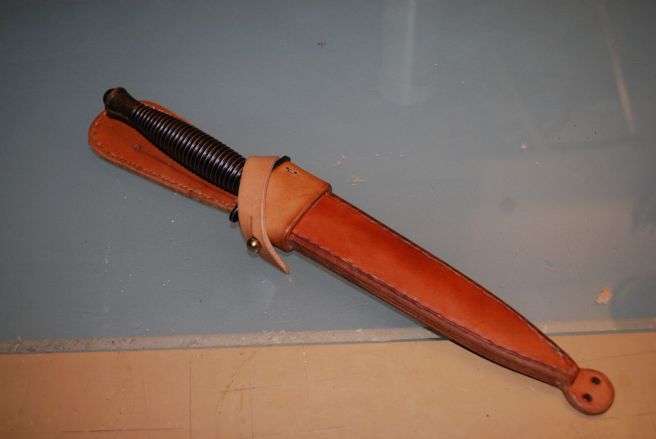 Part of the reason to procrastinate this was that I wasn’t sure what style sheath to make. This is a historical knife that was made with a very specific sheath but wanted one that reflected me and my “style”.
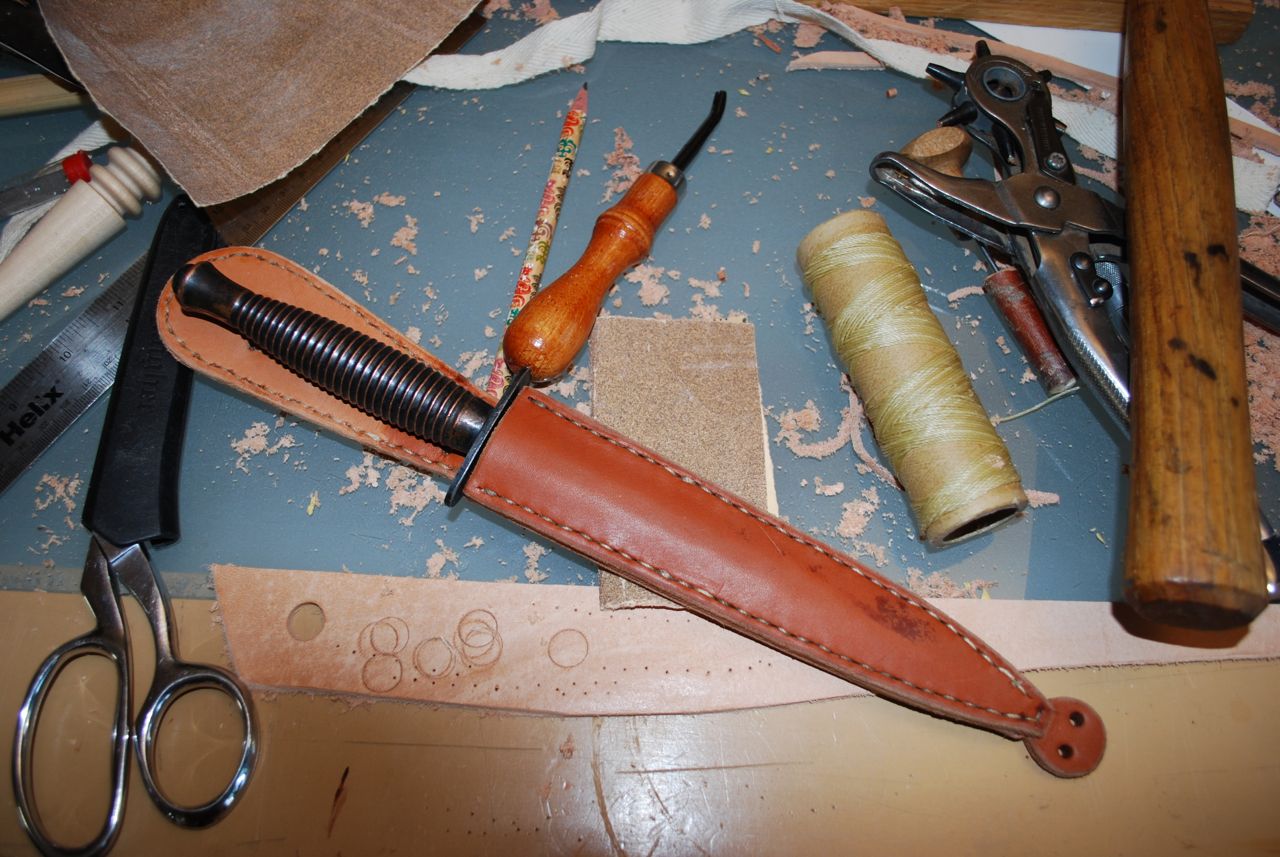
 After sketching out the blade and handle onto Bristol board, I decided to meld the basic outline of the original sheath (ca. A.D. 1942) with that of a traditional western sheath knife. That is to say, flat seamed with a welt. Knife sheaths do not require much leather so a quick trip to the scrap bin provided plenty of choices. I decided to go with a very heavy oak-tanned leather I have normally used for shoe soles for the body of the sheath, and a lighter 8 oz. for the collar and strap. The only hardware would be the button for the retaining strap.
 After cutting the pieces, the edges were smoothed and beveled where necessary. The heavy welt is shown above being glued down prior to sewing.
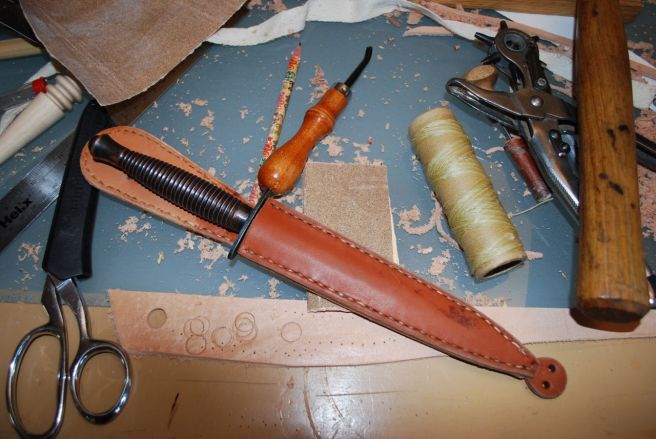 I didn’t photograph it, but the outer piece of the sheath was skived down very thin along the stitch lines to give a more rounded appearance to the finished product. Double needle saddle stitching was run up the sides and around the top to provide some support against stretching and to give a more finished look. The sheath was then wetted and the knife left inside for a couple hours to help form the shape of the diamond cross-section blade.
Note: This knife is high carbon steel and therefore prone to rust like any other so the blade was heavily waxed prior to being shoved into the wet sheath.
 After burnishing the edges, the leather collar was added with the retaining strap and button and the whole thing was then waxed.
 I’ll give it about 50 years before it needs to be replaced and I suspect that it won’t be my problem by then!
Author’s Note: The Fairbairn-Sykes knife is about the coolest mass-produced military knife I know. These were churned out by the 100s of thousands during the Second World War in Sheffield, England and have been in use, with very little variation through the present day. Although these were designed specifically for fighting, these make excellent bushcraft knives. They have an appealing aesthetic and are very similar to daggers carried throughout medieval and early historic Europe.

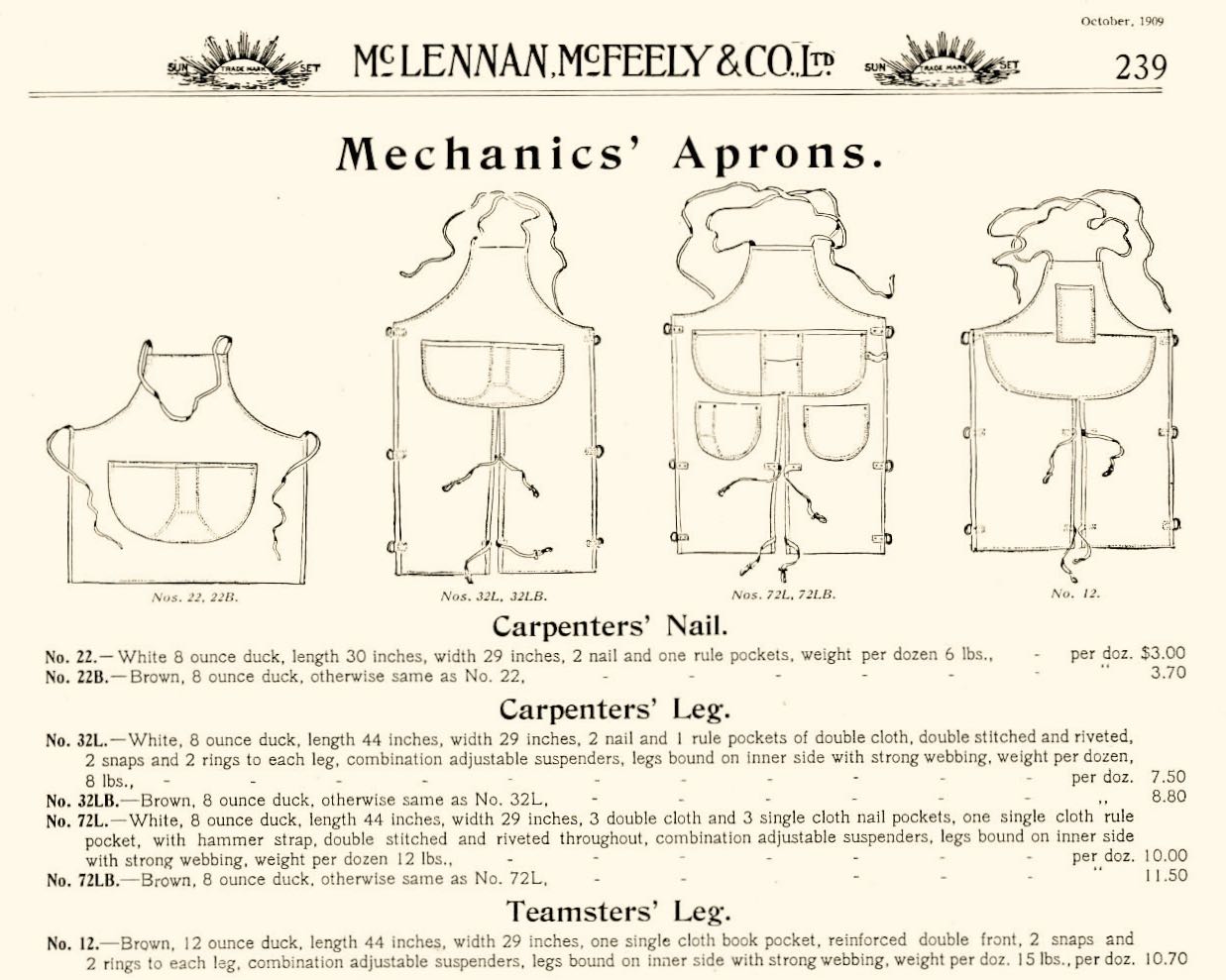 Shop aprons are not as widely used as in the past. I believe this is related to our modern view on clothing and how it has changed over the past century. Not only are we training less in the trades, our clothes are ridiculously cheap in the modern world. Low prices and availability keeps our incentive to protect them pretty low. As I have reduced my quantity of clothing I have grown to appreciate the humble shop apron more than ever. In the past, my only incentive was for protection when grinding metal or welding but now I begin to understand the real role a good apron can play in the shop.













 Preindustrial Craftsmanship