Freezing cold temperatures for weeks on end and no pressing chores with this old house gave me a chance to cut out a dozen new projects.

Adventures of an Imperfect Man In Search of a Handmade Life

Freezing cold temperatures for weeks on end and no pressing chores with this old house gave me a chance to cut out a dozen new projects.
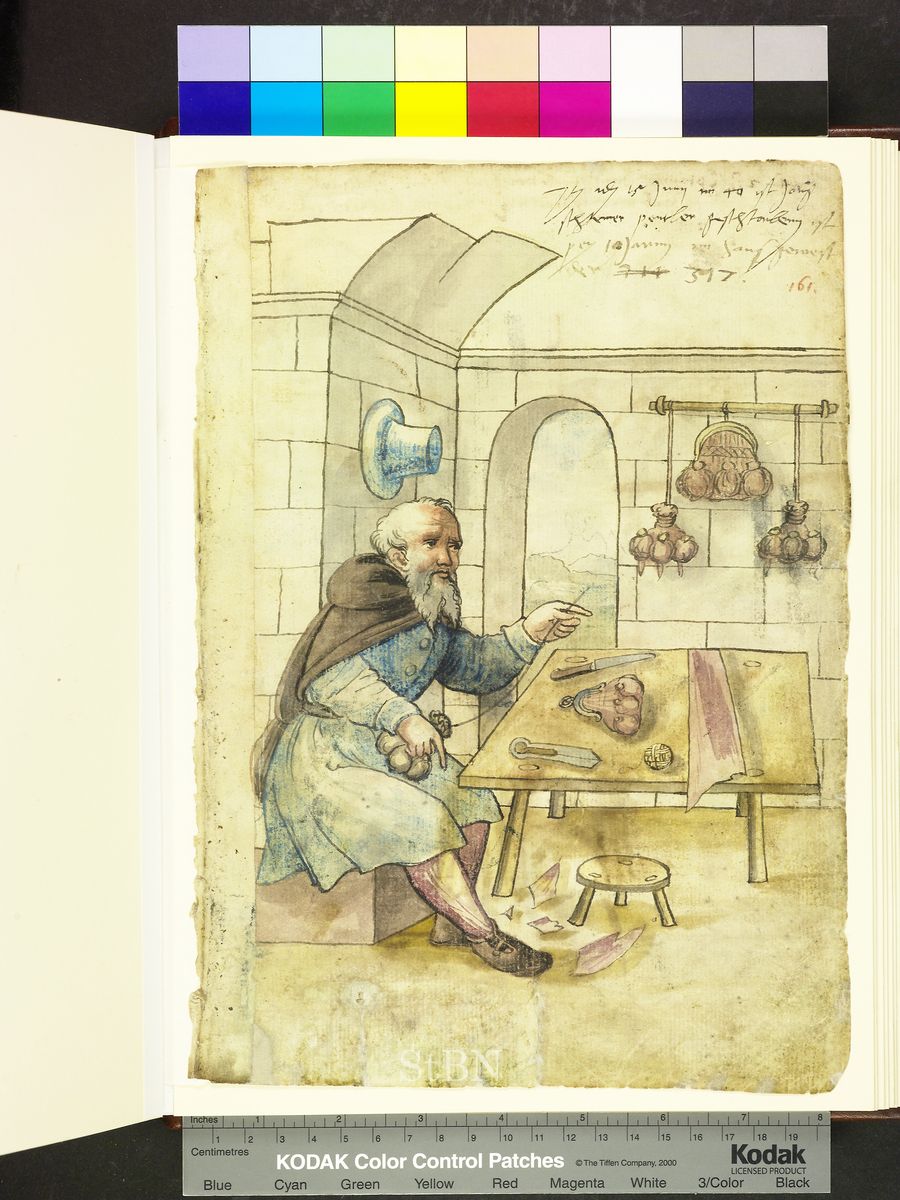
I’m dedicating the next few weeks to my small leatherwork business. When I’m making things with my hands and simple tools, I feel a real connection with our ancestors. It’s nice to get lost in the projects and learn new techniques along the way. When I’m away from this portion of my world it seems that there is a lag when restarting as the hands and mind relearn their movements and the order of things.
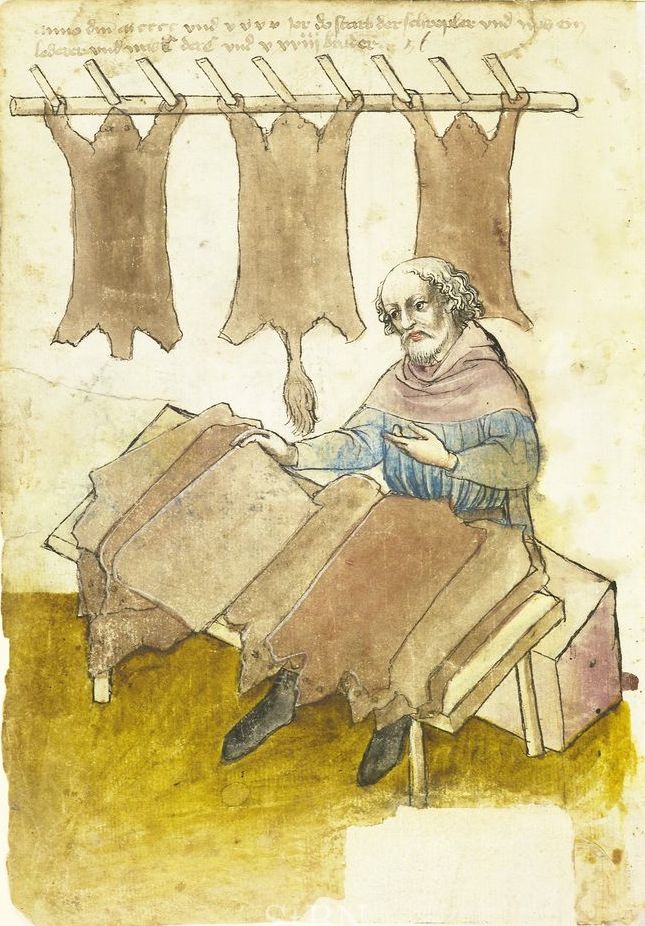
Hopefully, I’ll be able to restock the Etsy store with some exciting goods while the weather is cold. I’m looking forward to spring and the time to get out into the wild to gather materials and supplies from nature; a much overlooked time-consumer for the primitive technology teacher. And just maybe, we’ll be able to gather together again soon to share our skills and camaraderie of our community.
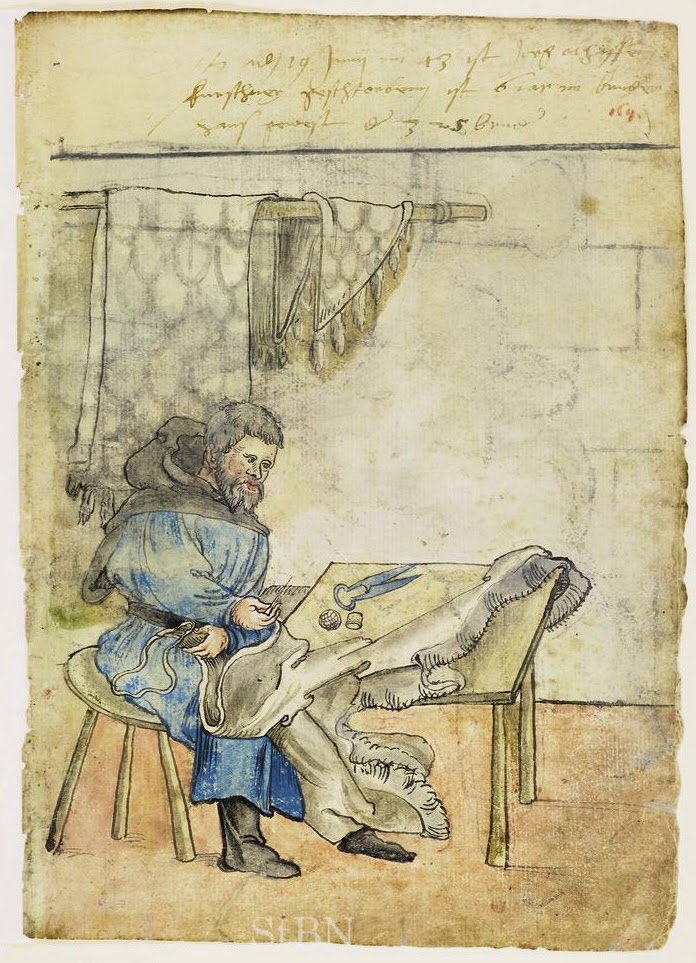
In the mean time, keep well and keep on making.

These ratty old moccasins have spent a lot of time in the woods. These have been my winter moccasins for over two decades. I can’t remember exactly when I made them but it was a quick and dirty sewing job. They have been re-soled at least twice and need it again. The uppers are an oil-tanned leather I bought from a saddle and boot maker supply house I found while driving through north Texas. As can be seen, the tops can be worn up or down. They aren’t beauties but they are definitely ME.
On a Cello Banjo no less! I gotta say, I’m not sure I’ve ever seen a Cello-size Banjo before but I like it! Robby Faverey has some amazing talent and I hope you check out more of his work on YouTube.
ENJOY!
If you are still interested at this point, check out more about him and his musical family from Suriname by having a look at his website HERE. Isn’t it fun to learn new things and explore new cultures?
Does this mean we should neglect our intellect? Absolutely not.
In fact, the opposite. We should strive to cultivate both mind and body to become the most perfect specimen we can become, daily.
I came across this passage while reading a bit this morning from Amateur Joinery in the Home (1916) by George and Berthold Audsley and thought it would be worthwhile to share.

There is a lot of good advice here but the above sentences stuck with me while taking the morning walk. “One never knows when life or limb may depend on the expert use of the hand and ordinary tools.” This could be applied to so many facets of an interesting life and is the basis of human survival that has put us where we are for a million years.
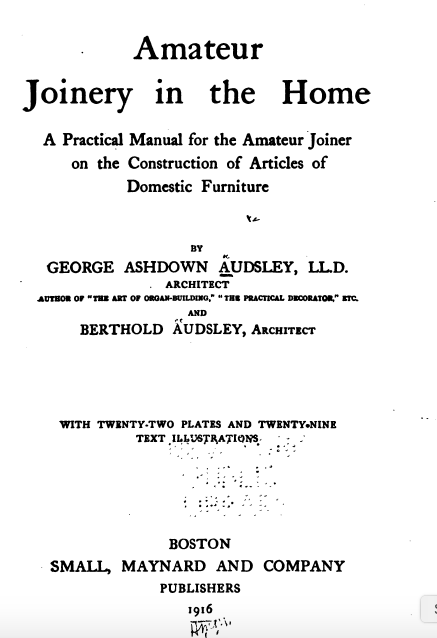
I have been using the down time afforded us by the events of 2020 to catch up on an ever-growing list of books and articles I have been amassing for decades. When I was working in archaeology full-time, the hundreds of pages of reading most weeks necessary just to keep current pushed many other interests into side avenues. I hope you all are using your time in a way that works well for you. In the mean time, this book is available for anyone with an interest in tools and working with their hands. It may even inspire new projects.
Click here to download a pdf file of the book. Amateur Joinery in the Home.
Kentucky Hunter’s Pouch –
Few words are needed to show this project. It is a Kentucky Hunter style pouch of a style popular throughout the 17th and 18th centuries in America. Its antecedents come from Britain and mainland Europe but changed with the times as North America was colonized.
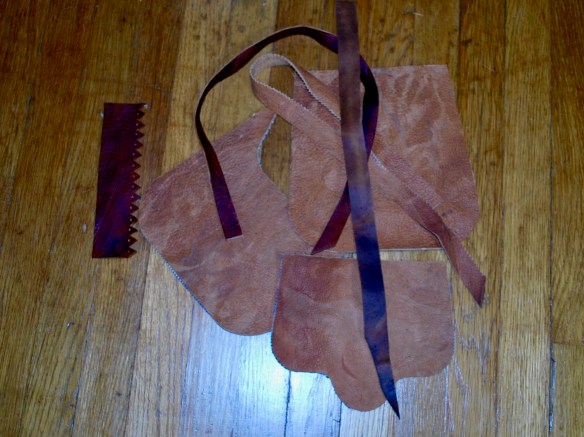
In the days before the common man had trouser pockets he still had a fair few things to carry, especially while out foraging in the forest. Men and women have carried some sort of bag to hold their essentials for as long as we have supplemented our inadequate selves with tools. Things such as food, fire making supplies, sewing kit, or ammunition.
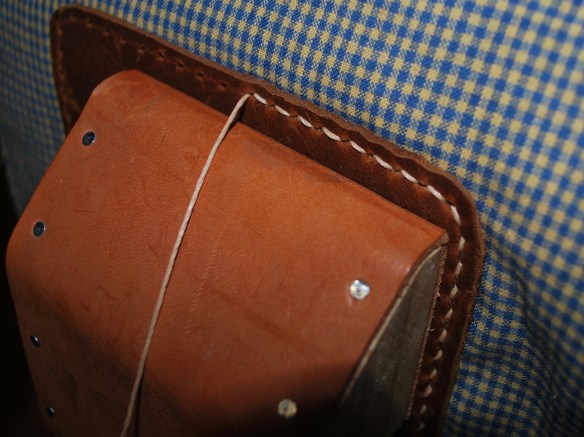
The poor man’s hunting pouch is essentially a single pocket bag with one or more internal pockets to separate out the smaller items.
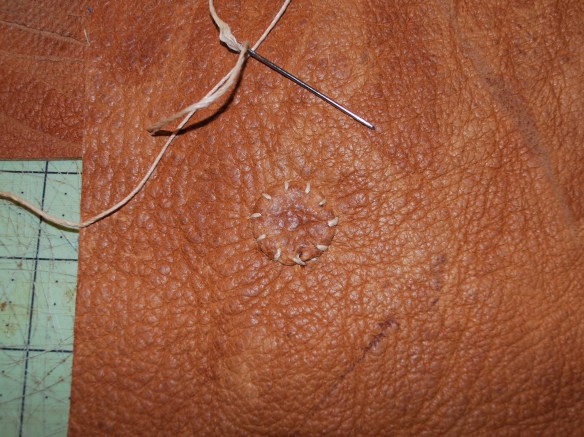
I chose some bark tanned elk from Joe Brandl as it is sturdy but with a very soft feel.
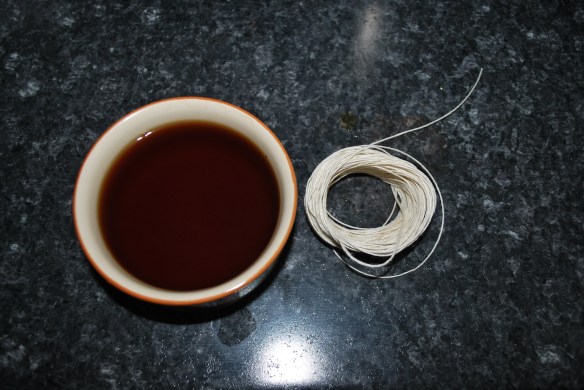
When using real linen, I often soak it overnight in a hot cup of tea before drying and waxing. This gives a nice reddish-brown color.
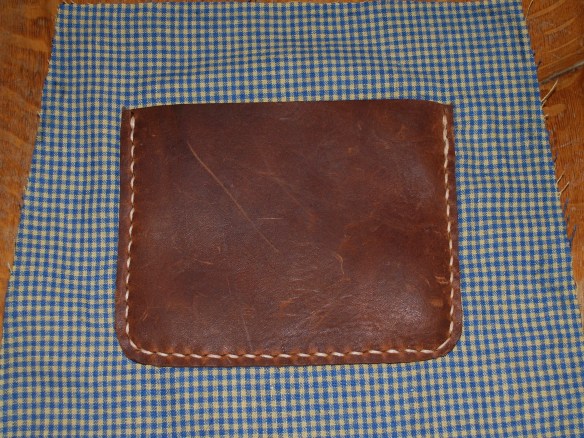
The body is sewn with a welt to create a tight seam and edging is added to stiffen the pocket and flap.
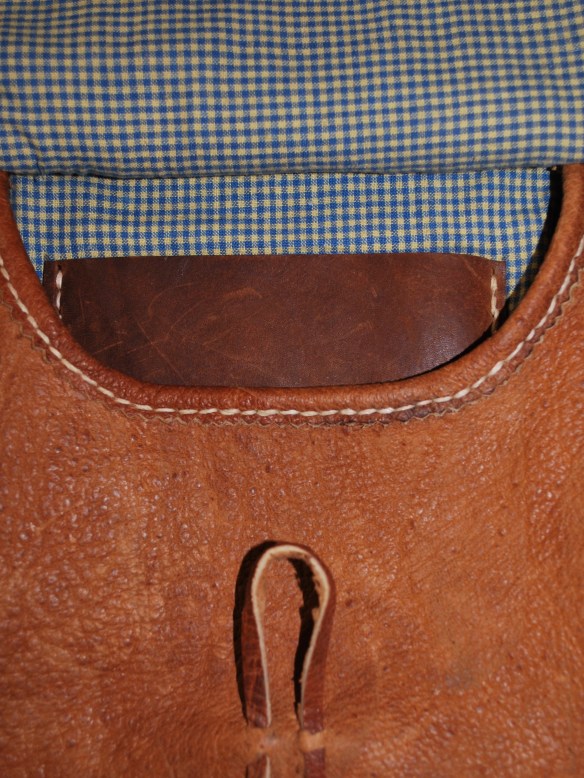
The inside pocket makes small items accessible that might otherwise be lost in the bottom of the bag. When shooting black powder, this pocket is a must.
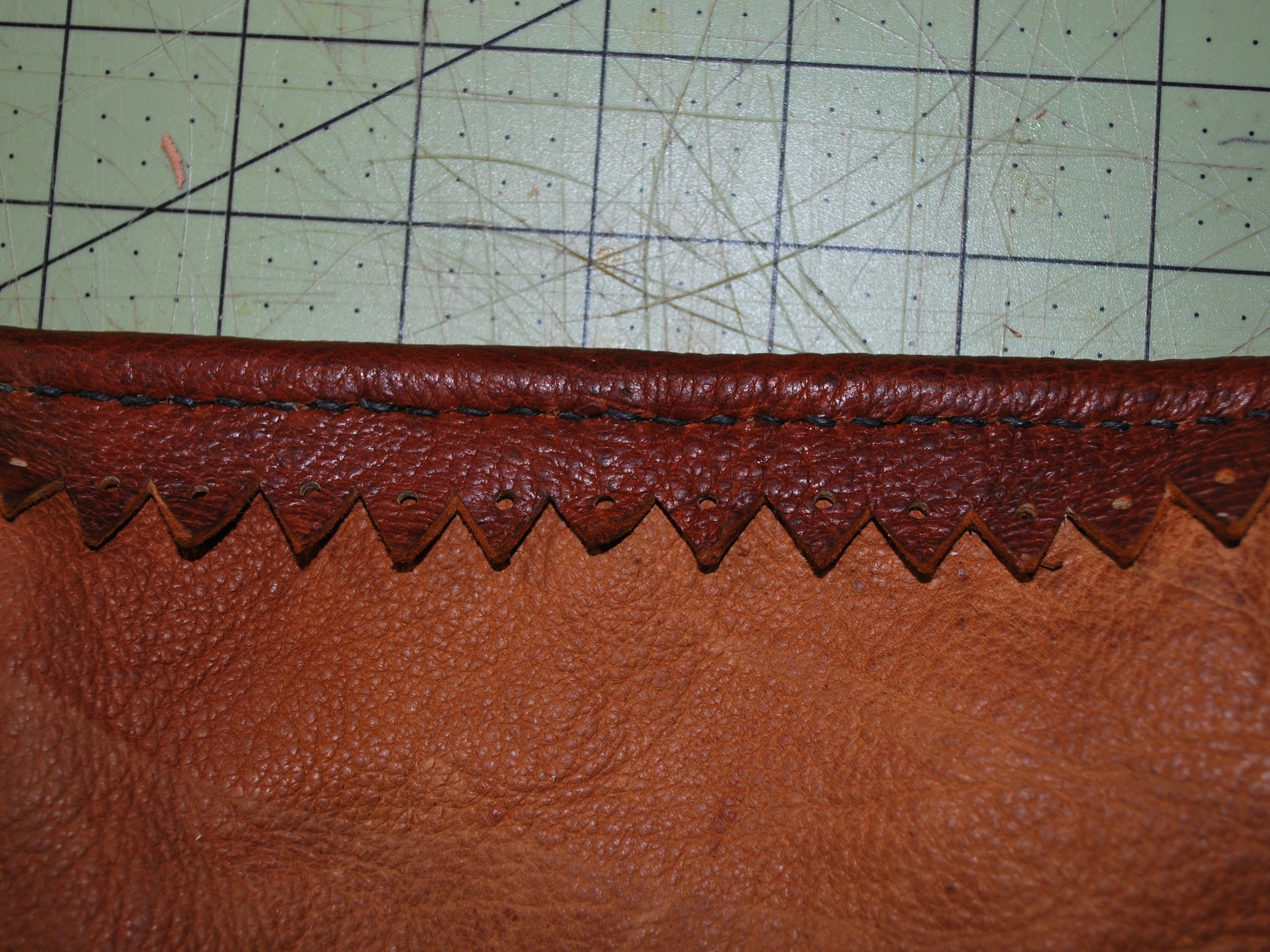
People have been adding fringe, ruffles, and other decorations to seams and edges for as long as there have been makers.
 This type of bag is designed to stay closed without any fastener but it is good to have a way to really secure the flap when traveling. This simple closure is a type that I like for a rustic bag. The toggle is carved from antler and is secured by a simple loop.
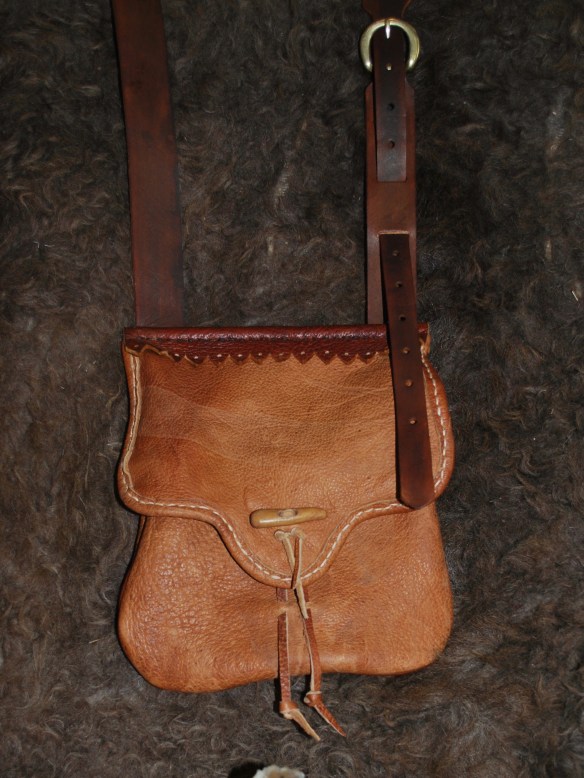
Finally, a shoulder strap is added. This one is 7 oz. veg tanned cowhide and adjusts by more than 12 inches. This will accommodate most people but more importantly will adjust with the seasons as heavier or lighter clothes are worn. The buckle is solid brass and will never rust.
This bag and others are available in my Etsy shop linked here:

I am stunned to hear from several recent misguided enthusiasts to the gentle art of wilderness skills that their new hobby costs them so much money… I guess even our low-tech approach to life can be marketed and sold to the right customer with our ingrained need for newer, quicker, and “approved” gear. Let’s hope this ailment isn’t catching.
Making something for one’s self is, in itself, an act of rebellion in these troubled times so I thought I would share what I’ve been up to in the idle hours these past few days.

After someone sweet-talked me out of my last (and personal) bucksaw I was in need of a replacement. I lucked upon some beautiful walnut last year and set some aside to make a few saws. Straight-grained, strong, and beautiful, this 5/4 sawn chunk was ripe for carving into something nice. I spent far too much time in finish and detail on this one but a beautiful tool is much nicer to use than an ugly one and curves appeal more than straight lines to this gentleman.

There isn’t much need for a lengthy instructable for this design but notice that the straight grain was respected in all dimensions and runs the length of each arm. As for hardware, it was my intention to inset square nuts into the handles and connect the blade with round-head machine screws. However, looking through my hardware on hand, that would have required a trip to a store, so for now, we use carriage bolts and wing nuts.

The devil is truly in the details and it is a joy to carve such fine wood with sharp tools. The entirety is polished with Lundmark carnauba wax as it brings out the color and grain while providing excellent protection against water.
Especially if one is a traveller. On that note, I put together this 18th century style portmanteau to attach to the bottom of my rucksack. It is on the small side for this style bag but the dimensions are based on a convenient size to attach to the backpack and the scrap shoulder I was using. I also foresee this working as a front bag for the scooter or even on the bike.
 Outside dimensions are 16″ (40.6 cm) x 7 3/4″ (19.7 cm) diameter for about 680 cubic inches (11 litres). One step closer to a handcrafted life.
 Preindustrial Craftsmanship