Beautiful and well-loved sheepherder photographed by Roger Wade Studio.
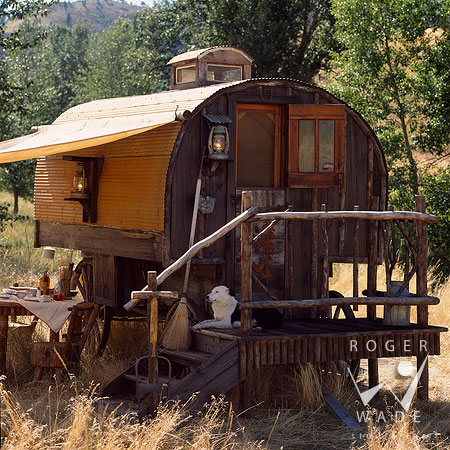 I really like the cupola on top.
Adventures of an Imperfect Man In Search of a Handmade Life
Beautiful and well-loved sheepherder photographed by Roger Wade Studio.
I really like the cupola on top.
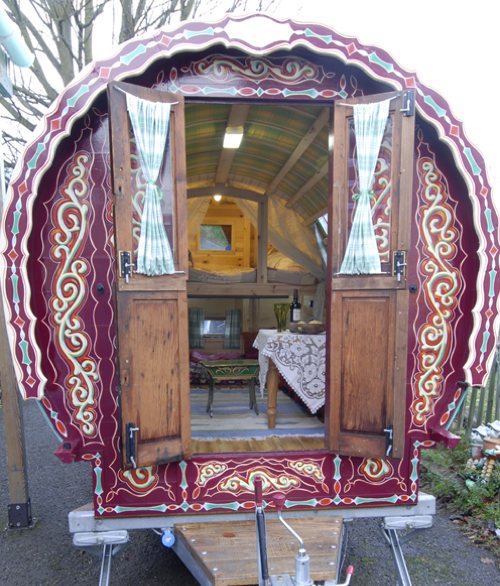
A nice bowtop wagon from Traveller Dave’s website. There are many “real” living wagons and rolling homes there in case you are in need of inspiration.
 I like the window but the builder in me sees it as a sure source of leaks.
…and Some Other Nice Work

Daphne at Daphne’s Caravans has been busy this summer and appears to have another beautiful wagon nearly ready to sell. Her description is “all cedar, with a roof like a cedar strip canoe. 7′ long, 6′ wide at the ledge, and 6′ high in the centre.” I presume the roof will be epoxied over glass or there will be a covering over the entire thing. If you’ve wanted your very own mini caravan but don’t have the time, tools, or inclination, this might be one for you.
Below is another creation of hers from earlier this summer. Click the photo to see more at her website.

First of all, a beautiful Bristol bowtop shown on Handmade Charlotte.

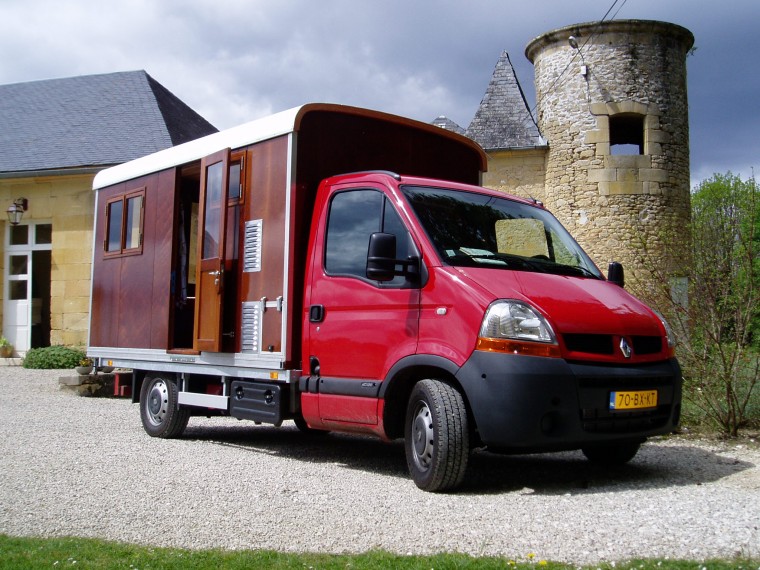
Tonke Campers make some amazing caravans in the Netherlands. The most remarkable part of this design is that the whole living compartment easily removes and can be left as an autonomous dwelling. Handy indeed.


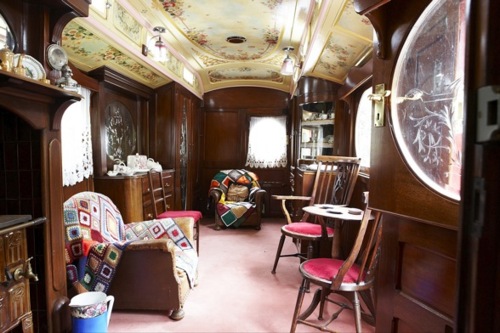
A restored “showman’s” wagon found at shootfactory.co.uk.
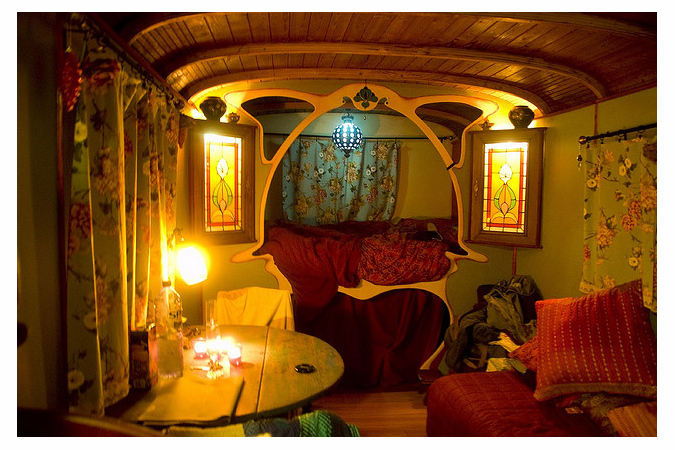
And a really great Art-Noveau style caravan. I want more pics of this one. I found this one here.
Finally, I don’t generally like the pop-up campers but when this one is “deployed” it’s pretty amazing. Designed by Axel Enthoven, it is appropriately called the Opera.


More information about this cunning design here.
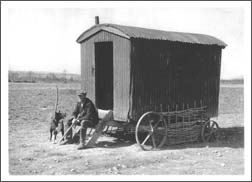
Old time shepherd’s huts aren’t really in the same class as vardos or showmen’s wagons as they aren’t really for long distance travel. These great little portable homes are dragged around to new pastures and are ideal for guest houses, studios, and weekend homes. These are generally simple affairs consisting of a room and a few built-ins. The old models often included a lamb cage under the bed platform and little else. As they don’t travel far they are often furnished with regular home furniture.
Several makers are still professionally building these. Have a look at…

OR

to see some contemporary work.
There is a lot of good history of the design at Historic Shepherd Huts.
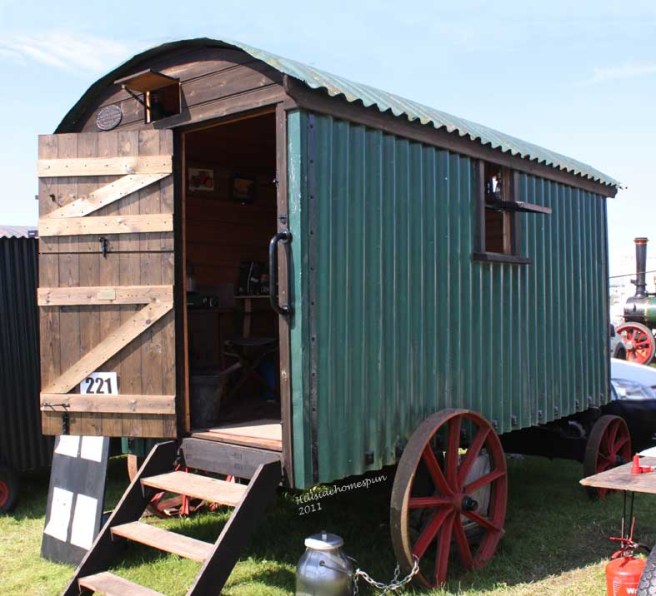
One appealing part of the design is the practicality. Many classic huts are covered in corrugated iron and painted making for easy upkeep against the changing weather. A far cry from high maintenance varnished wood.
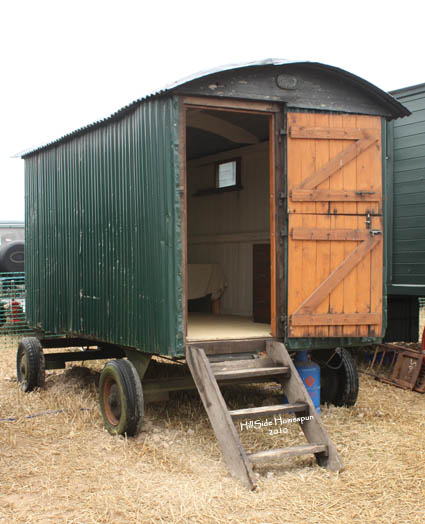
A good feature I have noticed is the nearly ubiquitous transom vent in the peak. I have considered this myself as a matter of security on warm nights and am not surprised it was thought up long before me.
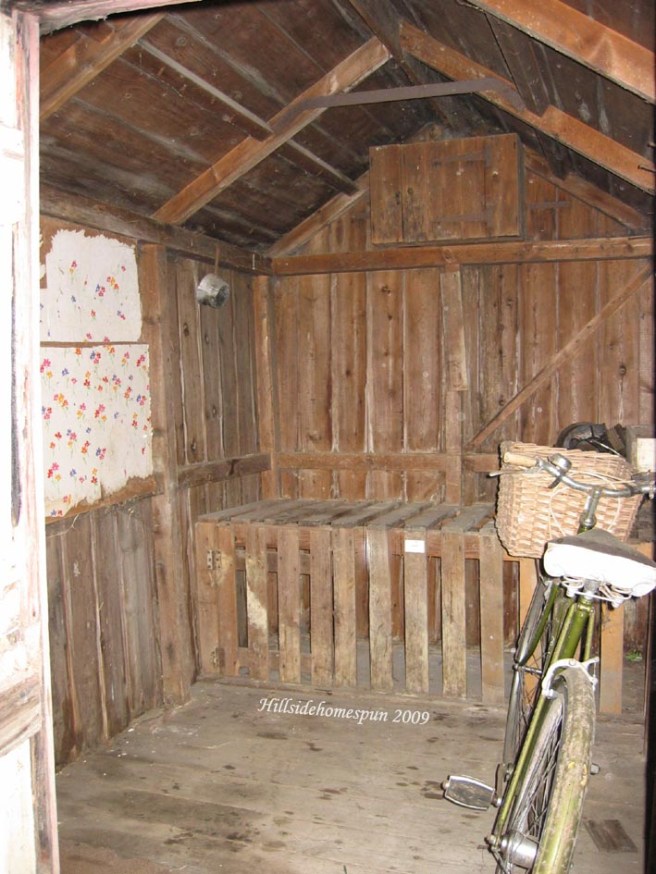
Above is a classic hut with lamb cage intact. Apparently these were used for all sorts of storage when lambs weren’t penned inside. The top of the rack held a mattress for the shepherd and the hut was generally fitted with a wood stove.
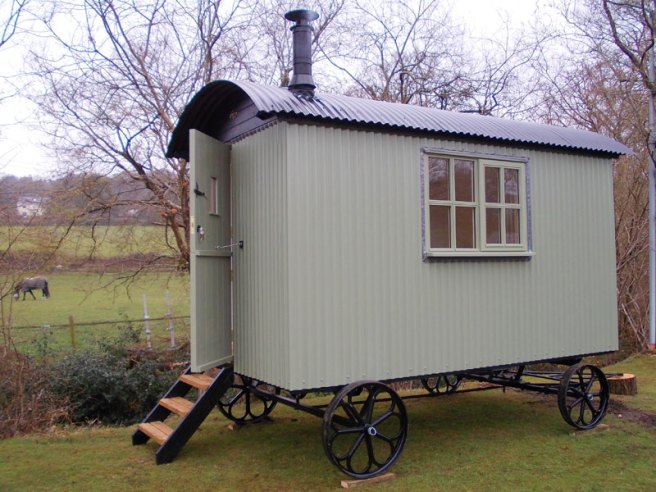
By far, the best examples I have found on the web are at Plankbridge Hutmakers. Above is a typical exterior and below, an exquisite modern interior.
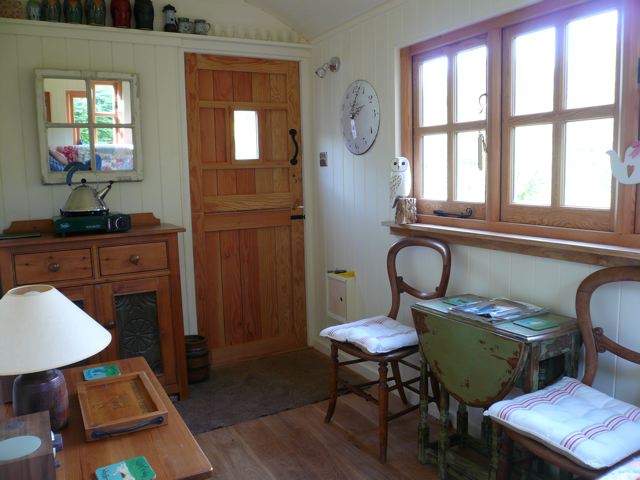 Have a gander at their site for a load of great images and information.
Deryk Macleod sent me a few more links for boat heaters.

The above Shipmate stove is a real beauty and looks very practical for heat and cooking.

Salamander makes some great looking glass front stoves for small spaces. The above is the “Hobbit” model. Below is the tiny “Pipsqueak”.


I’m happy to find more and more alternatives available for heating small spaces without needing electricity or a propane source. The boating community has kept this technology alive and available. Used with care these are a great alternative to grid-tied heaters.
When I was designing the Vardo, I considered several heating options, including no heat at all. I went with the current Four-Dog tent stove because I already owned it and the size was pretty good for the space I had. However, I am still considering better options to increase floor space in the Vardo.
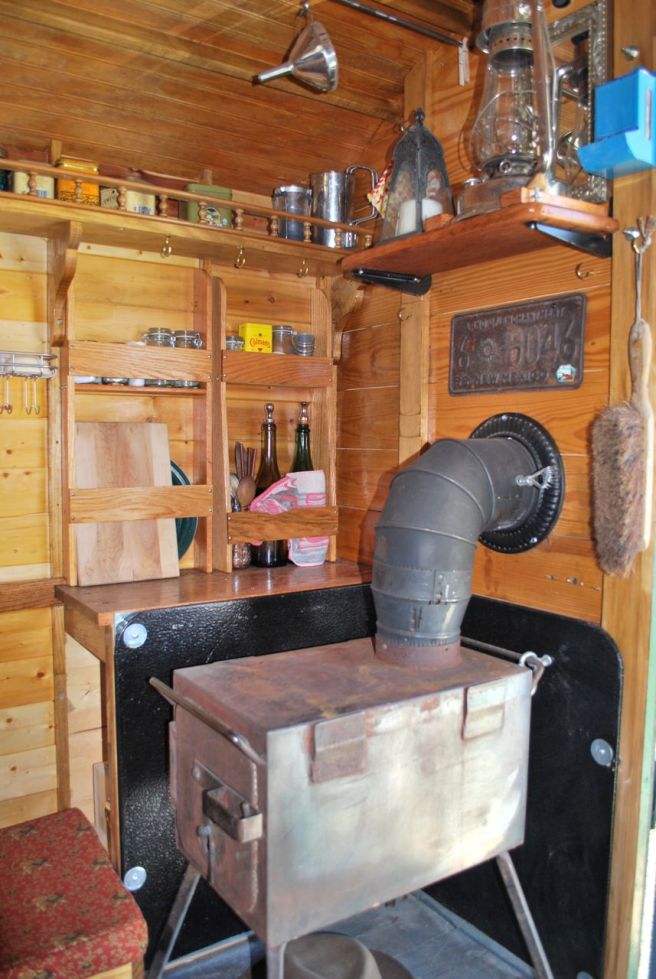
Initially, I set up the stove and adjacent counter at the same height to use as work surfaces when not in use for heat. Since the great majority of the time spent in the wagon is without a need for heat the surface is very handy but the stove uses a large amount of the limited floor space. Below are a few options I am considering.

The above stove is a “Sardine” stove designed for heating the cabin of a fishing boat. These are wonderful little stoves but a bit too costly for my taste. Click the image to see their website including their larger model “The Little Cod”.

Another option is diesel or kerosene heaters. These are commonly used in the boating community and work well in small spaces. I think these are a fine option and very efficient but cannot work without access to purchased fuel.

My preferred option right now is a Cozy Cabin Solid Fuel heater (above) as it mounts directly to the wall and is much smaller than the tent stove. The stove is the heart of the wagon, especially in cold, wet climates so it should meet your needs as closely as possible without too much weight or size. After spending so much time in my wagon, I think its time to move down in size and up in technology to a wall mount heater.
To be continued…
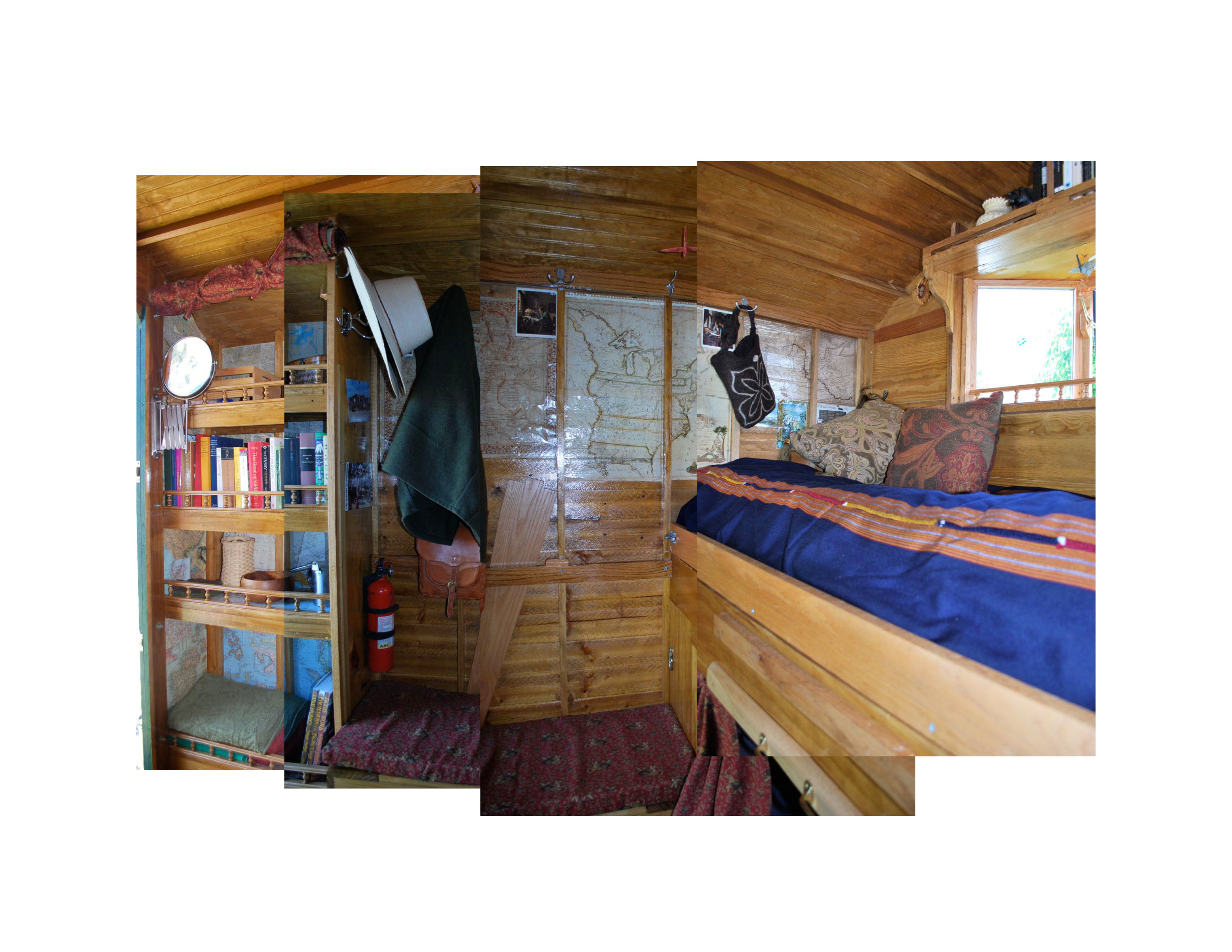
A few mosaic panoramas to give a “feel” of the Vardo interior. Click the images for larger a version.
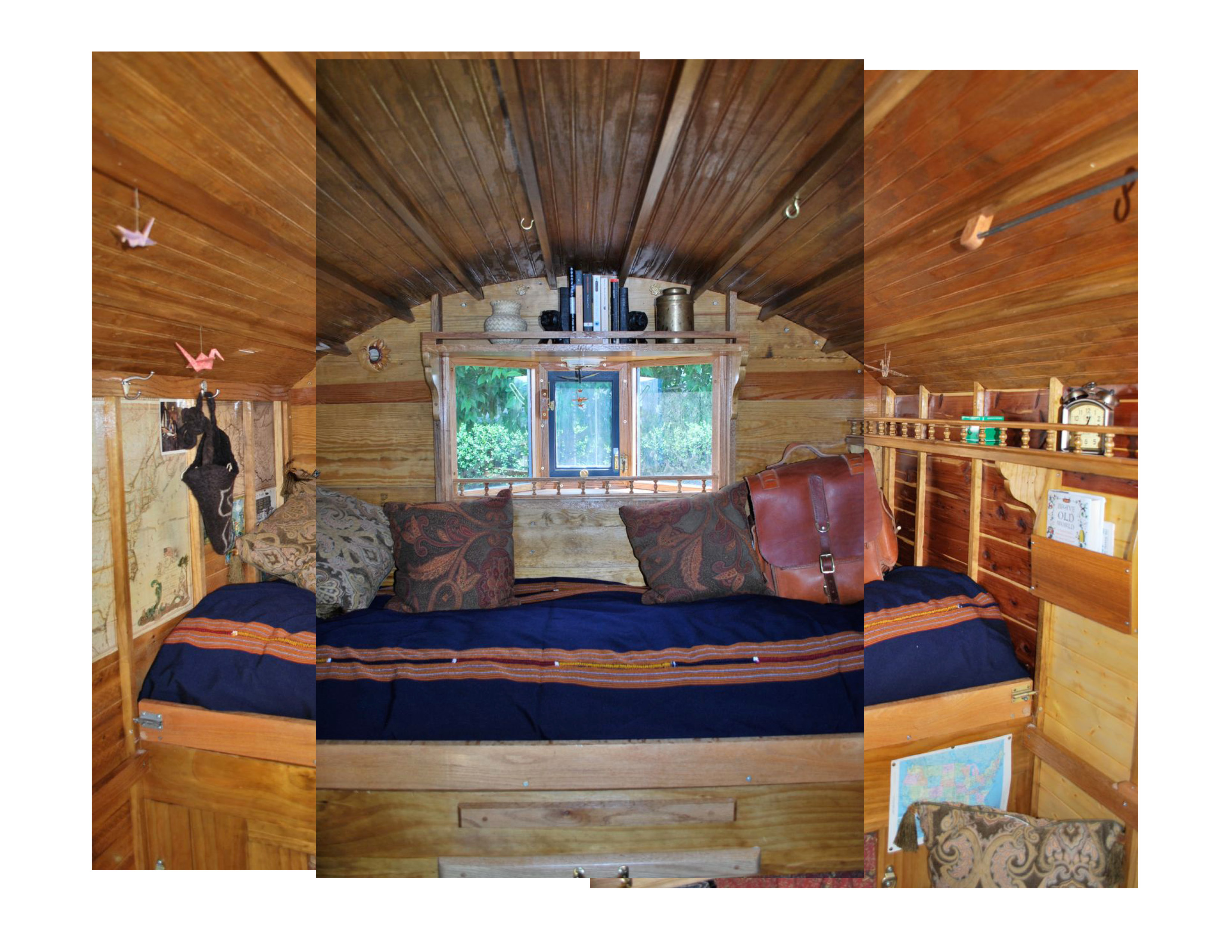
The bed and table retracted for maximum space.


The Bay Area Maker Faire was bigger and more interesting than I thought possible. I have rarely been so busy in my life as the eighteen or so hours I stood and talked about the Vardo. There were many interesting and interested people who thoroughly examined every aspect of the wagon. As it was built on a whim and shoestring budget, I’m not proud of every inch of my workmanship. I never thought it would be displayed for public scrutiny but it was received with great enthusiasm. When I dove into this project I thought it likely that it would be looked at as some crazy art project but it seems there is a core of like minds who long for a micro traveling home with a certain amount of style and aesthetic.

Knowing that loads of people would be poking around in the wagon meant a bit of cleaning and spiffing up was in order. Most of the interior received a fresh coat of varnish and most personal things were stowed away. It was sad that I couldn’t actually stay in the wagon as it was on display but the grant helped cover the cost of a nearby hotel.

Location, location, location. The obvious place for a low tech micro home is between the underwater robotics and the universal charging station. The Faire is so chaotic, I don’t think it really mattered but I think our setup would have been more at home in the Homegrown Village area. As it was, the Vardo was an interesting Low Tech display amidst all the electronics. There was generally a line of five to ten people all day, both days to file in and around the Vardo, hear my explanation and ask loads of questions.

The nifty sign created for the display. They said it, it must be true.

Closed up, ready to hitch to the truck I noticed all the eclipse shadows filtered through the leaves onto the Vardo. What timing.
I have loads of photos I’ll put up shortly when I make some sense of them. All in all, if you are a MAKER OF THINGS or even just a dreamer, the Maker Faire is worth a visit.
 Preindustrial Craftsmanship