Does this mean we should neglect our intellect? Absolutely not.
In fact, the opposite. We should strive to cultivate both mind and body to become the most perfect specimen we can become, daily.
I came across this passage while reading a bit this morning from Amateur Joinery in the Home (1916) by George and Berthold Audsley and thought it would be worthwhile to share.
There is a lot of good advice here but the above sentences stuck with me while taking the morning walk. “One never knows when life or limb may depend on the expert use of the hand and ordinary tools.” This could be applied to so many facets of an interesting life and is the basis of human survival that has put us where we are for a million years.
I have been using the down time afforded us by the events of 2020 to catch up on an ever-growing list of books and articles I have been amassing for decades. When I was working in archaeology full-time, the hundreds of pages of reading most weeks necessary just to keep current pushed many other interests into side avenues. I hope you all are using your time in a way that works well for you. In the mean time, this book is available for anyone with an interest in tools and working with their hands. It may even inspire new projects.
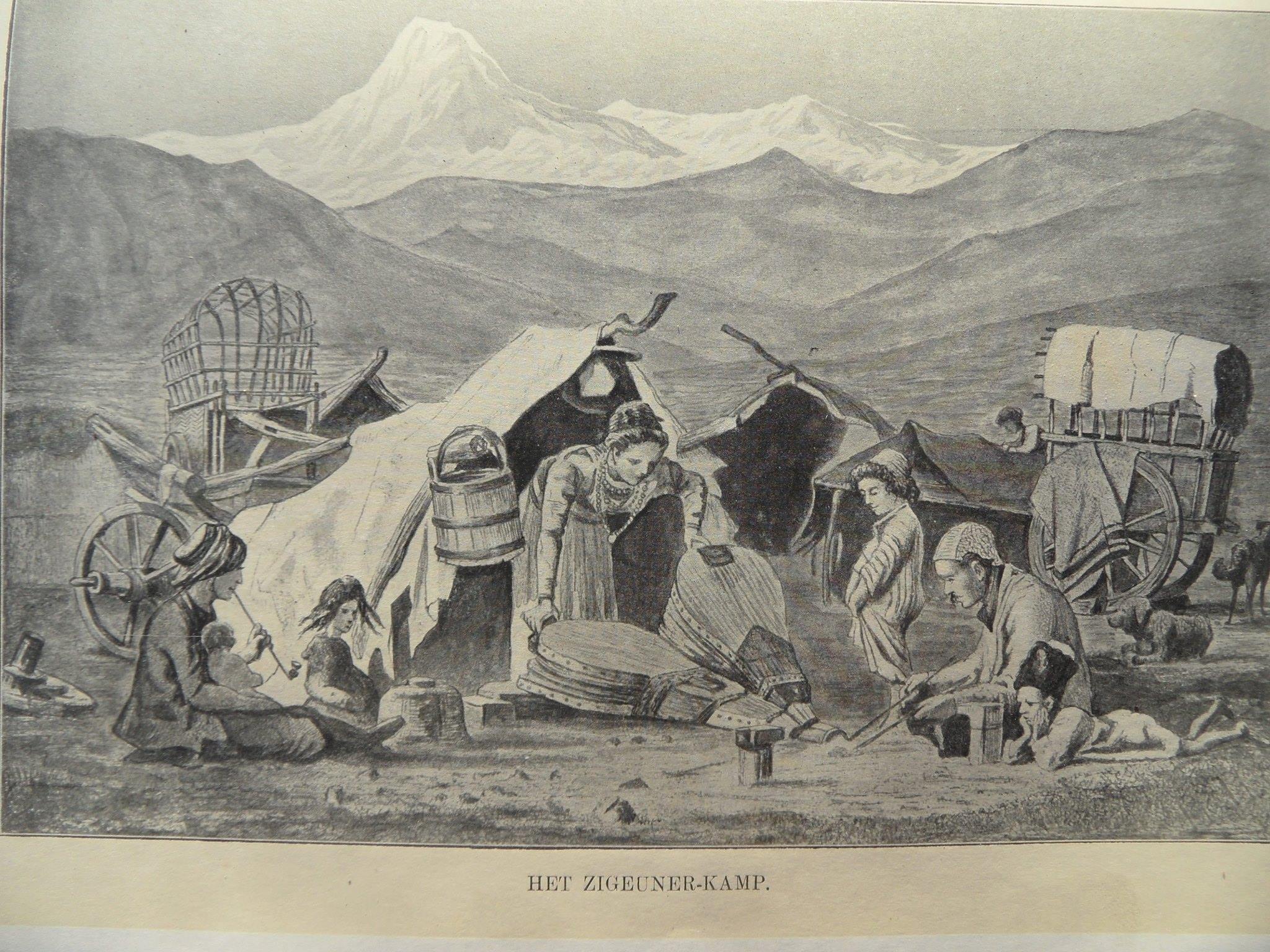
In Britain and Ireland, the Romany Gypsys and the Traveller community are often associated with low-skilled work such as scrap dealers, horse traders, musical entertainers, or more nefarious activities outside the societal norms. However, there were plenty of skilled craftsmen and craftswomen providing goods and services to people around the country.
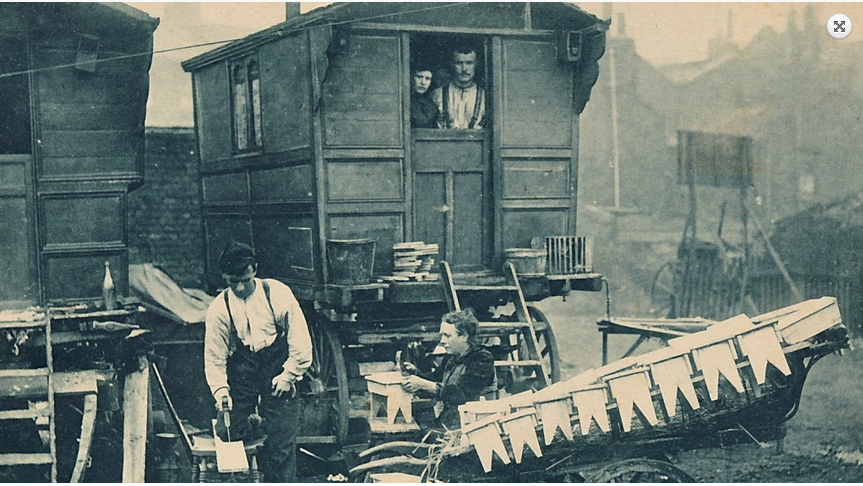
Below is an image of a couple, working together making footstools outside their vardo while another couple looks on from the comfort of their wagon.
Gypsy carpenters making small and large stools for market. From an early 20th century postcard. Source: Romany and Traveller Family History Society.
Other Gypsy families were blacksmiths, basket weavers, or similar occupations that could be taken on the road, required little stock or overhead, and could be performed independently or with a minimum of family help.
As usual, an interesting old find posted on the Lost Arts Press. It’s worth a read.
“It is doubtless the timidity of woman which restrains her mending instincts. She dreads the saw and the chisel as treacherous tools that inevitably inflict wounds on the user… Moreover, she can never grasp the difference between a nail and a screw, and regards the latter as an absurd variety of nail which can not be driven with a hammer unless the wielder of the hammer has the muscles of a man.”
From Cassell’s Carpentry and Joinery by Paul N. Hasluck, ed., 1907 edition, an excellent resource.
A selection of simple construction framing joints for building construction.
These are all really just mortises or forms of notching. These simple techniques can add a lot of value to your repertoire. The internet shows so much excitement when these things are seen in Japanese joinery but let’s not forget that this technology was world-wide common knowledge just a century ago.
I think I may have found a portable bench design that works for me and the small bench top I’ve been saving. (Pardon the poor translation; it is a mix of Google translator and my best effort).
The Heiberg Collections – Sogn Folk Museum has a very rich collection of objects related to various crafts. They have a beautiful display of carpenter’s tools that have been displayed to resemble a workshop with workbench and tools. In addition, they have much of this collection in the collection. In this book I came across a workbench that woke my interest. The bench has registration number DHS.3884. The bench is at a height so to sit on, 46 cm high (18 inches) and about 1.5 meters (60 inches) long. In one end there is a vise and the other end there is a screw clamp with crank.
I will start drawing up plans when I get a chance.
De Heibergske Samlinger – Sogn Folkemuseum har ei veldig rik samling av gjenstandar knytt til ulike handverk. Dei har ei flott utstilling av snikkarverktøy som er lagt til rette som ein verkstad med arbeidsbenkar og verktøy. I tillegg har dei mykje av samlinga si i gjenstandsmagasin. I dette magasinet kom eg over ein arbeidsbenk som vekte mi interesse. Benken har registreringsnummer DHS.3884. Benken er i høgd slik at han er til å sitje på, 46 cm høg og ca 1,5 meter lang. I eine enden er det ei baktang og i andre enden er det ei skruklemme med sveiv.
Arbeidsbenken slik han står på magasinet på museet. Foto: Roald Renmælmo
Prior to power sawmills and corporate lumber production, much of the carpenter’s project time was filled with simply making trees into boards. Most illustrations I have found of preindustrial carpenters feature someone hewing, planing, or chiseling with the occasional scene of sawing a board to length or width.
An image is just as much about what is chosen for inclusion as that is left out.
I love to ponder the details of old illustrations and paintings to really see what the artist was trying to show us. These images are no doubt biased in what they choose to show; and for good reason. There is a semiotic tradition in Medieval illustration to choose certain symbols to denote specific trades or historical characters and it should be remembered that the illustrators are not necessarily experts with the trade they are depicting.
If I were to let my hair and beard grow out a bit, I think I could pass for this guy.
Here we have the same carpenter from a previous post dated to around 1414.
The foreground holds a familiar skirted six-board chest with iron hinges and an escutcheon plate around the presumed locking mechanism. Either he is building these or perhaps it holds his tools. Beside it is a nice little cabinet of similar construction. He is working on a simple European bench with through-tenon legs, popular since the later Iron Age. His board is secured simply by four bench dogs.
Only four hand tools are shown. The frame saw, plane, chisel, and mallet. No doubt his dividers, straight edge, and winding sticks are in the box.
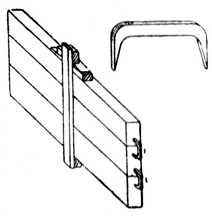
Just for fun, here’s another carpenter from about a hundred years later hewing a board to size with a bearded broad-axe. The work sits on a pair of saw horses with the typical tenon legs. Also, note the iron dogs used to secure the board to the horses. Living in the era of screw clamps, we don’t use these as much but they are still occasionally found holding boards while being glued like so:
And finally, a late 16th century carpenter cross-cutting a plank. I like this image as it depicts more tools, though in less detail. Chisels, hammers, and a square hang on the wall, a plane sits in the background, and the broad-axe sits on the floor next to the hewing stump. The frame saw hasn’t changed at all. I don’t know if the supprt under the board is unique but it appears to be stepped to hold planks at graduated levels. Pretty nifty if you ask me. And finally, a couple of details about the clothes; I love the sagging stockings and the patched elbow of his shirt. Definitely dressed for work.







 Arbeidsbenken slik han står på magasinet på museet. Foto: Roald Renmælmo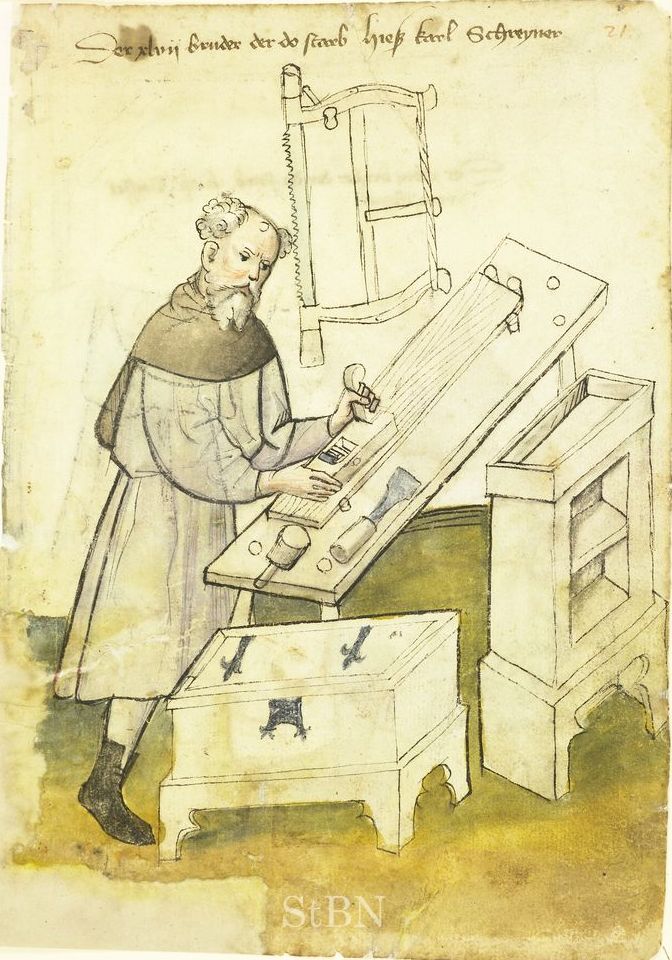


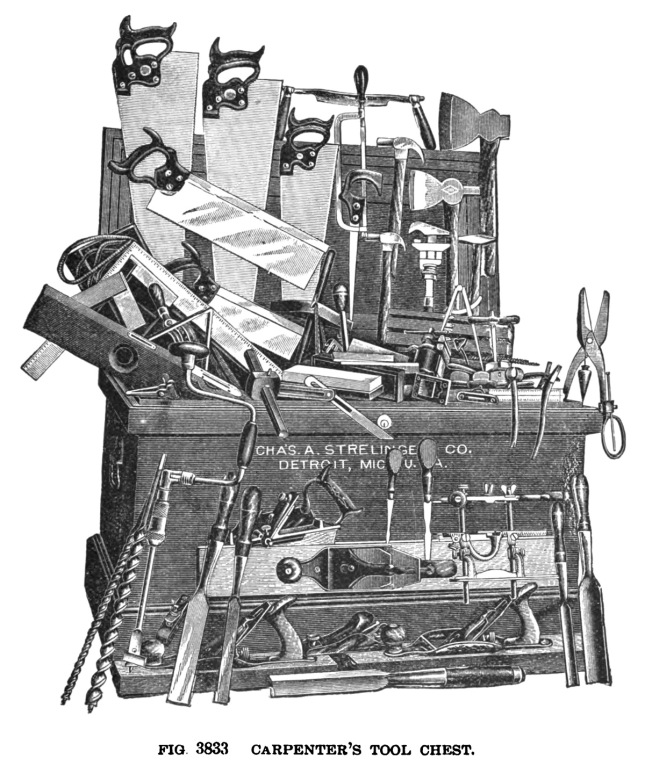 What a nice little setup found while searching images on my computer. Maybe from Lost Arts Press?

 Preindustrial Craftsmanship