Japanese Pack Frame

And an interesting basket.

Pack frames are nearly universal historically as most cultures encounter the drudgery of carrying heavy loads over long distances.  I am always searching for historic images to delve into to look for inspiration.  Here is a nifty pack frame from the early 20th century of a charcoal maker from Japan.  The frame looks like simple through-tenons in a rectangle.  The pack basket appears to be fairly simple twined straw and I think the shoulder straps are woven fiber.  He is also sporting some nifty looking waraji sandals.

japanesepackframeThis is what I could find out about the image:

RUSTIC OLD JAPAN — The Charcoal Carrier
From a Sample Set of Classic Meiji and Taisho-era Japan Stereoview images by Japanese Photographer T. ENAMI (1859-1929).

Photo by T. Enami, ca.1898-1905. View number S-392 from Enami’s 3-D Catalog.

See www.t-enami.org

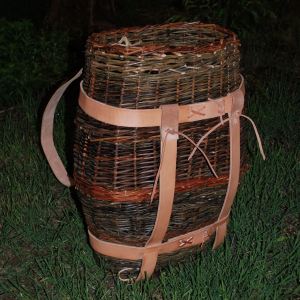
Pack Basket

In a fit of energy I got around to putting proper and better shoulder straps on my pack basket made last summer.  The pack is willow and the leather work is approximately 10 oz. Hermann Oak harness leather.

Once the leather ages a bit they will be beautiful and rustic-looking.

Horace Kephart Days: The Revival of Classic Camping

Sounds like a great time. Wish I were there!

Survival Sherpa's avatarSurvival Sherpa

Guest post by Kevin Bowen

Horace Kephart Days: The Revival of Classic Camping - TheSurvivalSherpa.com

First off, I must thank Todd Walker for the opportunity to write this piece for his blog. He really wanted to attend Kephart Days this year but an even more important event took place the same weekend that required his attendance, the birth of a beautiful, healthy grandson. Congratulations good buddy!!!

I first met Todd online about a year or so ago and then had to chance to meet up with him and Bill Reese at one of the Workshop in the Woods classes, hosted by primitive expert/teacher/author, and all around great guy, Scott Jones. If you regularly follow Todd’s blog, you have been introduced to Scott already. Since then, I have garnered a great respect for Todd’s attitude, an affinity for his ideas and work ethic, and more than anything, a love for his friendship. It’s truly an honor to help him out…

View original post 2,589 more words

Bark Basket

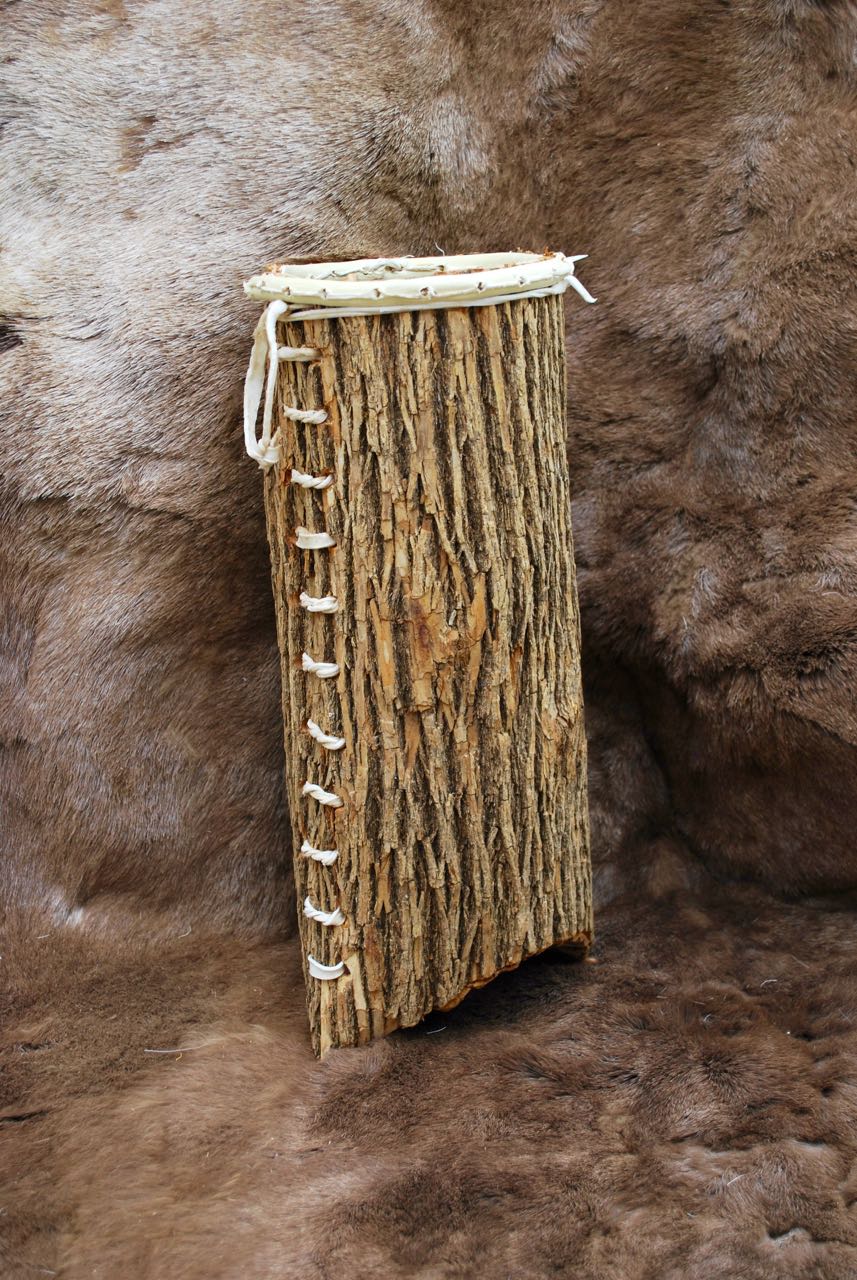
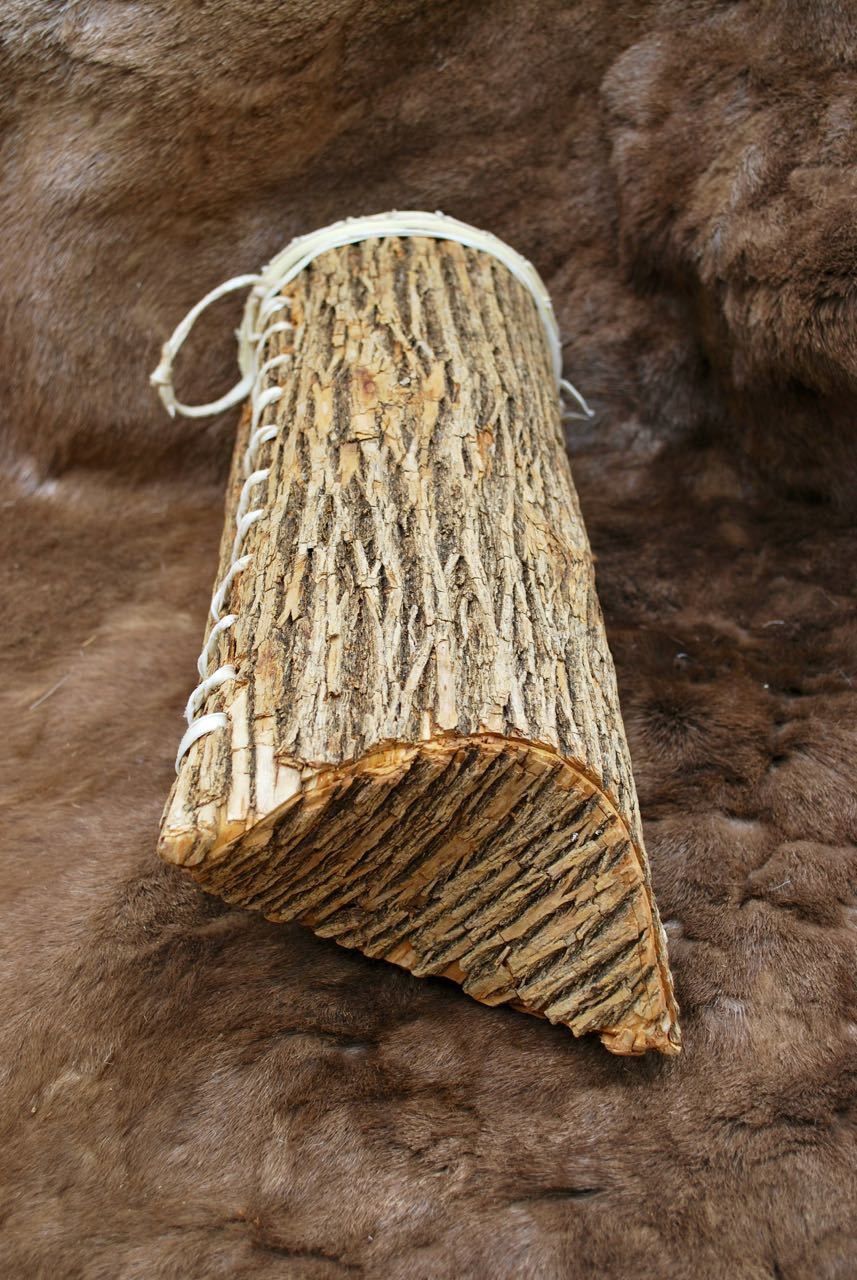
Bark - 1While sorting staves in the barn a long section of bark separated from a quartered trunk.  While this one is not from one of the usual species used for bark containers I decided to give it a try.  Bark is used as a raw material for making water resistant hats, bowls, quivers, and other containers far back into the mists of time.  From at least as far back as Mesolithic Europe to Pre-Columbian America, this type of “basket” has made it’s way into the human tool kit.  While this is not a tutorial proper, I took a few photos of the finished product.

Bark - 3The body is made from the whole bark of Osage orange (Maclura pomifera) and sewn with rawhide from deer.  The rim is constructed from a mesquite shoot split, steamed into a hoop, and sewn with rawhide.

Bark - 4It’s not perfect and probably won’t last forever as bark can be fairly brittle over a long time but will serve to hold some demonstration goodies for quite a while.

Bark - 2Have a look at a simple tutorial for a similar container by Ken Peek HERE.

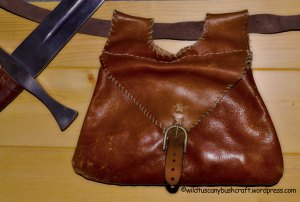
How to make a ‘medieval style’ possible pouch; more traveler’s gear

Here is a great little instruction set on how to make a European Medieval-style belt bag. You see these in paintings and illustrations on just about every traveler. Not only will you come out with a nice bag but it is a fine and simple introduction into leather working and sewing. All makers need to start somewhere and this might be the right project.

wildtuscanybushcraft's avatarWild Tuscany Bushcraft

Old style bushcraft: a medieval possible pouch Old style bushcraft: a medieval possible pouch

During the Middle Age was common carrying small items like coins, keys, inside pouches or purses attached to the belt.
There are many archaeological and iconographical documents, you can search for your favorite patterns, but there is a model that in my opinion, is one of the best for a bushcrafter.

View original post 298 more words

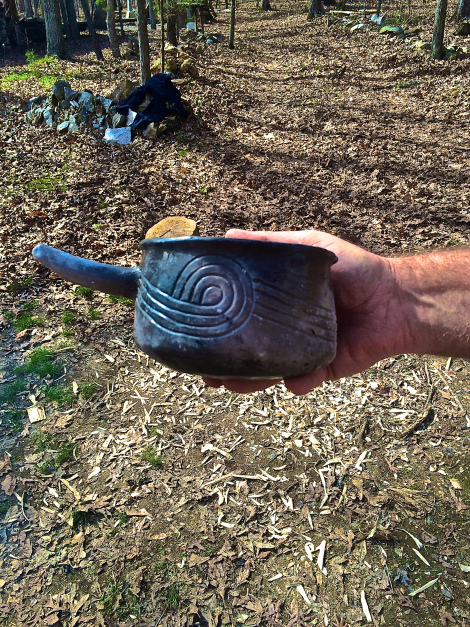
Making Containers via Primitive Process Pottery

I wanted to re-blog this excellent post about functional pottery construction from “Survival Sherpa”. I’m no great pottery maker but appreciate the craft for sure. Have a look.

img_1348 img_1419

Survival Sherpa's avatarSurvival Sherpa

by Todd Walker

Making Containers from Primitive Process Pottery - www.TheSurvivalSherpa.com

Coffee drinkers like myself usually have a favorite mug or cup. My all-time favorite “tankard” developed a crack and DRG trashed it. A sad day indeed!

My sob story may seem petty, but there’s nothing trivial about not having a way to “contain” stuff. Think of all the ways you use containers daily. Then imagine all your modern containers being gone… poof, no more. Welcome to the Stone Age!

Here’s what else disappears with your containers. Your ability to…

  • Cook stuff without skewering it on a stick
  • Collect, disinfect, transport, and drink water
  • Raise plants and livestock
  • Store food without stuffing it in an animal stomach
  • Dispose of waste
  • Personal hygiene
  • Ferment food and drink
  • Make medicinals
  • Gather food
  • Keep stuff clean
  • Organize stuff
  • etc., etc., etc….

This is why containers are king! 

After attending a local two-day primitive pottery class, my respect and appreciation for the humble container grew…

View original post 1,005 more words

Magnetic Compass, a Gimme from an Iron-Rich Earth

Compasses

Starting as a field scientist in the heady days when men were men and GPS was not available to common civilians, I learned my way around a compass pretty well.  I thought I knew something coming out of Boy Scouts but putting those skills to the test mile after mile in order to locate a distant waypoint or build a map by hand honed those skills and etched them indelibly on my brain.  Friendly competition arose amongst colleagues testing our pace and compass work over miles of rough ground in the eastern woodlands.  The West is easy in comparison with open forests, plains, and grand vistas for taking long sightings.  To this day, I generally prefer a pocket compass to a GPS and if I could choose only one, it would be one of these wireless beauties.Compasses2A surveyor’s sighting compass can just about perform miracles in the right hands and my trusty Brunton Pocket Transit, after all these years, still finds it’s way into my field bag for big jobs.  Get a compass, learn to really use it.  Keep it handy, and you may never be truly lost.