Working away on a weekend day a little while back. Enjoying time on the prairie in my little rolling home; coffee, a banjo, and connection to a HotSpot so I can get some work done. The best of all worlds.
A reminder to myself as to how the vardo is in constant change. Little updates happen all the time and I often forget them until looking back on a photo like this one.
I don’t remember for sure but I suspect there is a dog or two laying on the floor or, more likely, under the wagon keeping an eye out for wildlife. I’m itching to get back out on the road.
Today, it’s sheep camps from Wyoming from the Wyoming Tales and Trails webpage. Great photos and some good information about Western history.
Note the important things; wood stove, wash pan hanging on the door, the big tub sitting outside, and a fiddle for company. I could spend a good chunk of my life like this!
Another sheep camp, dog included.
This camp is downright crowded with two wagons.
Although the site is a bit difficult to navigate, there is a lot of information about western history to be found there. Have a look around.
Sink, seating, and storage galore – I’m finally moving onto the luxuries that make this addition what it is meant to be; essentially moving some outdoor activities and living indoors with more amenities and easier foul-weather living.
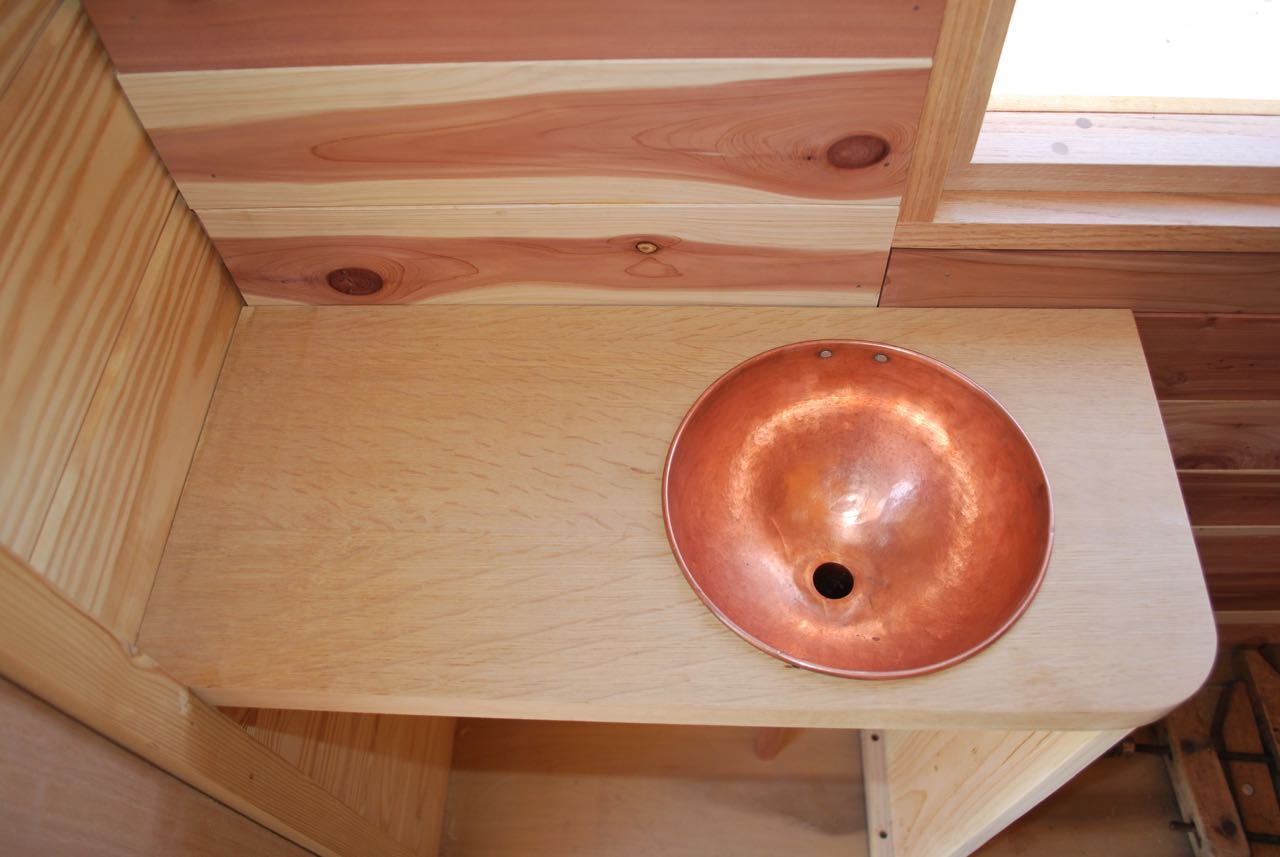
Copper mixing bowl drilled for a drain.
Beginning with a little sink re-purposed from an old copper mixing bowl set – This one was the middle size and fit the area perfectly. I’m certainly not taking credit for the idea as I took this freely from Mick’s vardo. The bowl is a perfect size for some personal hygiene, tooth-brushing, etc. while on the road while the bigger cleaning can still be done outside with the old washtubs and in the future, with an outside shower.
Drilling the hole – I was concerned about this step as there were several things that could go wrong; hole placement, dented bottom, rough fit, and so on. In the end I did my best to find the exact center with a tailor’s tape, from the outside, and marking the location with an awl. I then flipped the bowl over, set it up in a scrap board, and while holding it with my feet used a hand brace with a Forestner bit to slowly cut the hole. This worked surprisingly well and required only a little sanding and smoothing before moving on.
The bowl is not very heavy copper so I was concerned about the solder strength at the joint. There should not be much real strain on it but to ensure a larger surface area to sweat the solder, I sleeved the short pipe with a heavy coupling. I flowed the solder deep into the sleeve before attaching to the so they should be united forever now.
Pipe and coupling soldered in place.
Some serious tugging and testing leads me to believe this is a solid joint.
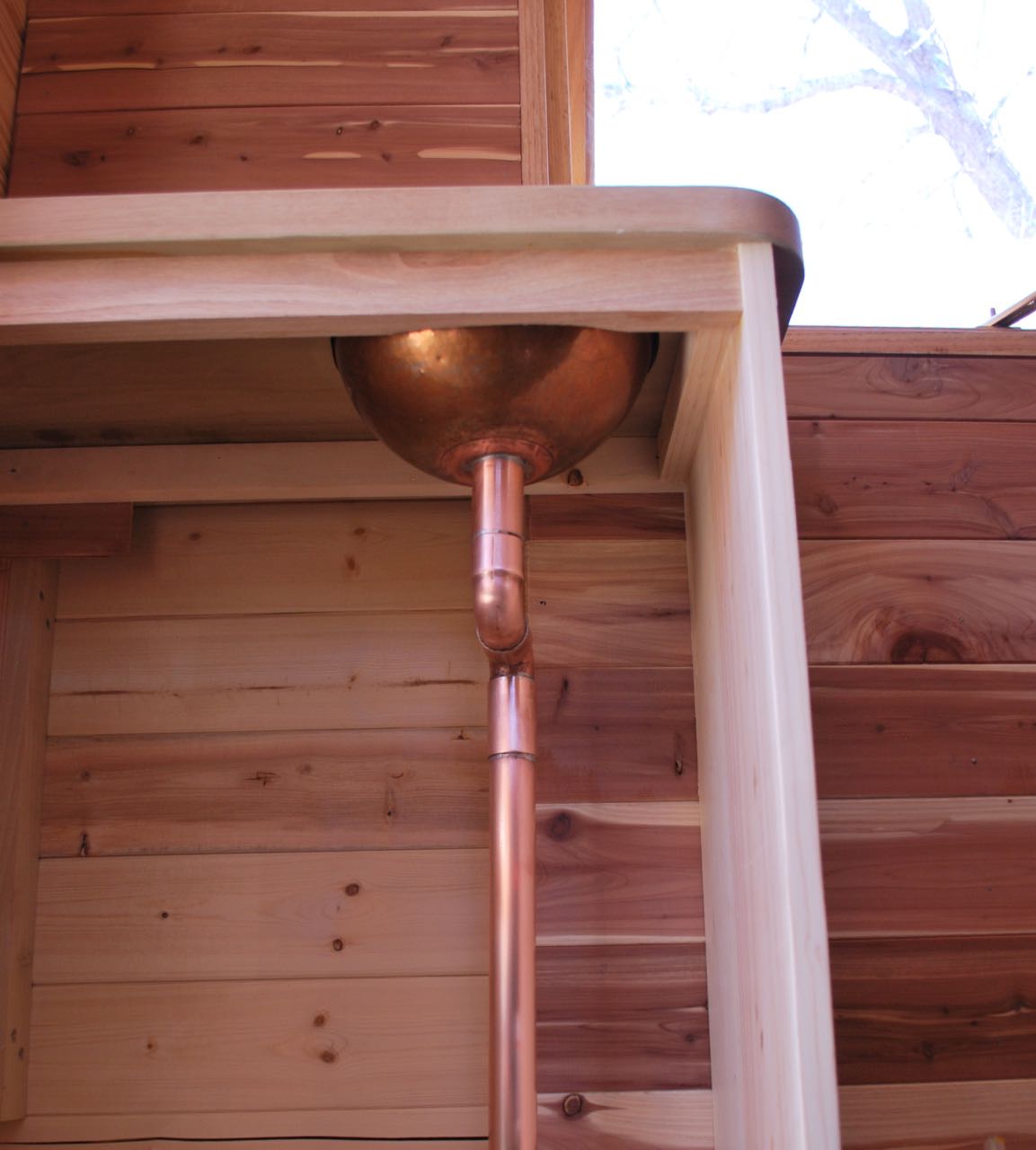
View of the plumbing from below.
A couple elbows and a short run of pipe completed the plumbing “system” and installation was a breeze. A small shelf to hold a couple Dr. Bronner’s bottles and a towel bar will be added soon to complete the set-up. The storage area to the left was sized to hold the beautiful new copper cistern during travel. The cistern will live outside in the kitchen area when encamped.
A note of caution – Although not really discussed here, the oak-framed windows are visible in some of the images. These were recently added and are glazed with Lexan for its light weight and excellent strength. Keeping the weight low is still a major priority, even in the addition and, if you are building something like this, remember: EVERY SINGLE POUND COUNTS! Fasteners, glass, hardware, accoutrements; they all add up and will be paid for in the final weight. If I could build everything with oak and walnut and hickory for durability, I would. However, the weight will add danger in towing, lower the fuel efficiency and have a cumulative effect on the overall structure.
Looking down the drain.
The sink was fitted into place and a outflow pipe seated in the hole drilled by the same Forestner bit used in the bowl. This counter is a re-purposed old office desk top from the 1930s or 40s that I’ve had for many years. It is a white oak laminate over a red-oak core (when things were built to last). A couple passes through the planer yielded a beautiful and sturdy surface to work with. The rest of the desk top was turned into the large counter on the starboard side that will be included in the next post.
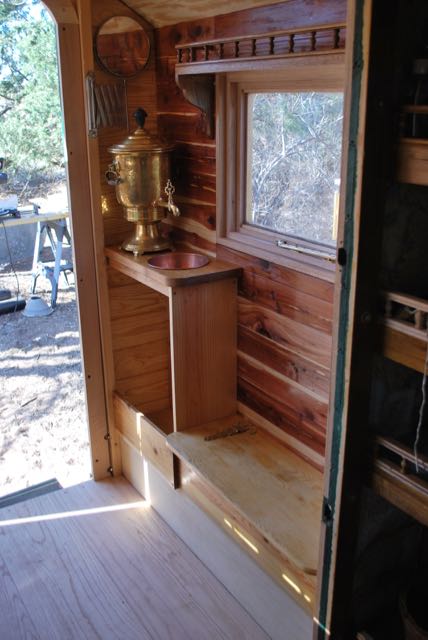
The Samovar in position for washing and the shaving mirror in it’s new place.
This old Samovar was a lucky find for us and fits the location perfectly. It’s high pedestal provides clearance that would otherwise need to be created with some sort of shelf. Otherwise, it’s simply a beautiful and functional piece.
The new bench and a smattering of varnish.
The next step was to create a small bench with the idea that this would give room when two or more people were inside as the floor space is limited in the main cabin. This area will serve as something of a mud room for the rest of wagon. The hinges were an Ebay find of solid brass under a hundred or more years of varnish and tarnish. I think Stacey really enjoyed making these shine again. This wood is some very solid pine reclaimed from an antique child’s desk and again, a planer made short work of cleaning it up for use.
Side bench.
I would have preferred the seat to be a little deeper for comfort but didn’t want to interfere with the traffic-way through the door. Nobody wants a shin-buster in such a small space.
There cannot be enough storage space in such a small accommodation.
The bench provides another small storage compartment for items that may need to be readily accessible; it’s not large but every bit counts.
An overview of the new area.
It’s always difficult to get a clear picture of arrangements in such a small space but this shot from the main cabin gives a general impression of the area and the relative size the new window.
For Part 1 of the rebuild/addition then CLICK HERE.
Conception. After years of doodles and illustration, mock-up a few models and decide what works best.
This post is a re-cap of the Vardo build. I get questions about this project at least three times per week and I think it has inspired a few other people to make the leap. I still consider it a work in progress even though it is four years old and has 18,000 miles under it. New and improved ideas are being added right now but maybe this will help somebody get started.
After the sketch-up, start making parts. This was a momentous occasion for me.
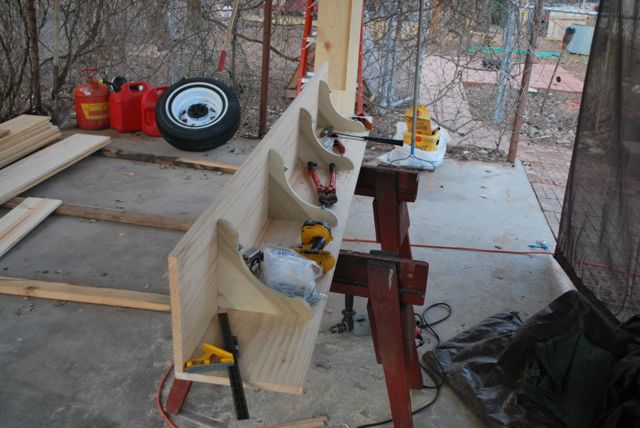
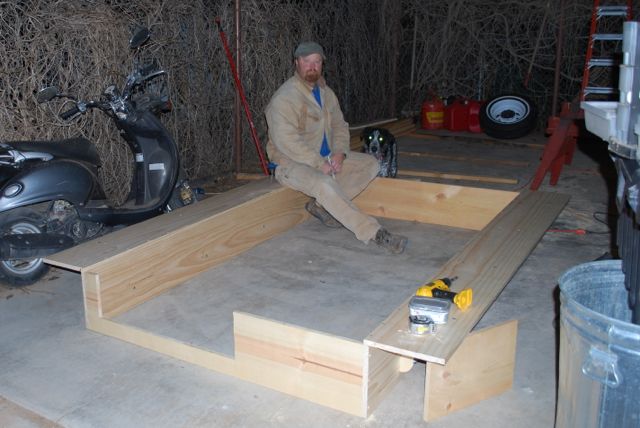
Assembly begins. Mild panic sets in; “will this work?” and “am I crazy to dive into this?”
At this point, I took some time to ponder. “Is the size and layout really going to work?”
Attaching the ledge to the prepared frame.
Build, build, build. Using a window of good weather in January.
Even relatively easy details, like door placement and size, were still up for change.
Finally, I can get a real sense of scale.
I fell in love with the design once the box was built.
Working alone means lots of clamps.
Gawkers were willing to take pictures.
The bed framing becomes integral to the structure.
Seats were designed and tested for size and functionality.
The first storage is done.
Wood is good!
The shell becomes complete.
Now for the details.
Temporary window inserted for a quick trip to the desert.
Quick coat of paint and off we went.
A little living helped bring together the details.
Spending time in the space gives an idea of where things are needed.
Finish work is a process, not an event.
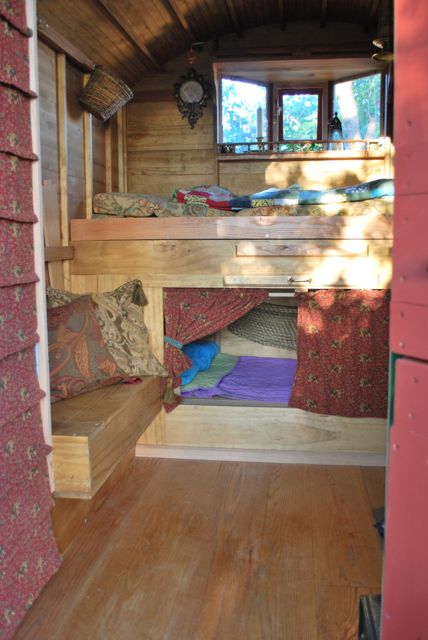
The Vardo becomes a home.
A safe and cozy nest on the road.
Still far from done, I took her cross-country anyway.
Things began to come together after a few thousand miles travel.
Finishing touches are added constantly.
As are safety details.
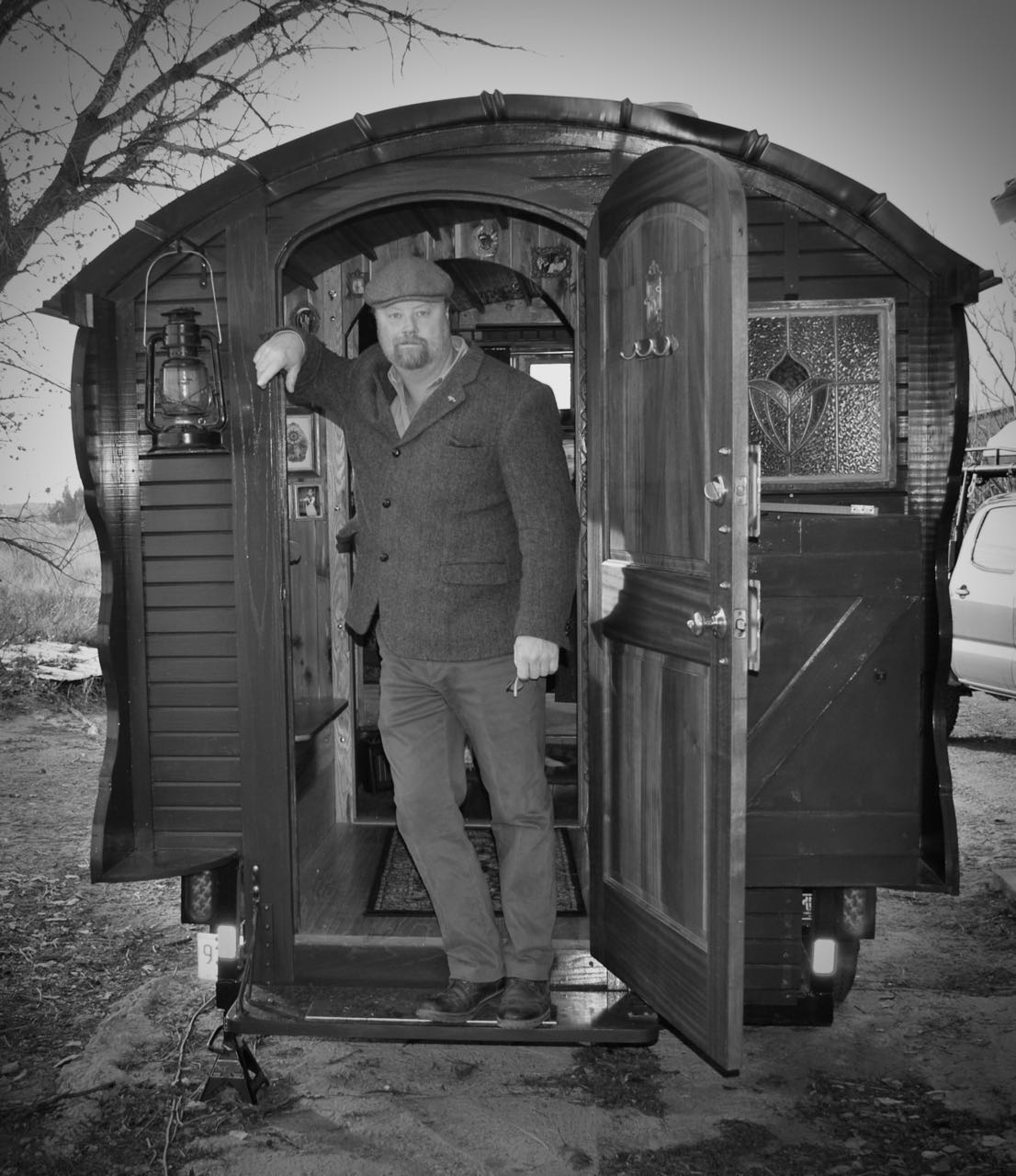
Still making changes and additions four years down the road.
More big changes are happening and I hope to get up some new information very soon. I think an important fact that this project showed was that, for a relatively low-budget, and a little patience, a little home can be built over time but still be usable along the way. I didn’t wait for every last detail to be completed before putting this house to good use or I’d still be waiting today.












 Preindustrial Craftsmanship