Sheep Camps are Alive and Well in the West

I have posted quite a few images and links to classic old-time sheep camps here over the years.   If you travel the small byways of the Mountain West you will still see plenty of old sheep camps in use or parked around ranch houses today.  But the sheep camp isn’t just a thing of a past generation, they are still being rebuilt, restored, or made in shops for modern use.

2012-11-09-09-30-54If you aren’t sure how this differs from a modern RV, you may not be alone.  However, there are some subtle but significant differences.  First of all, the sheep camps tend to be built much more sturdily than their recreational cousins and almost always have a wood stove for heat due their use in remote mountains.  The over-built bodies and heavy-duty frames allow them to be dragged into all sorts off-road locations without damage.  As a working accommodation they tend to be more spartan than many new RVs.

img_3415Note the traditional wheel arrangement on the model above. This type of running gear allows the wagon to be pulled into any location and is always set-up.  No need for jacks if you can find a relatively level patch of ground.  However, if the wagon is to be primarily pulled on the highway, a more modern configuration adds to their towability as seen below.

img_3844legend-outlinedThe layout is classic (I modeled my layout, in part, on this style wagon) with the bed across the back and a stowaway table.  The people at Timberline Range Camps, who create the wagons pictured here, have preserved the classic features in a fully modern “camp”.

TRC

I get no endorsement from them but please go and check out their work.

img_3361

Tiny sink, lots of storage, and a two burner stove are perfect for a couple working folks or an cold weather hunting camp.img_3360_0
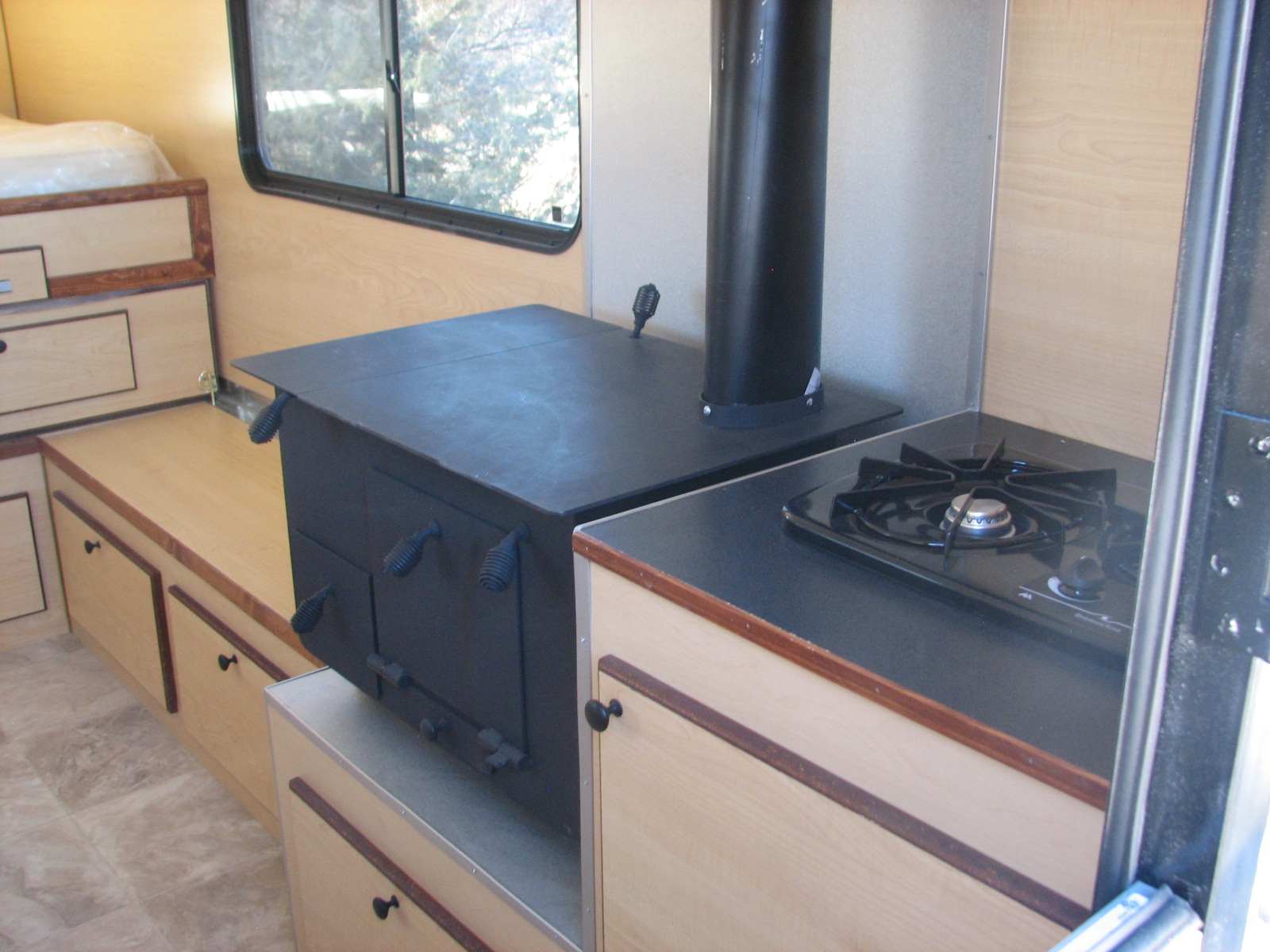
Nothing fancy required in an off-grid home like this.img_3365Although the wagons have grown in size to accommodate the modern worker I appreciate their dedication to simplicity.  One of the coolest features, I think, is the bed-under-the-bed.
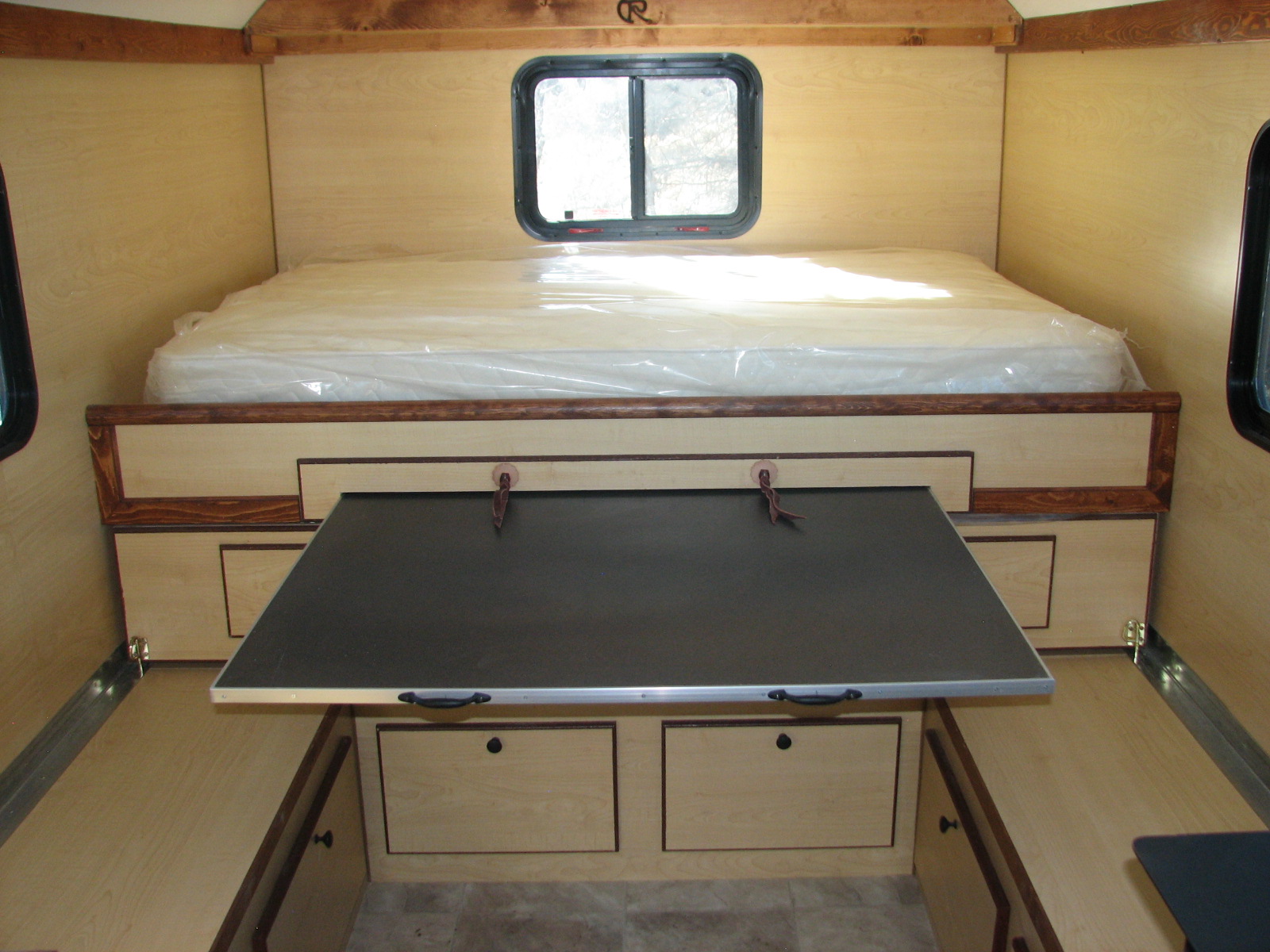
img_3368The lower bunk slides in and out as a drawer to completely stow away with a minimum of wasted space when not needed.  If you want the vardo-caravan-sheep camp lifestyle but cannot bring yourself to build it, explore the many options of the modern builders.  This is just a small sample of what they offer, check out their web page and blog to see many more photos: http://sheepcamps.com/

Home Carpentry

As usual, an interesting old find posted on the Lost Arts Press. It’s worth a read.

“It is doubtless the timidity of woman which restrains her mending instincts. She dreads the saw and the chisel as treacherous tools that inevitably inflict wounds on the user… Moreover, she can never grasp the difference between a nail and a screw, and regards the latter as an absurd variety of nail which can not be driven with a hammer unless the wielder of the hammer has the muscles of a man.”

The Heritage Hipster

Ha! “Lumbersexuals” and “Urban Woodsmen.” Finally some proper names for this “new” fashion trend. We dressed like this in high school and still do whenever we can. The only difference is the new hipsters actually compliment us on our Pendleton shirts and Redwing boots.

Markus's avatar74 FOOTWEAR DESIGN CONSULTING

Haha, I’ll have to think about this one..it took me kind of by surprise yesterday, while I was observing an emerging “Charro”, or Mexican Cowboy fashion trend here in Mexico (more in a future post).

Even though the recently coined “Lumbersexual” and “Urban Woodsman” shows that this aspirational fashion is also coming to a head, I think such fashions are also a reflection of some very significant social changes in developed and affluent societies.

heritagehipsterfashionmatrix

The Heritage Hipster Matrix Via Ouno Design

b60

lumbersexual-2

And I should be the first to admit that I was also a Heritage Hipster once.

10896364_10152978585429593_7281953185721823274_o

View original post

Alapana and the Mastery of an Art

640px-A_Lady_Playing_the_Tanpura,_ca._1735I occasionally post about my music interests on the blog.  I am no aficionado of Indian music but I certainly know what I like when I hear it.  Doing a little exploring on YouTube recently has led me to some remarkable players so I decided to share a bit from Jayanthi Kumaresh.  She comes from a family of Carnatic musicians dating back six generations and holds a doctorate in music.  She has been playing since the age of three and her mastery is beyond a doubt.  This woman really rocks.  After about 5:15 on the first video she really gets into gear.

The Veena she plays dates back in it’s current form at least 3,500 years giving it some significance in staying power if nothing else.  If you are interested in broadening your musical horizons there are plenty more links out there and services like YouTube and Vimeo are an excellent vehicle to expand knowledge.  Believe it or not, there’s more to the internet than conspiracy theories, social gossip, and cute animal videos.

Article Series on Japanese Joinery

A nearly lost art. Thanks for posting this great connection to Japanese joinery.

Greg Merritt's avatarHILLBILLY DAIKU

If you have an interest in Japanese joinery or joinery in general, then I would like to point you to an article series by John Bullar.  Mr. Bullar is writing this article series about Japanese joinery for:

Furniture & Cabinetmaking magazine.

Mr. Bullar begins the series with a look at Japanese tools as well as pointing out that a person can execute these joints with traditional western tools.

jp_joint-fc-03 Photo used with permission of Furniture and Cabinetmaking magazine. Also note the article title in the lower left corner… Just saying…

Let me say this, there is nothing magical about Japanese tools.  They are just tools and are solely dependent upon the skill of the user.  Now I’ll admit that their exotic nature is what first drew me to them.  The quality of the steel and ergonomics is what really hooked me.  The Japanese chisels and saws I absolutely enjoy using.  The kanna…

View original post 283 more words

Bark Basket

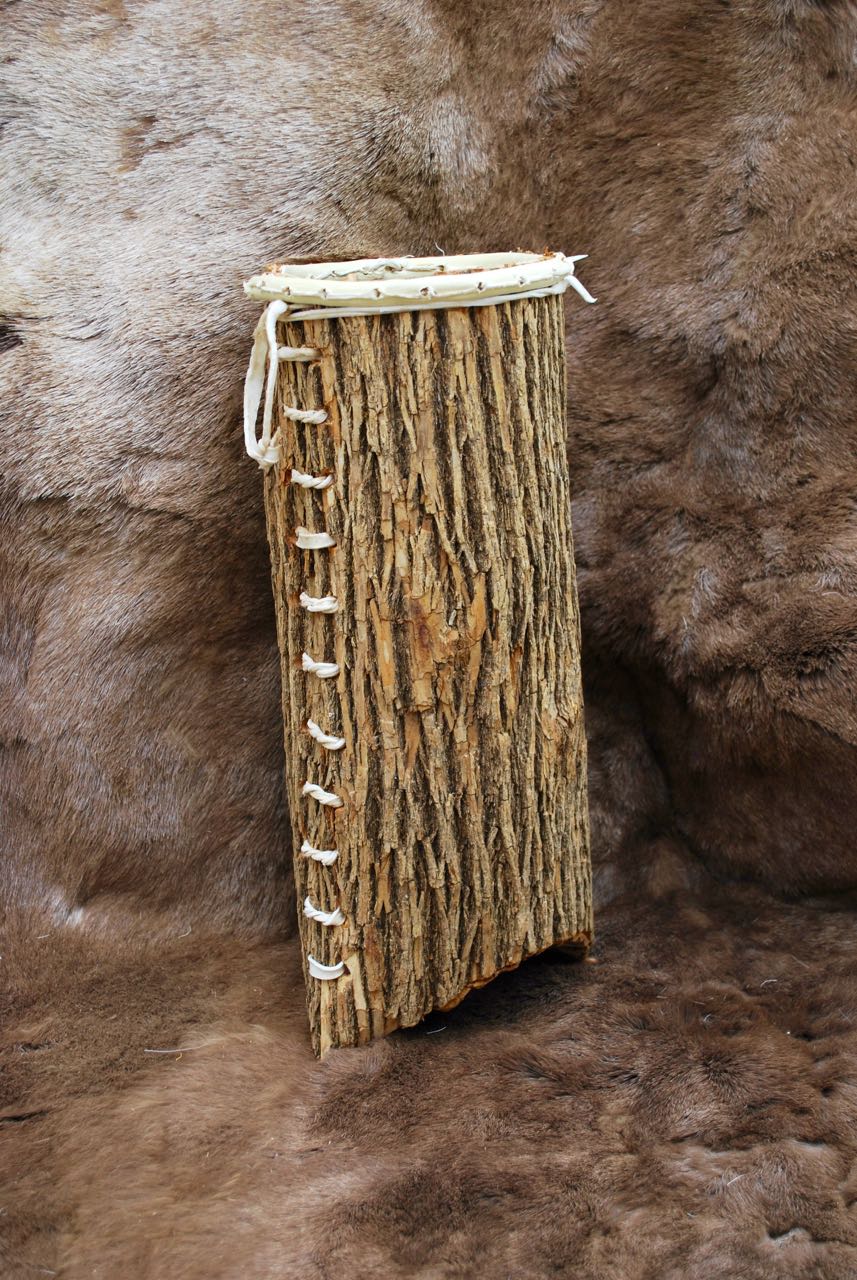
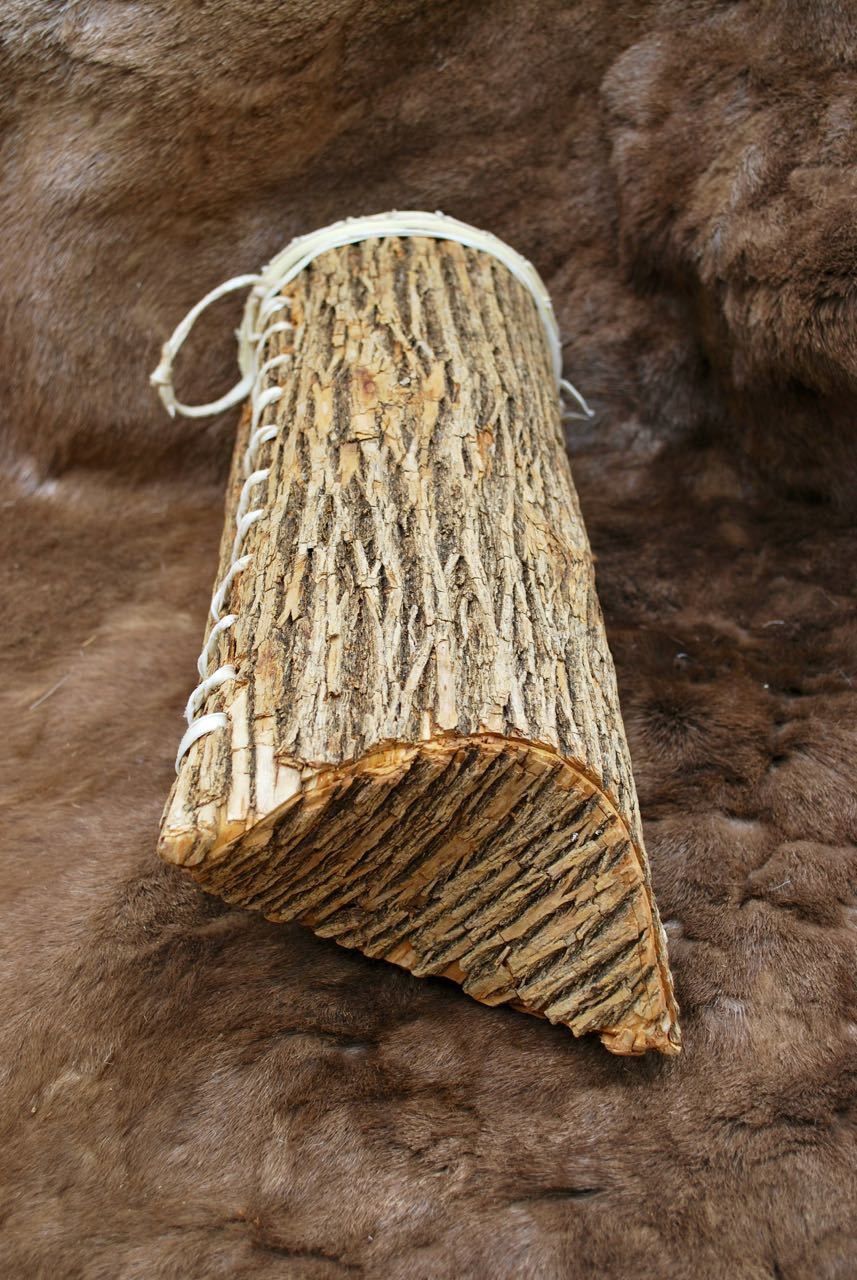
Bark - 1While sorting staves in the barn a long section of bark separated from a quartered trunk.  While this one is not from one of the usual species used for bark containers I decided to give it a try.  Bark is used as a raw material for making water resistant hats, bowls, quivers, and other containers far back into the mists of time.  From at least as far back as Mesolithic Europe to Pre-Columbian America, this type of “basket” has made it’s way into the human tool kit.  While this is not a tutorial proper, I took a few photos of the finished product.

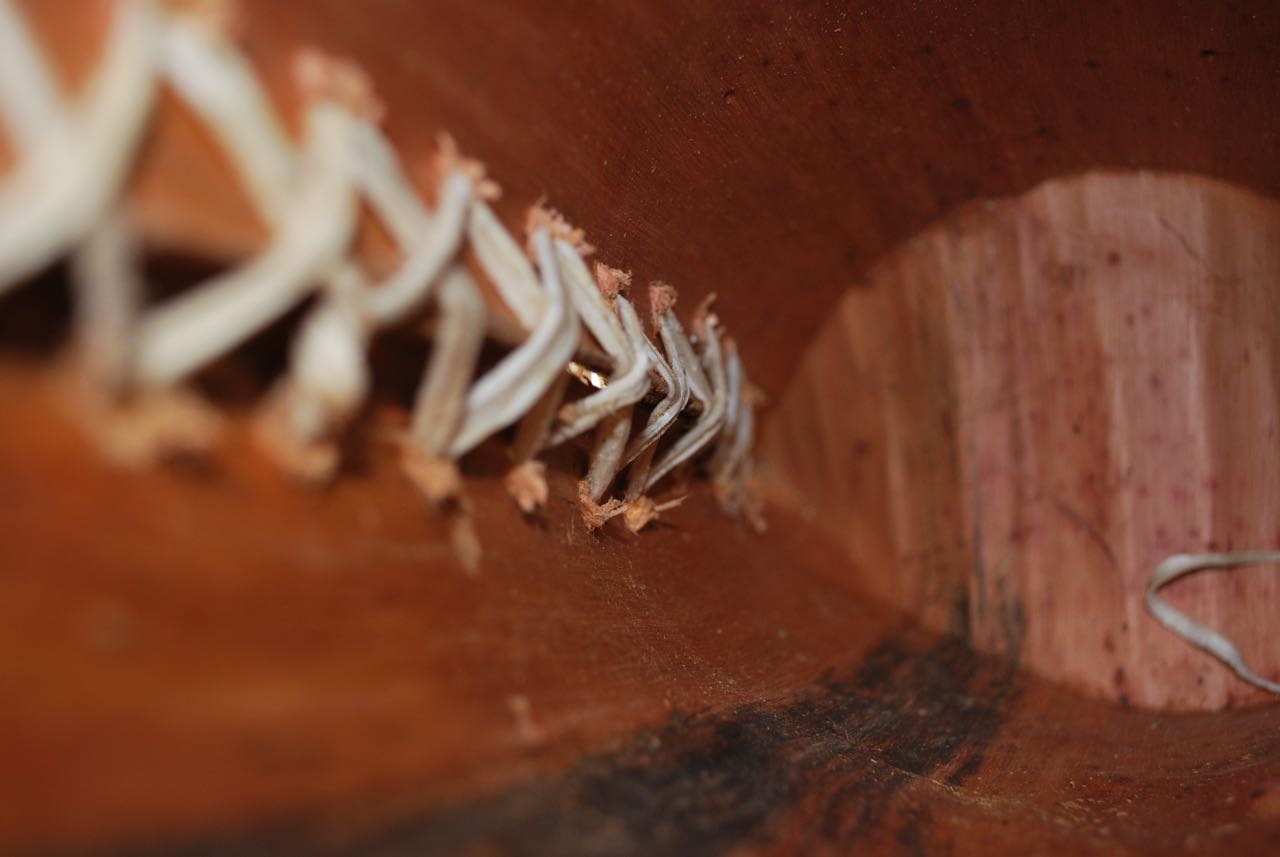
Bark - 3The body is made from the whole bark of Osage orange (Maclura pomifera) and sewn with rawhide from deer.  The rim is constructed from a mesquite shoot split, steamed into a hoop, and sewn with rawhide.

Bark - 4It’s not perfect and probably won’t last forever as bark can be fairly brittle over a long time but will serve to hold some demonstration goodies for quite a while.

Bark - 2Have a look at a simple tutorial for a similar container by Ken Peek HERE.

Make a Shop Apron

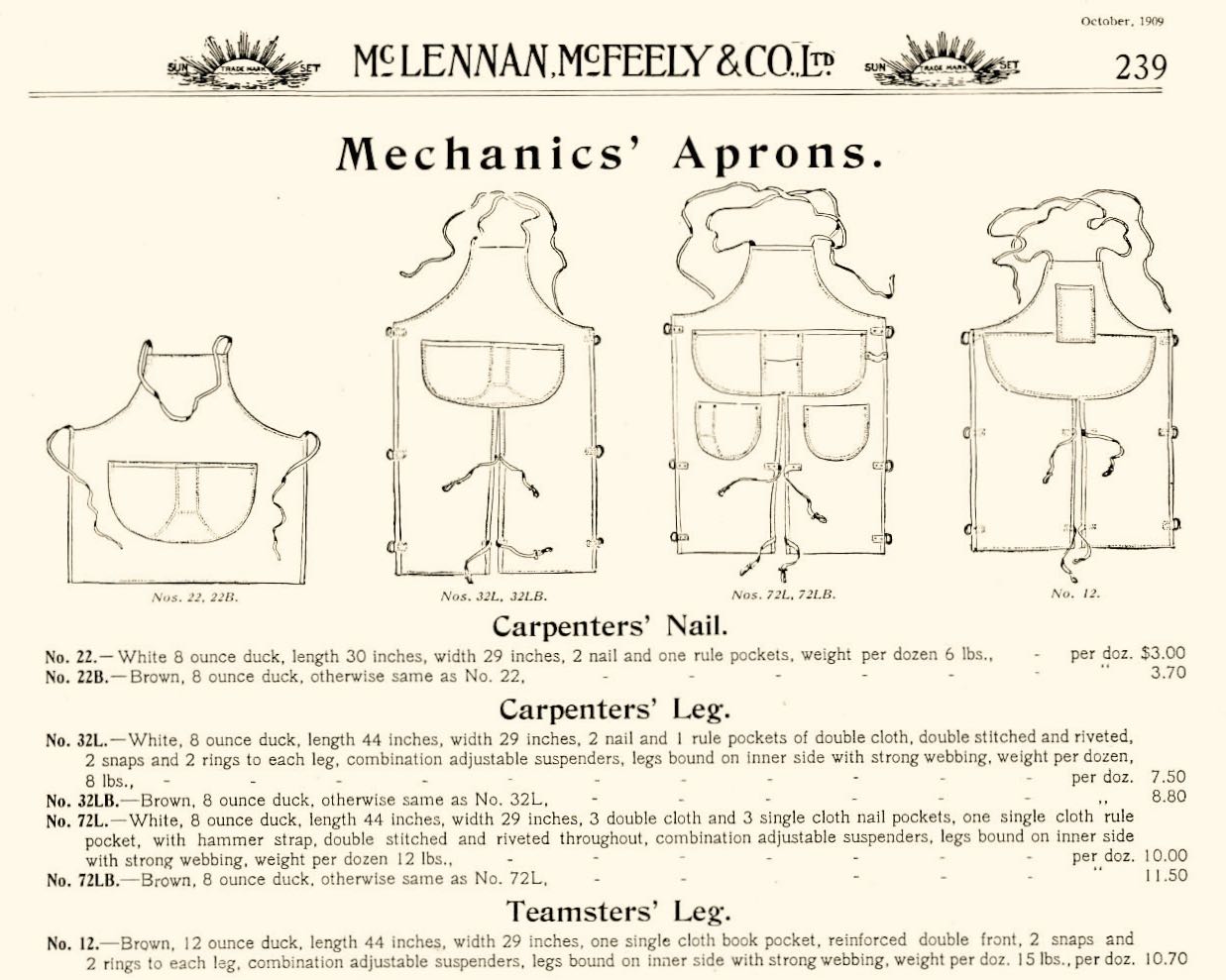
ApronsShop aprons are not as widely used as in the past.  I believe this is related to our modern view on clothing and how it has changed over the past century.  Not only are we training less in the trades, our clothes are ridiculously cheap in the modern world.  Low prices and availability keeps our incentive to protect them pretty low.  As I have reduced my quantity of clothing I have grown to appreciate the humble shop apron more than ever.  In the past, my only incentive was for protection when grinding metal or welding but now I begin to understand the real role a good apron can play in the shop.

A good shop apron can cost quite a bit of money ($40 – $100 or more) so I present the above catalog page as a starting point for construction.  Heavy canvas or leather are the obvious choices for material.  Although heavier, I prefer leather as is it is fireproof and offers some protection against cuts.  As for protection, here’s an image I found when looking for designs.  It’s from a Navy singlestick exercise.  Somehow the design seems familiar.

navysinglestickDSC_0003

The Last of the Mammoths

A small amount of perspective on TIME.

George Crawford's avatarTHE ACCIDENTAL ARCHAEOLOGIST

Dwarf Mammuthus primigenius, cousin to our own Columbian mammoth.

When the pyramids were being built, there were still wooly mammoths.  A few anyway.  Probably more on earth than there are rhinoceroses NOW; today!

Keeping time in perspective is the most difficult task when talking to or writing for the public.  Way back in college I kept notebooks of correlating timelines from around the world.  I still do this to some degree but it grows too fast to be really useful.  Twenty-plus years ago I started a project in Adobe Illustrator (that alone should give some perspective of technology) to create a graphic concordance; but it was too big to handle without making it a job.  Anyway, facts like that above are very useful for keeping a perspective of time.

A few other tidbits from this interesting blog post*:

Oxford University was over 300 years old when the

View original post 115 more words