Since my playing time is very limited I’ve learned to connect with other musicians via the internet. Having a great selection of “Play Along” tunes lined up on YouTube has really helped me out, especially when trying to keep up or understand variations in a tune. There are so many great garage artists out there that it’s easy to pick four or five versions of a tune to really learn it inside and out. I suspect you would have been a lucky itinerant musician to have stumbled across such an assortment in the slower Pre-Industrial days.
Here’s a fine English fiddler performing the Swallowtail Jig. I’ve been playing along with him recently and I suggest checking out the rest of his videos if this type of music suits you. He has a nice version of the old classic Old Mother Flanagan I particularly like as well.
“The cost of a thing is the amount of what I will call life which is required to be exchanged for it, immediately or in the long run.”
Or, in essence, that in the abstract economy in which we live that we pay for any goods or services by giving up a portion of our lives to another person in exchange for a credit to be spent elsewhere. We are so deeply entrenched in this thinking that most of us don’t even realize that this is how the system works.
If we want to eat, we no longer wander out to hunt, gather, or farm our food; we go somewhere, perform an abstract task, and receive a token. The tokens are then counted out and given to another in exchange for food that they likely didn’t hunt, gather, or farm either. And we’re in too deep to change this now…
At best, we can remain conscious of this fact and hopefully remember this lesson when we spend most of our allotted time away from our loved ones, our interests, or our real passions. Who wouldn’t prefer to go on a bike ride, spend time with their children, learn a new skill, or just sit on the banks of a creek? Instead, we rush to work, ignore our better selves, and spend our remaining hours seeking entertainment and distraction. That’s what we were trained to do.
I’ve been there myself. I spent too much time working away from home, living in motels; too many hours in overtime, for what? Even in doing a job I found extremely interesting, I began to resent the time lost from the things I could be doing for myself or my family.
I have no real answers. Just the knowledge that an awareness of the trade-offs may help us budget and balance our short time here on Earth. I know, just another late night ramble so please take this with a grain of salt.
I’m a sucker for this music and it brings out a load of primal feelings for me. Presenting Albannach, and I recommend setting your speakers to eleven and letting letting it pour over you. Have a glass of something good and enjoy the upcoming weekend.
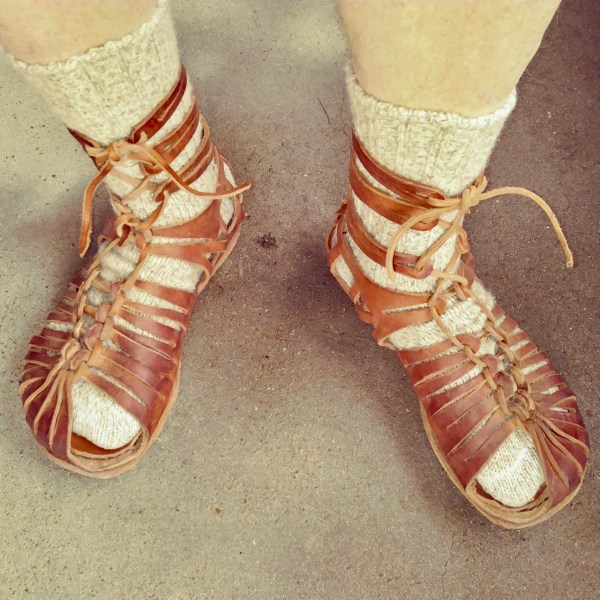
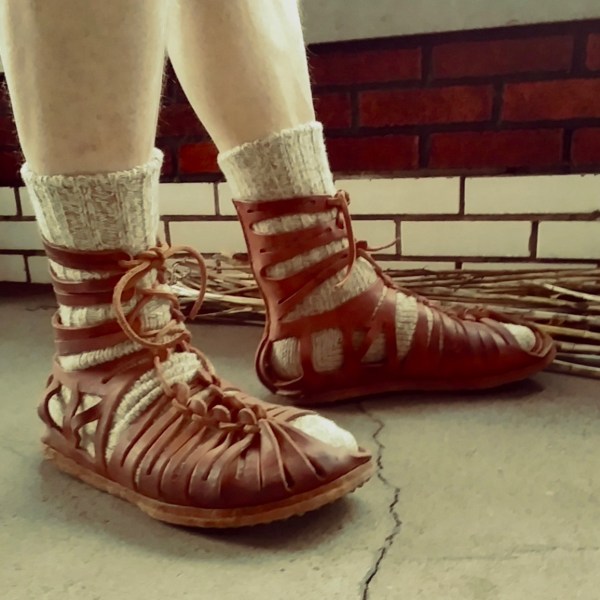
It has taken me quite a while but I’m finally posting a bit about my caligae, the standard soldier’s shoe of the Roman Army. Of course, the design changed somewhat over several centuries and as the army moved into different environments but the basic plan remained the same. I have finally field tested these enough to get the gist of how they perform in various terrains and feel on the feet. A modern westerner would have difficulty thinking of these as “boots” due to the openness of the uppers but I can attest to their substantial feel when worn. I don’t generally feel the need to wear them with socks but it is winter here now.
The archaeological basis – Shoes, and leather goods in general, do not generally survive well in the archaeological record but there are enough examples discovered to understand the constancy of the design. Also, the Romans created a lot of sculptural art celebrating the soldiers, athletes, or documenting historical events, recording the clothing and footwear of the subjects. As with modern footwear, it appears that the civilian population adopted the style for general use as well. These boots follow the same essential pattern as the carbatina but have the addition of a replaceable outer sole and are obviously much higher on the ankle. These are not coming off easily.
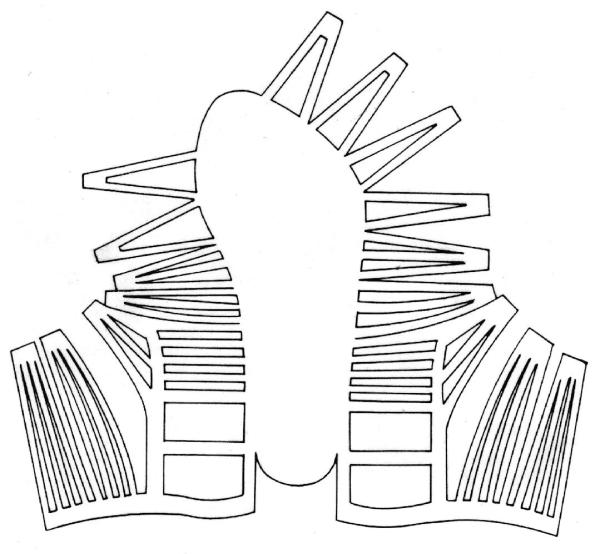
Why the open design? Well, some of this is educated conjecture on the part of the archaeologists and historians of early Europe but the bottom line is that less is more when it comes to equipping foot soldiers. Earlier closed boot designs were not as adaptable and had to be precisely fitted to each man or serious trouble would ensue on long, sustained marching campaigns. The boot is arguably the most important piece of gear to an infantryman. The Legionaries marched thousands of miles and depended solely on their feet and legs to get them there over mountains, woodlands, wetlands, snow and ice, and across countless streams and rivers. You cannot really keep the feet dry anyway, you might as well make them well ventilated to avoid moisture-related problems such as trench foot. The flexible uppers also allowed for an inner sock of woven wool or leather to be worn as dictated by the weather. In some designs, the big toe is completely open to relieve the pressure associated with ill-fitting shoes.Creating the caligae – After looking at every scrap of information I could find regarding archaeological caligae, as well as recreations made by museums and reenactors around the world, I sketched out a pattern primarily based on the example below. These take a lot of leather, so there was much hesitation and caution exercised during the design phase. Looking toward the long-term, I chose the best leather I could find which is 12 oz (3/16″ thick) vegetable tanned leather from Hermann Oak.
Cutting out the parts – There are four essential parts to the caligae: the upper, or body of the shoe, the mid-sole, sewn to the upper, the outer-sole, and the lace. An optional insole was added to mine from a thinner leather to protect the upper from inside wear and to help avoid the possibility of a hobnail working through to the foot. I wear a size 13 so a fair portion of a hide was committed to this project.
Pattern and Assembly – I apparently failed to photograph my cutout patterns but the one above is very similar in shape and design. When it is at this stage, it’s a good idea to put a couple of temporary stitches up the back, lace it loosely and test for fit. I felt that even if they weren’t perfect for me, I would be able to find someone they fit so I pressed on. Fortunately, they fit well. From this point, I cut out two mid-soles and out-soles and sewed the mid-sole to the upper and the out-sole to the mid-sole. You can skip the mid-sole for frugality but the point is to provide a solid base to attach a worn out out-sole later on.
I hope this brief tutorial is enough to get you started on your way. Comments and questions are welcome.
A point of departure – The above fragment of a bronze statue depicts a variation on this theme; a lightweight sandal that laces up above the ankle. If you are thinking of making a pair of these, an image search will find many depictions in art for inspiration.
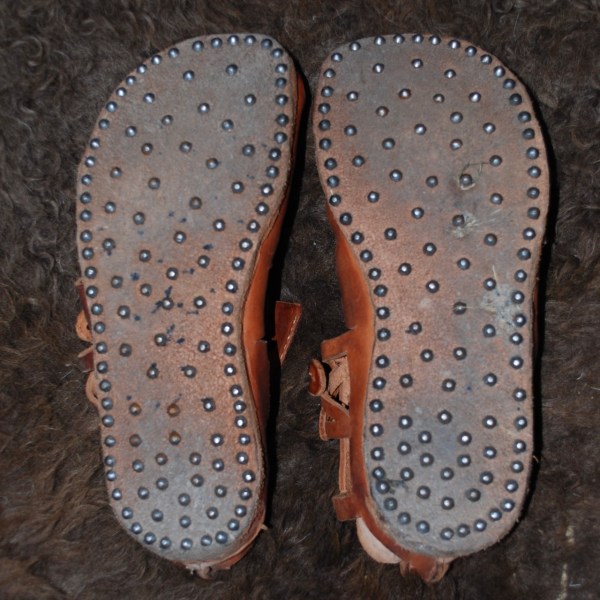
Finally, I added hobnails for authentic traction and feel. If I remember correctly, there are about 113 per shoe. Warning, hobnails are great in soft terrain but stepping onto a hard surface like a tile floor or even into a street have little grip. It’s a bit like hitting an ice patch and must have been something to contend with in days when hobnails were common.
An important anecdote about the dangers of hobnails:
The Jewish chronicler Josephus, writing about the Roman siege of Jerusalem in AD 70, recounted the death of a centurion called Julianus. After seeing his soldiers put up a poor defence against the rebels, he charged into the mass of Jewish rebels alone. He killed many and and gave chase to the rest the inner court of the Temple.
“he was wearing the ordinary military boots studded with masses of sharp nails, and as he ran across the pavement he slipped and fell flat on his back, his armor clanging so loudly that the runaways turned to look.” “the Jews crowded round him and aimed blows from all directions with their spears and swords … Even then as he lay he stabbed many with his sword;…but at last, when all his limbs were slashed and no one dared come to his aid, he ceased to struggle.”
Here’s the maker taking class signups at Rabbitstick 2017.
Greg, over at Hillbilly Daiku is always posting great stuff. There is too much good information out there and not enough time to take it all in while still leading a creative and fulfilling life so it takes me a while to catch up. I was just reading this excellent post about something dear to my heart; handmade music and cigar box guitars (CBGs). I am still a newbie in the low-tech, no-holds-barred world of this iconic American instrument but I am studiously working on my second one now.
My first CBG. Image links to description of the construction.
Not only is Greg a great woodworker and occasional philosopher but is quite gifted as an illustrator and draftsman as well. I suggest you get to his blog and peruse his fine work, starting with this post about how to build a cigar box guitar.
I don’t remember the first time I saw or heard a cigar box guitar. I’m sure it must have been on YouTube though. Like many of my projects, the seed was planted somewhere along the way and finally broke to the surface. So, what is a cigar box guitar? Well, it is exactly what it […]
… an interesting historical post about the fate of traveling folk in 17th century Scotland
Scotland had draconian laws against travelling folk. Hostility towards “Egyptians” took off under King James VI, who was also famously opposed to Border Reivers, Gaelic-speaking Highlanders, alleged Witches, Protestant religious dissenters and tobacco smokers. Edinburgh, 13 May 1682: ‘His Royall Highnes his Maties heigh Comisioner and lords of privie counsel being informed by the Earl […]
Read the rest of this interesting but seldom taught piece of history by clicking the link below.
I study the technology of prehistory. Because of this, I believe strongly in the benefits of experiential archaeology. It gives perspective on a very deep level. We can walk in the shoes of our ancestors, so to speak. I say experiential here not experimental and I’m glad to hear this word coming into the dialog of other primitive technology people. While not trying to dwell on the words themselves, it is an important distinction. Experimental generally implies the ability to replicate an actual experiment (i.e., testing a hypothesis to see what you find).
Experimental pottery; gathering materials, construction, paint, and firing. Click the image to see more about this project.
True experiments are things like:
Can a tree be cut down using an exact replica of a prehistoric axe?
Is it possible to move a ten ton stone over long distances using only the technology and manpower available in the Neolithic?
Can fire be made by rubbing sticks together?
Will a Medieval arrow penetrate 14 gauge armor plate?
You certainly gain the experience through these experiments but you are also testing something specific with something like a yes or no answer. Experimental archaeology can create some popular misconceptions as well. Just because something could be done, doesn’t mean that prehistoric people must have done it that way.
Replicated woven sandals as found on the Southern High Plains and throughout the greater Southwest. Produced from narrow-leaf yucca (by Stacey Bennett).
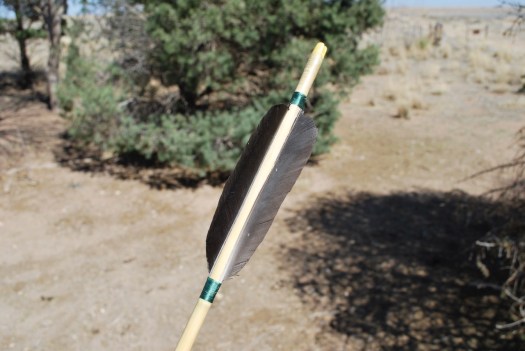
Experiential archaeology integrates this and everything else learned along the way. E.g., How comfortable are these shoes, is there more or less back pain using a tump line on a pack, what kind of wear can be expected on arrow fletchings over time? This allows us to ask even more questions and have a fuller knowledge of ancient peoples.
Testing silk lashed goose feather fletching. Clicking the image links to bamboo arrow making.
I really enjoy the various directions replication takes the maker. Learning the finer points of cutting and scraping with stone flakes or abraders, working with antler and wood, creating glues and mastics, and developing an appropriate paint or sealer as on the spear thrower below.
Upper Paleolithic-style spear thrower. Image links to the “how to” for making this thrower.
Whatever you do and whenever you learn, it’s all good.
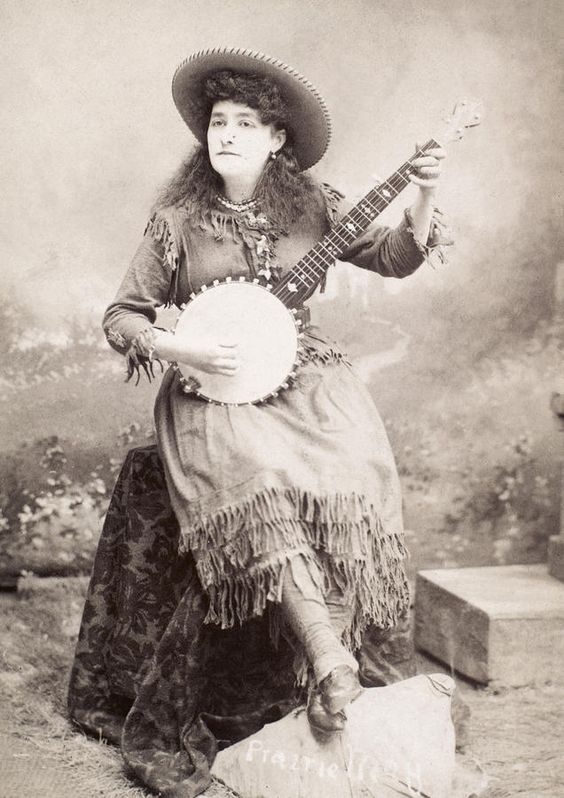
I can’t find any info on this photo. I think is says Prairie May at the bottom?
A little cowboy movie music isn’t a bad thing. Hollywood has produced some good music with the vast resources it has at its disposal. Here is a link to My Rifle, My Pony, and Me / June Applefrom the film Rio Bravo (the hot links will take you to lyrics).
If you know the Steve Martin, Chevy Chase, and Martin movie The Three Amigos (a family favorite around here) the first song reminds me of their homage tune Blue Shadows on the Trail. Take your mind away from work stress, cowboy up, pick up the guitar, and dream of a life on the trails in the Old West.
The modern banjo has ancient roots and shares much with it’s African antecedents. Its connection to the lute family along with the whole array of drum-headed cousins crossed many lost cultural boundaries in ancient times. This makes it the perfect candidate for bridging musical genres and styles, from the Sub-Saharan and Arabic music the banjo, with it’s almost ever-present drone string, morphed into creature we know today. Most non-players only know it from the post-war music known as Bluegrass or maybe even Old-Time Country but there is, and always has been, a broad range of music brought to life on this bright and varied instrument.
Cowboy Singing – Thomas Eakins
I read somewhere long ago the real instrument of the American Cowboy was the banjo due, in part, to the timing and population of the very people who became cowboys. Forget the 1950s movie stereotype, most cowboys were freed slaves, their offspring, or poor younger sons of Euro-Americans looking for a job and adventure. Those who were not were likely caballeros from old Mexico or the west in general; they brought most of the guitarras to the scene.
Thomas Eakins, Home Ranch 1888
Where I was going with this ramble was that the humble little banjo can do more than Mumford and Sons or Yonder Mountain String Band patterned rolls. Nifty and tight as they may be, some of us want to reach beyond and find the real soul in our hands. Don’t get me wrong, these are fine musicians, but really just one narrow style in a giant spectrum of sound.
Here’s a great example. What could be better than Bach and banjo?
I suggest checking out more of Mr. Raphaelson’s videos if you want to add a little novelty to your listening lineup. Whatever your instrument, love it, learn it, and expand upon it.
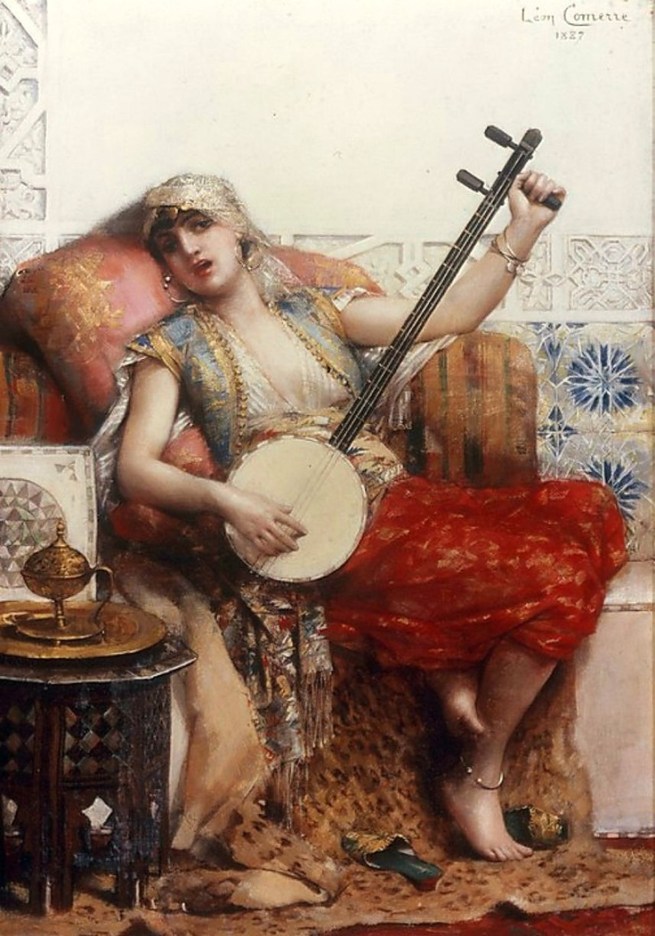
Since we opened the post with a banjo beauty shot, it seems appropriate to end with one as well. I love this inlay, by the way.
By Léon François Comerre, French Academic School. I think this familiar looking instrument comes from Africa via the Arabic world and is generally called a tanbūr. A sort of distant uncle to the modern banjo, America’s African instrument.


 Creating the caligae – After looking at every scrap of information I could find regarding archaeological caligae, as well as recreations made by museums and reenactors around the world, I sketched out a pattern primarily based on the example below. These take a lot of leather, so there was much hesitation and caution exercised during the design phase. Looking toward the long-term, I chose the best leather I could find which is 12 oz (3/16″ thick) vegetable tanned leather from






 Preindustrial Craftsmanship