Over the weekend I had time to add a few, more recent, photos of the wagon to the Vardo page. There are many requests and I assume there are quite a few people out there building their own. Good luck to you all.

Adventures of an Imperfect Man In Search of a Handmade Life

Over the weekend I had time to add a few, more recent, photos of the wagon to the Vardo page. There are many requests and I assume there are quite a few people out there building their own. Good luck to you all.
The arts and crafts of bow-making and arrow-making are alive and well. If anything, they have grown in quality and quantity in the 30 years I have been involved in archery. I, like most of the other bowyers I know, learned in relative isolation with very little printed information available. After a few successful bows, I was lucky enough to find a copy of James Duff’s 1932 classic Bows and Arrows which explains the English Longbow in great detail.
After making a couple dozen bows of various styles, I began to make arrows and realized that this is where the real magic happens. A bow is simply a leaf spring that stores energy applied slowly by the archer and (hopefully) returns that energy very quickly to launch an arrow. On the other hand, an arrow is a work of art and craftsmanship that undergoes tremendous force during acceleration and should be able to survive the trauma of slamming into a target at speeds approaching 200 feet per second (135 mph or 220 km/hr). On top of this, a good arrow must have some weather-proof qualities to handle massive temperature fluctuation, damp grass, heat, sun, and possibly rain.
I mention this because to many people I speak to just getting interested in archery, that to make a bow is the holy grail of primitive technology. For me, it is that creation of a matched set of 12-24 arrows that work well for me and my bow and will hold up under hard use. Yes, there is something cool in making a great bow, but building a good arrow is far more important.
On that ramble, here are a couple of good links I recently stumbled across on the internet.
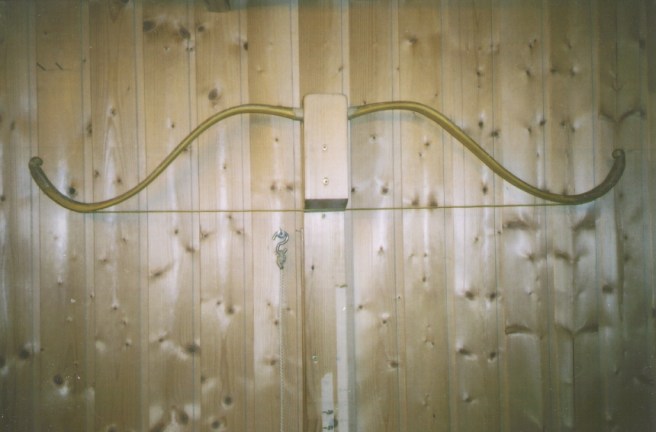
Bow Explosion is a German website from a bowyer working in the Black Forest with and interest in flight shooting.
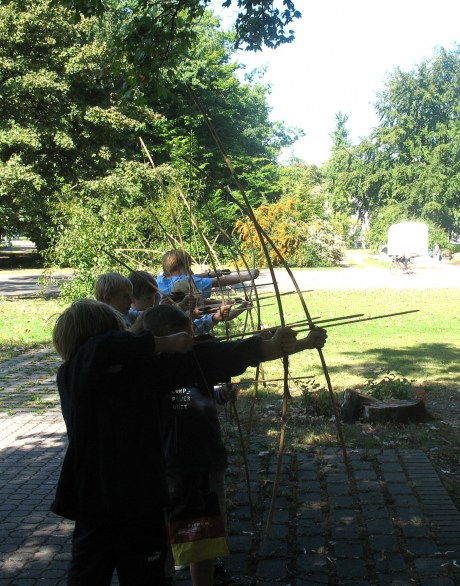
Ashbow has an excellent Picasa Web Album documenting some excellent archery and other primitive technology skills.

And I cannot say enough good about the ATARNnet. The forum of the Asian Traditional Archery Network. There is a load of great information there about Asiatic archery, from Scythia to Japan and everything in between.
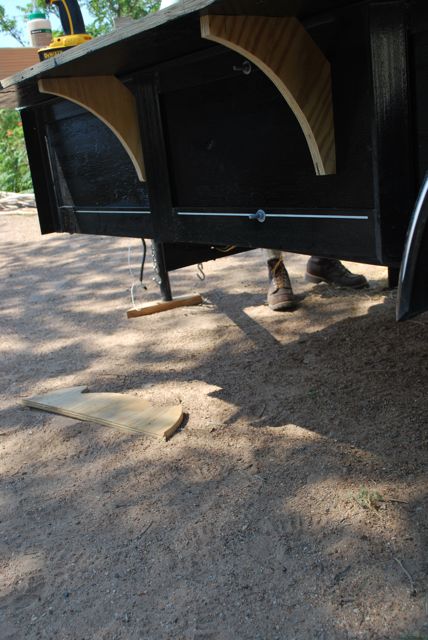
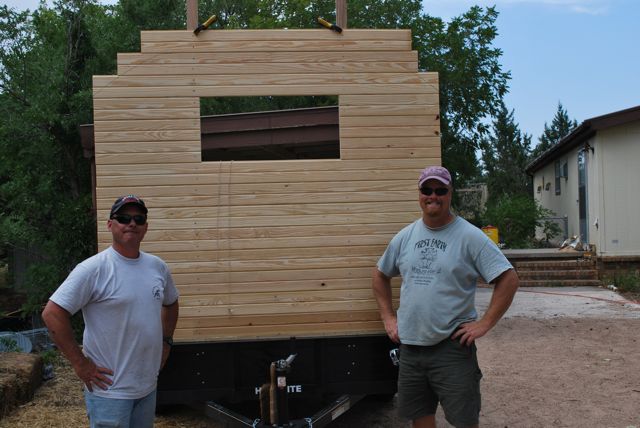
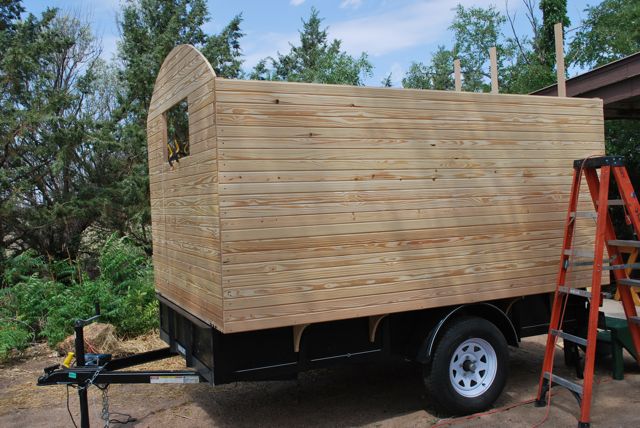
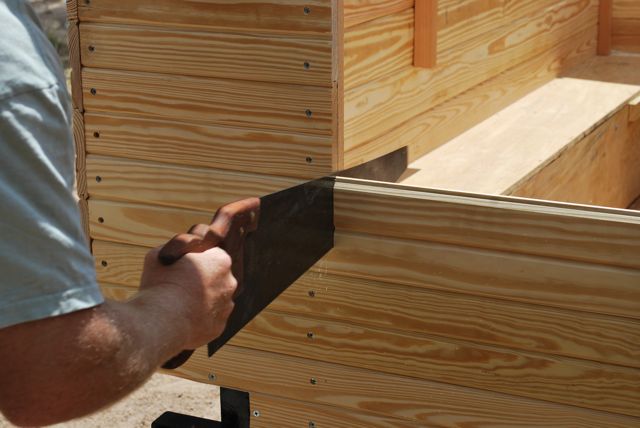
This was a quick and dirty build we were talked into a couple of weeks ago. I don’t like to rush these things but the builder’s time constraints meant this was the only week to get this done before the winter. It does show that the basic build can be completed in a very short time. The basic dimensions are 5′ x 10′ at the floor and just over 7′ wide at the ledges.
 I think it came out alright in the end.
Here is a small gallery of images showing the build. My daughter and I will try to put up an Instructable in the near future describing the process such as it is. Enjoy the photos.
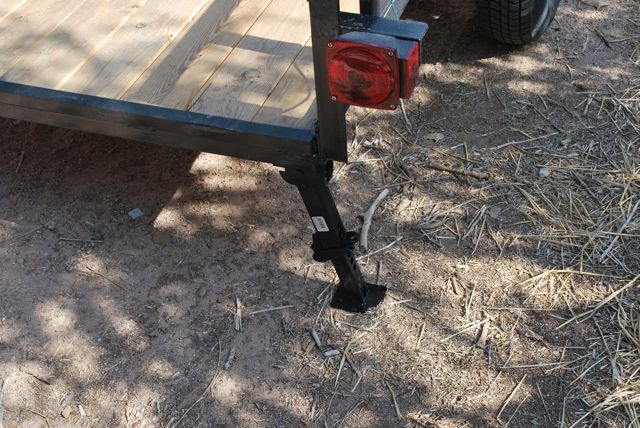

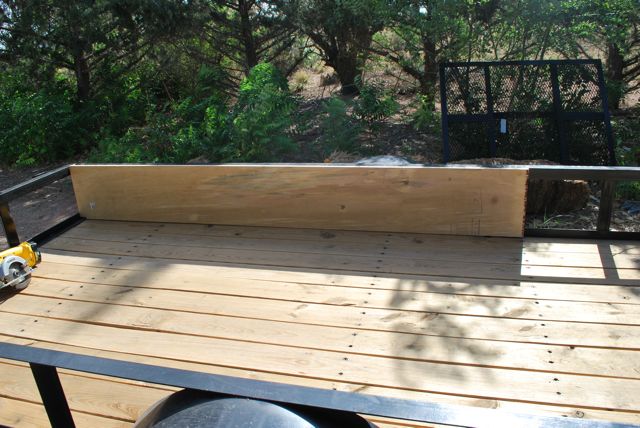







Here’s a preview pic of the new paint and some additions.
 Just about ready for the road again.
 Far from done, but this gives an idea of the new bling colors. They don’t look quite this vibrant in real life but the camera really brings them out.
The door is nearly done and the new window is installed. I am loving it and with a few more tweaks, it will be done. I finally put a good coat of Valspar paint on it and really like the new color.


A Yankee 1545 two-speed ratcheting four function drill circa 1918. I am in love with it. Will post photos when I clean and refurbish it.
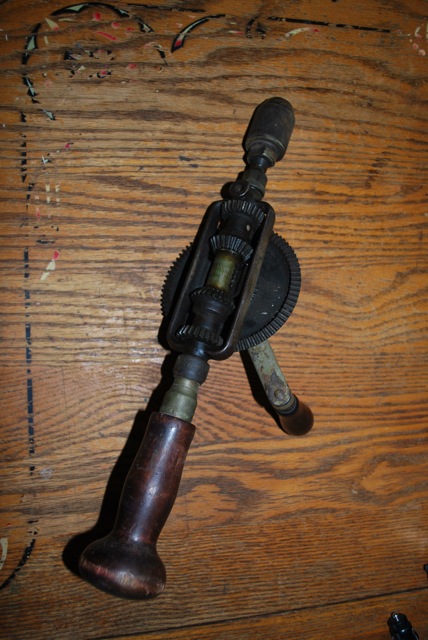
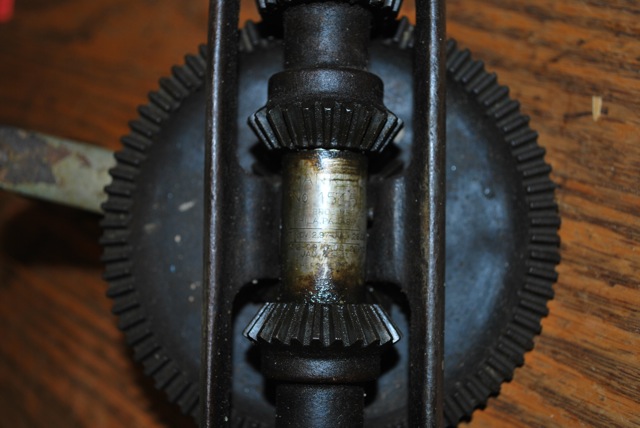 The pinnacle of drills.
Finally getting back to the wagon with longer days and less going on. Over the weekend I started the new window for the wagon door. The old one was a place-holder to get it out on the road (as are the other windows). Now I want to rebuild the whole door.
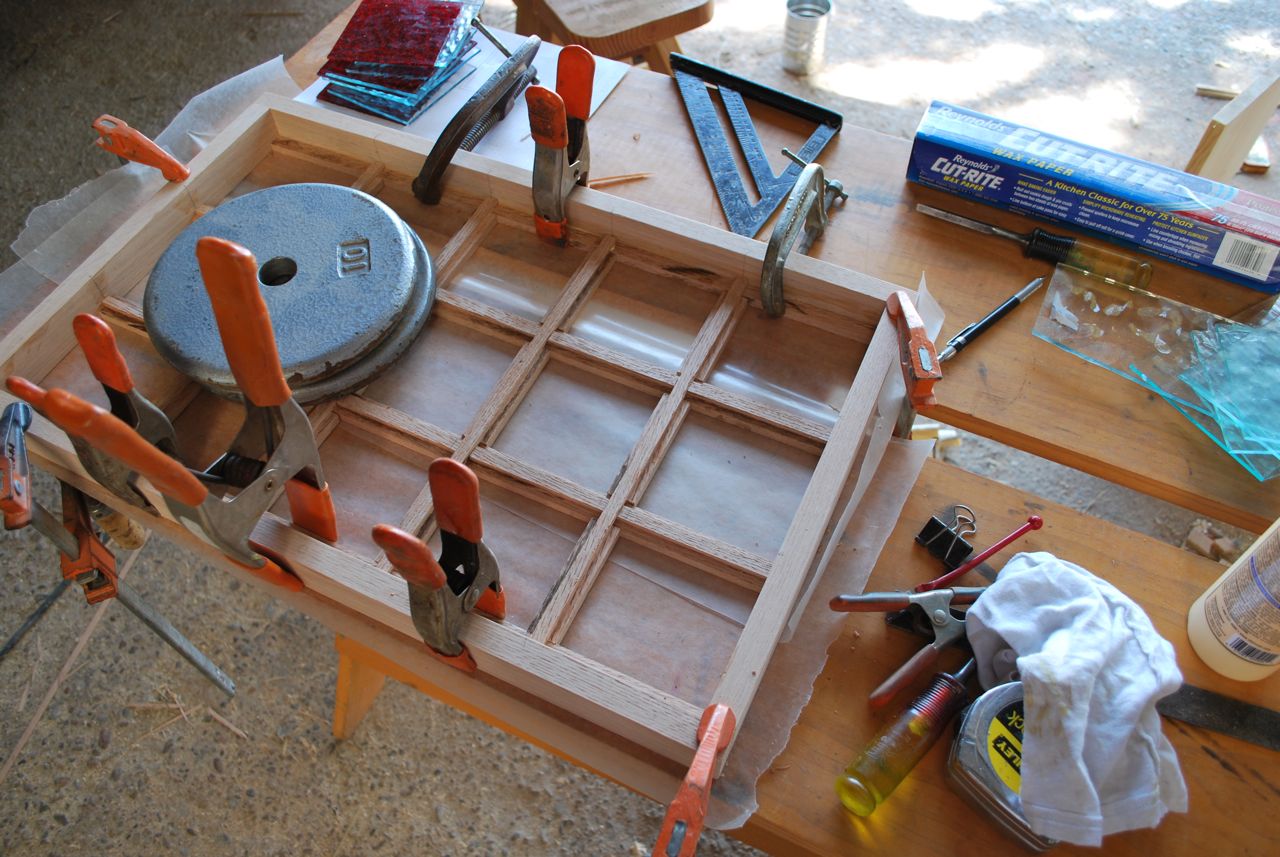 The frame being built. It is clamped to the work table to keep it rigid and prevent it from racking out of square.
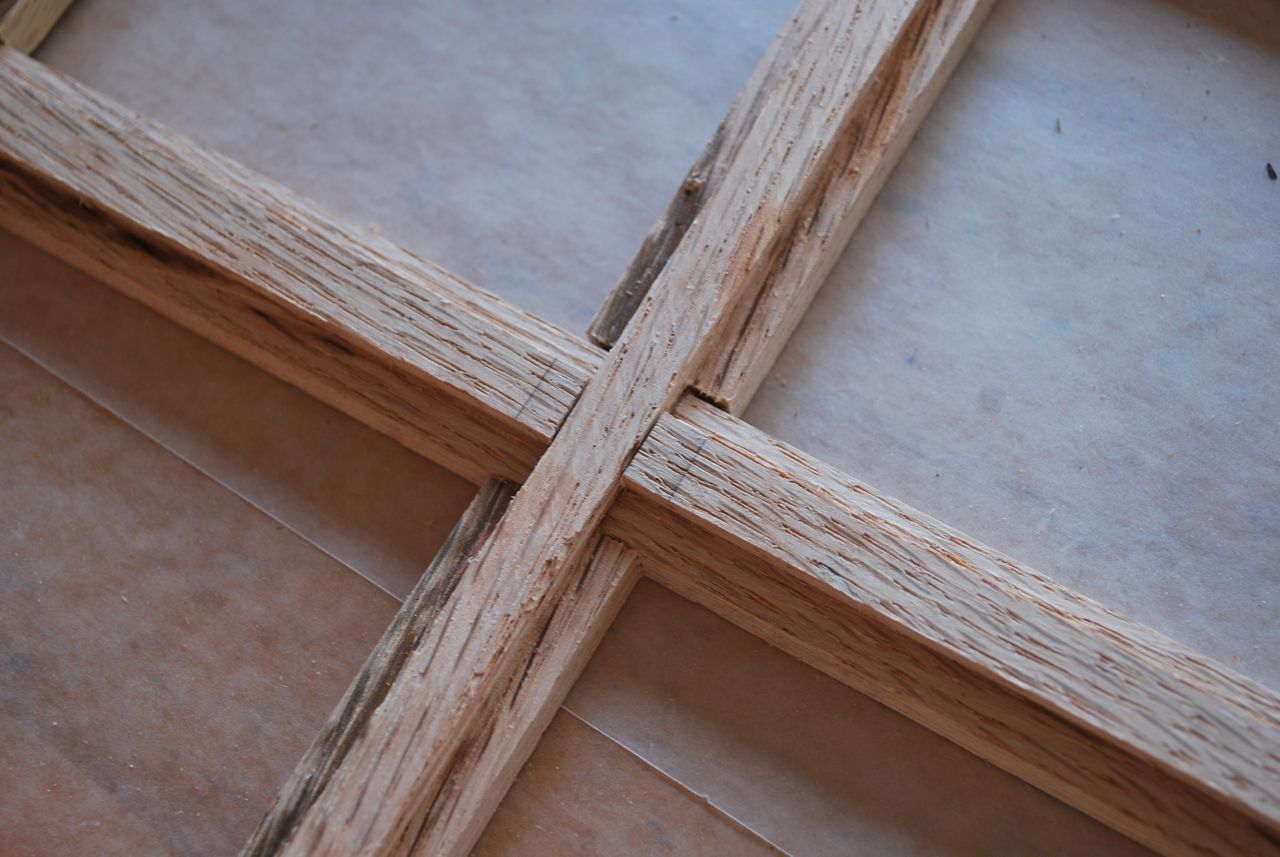
Detail of how the frames cross and interlock. I have never made a window like this so this is what I came up with.
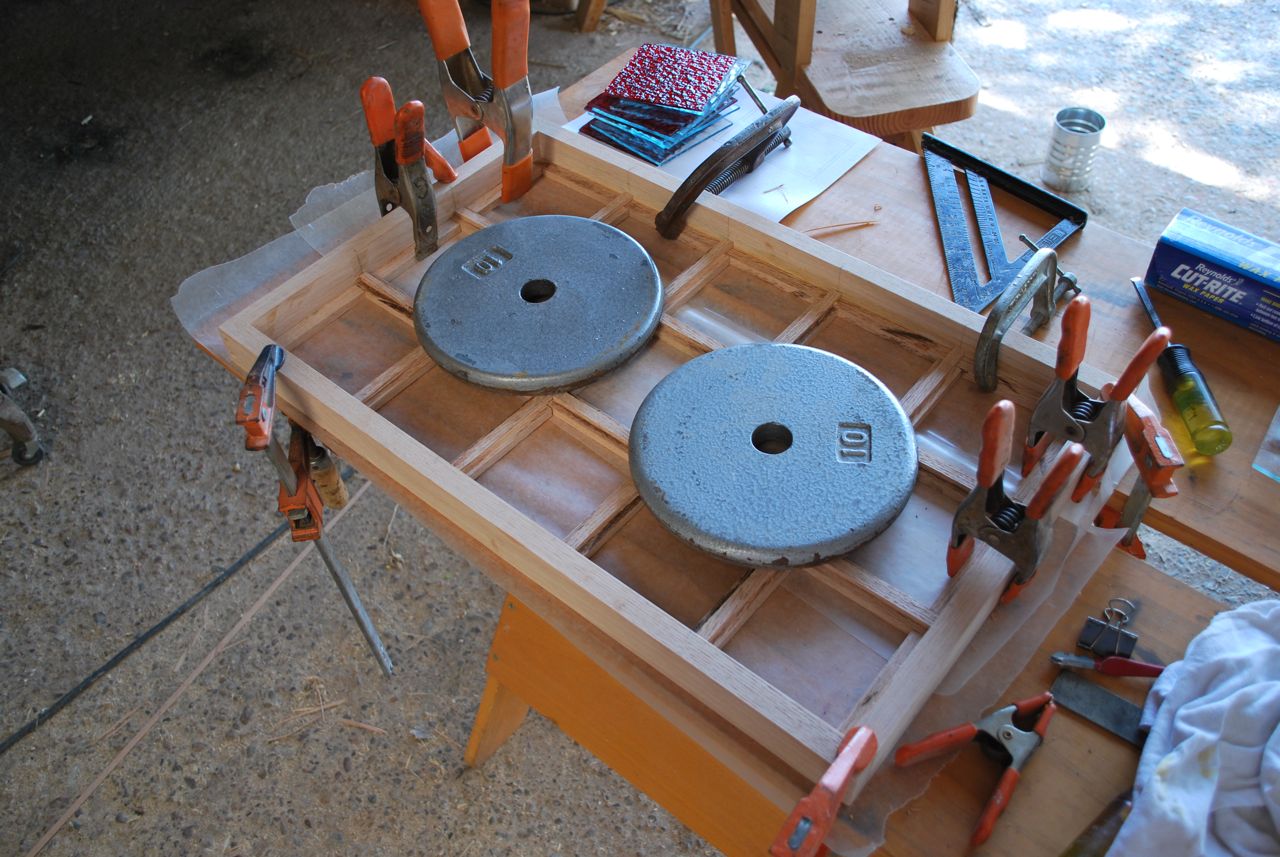 Holding the frames fast while the glue dries.
 Flipped over and given a final sanding.
 Getting a few coats of Cabot’s Spar Varnish for good measure.
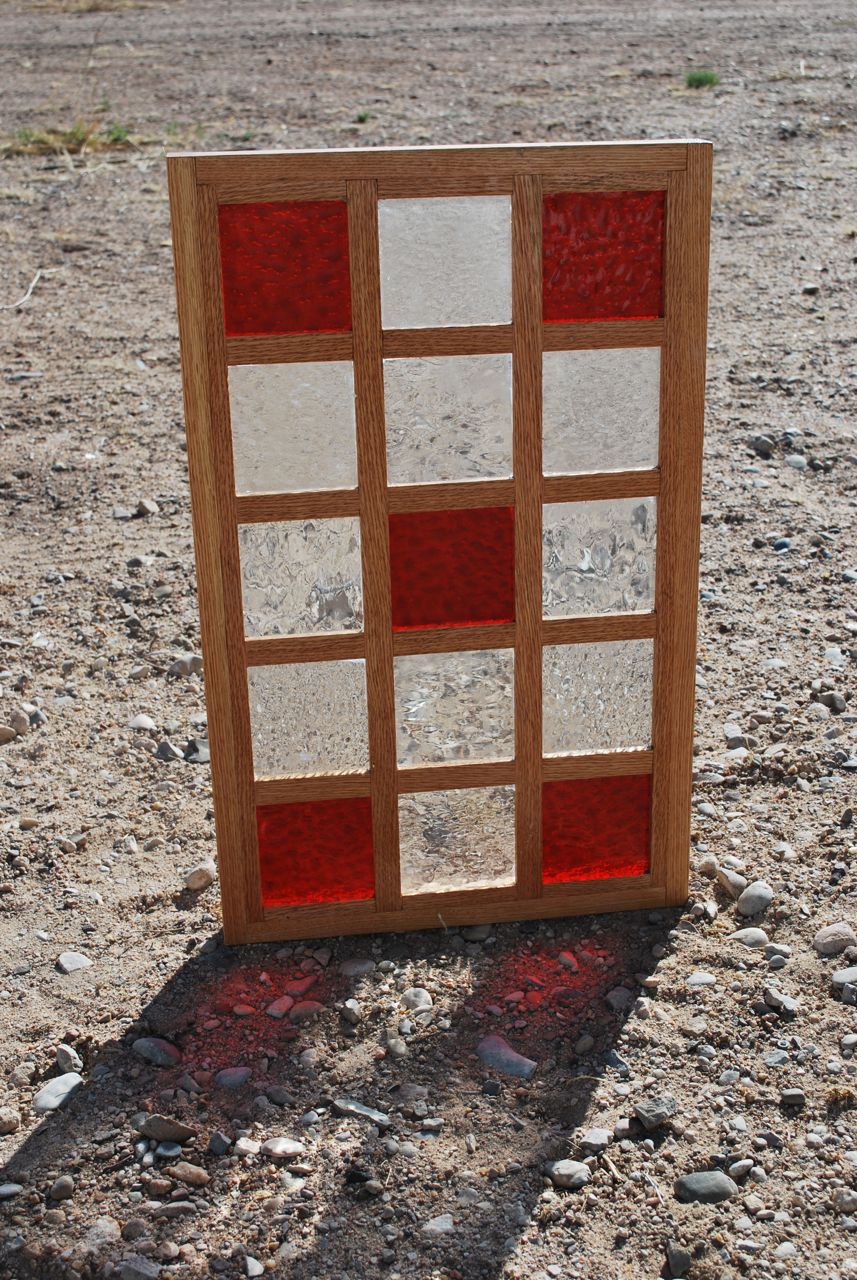 Fitted with three types of glass; wavy clear, hammered clear, and red with a lot of break-up. The widow will be fitted into a frame (pre-hung) so that it can be removed entirely for repair or replacement of the door. More to come soon.
The rest of the Vardo build can still be found here (https://paleotool.wordpress.com/plans-projects-and-patterns/the-vardo/).
 The hearth area is starting to feel more organized as shelves and hooks find their place and uses. The shelf above the stove is primarily a lantern spot with enough room to put a second next to it. Not visible from this angle is the divider in the plate holder that can either hold a cutting board or more plates. The lower right area is sized to hold olive oil bottles or tea tins.
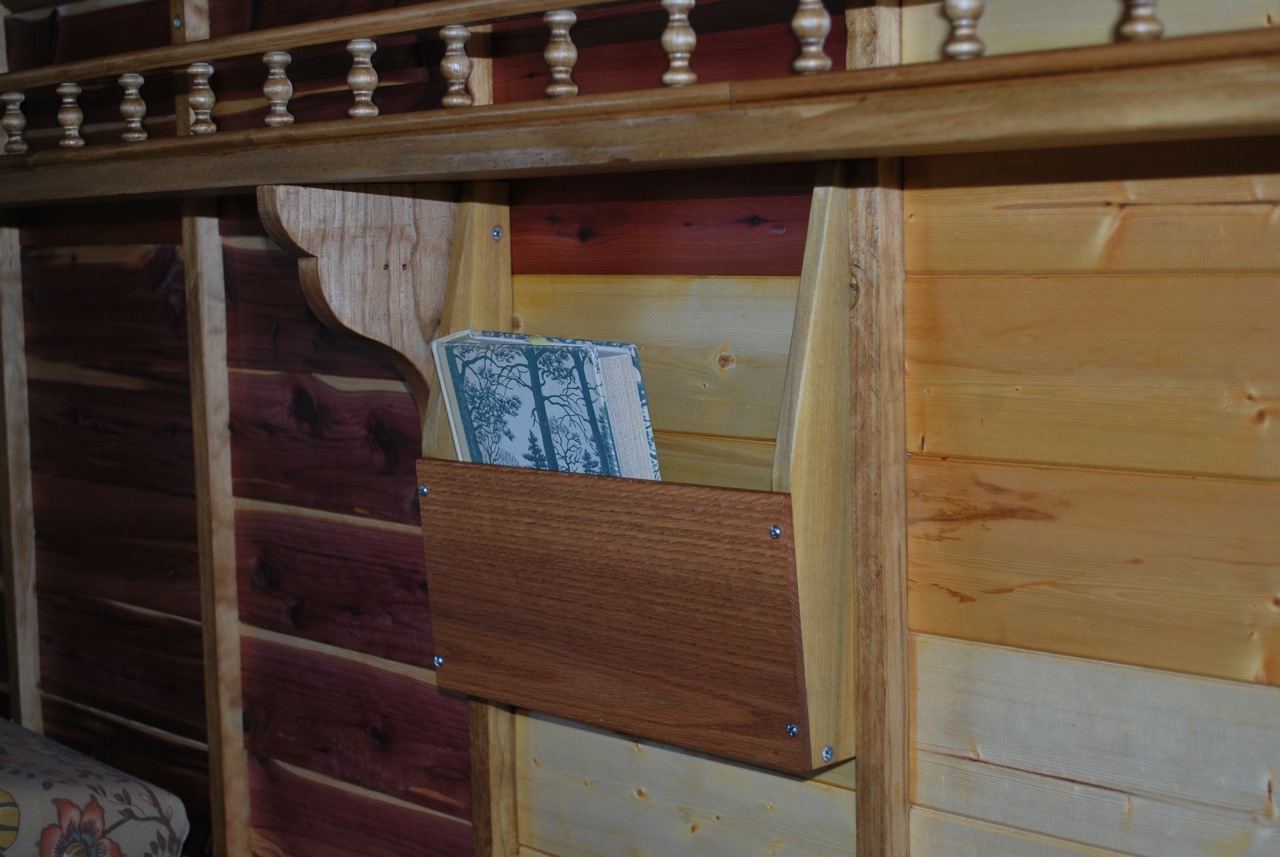 This is a small bedside container for keeping wallet, glasses, keys or a book. I think as the wagon gets more use, there will be many more small additions like this.
After long thought and lots of head-scratching I think I figured out a decent way to hold a lantern on a shelf in the wagon. 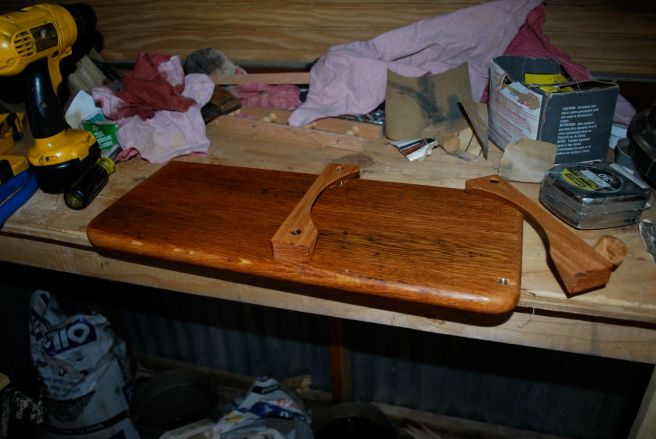
I found some old steel brackets and installed the shelf over the stove. This fits the newer “Blizzard” lanterns with the large tanks so I think all of my lanterns will fit.
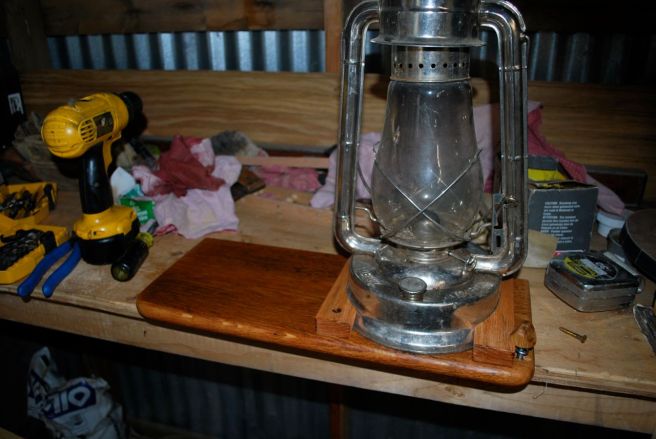 I put a brass insert in the shelf and carved a small knob to fit. Please excuse the messy workbench. Of course, the rest of the vardo build is here: Vardo Page.
 I am excited to say that I did indeed win the Grand Prize from Instructables and Popular Mechanics in the woodworking contest for my vardo/wagon. I have to admit that it is not the finest woodworking I’ve ever done, but is possibly the most complex and required the most consideration of layout, weight, and durability. Anyway, thanks to the committee and voters who made this happen. There may be some photos in an upcoming magazine issue.
 (I eagerly await the tools that come as part of the prize. There are more plans afoot.)
 Preindustrial Craftsmanship