English Shepherd’s Huts

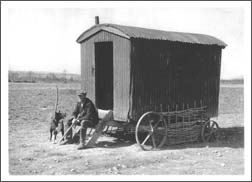
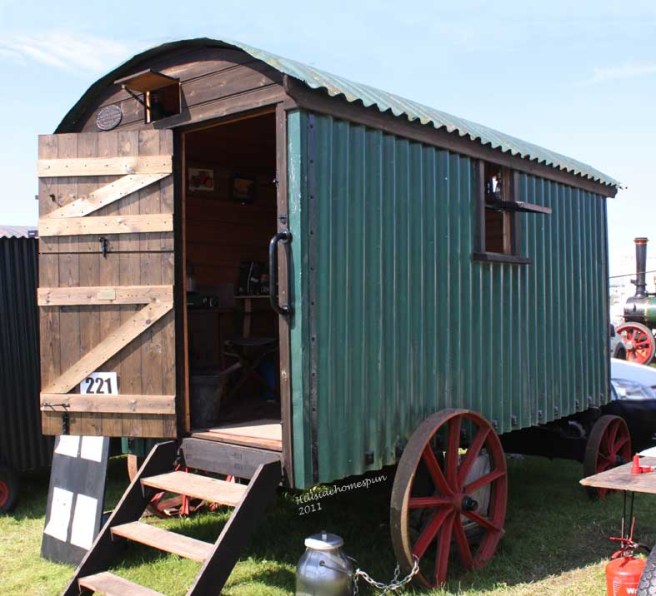
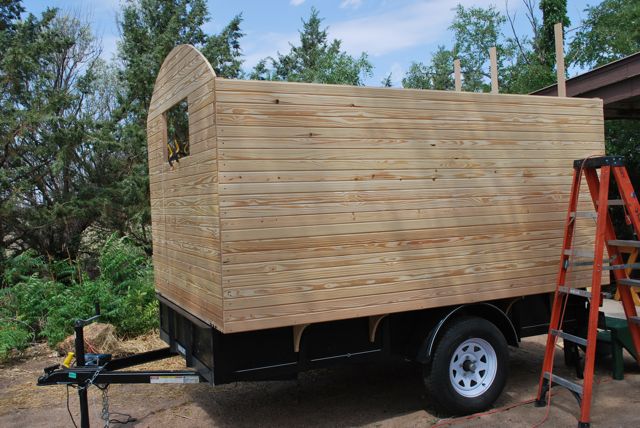
Old time shepherd’s huts aren’t really in the same class as vardos or showmen’s wagons as they aren’t really for long distance travel.  These great little portable homes are dragged around to new pastures and are ideal for guest houses, studios, and weekend homes.  These are generally simple affairs consisting of a room and a few built-ins.  The old models often included a lamb cage under the bed platform and little else.  As they don’t travel far they are often furnished with regular home furniture.

Several makers are still professionally building these.  Have a look at…

OR

to see some contemporary work.

There is a lot of good history of the design at Historic Shepherd Huts.

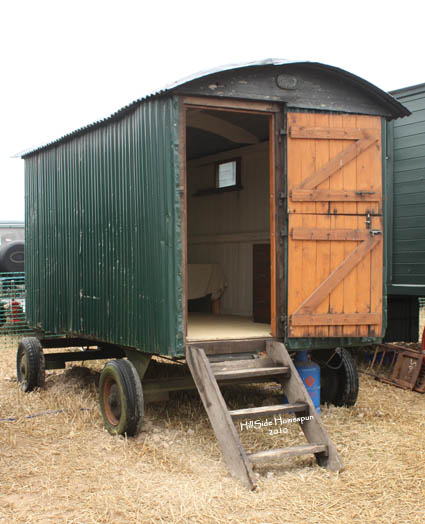
One appealing part of the design is the practicality.  Many classic huts are covered in corrugated iron and painted making for easy upkeep against the changing weather.  A far cry from high maintenance varnished wood.

A good feature I have noticed is the nearly ubiquitous transom vent in the peak.  I have considered this myself as a matter of security on warm nights and am not surprised it was thought up long before me.

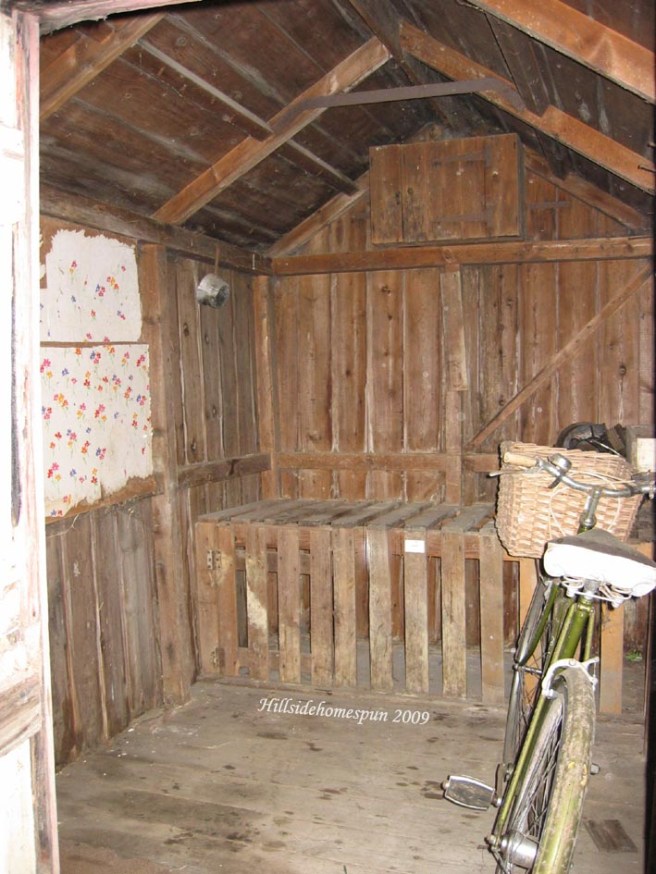
Above is a classic hut with lamb cage intact.  Apparently these were used for all sorts of storage when lambs weren’t penned inside.  The top of the rack held a mattress for the shepherd and the hut was generally fitted with a wood stove.

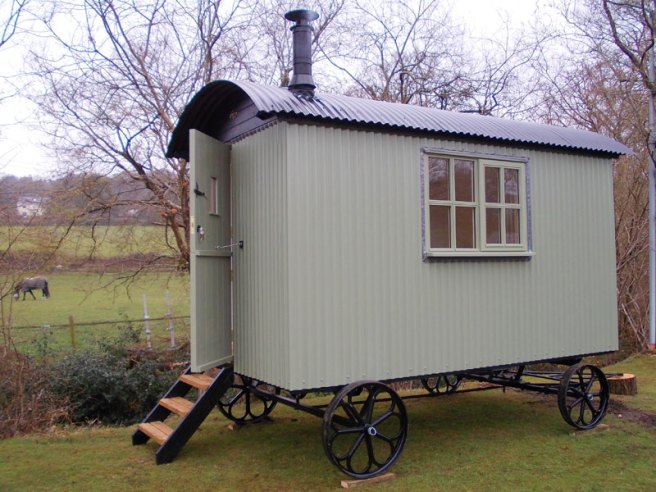
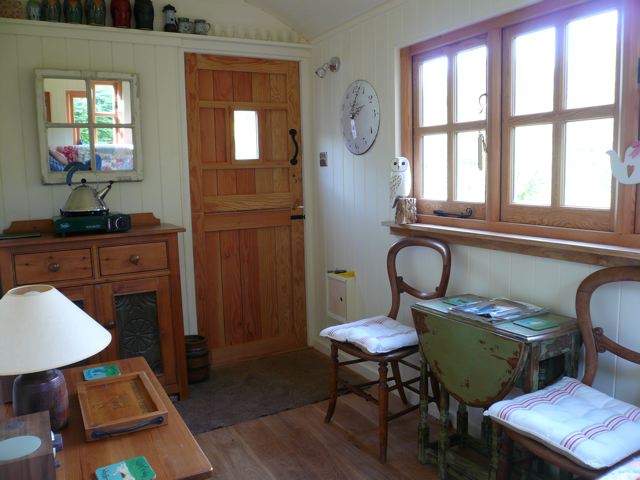
By far, the best examples I have found on the web are at Plankbridge Hutmakers.  Above is a typical exterior and below, an exquisite modern interior.

Have a gander at their site for a load of great images and information.

Vardo Panorama

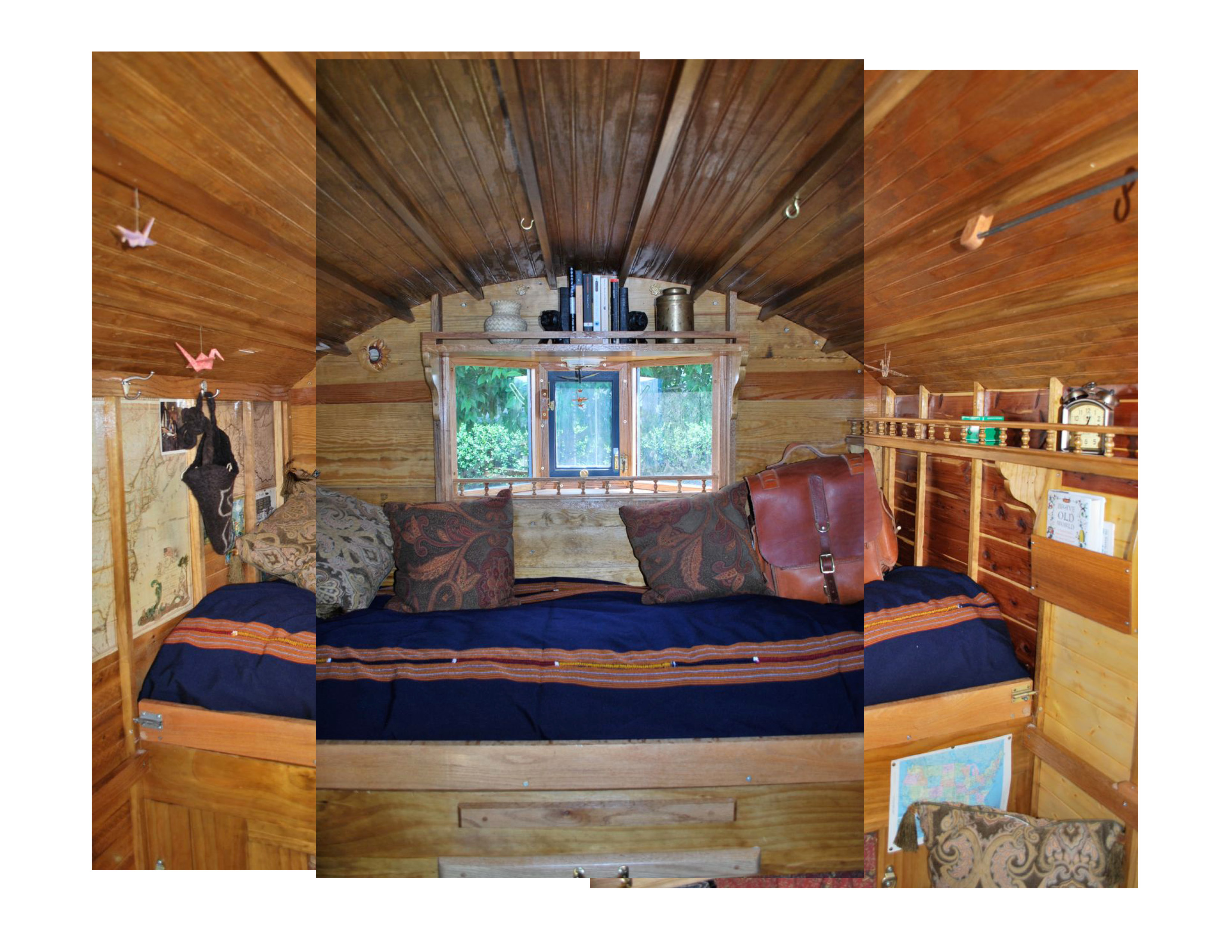
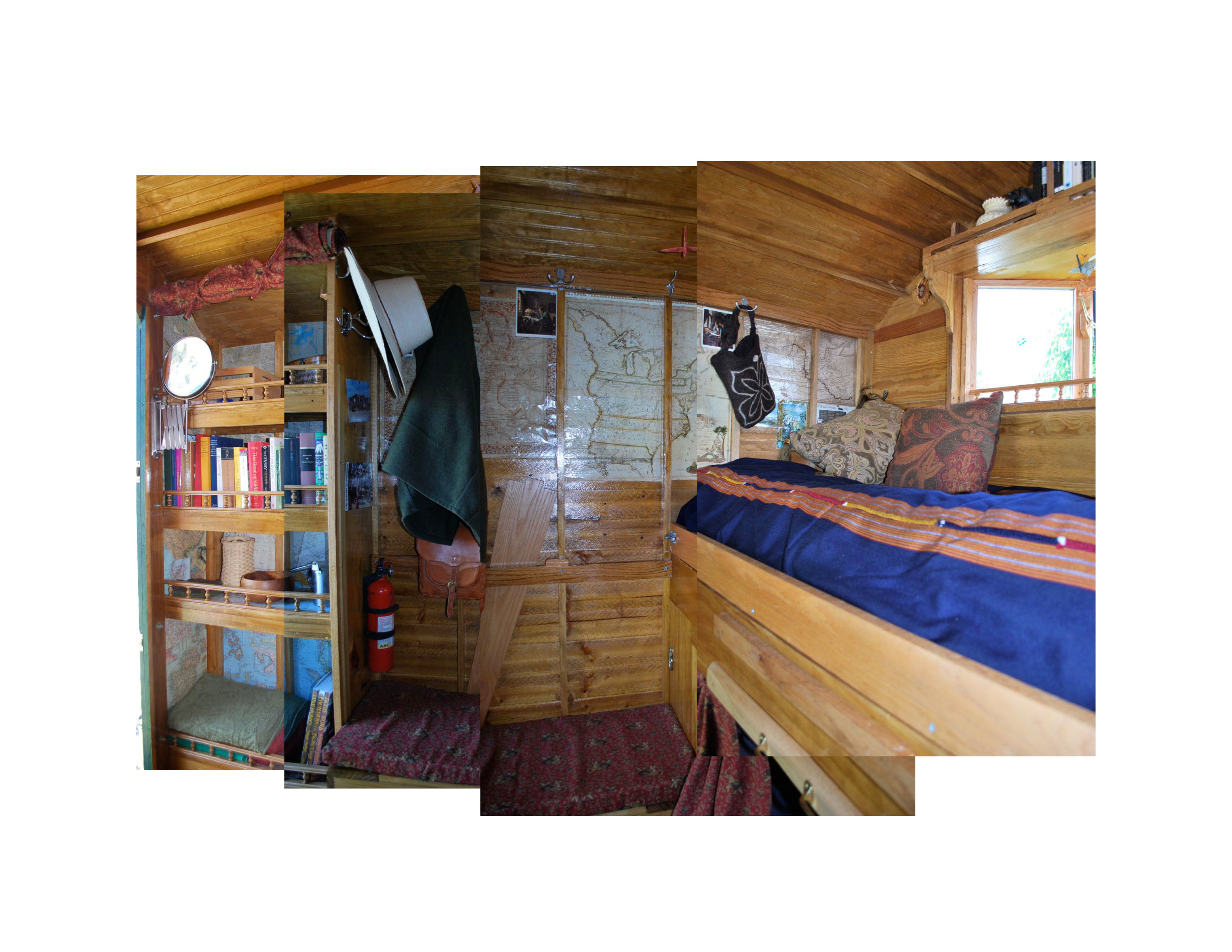
A few mosaic panoramas to give a “feel” of the Vardo interior.  Click the images for larger a version.

Forward

The bed and table retracted for maximum space.

Starboard
Port side.

Travel Shutters

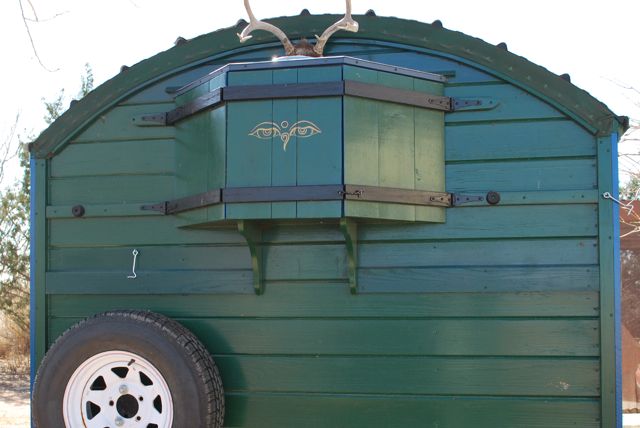
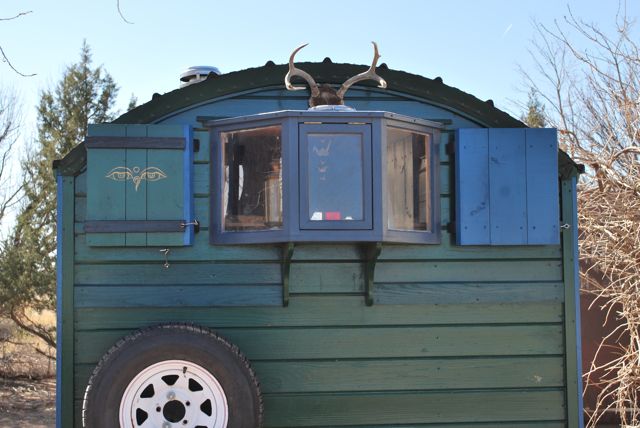
I wanted to put up photos of the travel shutters.  As the windows face forward, they take a real beating on the road.  After solving the issue of covering three sides, the construction was pretty simple.  Being small, I was able to knock these together from scraps around the barn.

Simple but effective. These should protect the windows from most flying debris.
Normal open position. There are rubber bumpers behind each to prevent the bumping sound in high winds.

More Vardos

Here are a couple new Vardos found in the Arizona desert this February.

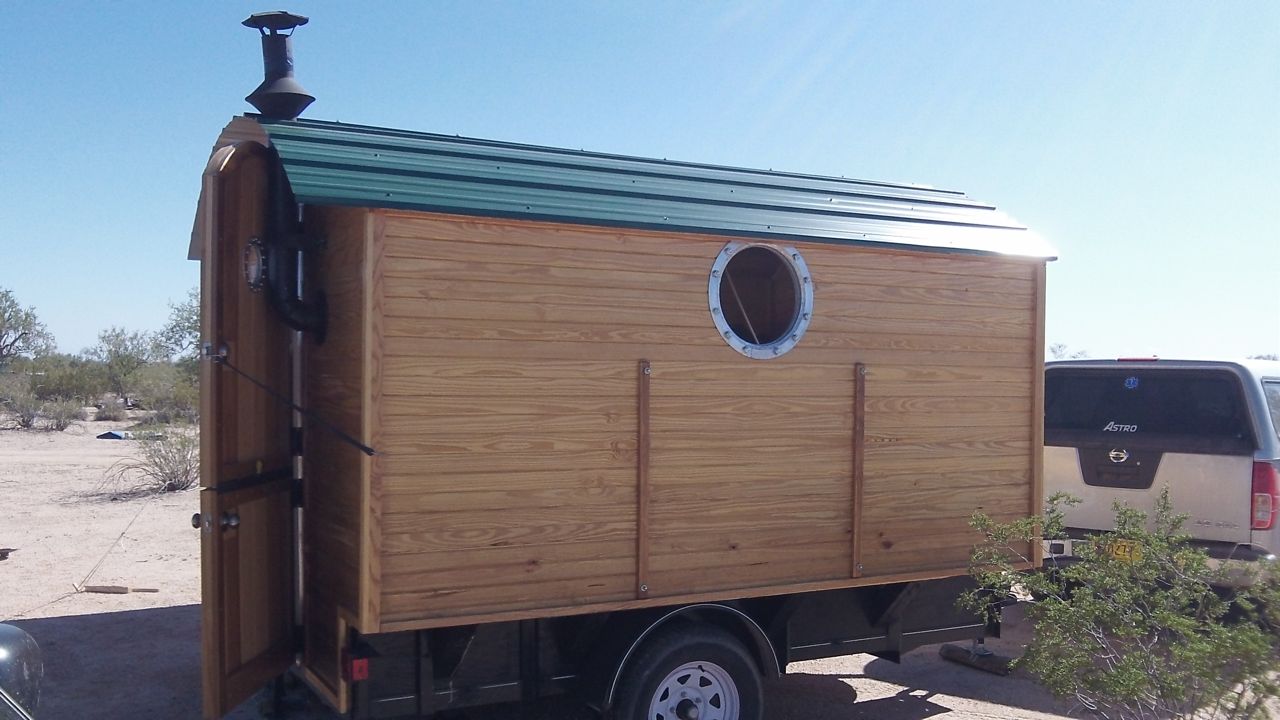
Jack’s wagon, nearly complete inside.  I helped him build the main structure in my driveway last summer and he has been trimming it out ever since.  It essentially the same design as mine (with a few logical improvements) and lengthened by two feet.

The portholes were purchased from a ship salvage company and add a cool nautical look.  This one is ten feet long (3 m) and feels very spacious inside.

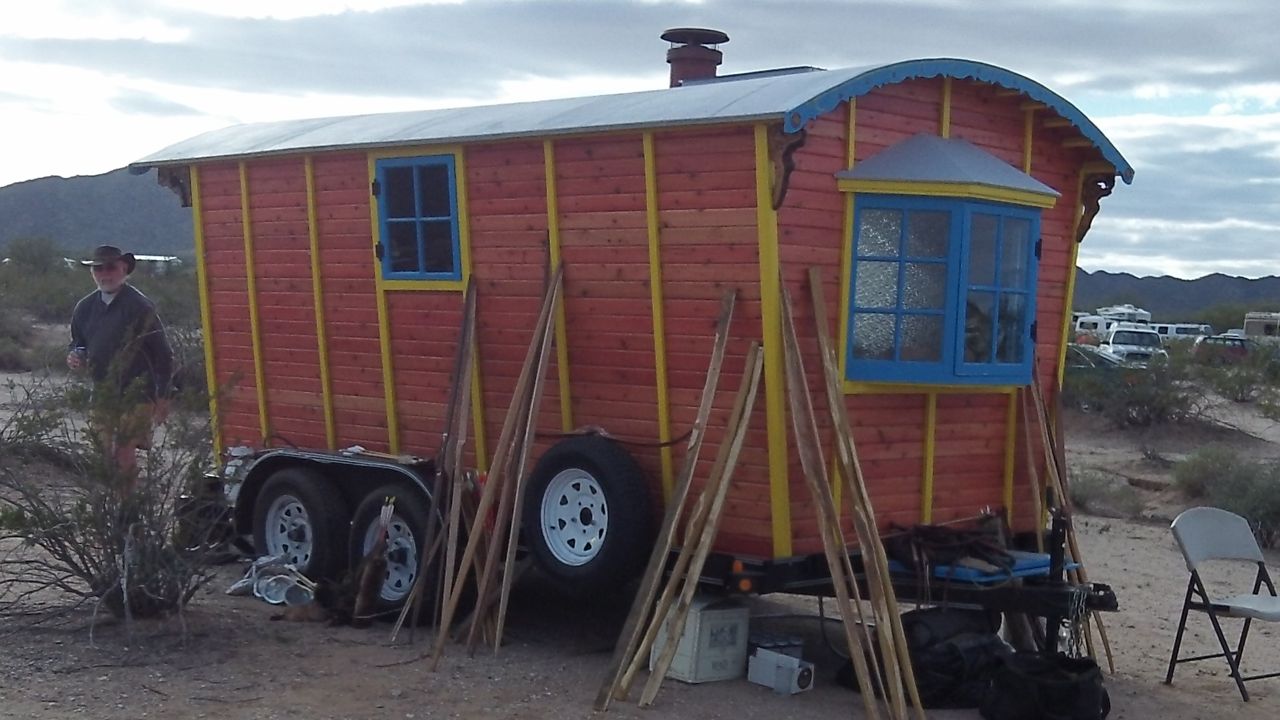
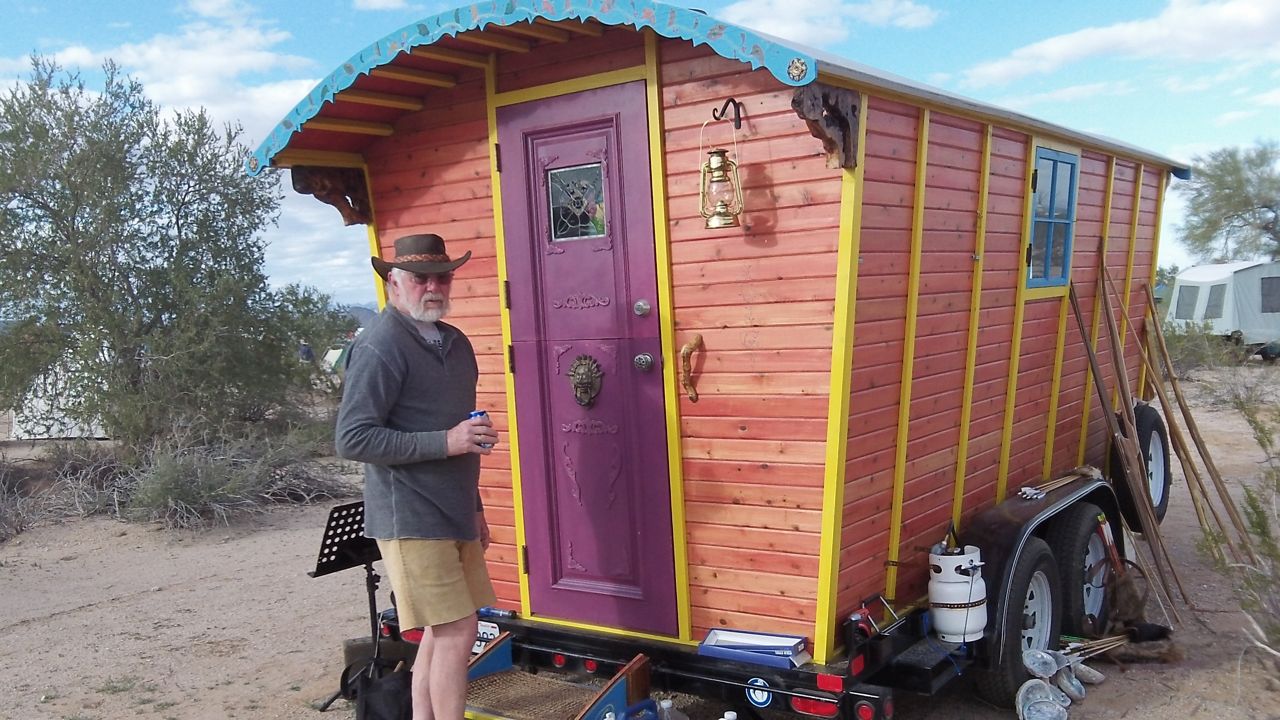
Paul’s wagon is a beauty but I suspect weighs quite a bit.  The tandem trailer alone might outweigh my little rig.  This one is 14 feet (4.25 m) long and could host a small dance party inside.

The color scheme and interesting details really make this one stand out in the crowd.

Inspiring Plans, pt 2

A modern RV, like a house, is a structure enclosing a lot of empty space.  This is why a large house costs (the builder) substantially less per square foot.  It costs virtually nothing to build more floor space but a lot of resources go into things like corners and openings such as windows and doors.  The essentials of habitable structure are walls, a minimum of space for sleeping and storage, ventilation, and maybe heat.

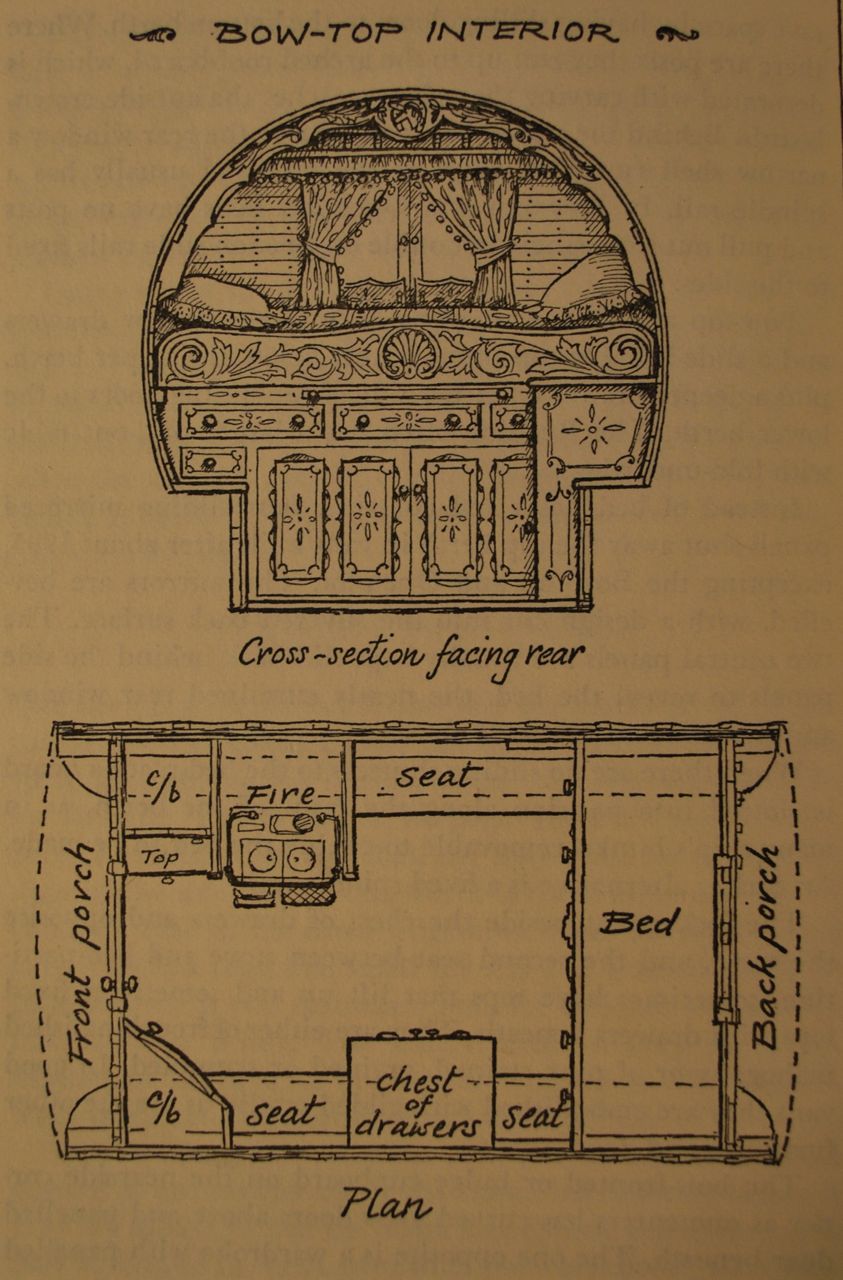
The beautiful illustrations here are from the book The English Gypsy Caravan.  Nineteenth century caravan builders distilled out the necessities of living on the move.  Not enough room to host a country dance but enough room to sleep, have some some privacy when necessary, and shelter from bad weather.  The Open Lot design, above, has a fair amount of seating, an expandable bed, and small amount of dedicated storage for personal items.  Prior to the twentieth century in the industrial world, most people “lived” outdoors with the “house” serving as protection and privacy.

The evolution into the Bow Top shows more storage and less room for seating but also the ability to cook inside and more dedicated storage.  It should be taken into consideration that wagon dwellers in the 19th and 20th century Europe generally slept outdoors unless in all but the worst conditions.  The wagons were safe havens to keep your possessions and children whereas adults slept under the stars or occasionally in tents.

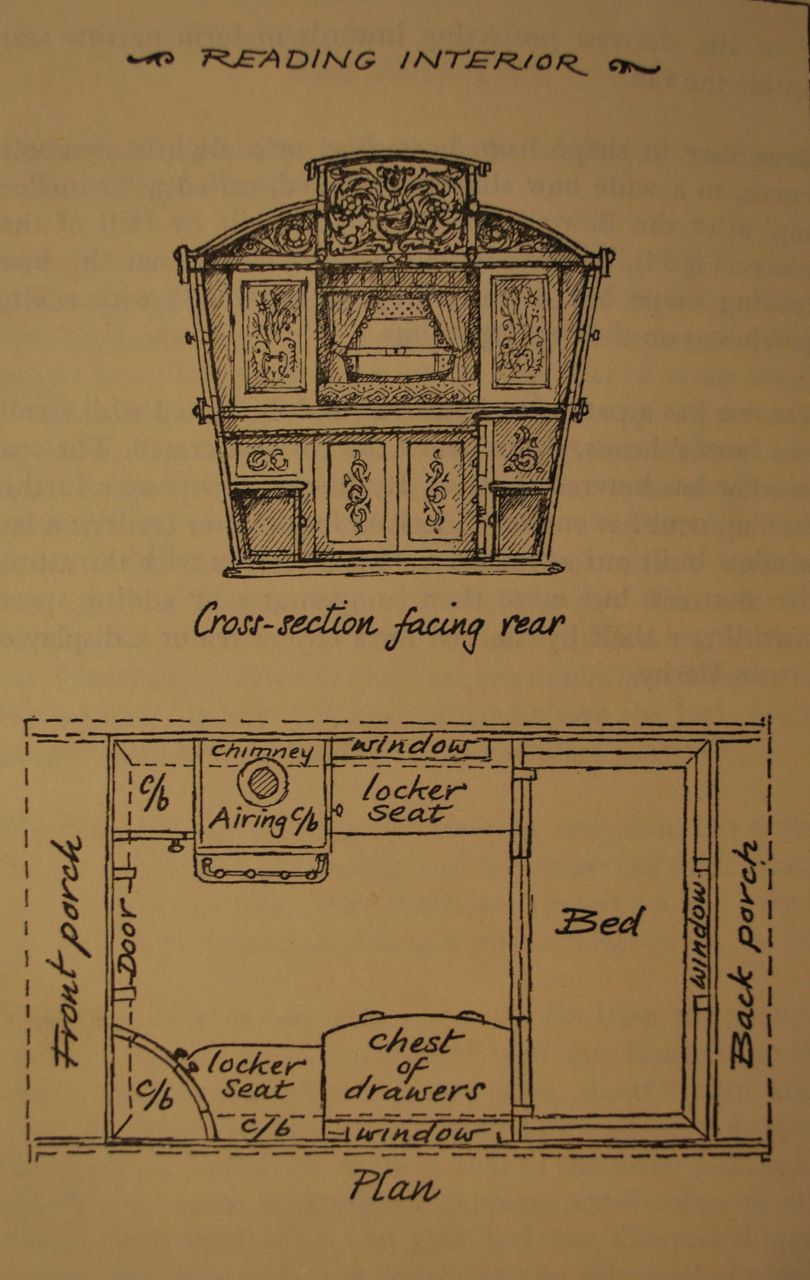
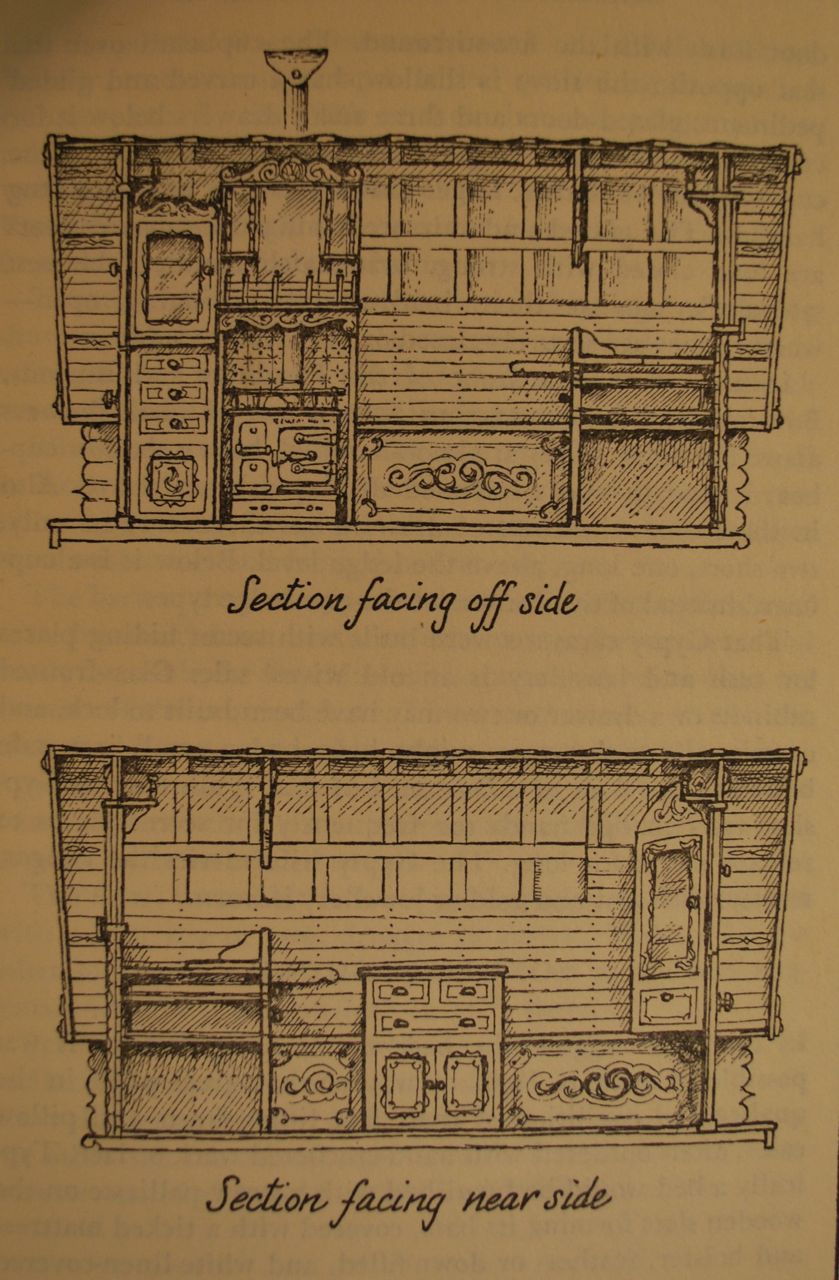
Many innovations came with the full development of the Reading wagon.  As the body is built more like a box, underseat storage really adds security to possessions on the move.  The chest of drawers remains but additional cabinetry adds ever more segregated storage.

The finest wagons of the era included a mollycroft or central raised portion of the roof allowing for small windows for ventilation and light.  In the image above, you can even see the small chimney vent that was placed over the mounted oil lamp as coal oil produced a lot of soot lowering air quality inside.

Inspiring Plans, pt 1

The following are plans from The English Gypsy Caravan.  This book taught me a lot about layout in such a small space.  There is rarely anything new under the sun and the early builders thought through the process quite thoroughly.

Figure 20.

The figure numbers on the images are from the book.  The above is a classic “Open Lot”.  Essentially the simplest of the caravan designs.  More sturdy than something like an American Conestoga as the walls are at least partially wood lined and there are a couple built-in cabinets.  This could suit a couple people fairly well.

Figure 18.

The “Bow Top” is a more sophisticated version of the Open Lot.  More cabinetry, a small cook stove, and some shelving.  Notice the corner cabinets to use the vertical space in both the above plans.

Figure 16.

Finally, the famous Reading Wagon.  This is what most people envision when they think of the gypsy caravan or wagon.  Kite-shaped from the end-view, this wagon has a lot of useful indoor space.  Cupboards and underseat storage are integrated and these generally have substantial chest-of-drawers built in.  The later roofs had mollycrofts to allow more light and the walls were decked out with mirrors to give the illusion of spaciousness.  Straight wooden walls lend themselves to hooks, pictures, or small shelves everywhere.  At about ten feet long, this was and is the epitome of traveling luxury.

Close Call at 65 mph

I had to wait a while to publish this one but maybe I just need to get it out…

I like to think I’m a safe person.  At least to the point of looking out for others if not always myself.  I don’t drive aggressively, I maintain my vehicles, and don’t take big chances on the road.  That said, I probably stress my truck and the vardo more than most people would.  The truck has spent sixteen years as an archaeologist’s field vehicle and has gone into places I would have never thought I would take it.  I have crept into BLM campsites with the vardo that required it to be tipped up to 45 degrees and I was certain it was going to go over.  I’ve intentionally jack-knifed the whole thing just to push it into place between boulders.

These things are just the nature of travel in the remote western US and having worked in remote places for 20+ years I have become used to expecting the unexpected.  I regularly check my tires, wheels, and bolts for damage or looseness.  In fact, I recently discovered a sheered-off bolt on my hitch bumper and I can’t even imaging how that happened except possibly during the event I am going to describe here.

This is the driver’s side wheel from the vardo.  It is steel, not aluminum.

We were driving from San Diego to Portales, New Mexico and after a nice stay in Flagstaff with our friends, we were coming down into the desert on I-40.  Approaching Holbrook, I thought I could feel a slight shimmy in the wagon.  As it normally tracks well behind the old F-150, I thought it must just be an effect of the wind.  Suddenly, with a “whooping” noise the trailer gave a jerk (surprisingly minor feeling due to the heavy weight of the truck).  I thought I might have a blowout but then saw sparks out of the corner of my eye in the side view mirror.

The wheel had come off and passed us at 60 mph as I was able to slowing onto the shoulder, fortunately near an off-ramp.

I watched the wheel run for what seemed like miles while I was trying to Jedi mind-control it to not steer into the oncoming lanes.  Fortunately, there was little traffic on the Interstate that day.  Mind-control worked (actually the road camber worked) and took it into the right ditch about a quarter-mile down the highway.

After a moment of mental freakout, I had a look at the situation, and realized what must have happened.  I lost a whole wheel!  A couple of studs were broken from the hub, one was stripped clean as the nut was ripped off.  The remaining two were intact.  The hub was whittled down to almost nothing and we had coasted in on the ends of the leaf spring bolts.

Did I mention it was Sunday?  In rural eastern Arizona?

I’ll keep the story short.  Assessing the situation I knew I was fully prepared to camp.  We had water, food, and a place to sleep if need be but I wanted to be on the road.  I had a good spare but nothing to bolt it to.  I contemplated putting it on the two remaining bolts to limp into town but upon inspection determined that they were far too destroyed.  As the wheel tore off the lugs it sheered into the bolts and the nuts were stripped anyway by being pried sideways. This meant abandoning the vardo on a rural highway; not the most desirable choice.

I was limping into Holbrook, Arizona.

I went to town and after asking around, I found the only 7 day a week mechanic was on vacation at Lake Havasu.  I actually spoke to him on the phone and he wasn’t sure what to suggest.  I drove back to Winslow as I figured there would at least be a parts store and maybe it would even open.  If there was nothing there I could trek back to Flagstaff before the end of the business day.  I’d only end up being a day or two behind.  Wild plans came to mind.  I could rent a flatbed trailer, load it with a come-a-long, and haul the vardo home that way; expensive and difficult.

I went back to the vardo on the way to Winslow and pulled the hub (fortunately I had some basic tools).  I brought the hub to the parts store that was open but the nearest part that fit was about 90 miles away in Payson, Arizona and could probably be delivered tomorrow.  I though maybe I could get studs pressed into the remaining hub but again, nobody would be around until tomorrow.

And then, like a miracle, the ol’ boy Good Samaritan network kicked in. 

An older man buying parts at the store overheard the conversation and knew a guy who might be around who might be willing to fix it.  The parts store kid was pretty skeptical but I was willing to try just about anything at this point as the day was waning away.  We followed the man to the old part of Winslow to a junk and car filled ancient gas station and talked to a teenager working on a little import car. He said his uncle Jerry would be back after lunch but we could wait if we wanted.

Eventually the uncle (Jerry) came back and gave us the tour of his Model A Ford he happened to be working on that day.  That’s why he was in.  Anyway, in fairly short order he pressed in new lugs, put in new bearings and charged me way too little for the whole process.  Jerry was our savior.  I hauled the whole thing back to the vardo, reassembled the hub, put on the spare, and away we went into the night.  I don’t always depend on the kindness of strangers but it’s these small acts of kindness that give me some hope in this world.

Drive safe.  Check your equipment.  Carry tools.
Quick and Dirty

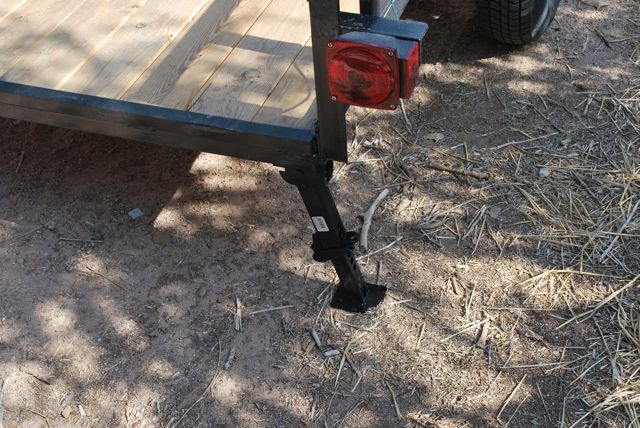
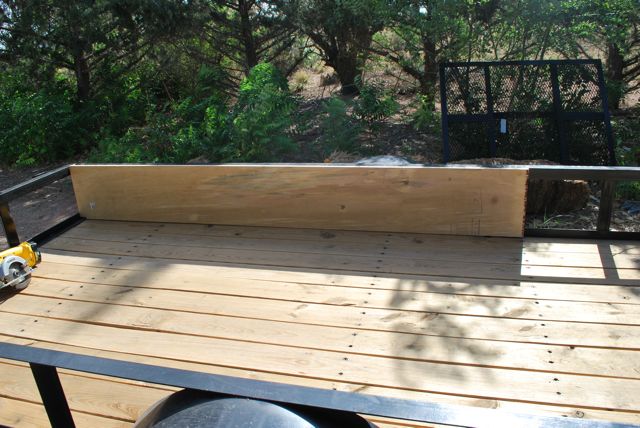
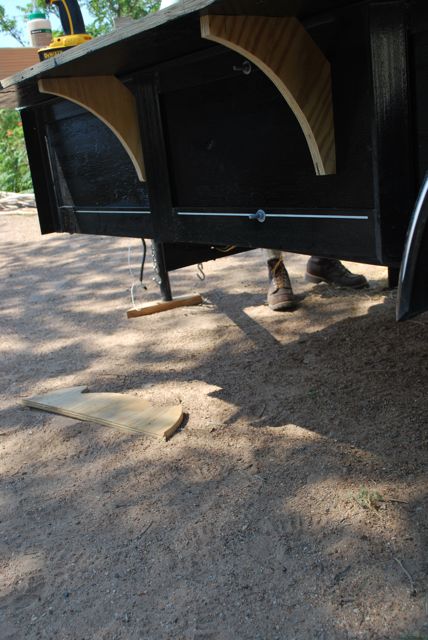
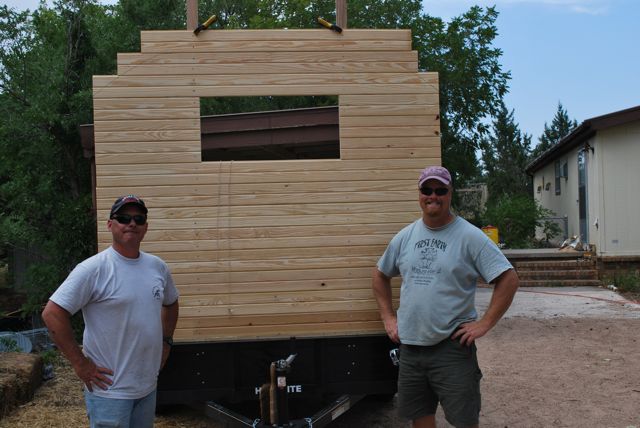
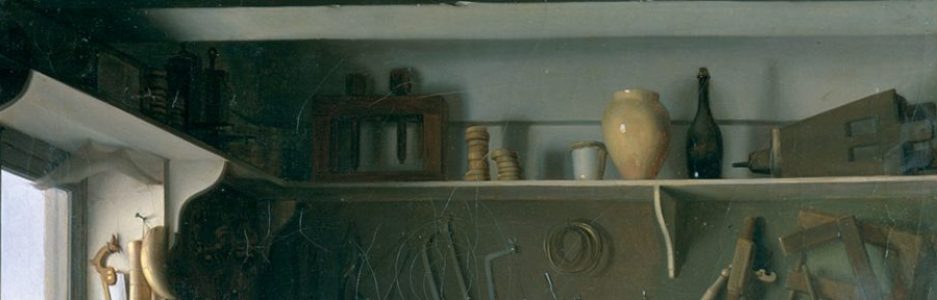
This was a quick and dirty build we were talked into a couple of weeks ago.  I don’t like to rush these things but the builder’s time constraints meant this was the only week to get this done before the winter.  It does show that the basic build can be completed in a very short time.  The basic dimensions are 5′ x 10′ at the floor and just over 7′ wide at the ledges.

I think it came out alright in the end.

Here is a small gallery of images showing the build.  My daughter and I will try to put up an Instructable in the near future describing the process such as it is.  Enjoy the photos.

Paint, Boxes, Many Upgrades

I recently added two new exterior storage boxes, a solar ventilator, painted most of the exterior, and added several new and handy things to the interior of the wagon in preparation for the next voyage.  Although I don’t feel like the Snail has really traveled much yet, my recent tally of the trips over the past 17 months totaled 7776 miles.  This is an under-estimate as it was calculated using Yahoo maps and doesn’t include any side trips or time lost looking for restaurants, campgrounds, and the like.  Photos and descriptions of the changes are on the way.