
Fairytale lifestyle or self inflicted poverty; Does life in a wagon live up to the dream?
Category: nomad
Mike’s Gypsy Wagon
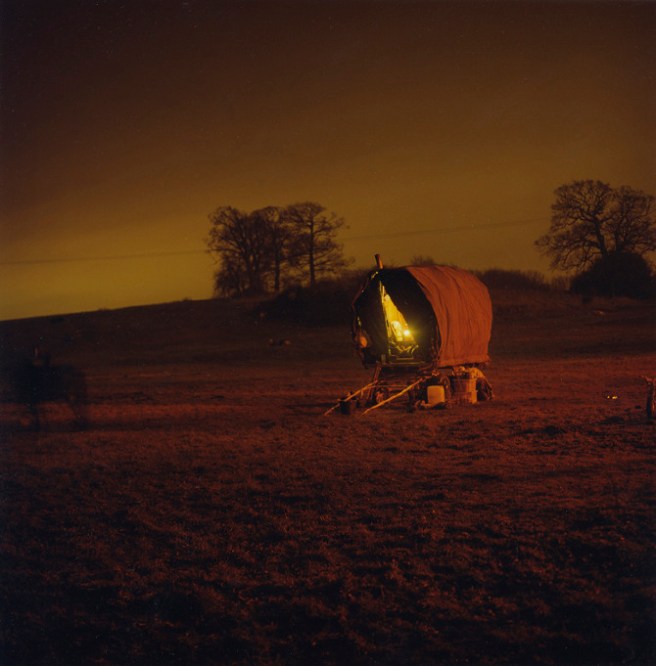
Mike is finishing up his remarkable vardo in the great white north. He included a mollycroft in the roof which not only looks cool but should add a lot of light and headroom. The front storage is accessible from the outside like a sheepherder and it will have an enormous bay window in the front. As it comes along I hope he’ll write up more about the design and construction of the wagon. With this wagon and Jack’s build last year, I think I’ll add a page to the header bar for “other vardos” so that they are easy to find on the blog.


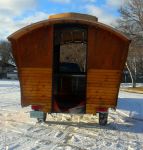
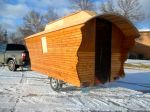
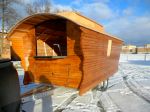

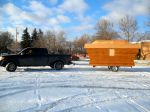


Enjoy! Hopefully more to come…
Semi-Bowtop for Sale…
…and Some Other Nice Work

Daphne at Daphne’s Caravans has been busy this summer and appears to have another beautiful wagon nearly ready to sell. Her description is “all cedar, with a roof like a cedar strip canoe. 7′ long, 6′ wide at the ledge, and 6′ high in the centre.” I presume the roof will be epoxied over glass or there will be a covering over the entire thing. If you’ve wanted your very own mini caravan but don’t have the time, tools, or inclination, this might be one for you.
Below is another creation of hers from earlier this summer. Click the photo to see more at her website.

Walking Shoes

My new walking shoes. Simple stitch-down design weighing in at about 14 oz (0.4 kg) each. The leather is Hermann Oak 2/3 oz for the uppers and 12 oz (I think) for the mid-sole and out-sole. There is also a double layer stacked heel that has a thin rubber layer on the bottom.
They have about 6 trail miles on them in this photo. They are dyed “light tan” and coated in home-made dubbin.*
The goal was to create an extremely lightweight shoe that will protect from the gawd-aweful sand burrs, cacti, and other sharpies that get into the sandals. They are loosely based on “desert boots” but provide a bit more protection. They are re-soleable, environmentally friendly, and made without sweatshop labor. Since I have little fashion sense, they can be worn with anything and in public. My only change in design will be to make the toe portion of the upper in slightly heavier leather as they will hold their shape better.
*A waterproofing concoction, in this case made from beeswax, olive oil, and walnut oil.A few more images:
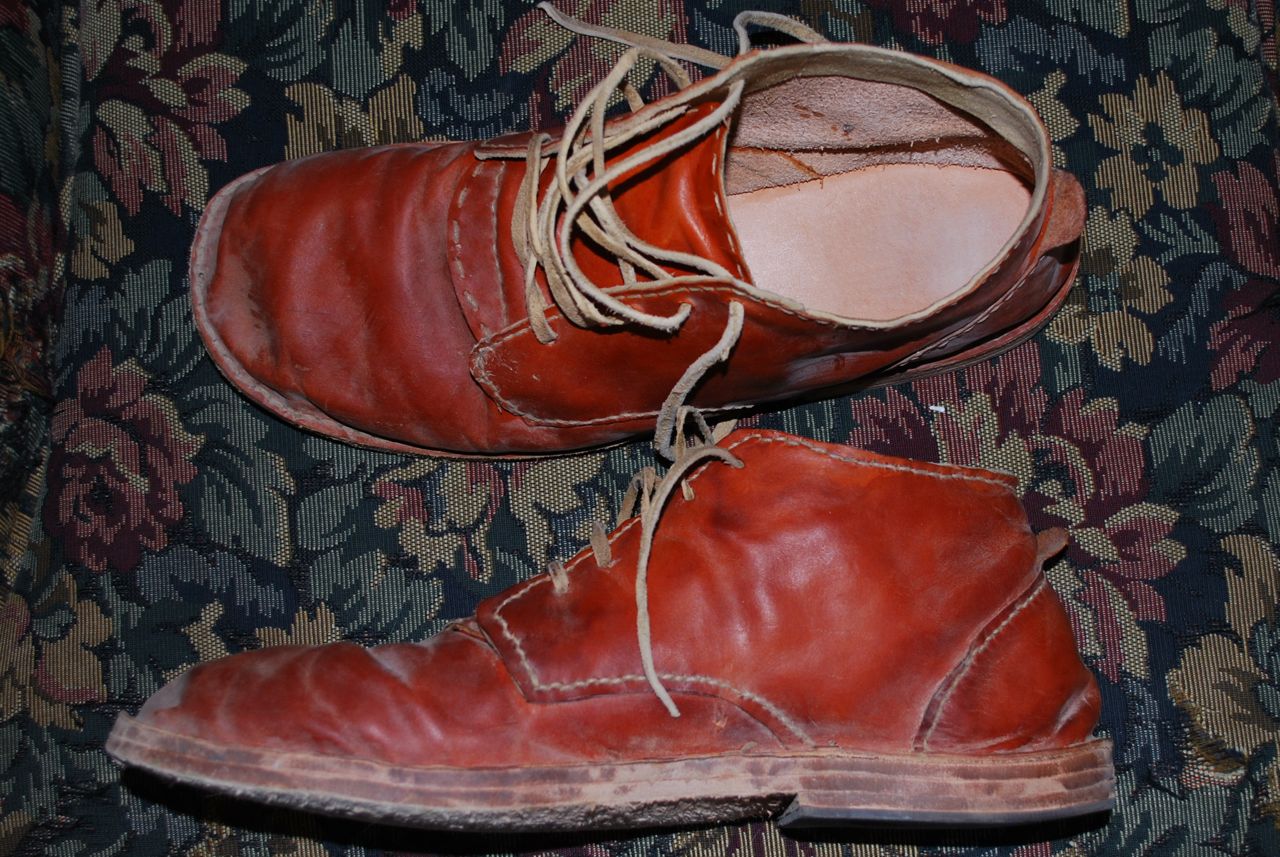 The shoes are unlined. Constructed with a double needle saddle-stitch. I wasn’t even concerned with stitching on this pair so they aren’t perfectly straight or small. The tongue is lined with brain-tanned deer hide and there is a band of brain-tan around the top edge for comfort. The laces are also brain-tan deer from a heavier hide.
 The out-sole stitch is trenched in about 1/8″ to protect the thread.
They may not be fashionable but I think they have style.
Narrowboats
If I lived in Britain or France, I would want to live aboard a narrowboat. Like the name suggests, these small ships are long and narrow, designed to navigate the extensive canal system throughout much of country.

At about seven feet wide, interior design is obviously very linear but there is little to constrain length, other than the size of the locks connecting the waterways. Often brightly painted, these floating homes have a real appeal for someone with a nomadic heart.
While looking for images of narrowboats, I found a short piece by Shelley Davis recently posted on Kent Griswold’s Tiny House Blog.
 The waterways have real appeal to me. Growing up near the Mississippi River gave me dreams of Huck Finn and Tom Sawyer adventures. As a kid it was a dream to have a little boat and float all the way from the creek in my back yard to New Orleans and into the Gulf of Mexico.


The above photos are from the Tiny House Blog article. As can be seen from this micro kitchen, efficiency is paramount in a tiny home. There are a lot of good ideas and inspiration to be gleaned from these amazing structures.
Van Gogh

Early in the planning stage while designing my ‘van, I encountered this painting by Vincent van Gogh. Painted in the late 19th Century, it is, to me, a great image of what is now a bygone era in Europe. Who knows, if the economy collapses, and the disparity between the rich and poor increases, maybe this will become a common sight again.
The New Gypsies
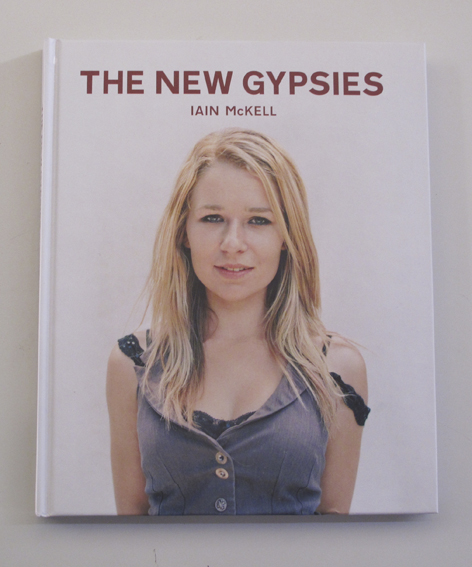
I have seen photos from this book around the web for a while now. A fair number of “hippie” Brits are living mobile, a difficult thing to do in the U.S. Iain McKell has done a wonderful job of photo-documenting the unique, beautiful, sometime spartan accommodations used by these folks on the move. If I get back to Britain I will try to track these people down.
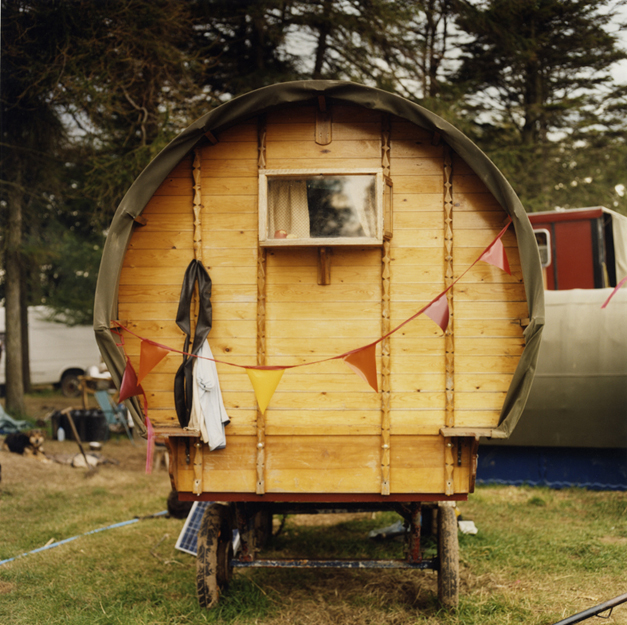
I have to admit, I’m mainly in it for the wagons. None of these look like high-speed movers, but who really needs that when it is home?
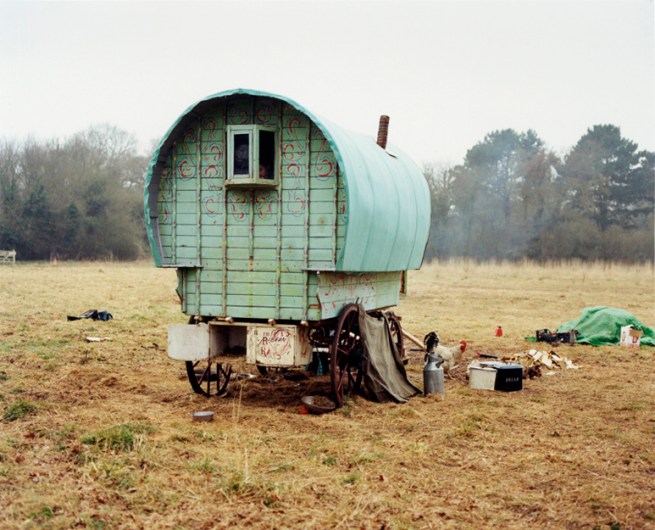
Most of these clearly appear to be restored (more or less) original horse-drawn wagons. Bow Tops, Open Lots, a Showman or two, but others look to be a bit more home-grown.
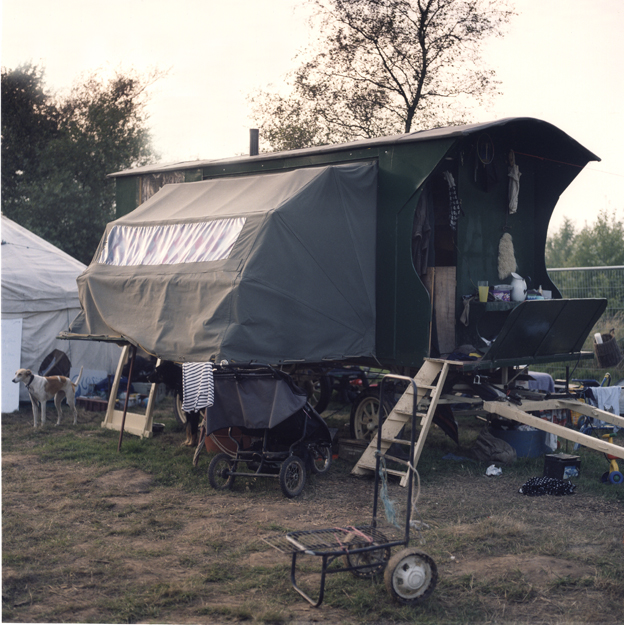
A close examination of the photos show some interesting clues to life on the road. I particularly like the “tip out” on the above wagon. I suspect it is for sleeping more people but I can imagine an outside space protected like this for cooking or storage. Hmmm, next project?
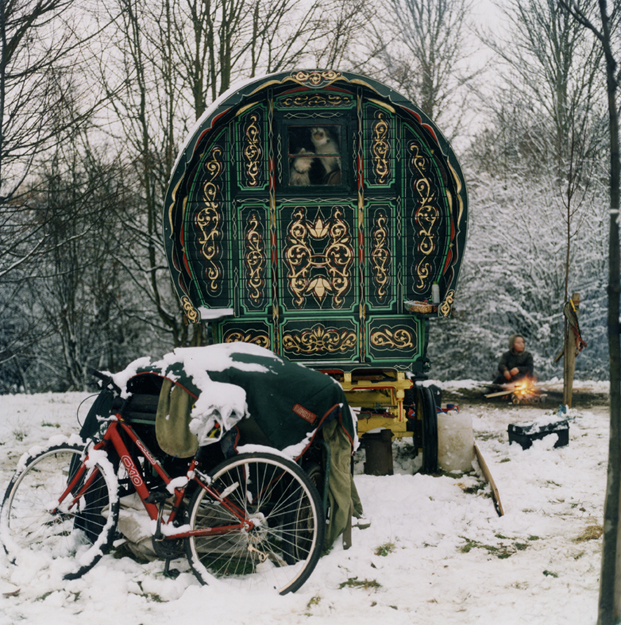
In my opinion, wagons like this are a great alternative for the modern nomad, as long as one can find a safe place to settle for the night or week or month. As with the Romani gypsies, modern travelers, living outside the norm of the greater social group are likely always to face fear and suspicion from the mainstream culture. Unfortunately, this will probably always be the way of the world.
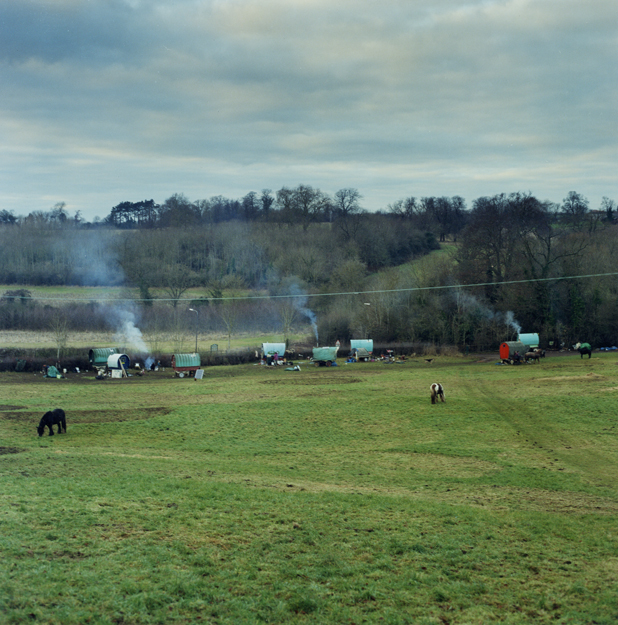
I think there will always be some of us who are okay existing outside the “normal”, expected behaviors of our peers. In a case such as this, or other fringe social groups (e.g., the Society of Primitive Technology) we can find kindred spirits who may understand our outlook in ways not found in more mainstream lifestyles.
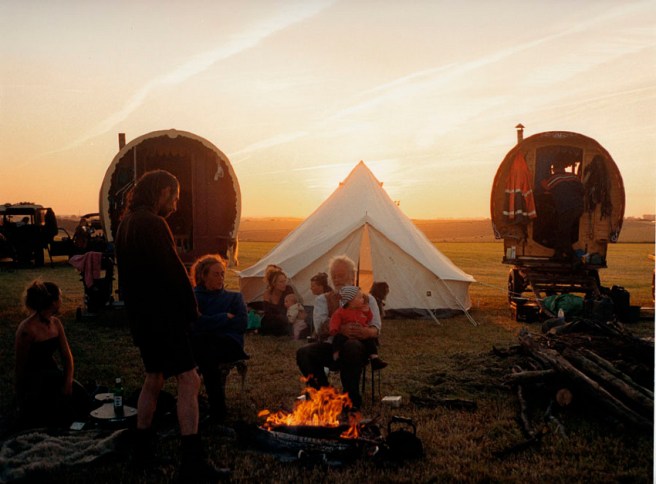
Please have a look at the art of Iain McKell and be sure to scroll down the left side of links to see more of his photos, including some fine shots of traveler’s wagons.
Travel Shutters
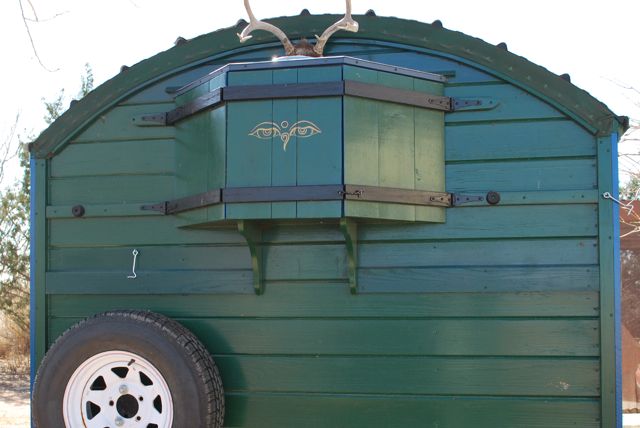
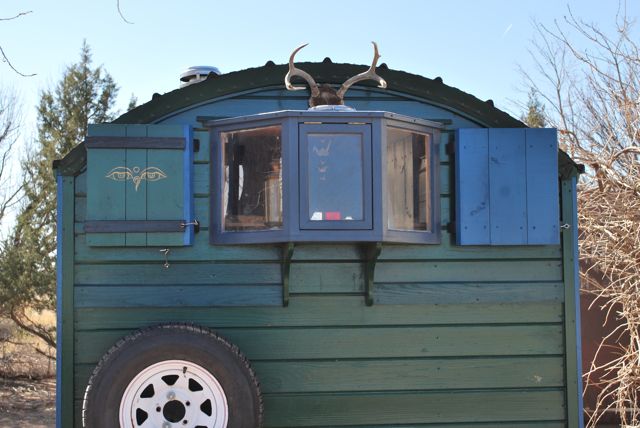
I wanted to put up photos of the travel shutters. As the windows face forward, they take a real beating on the road. After solving the issue of covering three sides, the construction was pretty simple. Being small, I was able to knock these together from scraps around the barn.
More Vardos
Here are a couple new Vardos found in the Arizona desert this February.
 Jack’s wagon, nearly complete inside. I helped him build the main structure in my driveway last summer and he has been trimming it out ever since. It essentially the same design as mine (with a few logical improvements) and lengthened by two feet.
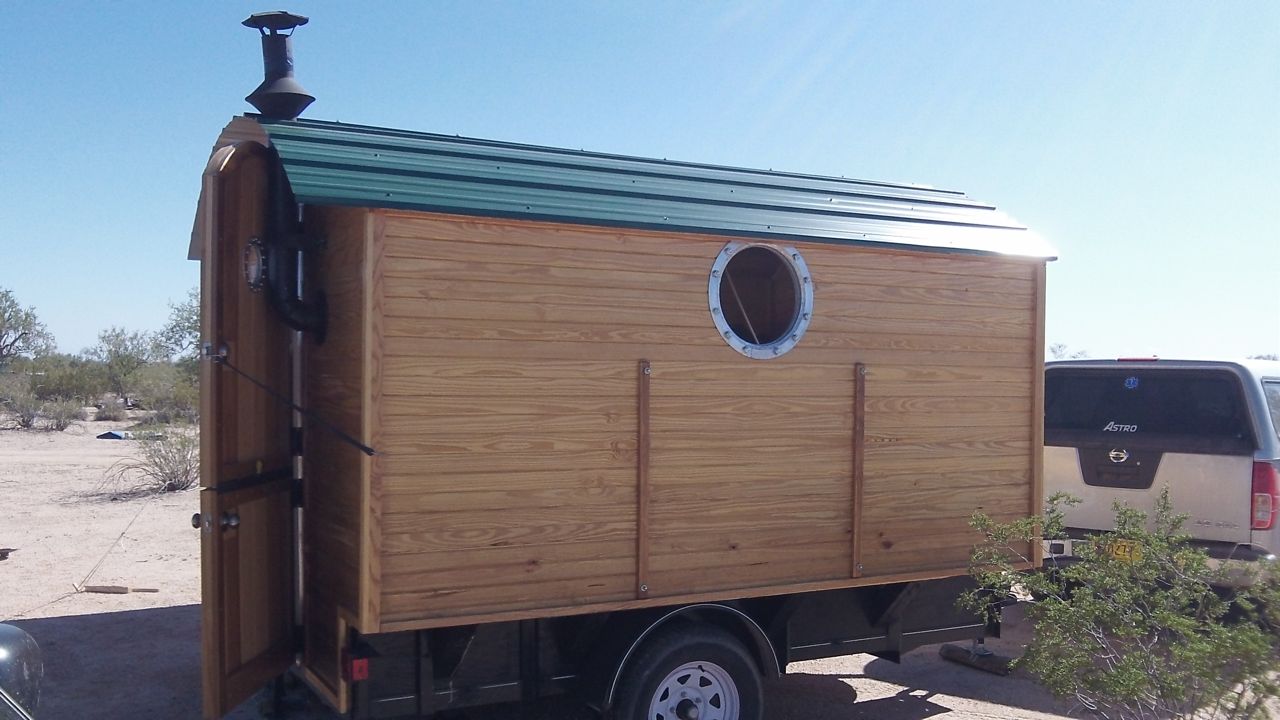 The portholes were purchased from a ship salvage company and add a cool nautical look. This one is ten feet long (3 m) and feels very spacious inside.
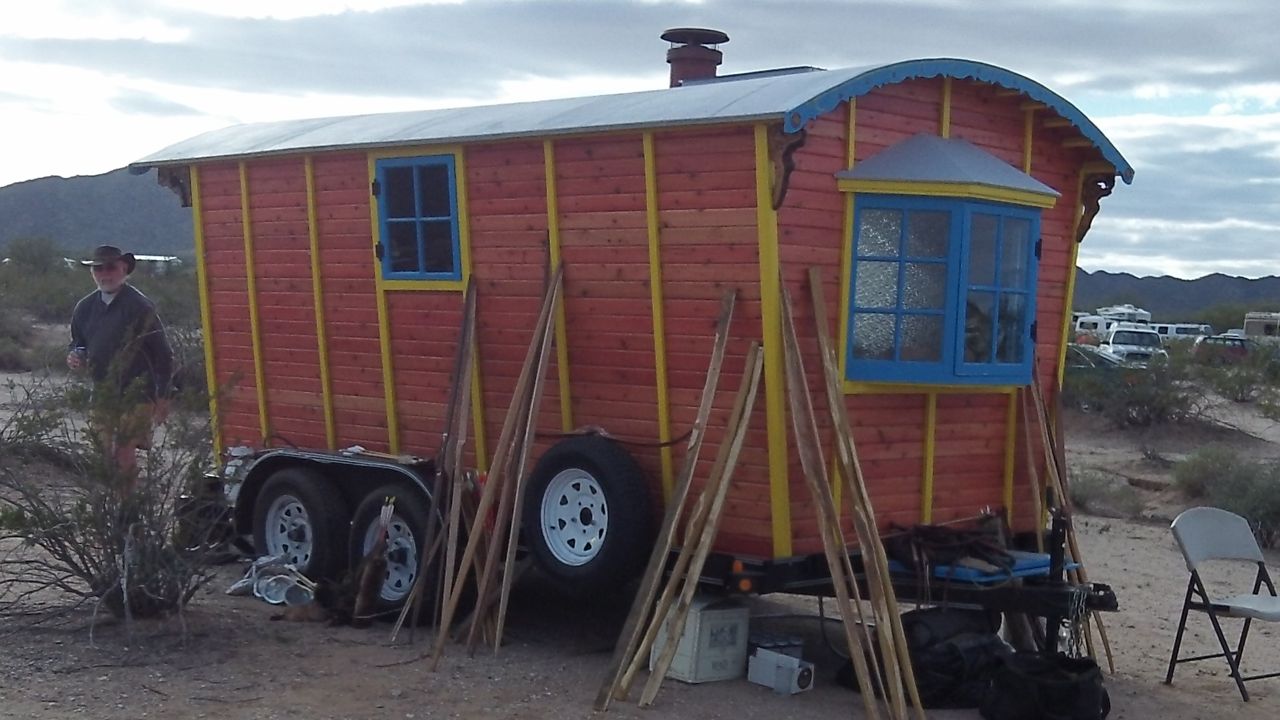 Paul’s wagon is a beauty but I suspect weighs quite a bit. The tandem trailer alone might outweigh my little rig. This one is 14 feet (4.25 m) long and could host a small dance party inside.
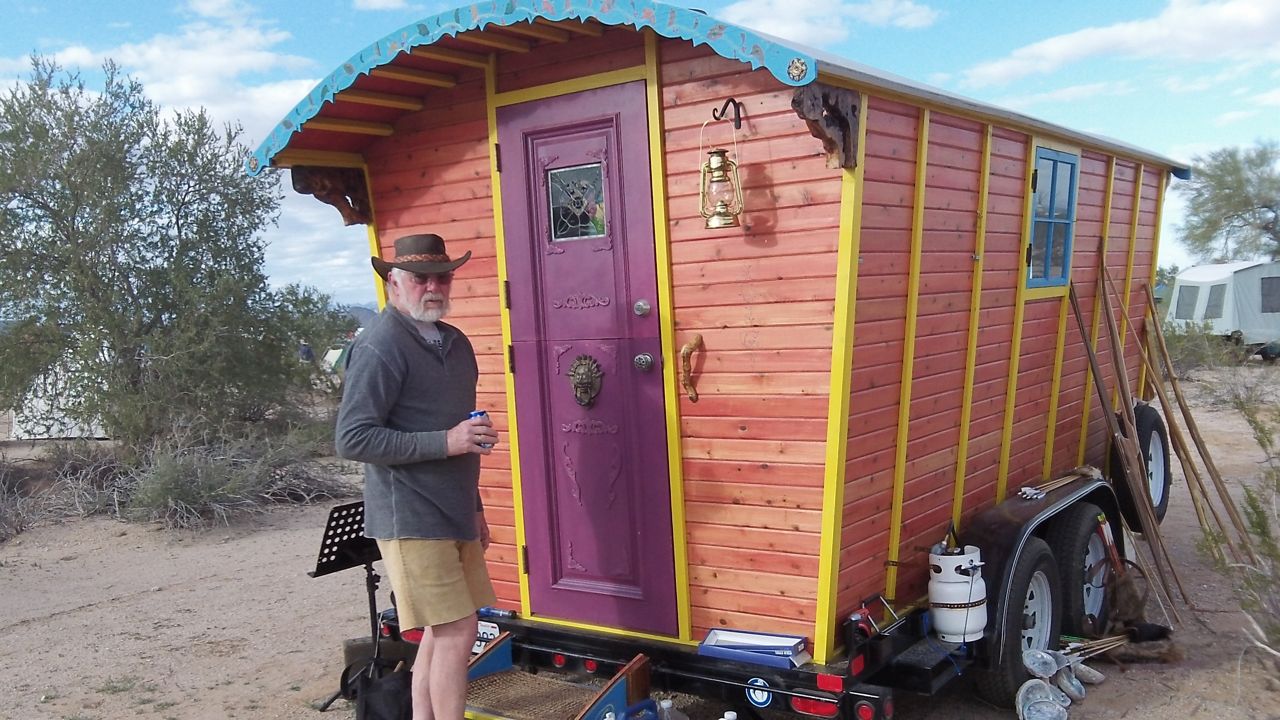 The color scheme and interesting details really make this one stand out in the crowd.
Inspiring Plans, pt 2
A modern RV, like a house, is a structure enclosing a lot of empty space. This is why a large house costs (the builder) substantially less per square foot. It costs virtually nothing to build more floor space but a lot of resources go into things like corners and openings such as windows and doors. The essentials of habitable structure are walls, a minimum of space for sleeping and storage, ventilation, and maybe heat.
 The beautiful illustrations here are from the book The English Gypsy Caravan. Nineteenth century caravan builders distilled out the necessities of living on the move. Not enough room to host a country dance but enough room to sleep, have some some privacy when necessary, and shelter from bad weather. The Open Lot design, above, has a fair amount of seating, an expandable bed, and small amount of dedicated storage for personal items. Prior to the twentieth century in the industrial world, most people “lived” outdoors with the “house” serving as protection and privacy.
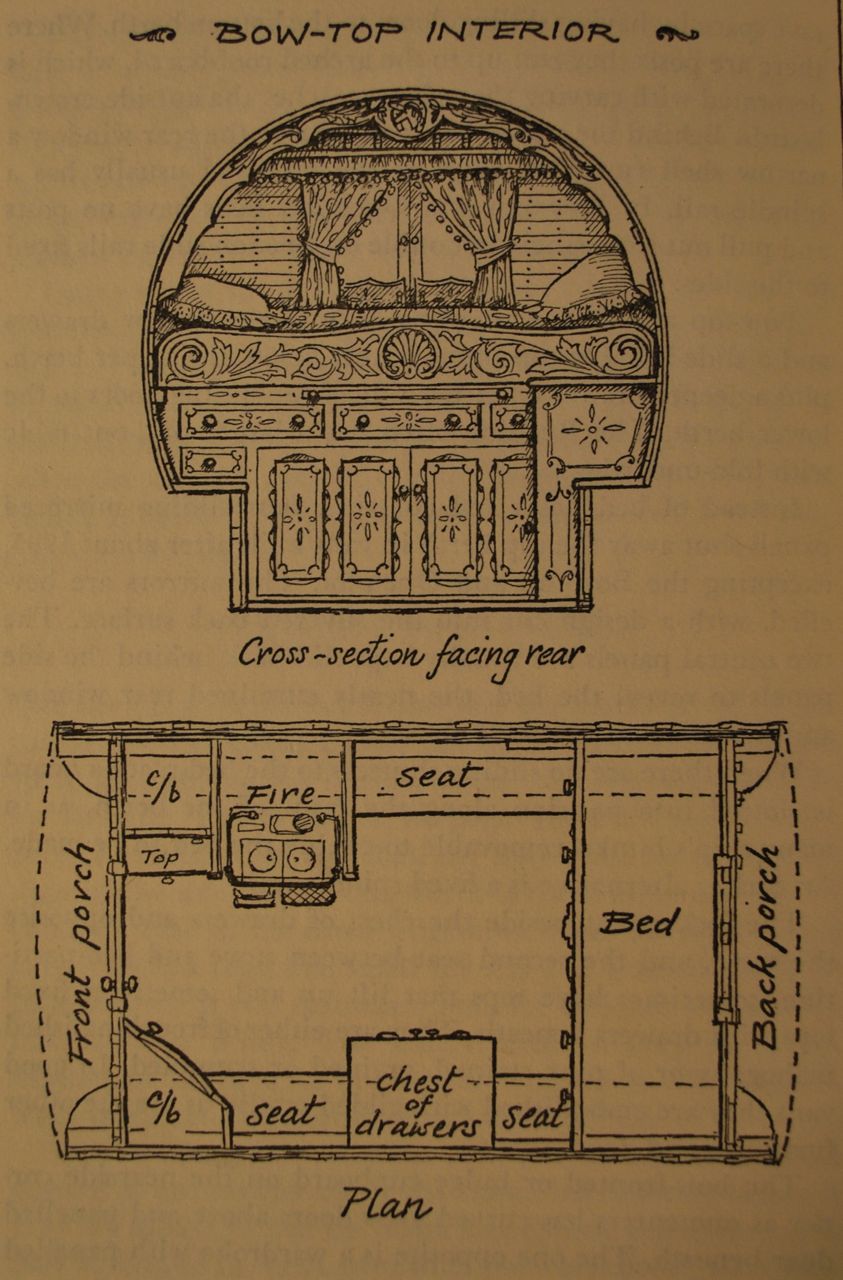 The evolution into the Bow Top shows more storage and less room for seating but also the ability to cook inside and more dedicated storage. It should be taken into consideration that wagon dwellers in the 19th and 20th century Europe generally slept outdoors unless in all but the worst conditions. The wagons were safe havens to keep your possessions and children whereas adults slept under the stars or occasionally in tents.
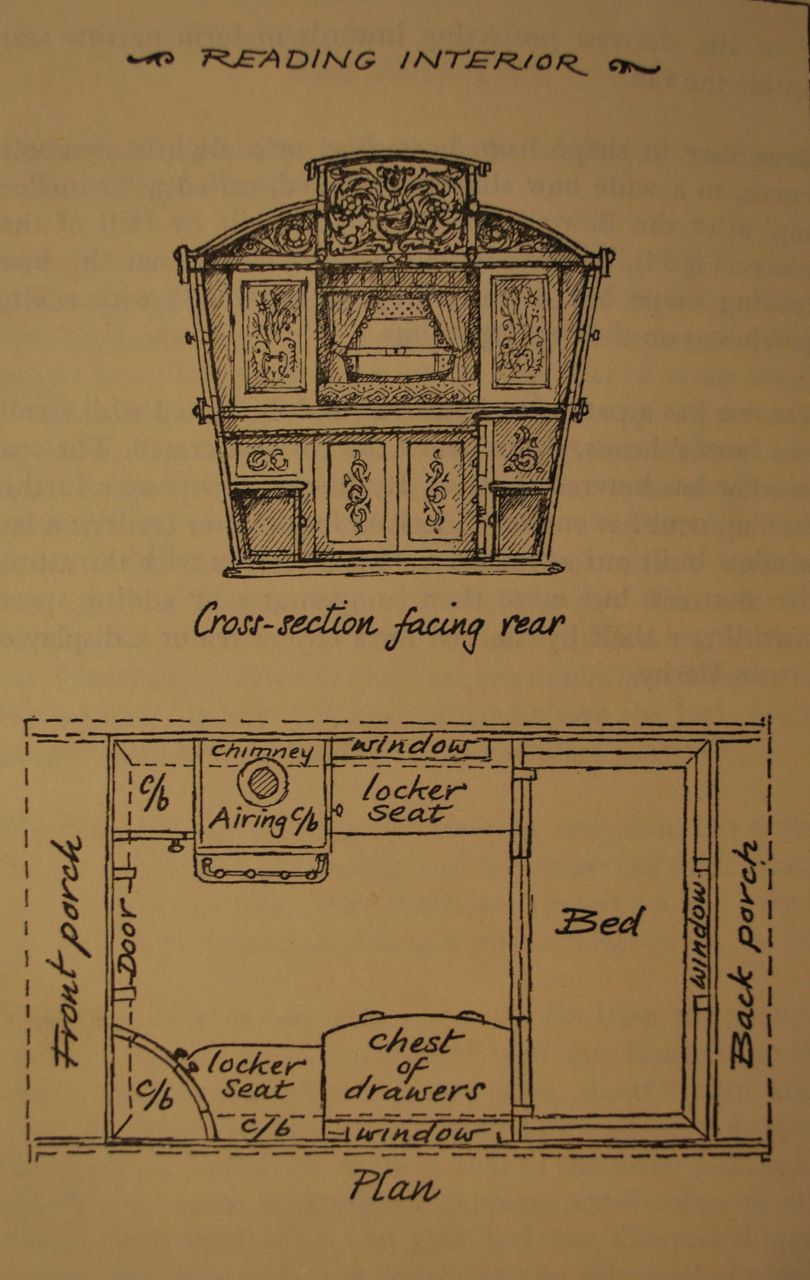 Many innovations came with the full development of the Reading wagon. As the body is built more like a box, underseat storage really adds security to possessions on the move. The chest of drawers remains but additional cabinetry adds ever more segregated storage.
 The finest wagons of the era included a mollycroft or central raised portion of the roof allowing for small windows for ventilation and light. In the image above, you can even see the small chimney vent that was placed over the mounted oil lamp as coal oil produced a lot of soot lowering air quality inside.
 Preindustrial Craftsmanship