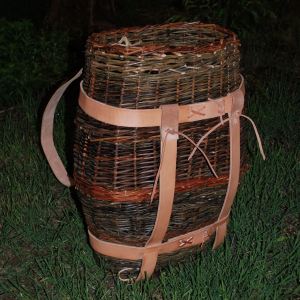
In a fit of energy I got around to putting proper and better shoulder straps on my pack basket made last summer. The pack is willow and the leather work is approximately 10 oz. Hermann Oak harness leather.
Willow pack basket I made several years ago. The straps were obviously new then.
Once the leather ages a bit they will be beautiful and rustic-looking.
First off, I must thank Todd Walker for the opportunity to write this piece for his blog. He really wanted to attend Kephart Days this year but an even more important event took place the same weekend that required his attendance, the birth of a beautiful, healthy grandson. Congratulations good buddy!!!
I first met Todd online about a year or so ago and then had to chance to meet up with him and Bill Reese at one of the Workshop in the Woods classes, hosted by primitive expert/teacher/author, and all around great guy, Scott Jones. If you regularly follow Todd’s blog, you have been introduced to Scott already. Since then, I have garnered a great respect for Todd’s attitude, an affinity for his ideas and work ethic, and more than anything, a love for his friendship. It’s truly an honor to help him out…
Some of my real-life camping gear mostly inspired by the period from 1745-1812, prior to major industrialization.
Starting in the upper left and moving more-or-less clockwise: small tomahawk, portmanteau, stoneware jug, braided buckskin cord, patch knife, buckskin bag for brass sundial compass, wool bonnet (tam o’shanter), trade bead necklace, small gourd for salt, pewter beer mug (could possibly hold water too), canteen gourd, Knife River flint blades, needle case and bone needles, strike-a-light and char-cloth box, wooden bowl and spoon, buckskin bag, bone handled eating knife, waterproofed leather bag, bark tanned belt pouch, buckskin neck bag containing spare fire kit, net shuttle holding hemp line, sewing kit in buckskin bag, wooden needle case with needles, argillite pipe with buckskin bag, fine hemp line, extra blanket pin, belt, pampooties (ghillie shoes), bamboo container containing larger bone awls and other bone tools, in the center, shoulder bag.
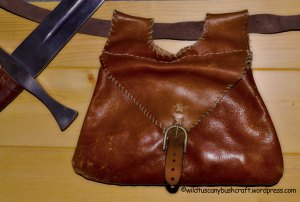
Here is a great little instruction set on how to make a European Medieval-style belt bag. You see these in paintings and illustrations on just about every traveler. Not only will you come out with a nice bag but it is a fine and simple introduction into leather working and sewing. All makers need to start somewhere and this might be the right project.
During the Middle Age was common carrying small items like coins, keys, inside pouches or purses attached to the belt.
There are many archaeological and iconographical documents, you can search for your favorite patterns, but there is a model that in my opinion, is one of the best for a bushcrafter.
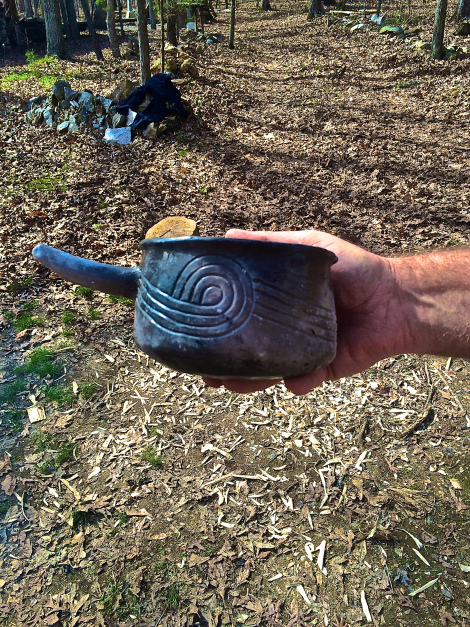
I wanted to re-blog this excellent post about functional pottery construction from “Survival Sherpa”. I’m no great pottery maker but appreciate the craft for sure. Have a look.
Coffee drinkers like myself usually have a favorite mug or cup. My all-time favorite “tankard” developed a crack and DRG trashed it. A sad day indeed!
My sob story may seem petty, but there’s nothing trivial about not having a way to “contain” stuff. Think of all the ways you use containers daily. Then imagine all your modern containers being gone… poof, no more. Welcome to the Stone Age!
Here’s what else disappears with your containers. Your ability to…
Cook stuff without skewering it on a stick
Collect, disinfect, transport, and drink water
Raise plants and livestock
Store food without stuffing it in an animal stomach
Dispose of waste
Personal hygiene
Ferment food and drink
Make medicinals
Gather food
Keep stuff clean
Organize stuff
etc., etc., etc….
This is why containers are king!
After attending a local two-day primitive pottery class, my respect and appreciation for the humble container grew…
Starting as a field scientist in the heady days when men were men and GPS was not available to common civilians, I learned my way around a compass pretty well. I thought I knew something coming out of Boy Scouts but putting those skills to the test mile after mile in order to locate a distant waypoint or build a map by hand honed those skills and etched them indelibly on my brain. Friendly competition arose amongst colleagues testing our pace and compass work over miles of rough ground in the eastern woodlands. The West is easy in comparison with open forests, plains, and grand vistas for taking long sightings. To this day, I generally prefer a pocket compass to a GPS and if I could choose only one, it would be one of these wireless beauties.A surveyor’s sighting compass can just about perform miracles in the right hands and my trusty Brunton Pocket Transit, after all these years, still finds it’s way into my field bag for big jobs. Get a compass, learn to really use it. Keep it handy, and you may never be truly lost.
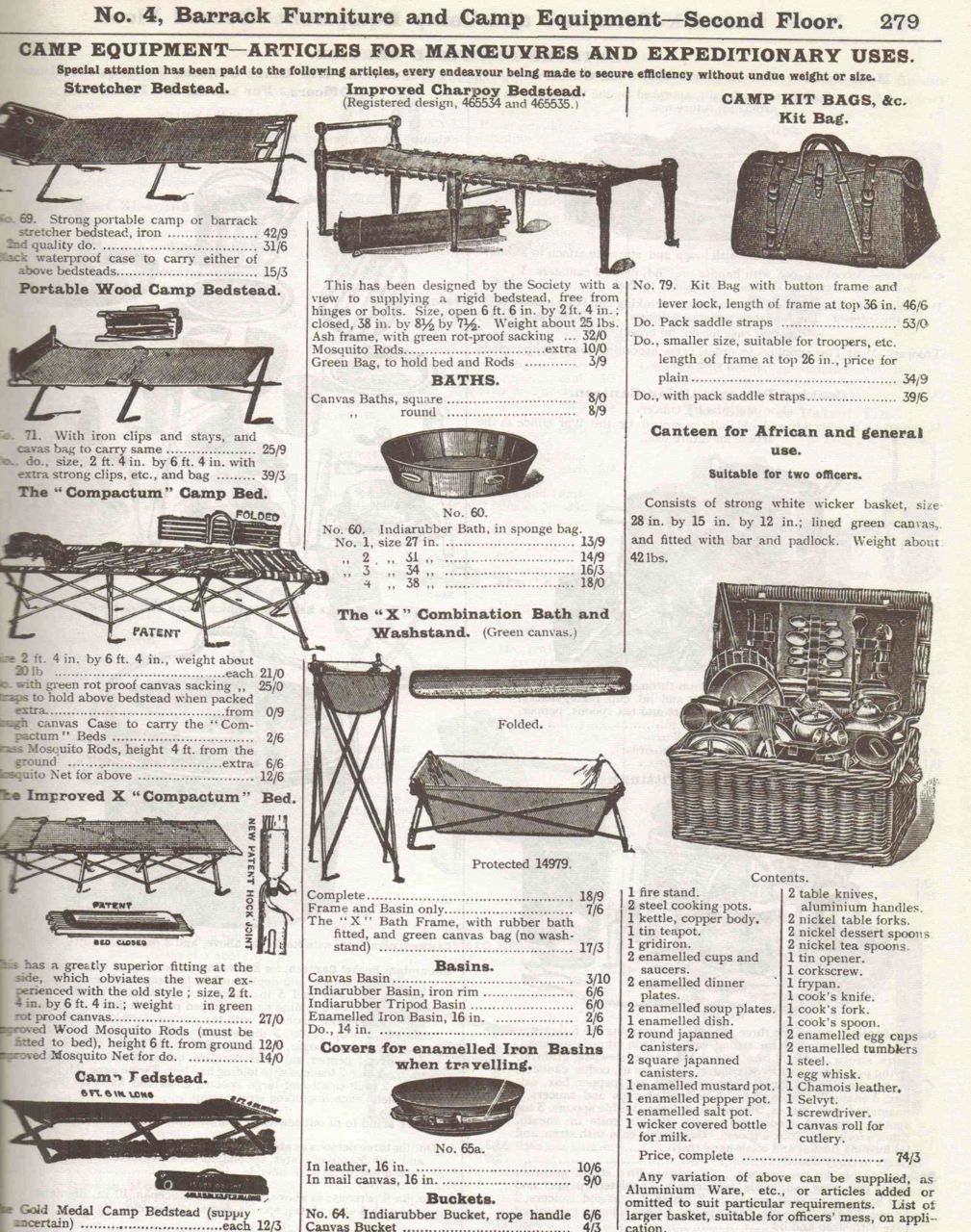
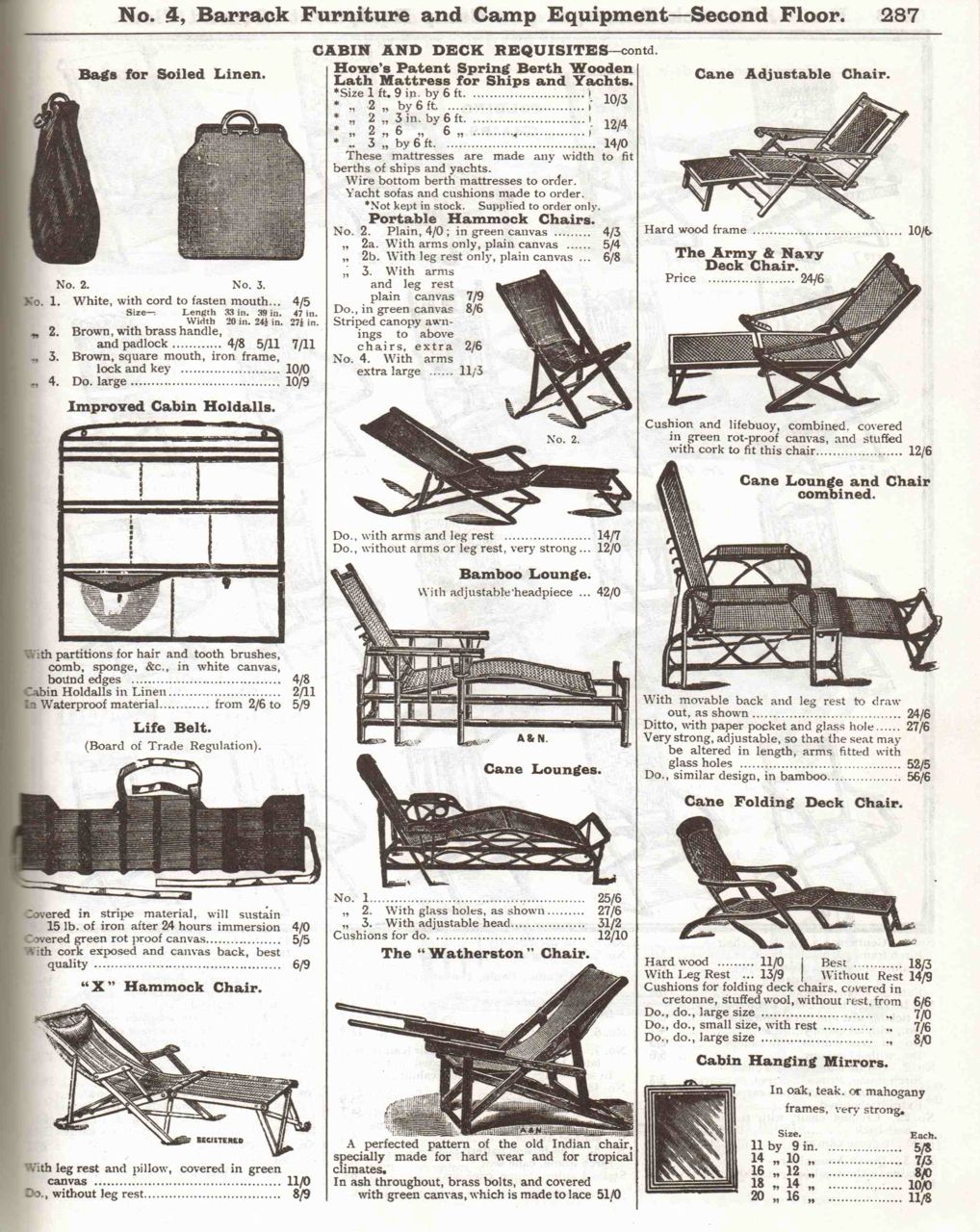
This is a re-post from an earlier entry. Say what you will about British imperial policy of the 19th and 20th centuries. They certainly worked out minimalist travel with a fair amount of style and comfort on a very personal level. These old catalogs give some great ideas for camp living.
From The Army and Navy Co-operative Society Store, London 1907
There are some excellent items here that should give some inspiration for fabricating some classic and classy gear. From an era before the activity of “camping” was fully segregated from “regular living”.













 Preindustrial Craftsmanship