William Sydney Mount, another pointless art excursion

My strange tendency, as an art-admirer, is to sometimes over-analyze a painting, not only as the Art itself, but also as a documentation of time and place.  In historical paintings, it’s fun to look for the details and pick up some lost history along the way.  There may be interesting clues in what the artist chose to depict … or not.

rightleft
By William Sidney Mount.

Anybody else notice the left-handed set-up?  Makes me wonder if the artist or model didn’t know the violin well.  Although I expect it would be rare, I think it’s just possible a self-taught individual might learn this way.  It’s a great picture and study but looks like a mirror image if you are intimate with the violin.  Maybe the clue is in the title Left and Right.

This got me thinking about another of his excellent works, The Banjo Player. I had to look again but I seemed to recall it as a lefty too.  And sure enough, a lefty.
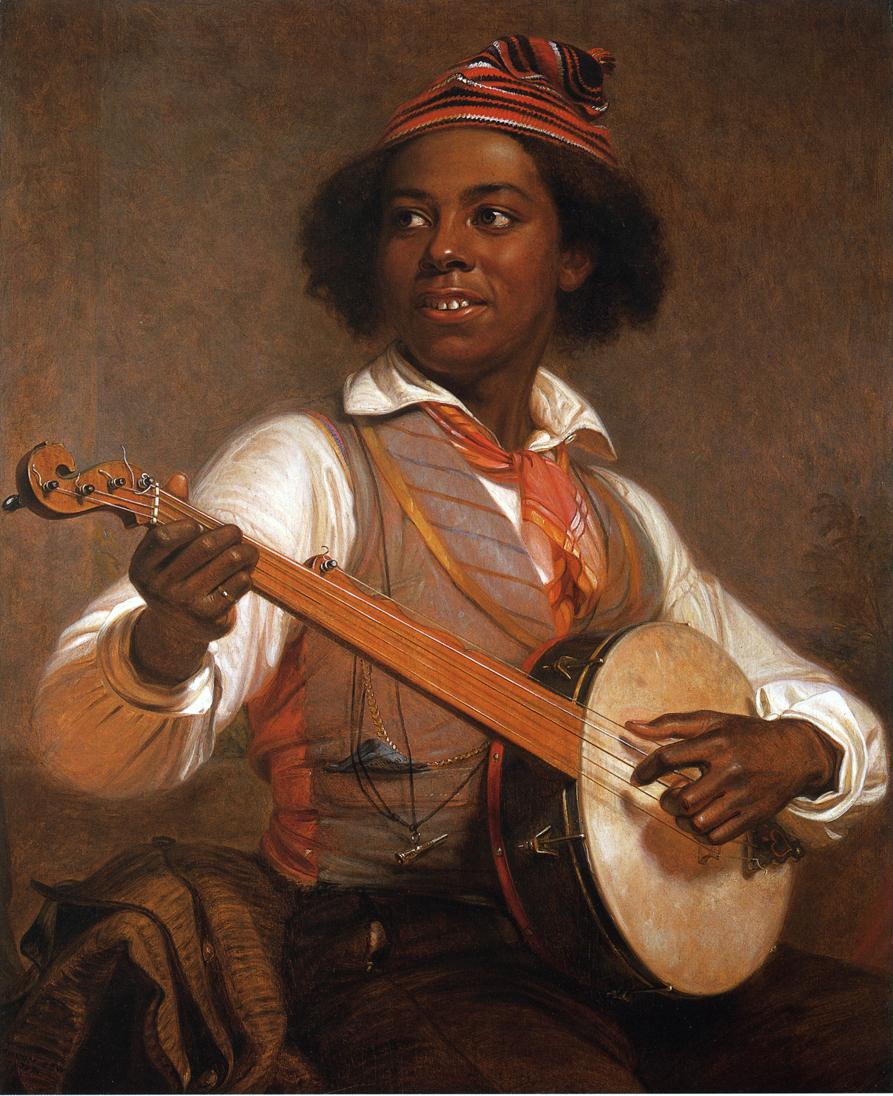
The Banjo Player
The Banjo Player

The Sweeney style banjo strikes me as legitimately left-handed as the drone string is reversed.  As a folk instrument it’s easier for me to imagine some variety in design and setup.  But really, there’s not much point in this discussion other than some odd notes about two paintings I’ve thought about for some time now.  If his art appeals to you,  a lot more can be found by clicking the self portrait of Mount below.

William Sidney Mount (1847-1850).

Making Your Attitude

“Men and boys are learning all kinds of trades but how to make men of themselves. They learn to make houses; but they are not so well housed, they are not so contented in their houses, as the woodchucks in their holes.  What is the use of a house if you haven’t got a tolerable planet to put it on? — If you cannot tolerate the planet that it is on?  Grade the ground first.  If a man believes and expects great things of himself, it makes no odds where you put him, or what you show him … he will be surrounded by grandeur.  He is in the condition of a healthy and hungry man, who says to himself, — How sweet this crust is!”

Henry David Thoreau, Letter to Harrison Blake 20 May 1860; emphasis added, published in Familiar Letters 1865.

https://mercuriuspoliticus.files.wordpress.com/2010/11/448px-formschneider-1568.png

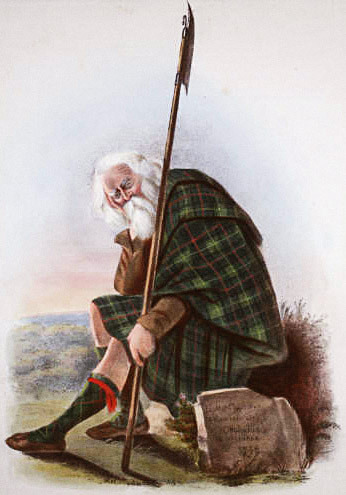
“The fault-finder will find faults even in paradise”

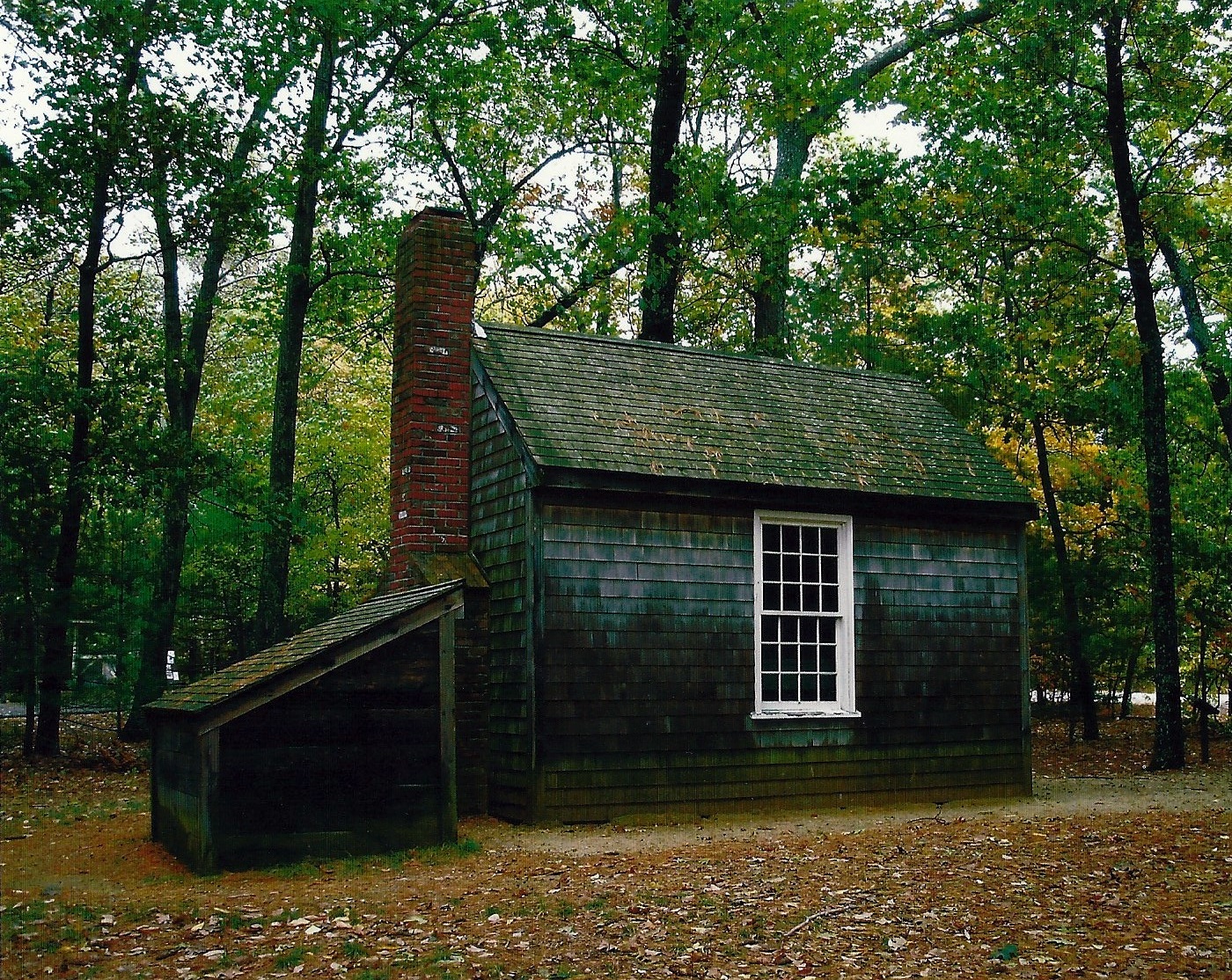
WaldenScan

However mean your life is, meet it and live it; do not shun it and call it hard names. It is not so bad as you are. It looks poorest when you are richest. The fault-finder will find faults even in paradise. Love your life, poor as it is. You may perhaps have some pleasant, thrilling, glorious hours, even in a poorhouse. The setting sun is reflected from the windows of the almshouse as brightly as from the rich man’s abode; the snow melts before its door as early in the spring. I do not see but a quiet mind may live as contentedly there, and have as cheering thoughts, as in a palace.

Henry David Thoreau, Walden

An Open Lot Accommodation

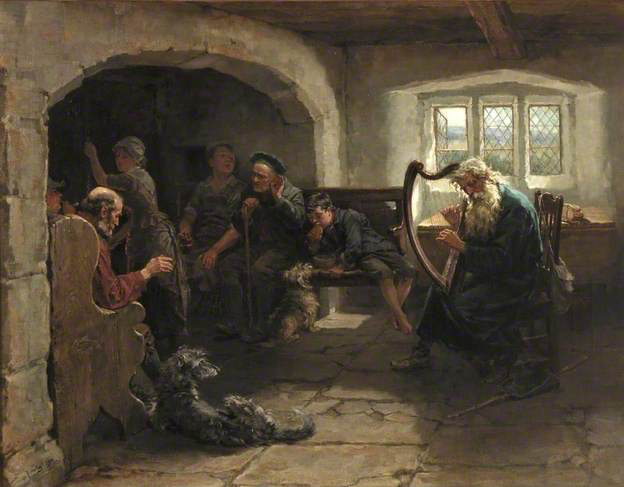
A little something for Wagon Wednesday.  A simple bow-top accommodation.  Very little of the wagon is seen in the image but we can rest assured that it was painted green at one time.  Hedley picked up some fine details here including bolts, boards, the tarp attachment, and a very nice little driving lamp.

LastLast in Market, Ralph Hedley 1885.  Hedley really captured life in rural northern Britain.

Sawing Planks

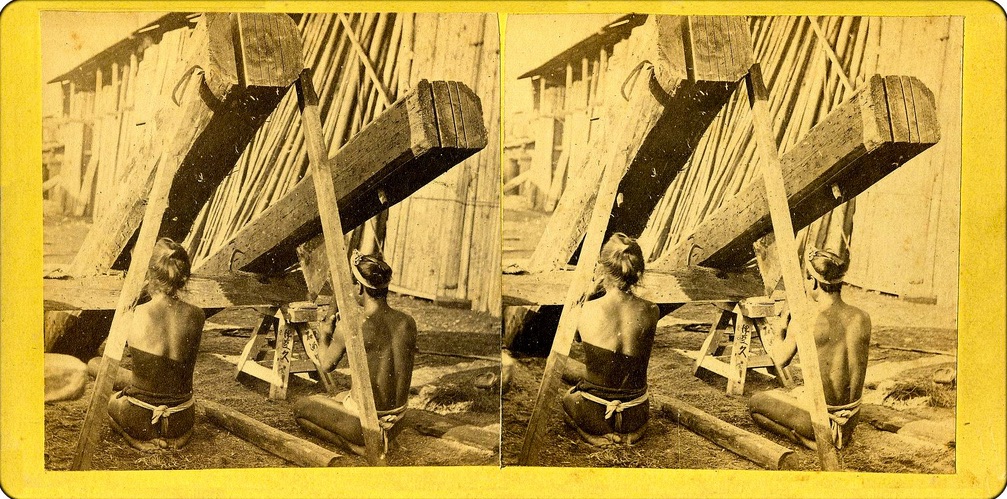
RippingPlanks
Sawing Planks by hand and eye in Japan ca. 1870.

Before powered saw mills, making lumber was much more labor intensive.  Now I can flip a switch to crank up the band saw or table saw; or pull the cord to fire up the chainsaw for big work.  It’s easy to forget how good we have it.  Notice the sturdy little sawhorse holding up the trunk.  I suspect this was hot and hard work.

There is much more about this stereo image here.