For the past 3 years Huarache Blog has been documenting and promoting the craft of Mexican Huarache footwear. This year I will also be developing a specialty e-trade business to offer more immediate support to the craft of Huaraches.
Introducing úkata, an online Huaracheria selling only the best Huaraches in Mexico. Rare designs crafted by the most talented Huaracheros. Timeless Huarache styles that have been made the same way by the artisan and his family for generations. Footwear with a low environmental impact, made with naturally processed and recycled materials.
Click back in February for a more detailed post on úkata and to visit the online store.
Durante los últimos 3 años Blog Huarache ha estado documentando y promoviendo la artesanía de los Huaraches Mexicanos. Este año voy iniciar un negocio de comercio internet para ofrecer un apoyo más inmediato a los Huaracheros y a la artesanía de los Huaraches Mexicanos.
A couple of months ago, Yevgeny Salinder, an 11 year old Russian boy, discovered a 30,000 year old mammoth thawing from the permafrost in the arctic Krasnoyarsk region. I have been hoping to hear more about this remarkable find but, of course, these things take time.
There is already some important information coming out about this find, including the discovery of large fat storage in the form of a hump on the mammoth’s back, confirming images from the Pleistocene depicting the humped back. Previously the hump in the art work was attributed to large thoracic spines but now it seems to be more camel-like soft tissue. Intact organs should tell us more about the animal and it’s environment than we have known. As the Arctic ice recedes, it seems we will find more and more of these specimens being exposed.
A real treat from the Sifting the Past blog. It is worth checking out if you are interested in researching the past through images of the period just prior to mass industrialization. The Townsend’s have a couple excellent websites including an interesting 18th century cooking blog with videos. There is so much in this painting that describes the time and the craft of the cordwainer. There is a palm awl and lasting pinchers in the lower right, the ever critical strap for holding the shoe while sewing, the sewer’s palm for pulling tight the lock stitch, as well as the hammer, mallet, and knife of the trade. He is holding the sole awl in his left hand. The basket on the work bench contains a great bone tool made from a metapodial bone as so often found prior to the 20th century when craftsmen made their own tools. I want my shop to look this great sometime soon.
Try to learn to breathe deeply, really to taste food when you eat, and when you sleep, really to sleep. Try as much as possible to be wholly alive with all your might, and when you laugh, laugh like hell. And when you get angry, get good and angry. Try to be alive. You will be dead soon enough.
It seems that minimalism is the word du jour around the internet these days. Tiny houses, the 100 Thing Challenge, Non-Conformist work strategies, and urban homesteaders are filling blog-space with ideas and adventures outside the old consumerist norm. Many people are looking for something more in their lives and realizing that Stuff is not the answer. There is often an epiphany in someone’s life when they come to the realization that humans are not just professional consumers or targets for marketing strategies. Shopping is not a valid pastime. Hopefully there is more to our short existence than reality TV. Having lived without regular television for quite a few years I feel very lucky to miss out on political soundbites, sit-coms, and mass marketing of sports-watching. Unfortunately, even with my relative isolation, I know about these things from reading the news on the Internet almost daily.
Choosing to not buy into most popular-culture lightens my mental load a lot and (hopefully) allows time for deeper and more elevated thinking as well as crafting a better life. Daily walks, exercise, building things, cooking good food, and reading make for a calmer mind and a lower stress level. These are intentional activities not the imposed sedation of consumer culture.
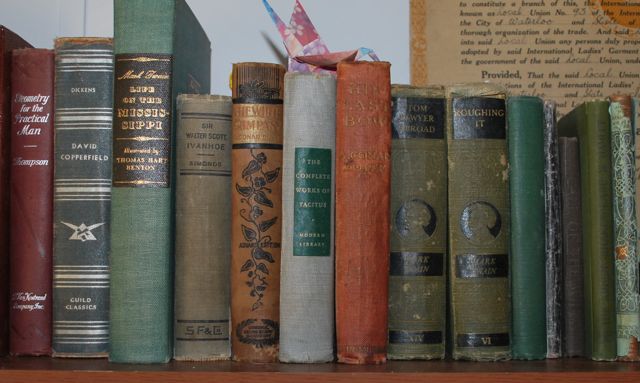
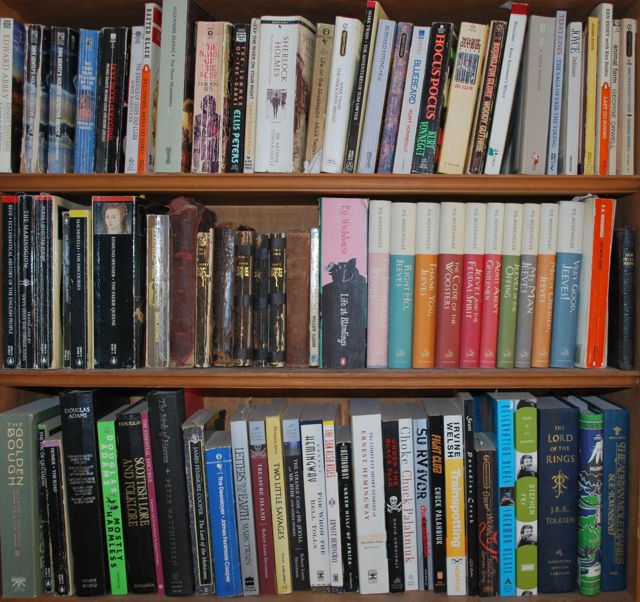
When I had to leave Flagstaff about eight years ago, I began uncluttering my belongings. I don’t think of myself as a collector, but I had amassed an enormous library of books. This is what people on an academic path do … right? Who did I think I was? Some nineteenth-century English aristocrat? Why would I possibly need a personal library? It hit me one day that this was crazy. I have hauled books around since I was a teenager until it became truckloads to move while nearly always living within twenty minutes of a large, academic library.
Sure, as a person who researches writes for work there are certain references and sources I need to have on hand and could not adequately perform my job without, but I had fallen into the trap of keeping books around “just in case” I wanted them again. That’s not to say that there aren’t recreational books I would never want to be without and I hope to read or reference many more times before I die.
I was able to sell a fair number of books and make a few dollars from them but, in the end, found that there isn’t a high monetary value on most books. These I gave away. I gave away even more to the local library and to the Goodwill store. I still have far too many books, but now its really just the one’s I love or have a need for. The ones I may not need but can’t quite part with are: a few rare antiques, first editions, special editions, and expensive academic tomes.
I’m still giving away books but I’m still buying them as well. Being far from a real bookstore actually makes it easier, not harder, to shop, read reviews, preview and purchase books. Without getting up I can order a book and expect it in my post office box in a week. Such is the Amazon.com culture.
I still read voraciously, but now, when considering a book, I really try to consider how much I want to own it and do I want to lug it around? Another anchor holding me down. Can my local library get it? This has been a difficult addiction to overcome. I’ve bought books since I was fourteen and, on some level, prided myself on having such an extensive collection at my fingertips. It felt good to put another dozen or so hardbacks in my Goodwill box this morning. Just a few hundred more to let go (but a few more are on their way to my post office).


 Preindustrial Craftsmanship