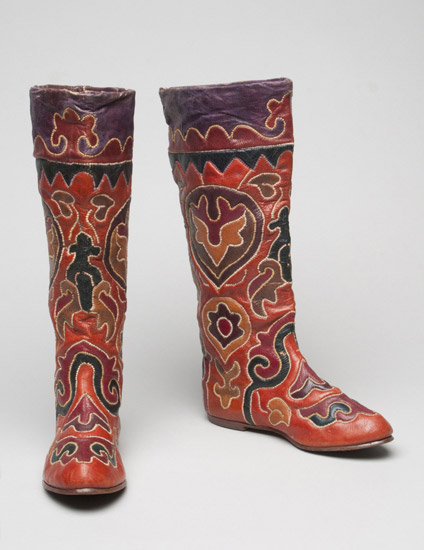
Uzbekistan boots. I need to make something like these.
Adventures of an Imperfect Man In Search of a Handmade Life

Uzbekistan boots. I need to make something like these.
From Carpentry and Building, April 1903

Here’s a nice open lot from Ireland.
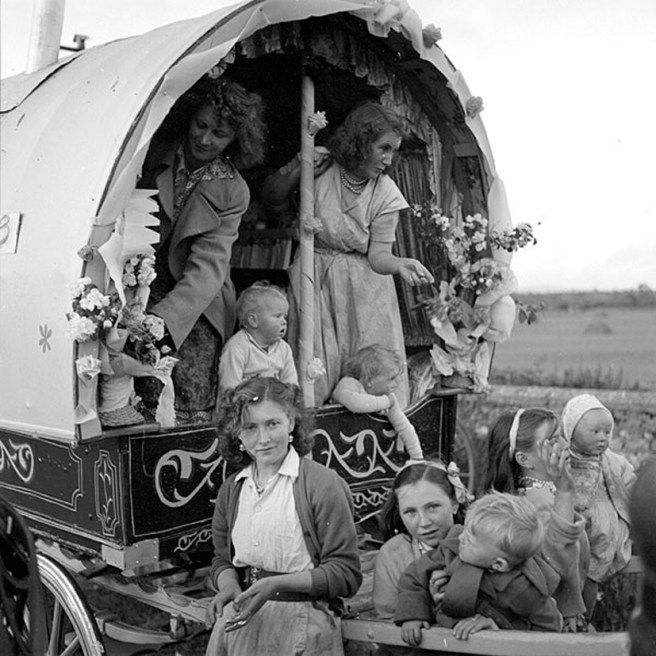
Beautiful…all of it.
The next step in finishing the pack frame…
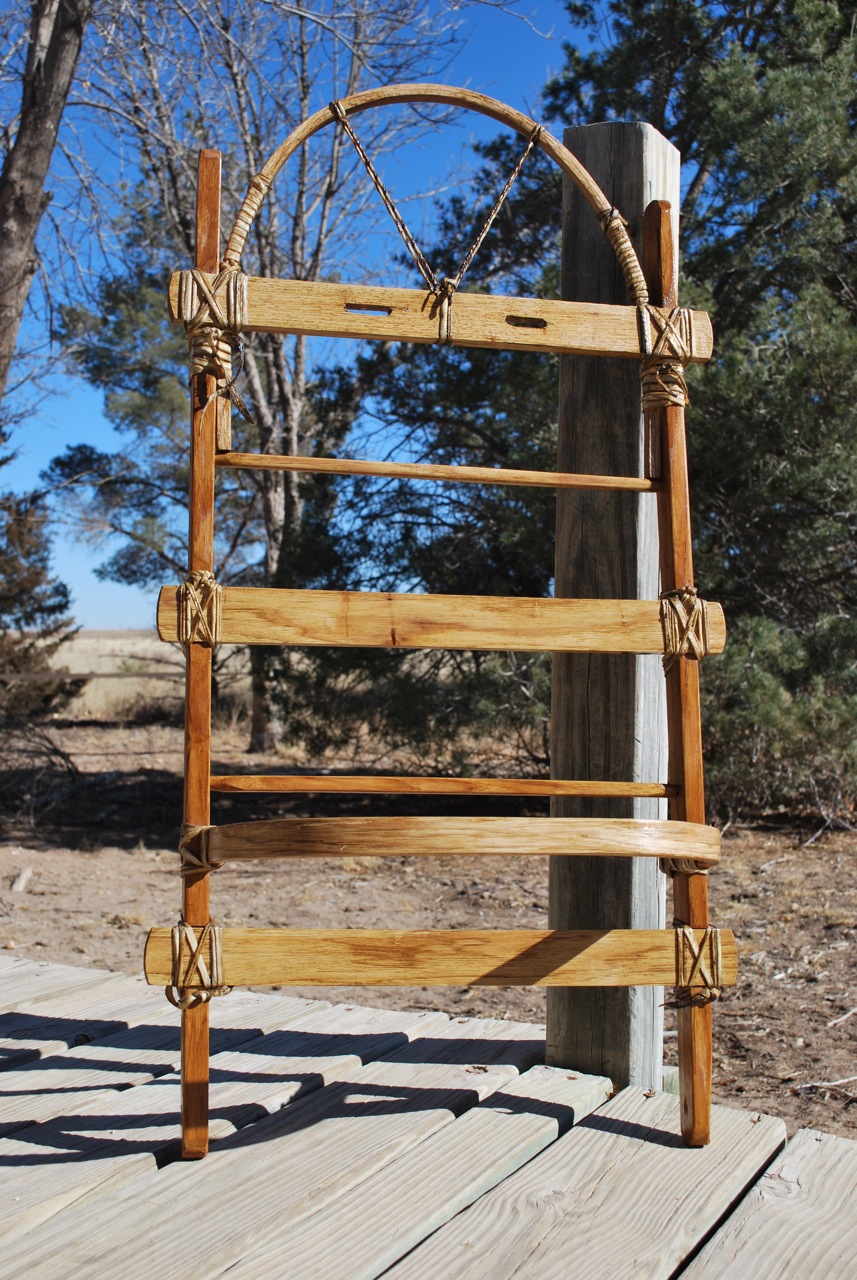
Here’s a detailed photo of the naked frame with an initial coat of oil & pine-tar coating. This will weatherproof the whole thing and make the rawhide less appealing to critters (I caught my dog licking one of the lashings this morning). This mixture is about 60% boiled linseed oil and 40% Stockholm pine-tar, an ancient coating used on just about everything in pre-industrial northern Europe. It should dry in a day or two and be ready for a second thin coat later in the week.

1930s:
Amanda Uren
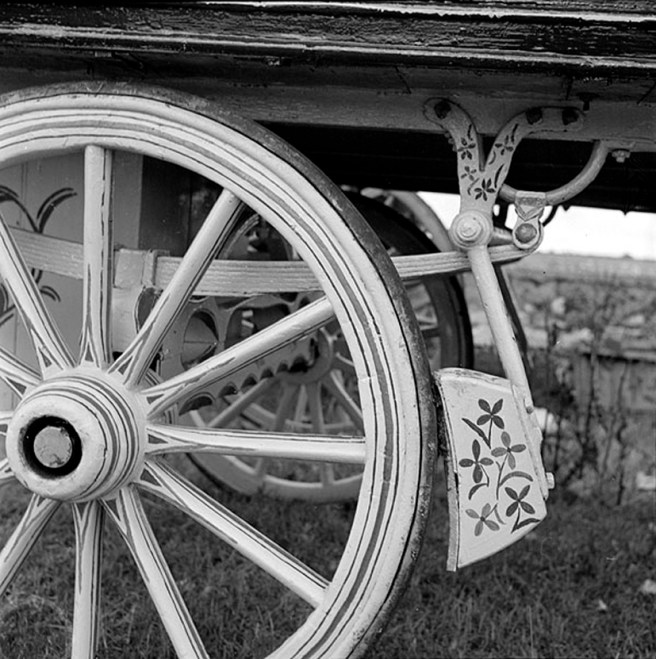
Peddler’s Car, the Netherlands
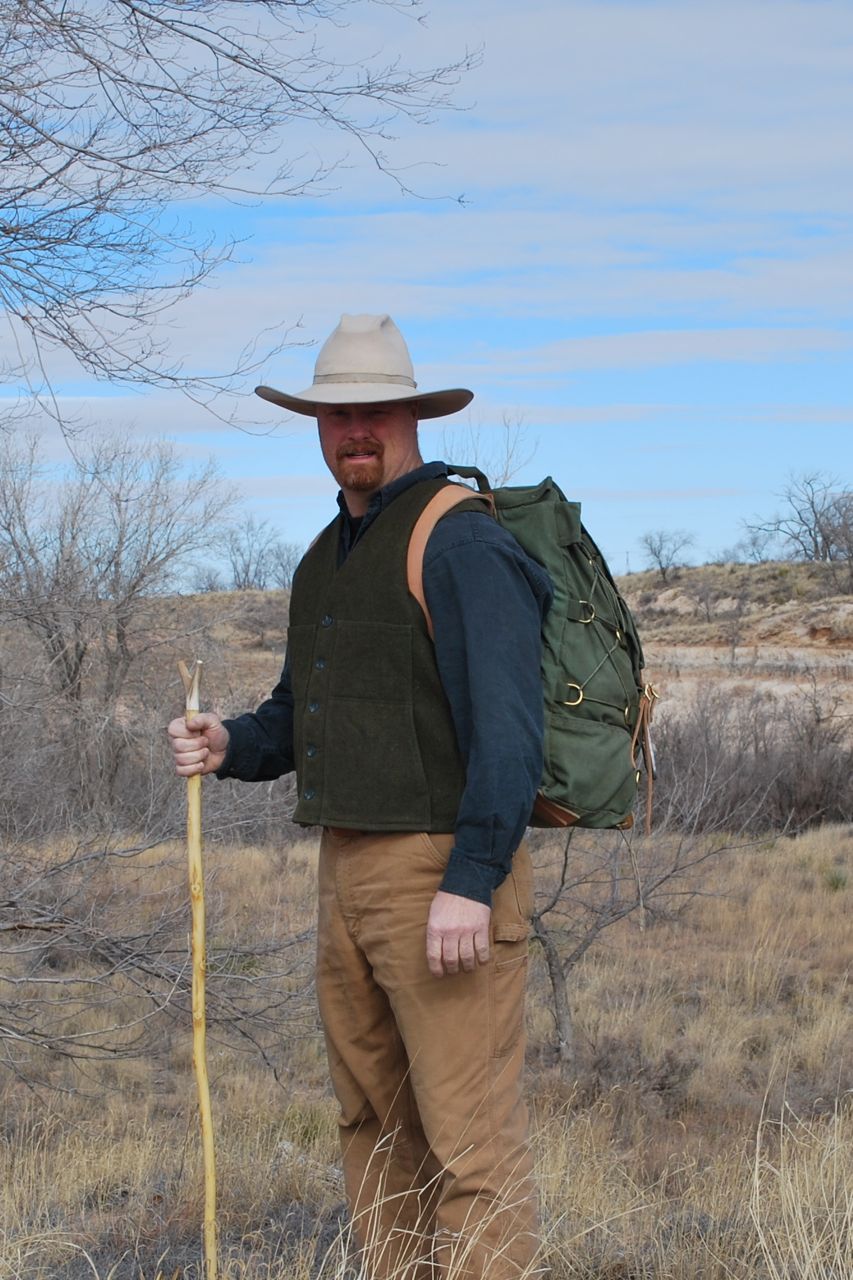 Field testing the nearly finished rucksack. It still needs a few closures and bits but is essentially as finished as anything I make. It’s poorly packed for a quick hike and not very full. More pictures to follow when I get some time off to tramp around with it.

Features: Heavy, waxed canvas truck tarp with 10-12 oz leather straps and all brass hardware. It has an axe sleeve, two long, exterior pockets, small flap pocket, two narrow pen-type sleeves, interior valuables pocket, compression D-rings on sides, D rings for shelter roll, and loops for carabiners.
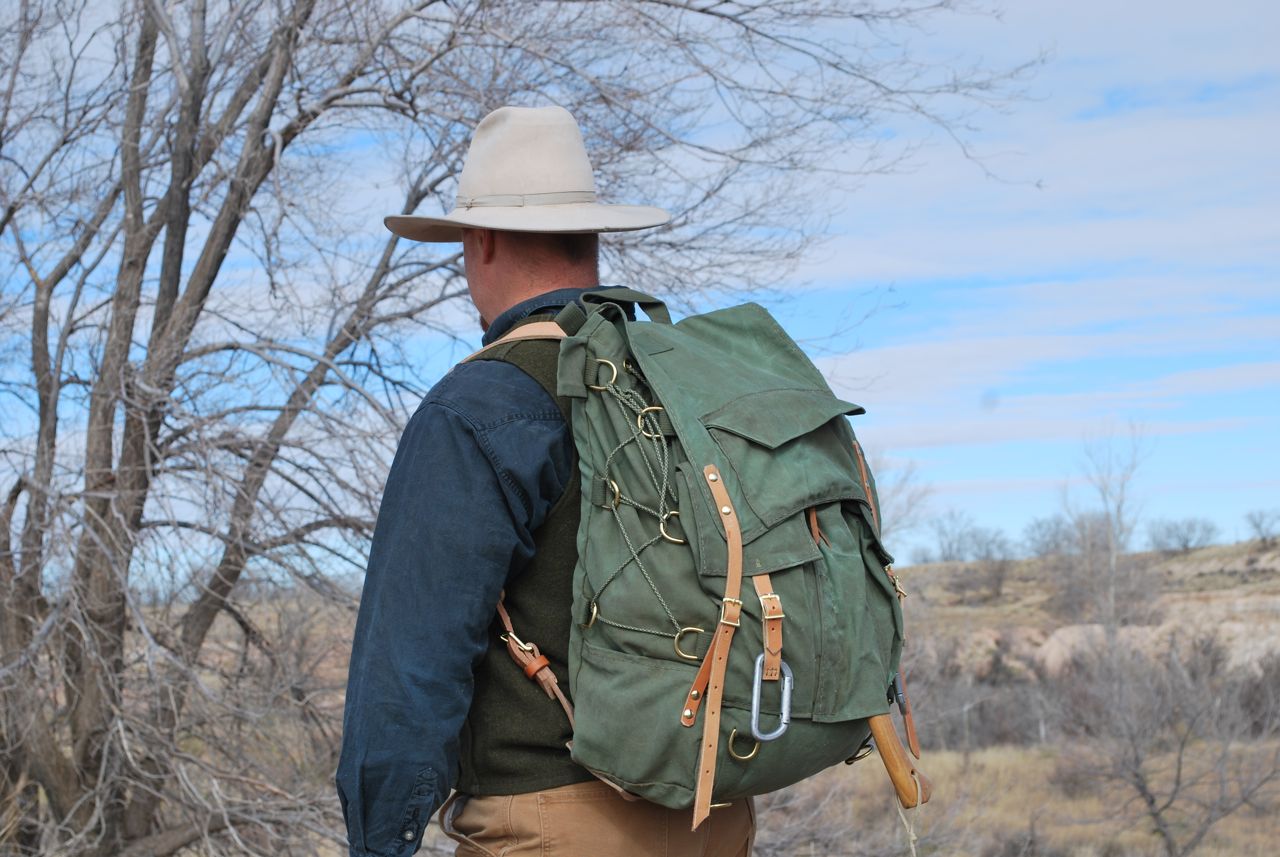
All hand saddle-stitched and riveted at stress points. I’ll put up a sketch of the pattern for anyone interested.
Fairytale lifestyle or self inflicted poverty; Does life in a wagon live up to the dream?
I hope its not TOO lame reblogging other people’s posts but this is just too ON TARGET. Check out his blogs.
Learning from the past is important and I sometimes think about this from a design perspective. Can we learn from old traditional designs, or techniques and apply them to modern design? Is all primitive design and technology inferior?
I believe that at the very least learning about old ways can provide us with food for thought, a comparison to our new directions and if necessary can inform any necessary adjustments to our course and design thinking.
External frame backpacks are interesting not only of their more versatile modularity, but also because the structural component of the pack is clearly visible and offers a great opportunity to any designer wanting to explore structural innovation. Designing compelling structural elements from diverse materials such as wood, aluminium, or even carbon fiber is something I think most designers live to do.
Every designer and their creativity draws from all forms of knowledge and inspiration…
View original post 1,938 more words
I just have to reblog this!
Camille Poirier patented the first back pack on Dec. 12, 1882 in Duluth, Minnesota (Patent No. 268,932). Initially called the Pack-Strap the pack is today referred to as the Duluth Pack.
The basic design of the Duluth Pack already existed in the blanket bag, or knapsack and had been in use for at least 100 years by the British Army prior to the patent, especially during the American Revolution. But Camille Poirier added a few improvements including a sternum strap, tumpline and an umbrella strap to hold an umbrella, or sunshade above the users head while hiking.
With a budding wilderness recreation movement in the USA, the Duluth Pack designed for ease of use went onto arguably become the first world’s first recreational backpack.
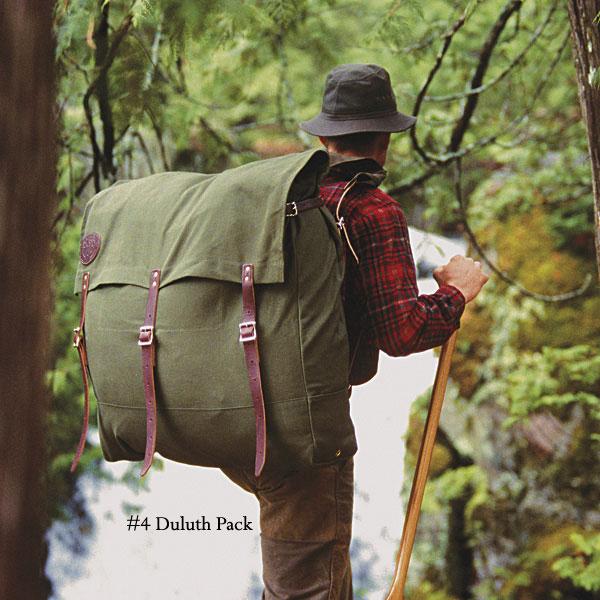


Incredibly today and over 130 years since its patent, the Duluth Pack is still is available and being made in Duluth, Minnesota, USA.
Which new products…
View original post 23 more words

 Preindustrial Craftsmanship