Expectations and the Literal Thinker

I cannot even express how much this speaks to me. I have been reprimanded for not being willing to make extensive working drawings of furniture for a lazy half-wit on more than one occasion. My Vardo building pages have been attacked by the entitled internet Anons for not being able to state in exact measures how many fasteners will need to be purchased to build their own project. I was loudly scolded for not making an exact dimensional cutting list for the thousands pf pieces that make up the project, and so on and on and on.

“Close your mouth, open your mind, get off your ass and put a little effort into life. You will be amazed at what you can accomplish” says it all.

Greg Merritt's avatarHILLBILLY DAIKU

In the past few days there has been a, lets call it lively, discussion over on Paul Sellers’ Woodworking Masterclasses forum.  Generally speaking, the entire thing centered on two complaints voiced by a single member.

The first complaint was that the when and why of which joinery to employ was not being directly addressed.  The second complaint was that the woodworking instruction was not directly addressing how to design a piece of furniture.  While these issues are technically correct, all of the information is there in Mr. Sellers’ videos and blogs for those willing to observe, think and extrapolate for themselves.

For some reason society in general has shifted to an absolute literal way of thinking.  Every step and element of a process must be spelled out in order for people to understand and perform that process.  Here is an example from my workplace:

An employee was told to sweep the floor in his…

View original post 514 more words

Home Grown Music

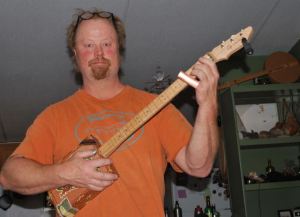
As an undaunted woodworker I have made most of my musical instruments over the years.  I could never justify purchasing a high-end, high-quality instrument but I could make a reasonable proxy.  My interest has been rekindled in the last couple years, making my third banjo for myself and reviving one of the mountain dulcimers as my partner has decided to take an interest in it.

I find that there is never enough time to play an instrument properly with a regular day job, a relationship, and other interests.  It seems that it’s time for a change in the schedule to put music back into the center of life.

DSC_0003 (3)

Home is Where the Hearth Is

…and the Vardo Will be Close by.

20150329_073652
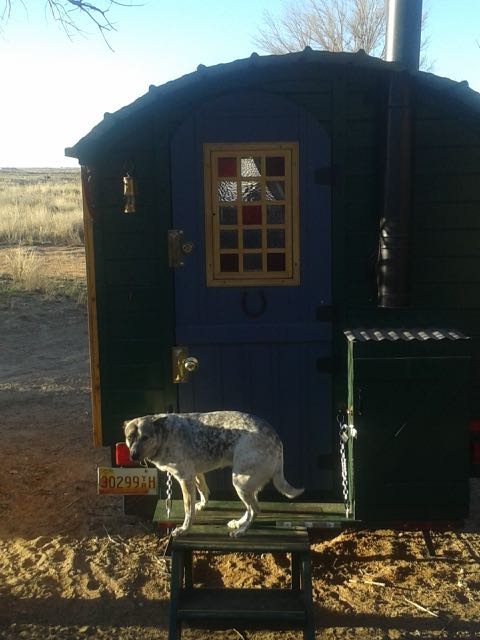
Somebody hates to be left out.

Some important facts about caravan living before the ultra-modern RVs came along that may help people understand some of the choices I have made about my own wagon:

atHome
At the most basic level, life revolves around food and shelter.
  • The caravan is the hub around which camp is built, but most “living” actually takes place outside in the wide world.  Sometimes this means tents or other temporary structures provide added protection from the elements.  Prior to the second world war, caravan Travellers in Europe often slept outdoors, under the caravan when necessary while the kids were corralled inside.  This makes a lot a sense as adults stay up later, and kids can wander off.
  • Cooking is done outdoors, over a fire.  The stove, when there is one, is for heat and drying.  The hearth is the focus of family life, just as it has been for a million years.  That is where people congregate, music and stories happen there, and it is provides comfort and cheer.
Hearth and home has a real meaning.
  • There is no water closet or toilet inside the caravan.  That is considered by connoisseurs to be repugnant in such a small space.  Needing to defecate in such a small space is a modern, and to some, a filthy idea.  However, this is one of the most common criticisms I hear about mine or other traditional wagons; seemingly from folks with little travel or camping experience.
J. Lequesca's sheep graze in Jordan Valley, Oregon.
J. Lequesca’s sheep graze in Jordan Valley, Oregon.
  • A consistent anthropological observation about nomads is the strict rules of hygiene and cleanliness.  Working and wandering outdoors can be a dirty business so strict rules are adhered to.  Some of these reach the level of taboos and can be traced back over at least a thousand years.  Living on the road can make one appreciate this need.Family

    Family
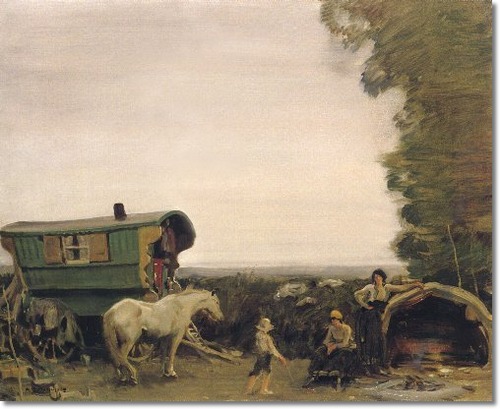
    A happy family from the road.
  • The fancy wagons of 19th century Britain are the exception, not the rule.  Functional but sometimes homely carts and wagons have likely served as the home base for nomads of various types since 500 B.C. or before.  They came to their peak of perfection in Britain in the 19th century before morphing into the RVs we see today.
TravellerinSWengland
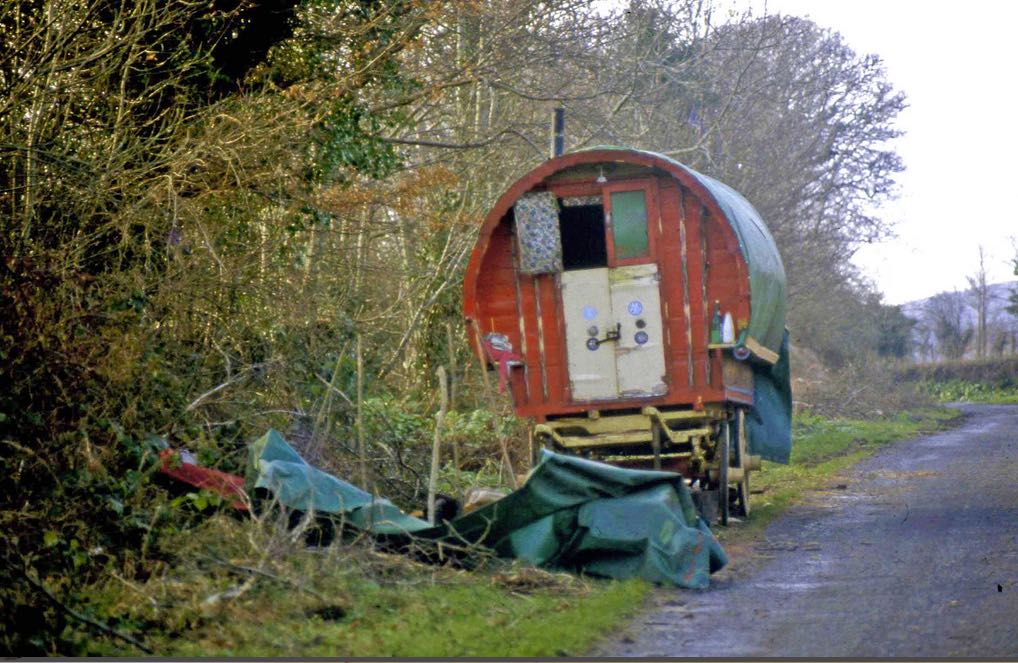
A Traveller in southwest England. This simple accommodation is much cheaper and more readily built from cheap or found materials than the fancy production models.

Then as today, a conscientious traveller uses a fire pan to prevent scorching the earth by the roadside.  Mine is an old plow disk.

And finally, above are a few examples of outside extensions added to late 19th century caravans across Britain exhibiting the functionality of canvas to extend the living space in less-than-perfect weather.

Caravanroadside
You never quite know where the day might end.


More Joinery

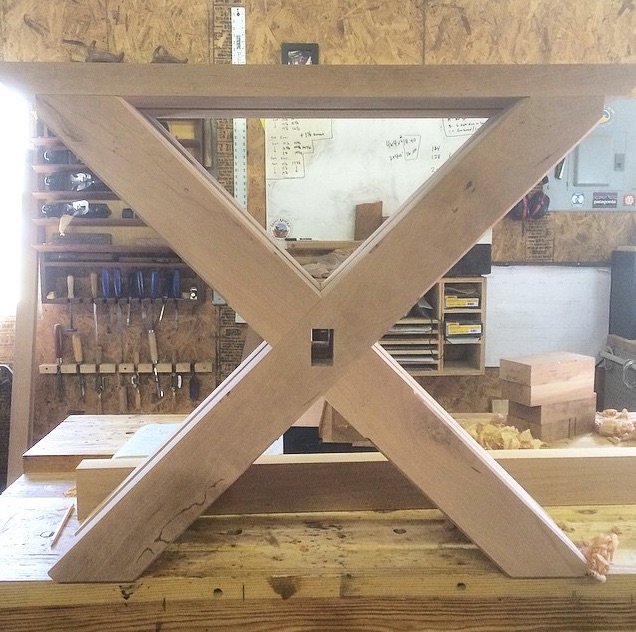
Here’s a beautiful trestle table coming together in Andy Rawls’ studio; spotted on his Tumblr this morning.

trestleSeeing this makes me realize I can’t wait to get some projects done over the three day weekend.  It makes me a little sad to say something like that.  Choosing a job for pay instead of a love for what you do every day.  Of course, the grass always looks greener…

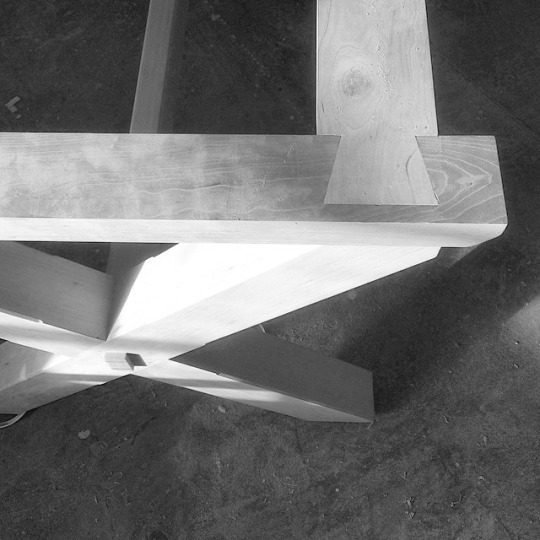
dovetailtressleThis will be one solid table and will last for ages if treated well.  This kind of craftsmanship has slipped away from most of our daily lives.  You won’t find this at a big chain furniture store.  Have a look at more of his remarkable work by clicking the link below.

Rawls_weblogo2

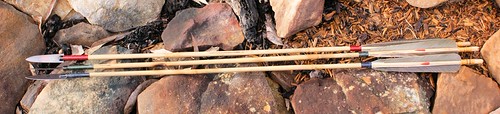
Mongolian bamboo arrows

More bamboo arrows from the leatherworking reverend.

Wayne Robinson's avatarThe Reverend's Musings

Reproduction 14th C Mongolian Arrows

I’ve been doing a little consulting to my nephew*, who has been making a Mongolian bow for a school history assignment. His theory is that the Mongolian bow gave the advantage to the Mongols during their invasion of China in the 14th century, so he’s making one and testing it out. I disagree in a greater part, but it’s more important that he can research, develop and coherently defend a theory. I offered to make him some contemporary bamboo arrows to go with the bow, partially because I knew he wouldn’t have time, and partially because it was an opportunity for me to learn some new skills working with bamboo. He’s also going to be a little more forgiving than a paying client if I make a couple of mistakes while I’m learning, or take some shortcuts.

Paleotool has an excellent two parter on making bamboo arrows, I…

View original post 297 more words

Sawing Planks

RippingPlanks
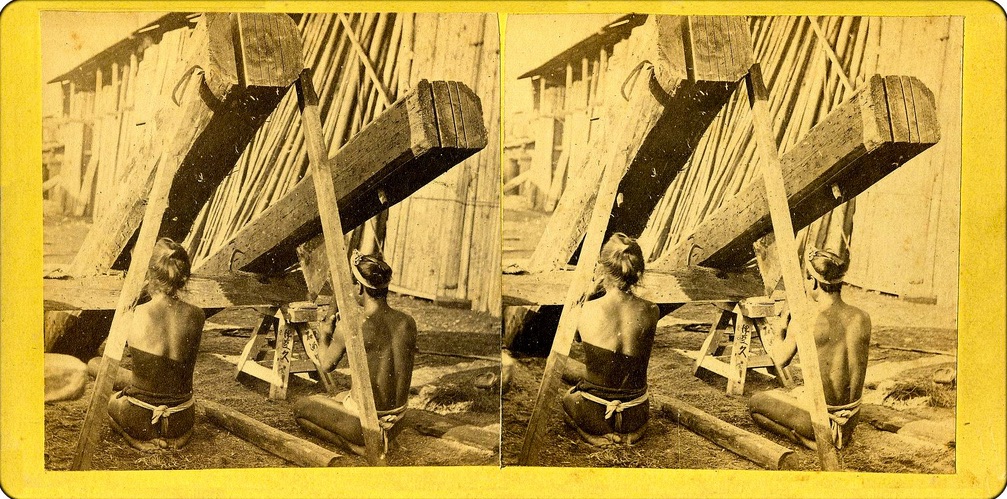
Sawing Planks by hand and eye in Japan ca. 1870.

Before powered saw mills, making lumber was much more labor intensive.  Now I can flip a switch to crank up the band saw or table saw; or pull the cord to fire up the chainsaw for big work.  It’s easy to forget how good we have it.  Notice the sturdy little sawhorse holding up the trunk.  I suspect this was hot and hard work.

There is much more about this stereo image here.

Tools of the Bowyer

I have been working on a bow-making tutorial for quite a long time now.  Trying to be as explicit as possible while not dumbing everything down is a tricky narrative to follow.  Just gathering the appropriate images of the process is time-consuming and difficult but truly, a good image is worth a thousand words.

bowyertools
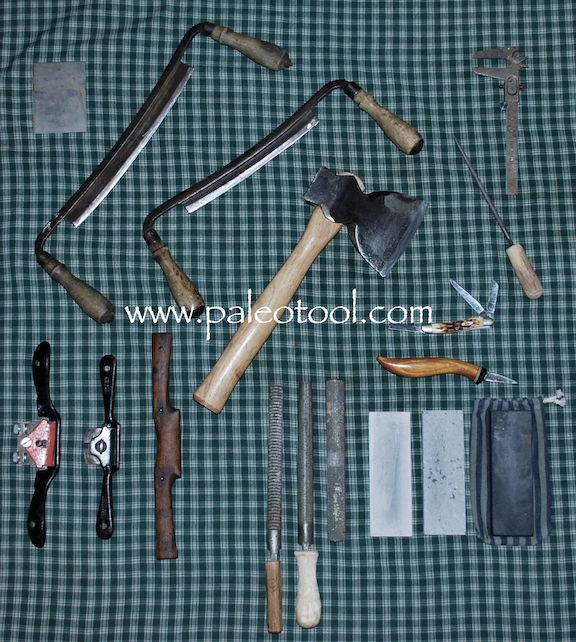
The basic hand tools used on bow making.


Making Connections with Kindred Spirits

The Internet is neither good nor bad.  It is just a repository of information like a giant disorganized library that is constantly in flux.  Like a library, it is a tool and like a library it can be a meeting place.  Probably the two best things about having an Internet presence is the vast amount of knowledge that can be shared or learned and the bringing together of like-minded individuals that would have never met otherwise.  I have had meaningful discussions and comments from all over the world about this oddball and eclectic blog and I would like to share a recent email of a connection made through the website from Rob Hanson of Evenfall Studios.  This, for me, sums up the heart of the message; “It makes me feel less solitary, as we are not the most common demographic these days.”

Hi George,

I enjoy your blog, and your approach to making and living. Thanks for sharing it.

Dick Proenekke lived in remote Alaska and made his cabin at Twin Lakes as well as much of whatever else he needed with tools that didn’t require power. Sure it was out of necessity, but I like that he didn’t make a big deal out of it. He just did what he needed to live, knowing the season to complete this was short. Dick was maybe somewhat of an uncommon adventurer in the late 1960’s, but 75 years prior, he would have been much more a common man in the western states.  Hours of our day in pre-industrial time were spent like Mr. Proenneke’s, assuring we had our life in order. Prepared for living life as it comes. It was everyone’s daily do.

I make hand tools for a living. I make pre-industrial tools, sort of. Probably developed in the early period of sloyd. Shooting boards, sawing and drilling tools, sharpening tools. I don’t do this because I intend to be pre-industrial, I do it because the premise of these tools is still amongst a “best method” approach to making things. Industrialization didn’t necessarily improve the possible outcomes, and so the relevance of these tools today is still alive.

I sort of got lucky. My Grandparents on both sides of the family were born very early in the 20th century and brought up on dairy farms. This was in the Pacific NW about 30 years after settling there began, so there was a lot of frontier knowledge in both sides of the family. Everything was still really old school. One great granddad had been in furniture making before coming to the west coast. He taught my granddad a lot that was passed on. This granddad had only daughters, so he waited a while longer for grandsons. Anyway, both grandfathers and dad were always independent makers, and I got a front row seat. They were hybrid. They did use power tools too, but their original skills were hand tools, and often they would choose the hand tool over the powered one.

The thing was, it was never as much about the tools as it was about having the skill and doing a good job when you make. It was inspirational to me and eventually after other careers, I had the opportunity to be a toolmaker and I took it. As a Toolmaker, I understand that this is about tool acquisition for many of my clients – they aspire to have a working shop. My deeper hopes are always in that the tools I make inspire them to be able to make what they envision and do so more directly. It’s one thing to have a tool, and another to become skilled with using it. Then you can “see” things in your mind’s eye and just make them.

I like that you have “made” with your hands and tried it out, made adjustments and evolved what you build while using tools that are the means to the end. This is the real process behind how things evolved. People read your blog and think oh, that’s how you do that, I could do that! They begin to get a taste for what they didn’t know they could do and they like it. This is inspirational. Once you have the skills that create craftsmanship, no one can take them from you. You could parachute into anywhere and scab up tools. Tools from ordinary things. Make shelter. Fire, food. things you’ll need, all with skill because you understand how to wield the tools. This is more between the head and the hands than in the environment. I hope that makes sense.

I think you probably understand our ancestors given your profession, and I like that you have endeavored to understand them in your hands as well as your head. It’s the physical understanding that is hardest to convey. Experiential knowledge. It isn’t imparted from reading about it, you have to do, or live it. Post Industrial life has perhaps blurred this connection to our past. Your blog shows people this and how rewarding it can be to reconnect. I hear from a lot of people who want to get reconnected, and it’s an enriching endeavor.

Paleotool has shared a lot of cool philosophy and stuff.  Stuff isn’t the loss for a better word.  Stuff, as in the physical examples of all sorts of pre-industrial life, and people are trying to get their hands around it. Trying to do it. They can leave their televisions and still be able to do. You are helping people leave their couch and go “live” instead of “watch” life. It’s cool!

Not everyone can do what Dick Proenneke did, or even do what you have done and are doing, because they may be afraid, or their life path won’t currently accommodate it so completely, but they get to try a leg up. You have piqued their interests. Trying a bit on allows them to grow, and it lights them up. I lit up when I saw what you were doing too. I have a busy business, and so free time is minimal, but I do get to work with my hands in craftsman skills and do what I love, so thanks for being another who uses the skill and lives a life you can love. It makes me feel less solitary, as we are not the most common demographic these days.

If you have time and you like, my website is at www.evenfallstudios.com.  Check the menus because there is a lot there. I have a blog and an online library with old books on making from all the old craft and trade ways. If you have time, I’d love to hear back from you sometime.

Best,

Rob Hanson, Evenfall Studios

evanfallheaderHave a look at the beautiful tools at Evenfall Studios but even more importantly, don’t miss the articles or immense library of downloadable books assembled there.  Thank you Rob!

The Useful Man

Some thoughts on a “useful man” from 1852. Possibly the best thing I’ve read this year.

“The useful man would be the necessary link in the chain that ought connect the man of science and the daily workman, for he would lay one hand on the theory and the other on the practice, and would often take the place of the two.”