Hickory Bow

The next hickory bow.  I have a barn full of aged staves languishing that need to be made into bows.  Today the weather was good and I had some free time so I jumped on the opportunity to get back into production.  Over the last three years I’ve only made about one bow per year as commissions.  That’s the result of abstract (albeit interesting) work cutting into an honest living.
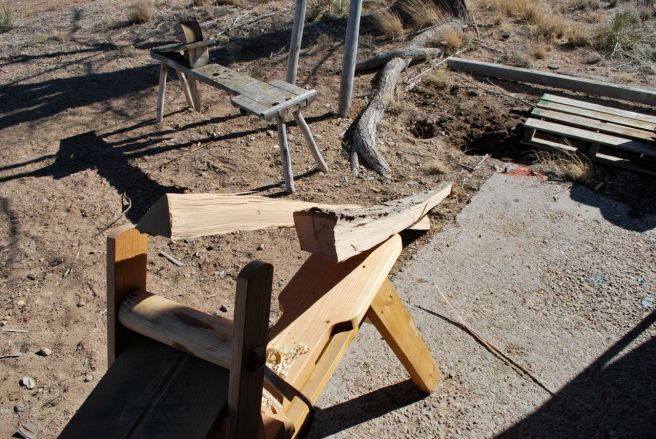
Above are a couple hickory staves cut from the old tree farm in Missouri.  This tree was as near perfect as possible so I intend to get bows from both inner and outer portions of the trunk.  The few bows made from this tree already are fine shooters so my hopes are high.

Although I will be using power tools for much of the roughing out, old-fashioned methods are at least as fast at this stage.  The froe is a handy tool that any green wood worker should have.

This stage is a bit of a break from tradition for me.  This bow is sort of a test in speed and efficiency as I don’t have a lot of leisure time in my week currently.  This stave was split from a larger piece and, as consequently there is some tear-out between growth rings.  The rough back is the cross-over between rings that will need to be smoothed to a single, perfect growth ring before finishing.  As it was very close to perfect, I skipped this normal step and began to roughly mark out some landmarks of the final bow such as the center of the bow, handle, limb width, etc.

The lath I use to mark a clear center line.  I have markings and distances marked for various length bows.  I find a flexible lath and a good eyeball to work better than a chalk line on the curved and undulating surface of rough wood.  This stave is an excellent teaching example as it has almost perfectly straight grain.  The sketch on the bow back is an idealized version of the finished product.  During the shaping process, knots, wavy grain, and twists are taken into account.

It is apparent here that the bow has progressed.  To speed the process, I sawed away much of the excess down to an approximate shape for the finished bow.  Final shaping a tillering commence.  Most of this will be done with a draw knife, spoke shave, scraper, and rasps.

This hickory has been air dried on the high plains of New Mexico for much of the last seven years (damn I’m old) and is extremely hard and dense.  Sharp tools are essential at this point for precision and control.

Lots of shavings like the one above will be generated tomorrow as I ran out of light today.

A note on the the bow itself.  The design is a classic flat bow with consistently tapered limbs.  Although, like many bowyers before me, I experimented and tried many designs over the years, I am returning to basics for the present and a design that has worked for thousands of years. More to follow tomorrow.

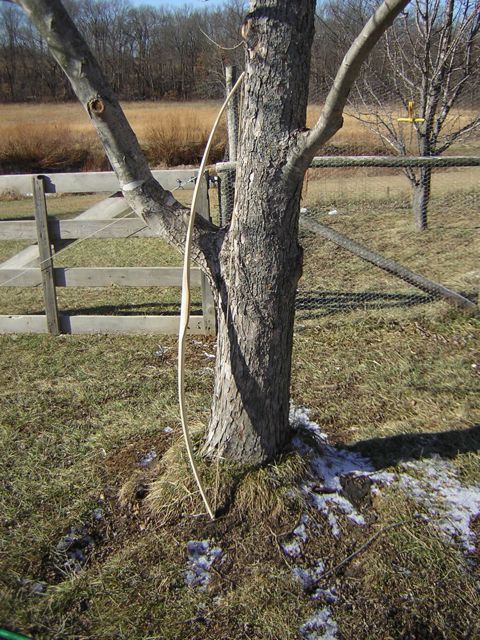
In the mean time, here are a few other more recent bows I’ve made.  Most of these are are probably posted around the site already.

The best laid plans …

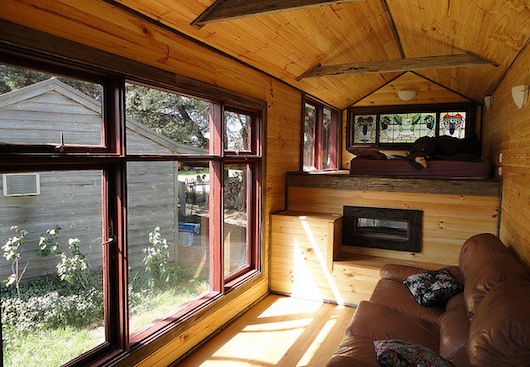
Everything has to begin with a plan, whether its in your head or on paper depends on the complexity and steps required.  While going through some old notebooks from the last few years I came across some early sketches of the vardo in progress.

I know it’s not a great sketch and didn’t scan particularly well but gives an idea of an early stage in the evolution of the caravan as it is now.  I kept some very strict size constraints but definitely increased the height from the early incarnations.  I did not waste the time making an exact blueprint of the caravan as I didn’t see a need.  I also wanted to keep the design flexible and open to change along the way after getting a feel for the space.

Click the image to access more sketches or link here.

House Trucks Again

My appreciation for house trucks has grown immensely over the years.  It’s not easy building a structure that is both light, strong, and wind-resistant.  Caravans, house trucks, and RVs have to undergo the rigors of hurricane weather every time they hit the road and still be light enough to be pulled.  If you are willing to get RV-type mileage from your vehicle  you can convert an older RV, large truck, fire engine, or bus into a fine living platform.  Starting from a link on Lloyd’ Blog I began looking at some very cool house truck conversions.  These have been around all my life and I’m surprised I haven’t started one yet.

These Bedford Fire Engines make beautiful platforms.

The trucks below were featured on the Tiny House Talk web page.

I wouldn’t want to drive these in high winds but the interior spaces are great.  Visit his Flikr page to see more interesting work.  They look very practical and I appreciate the low-maintenance exteriors.

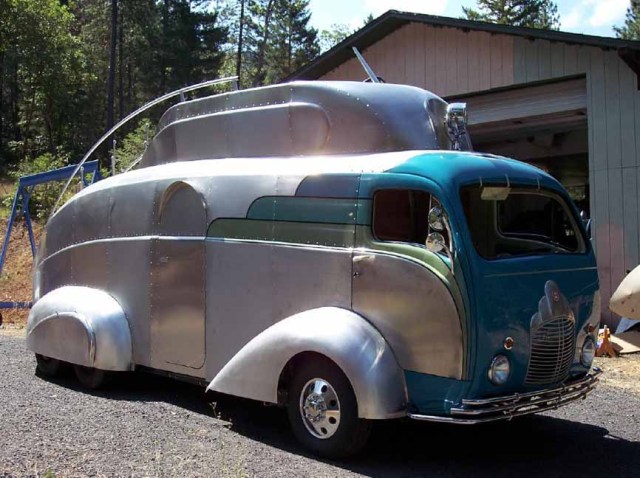
And finally, one of the most beautiful art car builds I have ever seen… The Decoliner.  While on his website, its worth looking at his other projects as well, especiall the 1800 cubic inch, 1000 h.p. tank motor turned art/race car.

Take the chassis from an old RV, add a classic truck cab and a lot of beautiful design work and this is what can happen.  This is my new dream car.  Time to peruse Craig’s List to start looking for a chassis.

Folding Stools and Table

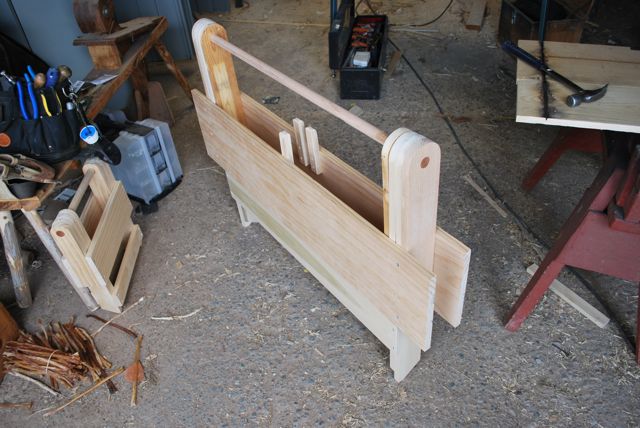
I have had many requests for dimensions of the stools and table so I finally sucked it up and measured some things to include here.  The only ones apparently on the web cost money so here are my dimensions.  Please modify them to fit your style, needs, or lumber.  A little time with some graph paper will go a long way.

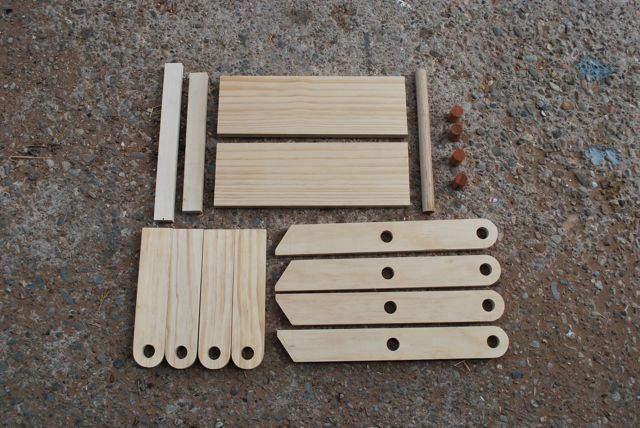
Folding stools.  Here is my cutting list from most recent batch.  The angles of the feet  will have to be worked out for yourself.  Also, not listed are the stretchers (the cross boards between legs).  These are not absolutely necessary but make the whole shebang a lot stronger.  Use whatever you have.

Legs 1×3″: 4 @ 18″
Skirts 1×3″: 4 @ 11″
Seat 1×6″: 2 @ 16″ (can vary substantially.  adjust dowels accordingly)
Dowels 1″ oak: 1 @ 12 3/4″
Dowels 1″ oak: 4 @ 1 1/2″

First, make these parts.
Assemble like so...

Then finish with the rest of the parts (See top photo).

Table test. Suitable for light dancing.

Note in above photos the far side stretcher isn’t in place.  I ran out of wood this day.

Table
For a 28″ tall table:
Legs 1×4″ hardwood: 4 @ 34″
Skirts 1×4″: 4 @ 20″
Top 1×12″: 2 @ 36-48″

Assemble just like the stool.

A little nomad furniture project.  Great for when guests arrive too.  If you are creative, the tops can be cut into ovals, rounded rectangles, or made circular.

Tool Tote

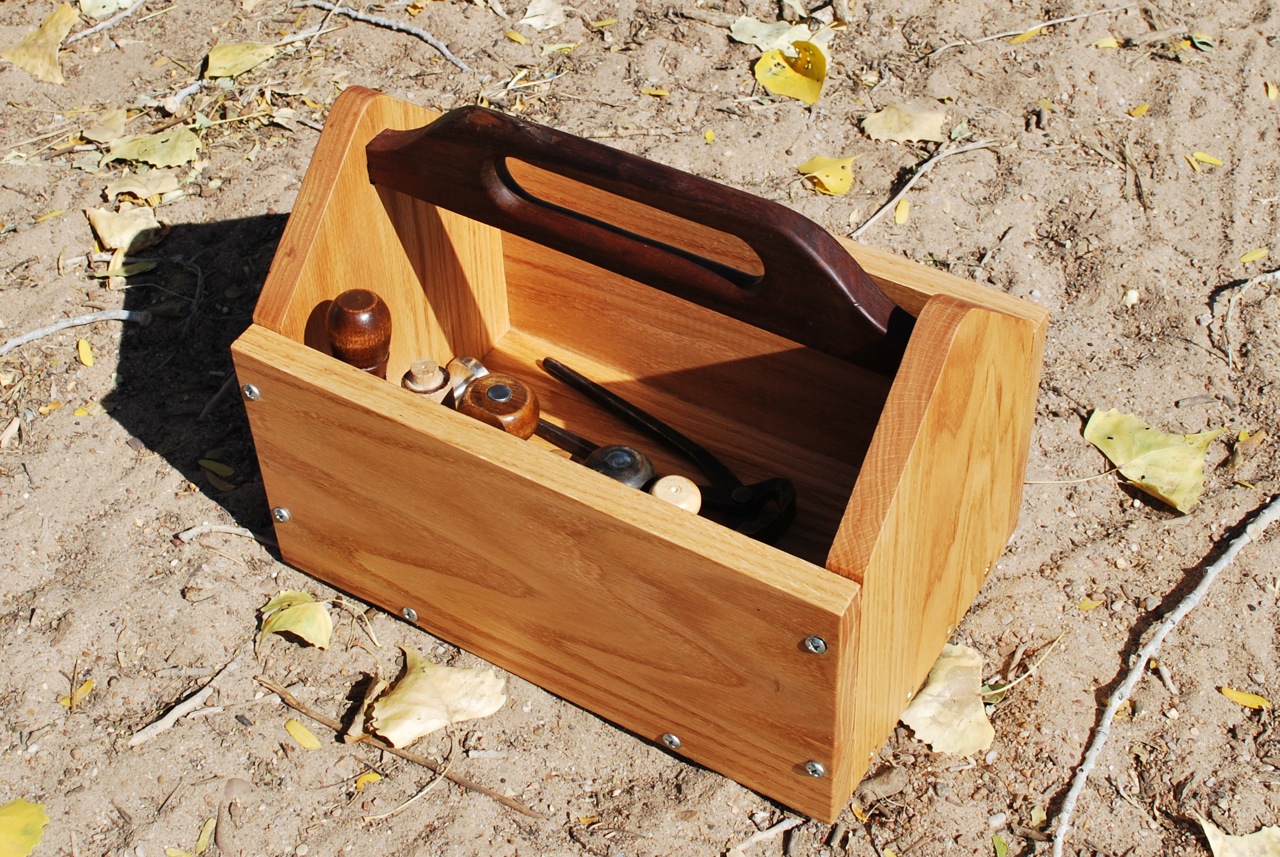
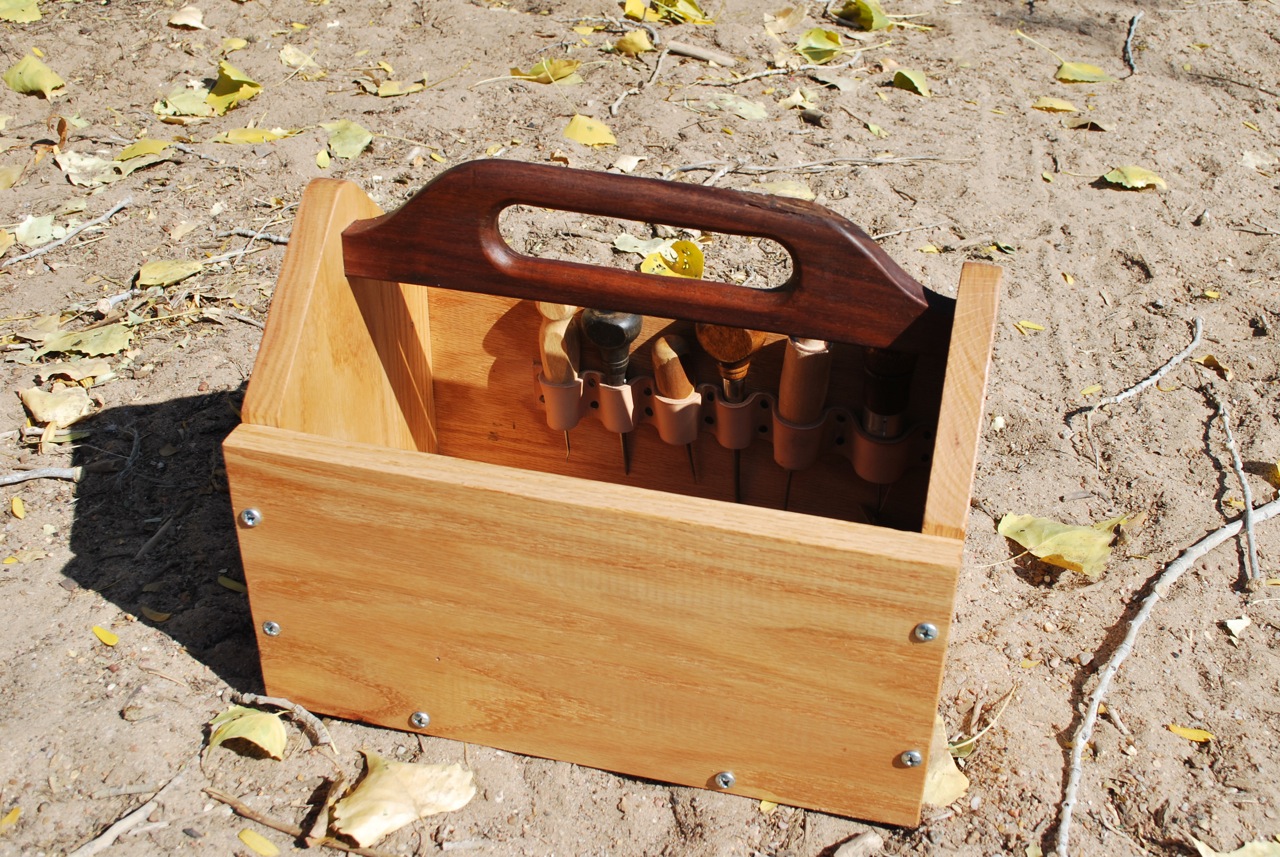
The shoemaker’s tote is essentially done and I had the chance to get a couple photos over lunch.  I will be adding more leather pocketing to hold tools but wanted to wait until I knew where things should be.

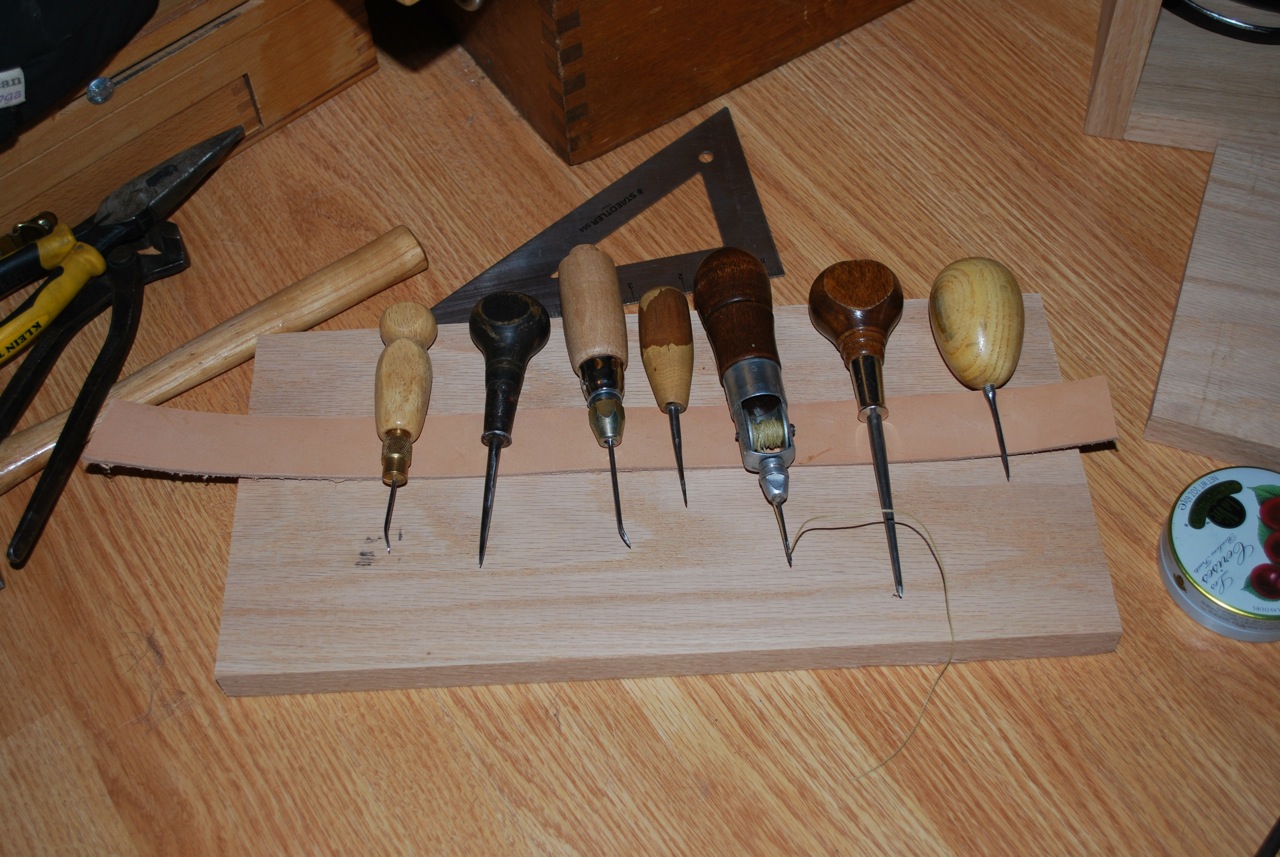
Laying out the tools

This is the inside of the side panel.  The tools that I know for certain need to be handy, not rolling around on the bottom of the box.

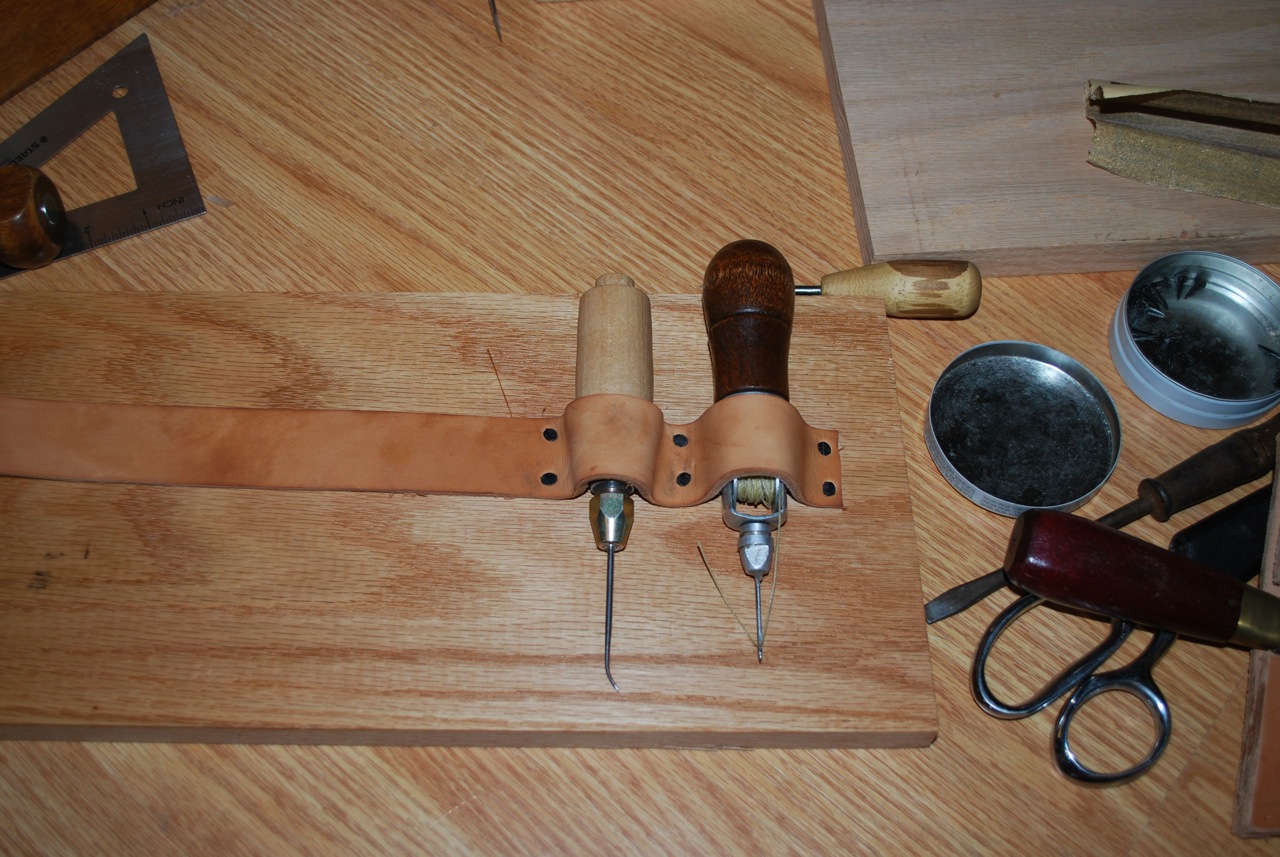
Test fitting a couple tools.  The strap was cut 1 1/4″ wide and is not as long as it should be.  I am using carpet tacks as I had some laying around.  Note that the inside has been given a coat of boiled linseed oil prior to placing the leather.

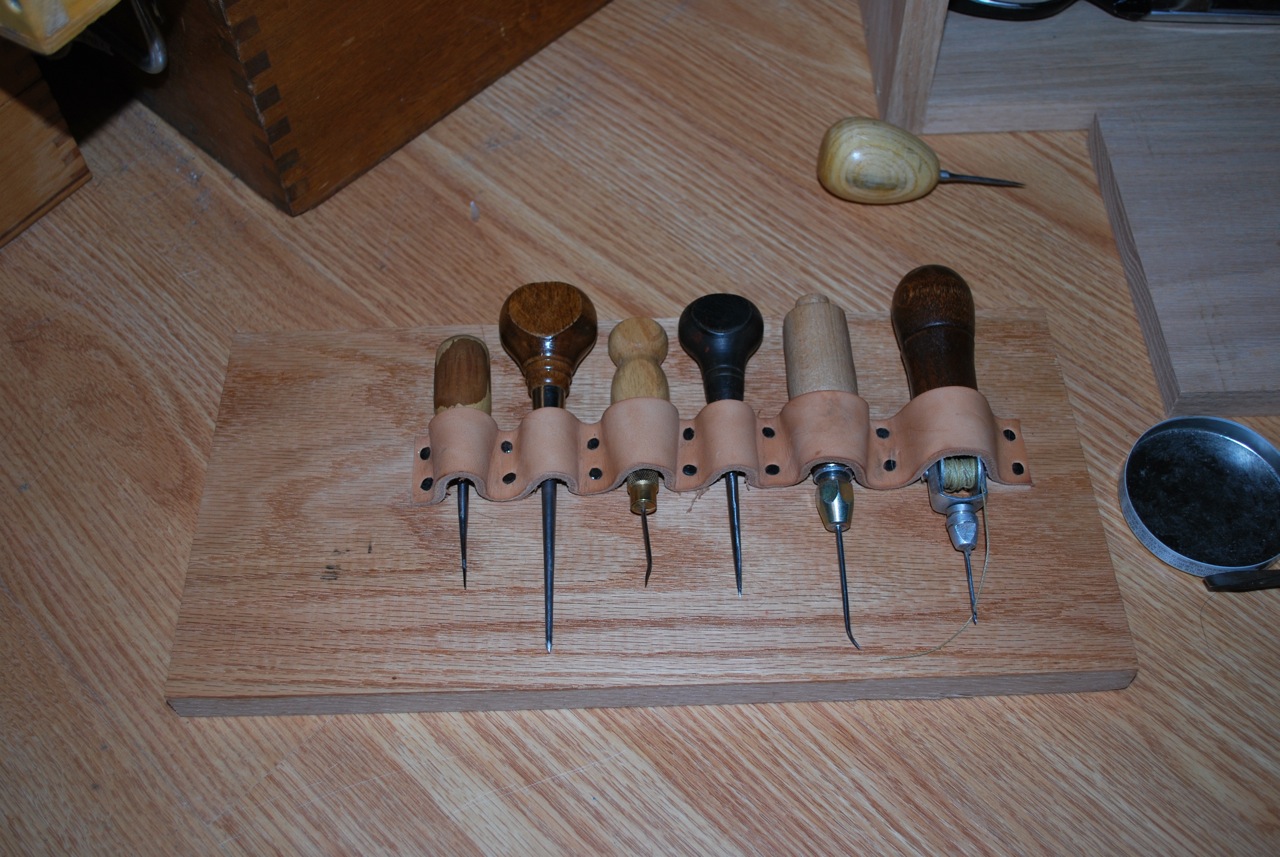
The essentials in place.  The bent awl is a little too deep and barely touches the floor of the box.

I used a few pan head screws I had handy.  They work as bumpers.  The box has been oiled at this point with boiled linseed.

And the other side.

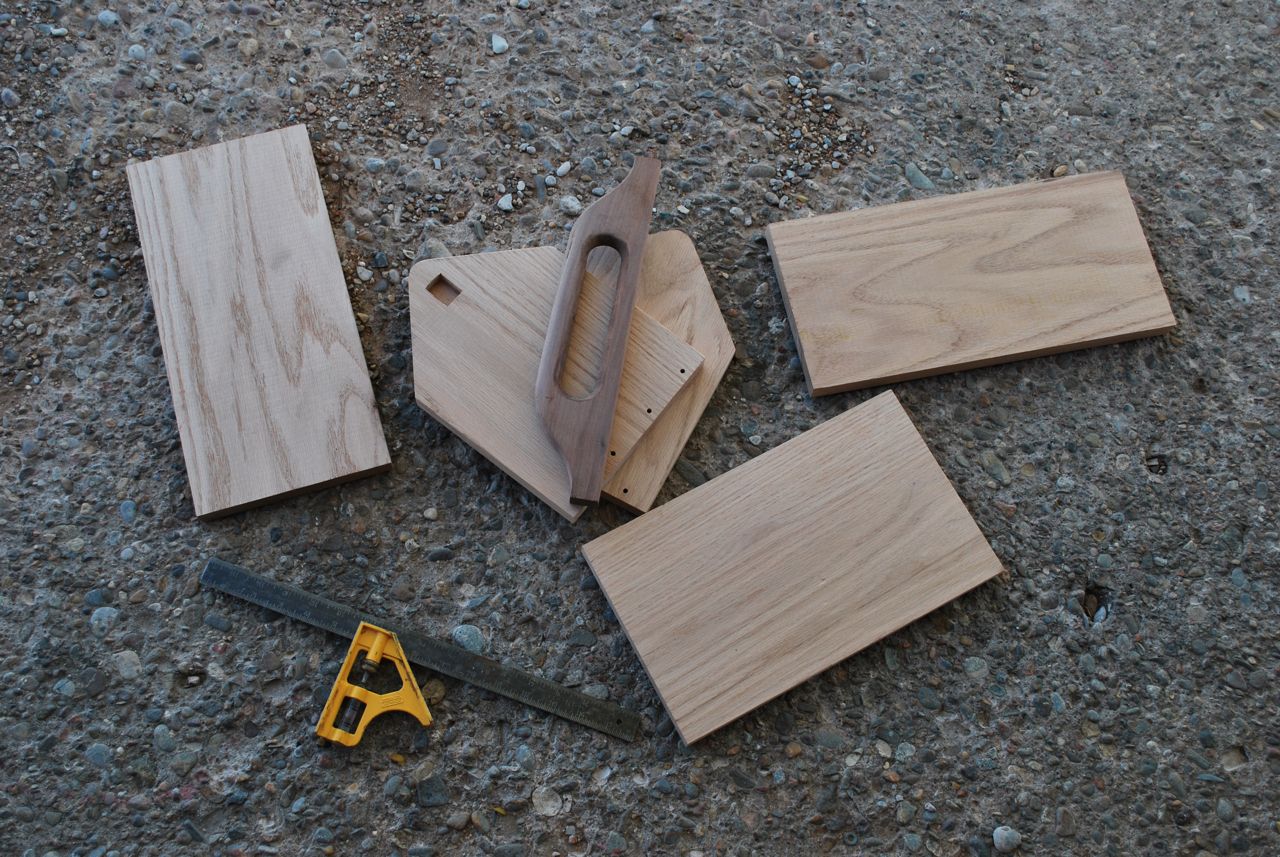
If you didn’t see the previous post, this is the plan photo.

Three rectangles, two pentagons, and a handle of choice.

Final dimensions are 14 5/8″ long, 9 1/2″ wide, 10 3/4″ tall.  I wanted to be able to comfortably fit a twelve inch ruler in the bottom.

Shoemaker’s Toolbox W.I.P.

Lunch-time post:

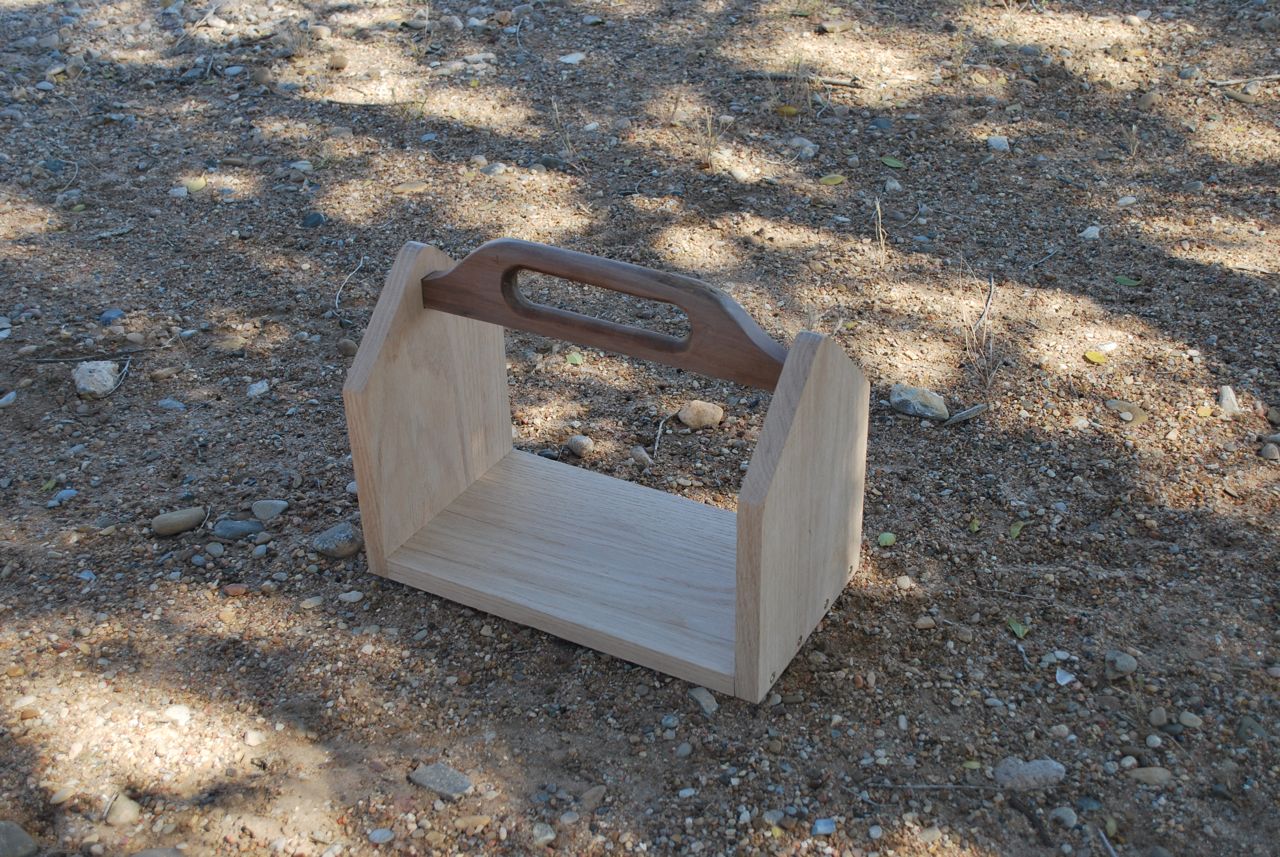
I began working on a shoemaker’s toolbox this weekend.  It’s based on an eighteenth century design but probably goes back further.  It will have leather “pockets” for the awls and some long tools.  The difference between this and a carpenter’s box is in the upright storage to keep the tools very handy.  The box I based it on can be found here: http://aands.org/raisedheels/Other/Toolbox/toolbox.php.

No complicated joinery other than the half mortises for the handle.  The sides are off still to tack in the leather pockets.  The original was nailed together but mine uses wood screws (brass).  Material is red oak with a walnut handle.  More to follow.

Tool Museum

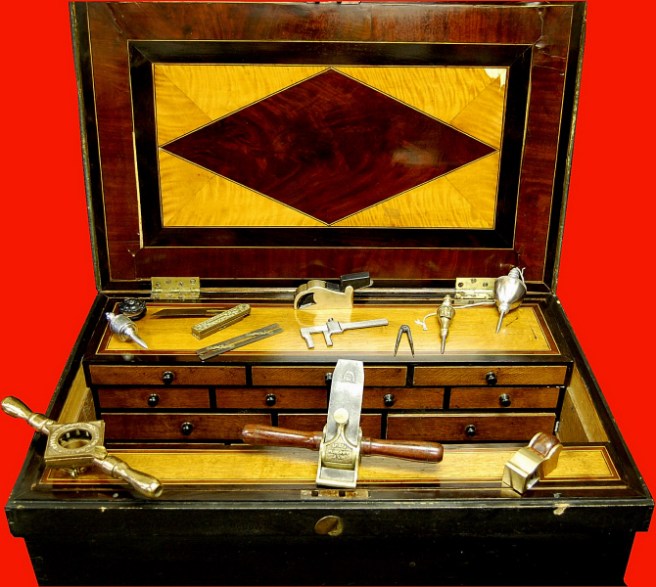
If you love beautiful tools (if you don’t, you should) there is a remarkable web page devoted to some remarkable historic tools.  I hope to see these in person someday.  I hope  I get to Michigan or find him on the road sometime.  He’s got a pretty amazing paint job on the trailer too.

Click the ship plane to open the museum in a new window.

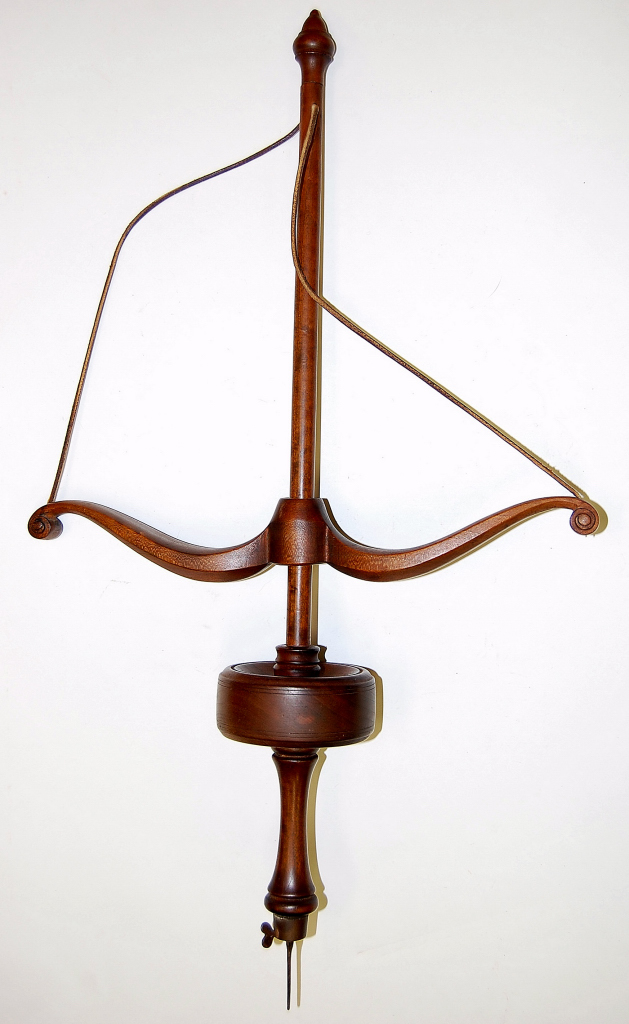
I really like this drill.  I think I need to make one.

Thank to the Village Carpenter (http://villagecarpenter.blogspot.com/) for having a link to the museum.

Quick and Dirty

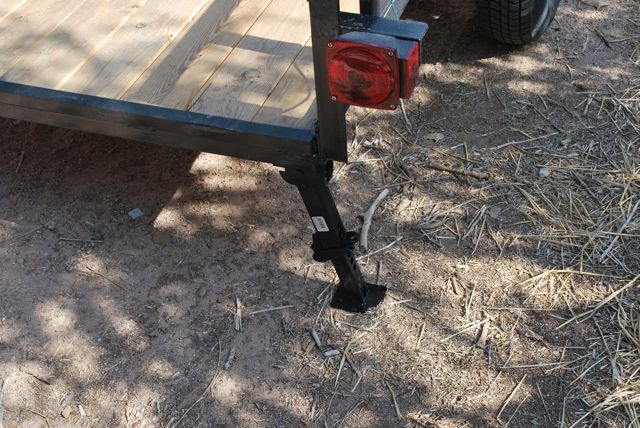
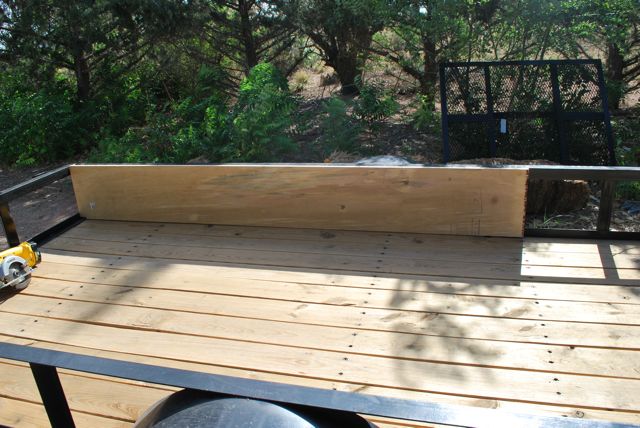
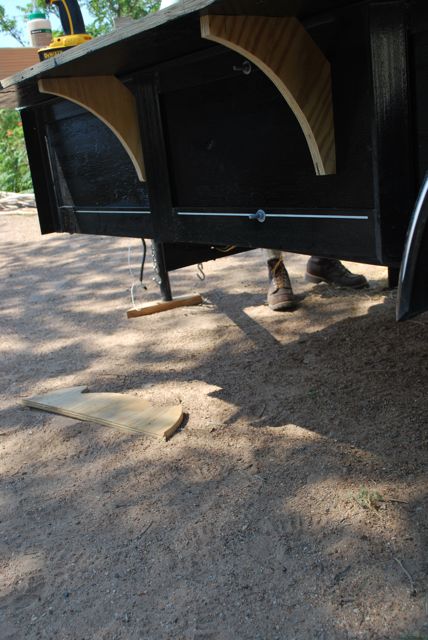
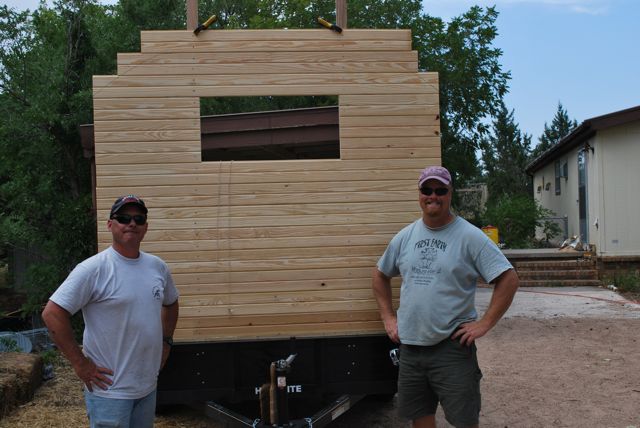
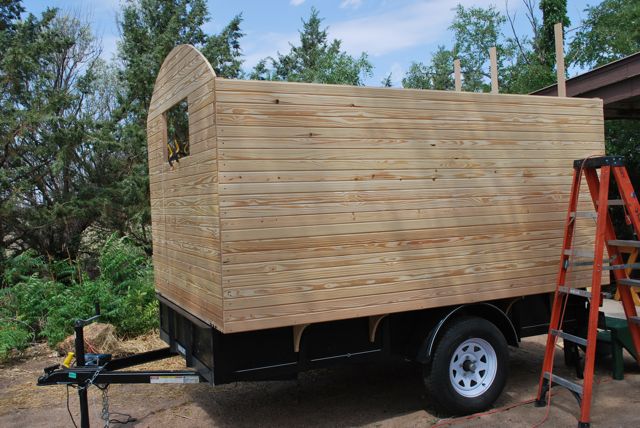
This was a quick and dirty build we were talked into a couple of weeks ago.  I don’t like to rush these things but the builder’s time constraints meant this was the only week to get this done before the winter.  It does show that the basic build can be completed in a very short time.  The basic dimensions are 5′ x 10′ at the floor and just over 7′ wide at the ledges.

I think it came out alright in the end.

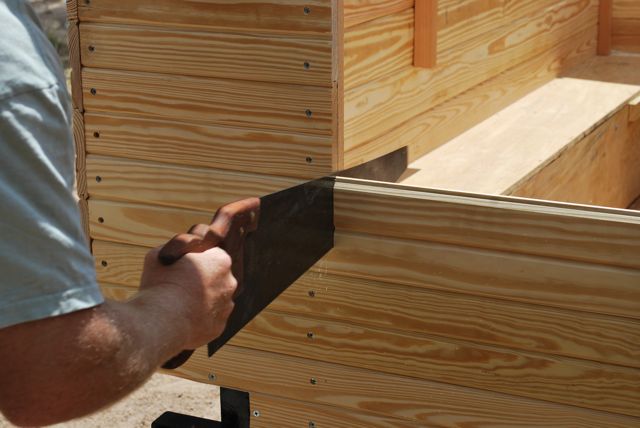
Here is a small gallery of images showing the build.  My daughter and I will try to put up an Instructable in the near future describing the process such as it is.  Enjoy the photos.