
Musical family
Adventures of an Imperfect Man In Search of a Handmade Life

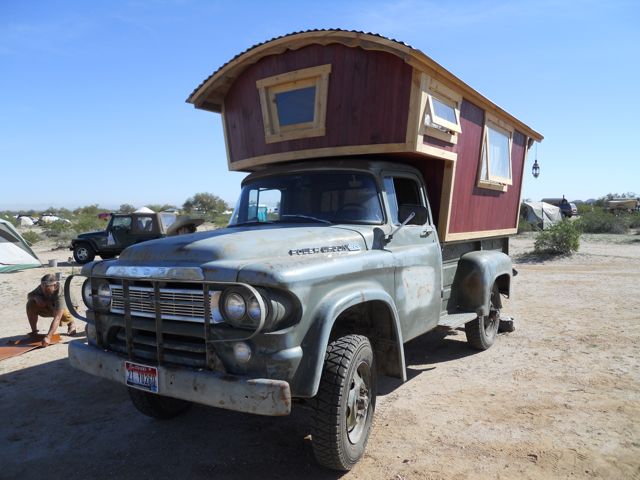
As unveiled at Winter Count 2014 near Maricopa, Arizona.
 This classic kite shaped beauty is built into the bed of an old Dodge Power Wagon. Like all projects of this nature, she’s a work in progress but is already and awe-inspiring thing of beauty.
 The layout is a traditional elevated cross-bed with a kitchen down one side with additional storage and seating down the other. A clever table is concealed under the counter and pulls out to be utilized from side-by-side seating.
 The tail gate porch is an excellent addition to the space.

 Best of luck to both Jed and Hilary in their future adventures.
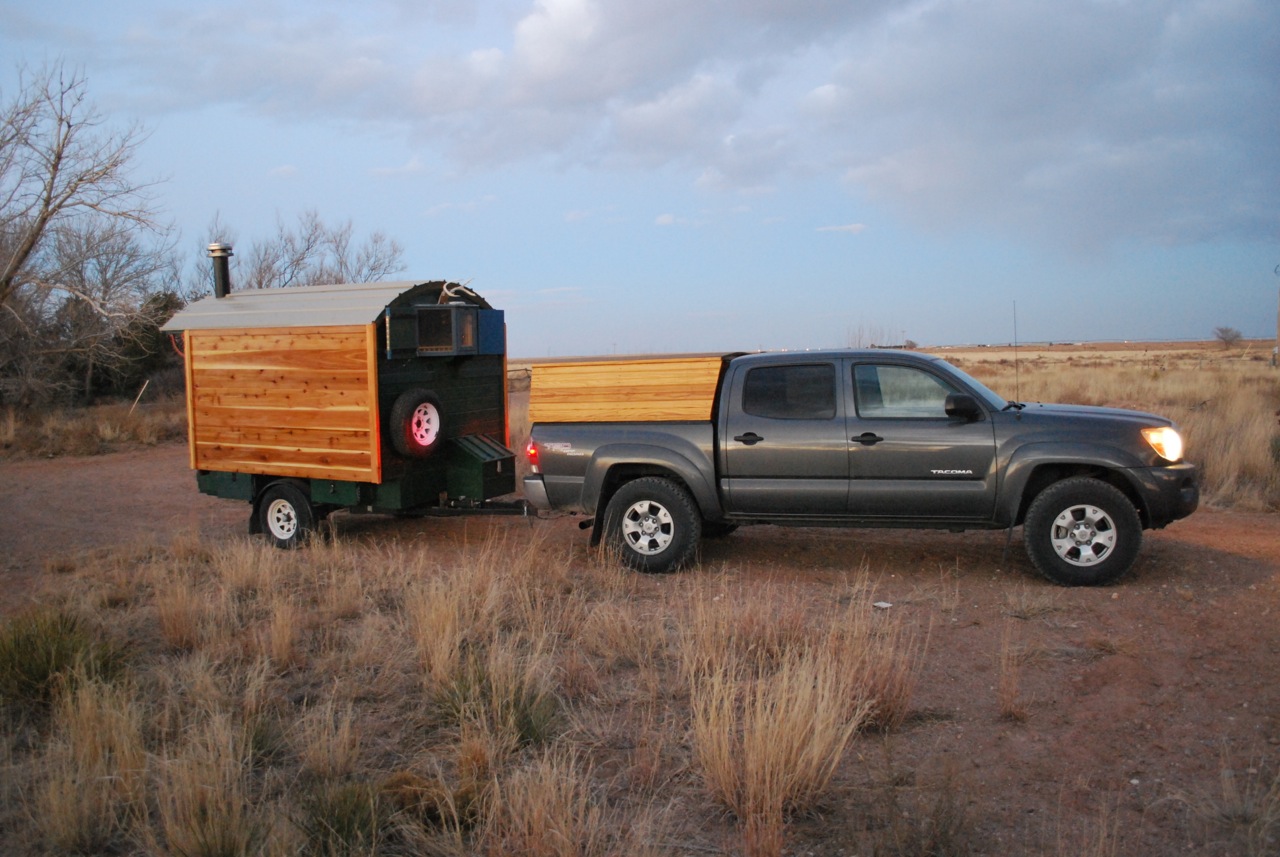
For those who know the Snail, you might notice something different. I’m making a little post about the new look but I just loved the sunset picture from today after work. I have a very short window of light at the end of the work day but try to use it best I can. More changes to come in the very near future.
I am hating my job so much right now I’m ready to jump in and run away. Bad people can really ruin your day no matter how much you try to make things better.
I’ll get more pictures up soon.
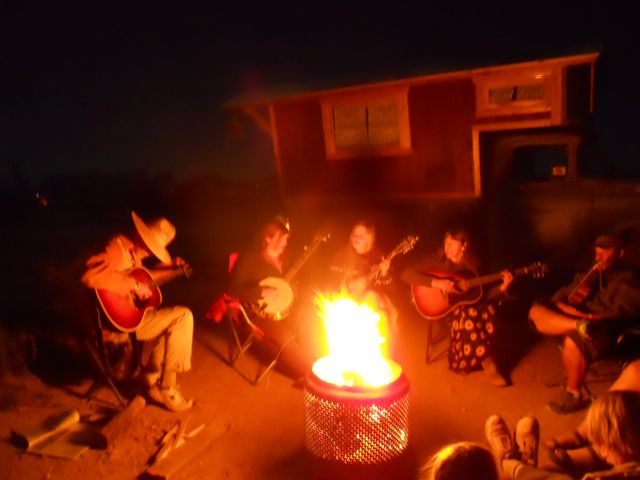
Last winter I had an important epiphany about myself as a musician. I am under nor delusion that I will ever be more than a closet or campfire player. For me, for now, that’s going to have to be good enough. Although I love the fiddle more than any other instrument, I went back to my roots and picked up a Deering Good Time five string banjo a couple years back to see if I couldn’t revive my banjo playing. I hadn’t really played much in over a decade but discovered that not only did the brain still remember some old tunes, but my big, beat-up fingers were actually still suited to it. Ham-hands I’ve heard them called!

After playing the “Good Time” for a couple years, I felt I outgrew it as a player. Don’t get me wrong, it’s a great instrument for the price (ca. $650), American-made, and travels well but I just wanted a little more substance and a thumpier traditional sound. Not being able to afford anything fancy, and my playing not really being up to any professional par, spending a load of money I don’t have was out of the question. It became apparent to me that it was time to make something better myself. This isn’t quite as outlandish as it may seem as in my woodworking days in my early twenties, I made a couple banjos, a handful of mountain dulcimers, and some mandolin parts that were fair to partly decent instruments. Anybody who knows me knows I hoard parts and hardware so fortunately I had a set of tuners, some fret wire, a tension ring, and a bracket set for a banjo (obviously the universe conspired for this to happen). For the rest, a quick trip through the Stewart-MacDonald catalog located the missing elements (e.g., a White Lady Vega-style tone ring, brass arm rest, bridge, and tailpiece, as well as a maple neck blank and rosewood fingerboard, and a calf-skin for the head).
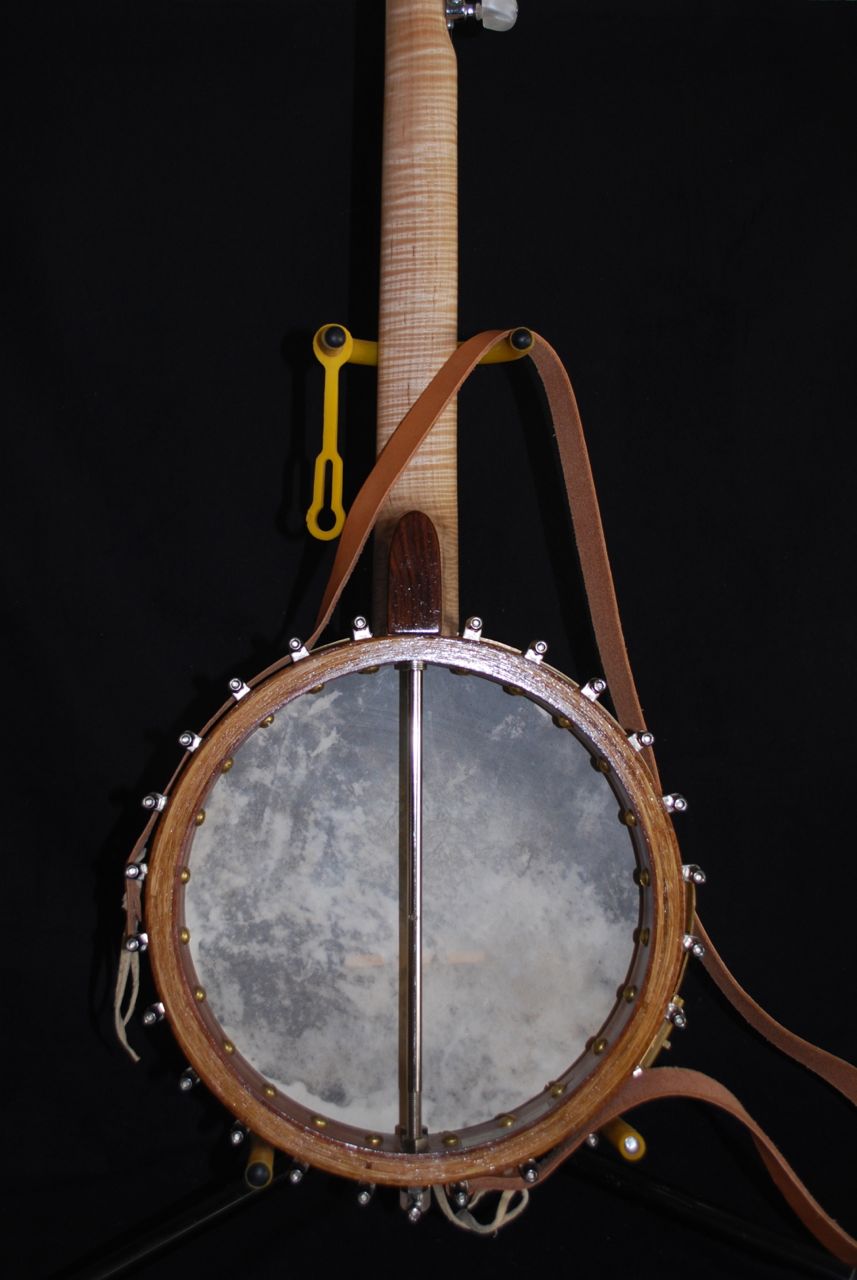
 Unfortunately, time and energy were against me when I made the initial build last summer. I was traveling and teaching for the university while working on this so I didn’t document the process. So, I essentially built this one twice. Once, to have something to play while traveling over the summer, then a rebuild in the fall to tweak the set-up and put a better finish on it (tung oil). The photos don’t really do it justice here but hopefully, it gets the idea across. Making an instrument is a doable thing.
I won’t even attempt to describe the process and there are many better instrument makers who have done this before me (see the Foxfire books, Irving Sloane, Earl Scruggs and plenty of others).

To make a banjo, you essentially need a few, more-or-less mechanical parts, then find a way to attach them together in a fairly precise and meaningful way; that is to say a neck, complete with a fretted fingerboard and tuners, and a drum-headed hoop of some type. Having some experience with steam bending, this part was not as intimidating as it might seem the first time around. My choice for the body was a hickory core with walnut laminates for the outside.

These pictures already show the six months of use and she already needs a good cleaning. As can be seen though, there’s little ornamentation on the instrument; no inlay or bindings, just an octave marker on the side of the fingerboard. I did steal the peghead design from Earl Scruggs’ book where he stole and printed the Mastertone design himself. It was just too classic.
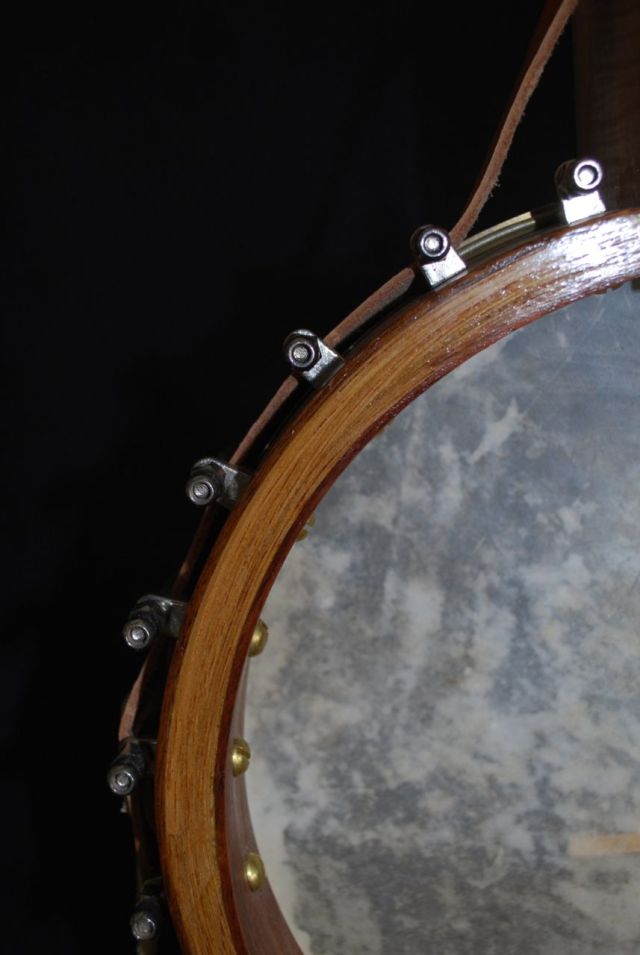
I had intended to veneer over the back but after completion, I liked the raw look that shows the construction. Maybe I’ll change my mind about this later but for now, this is it. The calfskin head can be a finicky when traveling as it is affected by humidity. Some players remedy this with a thin layer of spray-on silicone. I may try this in the future just to see how it works.

I rarely see a reason to hide a beautiful wood grain.
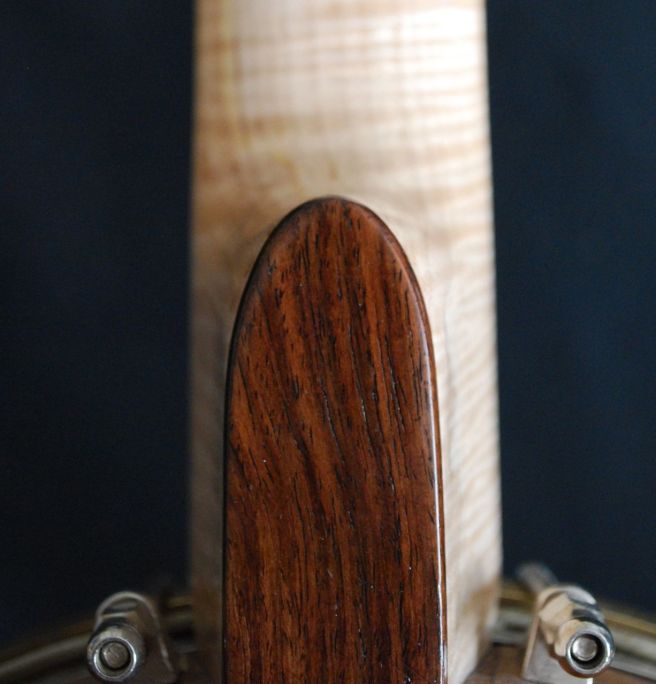

The components that make up the pot of the banjo are illustrated above. From right to left: brass tension hoop, edge of the rawhide over wire, nickel-plated tone ring, tension brackets, and wood hoop. the armrest is just visible in the lower right.
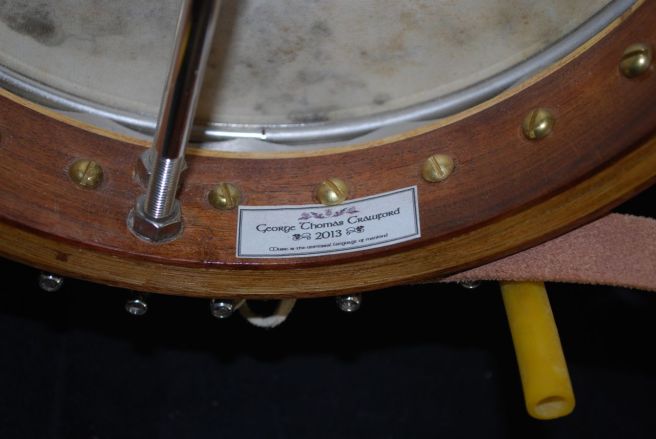
It’s remarkable how fast the weight adds up. 24 brackets, brass screws, tone ring, tension ring, tuners, and armrest make for some significant weight. I think it’s a good idea for any artisan to sign their work, even if it’s never intended to sell. This separates the hand-crafted from the mass-produced and show the care and the soul that goes into a hand-made work.
Now, time to practice.
This is one of those “in progress” posts.
The little home is never done. I don’t expect it ever will be and I think that’s great. Trying to approach a balance that will be perfect enough to live in yet stay within the reality of time, money, and general laziness. Since the beginning, I have wanted an exterior kitchen on the vardo but, at first, I was obsessed with size and weight (or lack thereof). Over the last few months I decided to jump in on the project but, being determined to spend as little money as possible, I awaited materials to appear.

Still determined to keep the weight as low as possible, I piled up the kitchen basics on my floor and figured out an approximate volume. Two small stoves, a kettle, coffee pot, cafetiere, a couple of cooking pots, tea tins, coffee cans, and some miscellaneous space. A few essential cooking utensils for good measure. Not much really. I decided I can store the less frequently used implements inside the truck or in the tool boxes of the wagon. With that examination made, the final design was almost infinitely more simple than my initial thoughts (which contained shelves, niches, and little drawers that only add weight but some real coolness, to the overall box). These may be added later though. So here’s what I’ve come up with so far.
 Upcycling some old pine 1 x 12″ shelving boards, I decided to use these as the basic building unit and the building began. Essentially, I created a box about 33″ tall by 21″ wide with two morticed-in shelves. I wanted a fold down shelf to cook on when on the roadside or at a temporary campground and for this, I found a couple hinges off an old secretary desk (I save lots of hardware) and old steel drawer pull that came in a box of junk from some auction years ago. To attach the door, an old piano hinge that needed a little scraping a brushing to remove some ancient enamel paint was located and brushed up.


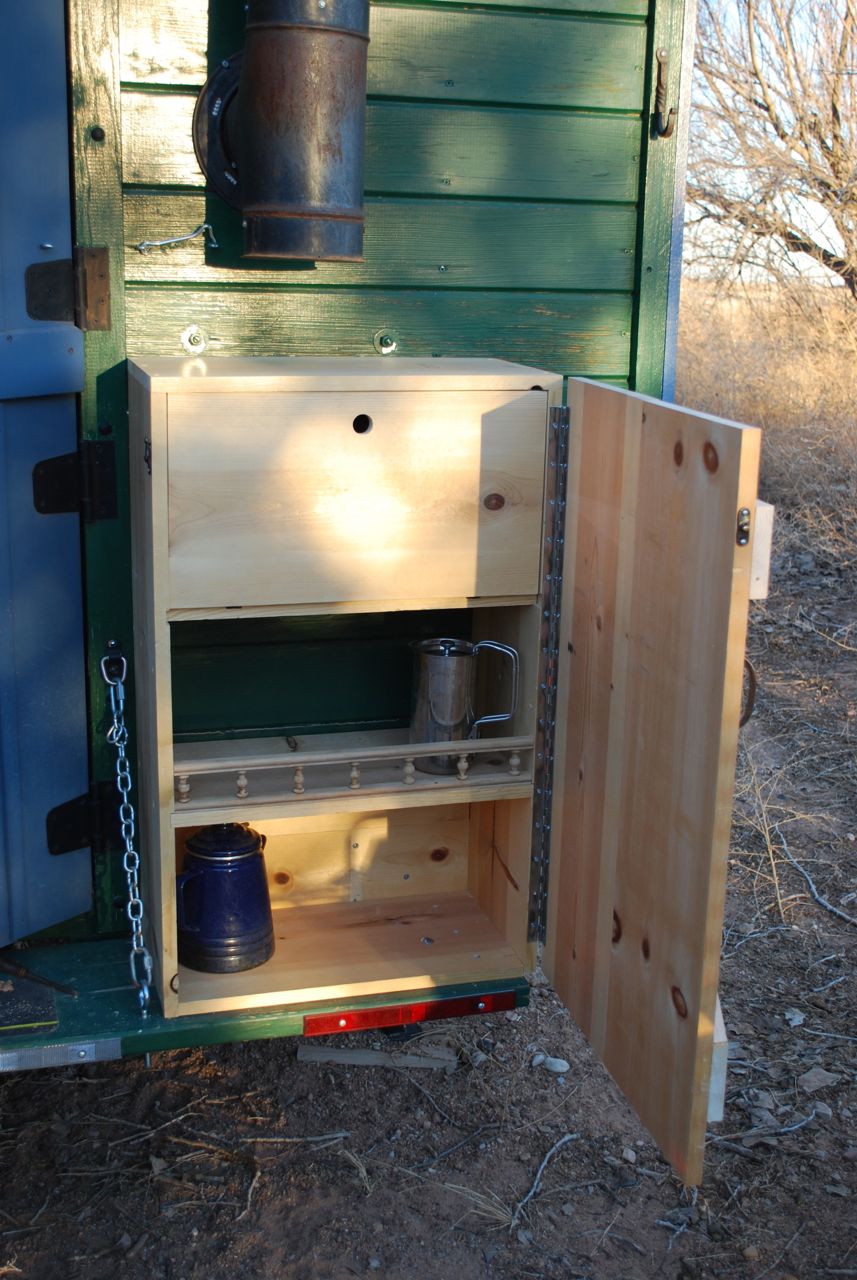


I should mention here that I did buy star-drive, stainless steel screws for the construction so I’m now into the project for about $6.00 of real money. More to follow soon I hope!
 I couldn’t help but post this… Found on TheRoadToGlamperland Facebook site. Built on a Morris Minor of all platforms. As they say, “why not?”
 Stanley Model 71 Router Plane. Tools of a simpler time.
Popular Mechanics, 1927
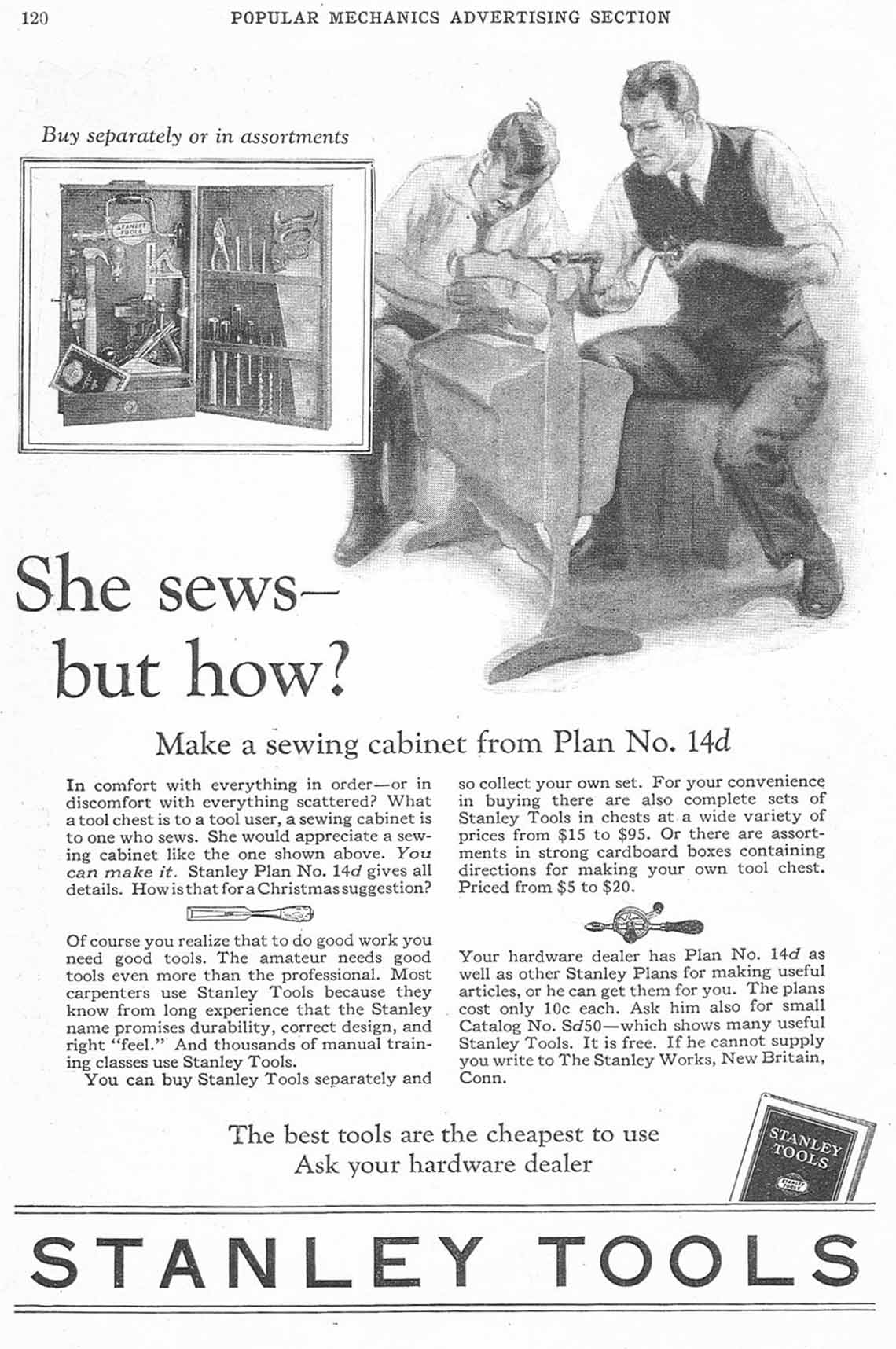
At least the son looks like he was allowed to loosen his tie!
aking a concept is much more fun than just making a set of plans for a woodwork project.
ere are the plans for a breakfast shelf for 6 that I made back in 2010, complete with cutlery drawer, shelf for the egg cups and juice glasses and pegs for the coffee or tea cups.




 Preindustrial Craftsmanship