After several requests for information, here is my short list of inspirational sites found on the web. Culling the web for Vardo style so you don’t have to. I will try to morph this into it’s own page soon as a place to add more links as they become available.
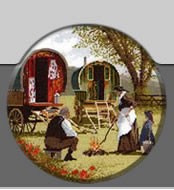
Romany and Traditional Style
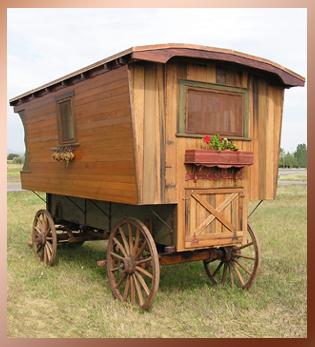
Great Historical ResourceGypsy Vans by Roth. Beautiful traditional waggons with loads of information about types and styles. Amazing stuff here.Nice, garden variety caravans. These make wonderful retreats and getaway spaces.Solid, permanent and towable vardos from Windy Smithy.Ingham & Fallon, restoration, new and used. The images alone make this page worthwhile.
Sheepherder Wagons
Plan to spend some time on this website. Anvil Wagon Works in Livingston, Montana makes all types of traditional Chuckwagons, Sheepwagons, and Buggies. Lot’s of great photos inside and out.
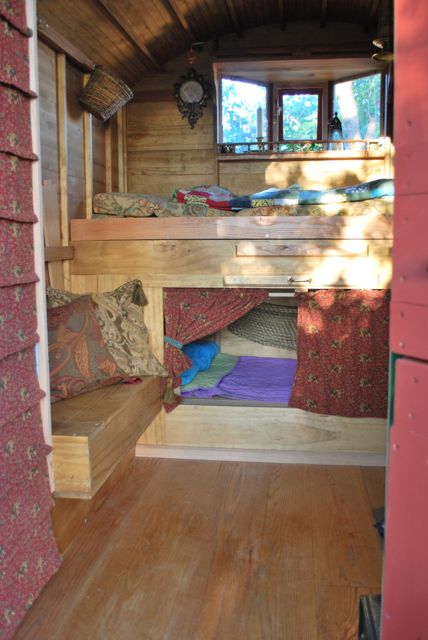
This image links to their Sheep wagon page but there is so much more here. Serious craftsmen of all things traditional Wagon and Wheel related.The Lazy AA Guest Ranch and Builders of towable Woolywagons.Idaho Sheep Camp. This is the interior of just one of their many featured wagons. You can’t be more authentic than this. I want one! Pages of images to inspire the builder of tiny homes.Old Western Wagons are builders of Sheep Wagons, Vardos, Freight Wagons, and other horse-drawn vehicles. Located in Seattle, Washington.Engel’s Coach Shop Joliet, Montana. Master Wheelwright and makers of horse-drawn vehicles.Plankbridge Shepherd Huts from Dorset, England. Traditional huts, not for long distance travel but fine for short moves. Nice designs.Blackdown Shepherd Huts. Handcrafted in Somerset, England. Posh and spiffy little cabins with lots of style.Everything you need to know about historic Shepherd Huts.Ranch Willow Wagon Co. builds and restores wagons to the highest quality standards. Company owner Lynn Sedar has been in the wagon business for over 20 years and is also an acclaimed artist, design consultant and furniture designer. Wagons designed by Ranch Willow Wagon Co. are the ultimate blend of history and art.
French Style
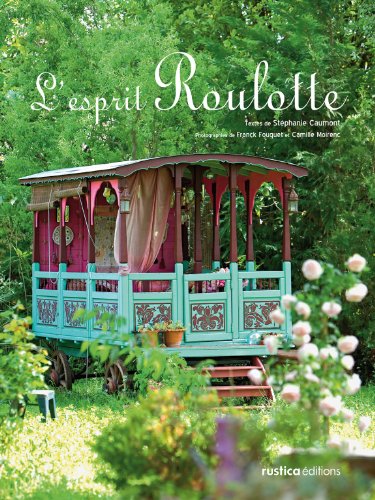
In French. The website contains some good old images as well as information about various types of travelers’ wagons (a.k.a. Roulottes).
An Interesting mix of Hippie vehicles from Britain and Europe:
Continuing my search for backpacks and rucksacks throughout history, I keep coming across various types of boxes and baskets strapped to people’s backs. While querying the web today for variations of the Asian pack box, I saw this nifty solution. Cheap, easy to construct and extremely functional.
I can imagine this as an excellent platform for a street performer or busker. Solidly built, this can be a table or a seat and provides a high degree of protection for the contents. This one is very simply built and harkens back to a medieval concept but note the sweet dovetails holding it together. I just want a peek inside. I would be sorely tempted to fill it with compartments.
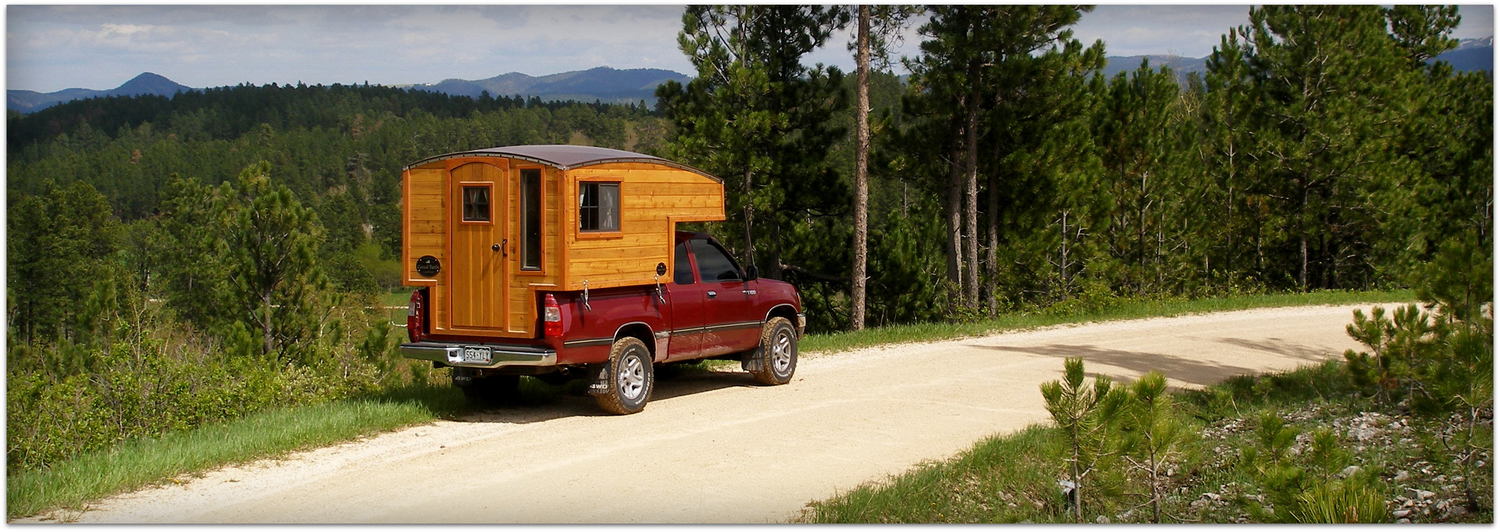
Not terribly far from the Paleotool secret lair there toils a designer and builder of unique, hand-built, small campers. Inspired by the lack of uniqueness and beauty in mass-produced campers, Peter Pavlowich put his Wood Construction and Design degree to work to create beautiful, minimalist campers for small pick-up trucks under the name Casual Turtle. These are real works of craftsmanship and simplicity and are reasonably priced for those who cannot or do not want to build their own. I particularly like the compound curves of his roof designs.
“Casual Turtle Campers was founded on the belief that wood is good, small can be comfortable, and that there is still room for simplicity in this increasingly complex world.” Peter Pavlowich, owner-designer-builder, Casual Turtle Campers.
Building on his past successes, Peter has now branched out into trailer-caravan design using the same principles as his truck mounted campers.
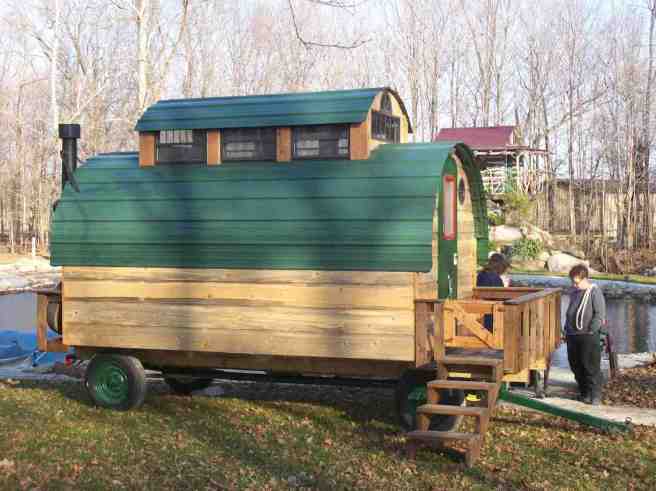
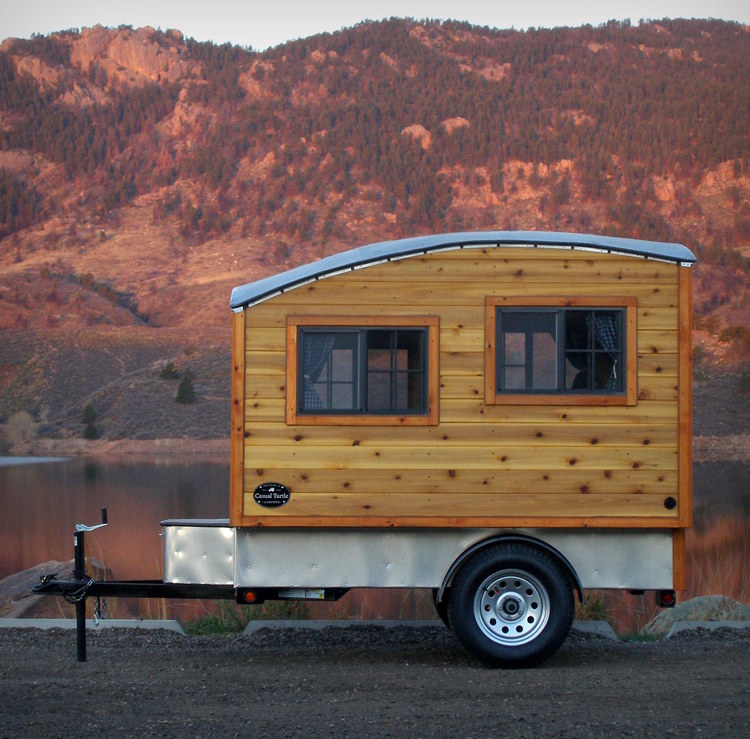
Meet the new Terrapin from Casual Turtle.
The new design packs a lot thought and detail into a small package. The new Terrapin is about 8’2″ long by 6’9″ wide (nearly identical in dimensions to the vardo known as the Snail). First of all, I love the roof design and have decided that if and when I build my next vardo, it will have compound curved roof like this.
“Tiny and simple” is the mot juste of this design, containing all the space you absolutely need and not a scrap more. Like the Snail, this beauty could easily accommodate two adults on an extended journey.
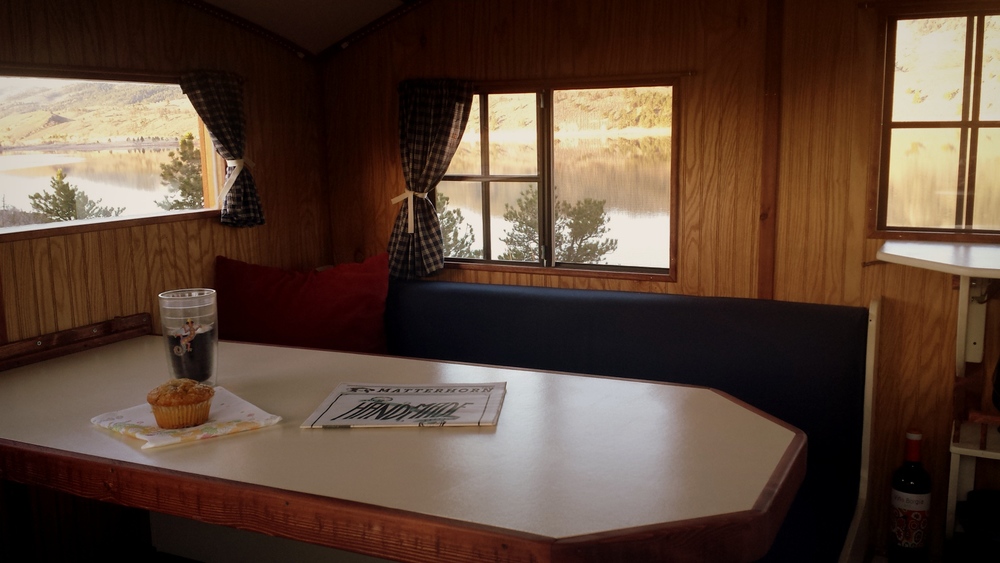
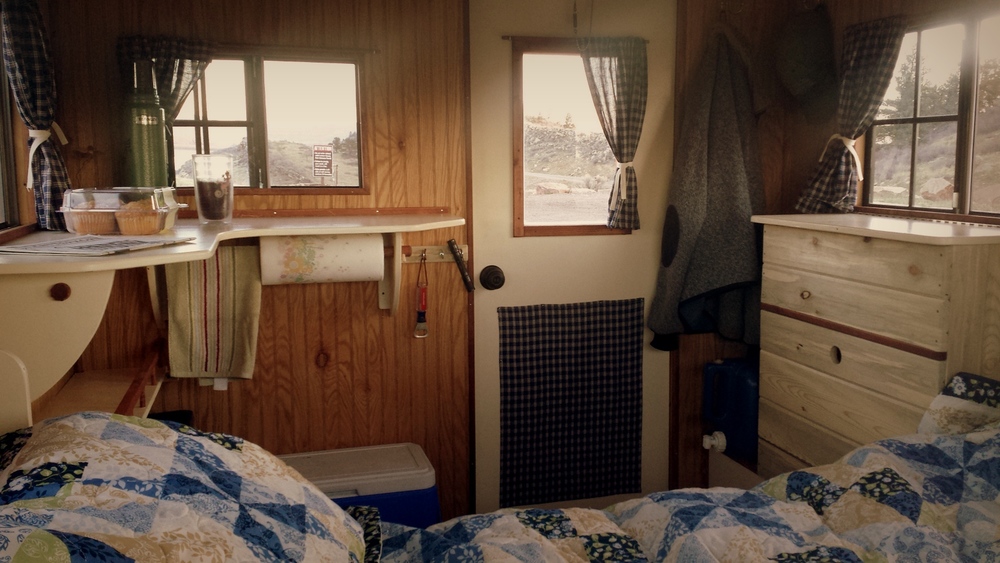
Taking inspiration from early twentieth-century design, the interior is a simple kitchenette that converts to a bed. A rich, wood interior keeps it classy and abundant windows provide light and views.
There is plenty of room for customization and in my opinion, maybe even a heat source.
Here are the spec’s from Casual Turtle’s website:
1,360 lbs
5’x8′ custom trailer frame from Sport Trail (Loveland, CO)Professionally-sprayed Reflex truck bedliner undercoating
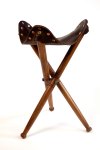
Here’s an interesting piece of “gone native” campaign furniture. There was much bad about empire building (and still is) but the bringing together of foreign cultures often created new and interesting art and craft styles.
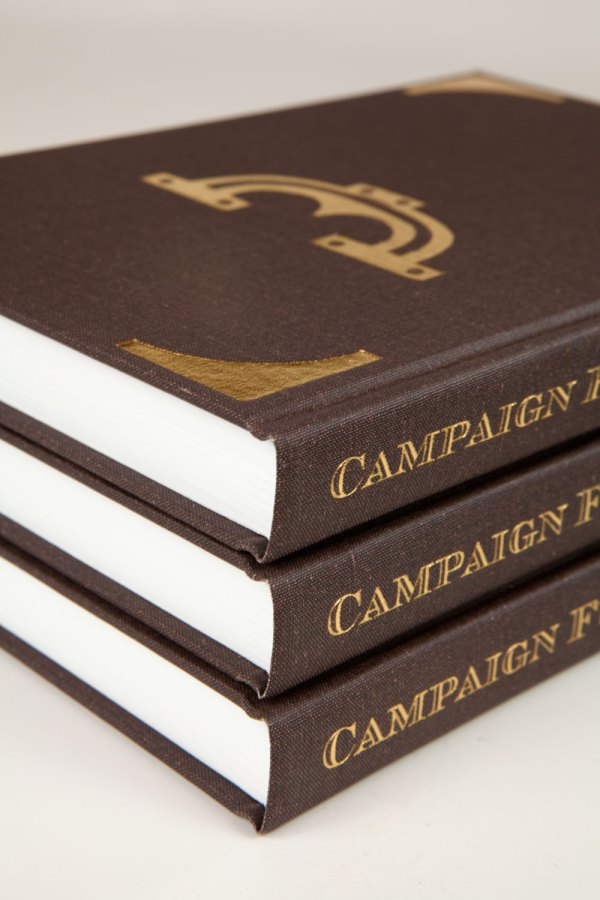
While on the topic, if campaign furniture is of an interest, or if you want to even know what it is, head over to Lost Arts Press and check out Chris Schwartz’s new book on the topic.
Here are just a few designs from the genre known as Campaign Furniture taken from Schwartz’s webpage. Click the link below to go right to his book store.
From the Road to Glamperland Facebook page. A very interesting all or mostly wooden home built camper trailer. It has two simple slide-outs, a nice little kitchen set-up and I suspect the benches fold out to be the bed. I really like the water tank on the roof. I have been looking for a vintage looking tank to use for quite a while now but so far, no luck.
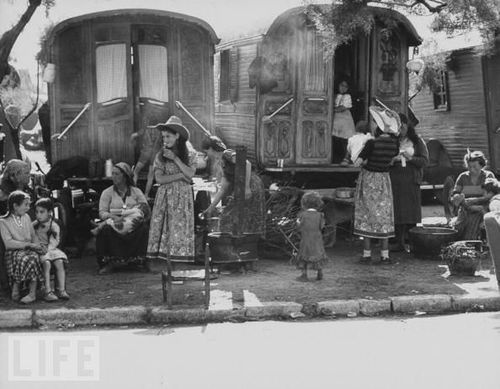
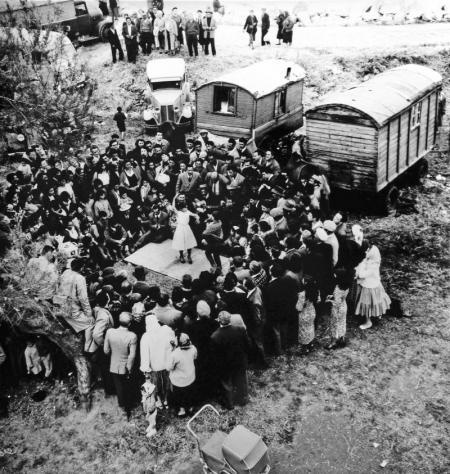
This is part of a series of images, mostly Romany, Irish and Scottish Travellers collected from around the internet. Many of these historic images found on the web are without citation. When a clear link to a source is found, I try to include it. If a source is known, please pass it on and I will gladly include it or remove it if necessary.
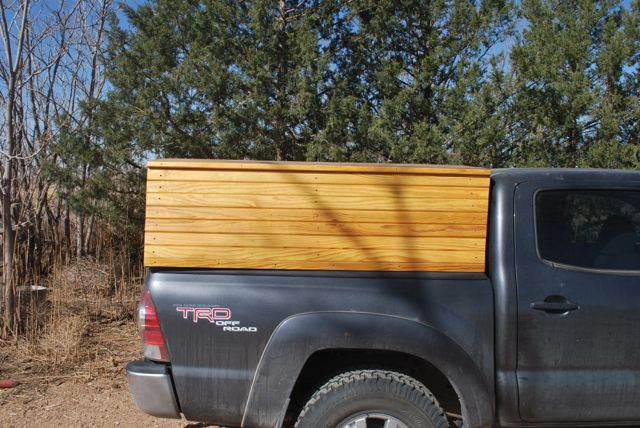
A couple recent inquiries prompt this quick post about a wooden truck topper. The question that came up a few weeks ago was “why would you make a topper instead of just buying one?” Well, I’m not wealthy and making something costs a lot less than buying it. Also, if you are a woodworker, it’s easy to end up with surplus wood from projects. Often, the next project is virtually free. That’s what happened here.
Sorry for the grime in this photo but I live on the southern Plains. What can you do? I tried to streamline it and match the curves of the pick-up but honestly, I didn’t put too much effort into any aspect of the topper. I just needed something to get me through last summer but I’ve liked it enough that it is now a fairly permanent fixture. The arc of the roof approximates the arc of the truck, created by eyeball and a pen on a board. There is no better tool than the human eye in the creative process.
While making the shell, it became apparent that the Toyota bed tapers to the back. I decided, upon reflection, to be lazy and just ignore this inconvenient truth and keep the shell square. I did, however, match the front of the shell to the slope of the cab and allowed the back of the roof to overhang slightly.
This interior shot shows the three frames and sill that are essentially, the skeleton of the whole thing. Also, highlighted is the eternal mess in the back of a working truck.
Here’s the basic part list that I used: 2x4s for side and front sills, 2×4 frames, tongue and groove yellow pine for sides, front, and hatch, western red cedar roof. Lexan front and rear windows, hinges, closures, and various fasteners to hold it all together. For the roof exterior, 30# tar paper and a canvas truck tarp. The whole thing is varnished with exterior spar varnish. I think the whole thing can be made for a couple hundred dollars as opposed to a couple thousand from the store.
This is part of a series of images, mostly Romany, Irish and Scottish Travellers collected from around the internet. Many of these historic images found on the web are without citation. When a clear link to a source is found, I try to include it. If a source is known, please pass it on and I will gladly include it or remove it if necessary.
Conception. After years of doodles and illustration, mock-up a few models and decide what works best.
This post is a re-cap of the Vardo build. I get questions about this project at least three times per week and I think it has inspired a few other people to make the leap. I still consider it a work in progress even though it is four years old and has 18,000 miles under it. New and improved ideas are being added right now but maybe this will help somebody get started.
After the sketch-up, start making parts. This was a momentous occasion for me.
Assembly begins. Mild panic sets in; “will this work?” and “am I crazy to dive into this?”
At this point, I took some time to ponder. “Is the size and layout really going to work?”
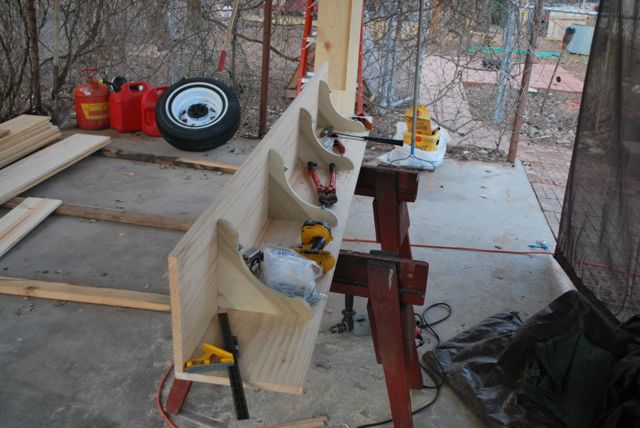
Attaching the ledge to the prepared frame.
Build, build, build. Using a window of good weather in January.
Even relatively easy details, like door placement and size, were still up for change.
Finally, I can get a real sense of scale.
I fell in love with the design once the box was built.
Working alone means lots of clamps.
Gawkers were willing to take pictures.
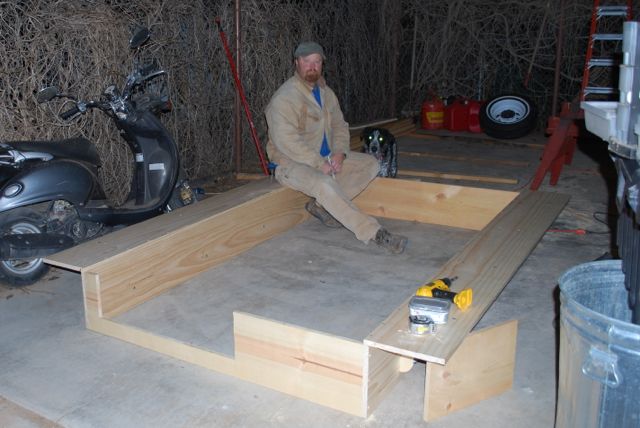
The bed framing becomes integral to the structure.
Seats were designed and tested for size and functionality.
The first storage is done.
Wood is good!
The shell becomes complete.
Now for the details.
Temporary window inserted for a quick trip to the desert.
Quick coat of paint and off we went.
A little living helped bring together the details.
Spending time in the space gives an idea of where things are needed.
Finish work is a process, not an event.
The Vardo becomes a home.
A safe and cozy nest on the road.
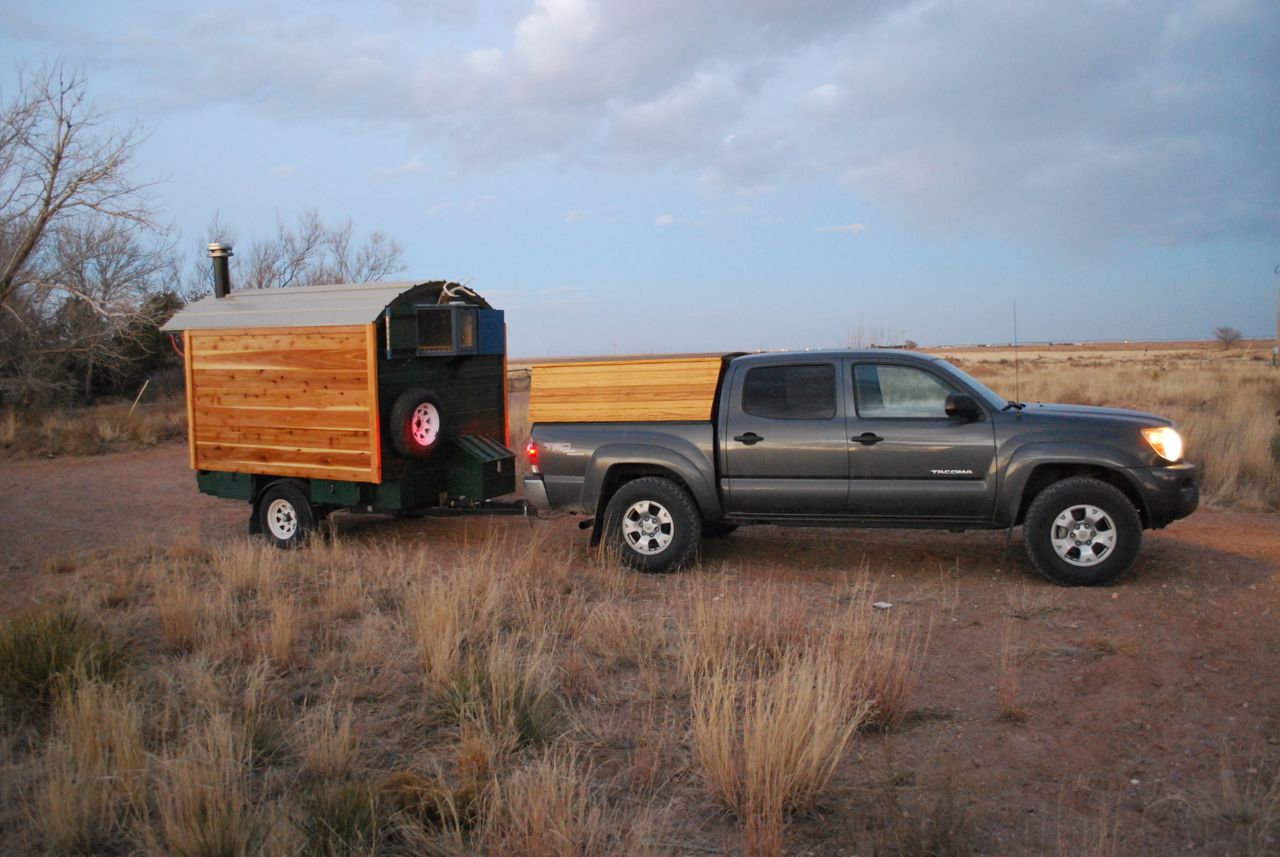
Still far from done, I took her cross-country anyway.
Things began to come together after a few thousand miles travel.
Finishing touches are added constantly.
As are safety details.
Still making changes and additions four years down the road.
More big changes are happening and I hope to get up some new information very soon. I think an important fact that this project showed was that, for a relatively low-budget, and a little patience, a little home can be built over time but still be usable along the way. I didn’t wait for every last detail to be completed before putting this house to good use or I’d still be waiting today.




























 Preindustrial Craftsmanship