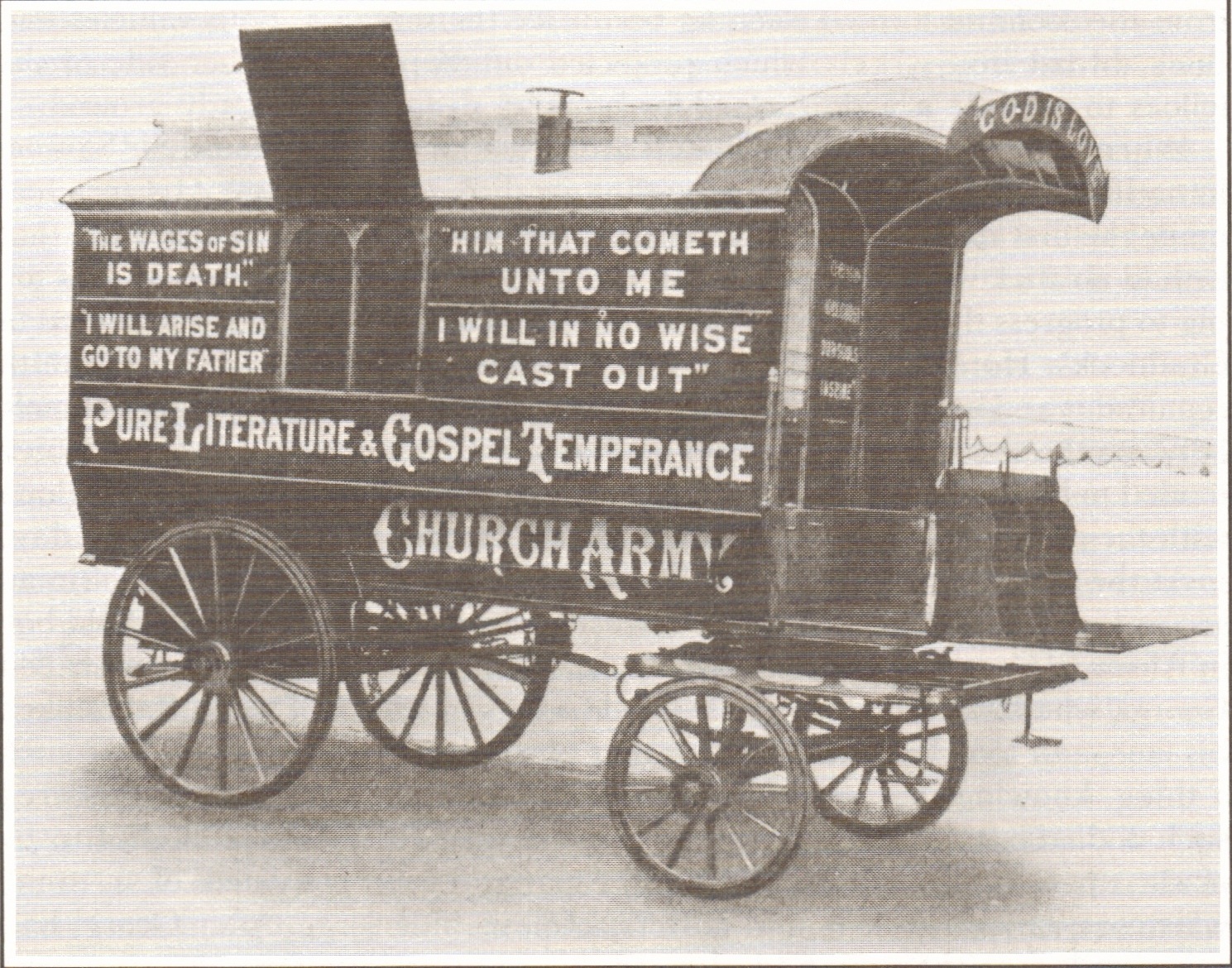
It seems only natural that evangelical ministers would take to the caravan as a way to bring the Gospel to the people. Christianity is a missionary religion after all. The caravan served as a sort of home base for missionaries and a vicarage for ministers, even being outfitted with a harmonium (pump organ) in some cases.
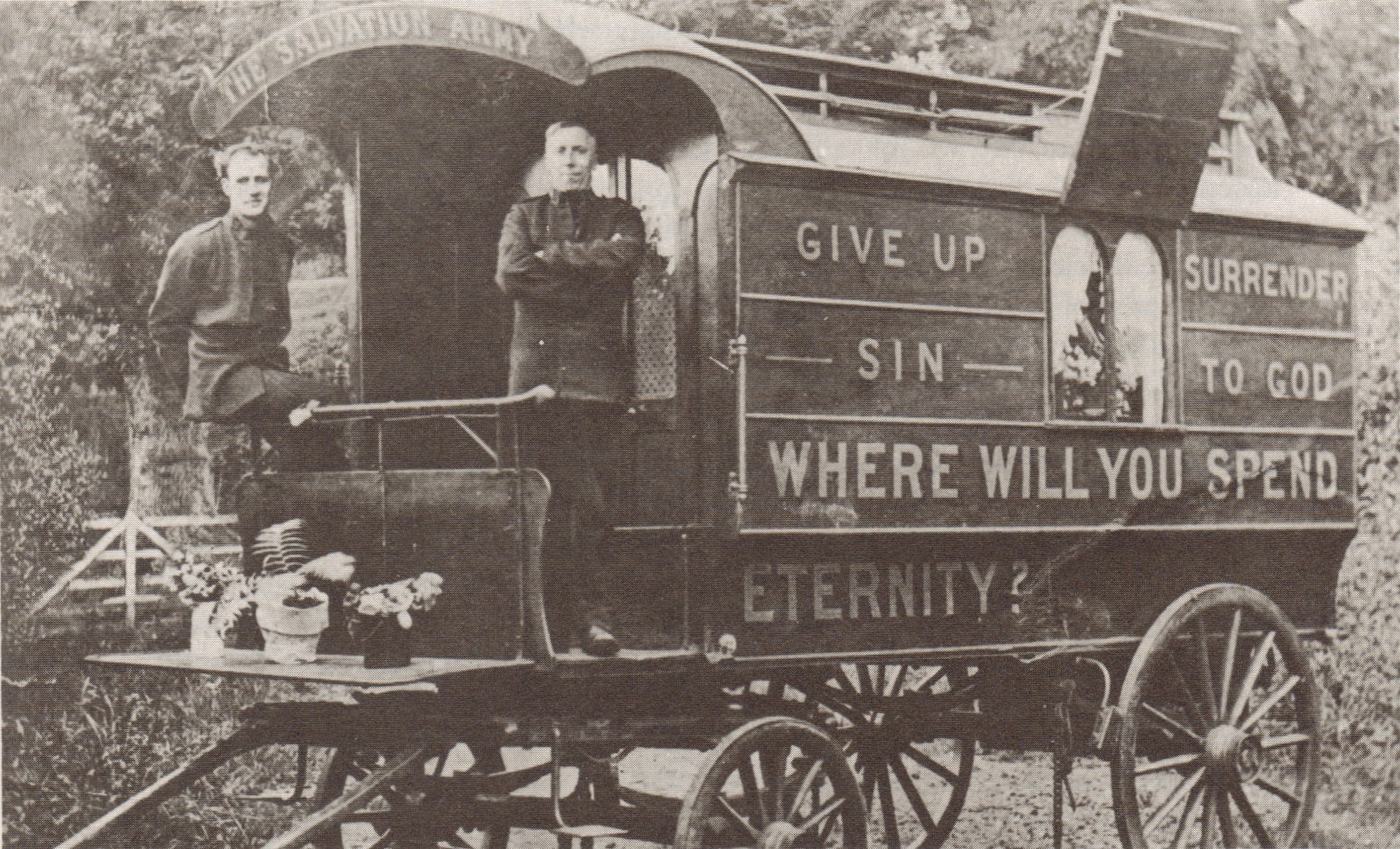
Like hawkers of more earthly wares, church denominations competed for trade by using their wagon walls as billboards.
Anyway, here’s another aspect of the caravan life we don’t often see.
Some could now claim that the whole world was their parish.
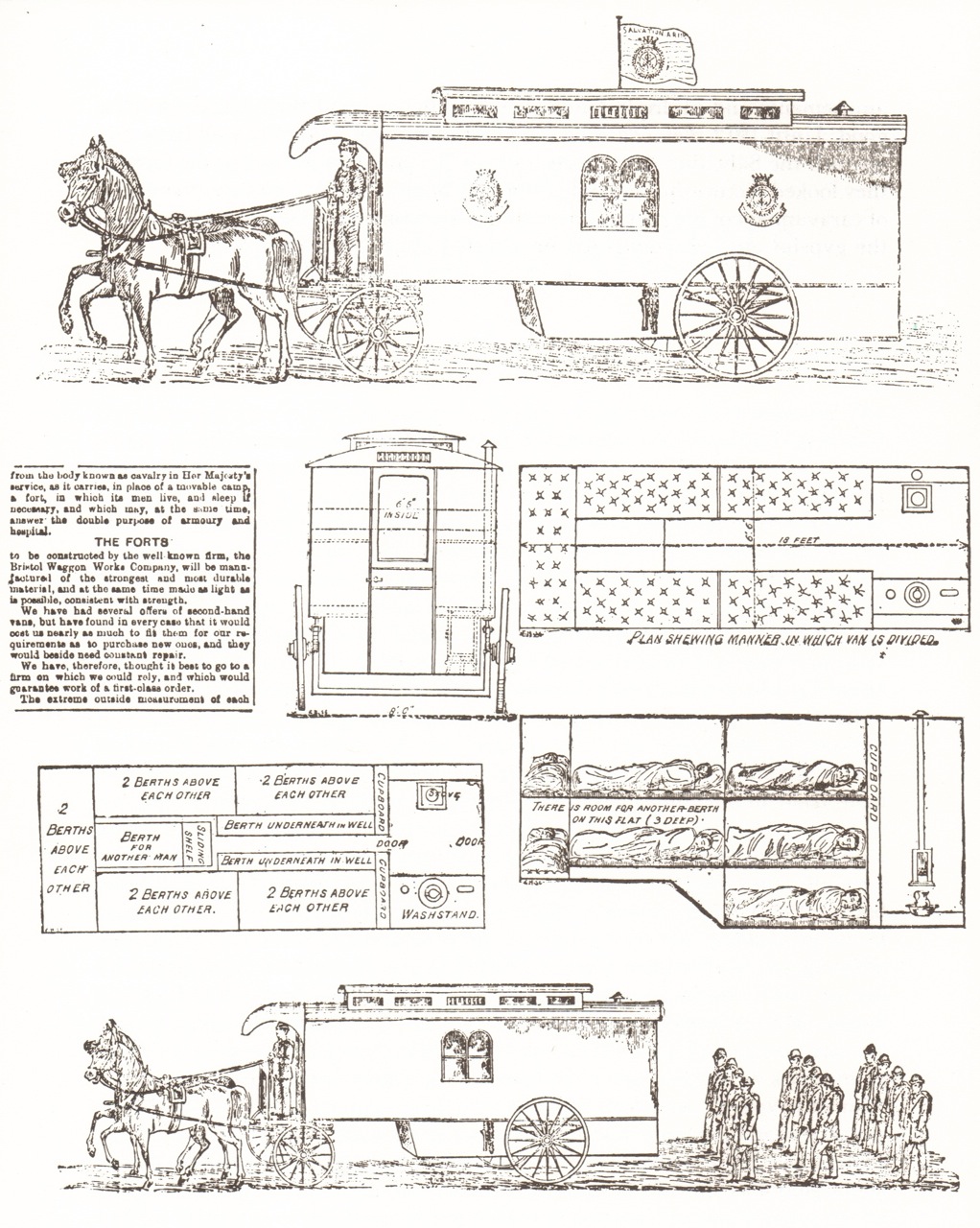
Finally, the FORTS. A concept of the Salvation Army to travel the countryside, gathering pledges of abstinence and converting the destitute. Definitely the forerunner of the modern fifth-wheel camper.
The schematics of “The Fort” from Gypsies and Gentlemen by Nerissa Wilson.
Presenting the traveling requisites; a caravan case and road-grade book.
Advertisement for a lightweight but implicitly tough (it is sole leather after all) suitcase or light trunk for the traveler. Road grade books were very handy in the days of principally human and animal power. If you are cycling cross-country or pulling and immense showman’s van you may choose to avoid some of the worst grades. Britain was notorious for poor roads for centuries so you don’t want to be stuck in ruts on an eight percent grade at nightfall. These books were lifesavers.
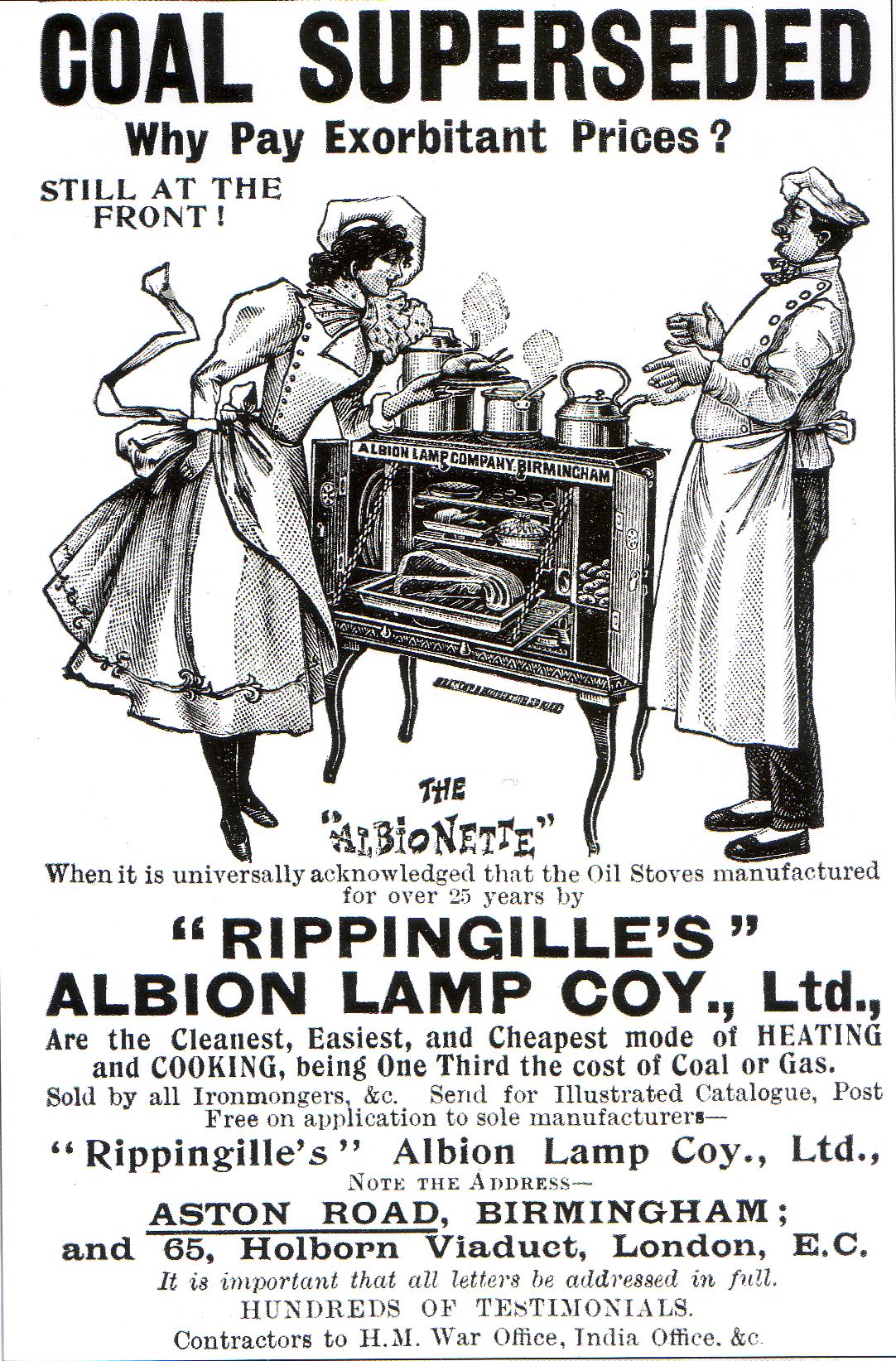
“Do you ever Hunt? Fish? Paddle a Canoe? Explore? Prospect? Climb Hills or Sail on a Yacht?” Such was the opening line on an 1899 advertisement for Primus stoves. That covers just about anybody of worth that I know. Of course you need a stove. Buck up and buy one (that means you Jim). The ad goes on to say “It cures all ills that campers are heir to. It is the one thing needful to make camp life a dream of Elysium.” You just can’t ask for more than that.
Improving the Primus Stove experience began early on. Putting the stove in a tin case, disassembled, made for easier packing and kept the parts together. And of course, a toaster rack that works while the tea kettle is heating on top would become indispensable.
Unlike what was taught in the Boy Scouts, Primus highly encourage its use inside tents; going so far as to suggest drying clothing and bedding. I’m not sure my old Scoutmasters would approve but really, it’s nearly the twentieth century, right? Seriously though, some of the better information concerns the economy. One quart (0.95 litres) will burn for 5 hours, or as one prospectors testimony claims “A quart of kerosene lasts a week and cooks three meals a day for us.”
Now I just need to find the right tin box and the remarkable flatiron griddle shown in the upper right of the second ad.
Early work vans were designed to house manual laborers when on the job. Great for highway and railroad crews. These caravans were noted for poor ventilation and their spartan interior. Three to six workmen were often housed in these wagons.
All the necessities for living with none of the comforts of home. Cheaper than regular housing and mobile too. One can see how this evolved into the later caravan. These were expensive and not as well thought-out as later ‘vans.
At the end of the first decade of the twentieth century, the young artist Frances Jennings became a semi-invalid and was advised by her doctor to spend as much time as she could in the open air. Being a Victorian lady at loose ends, the obvious choice was to take to the open road. Her simple rig and a good spirit served her well. As described by J. Harris Stone:
She is extremely delicate, partially paralysed, and her doctor told her that she should practically live in the open air. Being of an active and practical mind she set to work to see how she could, within her means, carry out the drastic requirements of her medical adviser. She joined the Caravan Club, and all the assistance, in the way of pitches and introductions, was of course afforded her. Her desire was to take to the road and live altogether in the open air in rural parts of the country. Her cart—it can scarcely be called a caravan—she describes as “strange and happy-looking.” It is four-wheeled, rather like a trolley, and painted bright blue, with a yellow oilskin hood—something like a brewer’s dray in shape.
Beauty in a caravan is in the eye of the beholder.
“I carry,” she tells me in one of her letters from a pitch in a most out-of-the-way spot in rural Gloucestershire, ”a hamper of food, and one of soap and brushes and tools, etc., and a box of books, a small faggot of wood for emergencies and a gallon can of water. I have a covering of sheepskins with the wool on them, and a sack of oats, bran, chaff, hay, or something to feed my little ass upon. Also I keep in a sack the donkey’s brush and comb and chain, etc., and the harness when not in use. I do not generally travel after dark, but if overtaken by dusk I hang out my candle lantern.”
Cooking over a campfire with the ubiquitous fire hook.
“…I build immense fires. That constitutes a great happiness to me. I have a kettle-hook and hanging pot, and I buy food in the villages. At the farms I find a plentiful supply of milk, fruit, honey, nuts and fresh vegetables. I build the fire just by the cart, with the donkey near at hand.”
Described in her first year on the road, she “sleeps in the covered cart, and she carries a few straight rods with her to drive into the ground on her pitch, on which she hangs squares of sacking across as a screen to keep off the gaze of curious watchers when she wants to sit by the fire ” and dream, and not be the object of their gaze.”
In her own Walden experience, things were not always easy or perfect. “I find great excitement, in the winter, in hearing the storms raving around me in the black of night… I feel my present outfit and way of getting along is very far short of perfection!… at present it is rather by the skin of my teeth that I manage to exist amid the elements of wind and rain and cold and space.”
Speaking of her time with the more traditional travellers, she says: “They have spoken like poets, worn silver rings on their copper hands and rosy beads around their necks; and their babies have round little twigs of hazel-nuts in their red hands. And perhaps the roof of their cart has been on the sea—the sail of a ship.”
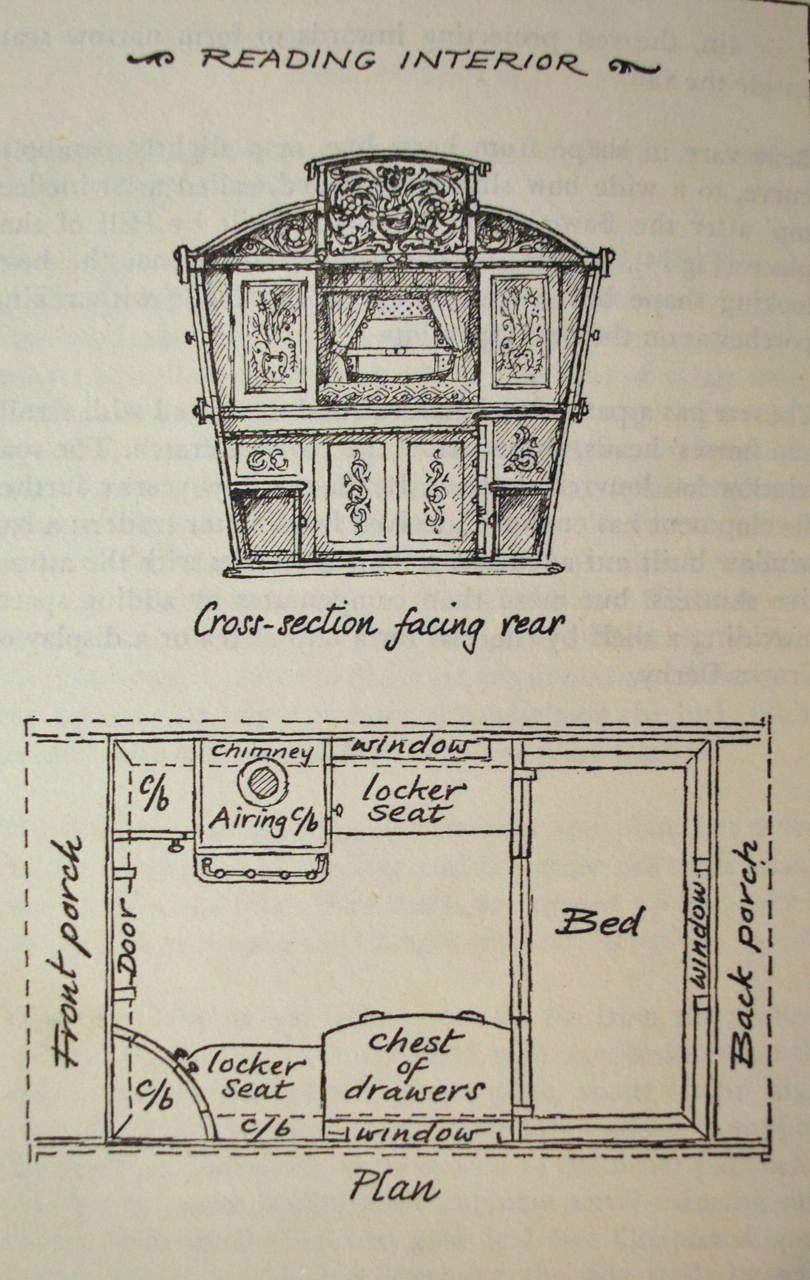
Many considerations concerning floor plans and general layout have come my way over the years. I am compiling as many as possible to post here. To start things off, here is the iconic Reading Waggon by Dunton’s (note: two “g’s” in the older British spelling).
This design is truly the classic. When one sees this, it cries of the open road and Gypsy Wagons. It is Henry David Thoreau’s Walden cabin on wheels. The wide rear axle and narrow front carriage was the best of compromise for agility, weight, and worthiness on and off road. This design is worth a potential builder scrutinizing in detail for it’s perfection of design. A mollycroft roof, high clearance, well-proportioned windows, and solid design make this ideal for the rolling home.
On the downside, kite walls (out-sloping) add some difficulty when working on interior shelves and cabinets. Also, as noted for over a hundred years, the mollycroft can weaken the roof and ultimately increase the chance of leaks. A small price to pay maybe but something to keep in consideration.
The classic caravan at this period included a full chest of drawers and a fairly large stove, limiting seating to a largish space on the stove side and a small dressing seat next to the dresser. Although we read of dozens of children being born and raise in this design, the real layout seems to be based on the couple. Kids will make due.
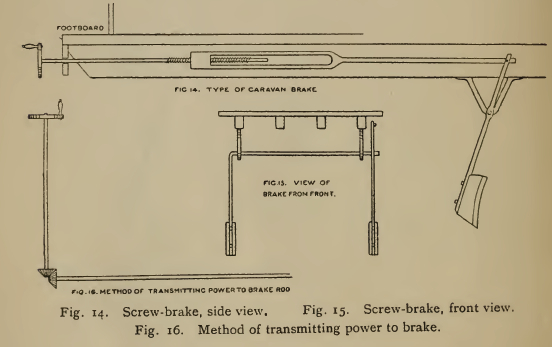
In response to the inquiry about the little wheel on all the old wagons. They also had a drag brake to connect when going up hill to prevent back sliding. The precursor to the auto handbrake.
Here’s a guide to the basic parts of the Reading wagon. Borrowed from The English Gypsy Caravan. Sadly, long out of print.
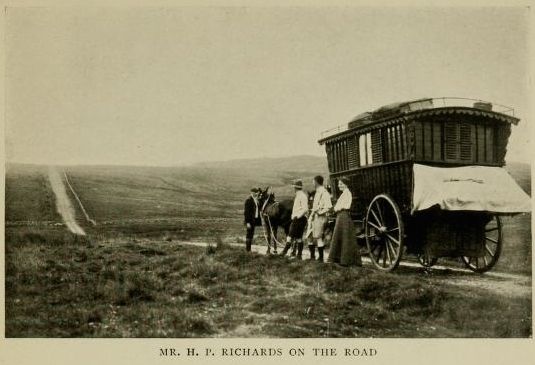
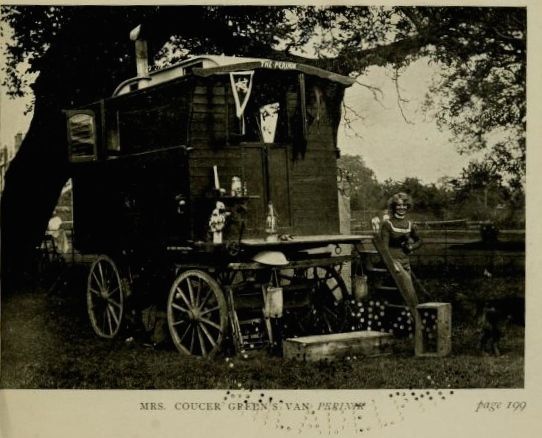
Three great and rare books have come to me in the very recent past. Each has it’s own merits and is full of great stuff. I am scanning, reading, and summing up some excellent stuff and will get it out as soon as I can. In the mean time, enjoy these great photos ca. 1911-1914 the Golden Age of Caravanning.
More and better details on the way, including plans and historic photos that have lots to show us about design.






 Preindustrial Craftsmanship