I know nothing about this but like it a lot.
Adventures of an Imperfect Man In Search of a Handmade Life

I know nothing about this but like it a lot.
We just put another couple thousand miles on the Little Green Vardo. It’s always an adventure when you are pulling something like this around the country and it makes for some interesting conversations.
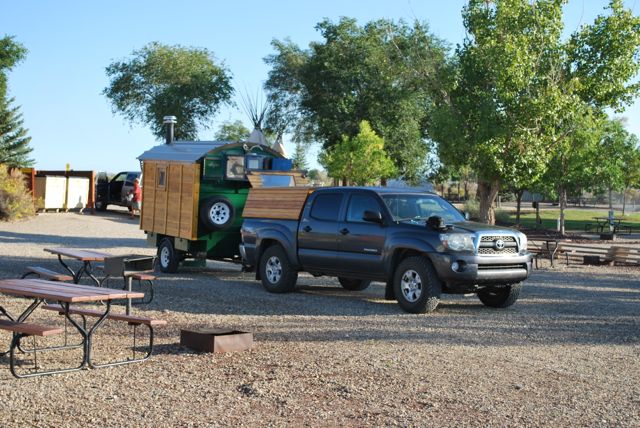
Most of the people we meet are great but the comments are sometimes a little difficult. Of course, the number one question from most people is “what does it weigh?” Not that the numbers mean much to them but it just sounds like something to ask. Another favorite is “does it leak a lot?” I guess this is a reasonable question for someone. If my house leaked, I hope I would remedy it pretty quickly.

It’s great to get all the smiles, nods, and waves from other travelers. It must say something that out of the thousands of vehicles you might see on a trip, only a few evoke any real response. It’s hard to get gas or take a break without having a real conversation about it with someone. While getting coffee in a small Colorado town a watched a woman burst out of an office door across the road and sprint across a busy four-lane road just to have a peak. It was flattering when she said “I know you from the Internet! I’m a huge fan of tiny homes and little campers!”


Another fun interaction happen in Monticello, Utah when an elderly man came running out from a house to talk about Sheep Wagons. His wife grew up in one and wanted to have her own after they retired. As this was a tall order, he built her this beautiful scale model sheep camp complete with tiny dutch oven, pans, tools, a broom, and even a tiny fried egg.
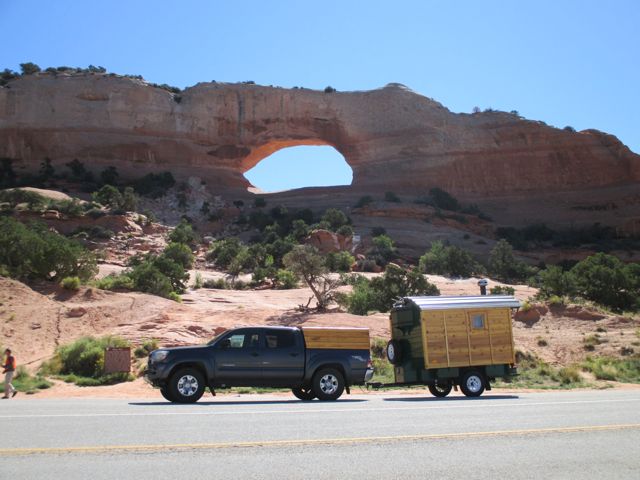
Maybe, not too long from now, I’ll be able to take to the road for a longer adventure.
 Coming home to Purgatory, New Mexico with a list of improvements and a slew of minor changes to the Vardo. I can’t wait for the cooler weather to make this happen.
Here are a few images to clarify some questions about the wooden topper. It is not a work of art. It was to be used for a single field project last summer but now I really like it so it will be a permanent part of the rolling home.
 Here’s the overview sans roof rack. It has received about five more coats of spar varnish after a good sanding. It is built from recycled lumber so there is some small shrinkage checking and a little discoloration from some mold or fungus but it hardly visible.
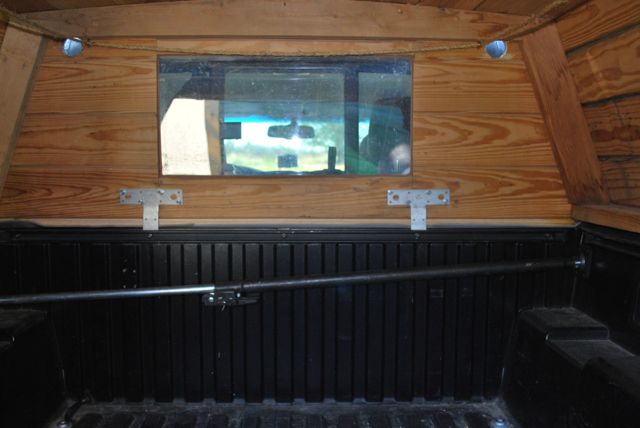 Tacomas really suck for attaching racks and toppers for a couple reasons. The top rails of the bed are plastic over some fairly unsubstantial metal and there are no stake holes. There is however, the nifty rail system inside the bed that is secure. To attach this topper, I used some construction straps from the Big Box Store which are screwed in behind the rails. This is the forward view, blemishes and all. The rope is for hanging up wet stuff like towels, swimsuits, etc.
 Here is another strap at the aft end utilizing one of the bed bolts in a reenforced spot.
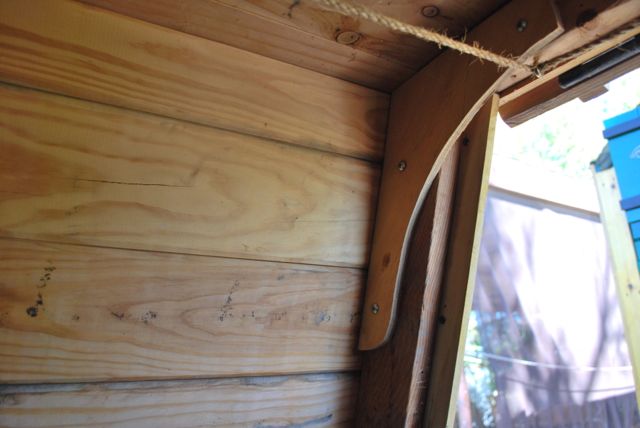 And finally, here is an image of one of the knee braces that are screwed and glued to the frame to strengthen the door area. I hope this helps if someone else wants to construct something like this.
Because there’s always room for improvement. In my case, a lot of improvement.
Rehung siding, new paint, fresh varnish, little fixes, and lots of cleaning. We’re hooked up to get out of town for a bit.
 Dietz lanterns, Kelly kettle, fuel, and lamp oil packed away in the pan box. The steel disk serves as a heat shield to minimize ground scarring under the fire.
 A view from the bed. Still more to pack up but things are looking good and nearly ready to go.
 The new windows are great and really perk the place up. Bright and airy makes for a pleasant space.
 Still, the little Snail is far from perfect; made on a shoestring budget during snatches of time between work and bad weather. Although I don’t live in it full-time currently I have come to see this as my home.
 From her ABOUT Page: Nukshi is a documentary and portrait photographer and an artist living and working in Nottinghamshire.
Her sensitivity to situations, culture and people, has allowed her to adapt well to new challenges and environments. She captures her images by getting involved with people, their culture and lifestyle, which motivates her to preserve those times and moments. Knowledge and empathy with her subjects is the key to her image success, especially when intimate portraits are involved.
With an open mind and a quest to explore extreme situations, places, cultures, people and learn from that interaction. She intend to travel more, in doing so broaden her abilities. Often able to impart new skills to individuals in an exchange for their confidence in her, which has allowed her to bond with them easily.
 When a friend sent a link to her website I was, of course, immediately interested in the vardo. Looking beyond the structure, there is wonderful documentation of life on the road. An exterior wash stand tripod, pragmatic stairs, cooking tripod, and the ubiquitous tea kettle extend the home.
 A homey interior, with an eye for beauty is shown in this “typical” vardo.
 A rare site where I live. Nomads and Travellers are not often welcome in the modern world. I’m glad this couple can live as they wish.

More details are documented on her website. I picked a few of my favorites for this post.
 And let’s not forget the people who keep this tradition alive. It’s all well to look at the staged “gypsy” wagons across the web, but it’s important to remember that these are truly home, made complete by their inhabitants.
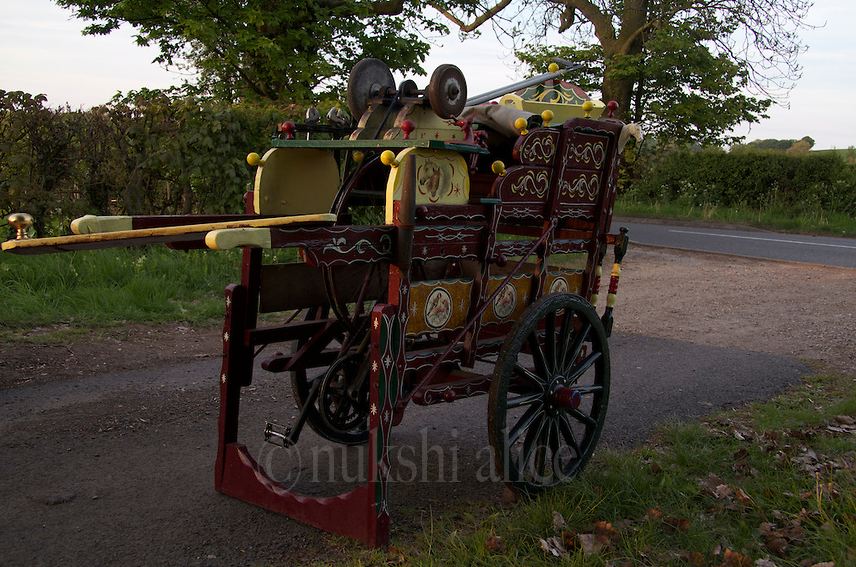 A way to make a living. I still remember the knife grinder who made his way around the city in St. Louis many years ago. His was not quite this flashy but had the housewives scurrying out with handfuls of knives and scissors when he came around. I suspect that’s a rare job in America today.
Many more images from this series and others are viewable on Nukshi’s website. Have a look and read the little story that accompanies the photos.
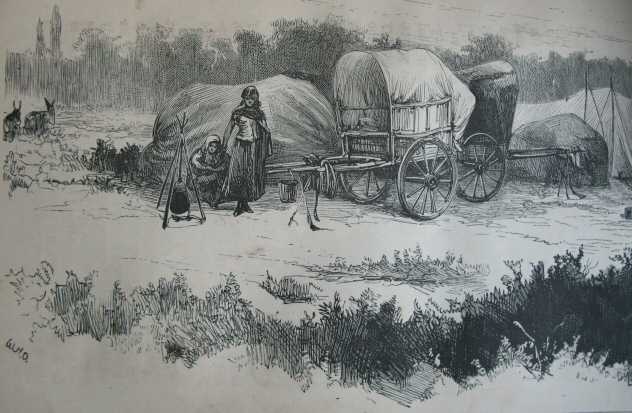
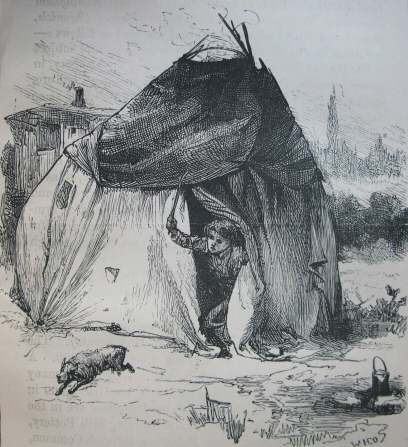
From a book published in 1880 about the Roma and some thoughts on how to “improve” their condition in Britain. He traces their history in Britain from their first recorded arrival in Scotland in 1514 and is an interesting and somewhat sympathetic read. Here are some images and a couple snatches of the writing.
 Several types and qualities of bender tents are illustrated and show a realistic view of camp life.
“For the dance no music can be better than that of a Gipsy band; there is life and animation in it which carries you away. If you have danced to it yourself, especially in a czardas, then to hear the stirring tones without involuntarily springing up is, I assert, an absolute impossibility.” Poor, deluded mortals, I am afraid they will find—
“Nothing but leaves!
Sad memory weaves
No veil to hide the past;
And as we trace our weary way,
Counting each lost and misspent day,
Sadly we find at last,
Nothing but leaves!”
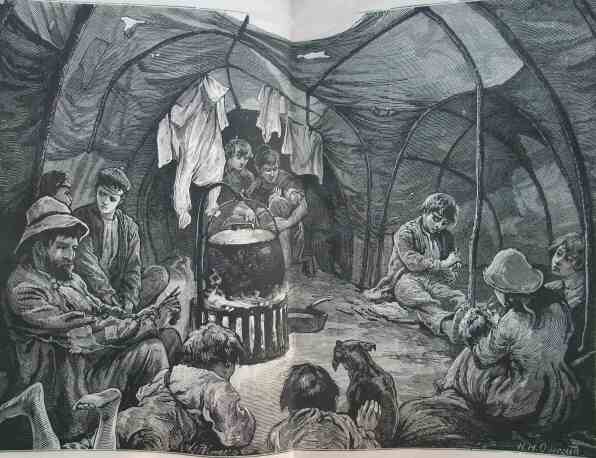 I was for the first ten minutes fully occupied in trying to keep a respectable distance from a number of dogs of all sizes and breeds, which had the usual appetite for fresh meat and tweed trowsering, and, at the same time, endeavouring in vain to find solid ground upon which to stand, for the place at the entrance and all round the tents was one regular mass of deep “slush.” It soon became known that my p. 228pockets were plentifully supplied with half-ounces of tobacco and sweets. These I soon disposed off, especially the latter, for there seemed no end to the little bare-footed children that could walk, and those that couldn’t were brought in turn by their sisters or brothers. I was invited to visit all the tents, but I could gain but little information beyond an account of the severe winter, bad state of trade, your visit in one of the black, dense fogs, &c.


 To be quite honest, I’m mostly into this one for the images but for those interested, the book can be found online HERE.
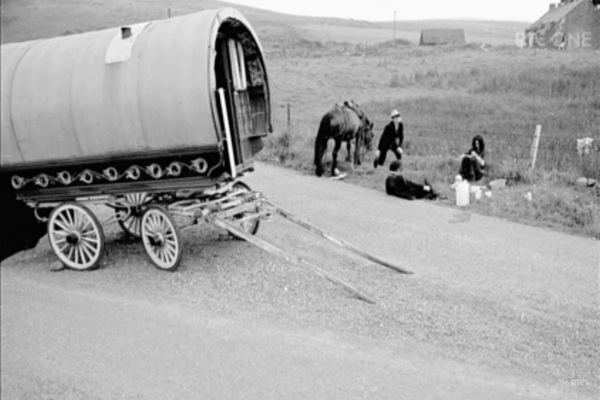
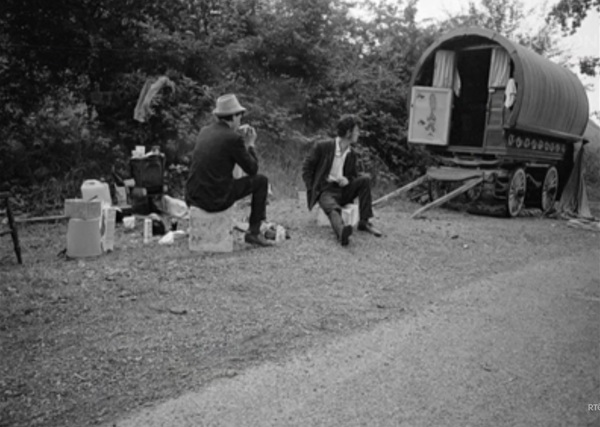
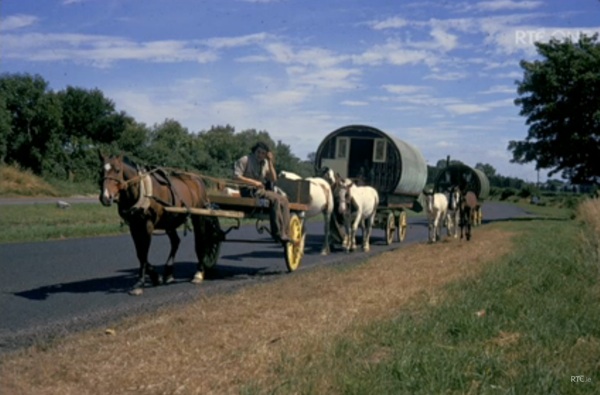
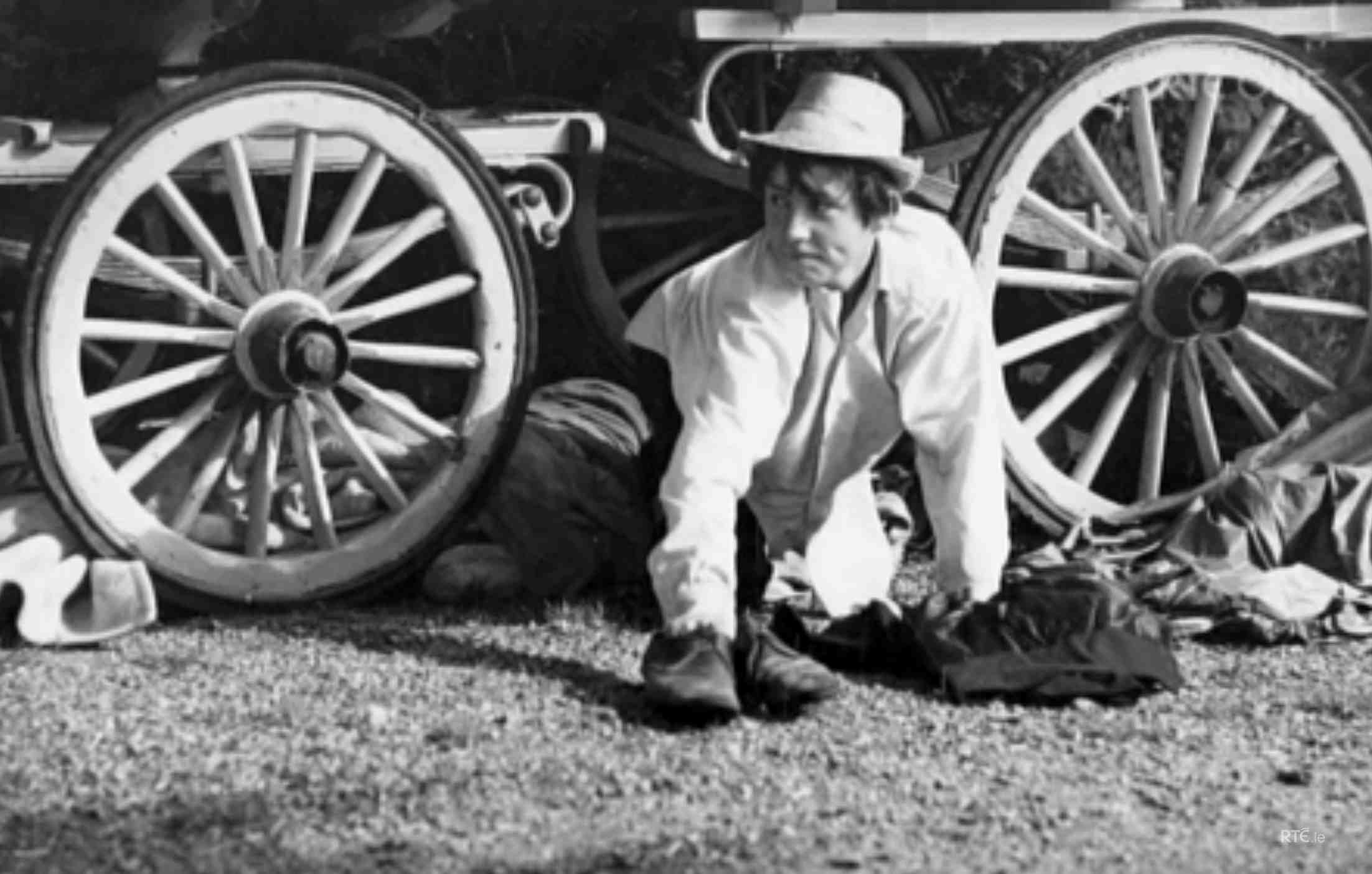
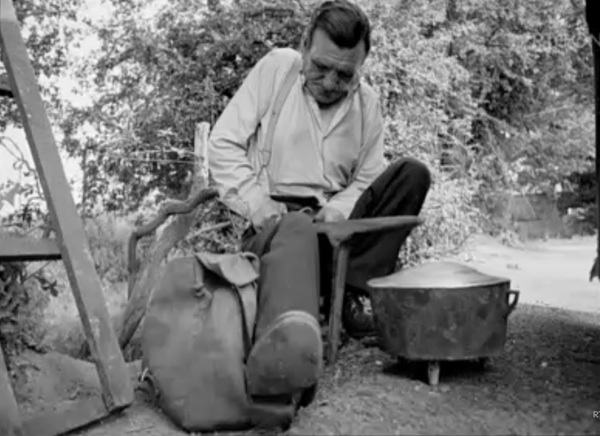 Screenshot images from Tinker to Traveller, a documentary about “Two Californian anthropologists who spent a year living with the travelers on a Dublin site in 1970 return to Ireland to learn what has happened in the intervening years.”
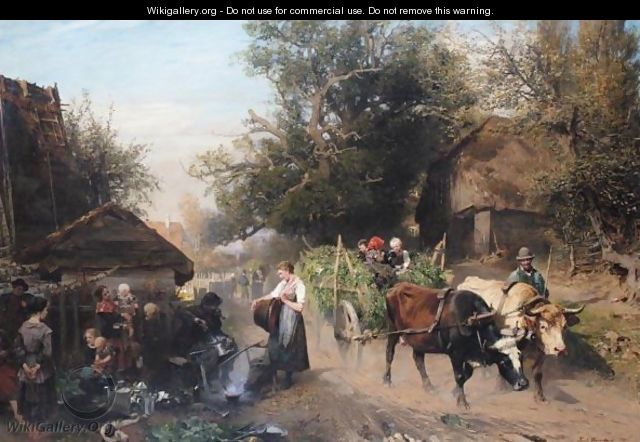
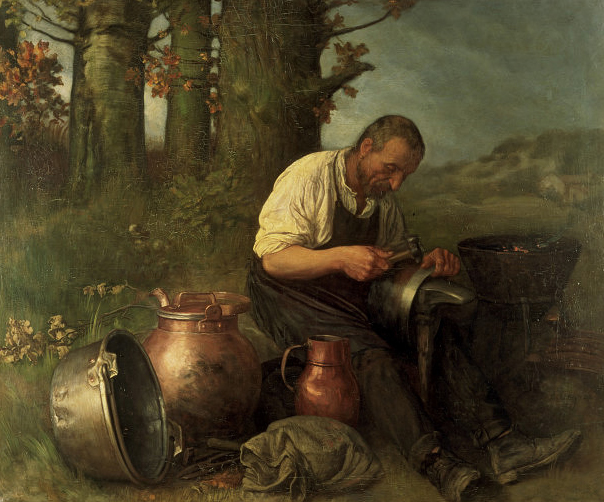
Finally, I’m getting around to adding side windows to the Vardo. I’ve wavered for a long time as to whether this was what I wanted. In the end, the ventilation and view won out. Many decisions needed to be made. What kind of opening, size, materials, etc. In the end, I chose reclaimed oak as it is very stable, strong, easy to work with, and looks good.
 This isn’t a high-tech, double-glazed thermal window. It is a simple square frame of oak around a Lexan pane with a simple, chromed piano hinge and a nice brass casement window mechanism.
 The discolored oak is visible here as I didn’t bother to remove the patina from the parts that will be invisible once installed.
I am sometimes criticized here for not giving enough of the remedial steps when building something new… So here it goes:
 First, choose where the window will be placed. I have kept this spot in mind from the beginning and have kept it free of shelves and cubbies. I decided to center the window on the structural stud.


I knew where the window needed to be located on the inside, but finding the exact placement on the outside wall can be difficult. In order to find the point on the outside wall, I drilled a small hole where the top center of the window should be. Why did I need to do this? Because the cutting from the outside smooth wall is far easier and less messy (keeping the sawdust mostly on the outside).


Using the hole as a marker, a line was created to layout the opening.


A framing square was used to square up the other three sides of the opening. The circular saw was used, making a plunge cut (using two hands) as deep as possible, following the guide lines.


The nature of the circular blade prevents the saw from cutting into the corner so a hand-saw was used to finish up.
 After a dry fitting to check the size, silicone caulk was applied to seal out water and the window was inserted.
 Having a look at the new window.


Checking the functionality. Interior framing is not yet complete here.
 Preindustrial Craftsmanship