Home is Where the Hearth Is

…and the Vardo Will be Close by.
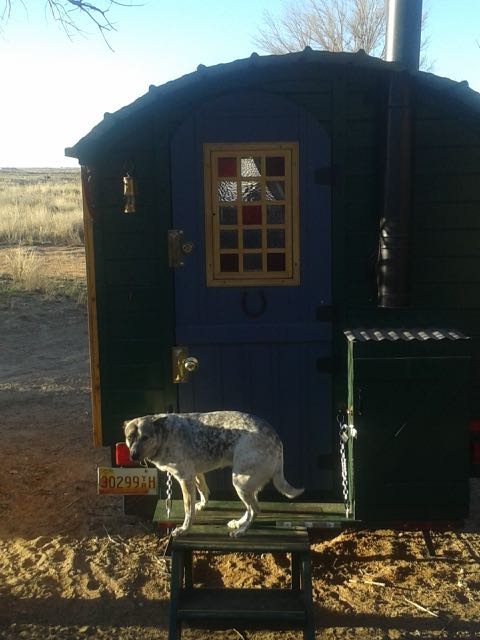
20150329_073652
Somebody hates to be left out.

Some important facts about caravan living before the ultra-modern RVs came along that may help people understand some of the choices I have made about my own wagon:

atHome
At the most basic level, life revolves around food and shelter.
  • The caravan is the hub around which camp is built, but most “living” actually takes place outside in the wide world.  Sometimes this means tents or other temporary structures provide added protection from the elements.  Prior to the second world war, caravan Travellers in Europe often slept outdoors, under the caravan when necessary while the kids were corralled inside.  This makes a lot a sense as adults stay up later, and kids can wander off.
  • Cooking is done outdoors, over a fire.  The stove, when there is one, is for heat and drying.  The hearth is the focus of family life, just as it has been for a million years.  That is where people congregate, music and stories happen there, and it is provides comfort and cheer.
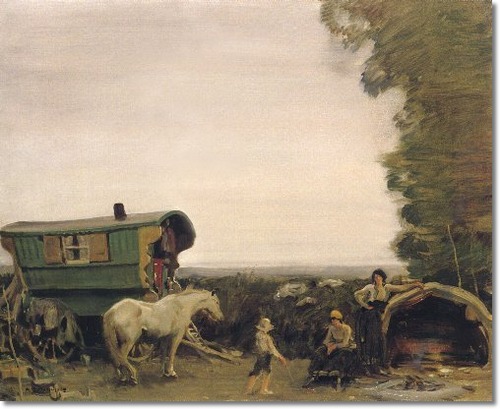
Hearth and home has a real meaning.
  • There is no water closet or toilet inside the caravan.  That is considered by connoisseurs to be repugnant in such a small space.  Needing to defecate in such a small space is a modern, and to some, a filthy idea.  However, this is one of the most common criticisms I hear about mine or other traditional wagons; seemingly from folks with little travel or camping experience.
J. Lequesca's sheep graze in Jordan Valley, Oregon.
J. Lequesca’s sheep graze in Jordan Valley, Oregon.
  • A consistent anthropological observation about nomads is the strict rules of hygiene and cleanliness.  Working and wandering outdoors can be a dirty business so strict rules are adhered to.  Some of these reach the level of taboos and can be traced back over at least a thousand years.  Living on the road can make one appreciate this need.Family

    Family
    A happy family from the road.
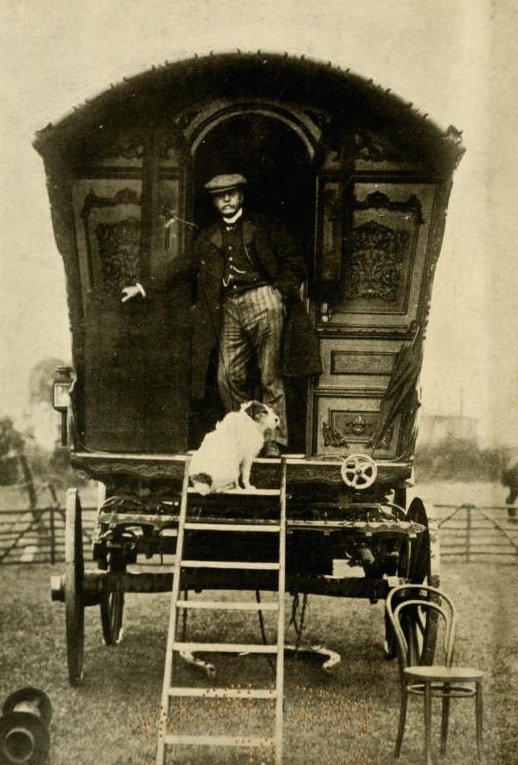
  • The fancy wagons of 19th century Britain are the exception, not the rule.  Functional but sometimes homely carts and wagons have likely served as the home base for nomads of various types since 500 B.C. or before.  They came to their peak of perfection in Britain in the 19th century before morphing into the RVs we see today.
TravellerinSWengland
A Traveller in southwest England. This simple accommodation is much cheaper and more readily built from cheap or found materials than the fancy production models.

Then as today, a conscientious traveller uses a fire pan to prevent scorching the earth by the roadside.  Mine is an old plow disk.

And finally, above are a few examples of outside extensions added to late 19th century caravans across Britain exhibiting the functionality of canvas to extend the living space in less-than-perfect weather.
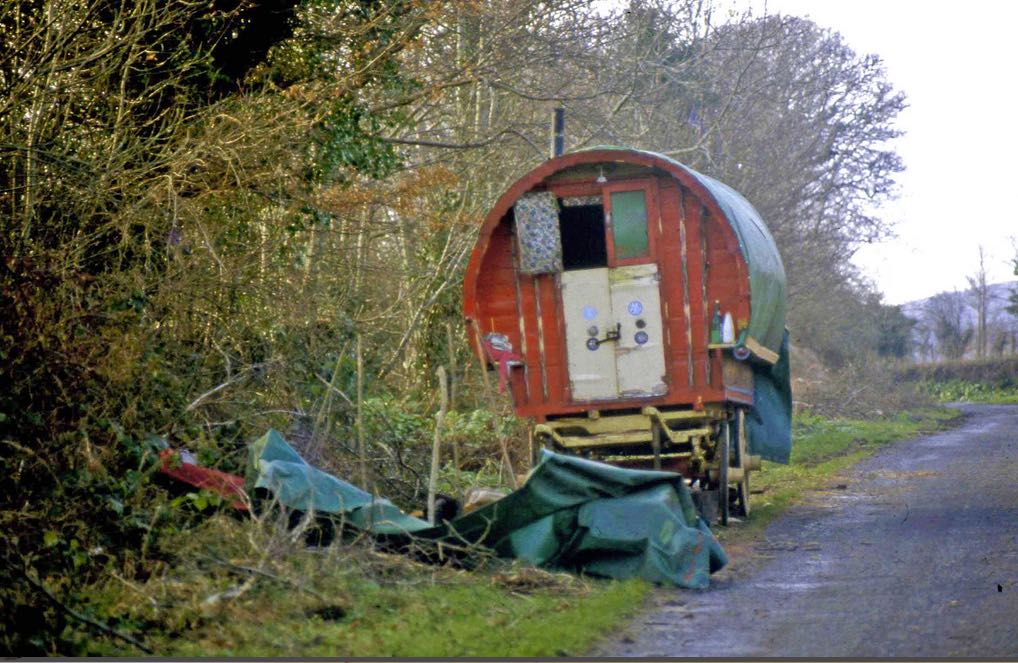
Caravanroadside
You never quite know where the day might end.


An Open Lot Accommodation

A little something for Wagon Wednesday.  A simple bow-top accommodation.  Very little of the wagon is seen in the image but we can rest assured that it was painted green at one time.  Hedley picked up some fine details here including bolts, boards, the tarp attachment, and a very nice little driving lamp.

LastLast in Market, Ralph Hedley 1885.  Hedley really captured life in rural northern Britain.

Early Style Camping Gear

Some of my camping gear mostly inspired by the period from 1745-1812, prior to major industrialization.
Some of my real-life camping gear mostly inspired by the period from 1745-1812, prior to major industrialization.

Starting in the upper left and moving more-or-less clockwise: small tomahawk, portmanteau, stoneware jug, braided buckskin cord, patch knife, buckskin bag for brass sundial compass, wool bonnet (tam o’shanter), trade bead necklace, small gourd for salt, pewter beer mug (could possibly hold water too), canteen gourd, Knife River flint blades, needle case and bone needles, strike-a-light and char-cloth box, wooden bowl and spoon, buckskin bag, bone handled eating knife, waterproofed leather bag, bark tanned belt pouch, buckskin neck bag containing spare fire kit, net shuttle holding hemp line, sewing kit in buckskin bag, wooden needle case with needles, argillite pipe with buckskin bag, fine hemp line, extra blanket pin, belt, pampooties (ghillie shoes), bamboo container containing larger bone awls and other bone tools, in the center, shoulder bag.

Sheep Camps are Alive and Well in the West

I have posted quite a few images and links to classic old-time sheep camps here over the years.   If you travel the small byways of the Mountain West you will still see plenty of old sheep camps in use or parked around ranch houses today.  But the sheep camp isn’t just a thing of a past generation, they are still being rebuilt, restored, or made in shops for modern use.

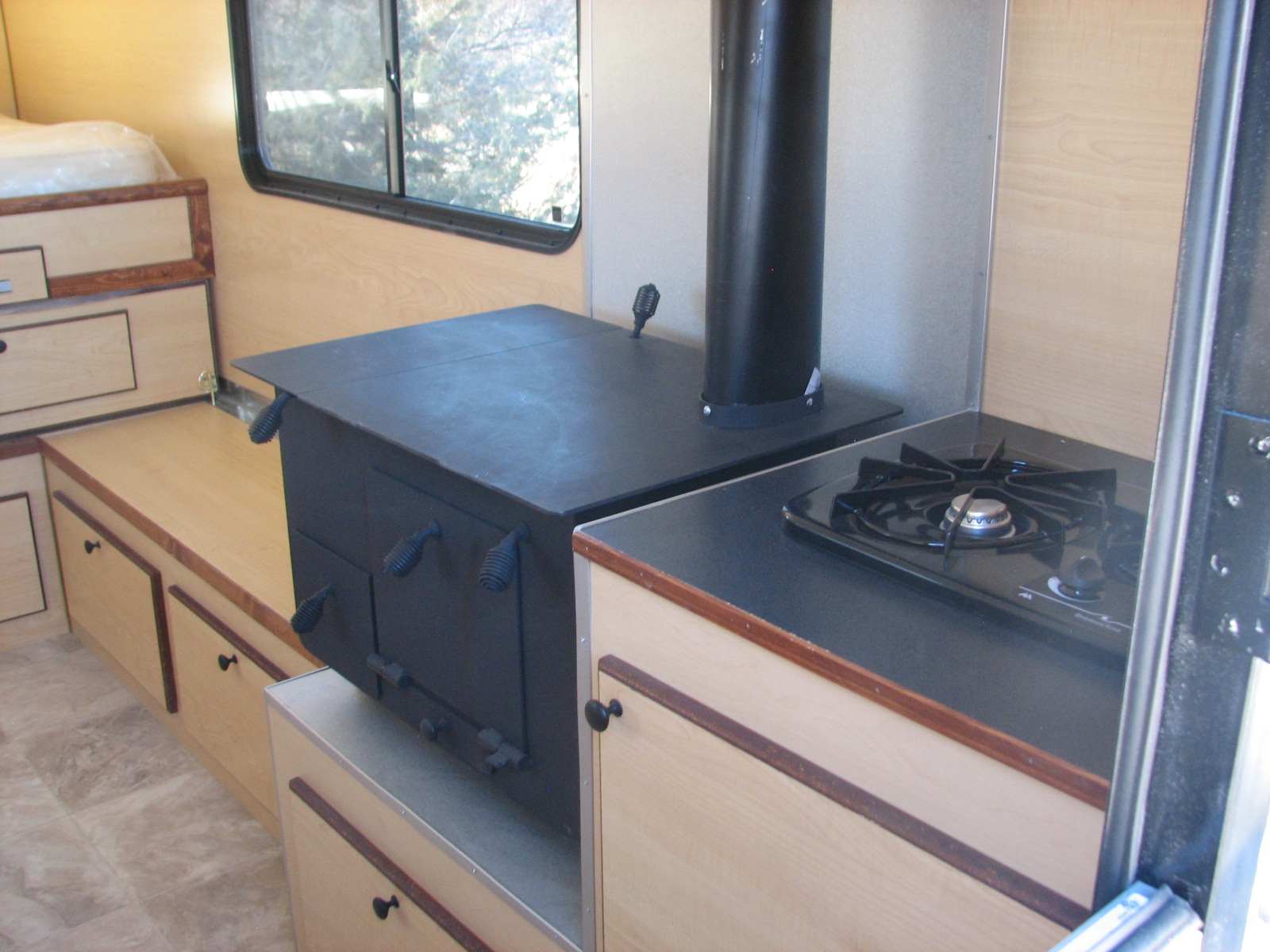
2012-11-09-09-30-54If you aren’t sure how this differs from a modern RV, you may not be alone.  However, there are some subtle but significant differences.  First of all, the sheep camps tend to be built much more sturdily than their recreational cousins and almost always have a wood stove for heat due their use in remote mountains.  The over-built bodies and heavy-duty frames allow them to be dragged into all sorts off-road locations without damage.  As a working accommodation they tend to be more spartan than many new RVs.

img_3415Note the traditional wheel arrangement on the model above. This type of running gear allows the wagon to be pulled into any location and is always set-up.  No need for jacks if you can find a relatively level patch of ground.  However, if the wagon is to be primarily pulled on the highway, a more modern configuration adds to their towability as seen below.

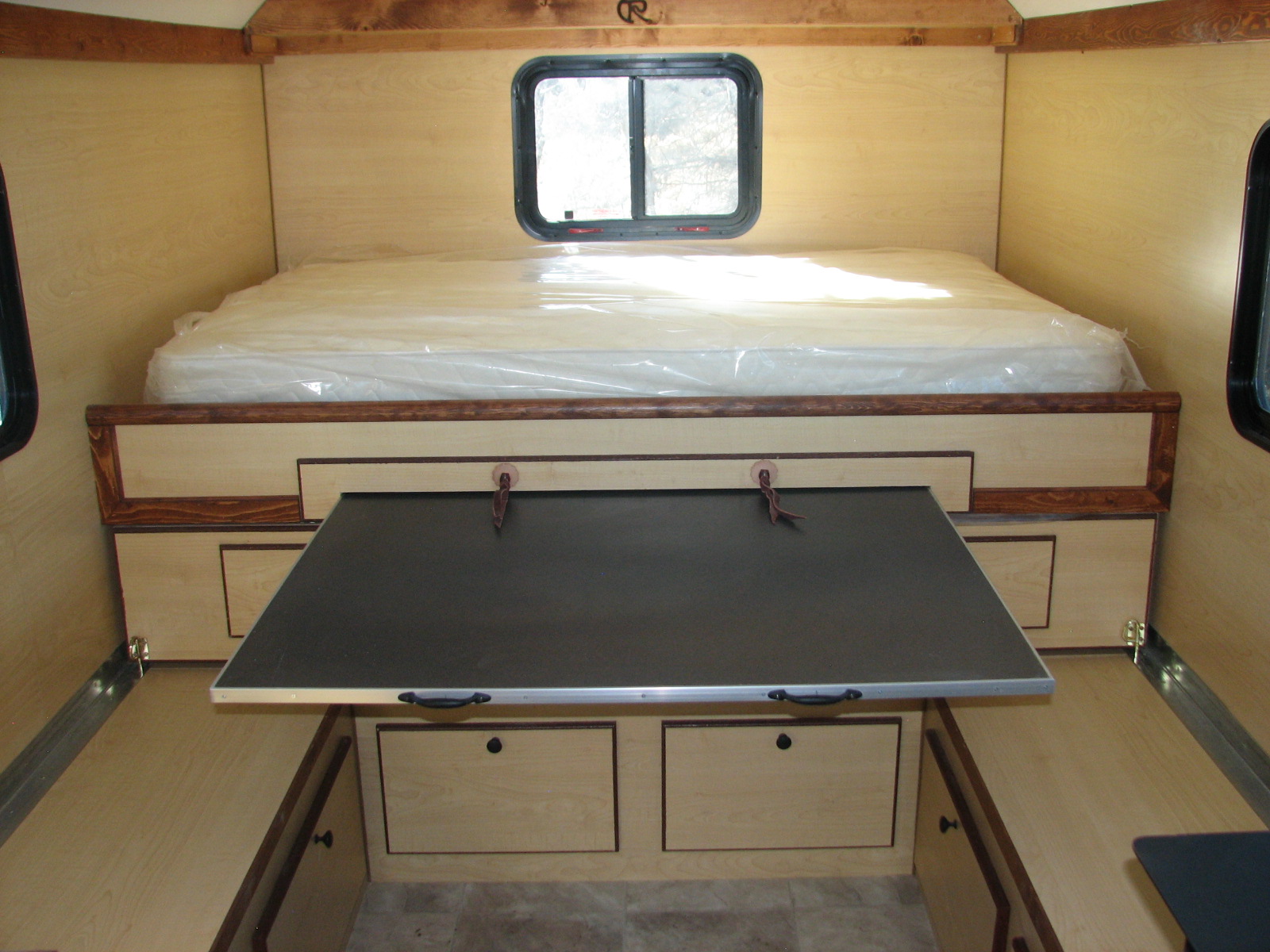
img_3844legend-outlinedThe layout is classic (I modeled my layout, in part, on this style wagon) with the bed across the back and a stowaway table.  The people at Timberline Range Camps, who create the wagons pictured here, have preserved the classic features in a fully modern “camp”.

TRC

I get no endorsement from them but please go and check out their work.

img_3361

Tiny sink, lots of storage, and a two burner stove are perfect for a couple working folks or an cold weather hunting camp.img_3360_0

Nothing fancy required in an off-grid home like this.img_3365Although the wagons have grown in size to accommodate the modern worker I appreciate their dedication to simplicity.  One of the coolest features, I think, is the bed-under-the-bed.

img_3368The lower bunk slides in and out as a drawer to completely stow away with a minimum of wasted space when not needed.  If you want the vardo-caravan-sheep camp lifestyle but cannot bring yourself to build it, explore the many options of the modern builders.  This is just a small sample of what they offer, check out their web page and blog to see many more photos: http://sheepcamps.com/

Blast Off with this Homemade Atomic Age Rocket Camper

Home-built camper fans will probably really appreciate this remarkable future-retro monstrosity. Conceived, designed, and built by Bill Guernsey while recovering from a broken back, it took two years to complete. Follow the link below to the short write-up on the Makezine Blog or click here to straight to the Instructable: http://www.instructables.com/id/Rocket-Camper-Revealed/

Traveler’s Life

Getting back to our theme of traveler’s, caravans, and other wanderers of the world… a few images from Pascal Dagnan-Bouveret a French Naturalist Painter of the late 19th and early 20th centuries.

"Dans la forêt-Musée des beaux-arts de Nancy."
“Dans la forêt-Musée des beaux-arts de Nancy.”

I believe I would enjoy siting around this campfire.

chevaux-a-l-abreuvoir---pascal-dagnan-bouveret
“Chevaux à l’abreuvoir.”

Once a common scene, now virtually lost in an era of loud, fume-belching machinery.

"Gypsy Scene."
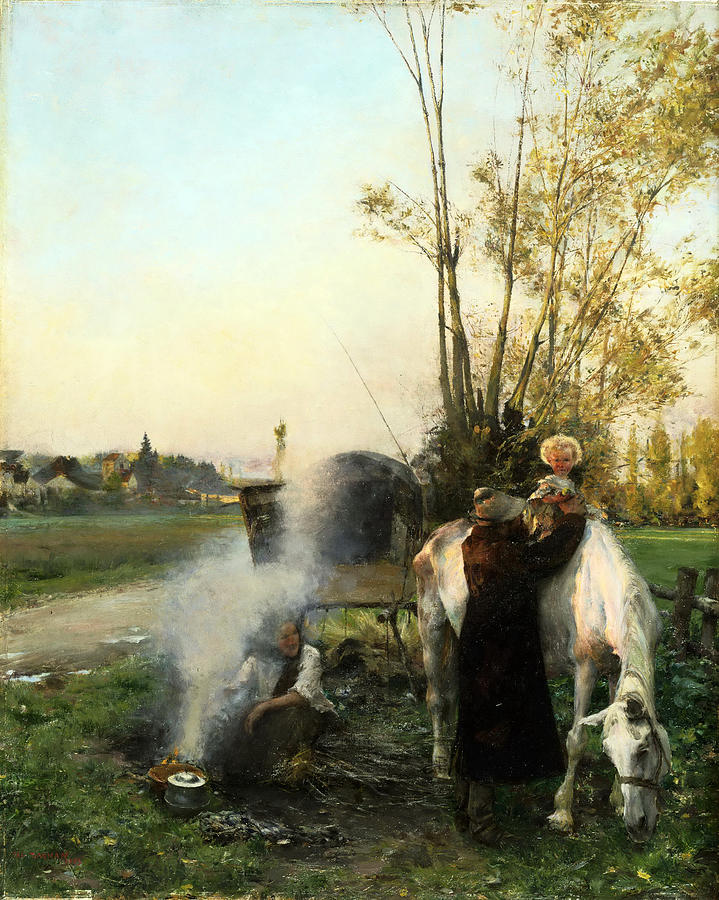
“Gypsy Scene.”

A peaceful morning cooking breakfast in the morning dew.  The caravan is obscured by the smoke of the campfire.

The Micro Airstream Bike Camper

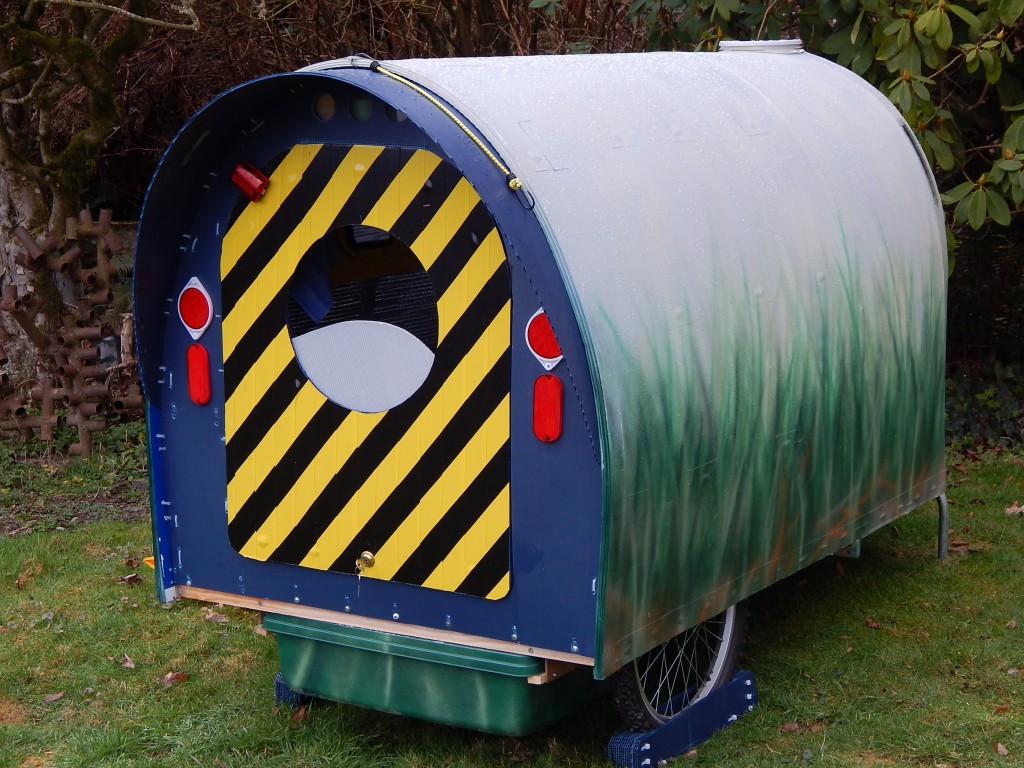
Paul Elkins seems to be quite an inventor and a talented Maker.  Here is an ingenious and practical shelter he created that weighs only 45 pounds (20 kg).
profileTiny indeed but I love the low profile.  Wind resistance is everything with human power.

rearobliqueGreat combination of high and low visibility here.  Automobile drivers are the biggest concern for cyclists and it is good to be seen on the road.  When I was a full-time cyclist I was hit several times.
interiorExtremely simple furnishings; lightweight plastic bins, some tiny cabinets, a small stove and speakers.

rearobliquescaleWith the builder modelling for scale, the pod seems rather small.  However, it provides a simple shelter from the weather and a place to keep some gear.  Have a look at the summary HERE and check out his older work on the BLOG.