A Dog and Her Vardo

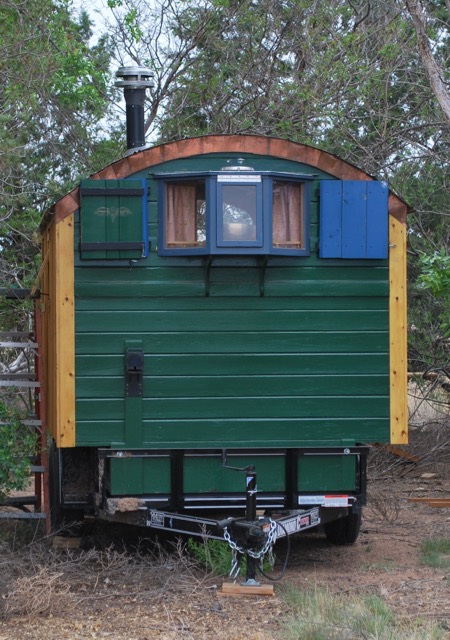
So, a vardo is a small space, especially when living with a dog. 

Stationed for maximum observation.

The old dog loved sleeping under the rig as she took her guard duties seriously but unfortunately, she is no longer with us.  The youngster, on the other hand, has no interest in that sort of nonsense and only wants to be by my side as much as possible.  She loves enclosed spaces so the vardo is a big attraction for her.  She spends much of her time under the main bed, hidden away, and often forgotten about until she decides to get under foot.  I even lost her for the better part of a day when she snuck in while I wasn’t looking, slipped into her bed, and was locked in for several hours.  When I found her, she looked content enough and came out stretching like a sleepy child.

kyly - 1
Making it fit.

Much of 2016-2017 I was lucky enough to spend many nights camped in the gypsy wagon with just my dog for company.  She doesn’t get on furniture inside the house but the dog has decided the floor or her bed are not good enough when she’s in the vardo.  Since she knows she not really supposed to sneak into the bed, the (too small) bench seat is often her compromise in the wagon.  She doesn’t really fit but I guess it makes her feel like one of the family.

A bed’s eye view in the morning.

A couple years ago I learned to be extra careful when sliding out of bed, especially in the dark, as she often plants herself on her favorite felted rug; right under my feet.  In this case, it also happens to be in front of the ceramic heater on a chilly morning.

Photo-bomb. She climbed out from her bed in order to not miss the action.

Even while getting ready to go to work, she seems to manage a photo-bomb; always lurking nearby and not wanting to be left behind.  Just because it’s a small space, there is still plenty of room for a dog; sort of.
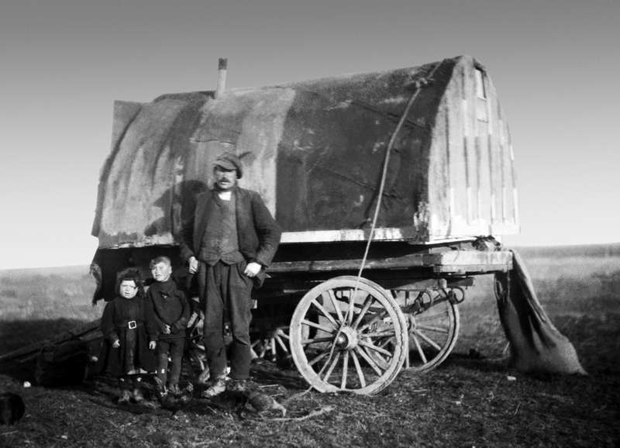
 

Tinker Family in Scotland

Tinker1920s
Tinker family. Estimated date : 1920 – 1929 ©The Wick Society,

Here’s a wonderful old photograph of a “Tinker Family in Scotland.”  It is believed to be taken sometime in the 1920s but the location was not identified.  The wagon could just about pass for a western American sheep camp.  Even thought they had the wealth to own a wagon it was still a pretty tough life, often unwanted in non-traveller (sic) communities, these people have been marginalized for centuries.

I found this one while perusing the Johnston Collection on the Document Scotland webpage.  Have a look if you are interested in great images of a beautiful country.

A Perfect Vardo

Desert Dream

This is a beautiful photo of Travellers in Britain, 1950.  I came across it a while back while searching out vardo images for my own inspiration.  This one has some great details and has a distinctive Scottish feel.

There’s a flag of the Scottish Caravan Club flying on the roof and some great signage on the walls as well as the typical harness brass horse shoe on the door.  I would love to find out more about this one.  Comments?  Thoughts?

Dugald Semple and a Simple Life

I would like to re-share this older post I wrote about a caravaner, scholar, and philosopher I am quite intrigued by – Dugald Semple

Dugald Semple was a Scottish philosopher of the early 20th Century and an advocate for simple living.  After becoming and engineer he took to the woods and, for a period, a life on the road, living in a tent and in various caravans in order to write and travel and avoid the enslavement of increasingly urban society.

Semple on the beach.

His major question was always “How ought we to live?” an ancient subject for thinkers the world-over and a very important topic in Asian philosophy as well.  His teachings are interesting and he still has a serious following of vegans, fruitarians, and Christian Phlosophers around the world.  He apparently never ate meat, eggs, or cheese, and subsisted on a mostly fruit diet.  It clearly worked well-enough, as he died at the age of 79 in 1964.  Not bad, but think of all the bacon he missed!

DugaldSemple

Of course, my interest in Dugald lies primarily in his simple lifestyle and his fondness for caravans and living in the open.  He married well.  Cathie, his wife was a widow who was independently wealthy, owning a large house and grounds.  This certainly contributed to the success of the life-long experiment in simple living.  Even as he settled down, he still philosophized and associated with his old friends who roamed the countryside and set up guilds of craftsmen (Nerrissa Wilson, Gypsies and Gentlemen).  He envisioned a new generation of skilled travelers who could pack up their trades and families and move to where the work was, thus alleviating some of the new stress of urban life.

Semple
Semple in his summer camp.

I love this camp.  This wagon seems perfectly suited for summertime use with the fully opening sides.  Too bad his dream didn’t catch on, but he admitted that life on road could be stressful and difficult.  At least we can give it a try; even if in a limited capacity.

Joy-in-Living

As an end note, here’s a quote he is well known for on his philosophy of a vegan lifestyle:

Personally, I began rather drastically over 50 years ago by cutting out not only all meat or flesh foods, but milk, eggs, butter, tea and coffee. Cheese I have never eaten; indeed I hate the very smell of this decayed milk. Next, I adopted a diet of nuts, fruit, cereals and vegetables. On this Edenic fare I lived for some ten years, and found that my health and strength were greatly improved. Probably this was also because I lived more in the fresh air and closer to Nature. (Emphasis added by the ed.).

I just don’t know if I can fully trust a man who won’t eat cheese…

A View from the Vardo

Working away on a weekend day a little while back.  Enjoying time on the prairie in my little rolling home; coffee, a banjo, and connection to a HotSpot so I can get some work done.  The best of all worlds.

A reminder to myself as to how the vardo is in constant change. Little updates happen all the time and I often forget them until looking back on a photo like this one.

I don’t remember for sure but I suspect there is a dog or two laying on the floor or, more likely, under the wagon keeping an eye out for wildlife.  I’m itching to get back out on the road.

House Trucks from the Early 1970s

Rolling homes go back almost as far as rolling vehicles and the modern era of motor driven cars is not an exception.  If you have followed this blog at all you may have seen some great contraptions, especially from the 1920s and 30s.  The counter-culture of the 1960s lead to a generation of rolling home builders and dwellers ready to hit the road.

Luckily…

Photographer Paul Herzoff took a series of photos of some of the interesting, home-built, house trucks between 1971 and 1973 on the American West Coast. Many of these images are now housed at the Smithsonian American Art Museum. Since I save a LOT of reference images, I sometimes forget what is even there.  I picked a few from my files to share here since they gave me many ideas since I first encountered them many years ago.

1983.63.694_1.tif
Paul Byrd’s Old West-themed truck is among my favorites and has a lot of charm in the details. I hope it survives somewhere today.
1983.63.729_1.tif
This thing looks like a mid-century sheep wagon mated with and early Airstream (its descendant) and gave birth to a little COE camper. The giant drop down porch looks like a precursor of a modern day Toy Hauler camper.
1983.63.732_1.tif
The interior of Bob’s Bus. It appears to have a lot of great storage space and utilizes a loft for added room.  You have to love the plants as well.
1983.63.686_1.tif
This one is called “Cab, Craftsman’s Van.” Again, I just love the homeyness of the plants on board.
David
Not much information about this other than the title “David.” It is a very utilitarian door that appears to be made from a recycled packing crate and a re-purposed window. I wouldn’t put a hasp on the outside unless it could be locked in the open position. I think there would be too much chance of mischief.
1983.63.737_1.tif
Here’s another pragmatic interior with a guy named George. Small bed, maybe it folded out?
1983.63.739_1.tif
Here’s another bus interior decorated with recycled cloth. Very Bohemian.
1983.63.725_1.tif
Craig’s house truck really speaks to me. It has a great form with the compound curve of the roof and a mollycroft. You’ll notice the water barrel on top and the ever important stove pipe poking up.
Craig Inside
Another view of Craig’s home. Not only does it have a mollycroft, but it has a sunroof as well.
Housetruck
Here’s a pragmatic plywood beauty. Maybe not very aerodynamic but it sure looks spacious.
1983.63.730_1.tif
And finally, probably my favorite from the set. I suspect it is ridiculously heavy but I think this truck can handle it. There are a lot fine details to note with this one.

If you are preparing to build a rolling home, there has never been a better time to find pertinent examples to learn from on the web.  Enjoy the views.

Scout Staff Hiking Stick

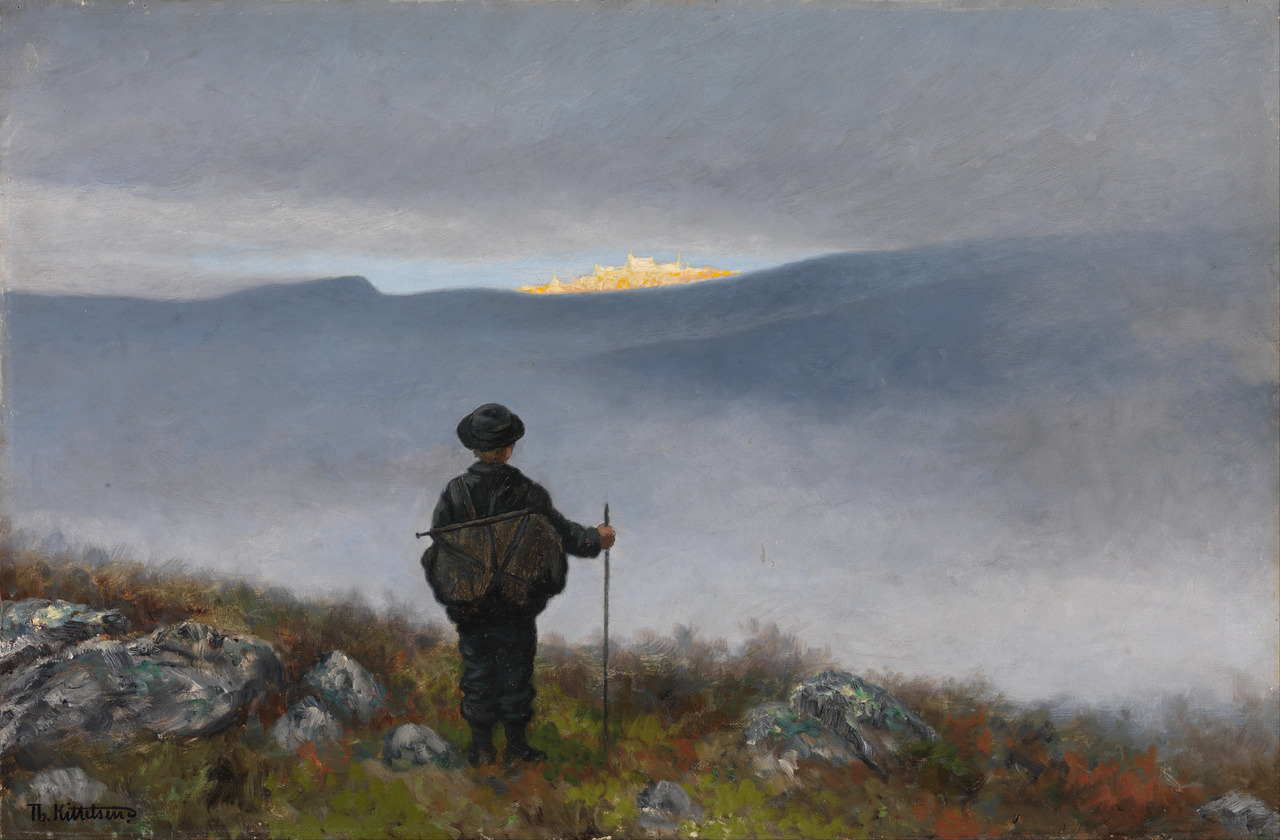
Sometimes I wish carrying a walking stick was more acceptable in daily life. Maybe it’s just my yeoman heritage or my fondness for the old ways…

A review of Scouts, Calgary 1915.

To do so now, you tend to either look like a hoodlum or the walking wounded.  Living for so long in wild country I found that a staff was a handy tool that lends some confidence when encountering a wild hog, a rutting elk, or dog.  In my professional work as a field scientist it isn’t common to carry one either due mostly to the logistics of carrying a map, notebook, compass, GPG unit, pin flags and the like.  The reality is, you only have two hands.

The author with his antler-fork walking stick and his dog begging for a walk.

However, in the perfect world of semi-fantasy that I inhabit, I tend to keep a walking stick nearby and have several on-hand at any given time.  I’ve wavered over the years as to whether or not the extra burden is worthwhile and the truth I have settled upon is “yes, mostly.”  Other than the confidence it gives in an unwanted encounter, a staff really helps a walker crossing a stream or other rough terrains when heavily loaded.

As the great traveler Colin Fletcher wrote many years ago,it converts me when I am heavily laden from an insecure biped into a confident tripedThe Complete Walker.

The staff instills confidence and provides stability for the walker.

Here are a few other ideas for a walking stick and its many uses found around the Web. I’ll post a few more pictures of my own in upcoming posts.

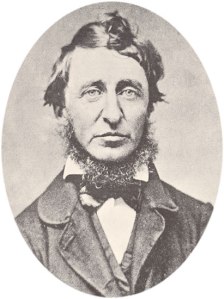
In the mean time, if you are contemplating becoming a walker yourself, or already are, you may enjoy Henry David Thoreau’s short essay on the subject.  It’s a favorite of mine from a surveyor and philosopher who spent much time walking in the woods.

Walking, 1862

Save

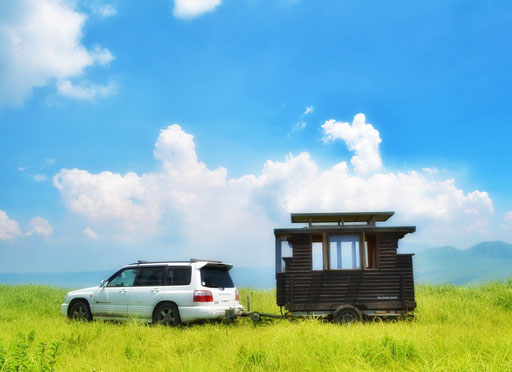
More of The Beautiful Japanese Vardo

This is a follow-up to the previous post.

I say Vardo because that’s really what it is.  You can sense that the presenter of this show isn’t too familiar with true rolling homes, caravans, vardos, or whatever you want to label them but his enthusiasm is real.  I like this home a lot but there is too much gymnastic restructuring for my taste.  I’m probably just lazy.  I’m not knocking his aesthetic or design though; they are spot-on.  Mr. Tagami fit a lot of useful ideas together to create a wonderful living space.  Several of these innovations are being integrated into my future plans.

If you haven’t seen this yet, here’s a video detailing one of his creations and the happy owners who inhabit it.

Let me know what you think…

Pipes, Varnish, and More

DSC_0113 (11)
Parked in the “workshop” area.

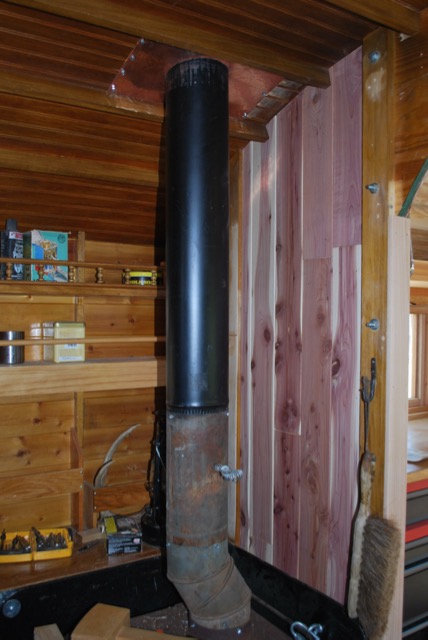
I have not been entirely idle on the vardo project but have not had time to post here.  Work life has been eating up my spare time with travel, and fun though that may be, it means nothing else gets done outside the work day.  Cutting a hole in my nice, dry roof haunted me for several months but with the aid of a high-temperature silicone stove-pipe flange, I was ready to dive in.  I didn’t want to remove the roofing panels so the cutting was difficult.  I did what I could with the circular saw and gnawed the rest out by hand with a chisel.  Not pretty, but it worked in the end.  Then it was just a matter or cutting a hole through the steel and cleaning it up with a file.

DSC_0113 (12)
The ugly hole. Fortunately it will be hidden.

I created a cover for the hole from an old, solid copper serving platter (see photo below) that looks nice, and will cover the ugly.  The gap between the layers was filled with stove gasket insulation.

DSC_0114 (11)
Matching up old, very old, and new pieces to make the connection. The offset was used so that the pipe lands between the purlins.

The upper pipe will get a coat of high heat paint while the lower portion will get stove polish along with the stove itself.  In the background, the new juniper paneling is visible.  Otherwise, the place looks like a wreck.  The mallet is handy to solve all measurement problems.

DSC_0115 (8)
The silicone flashing isn’t as ugly as I feared but still hope to pretty it up with copper sometime.

Learning from experience, I created this new chimney setup so that the outside pipe could be easily removed, if necessary, for off-road travel.  I will probably shorten the pipe by a few inches as it sticks up fairly high.  Once this was completed, I could get back to the good stuff.

DSC_0115 (7)
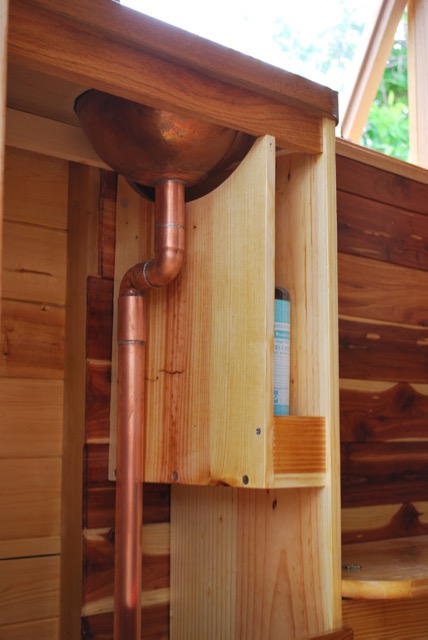
Sink area with a new-purpose-built soap holder.

In order to maximize storage space a small shelf was created to hold soap.  The size was determined by a standard Bronner’s soap bottle and it holds two comfortably.

DSC_0117 (6)
A little carpenter’s geometry.

Some scraps from the wood pile were recovered and planed down to rejuvenate them for use.  Nothing fancy here, just utility.

DSC_0116 (7)
The large under storage area is designed to hold the beautiful copper cistern from the tinker Robins.

Everything in the area has another coat of varnish so as soon as create a method of securing the Samovar, the washing-up area will be complete.

DSC_0114 (10)
First coats of varnish on the oak.

Finally, I have begun varnishing the floor.  The new oak contrasts with the old but will darken soon enough.