I have mentioned this unique little wagon before but it is worth revisiting as a near perfect mini traveller’s wagon. Günther Lorenz, a maker from Bayern designed and built this bike-towed caravan without a plan or significant financial outlay.
It makes me happy to know that this was built, fueled by beer and a dream, in three weeks worth of evenings. It weighs in at 55 kilograms empty (120 pounds) so it isn’t exactly light-weight but provides the comforts of a dry bedroom while on the road.
The body is 2 meters long by 1.04 meters wide (79 by 41 inches). The frame is constructed from 20 mm square steel tubing welded together and the 5 bows are made from 8 mm tubing covered with garden hose. The whole thing runs on 28″ wheels.
If you’re looking to build something like this, head over to Günther’s web page for a more complete photo-set. They’re thumbnailed on his page but can be downloaded and viewed at higher resolution.
Click the image to view the rest of the images. His website is in German but the photos speak for themselves.
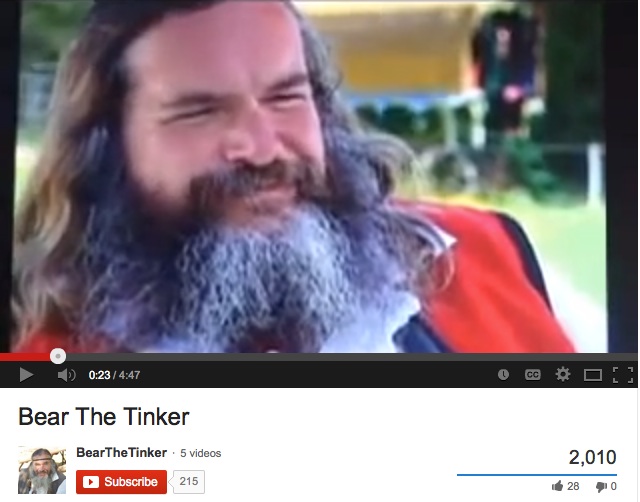
Here’s a man making his way in the modern world but likes being stuck in the late 18th century. Farrier, blacksmith, storyteller, and musician living in his bowtop.
Above is a short interview with the man himself from a few years back (opens in a new window).
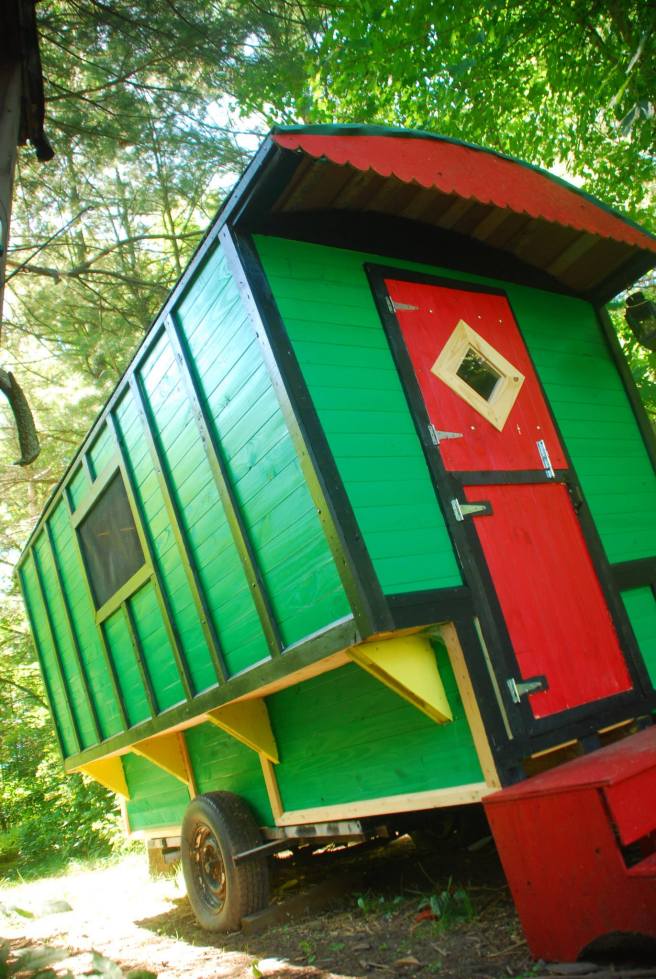
Living in the 21st century, he even maintains a Facebook presence, of sorts. Click on his new little Ledge Wagon above to see what he’s up to.
Continuing my search for backpacks and rucksacks throughout history, I keep coming across various types of boxes and baskets strapped to people’s backs. While querying the web today for variations of the Asian pack box, I saw this nifty solution. Cheap, easy to construct and extremely functional.
I can imagine this as an excellent platform for a street performer or busker. Solidly built, this can be a table or a seat and provides a high degree of protection for the contents. This one is very simply built and harkens back to a medieval concept but note the sweet dovetails holding it together. I just want a peek inside. I would be sorely tempted to fill it with compartments.
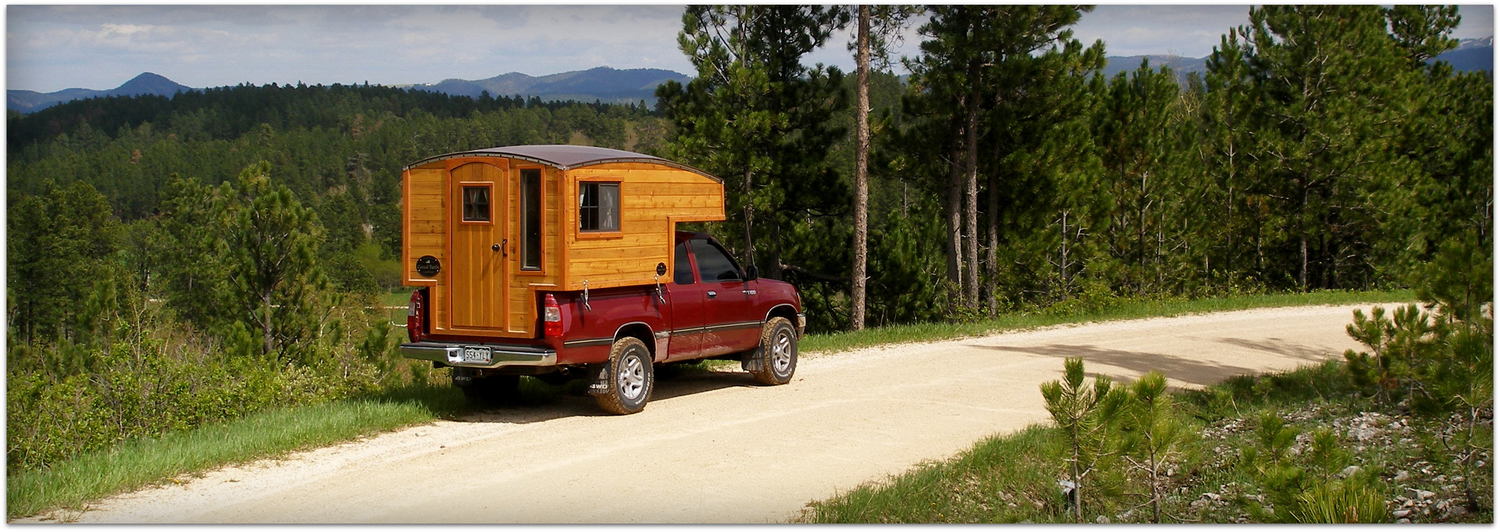
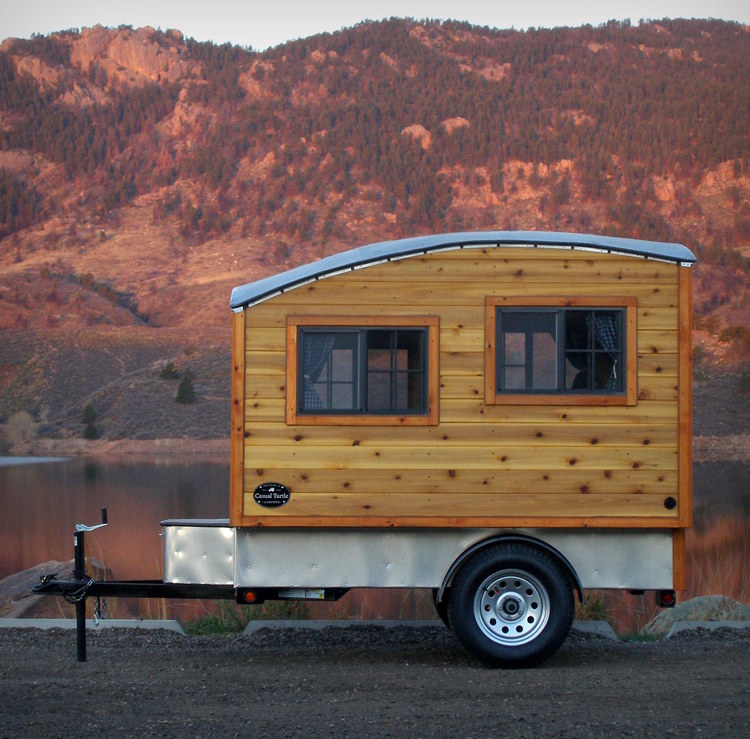
Not terribly far from the Paleotool secret lair there toils a designer and builder of unique, hand-built, small campers. Inspired by the lack of uniqueness and beauty in mass-produced campers, Peter Pavlowich put his Wood Construction and Design degree to work to create beautiful, minimalist campers for small pick-up trucks under the name Casual Turtle. These are real works of craftsmanship and simplicity and are reasonably priced for those who cannot or do not want to build their own. I particularly like the compound curves of his roof designs.
“Casual Turtle Campers was founded on the belief that wood is good, small can be comfortable, and that there is still room for simplicity in this increasingly complex world.” Peter Pavlowich, owner-designer-builder, Casual Turtle Campers.
Building on his past successes, Peter has now branched out into trailer-caravan design using the same principles as his truck mounted campers.
Meet the new Terrapin from Casual Turtle.
The new design packs a lot thought and detail into a small package. The new Terrapin is about 8’2″ long by 6’9″ wide (nearly identical in dimensions to the vardo known as the Snail). First of all, I love the roof design and have decided that if and when I build my next vardo, it will have compound curved roof like this.
“Tiny and simple” is the mot juste of this design, containing all the space you absolutely need and not a scrap more. Like the Snail, this beauty could easily accommodate two adults on an extended journey.
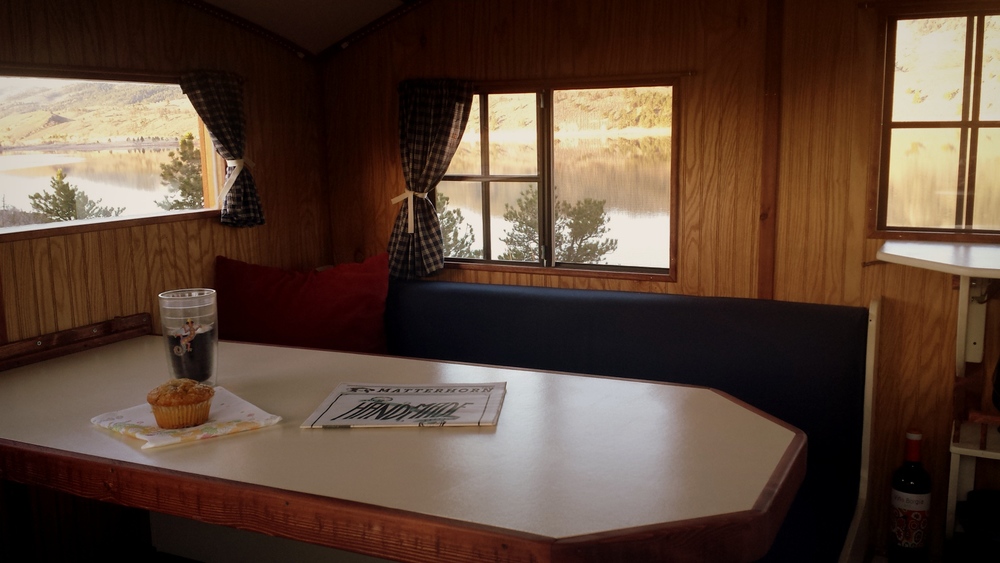
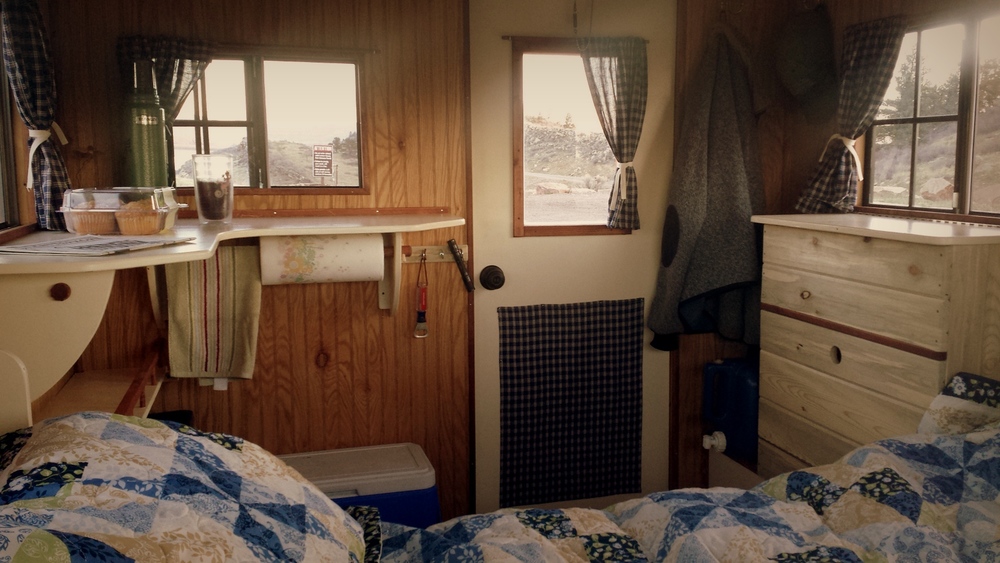
Taking inspiration from early twentieth-century design, the interior is a simple kitchenette that converts to a bed. A rich, wood interior keeps it classy and abundant windows provide light and views.
There is plenty of room for customization and in my opinion, maybe even a heat source.
Here are the spec’s from Casual Turtle’s website:
1,360 lbs
5’x8′ custom trailer frame from Sport Trail (Loveland, CO)Professionally-sprayed Reflex truck bedliner undercoating
From the Road to Glamperland Facebook page. A very interesting all or mostly wooden home built camper trailer. It has two simple slide-outs, a nice little kitchen set-up and I suspect the benches fold out to be the bed. I really like the water tank on the roof. I have been looking for a vintage looking tank to use for quite a while now but so far, no luck.
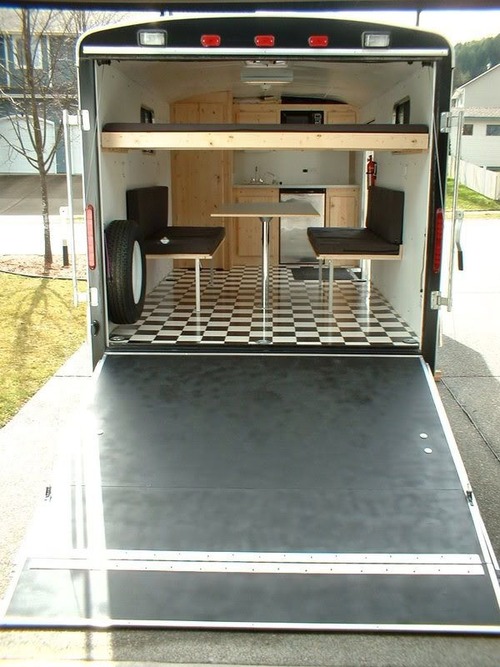
Virtually everything folds away and you still have a cargo trailer when needed. This was my initial plan before building the vardo but, well, you-know, one thing led to another, the wood got out of control, plans were pulled out of old notebooks and the gypsy wagon as we know it was born.
Nice and clean look here but I’d miss my cozy interior. This however, is a great, straight-forward design that could work for many people and is incognito from the outside.
I’m a Romano Rai, just an old didikai, I build all my temples beneath the blue sky, I live in a tent and I don’t pay no rent, and that’s why they call me the Romano Rai.
Your Daddus tryin’ to sell a mush a kushto grai. I’m a Romano rai, just an old didikai, I live in a mansion beneath the blue sky, I was born in a ditch, so I won’t ever grow rich, But that’s why they call me the Romano Rai.
Tikka, tikka, didikai, tikka, tikka, didikai That’s why they call him the Romano Rai
Tikka-tikka-didikai, tikka tikka, didikai, That’s why they call him the Romani Rai.
I’m a Romano Rai, a true didikai, My temple’s a mansion beneath the blue sky, I’m a Romano Rai, a true didikai, just campin’ around, on any ol’ ground,
But that’s why they call him the Romano Rai.
*Didikai is a term than Romanichal (British) call mixed-blood Romani.
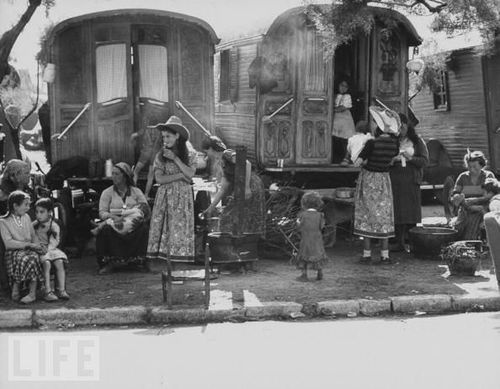
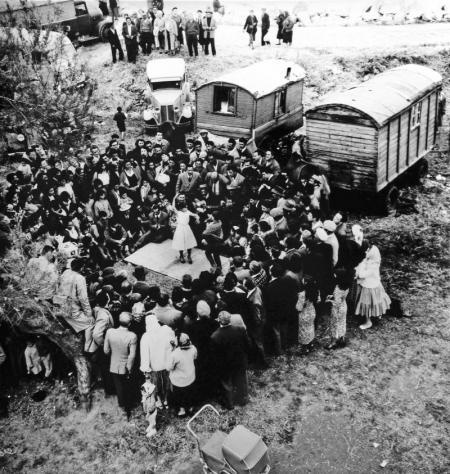
This is part of a series of images, mostly Romany, Irish and Scottish Travellers collected from around the internet. Many of these historic images found on the web are without citation. When a clear link to a source is found, I try to include it. If a source is known, please pass it on and I will gladly include it or remove it if necessary.
This is part of a series of images, mostly Romany, Irish and Scottish Travellers collected from around the internet. Many of these historic images found on the web are without citation. When a clear link to a source is found, I try to include it. If a source is known, please pass it on and I will gladly include it or remove it if necessary.


 The body is 2 meters long by 1.04 meters wide (79 by 41 inches). The frame is constructed from 20 mm square steel tubing welded together and the 5 bows are made from 8 mm tubing covered with garden hose. The whole thing runs on 28″ wheels.
 If you’re looking to build something like this, head over to Günther’s web page for a more complete photo-set. They’re thumbnailed on his page but can be downloaded and viewed at higher resolution.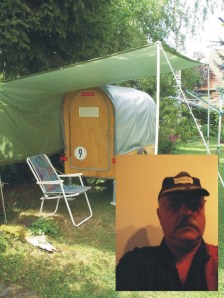








 Preindustrial Craftsmanship