“About going where he likes, for instance? Are there not certain laws of the road that forbid the tarrying by the way of caravan folks, for a longer period than that necessary to water and feed a horse or look at his feet? By night, again, he may spy a delightfully retired common, with nothing thereon, perhaps, except a flock of gabbling geese and a superannuated cart-horse, and be tempted to draw up and on it, but may not some duty-bound police man stroll quietly up, and order him to put-to and “move on?”
Gordon Stables 1886.
The RV and traveling community owes a debt of gratitude to this fine rolling home. The Wanderer was the first true luxury Land Yacht, having been given that moniker by it’s owner, Dr W. Gordan Stables. There were some Romany-style and showman’s wagons in use on the roads, and the Salvation Army “barrows” (see Caravans for Christ) but Stables’ design expanded upon the basic plan as a luxurious moving home that well-to-do Victorians could understand.
A retired Royal Navy doctor, Stables commissioned the Wanderer to be built and began a 1300 mile tour in 1885. Prior to this, living wagons were mostly pragmatic affairs with few creature comforts, primarily employed for housing work crews. The base specifications for the Wanderer are 30 feet long (9.15 meters) and she weighed approximately 4000 pounds (1815 kilos). Two years on the road led Stables to conclude that “one about twelve feet long would serve every purpose, and be easily moved with one good horse. It would also be more easily drawn into meadows at night.”
The Wanderer. Image after Nerissa Wilson, Gypsies and Gentlemen 1986, pg 53.
Fortunately, the Wanderer was owned and loved by an avid writer so there is a lot of information about life in this beast. Dr Stables described in his writings several important amenities which we can benefit from today:
“Under the rear door the broad steps are shipped, and at each side is a little mahogany flap table to let down. These the valet finds very handy when washing up. Beneath each of these flaps and under the carriage is a drawer to contain tools, dusters, blacking-brushes, and many a little article, without which comfort on the road could hardly be secured.
Under the caravan are fastened by chain and padlock a light long ladder, a framework used in holding out our after-awning or tent, a spade, and the buckets. But there is also space enough here in which to hang a hammock.”
Gordon Stables. “The Cruise of the Land-Yacht “Wanderer”; or, Thirteen Hundred Miles in my Caravan.”
If I could only employ a valet to do the washing up!
Line drawing of the Wanderer’s floor plan.
As a career Naval officer, Dr Stables was clearly familiar with living in small spaces and understood that neatness and a place for everything was key to comfort. To explain the layout, Stables continues with a more detailed description of his little home:
“Entering from behind you may pass through A, the pantry or kitchen, into B, the saloon. Folding doors with nice curtains divide the caravan at pleasure into two compartments. C is the sofa, upholstered in strong blue railway repp. It is a sofa only by day. At night it forms the owner’s bed. There are lockers under, which contain the bedclothes, etc, when not in use, as well as my wardrobe. D is the table, over which is a dainty little bookcase, with at each side a beautiful lamp on brackets. E is the cupboard, or rather the cheffonière, both elegant and ornamental, with large looking-glass over and behind it. It will be noticed that it juts out and on to the coupé, and thus not only takes up no room in the saloon, but gives me an additional recess on top for glove-boxes, hanging baskets for handkerchiefs, and nicknacks.”
Illustration from Stable’s book about his 1300 mile journey in the Wanderer.
In this era of slow-moving traffic, regular furniture was used with few “built-in” units used, more like a normal Victorian parlour. I love the fact that music seems to have been very important to the good Doctor. He describes his “furniture” as:
“a piano-stool and tiny camp-chair, music-rack, footstool, dressing-case, a few artful cushions, pretty mirrors on the walls, with gilt brackets for coloured candles, a corner bracket with a clock, a guitar, a small harmonium, a violin, a navy sword, and a good revolver.”
The list seems very sound and familiar to me and shows preparedness for most contingencies on the road, from raucous music parties to a quiet evening in the saloon, with the ability to hold off highwaymen and marauders as necessary. I think he is definitely a kindred spirit. I guess I need to add a sword to my traveling accessories now.
Artist’s rendering of the Wanderer’s interior.
Above we see the valet hard at work, after Wilson 1986. Note the under seat/bed storage visible here. I became very curious about the tricycle and found that the good Doctor not only loved caravanning but promoted the new past time of cycling as an excellent and healthy way to tour Europe. Thinking like a Navy man, he thought of the bike as a “tender” to the caravan; a land dinghy of sorts.
The Wanderer’s flooring choice was a practical one. Linoleum was a relatively new product but had shown itself to wear well under difficult conditions and remain flexible (perfect for a rolling home). To further beautify the main room, Stables chose a Persian rug to overlay the Linoleum.
A filter much like that described in the Wanderer may be seen in the lower right of this advertisement.
On a practical note, the Wanderer was fitted with a carbon-silicated water filter as the general supply was still very poor in much of Britain. Hygene was attended to in the after cabin at the marble washstand with a small gravity-fed water system. The after cabin (really the domain of the valet) also contained a Rippingille cooking-range, a truly modern convenience in portable stoves of the time.
The Rippingille cook stove.Rippingilles Stoves Magazine Advert ca. 1910. Don’t they look happy?
“The Rippingille cooking-range is a great comfort. On cool days it can be used in the pantry, on hot days—or, at pleasure, on any day—it can be placed under our after-tent, and the chef’s work got through expeditiously with cleanliness and nicety. ” Stables 1886.
-Note to self: get a chef.
A brief stop for a meal. As with most caravans, the Wanderer carried tentage and awnings to extend the living space. The little Rippingille cooking-range can be seen next to the cook in the A-frame tent.
Dr Stables traveled in style, apparently employing a cook, coachman, and valet (it’s not clear to me if they are one-and-the-same) and had little monetary concern along the way between his pension and some success as a writer. He did, however, pave the way for the “gentleman caravanner” and helped start a trend that many of us are still emulating in our own way today. This style of off-beat living eschews the tin-can clones of the RV park and brings a level of style and class to living on the road, whether it be for a week or a year.
A couple of well-dressed Scotsmen; Stables (right) and unknown man (possibly his valet) stand in front of the Wanderer. That’s Bob the dog lying next to his master. You get a real sense of the scale of this caravan in this image.
Finally, what became of the Wanderer? A few years ago, she was safely ensconced in the Caravan Club’s site in the Costwolds, England. It seems that she never left safe hands and therefore didn’t suffer the rot and destruction that was the fate of most of the early caravans. She is still a sight to see and many are thrilled that the decision was made to display this piece of history instead of storing it in a less accessible facility.
Colin Elliott from the Caravan Club with The Wanderer. Click the image for a short article about the preservation.The Wanderer still looks immaculate inside with beautiful woodwork and attention to detail.
About the book, The Cruise of the Land Yacht Wanderer, Thirteen Hundred Miles in my Caravan. After the descriptions of the Wanderer itself, much of his book is simply a travelogue of late 19th Century Britain with encounters and minor adventures along the way. However, there are some great morsels of information hidden throughout and a delightful chapter about “Caravanning for Health” with his opinions as a career Medical Doctor. Also, he wraps up with some good advice for the traveling gentle-person about living in a small space on the road. It’s a great little read and I highly recommend it to the caravan set. If it cannot be found any other way you can read his book by downloading it from Project Gutenberg; The Cruise of the Land-Yacht “Wanderer”.
This is a requested repost of a series I did almost five years ago when I took my eight foot single-axle vardo caravan and reconstructed it into a 12 foot body on a robust tandem trailer.
After adding up the mileage from the log book I keep with the Vardo, I see we have clocked over 21,000 miles since she was first put to the road in February of 2010. I have, no doubt, missed some small side trips and there are excursions I know I forgot to record, but this is, more-or-less, where we stand. The trailer frame itself was high-mileage but well-maintained when I acquired it back around 2002 having first been owned by a university, then by a private individual before coming to me.
My “before” photo. Rated at 2,000 lb. gross vehicle weight. It was solid and well-built but already showing some signs of age and life in the salt air of the Pacific Coast.
The real beauty of this trailer is the square tube construction and heavy-duty hitch. Starting small was wise for me as it constrained the build and forced me to squeeze every inch out of the design.
On the way to becoming the “after” photo. The full box body nearly done.
I eventually replaced the original jack with a more heavy-duty model and replaced the jack wheel with a large foot for stability. For safety, the tires were replaced when the trailer was re-purposed due to age, not wear. If you missed it and want to read more about the construction of the micro house we call a vardo, GO HERE.
The Vardo; Where are we now? What do we want?
This little living wagon is great and serves it’s function well. It’s a little beat up and showing it’s miles; living and traveling in all weather, a lot like it’s owner. But still, it’s a little homey shelter from the elements, providing all the necessary comforts, and making travel a breeze. With about 49.5 square feet of living space inside (4.6 sq. meters) it is spacious for one and comfortable enough for two adults who do most of their activities outdoors. However, I have long pondered placing my vardo on a longer trailer, either to gain cargo space for tools and the like OR to extend our living space. Sticking with the Minimalist thinking, I decided long ago that 12 feet was about the maximum I want in a trailer. With a standard 4 foot hitch that makes for 16 feet (4.9 meters) dragging behind the truck or about the length of a second truck. I did the math on the new space and I liked it.
So back to it. What do we really need?
Thinking of the many scenarios we find ourselves in, some added amenities could be handy in certain situations. From wilderness areas in Utah to posh campgrounds in San Diego, highway rest areas in the Midwest and museum parking lots in Santa Fe, or even stealth camping on a city street, our needs are varied. Although the vardo was built as a wilderness base camp, sometimes it feels like a miniature fortress or space station or temple of solitude. When we’re camping in the remote west, beyond the confines of civilization and snooping gawkers, it’s not a problem spending most of our time outdoors, using a campfire or cook stove to fry up some bacon and boil some coffee, but try that in a grocery store parking lot in the city and you will only find trouble. But we still essentially live outdoors. We don’t need a dance floor inside.
Two thing we want that this space can supply:
A simple kitchen. By this I don’t mean a Martha Stewart style, butcher block countertop with rotating spice racks, dual ovens and a six burner ceramic-top range. We need a dedicated space to store our cookware and food, do some prep-work, and make simple meals in any weather, beyond the prying eyes of the local gendarmerie.
Secondly, we want more storage space for our personal belongings when we finally hit the long open road and don’t look back. Tools for making things and raw materials alone take up a lot of our space. Leather, wood, sewing supplies, fasteners, etc. all require more space than we have. On top of this, a large, flat work surface would be a nice addition indoors.
After several (many) sketches and mock-ups… Voila! I think we nailed it, the vardo formerly known as the Snail reborn as Nautilus 78. Even though we know that nothing comes from nothing, our minds like to think of things as having a beginning, middle, and end.
So in that sense, here’s to our new beginning.
The new foundation. Tandem wheels, brakes, breakaway safety system, LED lights and 7,000 GVWR. Let’s hope we’ll never need this much trailer.Too many badges, certificates and insignia. Still, and excellent buy I think.First things first. The heavy wooden floor must go.
During the heyday of Caravan living it is important to remember that these were rarely the dwelling of a loner. The Caravan was the hub of the nuclear family and groups of wagons represented larger, extended family groups and allies.
Every traveler has a campfire has the center of daily life. The hearth has been our home for 1.5 – 2 million years now. No wonder it fascinates us and brings so much comfort.
Nomads in a stationary culture are often tolerated at best and left only marginal space to congregate. This will probably never change.
These high-end vardos with fancy covers are probably “gentlemen travelers,” the antecedents to modern RVers.
Yes, I know that Traveller has two Ls in our title but since we’re looking at Britain and the Continent that’s how we’re spelling it.
Well this is exciting. I got interviewed at winter count near Florence, Arizona back in February.
It’s heavily edited from a much longer discussion but I don’t think I sound too stupid here talking about the Vardo. The interview is very close-up and tight but you can get a feel for the interior layout. There is a lot of good stuff on the Cheap RV Living website and I’ve been a reader for a very long time. Check it out.
A look at the origins and evolution of our favorite camp stove…
This post was going to be a few words about the Primus stoves we all love and some images I’ve collected from around the web. As usual, I found myself rambling all over the topic without a clear direction but here is a bit of an overview of liquid fuel stoves and how they have evolved over the past 150 years. Clicking the image will link to a larger version in most cases.
Outdoor cooking has become something of a lost art for those of us raised in the industrial world, but not too long ago, what we think of as camp cooking was just plain cooking. Several major advances made in the 19th and early 20th centuries resonate in our lives without a second thought from most of us. Most of our grandparents or great-grandparents cooked with solid fuel (mostly wood, peat, manure, or charcoal) and their grandparents may have felt fortunate to even be able to cook indoors in bad weather. Much of the world still cooks this way and it is an eye-opener for those raised in the more industrialized countries if and when they travel abroad.
In the 19th century, the Caravan Craze, global expansionism, and long-distance campaign warfare sent massive numbers of otherwise “civilized” people back to the outdoors; often with high expectations about the board-of-fare. Although we, as a species, have cooked over campfires for many thousands of years, this is not always convenient or desirable; whether for speed, lack of fuel, or need for a low profile in the hedgerows. An early response to this need was the brazier or hibachi-type grill reinvented on numerous occasions in various parts of the world. These stoves can use small wood or charcoal but are heavy, smoky, and need large volumes of solid fuel for sustained use. Not a good option for the traveller (sic). When coal oil and kerosene became common, liquid fuel appeared to be the answer.
Tea at the Caravan with the Classic Svea Stove.
Although common now, liquid fuel stoves have not always been a good or safe choice for cooking on the road or in camp. Early portable stoves used a wick and some variety of coal oil for the fuel. The flame created with a wick is relatively low-temperature, causing incomplete combustion.
In fact, the early instructions for safe stove use are nearly the same as that of fireworks.
“LAY ON GROUND. LIGHT FUSE. GET AWAY! – USE OUTDOORS ONLY – UNDER ADULT SUPERVISION.”
Another feature of the earliest wick stoves, due to their relatively low burning temperature, is that they exude fumes and soot, like a low-quality oil lamp. This sooting and smoke make them unpleasant at best, especially in confined spaces. Though not a terrible option for the 1850s, they are nothing as good as what would come in the next generation.
Soyer stove.
The advancements of Alexis Soyer – The contraption above is one of the many inventions given to us by Alexis Soyer, celebrity chef and cooking guru of mid-19th century Britain. Many of his cookbooks are still referenced and can be found for free on the web. He was, by the way, born a Frenchman but we can forgive him this oversight for his many wonderful contributions to the world of food.
Not only did Mssr. Soyer invent several useful contraptions for cooking, but he is credited with organizing the first Soup Kitchen to help the starving Irish during the Famine.
As a further claim to fame, the large unit stove he developed for the British army during the Crimean War was such and excellent design it was still regular issue 120 years later. But I digress from our theme.
Seen in use above, this little stove was revolutionary for the time but still left much to be desired, especially if one wanted to cook with it indoors. I don’t believe you’d catch a sane cook using something of this sort on an actual tablecloth unless it was made from asbestos but it seemed like a good idea for the advertisement. In the 19th century, both camp and home cookery were beginning to change drastically; up to this time the two were not very different. Along with improvements in stoves, better cooking pots, and roasting pans, other kitchen gadgets were being developed to help make cooking better and easier. A humble and often overlooked kitchen appliance was invented in this period…
The wind-up cooking timer –
Soyer’s Alarum.
This little beauty is something that all modern cooks take for granted. It seems obvious now, but Soyer realized that mothers, chefs, and camp cooks have many things to attend to at once. He wisely decided that a dinging countdown timer timer could take some of the strain away from cooking and make for better prepared meals.
The coming of the pressurized stove – The Crimean war, the Raj in India, and other colonial ventures undertaken during Queen Victoria’s reign spurred on great advances in campaign living and long-term camping. The East India Company and the regular military encouraged officers to bring the comforts of home as whole careers were spent thousands of miles from home creating and running an empire. From this period, the Brits gave us great folding furniture, camp bedding, portable furnishings, and the Gypsy caravan but it took a Swede to take us to the next level, and camp technology has never looked back.
Lindqvist’s patent covered the burner, which was turned upward on the stove instead of outward as on the blowtorch.
Improvements and variations came quickly after their introduction.
…The Primus No. 1 stove, made of brass, consists of a fuel tank at the base, above which is a “rising tube” and the burner assembly. A steel top ring on which to set a pot is held above the burner by three support legs. Other Primus-style stoves may be larger or smaller, but have the same basic design. The No. 1 stove weighs about 2½ pounds, and measures about 8½ inches high with an overall diameter of just under 7 inches. The tank, about 3½ inches high, holds a little over two pints of kerosene and will burn for about four hours on a full tank.
We think of this type stove as a camp stove but they were marketed far and wide for household use as well.
…Prior to the introduction of the Primus, kerosene stoves were constructed in the same manner as oil lamps, which use a wick to draw fuel from the tank to the burner and which produce a great deal of soot due to incomplete combustion.
The Primus stove’s design, which uses pressure and heat to vapourize the kerosene before ignition, results in a hotter, more efficient stove that does not soot.Because it did not use a wick and did not produce soot, the Primus stove was advertised as the first “sootless” and “wickless” stove.
These stoves are still celebrated worldwide and are in use on every corner of the planet. They are a labor-saving device that frees their owners from fuel collection and actually lower airborne pollutants in the immediate area. They are also credited with limiting the natural deforestation that accompanies humans living in concentrated communities.
The ads give a hint as to how far and wide the Primus stove reached around the globe.
This Radius ad is interesting as it shows the kinship or reapplication of technology from blow torch to stove with only a little modification by the engineers. Below, this advertisement for an aftermarket pressure cap shows the need for improvement as stoves could easily become clogged and explode as a pressurized bomb. I narrowly escaped this hazard myself when my stove nozzle became clogged on an outing. A chemical fire-extinguisher is never a bad Idea to have handy living on the road.
The designers continually improved this simple device with, among other features, a safety cap that intentionally failed at a lower pressure than that which would have caused the stove to turn into a brass grenade. Although safety features were invented to reduce the number of serious accidents, I suspect these little contraptions are responsible for a fair number of burns and the loss of more than a few homes, autos, and RVs.
As with any successful product, there were and are many imitators of this relatively simple design and many still on the market models come from former Soviet Union, China, and India.
Judging by the marketing, they bring nothing but bliss and happiness to the laboring mother… but seriously, these devices were probably a huge boon to the housewife no longer in need of wood or dung for cooking fuel.
The switch to gasoline –
Although introduced in the early 20th Century, the Second World War and subsequent decade saw widespread popularity of the gasoline stove for military use. Unlike kerosene, gasoline (or purified “white gas”) is truly explosive, not just flammable. Placed under high pressure, these are potentially bombs. However, gasoline or derivatives can now be found almost anywhere on earth with the spread of the internal combustion engine, making this a fuel of choice for international travelers. As per usual with us humans, we chose practicality and convenience over safety.
The iconic early stove of this design is the Svea 123 as it it is a beautiful combination of design features including simplicity of construction, easy field repair, and heating power.
Classic Svea 123 and a close cousin.
Here’s a link to lighting the Svea 123 (and a little info about why they are so cool): “DEMYSTIFYING THE SVEA 123“
n.b. The original link was dead when I last checked but I have saved an archive copy here with credit to the author.
Variations on the theme are endless, from the Svea 123 (gasoline) to the Ultra-Primus double burner home range (kerosene). The various designs proved themselves in kitchens, on river trips, mountain tops, and in virtually every modern backpacker’s gear in one form or another. For much of the world, this style stove is still the centerpiece of kitchen cooking.
A different spin on the basic Svea design. The main feature of the 71 is it’s convenient packaging for the traveller.
Summitting Everest, a pretty great endorsement.
As a side note to history, the design was so successful that many other companies copied the essential design. Here are just a few ads for the Optimus line of stoves and lamps, another spin-off, from their own website showing a wide range of related products over the last century.
The modern era of the camp stove –
In my lifetime, liquid fuel backpacking stoves have undergone some serious refinements but overall, the system for liquid fuel stoves is essentially the same. Safety has been a big issue, of course, but size (decrease) and fuel capacity (increase) are probably the biggest changes. Many stoves use canister fuel (butane or propane), alcohol, or solid fuel pellets; but I won’t get into those as they are beyond our scope and interest here.
A new era; the MSR XGK multi-fuel stove.
The final round of changes came from Mountain Safety Research and its later competitors. The big innovation was to separate the fuel tank from the burner assembly and add a pressurizing system to the tank. Small but efficient details were added like the self-lighting sparker, self-cleaning tube, and the inclusion of a lightweight wind screen. I have used one of these for used with pretty good success but I still find myself choosing the Svea 123 for many journeys.
Links and Further Information –
This post is woefully inadequate in so many ways but it is meant as a quick overview of the pressurized liquid fuel stove we all love so much. Here are some links to some great information on the web.
And my all time favorite, the Svea 123. We have been friends for many years.
If you don’t already own a 123, click the images to find out more.
With aluminum cup.
The Base Camp is a specialist equipment internet retailer based in Littlehampton, Southern England since 1986. They stock classic stoves and have an excellent selection of obsolete parts.
The Fettle Box is a good source for pieces and parts for your classic stove. I have had good luck with them.
Finally, the Classic Camp Stoves Forum. Several images above were found here. Information about virtually every kind of stove available. History, art, repairs, tutorials, and reprints are all available on the Forum.
Click here for the mother load of information about Classic Stoves.
This is a pretty good setup for any outdoorsman (our outdoors woman for that matter). By 1925, the scouts had worked out a pretty good uniform and gear setup based on many old experts not the least of which was the US Army.
If there’s a bit of a paramilitary look to the scouts it certainly owes much to its military background in Britain and further as a result of the Great War. Still, there’s a lot of good info to take away from this. These are truly the essentials.
The new internet Bushcraft world has very little on the old-timers knowledge.
At the end of the first decade of the twentieth century, the young artist Frances Jennings became a semi-invalid and was advised by her doctor to spend as much time as she could in the open air. Being a Victorian lady at loose ends, the obvious choice was to take to the open road. Her simple rig and a good spirit served her well. As described by J. Harris Stone:
She is extremely delicate, partially paralysed, and her doctor told her that she should practically live in the open air. Being of an active and practical mind she set to work to see how she could, within her means, carry out the drastic requirements of her medical adviser. She joined the Caravan Club, and all the assistance, in the way of pitches and introductions, was of course afforded her. Her desire was to take to the road and live altogether in the open air in rural parts of the country. Her cart—it can scarcely be called a caravan—she describes as “strange and happy-looking.” It is four-wheeled, rather like a trolley, and painted bright blue, with a yellow oilskin hood—something like a brewer’s dray in shape.
Beauty in a caravan is in the eye of the beholder.
“I carry,” she tells me in one of her letters from a pitch in a most out-of-the-way spot in rural Gloucestershire, ”a hamper of food, and one of soap and brushes and tools, etc., and a box of books, a small faggot of wood for emergencies and a gallon can of water. I have a covering of sheepskins with the wool on them, and a sack of oats, bran, chaff, hay, or something to feed my little ass upon. Also I keep in a sack the donkey’s brush and comb and chain, etc., and the harness when not in use. I do not generally travel after dark, but if overtaken by dusk I hang out my candle lantern.”
Cooking over a campfire with the ubiquitous fire hook.
“…I build immense fires. That constitutes a great happiness to me. I have a kettle-hook and hanging pot, and I buy food in the villages. At the farms I find a plentiful supply of milk, fruit, honey, nuts and fresh vegetables. I build the fire just by the cart, with the donkey near at hand.”
Described in her first year on the road, she “sleeps in the covered cart, and she carries a few straight rods with her to drive into the ground on her pitch, on which she hangs squares of sacking across as a screen to keep off the gaze of curious watchers when she wants to sit by the fire ” and dream, and not be the object of their gaze.”
In her own Walden experience, things were not always easy or perfect. “I find great excitement, in the winter, in hearing the storms raving around me in the black of night… I feel my present outfit and way of getting along is very far short of perfection!… at present it is rather by the skin of my teeth that I manage to exist amid the elements of wind and rain and cold and space.”
Speaking of her time with the more traditional travellers, she says: “They have spoken like poets, worn silver rings on their copper hands and rosy beads around their necks; and their babies have round little twigs of hazel-nuts in their red hands. And perhaps the roof of their cart has been on the sea—the sail of a ship.”
“A man is rich in proportion to the number of things which he can afford to let alone.”
Henry David Thoreau, Walden.
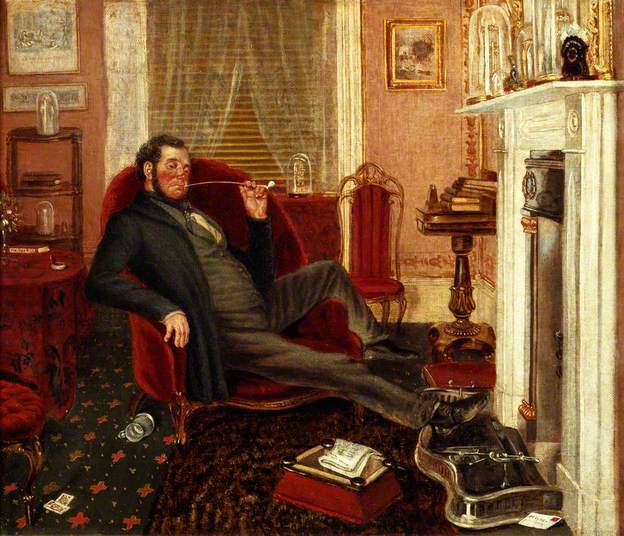
Comfort in the Parlour. Artist, John Edward Soden, ca.1836–1897.
Possessions don’t make us happy! Situations do.
Possessions, desire, covetousness, craving, yearning, lust; these forces drive humanity. Somehow each generation of moral thinkers know these things are ultimately wrong and look for something deeper. With virtually every major religion and most schools of moral philosophy reiterating this through the millennia it’s surprising any of us even pretend to a higher conscience in the age where consumption is a human’s primary role.
A Taoist monk wearing a coat made from cast-off scraps of cloth as a sign of his un-attachment.
And yet, each generation produces it’s share of radicals who cling to the hope that we can get more from life by having less.
At some point, some of us have an epiphany about what is truly important in life. It’s not the pursuit of money. Life is short, so if you don’t enjoy what you do from day-to-day, them something needs to change. Look around. How many ways are people and companies trying to sell you something you didn’t even know you wanted? Is it worth selling your soul, one hour at a time? Not to me. Not any more. Like so many people before me, I wasted much of my youth. Not all of it, but large swaths of time were sold away to an employer for mere money. Not that giving time to a cause is an evil in itself. Helping a friend, working with kids, or teaching a skill; all are noble pursuits and are, in a sense, work. These things just don’t fall into that class of mindless drudgery that makes up most day jobs.
Filling a McMansion with things you don’t need while struggling to pay the mortgage is not a road to happiness. It’s the road to enslavement.
Even in our hobbies, generally they are just fillers. Something to be done in our leisure time, and somehow not part of “real life.” Isn’t this backwards? Shouldn’t we fill our days with things we love; music, family, reading, writing, wandering, or just plain idling? We are taught to criticize the idle and there is possibly some logic to it.
At a family or village level, its easy to see how we might resent someone who doesn’t pull their weight; and rightly so, but that doesn’t mean we need to forget to live a satisfying life along the way.
I am often amazed how angry even the most privileged people become when they think someone is getting a handout for free. Taking this to an extreme, people relish in the schadenfreude*.
I think many of us are that person at some point in our lives, but with spiritual growth, this petty thinking will be only a phase.
Finding your joy. In this case, a little wine, song, and presumably, camaraderie.
We have, as a society, confused real and honest work, with mindlessly stumbling to a job. Even with a so-called “good job” most of us have no stake in our employer, other than making sure the check comes regularly. Choosing to not punch the clock does not make one a slacker. My friends and acquaintances who choose to live outside this system are the hardest working people I know.
They just don’t sell their lives cheaply for others’ gain.
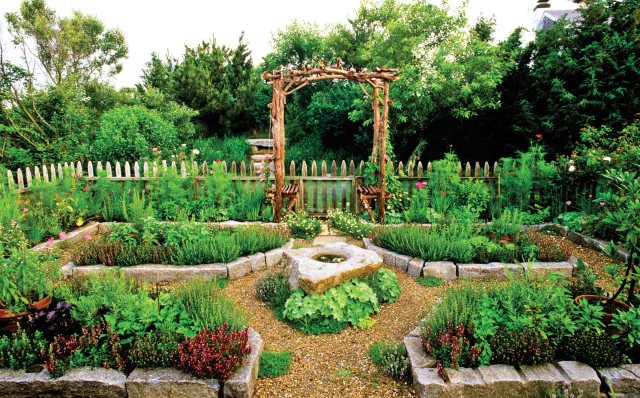
Maintaining a garden is work, but providing for yourself and family directly eliminates the constant need for the middle-men.
Taking control of your needs, even a little, alleviates some of the more abstract time demands paid out to someone else by serving yourself directly. The most negative comment I have heard about doing these things for oneself is “I don’t have enough time!” Yes, doing things like gardening or making clothes or furniture or tools takes time but at some point it becomes a trade-off. Is it a bigger waste of time to commute and hour to work each way or spend two hours with the kids in the garden?
For me, there’s no question; and I’m certainly not the first person to reach this conclusion.
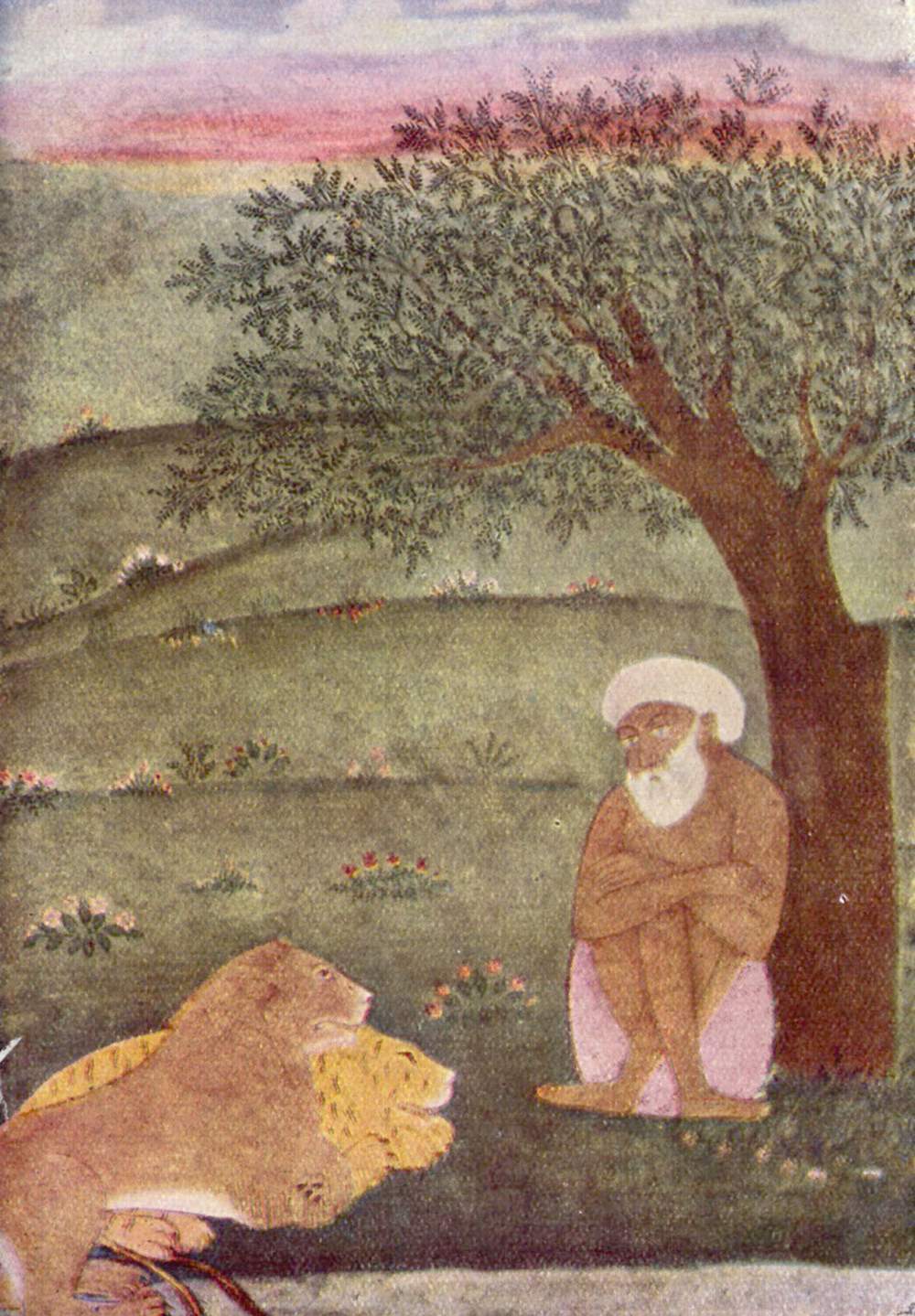
Finding your inner peace. Dervish, with leopard and a lion, ca 1650.
I think this need for, or as a result of, spiritual awakening is the driving force behind many religious and philosophical movements over many thousands of years. And, of course, they are all the one true path, religion, paradigm, whatever-you-call-it (leading to division, persecution, strife, and war; some irony, eh?). Once the epiphany hits, there is realization that the system is not really necessary. To make it through life, few possessions are truly essential.
Join me on a journey to a better life…
A well-known photo of the personal effects of Mahatma Gandhi.
“Chase your passion, not your pension.”
— Denis Waitley
*Schadenfreude– the feeling of joy or pleasure when one sees another fail or suffer misfortune; an all-too common evil in humanity.





 Preindustrial Craftsmanship