Musicians hitting the road.

Vintage photo found on Tumblr HERE. No other information was supplied. Got the guitar, dog, and stove. Let’s go…
Adventures of an Imperfect Man In Search of a Handmade Life

Musicians hitting the road.
Vintage photo found on Tumblr HERE. No other information was supplied. Got the guitar, dog, and stove. Let’s go…
Here’s a recent conversation I had, as best I can recall, of creating disappointment and maybe using the wrong words when describing the Vardo.
A woman in a grocery store parking lot jogs up to the vardo while I’m making a sandwich shouting, “Oh my gosh! That is so cool! Wow! Is that a Tiny House like on TV? Can I have a look inside?”
“Yes, of course. You can look inside.” So far, it’s progressing just like a hundred other conversations I’ve had over the years.
“Is it like the little TV houses? You know, like on that show?”
“I don’t know the show but it’s actually a little camping caravan.”
“It’s not a Tiny House? Oh, never mind then,” turning on her heel she walked away without a backward glance. Then to another gentleman walking towards us she shouts, “It’s nothing. It’s not like the Tiny House Show” shaking her head in disappointment. The gentleman and I proceeded to to tour the little wagon and had a merry talk about the Vardo and having it as a traveling companion.

A Clarification – Something I find myself explaining on the road when pulling the little caravan is the difference between a Tiny House and a true caravan or vardo. A Tiny House is just that; a very small house. Because of codes and strong laws about housing in the Industrial Nations, Tiny Homes are usually placed on a trailer for legal and logistic reasons. This doesn’t mean that most Tiny Houses should or could be dragged all over the country. That’s not really the point. They are generally too heavily built (rightly so) and use materials like factory-built house widows and normal pitched roofs. While these make for a nicer living structure they are not designed for the sustained tornado-like conditions and severe jarring that come from over-the-road travel.

When the world moved a little slower, some of these issues were not as important, such as real glass windows and hurricane-proof roofs, but now, we certainly don’t want parts to fly off at 70 miles per hours on the highway, or to show up in camp with shattered glass on the bed.
Definitions:
Tiny House – Very small home often mounted on a trailer frame. Designed to be towed to a final location or towed for occasional moving.
Vardo or Caravan – Small dwelling designed to be regularly towed to new location.
A great historic image of the long road ahead to start your weekend off right.
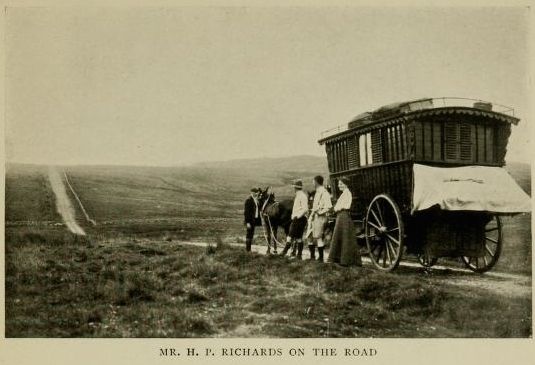 It’s always a good time to hit the road.
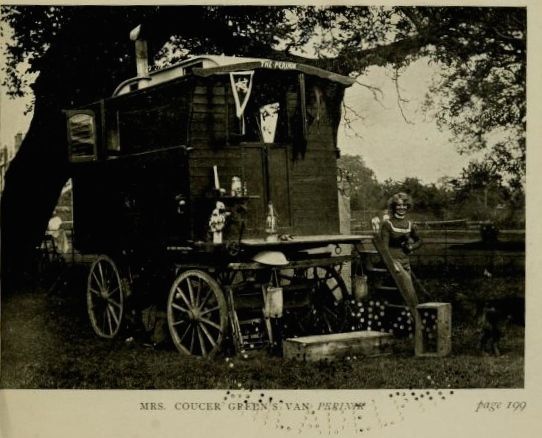
Three great and rare books have come to me in the very recent past. Each has it’s own merits and is full of great stuff. I am scanning, reading, and summing up some excellent stuff and will get it out as soon as I can. In the mean time, enjoy these great photos ca. 1911-1914 the Golden Age of Caravanning.
 More and better details on the way, including plans and historic photos that have lots to show us about design.
Because there’s always room for improvement. In my case, a lot of improvement. 
Rehung siding, new paint, fresh varnish, little fixes, and lots of cleaning. We’re hooked up to get out of town for a bit.
 Dietz lanterns, Kelly kettle, fuel, and lamp oil packed away in the pan box. The steel disk serves as a heat shield to minimize ground scarring under the fire.
 A view from the bed. Still more to pack up but things are looking good and nearly ready to go.
 The new windows are great and really perk the place up. Bright and airy makes for a pleasant space.
 Still, the little Snail is far from perfect; made on a shoestring budget during snatches of time between work and bad weather. Although I don’t live in it full-time currently I have come to see this as my home.
I had a friend shoot a few pictures of the rucksack in action. My only regret is that it could be slightly bigger. But then again, I’d just fill it with more stuff.
 It should last a lifetime and beyond.
 Not exactly dressed up here. I’m wearing the old caulking and painting shorts.
 If I remember correctly, the combined volume is about 2375 cubic inches (about 39 litres).
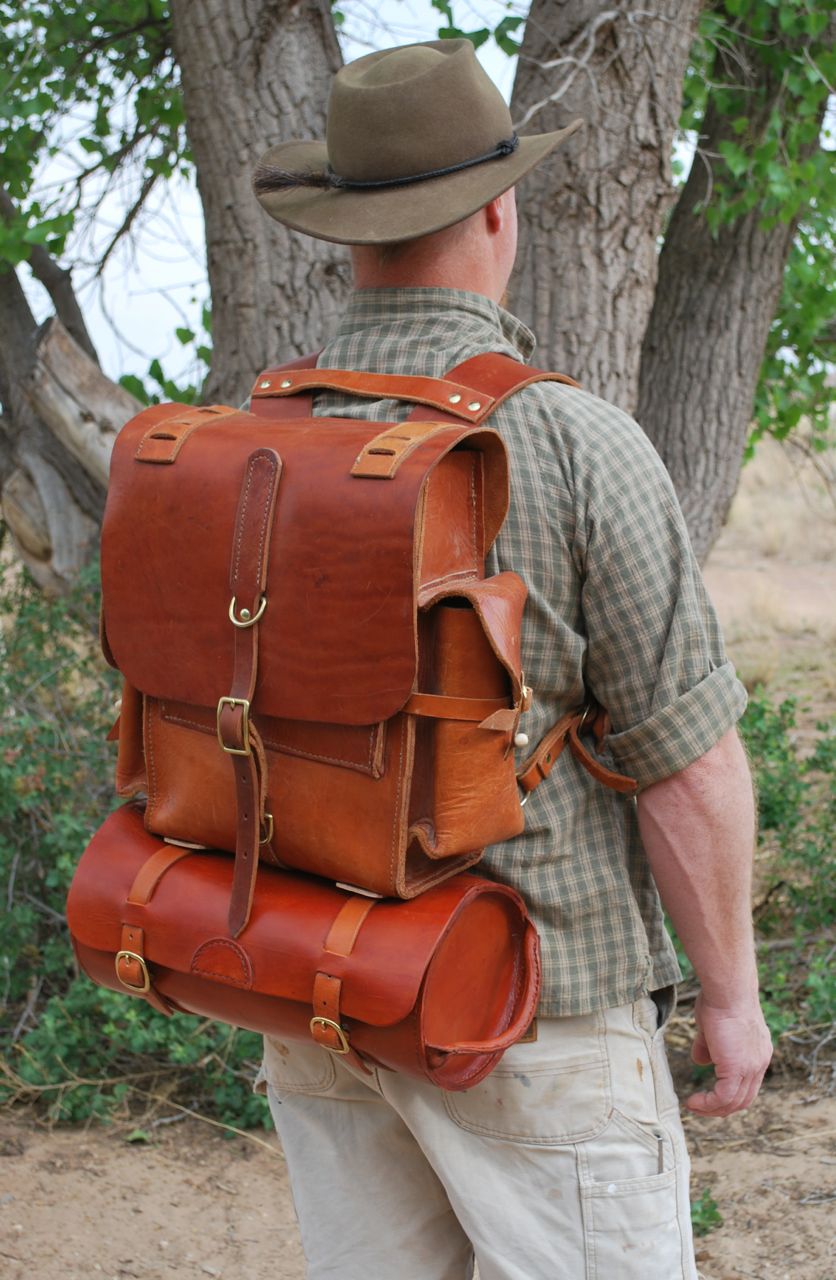
Continuing my search for backpacks and rucksacks throughout history, I keep coming across various types of boxes and baskets strapped to people’s backs. While querying the web today for variations of the Asian pack box, I saw this nifty solution. Cheap, easy to construct and extremely functional.

I can imagine this as an excellent platform for a street performer or busker. Solidly built, this can be a table or a seat and provides a high degree of protection for the contents. This one is very simply built and harkens back to a medieval concept but note the sweet dovetails holding it together. I just want a peek inside. I would be sorely tempted to fill it with compartments.
More nifty ideas to follow.
 Not terribly far from the Paleotool secret lair there toils a designer and builder of unique, hand-built, small campers. Inspired by the lack of uniqueness and beauty in mass-produced campers, Peter Pavlowich put his Wood Construction and Design degree to work to create beautiful, minimalist campers for small pick-up trucks under the name Casual Turtle. These are real works of craftsmanship and simplicity and are reasonably priced for those who cannot or do not want to build their own. I particularly like the compound curves of his roof designs.
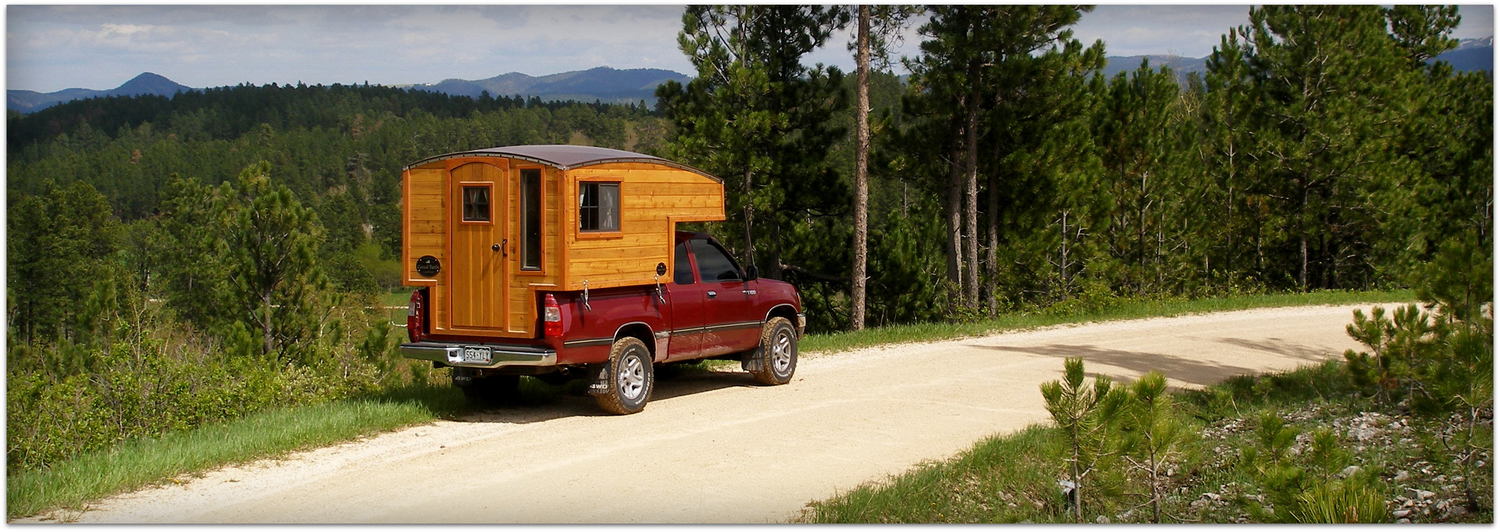 “Casual Turtle Campers was founded on the belief that wood is good, small can be comfortable, and that there is still room for simplicity in this increasingly complex world.” Peter Pavlowich, owner-designer-builder, Casual Turtle Campers.
Building on his past successes, Peter has now branched out into trailer-caravan design using the same principles as his truck mounted campers.

The new design packs a lot thought and detail into a small package. The new Terrapin is about 8’2″ long by 6’9″ wide (nearly identical in dimensions to the vardo known as the Snail). First of all, I love the roof design and have decided that if and when I build my next vardo, it will have compound curved roof like this.
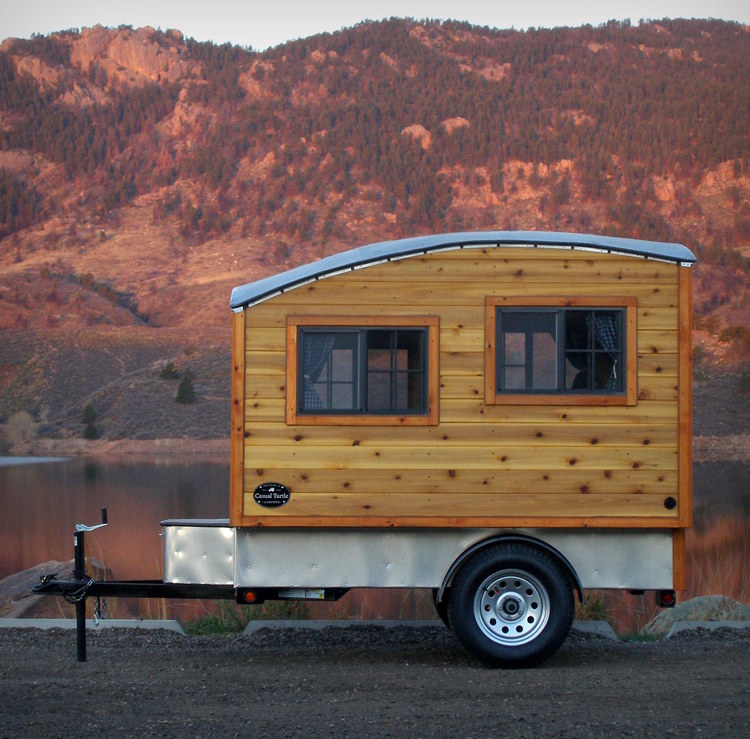 “Tiny and simple” is the mot juste of this design, containing all the space you absolutely need and not a scrap more. Like the Snail, this beauty could easily accommodate two adults on an extended journey.
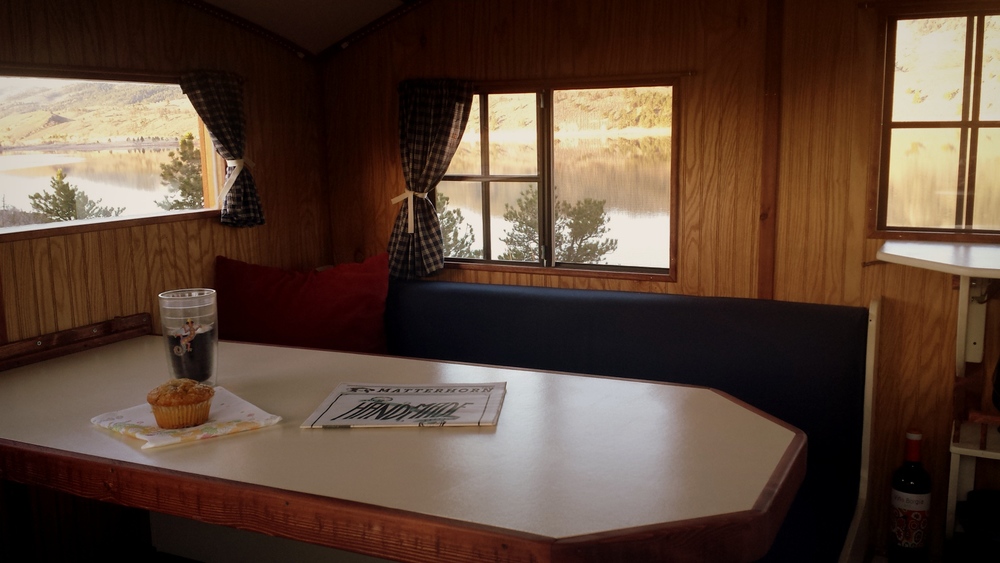 Taking inspiration from early twentieth-century design, the interior is a simple kitchenette that converts to a bed. A rich, wood interior keeps it classy and abundant windows provide light and views.
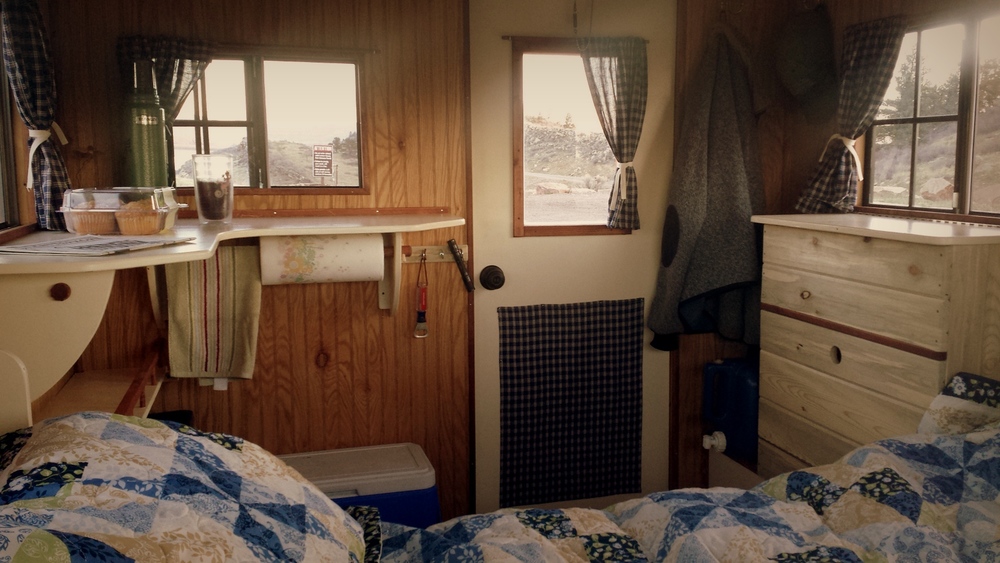 There is plenty of room for customization and in my opinion, maybe even a heat source.
Here are the spec’s from Casual Turtle’s website:
Dimensions:
All coming in at $11,800. Not too shabby.
Head on over to Casual Turtle to see more today!

 From the Road to Glamperland Facebook page. A very interesting all or mostly wooden home built camper trailer. It has two simple slide-outs, a nice little kitchen set-up and I suspect the benches fold out to be the bed. I really like the water tank on the roof. I have been looking for a vintage looking tank to use for quite a while now but so far, no luck.
A cool conversion I saw on Tiny House America:
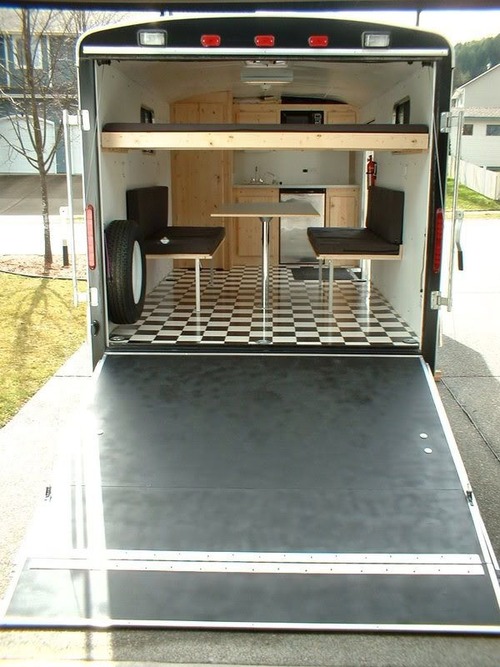 Virtually everything folds away and you still have a cargo trailer when needed. This was my initial plan before building the vardo but, well, you-know, one thing led to another, the wood got out of control, plans were pulled out of old notebooks and the gypsy wagon as we know it was born.
 Nice and clean look here but I’d miss my cozy interior. This however, is a great, straight-forward design that could work for many people and is incognito from the outside.
 Preindustrial Craftsmanship