A Fine Old Sheepherder Wagon

I love these the old sheepherder camps.  I’ve seen quite a few parked on ranches from Colorado to Idaho and even a few in Arizona.  I know they aren’t highway capable but it seems they could provide a real housing alternative for low-income minimalists who have access to land.  Far better than a housing complex or apartment for sure if you can deal with a small footprint.

Originally designed on a narrow wagon box, the builders took advantage of every square inch of space.  Since weight wasn’t really an issue, many have large stoves like the one above for heating and cooking.  As most of these wagons were homes for ranch workers in the western U.S., they needed to be prepared for extreme cold and windy environments.  When I was building my vardo, I took a fair amount of design inspiration from these wagons, adding their vibe to the more European designs I was ingesting.  My stove is small and I envy this one above; at least the cook top.

Off-the-shelf or build it yourself?  It’s the details of hand-built structures that make them stand out and this chimney cap is no exception.  This looks far more interesting to me than the local hardware store option.

The photos are from Ken Griswold’s Tiny House Blog.  If you haven’t figured it out yet, I’ve been a fan of his site for a long time now and recommend it for anyone with an interest in Tiny Homes.  Here’s a link to the full article about Lorna’s wagon.

Save

Scout Staff Hiking Stick

Sometimes I wish carrying a walking stick was more acceptable in daily life. Maybe it’s just my yeoman heritage or my fondness for the old ways…

A review of Scouts, Calgary 1915.

To do so now, you tend to either look like a hoodlum or the walking wounded.  Living for so long in wild country I found that a staff was a handy tool that lends some confidence when encountering a wild hog, a rutting elk, or dog.  In my professional work as a field scientist it isn’t common to carry one either due mostly to the logistics of carrying a map, notebook, compass, GPG unit, pin flags and the like.  The reality is, you only have two hands.

The author with his antler-fork walking stick and his dog begging for a walk.

However, in the perfect world of semi-fantasy that I inhabit, I tend to keep a walking stick nearby and have several on-hand at any given time.  I’ve wavered over the years as to whether or not the extra burden is worthwhile and the truth I have settled upon is “yes, mostly.”  Other than the confidence it gives in an unwanted encounter, a staff really helps a walker crossing a stream or other rough terrains when heavily loaded.

As the great traveler Colin Fletcher wrote many years ago,it converts me when I am heavily laden from an insecure biped into a confident tripedThe Complete Walker.

The staff instills confidence and provides stability for the walker.

Here are a few other ideas for a walking stick and its many uses found around the Web. I’ll post a few more pictures of my own in upcoming posts.

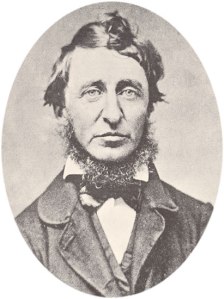
In the mean time, if you are contemplating becoming a walker yourself, or already are, you may enjoy Henry David Thoreau’s short essay on the subject.  It’s a favorite of mine from a surveyor and philosopher who spent much time walking in the woods.

Walking, 1862

Save

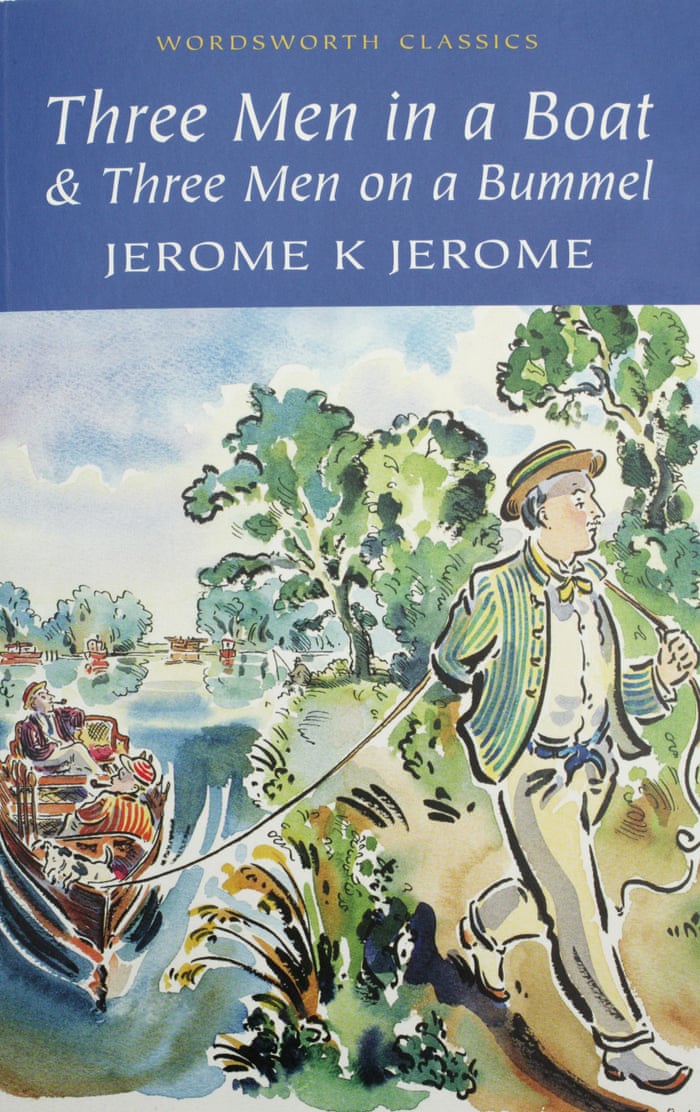
Three Men in a Boat (a book of subtle humor and deep philosophy)

“Let your boat of life be light, packed with only what you need—a homely home and simple pleasures, one or two friends, worth the name, someone to love and someone to love you, a cat, a dog, and a pipe or two, enough to eat and enough to wear, and a little more than enough to drink; for thirst is a dangerous thing.”

~ Jerome K. Jerome. “Three Men in a Boat.”

I highly recommend this little book as an English classic about three young and idle gentlemen in need of a holiday; filled with good humor, philosophy, and observations about life.

Yet Another Sheepherder…

(from the Paleotool vault)

I love these things.  I saw quite a few parked on ranches from Colorado to Idaho last week.  I know they aren’t highway capable but it seems they could provide a real housing alternative for low-income minimalists.  Way better than a housing complex or apartment for sure.  The photos link to Ken Griswold’s Tiny House Blog.  If you haven’t figured it out yet, I’m a fan of his site.

I took a fair amount of design inspiration from these wagons but added a bit of class along the way.  I wouldn’t mind having a cook stove like this one though.

Off-the-shelf or build it yourself?  I love these details in hand-built structures.  This looks way better to me than the local hardware store option.

Have a look at Lorna’s old wagon here.

Save

Save

More of The Beautiful Japanese Vardo

This is a follow-up to the previous post.

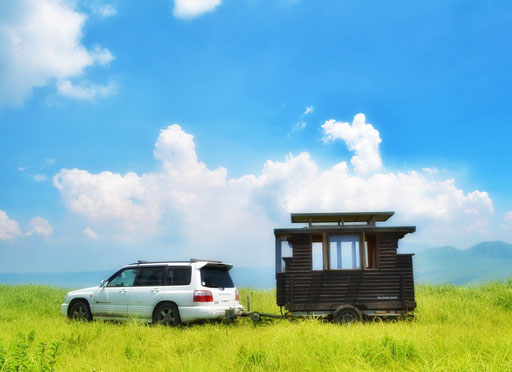
I say Vardo because that’s really what it is.  You can sense that the presenter of this show isn’t too familiar with true rolling homes, caravans, vardos, or whatever you want to label them but his enthusiasm is real.  I like this home a lot but there is too much gymnastic restructuring for my taste.  I’m probably just lazy.  I’m not knocking his aesthetic or design though; they are spot-on.  Mr. Tagami fit a lot of useful ideas together to create a wonderful living space.  Several of these innovations are being integrated into my future plans.

If you haven’t seen this yet, here’s a video detailing one of his creations and the happy owners who inhabit it.

Let me know what you think…

Enjoy the Ride; Happy Birthday Edward Abbey

Don’t Forget to Enjoy the Ride

This is a re-post from last year.  However, I think the message is a strong one and worth think about again.

Life is short.  If you’re fortunate enough to live with the means and privilege and food security, consider yourself lucky.  When I feel low or unhappy, I always want to remember the people subjected to abject poverty worldwide through no fault of their own.  It seems that the privileged, the comfortable, and those with the least to complain about are the most vocal and judgmental and superior acting.  A few words by Edward Abbey from a speech to environmentalists published in High Country News, (24 September 1976), under the title “Joy, Shipmates, Joy!”

DSC_0326
Columbia River 2015, G.T. Crawford.

One final paragraph of advice: […] It is not enough to fight for the land; it is even more important to enjoy it. While you can. While it’s still here. So get out there and hunt and fish and mess around with your friends, ramble out yonder and explore the forests, climb the mountains, bag the peaks, run the rivers, breathe deep of that yet sweet and lucid air, sit quietly for a while and contemplate the precious stillness, the lovely, mysterious, and awesome space.

Enjoy yourselves, keep your brain in your head and your head firmly attached to the body, the body active and alive, and I promise you this much; I promise you this one sweet victory over our enemies, over those desk-bound men and women with their hearts in a safe deposit box, and their eyes hypnotized by desk calculators. I promise you this; You will outlive the bastards.

Edward Abbey

The Tobasco Donkeys, a little known musical group working at the Philmont Scout Ranch recorded a song using Abbey’s words in one of the verses.  It fits well and brings a smile to my face.

Man Powered Vardo

A desperate man with some ambition and the gumption to not be beaten can make himself a man-powered vardo (I’m thinking of you, Jim).  An alternative to homelessness with a minimum of skills and materials.

WeatherheadCaravan

In 1935 David Weatherhead, an unemployed shipyard worker from Sunderland, toured the county (England) looking for work in this one man caravan which he designed and made himself. From the Telegraph (UK).

Picture: Fred Morley/Fox Photos/Getty Images

Hamlet, A Tale of the Road Less Traveled

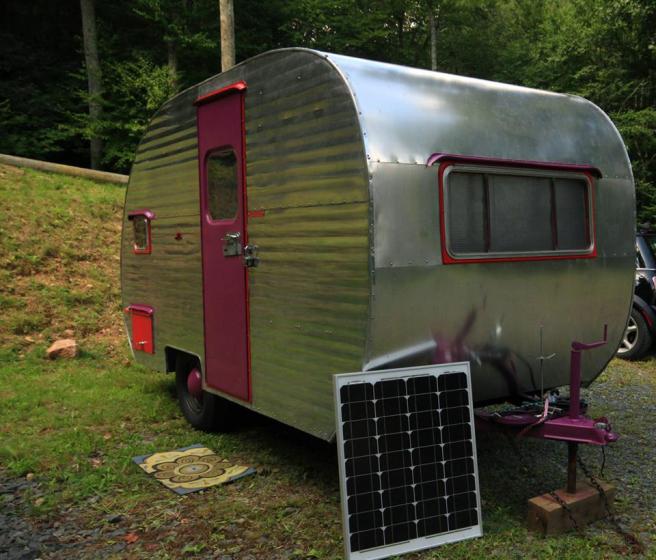
A mid-40s couple restores a tiny canned-ham trailer, leaves their mundane careers, and takes off on a journey across the continent.  Sounds pretty good to me.

When it comes to making enough money to get by, the two have a unique system.

“In our ideal setting,” Hutchison explains, “is four months of working somewhere, [or] four months of volunteering somewhere, and then four months of traveling.”

The little trailer has a Facebook link.  See more images and the restoration by clicking the photo above.
The little trailer has it’s own Facebook link. See more images and the restoration by clicking on the photo above.

FROM THE VERMONT PUBLIC RADIO ARTICLE:

“Many people spend most of their day in an office, and I was really, really tired of that and being tied to e-mail and my calendar.” Galiardi explains.

“We both had challenging careers,” she says. “The challenges were becoming, ‘How much more can I fit in?’ Rather than [fitting in] what I really want to be doing.”

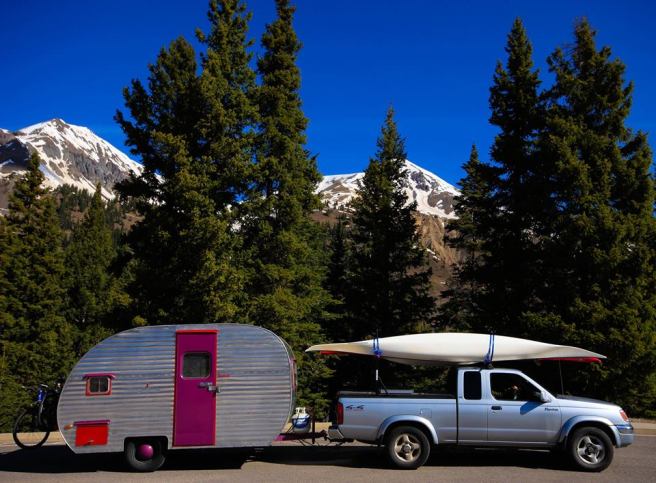
Now the couple uses the trailer as a home base, spending much of their time outdoors: kayaking, biking and hiking.

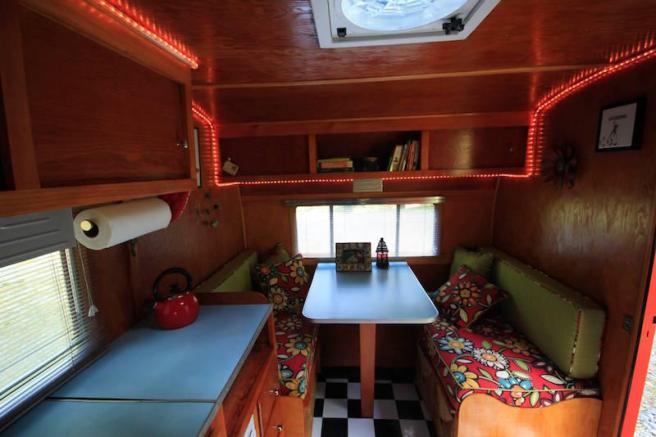
interior
Dinette area.

On fitting the few things they own into a tiny space:

“It’s a lot like a sailboat. In that, everything has to have its place,” says Hutchison. “When you go look for that thing, it’s there. And then it goes back there when it’s done.”

ontheroad

If you are interested in learning more they have been keeping a blog of their adventures over the past few years.  You can read more by clicking here: Tales from a Mid-Lifeventure.

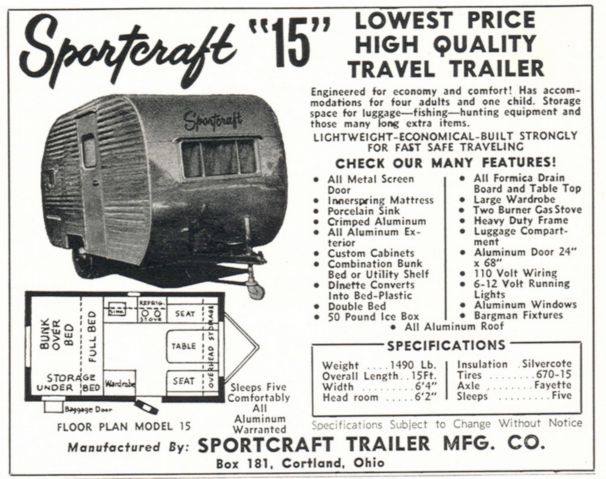
advert
Home sweet home.

Another Look

Here’s another look at an image I posted quite a while ago.  I really like this photo.  These Scottish Travellers give a glimpse of some less-than-stereotypical living waggons (sic).  Very few wanderers could afford the classic Dunton Reading wagon but made do with more affordable accommodations; possibly even owner-built.

Tyne & Wear Archives & Museums. Click image for link.
Tyne & Wear Archives & Museums. Click HERE for the source.

All three of the caravans pictured have mollycrofts for light and air but are of a pretty simple variety.  I am struck by the one on the right mostly by how plain it is (plank siding without exposed ribs) and it’s very small proportions.  I suspect there were many more of this variety than the elite, custom-built wagons on the roads in Britain in the heyday.