Tool Tote

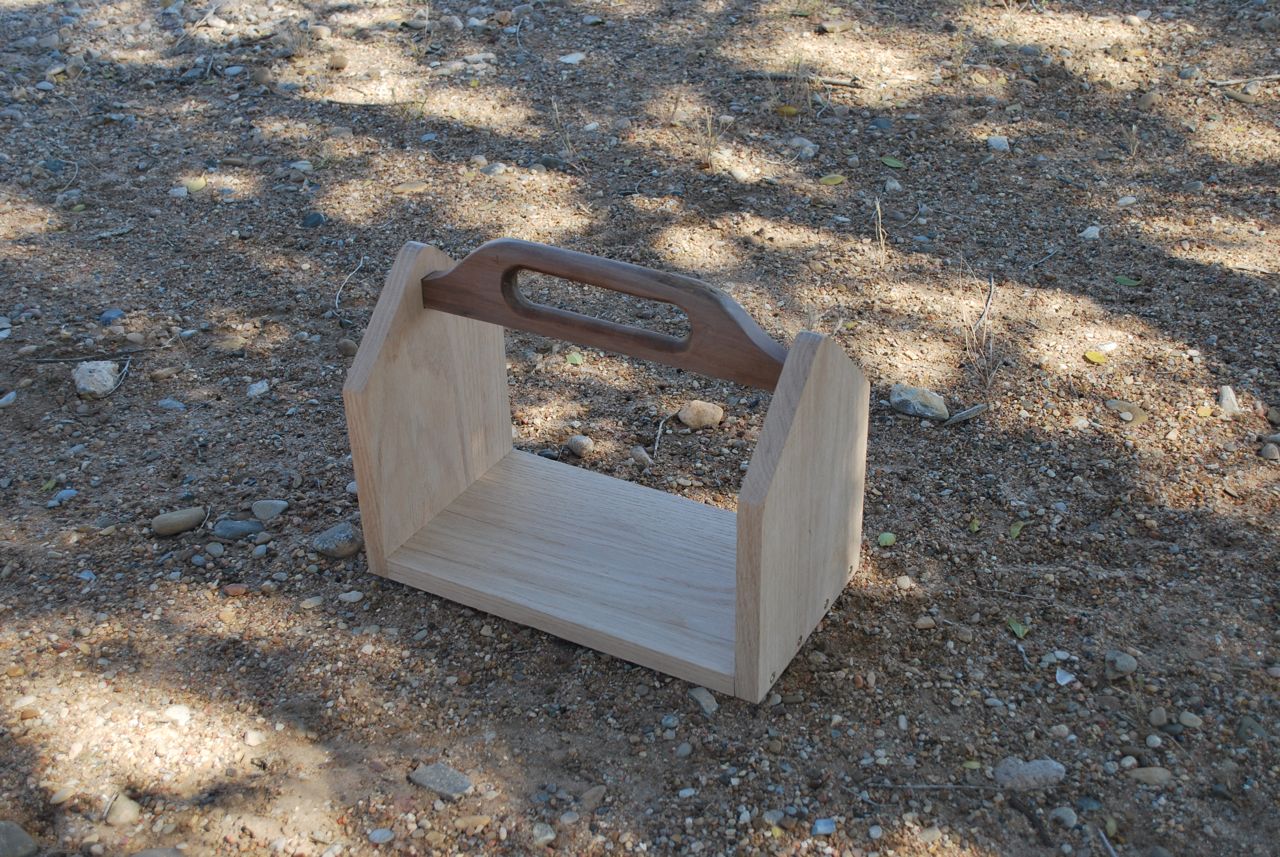
The shoemaker’s tote is essentially done and I had the chance to get a couple photos over lunch.  I will be adding more leather pocketing to hold tools but wanted to wait until I knew where things should be.
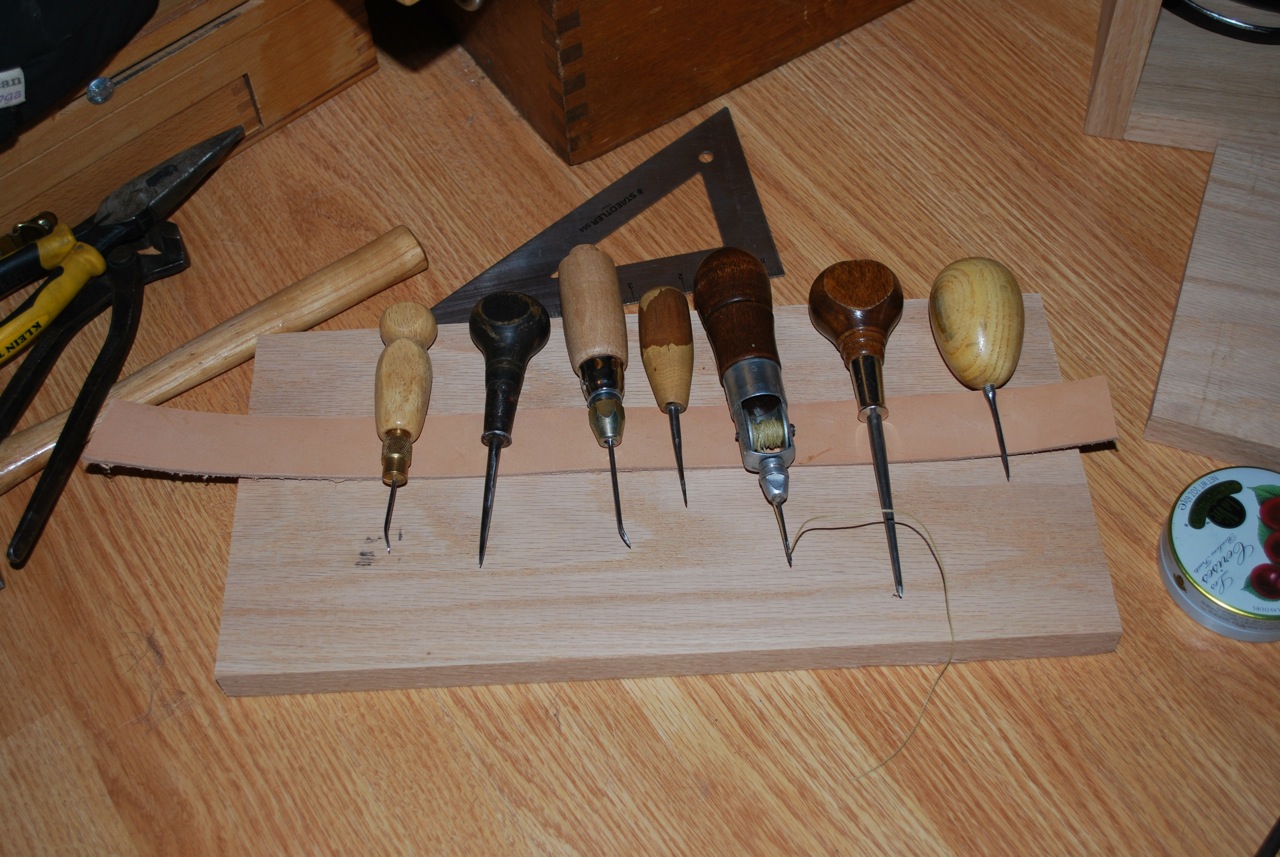
Laying out the tools

This is the inside of the side panel.  The tools that I know for certain need to be handy, not rolling around on the bottom of the box.
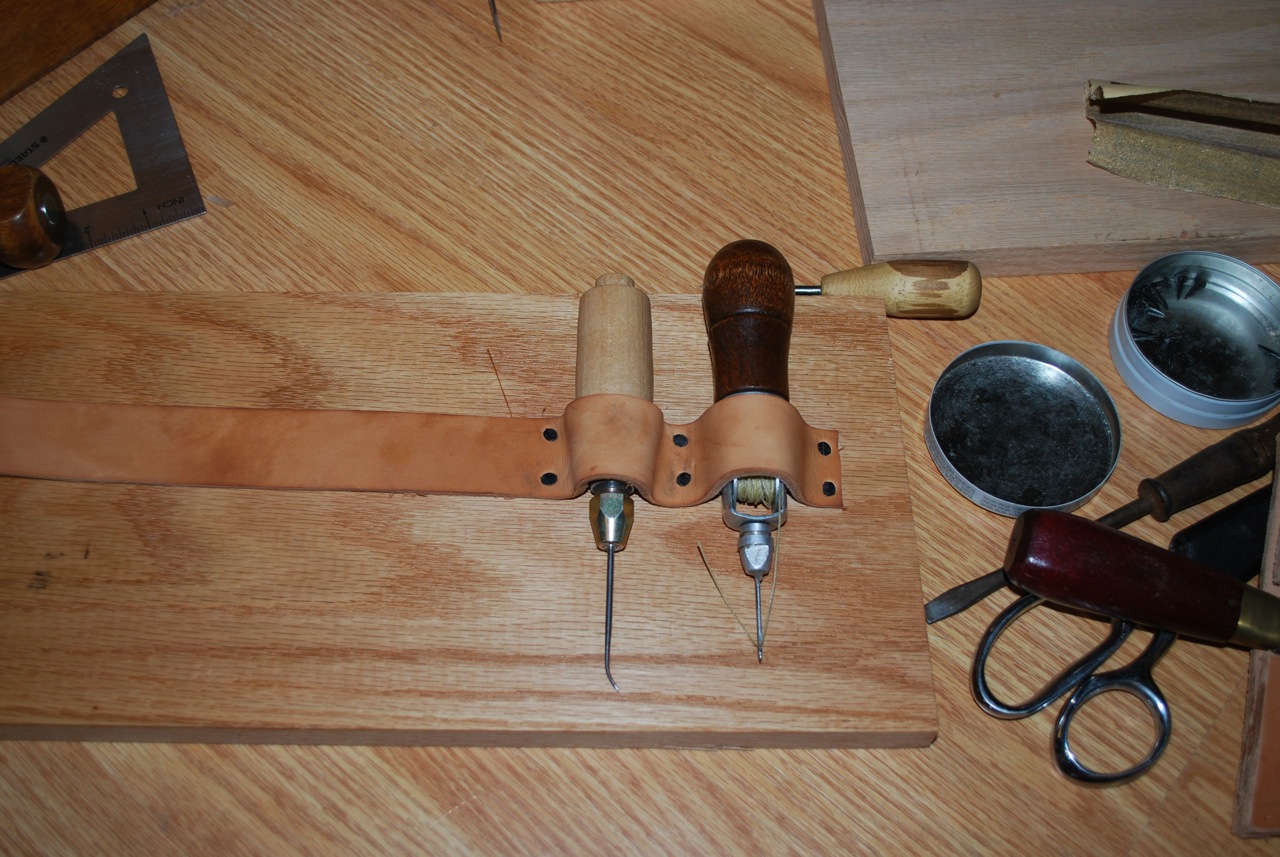
Test fitting a couple tools.  The strap was cut 1 1/4″ wide and is not as long as it should be.  I am using carpet tacks as I had some laying around.  Note that the inside has been given a coat of boiled linseed oil prior to placing the leather.
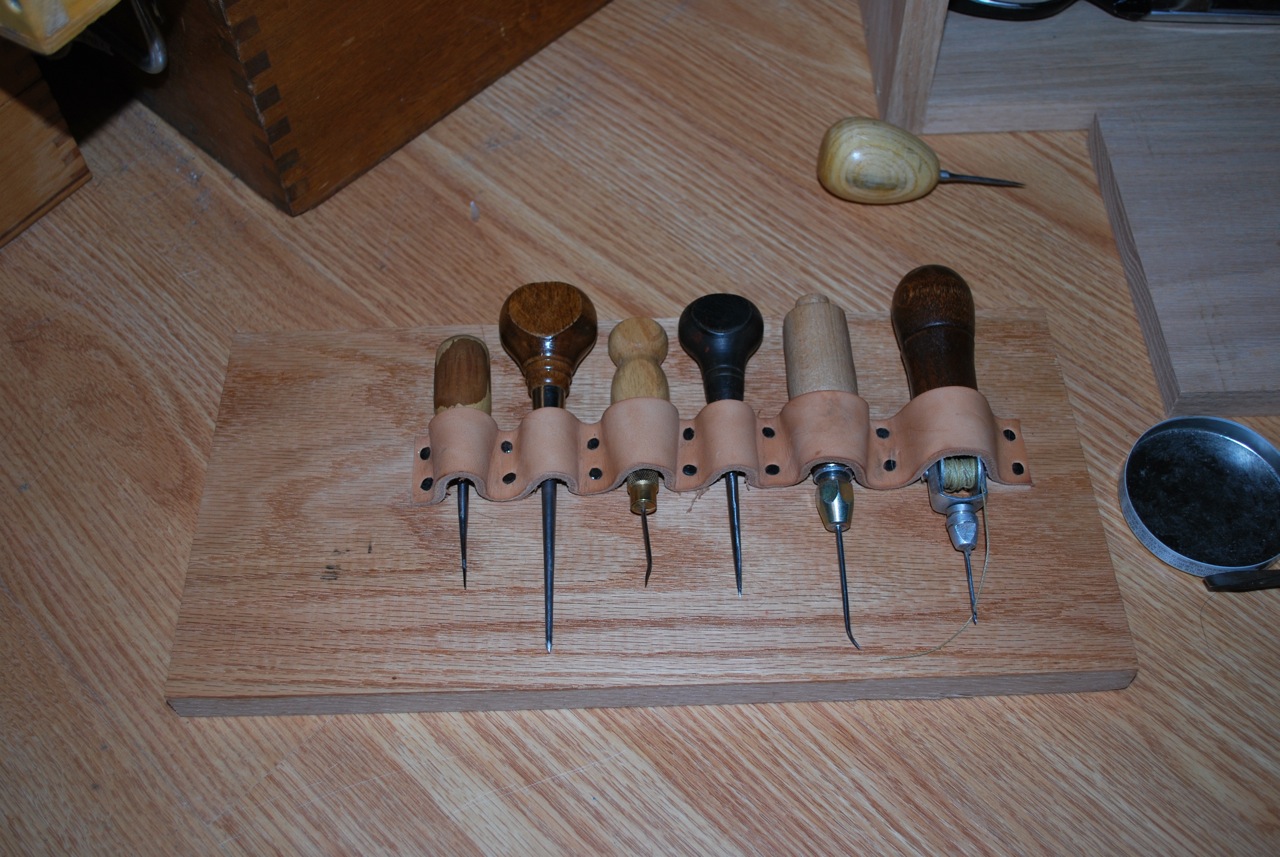
The essentials in place.  The bent awl is a little too deep and barely touches the floor of the box.
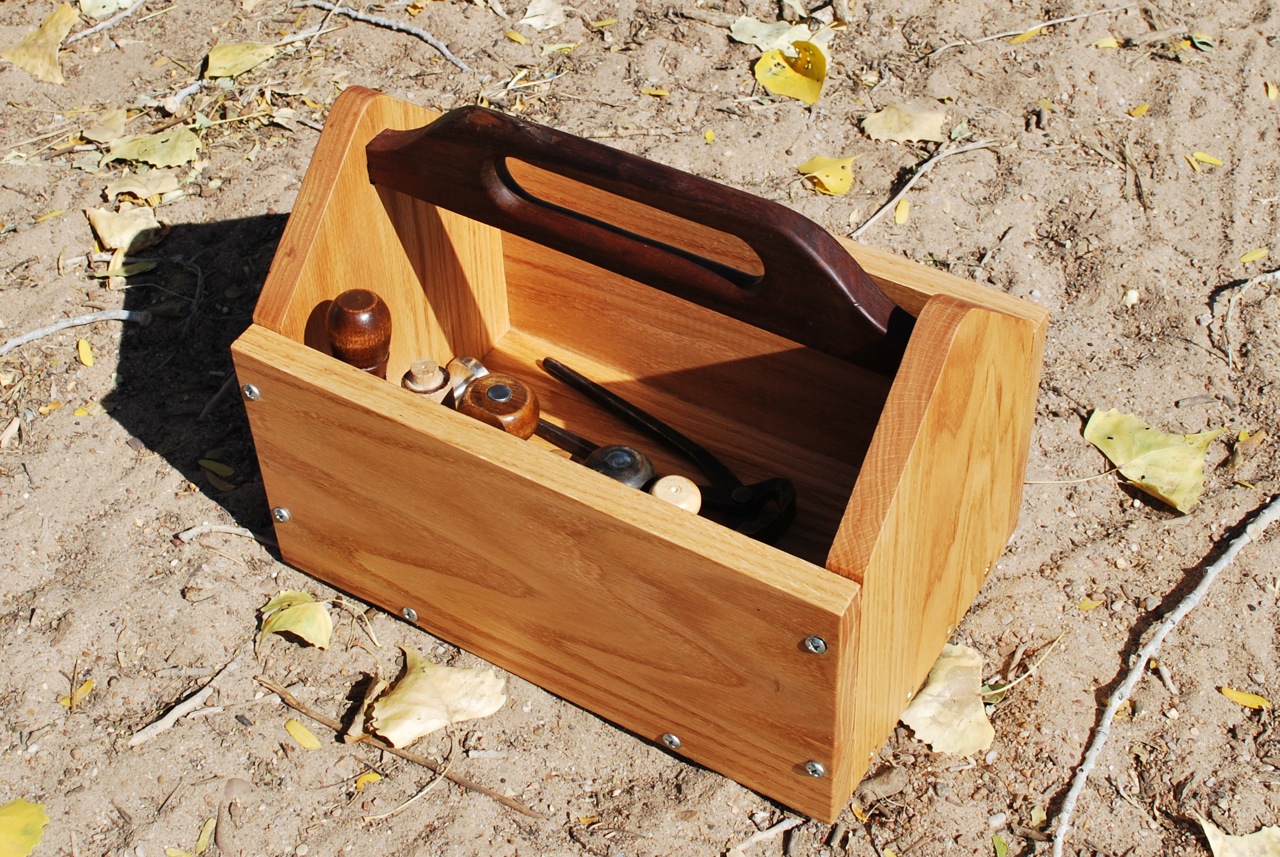
I used a few pan head screws I had handy.  They work as bumpers.  The box has been oiled at this point with boiled linseed.
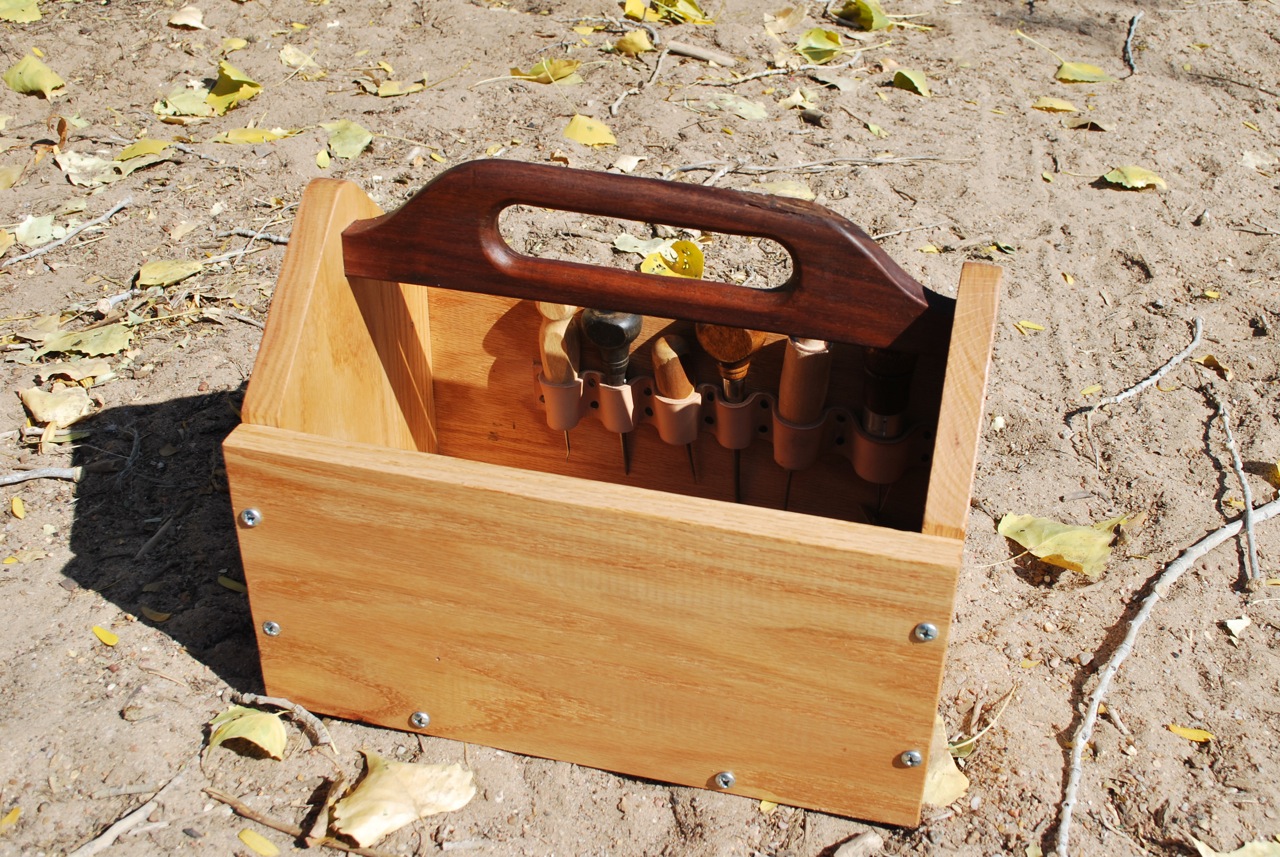
And the other side.

If you didn’t see the previous post, this is the plan photo.
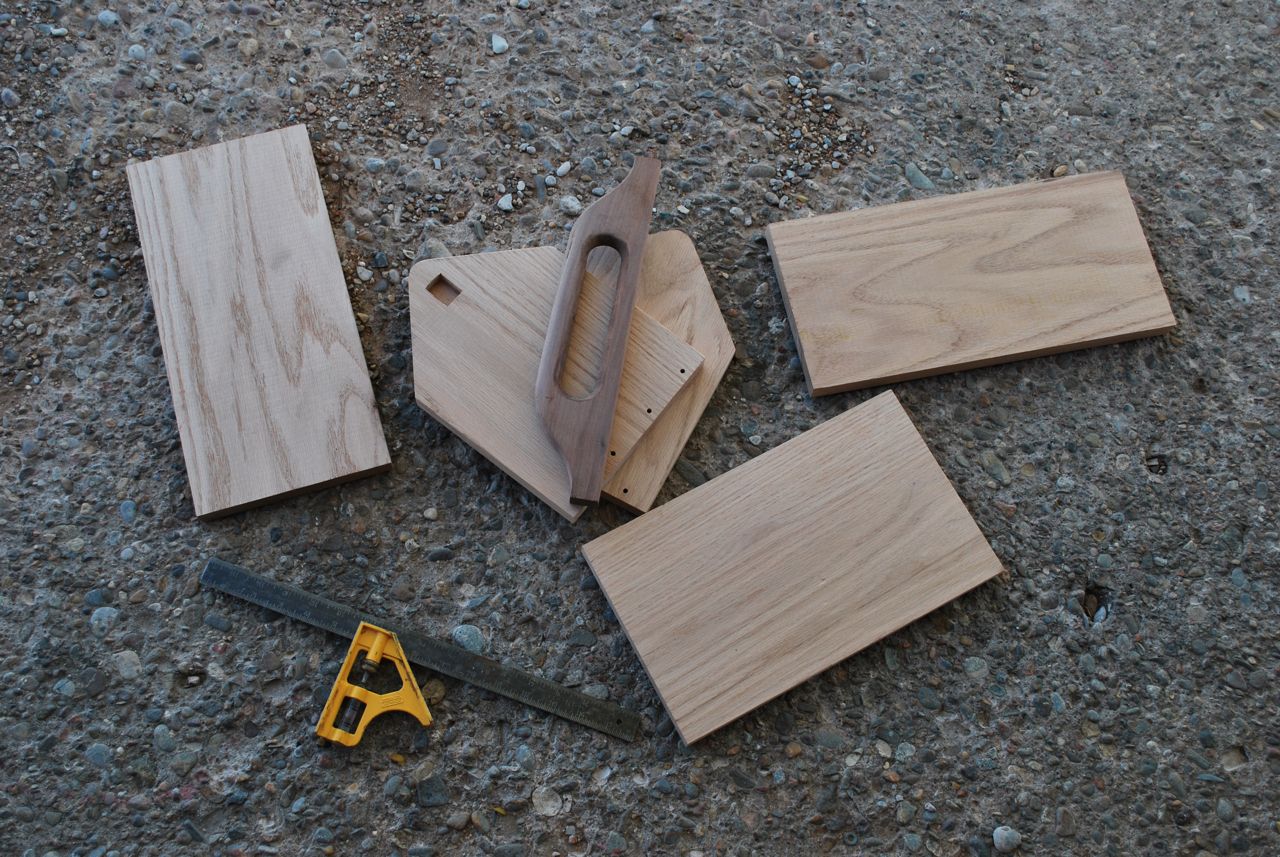
Three rectangles, two pentagons, and a handle of choice.

Final dimensions are 14 5/8″ long, 9 1/2″ wide, 10 3/4″ tall.  I wanted to be able to comfortably fit a twelve inch ruler in the bottom.

Shoemaker’s Toolbox W.I.P.

Lunch-time post:

I began working on a shoemaker’s toolbox this weekend.  It’s based on an eighteenth century design but probably goes back further.  It will have leather “pockets” for the awls and some long tools.  The difference between this and a carpenter’s box is in the upright storage to keep the tools very handy.  The box I based it on can be found here: http://aands.org/raisedheels/Other/Toolbox/toolbox.php.

No complicated joinery other than the half mortises for the handle.  The sides are off still to tack in the leather pockets.  The original was nailed together but mine uses wood screws (brass).  Material is red oak with a walnut handle.  More to follow.

Tool Museum

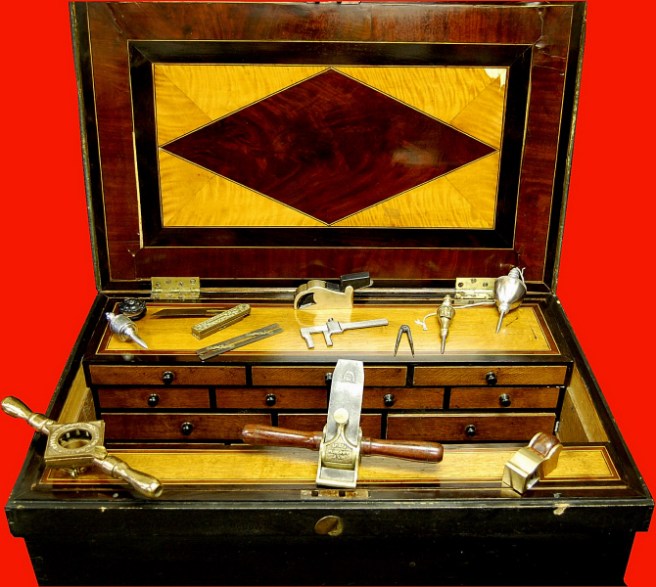
If you love beautiful tools (if you don’t, you should) there is a remarkable web page devoted to some remarkable historic tools.  I hope to see these in person someday.  I hope  I get to Michigan or find him on the road sometime.  He’s got a pretty amazing paint job on the trailer too.

Click the ship plane to open the museum in a new window.

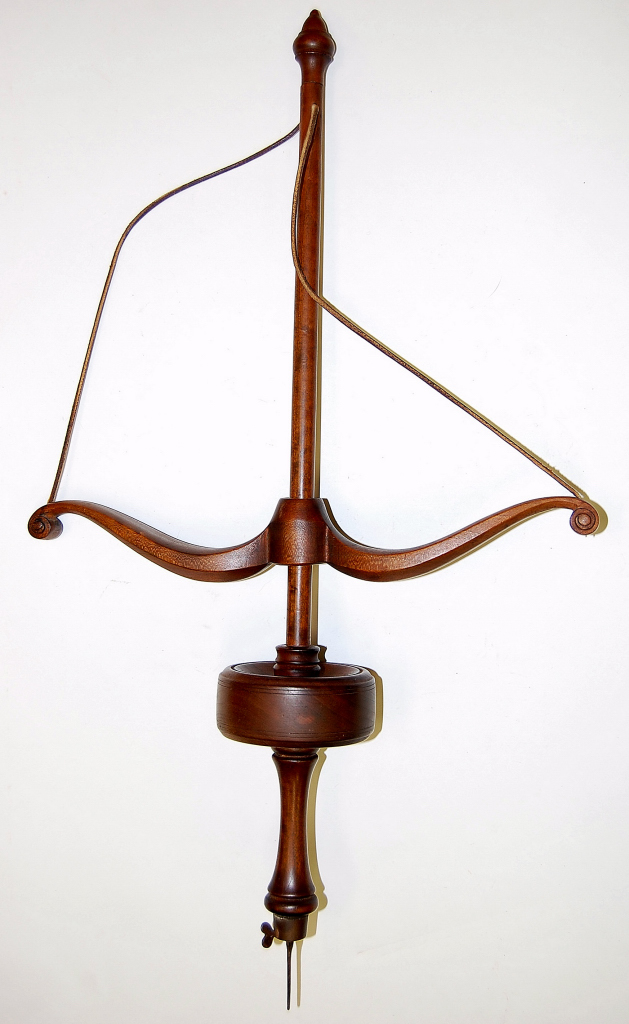
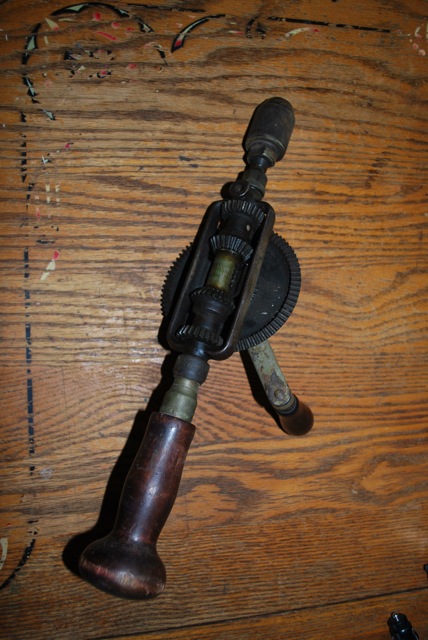
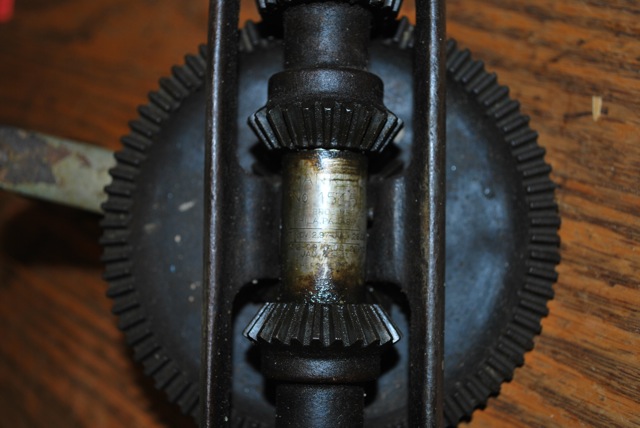
I really like this drill.  I think I need to make one.

Thank to the Village Carpenter (http://villagecarpenter.blogspot.com/) for having a link to the museum.

Hooked


Bone fish hooks made in the last week.  I have made a few in the past but NEVER fished with them.  They are plentiful in Village contexts along the Missouri River, all over Europe, and many other contexts.  It seems to have taken several millennia in some areas to add barbs or drilled ends.   I will make a couple more styles and various sizes and hope to try out my kit sometime when I get back to water.  The cord is a two-strand agave made from only four individual elements.

Folding Camp Funiture

I’ve been making folding camp furniture.  The stools are sometime called “pea-pickers”.  They were somewhat difficult to figure out without a plan but some photos of others and experience making other furniture helped.

finished

They’re not as easy to make as I thought they would be.  The holes must be very precise and dowels tight-fitting.  If everything isn’t square and precisely cut, the stool just doesn’t work.

folded

This is their beauty.  They fold flat and have an integrated handle.  They can be made just about any size and out of any straight lumber.  My first one is made from scraps from around the workshop.  These later ones are from premium pine.

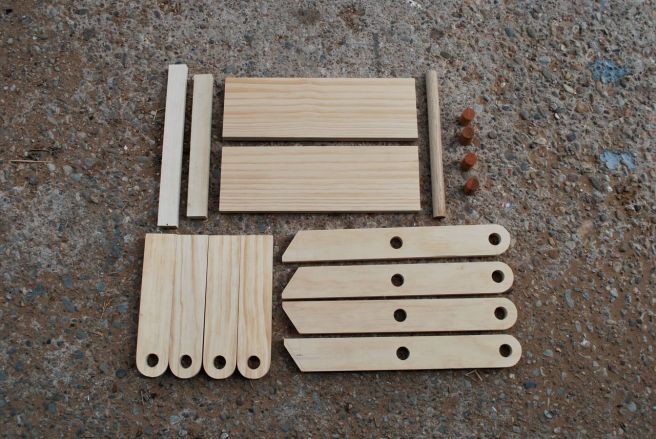
17pieces12holes

Seventeen pieces, twelve holes.  Stick ’em together.  Sit.  Mine are sturdy enough to use as a step stool, with some caution due to the narrow width.

strong-enough

A table of similar construction.  The top is about 22 x 46″.  I made it 2 inches lower than a standard table to fit the stool height.  A combination of pine, poplar, and oak.  Definitely strong enough if it is well-fitting.