The human love affair with fire is intimate and ancient. Over the flames we cook, celebrate, spin tales, dream, and muse in the swirls of wood smoke. Fire is life. Its warming glow draws us like moths to a flame.
It’s not a stretch to believe that a Stone Age chemist recognized the idea of using carbon for future fires. Disturbing the leftover carbon ashes from the night fire, she stares at sparkles of light glowing like the pre-dawn stars above. She carefully nurses a baby “star” back to life to warm her hearth and home.
It ain’t rocket surgery. Even cavemen knew the importance of the sixth most abundant element in the universe.
Carbon and Future Fires
The game of chasing lightning strikes for each fire was no longer required. This unreliable practice was abandoned for twirling sticks together to create enough heat to initiate the…
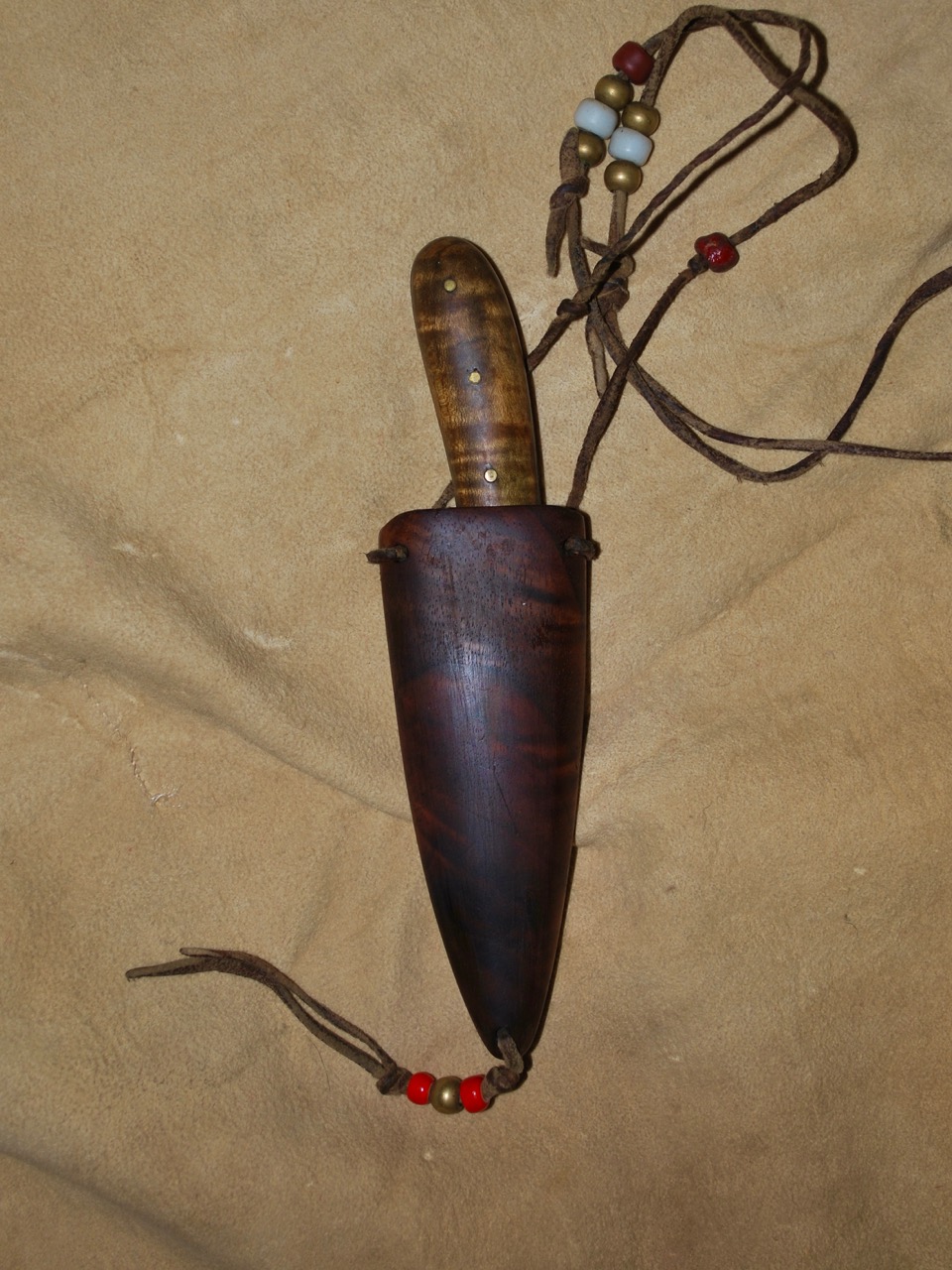
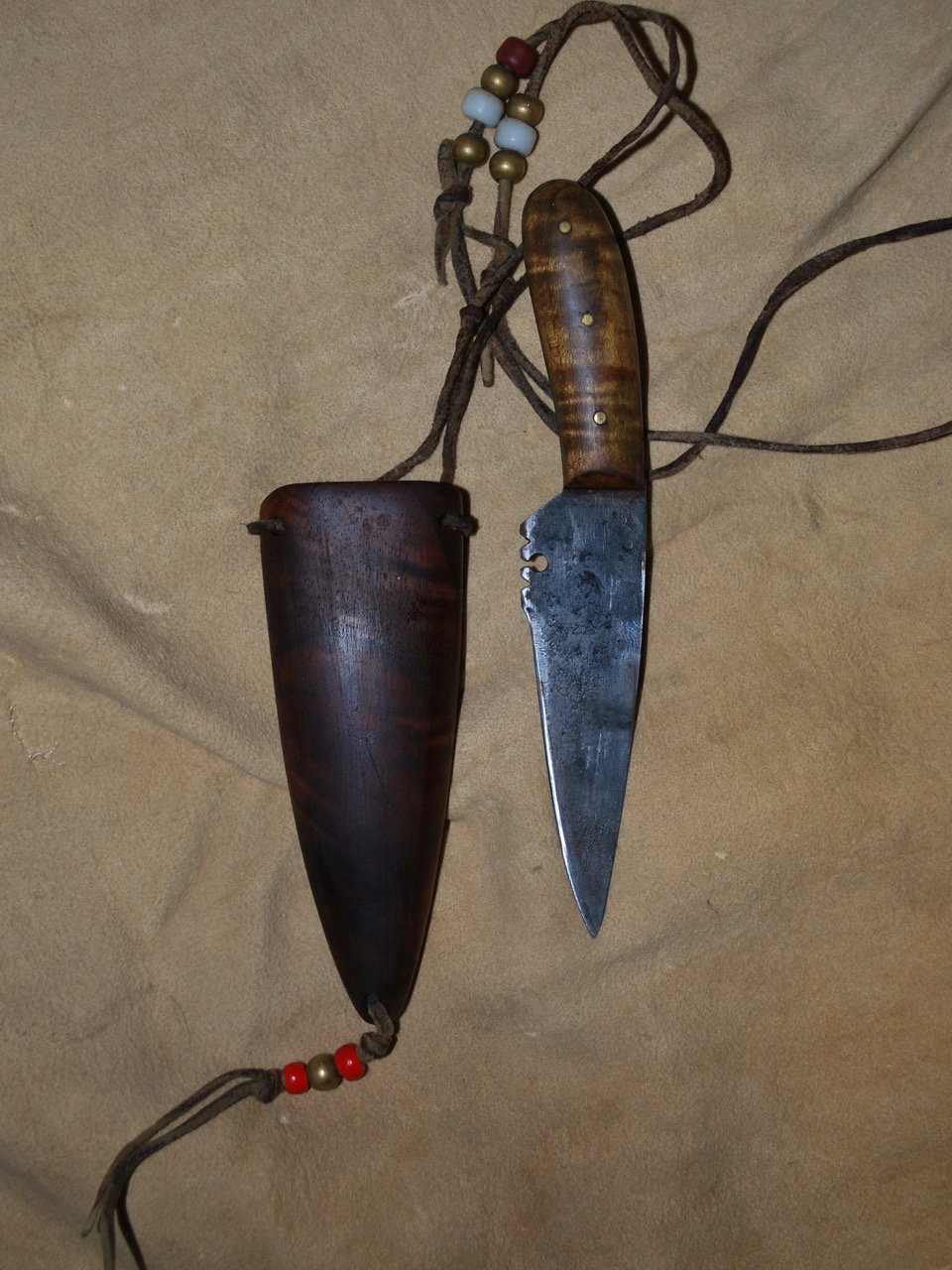
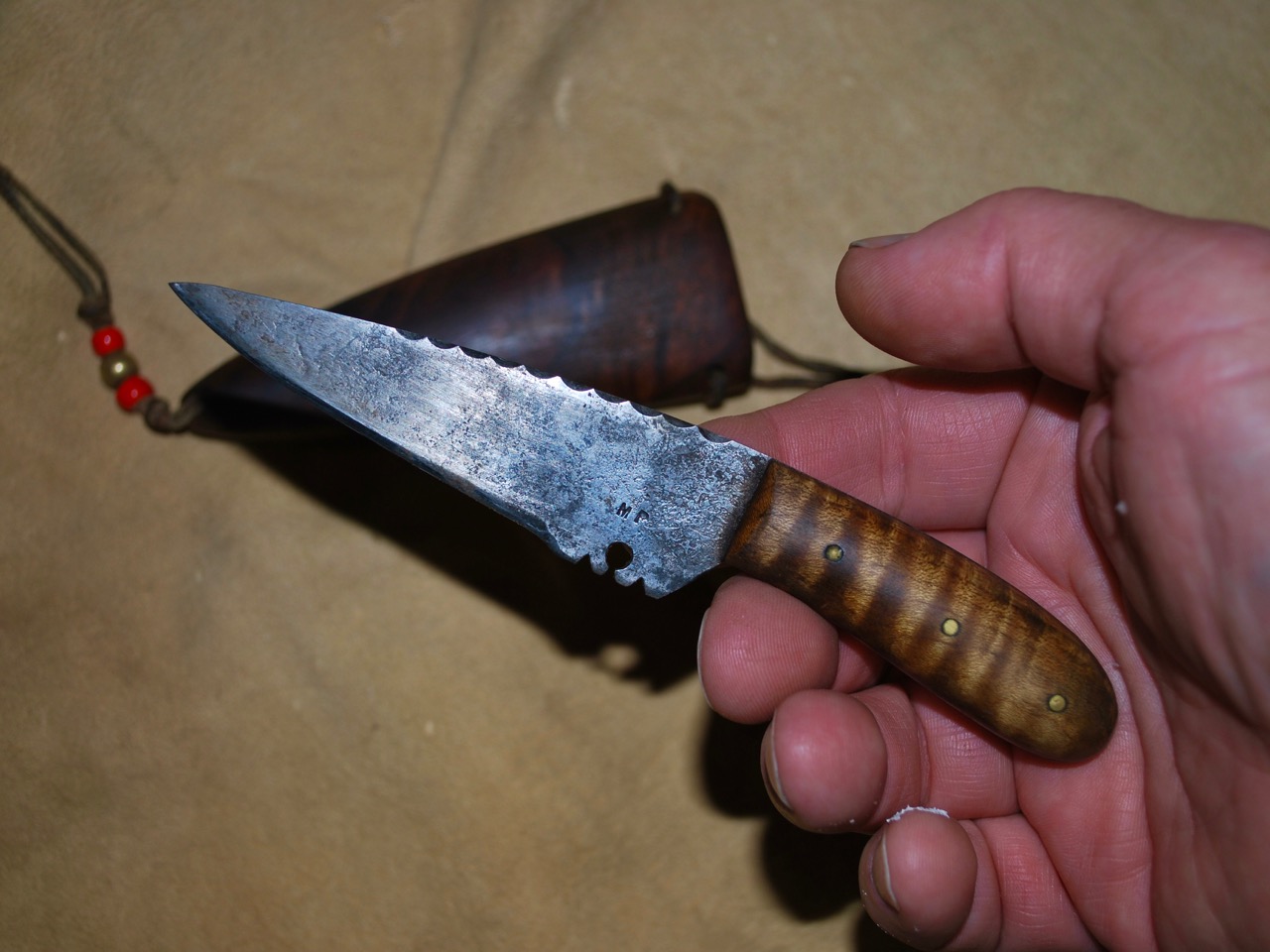
In the spirit of the internet Bushcraft trend of pulling out our tools and comparing I decided to join in the fun. This is the patch / neck knife I purchased back around 1986 when I first started getting primitive.
A poor photo of the walnut sheath.I went with wood as I was wearing this almost constantly whle working a backwoods program for the Scouts. I decided it might just impale me through the sternum or neck if I took a bad fall so the wooden block sheath was the solution.Human hand for scale.
This one was made by a bladesmith from an antique crosscut saw and has a beautiful tiger-striped maple handle. This is probably its third sheath but it’s the one I’ve stuck with since around 2001. It’s been camping and on thousands of miles of field projects, not always around my neck but almost always close-by in my pack. For some reason, our society thinks you’re a little weird if you wear a knife around your neck all the time.
I’ve been working on a new hand reel to keep in my pack with my travel fishing kit. I didn’t have much of a plan when I started so I drilled out a couple of one-inch holes a little further apart than the width of my hand and started from there. The wood came from the scrap pile and is a very solid chunk of walnut. I’m a little concerned about the possibility of cracking but this piece is old, well-aged, and extremely solid so I suspect it will be okay in the end. It will be heavily waxed to waterproof the wood and I’m working on making and trying a few silk leaders. Anyone with experience with hand-made fishing gear have any thoughts on this?
The hand reel and the primary tools used.
These little projects are a nice way to spend the evening in a productive way. After looking at so many artifacts over my career it becomes apparent that our ancestors often created works of art and beauty that truly come from within maker and their influences throughout their lives.
When you make for yourself, your tools and possessions become a reflection of who you are, not where you shop.
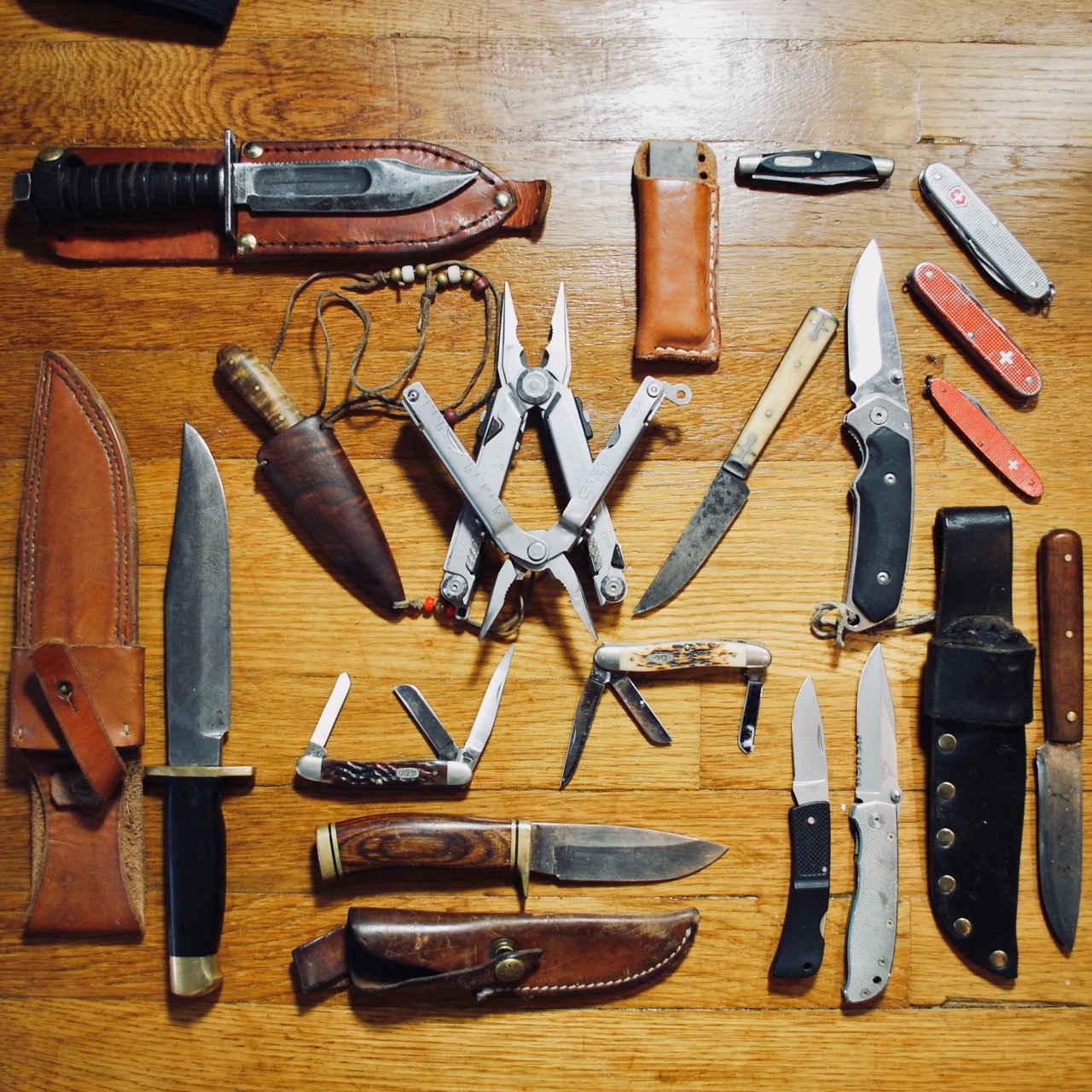
This is what happens as you travel, receive gifts, buy better stuff, always need a good knife, etc.
From the upper left: Camillus 5-1967 (a friend carried this through Vietnam), my small Arkansas stone for field touch-ups, Buck folder, two classic Victorinox Pioneer knives (I’ve carried this style every day since high school) and a small pen knife, a lock-blade Buck made in Idaho, a 19th century bone handle knife cut down from a larger eating knife, two Gerber multi-tools (the original is from 1990 and a more modern, but heavy version beneath), a hand-made patch knife by M.P. with walnut neck sheath I’ve had since 1986, a Solingen-made high carbon Bowie knife with ebony handle, two classic Case XX folders, two small folding Gerbers, a hand-made camp knife from a fine Colorado maker, and at the bottom my “go to” Buck field knife that has worked on archaeological projects, cut up animals, dog holes, and performed about every other imaginable task.
This photo came about as I decided to organize my camping gear. While emptying packs and bags I realized there were knives in every one, usually in more than one pocket. After throwing them out on the floor and arranging for a quick photo I began to think about the ones in various tool boxes, my wood carving knives, a couple collector knives I can’t seem to part with, and others stashed away around the house. My search for minimalism is failing when it comes to good tools.
Several years ago I starting documenting some of the arrow-making I do. I wrote the original version of this piece in 2012 but as it always draws a lot of interest I have re-edited it and am posting it again.
Arrows have been much on my mind after seeing how ratty some of mine have become. Even though shooting takes its toll on the fletchings, it seems they get at least as much damage in storing and travel.
I was intending to start with a set of British longbow style arrows but having received some beautiful arrow bamboo (Pseudosasajaponica) from a friend who grows the stuff, I changed plans to suit the new material. Prior to this project I had never used real arrow bamboo but have used it’s distant cousin the american bamboo or rivercane (Arundinariagigantea). It could not be much more perfect for the job.
Since I hoped to do this right, I decided to photo document the process as best I could. Good arrow making isn’t easy or fast so unless you are dedicated to perfection, you are probably better off buying them.
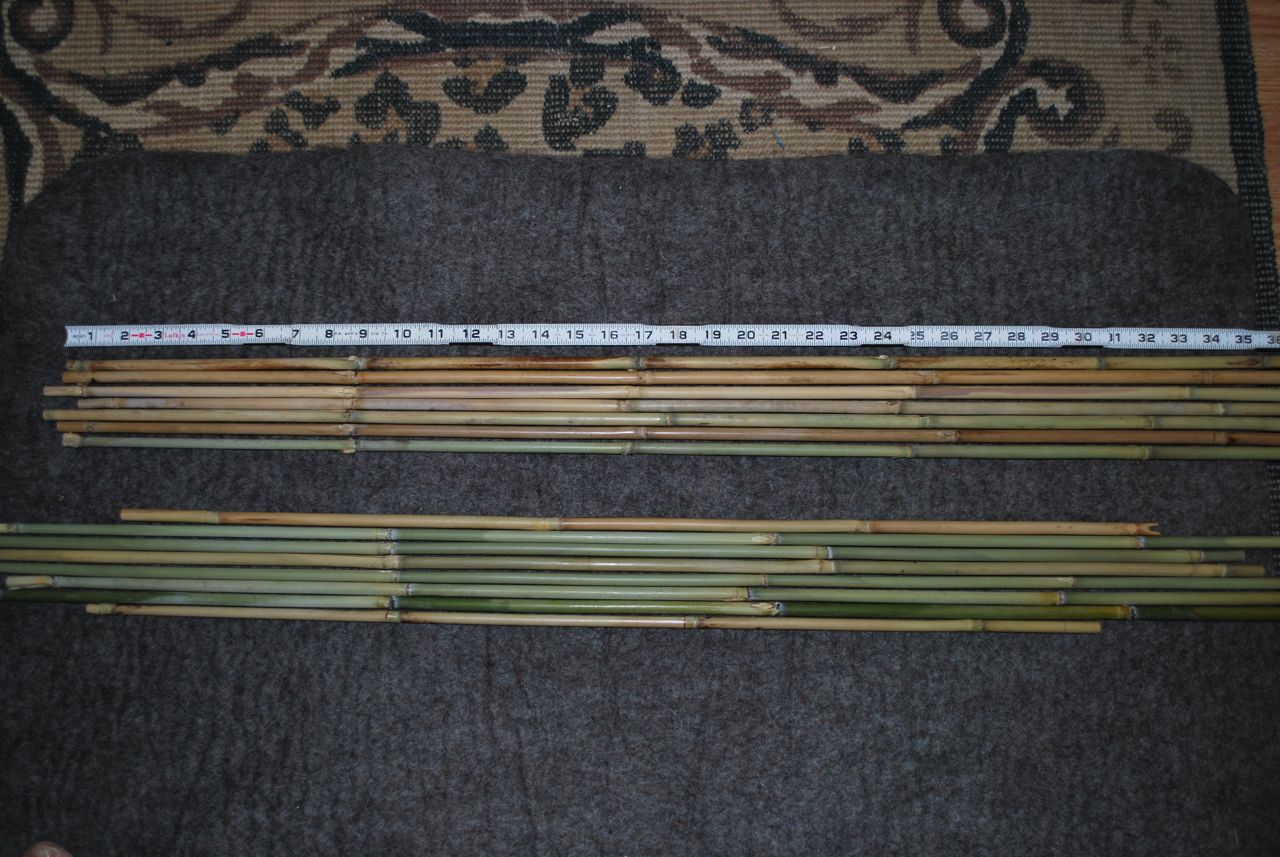
Matching shafts.
High-grading the materials
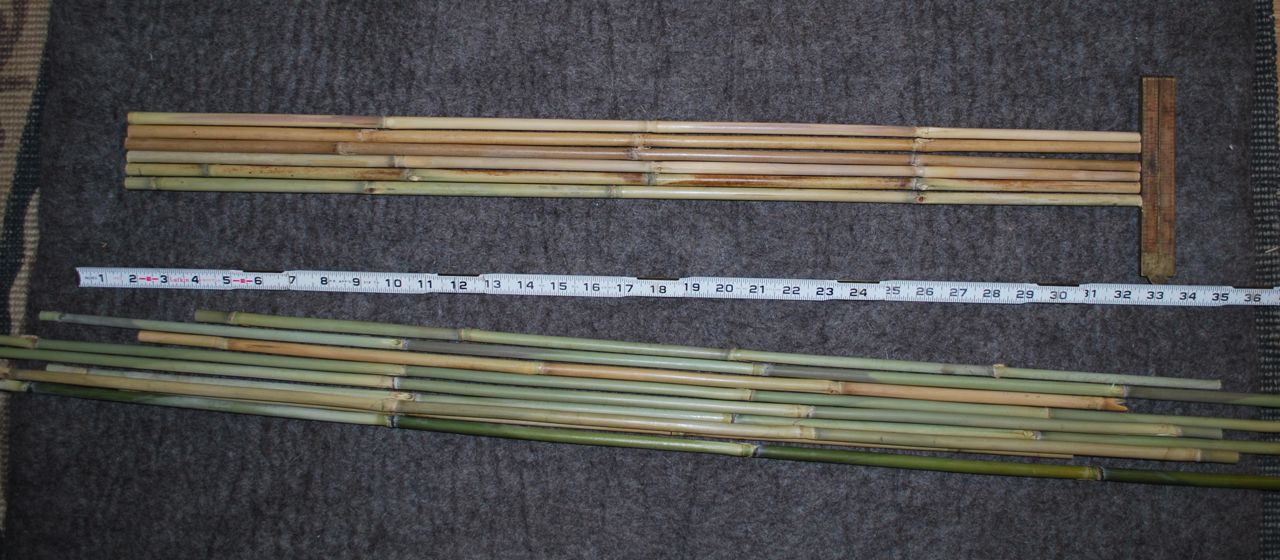
The first thing to do is to select shafts. I didn’t have hundreds to choose from but these were pre-selected for diameter (hence spine), straightness, node alignment, etc. so this made my work easy. I parsed out a half-dozen I liked for starters and cut them to length. Note similarity in diameter and node alignment. The scale above the shafts is in inches. I could hardly ask for better.
A preview of shafts selected, straightened, and cut to length.
Attributes to look for in bamboo or cane shafts
Your arrows should be a consistent diameter, consistent weight, similar spine, long lengths between nodes, similar node placement, with very little taper overall. Most people seem to think that bamboo is straight coming right out of the ground but this is rarely the case. Expect to heat straighten and you shafts. Your best work will be done in groups to get a consistent set, not just a one-off product.
After a lot of reading, I decided to approximate Korean style arrows with inserted wood nocks. These have worked well for me in the past but I have never started with this great of bamboo.
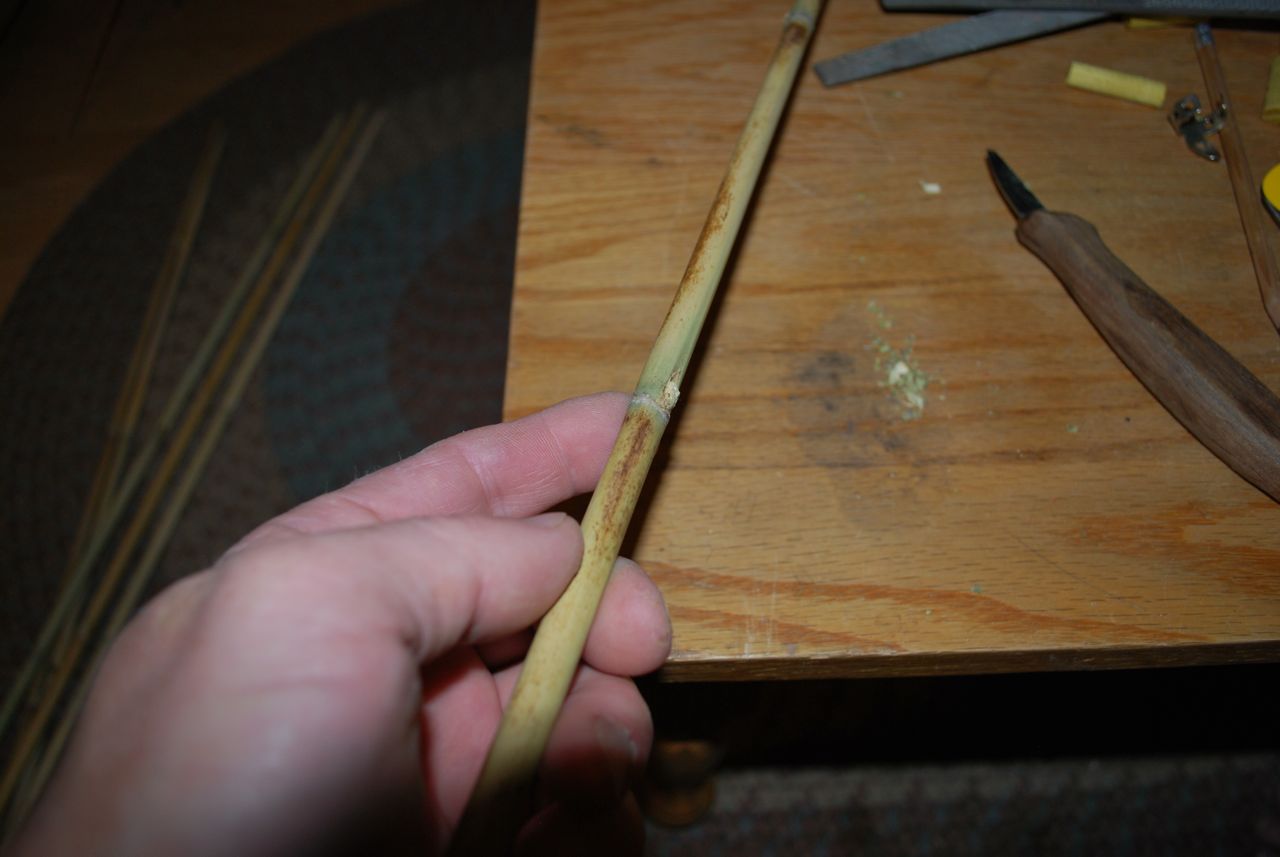
Remove the flares at the node sections.
Cleaning up the shafts
Raw bamboo has a flair at each leaf node that must be removed for a smooth arrow shaft. I do most of this with a knife but a small plane or file will suffice. You don’t want something bumping over the hand or bow as the arrows is loosed.
Smoothed node.
The node above is cut smooth.
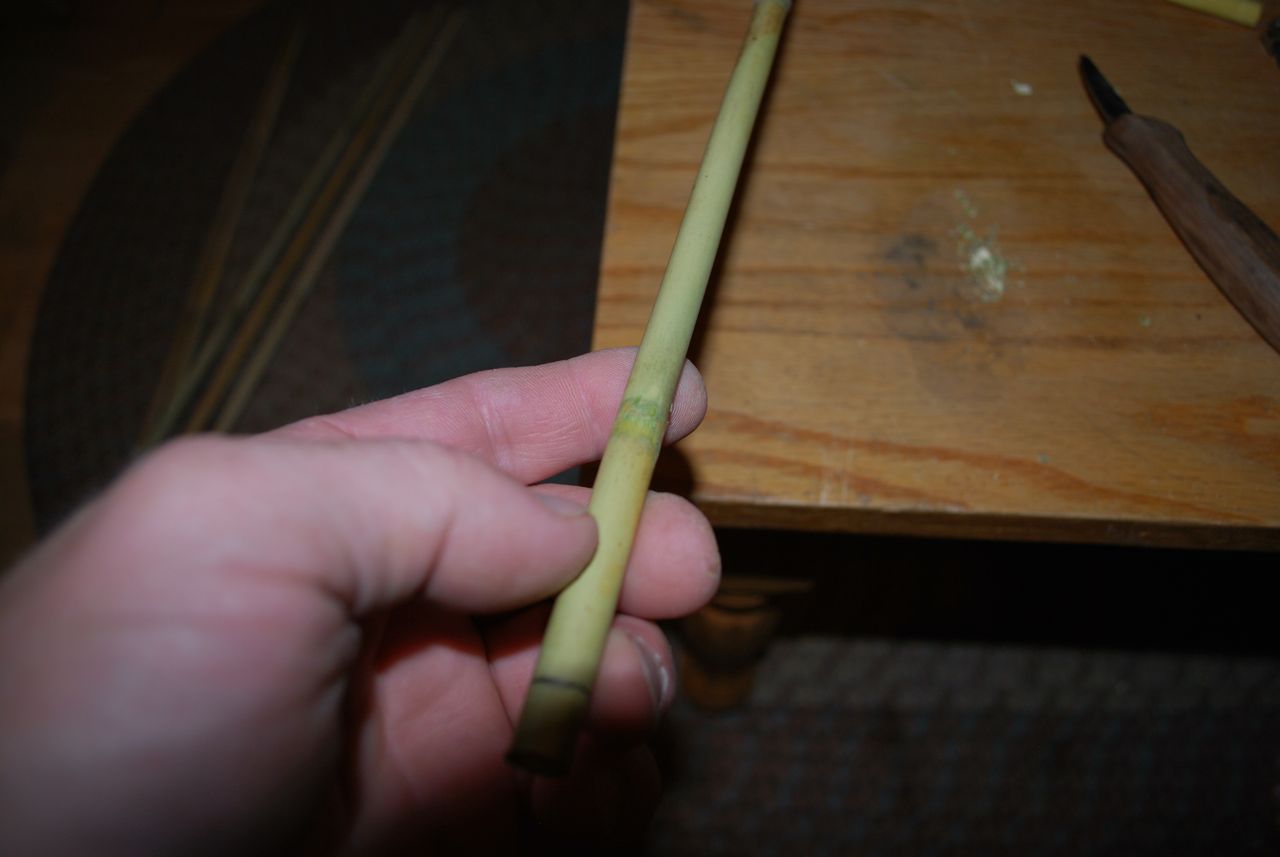
Further smoothing.
I have a neat little shaft plane (made by Dick Baugh) that helps at this stage but a rasp or sandpaper will work too. You might have a divot at the joint but this won’t really affect your arrow.
Nodes are smooth.
The nodes of the set are now relatively smooth. Now, any final straightening should be done over gentle heat. This can take several hours so don’t rush it. Keep fixing little bends and make sure to heat the entire shaft to temper it. I stand over the stove for this but have used coals from the fire in a pot to achieve the same purpose. Wear gloves and be patient.
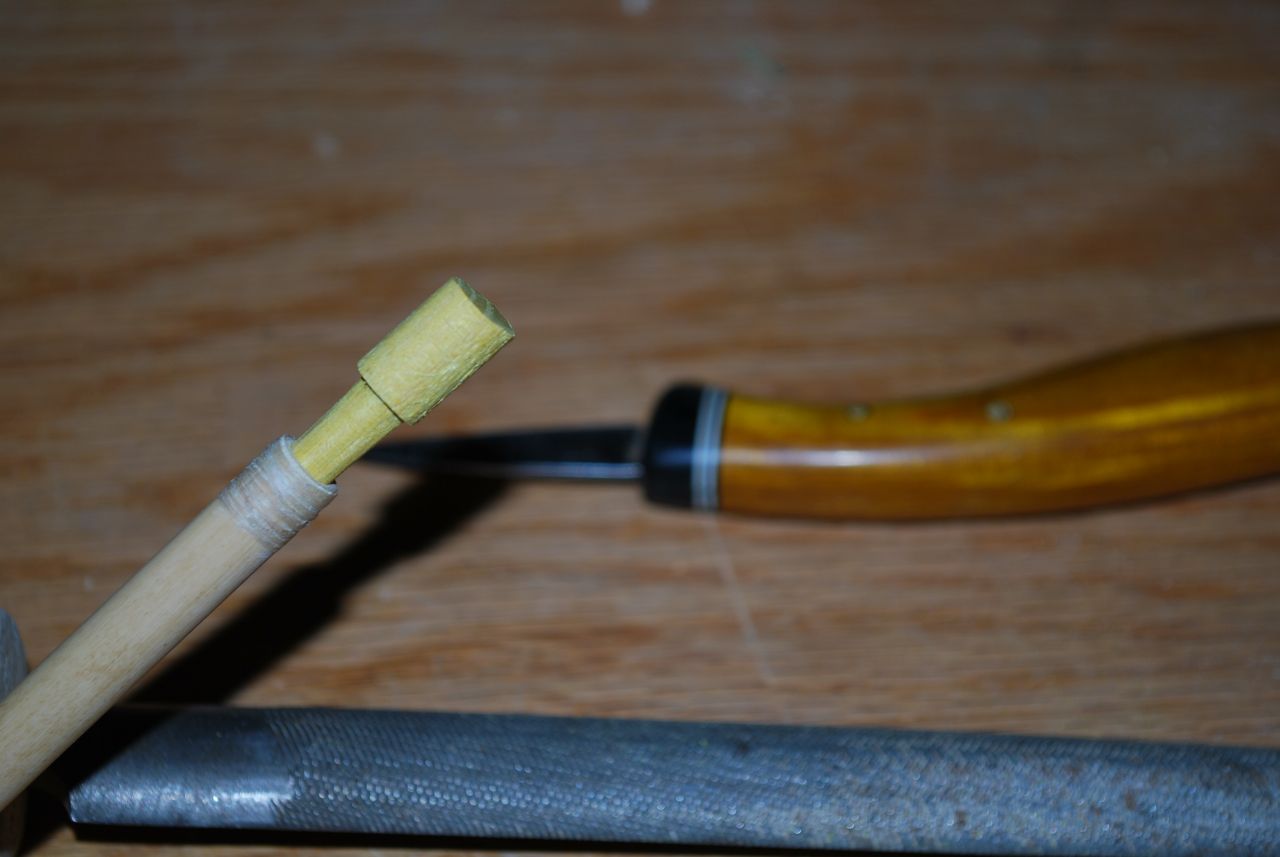
Whittling nock inserts.
I selected Osage orange for the nocks. Horn or other hardwoods can be used here as well. The above photo shows a blank and finished nock preform.
More whittling.
This photo shows the basic method. With a very sharp knife, score a ring around the nock. Whittle away from the score to narrow the piece slowly. Repeat until it fits the shafts. At this point I will say that I omitted a photo of an optional, but I think important, step. That is, to wrap the end of each shaft with sinew and hide glue to prevent the shaft from splitting while pressing in the wood. If, for some reason, sinew isn’t available, silk thread can be used in its place but you should top the silk with a little thinned white glue to help prevent it unraveling through abrasion. As sinew is free and carried around inside all the higher life forms, it should be pretty easy to get some.
Almost a tight fit.
As you get close, keep test fitting the nocks until they are a perfect fit.
A perfect fit.
You can see the sinewed shaft ends being fit with the inserts. Glue the nocks in place with a water-soluble wood glue for easier repair.
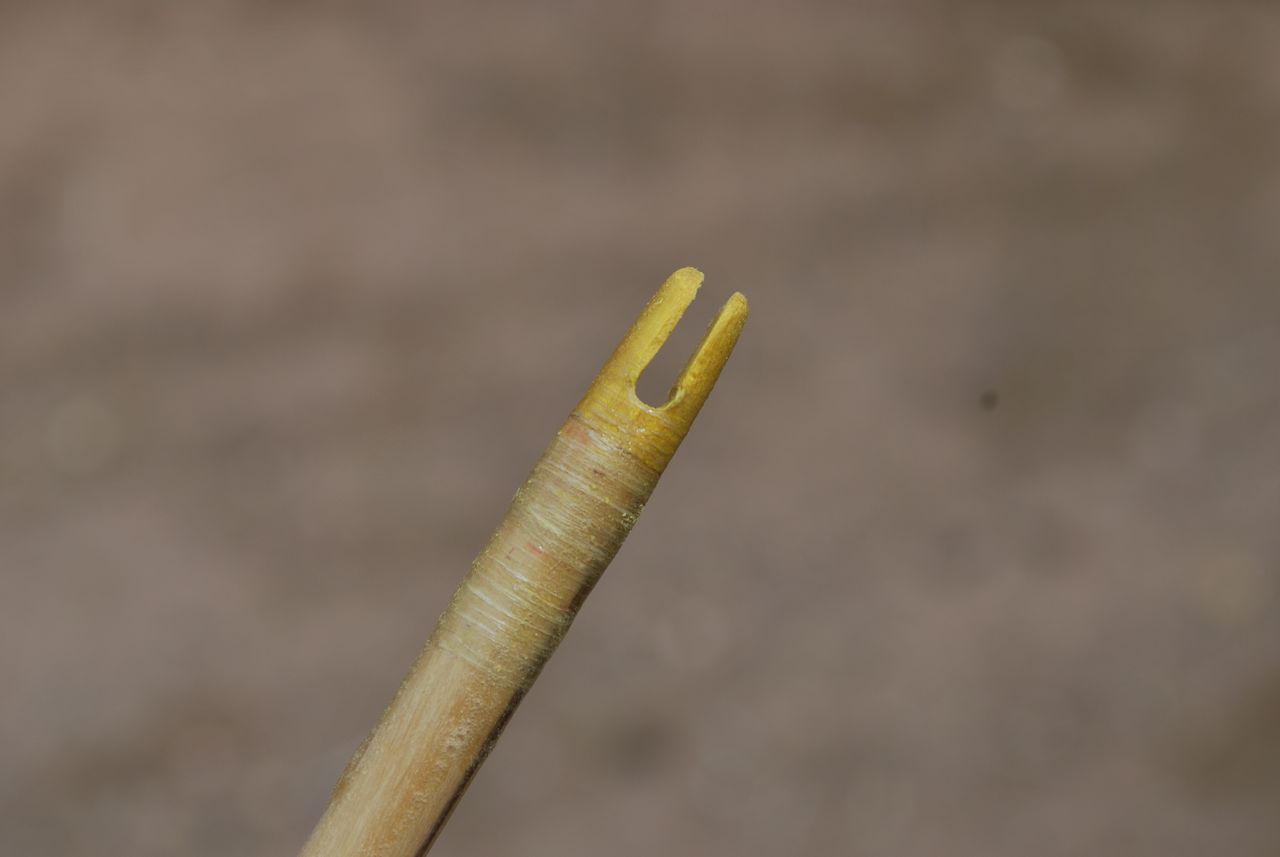
Steps in forming the notch.
At this point, several simple steps create a nice notch. First, wrap the joint with more sinew and coat in a thin layer of hide glue. Second, drill a small hole through the nock, preferably at 45 degrees across the grain. Make a small saw incision to start the carving and remove the waste with a small knife. Use a very small file or sandpaper to open the notch and smooth the surfaces.
The finished product.
At this point, you have the essence of an arrow.
Foreshafts, points, and fletchings
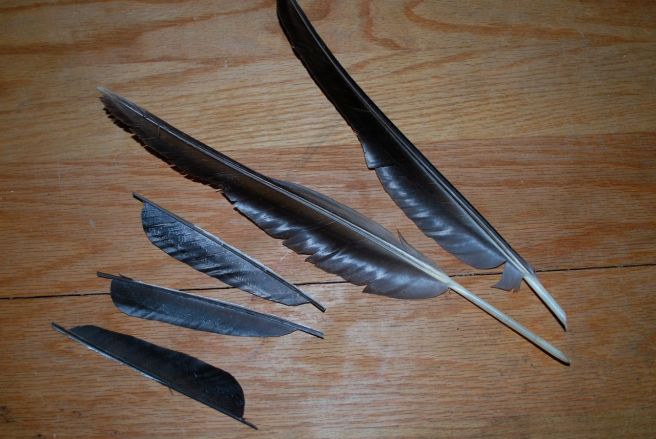
The next step to make these fancy sticks into arrows is to fletch them with feathers. To make fletchings, the best feathers must be selected. I am using some goose wing feathers given to me by a friend which have been graded to the last three per wing. Perhaps common knowledge in the fletching world but it worth noting that all three feathers must be from the same side of the bird (i.e., all right wing or all left wing). I cut a template from Bristol board to serve as a guide so that all the fletchings are the same size and shape. After the quills are split and trimmed, the bases (where they will be glued to the shaft) must be trimmed smooth and sanded flat to lie against the arrow. This is a very time-consuming task but critical in proper fletching.
Feathers to fletchings.
Again, there are only about three feathers on each wing suitable for fletchings and all three on an arrow need to come from the same wing to have the same shape and twist. To produce the needed 18 fletchings I cut about 24 as some may go to waste. I always ruin a few in the final trimming or end up weeding them out due to defects. Save them for later repairs if you have any left over.
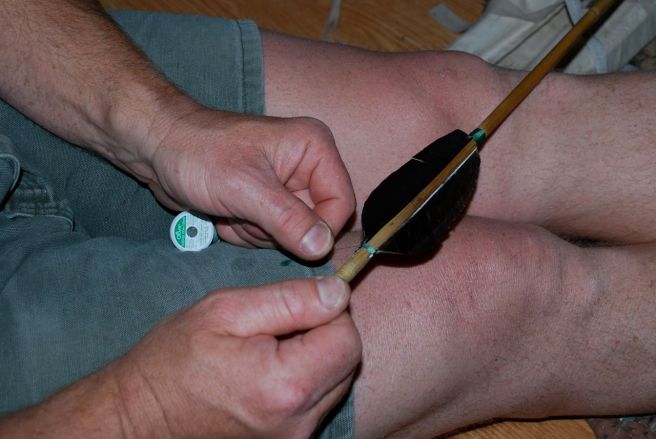
Serving the feathers with silk.
After gluing them in place by hand, the ends are served with two layers of fine silk. This is a slow and tedious job and neatness really shows but the end product will be sturdy and handle a lot of abuse through shooting.
Silk in the sunlight.
The arrow above is now fletched, reinforced, and has a sturdy wooden nock. Real silk is strong and shimmers beautifully in the light and comes in virtually any color.
Inserted wood nock and goose fletching.
It takes me nearly an hour for each arrow so I took a break after the first four.
Footings
The foot is the front portion of the arrow that reinforces the shaft and connects to the point or head. This was done exactly as the nocks above but instead of drilling and cutting a slit, they are tapered to match the heads they are to be attached to.
Bodkin, foot, and sinew reinforcement.
As for points, I chose some traditional bodkins since they are good looking and very efficient. Many cultures came up with this essential design. These are English copies and are known to punch through heavy armor. They are surprisingly sharp and tear through most targets easily.
Bodkins test fitted. The joint at the wooden “foot” is reinforced with sinew.
For the photo, I dropped these from about six inches above and they all stuck in the oak. I should mention that these points haven’t had the final fitting yet and are just stuck on by friction. If you look closely in this photo, the ferrules don’t quite fit the foreshafts yet.
First four finished.
Arrows are difficult to photograph so I took this high oblique shot to show them as nearly done. I hope these images help a fledgling fletcher somewhere as it isn’t an easy task. Be patient, don’t lose hope, and be consistent. Good things take time and it really shows in their performance and longevity.
A bit of red ochre paint completes the set.
I marked my shafts with a little ochre paint made with a base of boiled linseed oil with a drop of turpentine and ground pigment. I love the natural look of ochre and enjoy knowing I found and ground the pigment myself.
These remarkably fast and true arrows suit my bow very well. A little luck, experience, and patience pay off big rewards in the end.
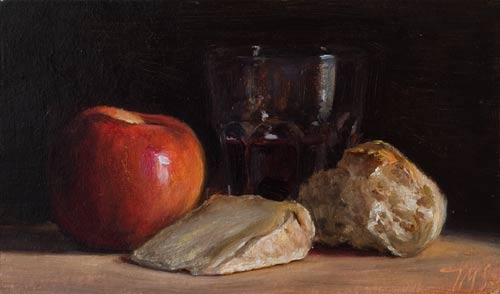
Every woman, high or low, ought to know how to make bread. If she do not, she is unworthy of trust and confidence; and, indeed, a mere burden upon the community. –William Cobbett
Today this should probably read “Every homemaker” instead of “Every woman” but, as Cobbett composed this treatise in 1821, he assumed that the home and cooking were the domain of the women and the men were to labor outside the home.
Bread
I have a mixed relationship with bread. I love to make it and eat it, and have for many years, yet I don’t eat a lot of it as it seems to easily fatten me up and doesn’t always sit well in my gut; the same reasons I rarely drink beer these days. However, I am very aware that bread, in one form or another, has been a staple in the Western World for millennia and should not be overlooked so I occasionally dive in and start making bread regularly again. I can’t stand the modern garbage marketed as “bread” as it barely resembles the greatness of a real, leavened or fermented loaf.
By the early 19th century, big business was already encouraging families to buy bread instead of bake at home and there can be some sense in this, especially in the city (fuel cost for cooking, the efficiency of oven sharing, etc.). Cobbett thought this purchase instead of make mentality was one of the many atrocities that kept laboring families unnecessarily poor. Foolish practices that kept the poor from ever improving their lot was a major theme of his life and we can learn from this.
Some Thoughts on Making Arrows, an Underappreciated Art –
I have been making my own arrows from scratch for a couple decades (since 1987 to be precise) and thought I’d showcase some I have made over the past few years. I don’t generally make them to sell and I rarely hunt these days but there is something very satisfying and meditative in gathering the materials and constructing something so practical, with such fine tuning and narrow parameters in functionality. I learned many tough lessons along the way, having no actual teacher, but I gleaned all I could from the historical resources I could find. Most cultures of the world have a martial tradition of archery and each have their advantages and limitations.
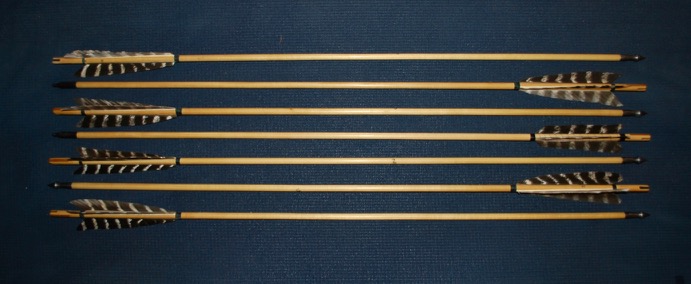
A set of seven hand-turned poplar arrows in the English tradition.
The poplar arrows above were made from aged, straight-grained wood that was split along the grain then turned in a dowel cutter. The nocks are reinforced with Bois d’arc (Osage orange) wood for added strength. The heads are conical bodkins, fletchings are prime turkey wing secured with glue and silk binding.
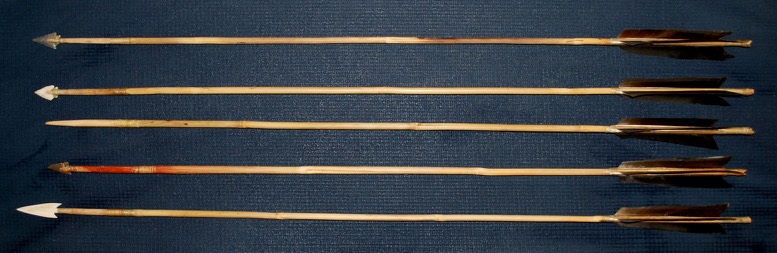
A “primitive” set of cane arrows with hardwood foreshafts tipped with a variety of point types.
Making matched sets –
I sometimes come across beginning arrow-makers (fletchers) who only produce “one-offs” without attempting a matched set. This is fine as an experiment or as a learning tool but does not suffice for someone who plans to actually use them for precise or regular use. The minimum I make is three but I try to produce arrows in sets of six or twelve. Since the plank used for the the arrows above worked out to produce exactly seven shafts, I kept the group together.
I believe it was a writing by Arthur Young where I first learned that to have a truly great set that sometimes you had to sacrifice a few as imperfect. With all the work that goes into an arrow, it is painful to cull one out but sometimes it must be done. The weights may match, the spine may feel the same, but one may just not fly as perfectly from the bow as the rest. In the past, I have marked these and they become stump shooters of ones that you don’t mind risking on a long or difficult shot.
Finding a perfect set of rivercane shafts can involve a lot of looking, sorting, and luck. People who want to purchase these hand-crafted materials and products rarely appreciate how much work goes into just gathering the materials. A dozen matched cane shafts may come from sorting a hundred plants, then aging, curing, and straightening before the arrow can even be started.
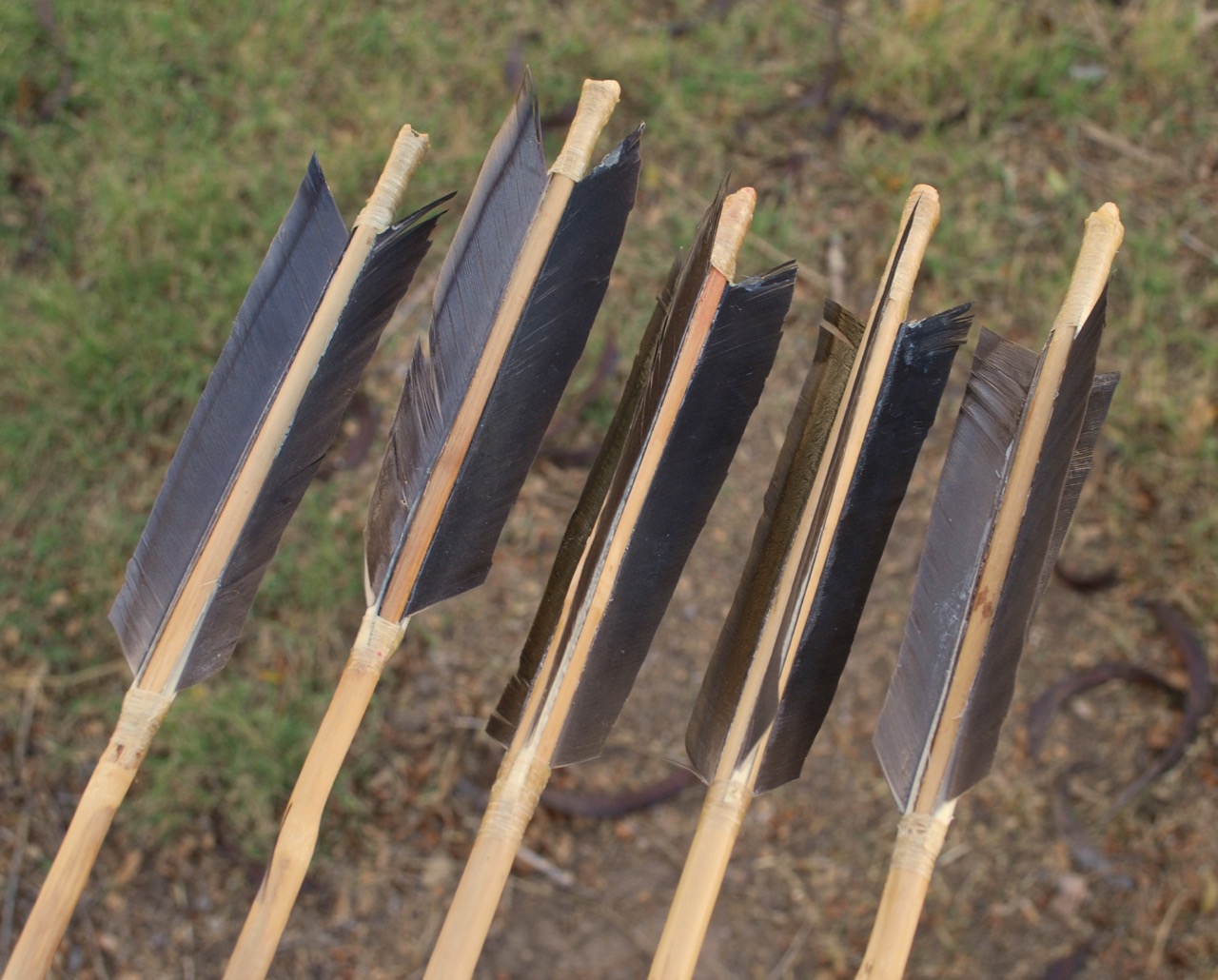
Rivercane (Arundinaria) arrows with reinforced self nocks.
Fletchings –
To produce enough fletchings for the above, one has to acquire three feathers per arrow, matched by side (all rights or lefts) and placement on the wing of the bird (e.g., second or third wing feather). This could mean wings from seven to fifteen animals depending on how picky one is just to produce five sets of fletchings.
Antler point.
Points –
Finally, the points are considered based on the needs of the archer. Will these be for hunting large or small game, target shooting, or just all around fun shooting? I use bone, antler, stone, wood, and steel depending on the intended use of the set. Although I purchase most of the metal points I use, a lot of time can go into making matched heads from natural materials.
Today I’m prepping to present some primitive skills on Saturday, from raw materials to finished goods. I’m also getting some kid’s activities together to draw in the latest generation.
An assortment of stone-age technology laid out to take to the public.
I’ve been researching more ethnographic data for trapping techniques to get beyond the same handful we have all seen since our Scouting days; the Paiute, Figure-4, spring snares, etc. While not looking at all I came across this interesting image from the archives of the Smithsonian from 17th century Italy. The more I research, the more I learn that trapping, in the old days, was a passive-active activity, not just set the trap and go away. Leaving the animal for any significant time allows the prey to escape or be taken by other, craftier, predators.
Text authored by Giovanni Pietro Olina, , about 1622; and illustrated by Antonio Tempesta, 1555-1630 and Francesco Villamena, ca. 1566-1624.
This trap is a great example of the active-passive nature of hunting and trapping. The hunter, disguised as a cow is slowing pressing the flock into a tubular net, guided by the short fences on either side.
There are more tried and true ideas where this came from so hopefully I’ll be able to tease them out of the available archives and share a few more as I find them.











 Preindustrial Craftsmanship