Tag: primitive technology

More Woodworking Tools on the ‘net
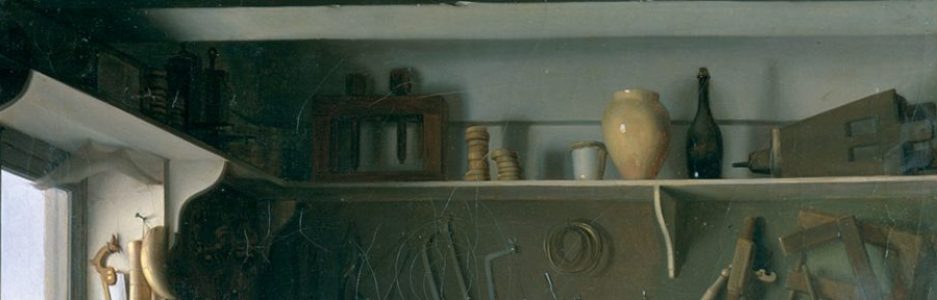
Here’s some images from a short eBook on woodworking by Peter C. Welsh. A quick read with some good stuff in it.

Not just eye candy, there is good information contained in this study of tools. But really, I’m just in it for the tool porn.

I particularly like the comparison of tools owned and used by actual people. For instance, in a Virginia workshop of 1709:
“John Crost, a Virginian, owned, in addition to sundry shoemaking and agricultural implements, a dozen gimlets, chalklines, bung augers, a dozen turning tools and mortising chisels, several dozen planes (ogees, hollows and rounds, and plows), several augers, a pair of 2-foot rules, a spoke shave, lathing hammers, a lock saw, three files, compasses, paring chisels, a jointer’s hammer, three handsaws, filling axes, a broad axe, and two adzes.”
A man could get a lot done with that tool kit.

In 1827, a Middleborough, Massachusetts, a carpenter lists his tools and their value. This is likely a representative set of tools for an actual tradesman of the time.
1 set bench planes $6.00 1 Broad Axe 3.00 1 Adze 2.25 1 Panel saw 1.50 1 Panel saw 1.58 1 fine do— 1.58 1 Drawing knife .46 1 Trying square .93 1 Shingling hatchet .50 1 Hammer .50 1 Rabbet plane .83 1 Halving do .50 1 Backed fine saw 1.25 1 Inch augre .50 1 pr. dividers or compasses— .71 1 Panel saw for splitting 2.75 1 Tennon gauge 1.42 1 Bevel .84 1 Bradd Hammer .50 1 Architect Book 6.50 1 Case Mathematical Instruments 3.62-1⁄2 1 Panel saw 2.75 1 Grafting saw 1.00 1 Bench screw 1.00 1 Stamp 2.50 1 Double joint rule .62-1⁄2 1 Sash saw 1.12-1⁄2 1 Oil Can .17 1 Brace & 36 straw cold bits 9.00 1 Window Frame tool 4.00 1 Blind tool 1.33 1 Glue Kettle .62-1⁄2 1 Grindstone without crank 1.75 1 Machine for whetting saws .75 1 Tennoning machine 4.50 Drafting board and square Bevel— 1.25 1 Noseing sash plane with templets & copes 4.50 1 pr. clamps for clamping doors 2.17 1 Set Bench Planes—double irons.— 7.50 1 Grindstone 300 lbs @ 6.25 1 Stove for shop—$7.25, one elbow .37 & 40 lbs second hand pipe $4.00 11.62 1 Bed moulding 2.00 1 Pr. shears for cutting tin.— .17 1 Morticing Machine 10.75 1 Grecian Ovilo 1.13 1-3⁄16 beed .67 1 Spirit level 2.25 1 Oil stone .42 1 Small trying square .48 1 pareing chisel .37 1 Screw driver .29 1 Bench screw .75 1 Box rule .50 1-3⁄4 Augre .41 11 Gouges 1.19 13 Chisels 1.17 1 small iron vice .52 1 pr. Hollow Rounds .86 4 Framing chisels 1.05 1 Grove plough & Irons—Sold at 4.50 5.00 1 Sash plane for 1-1⁄4 stuff 1.50 1 Copeing plane .67 1 Bead 1⁄4— .75 1 Bead 3⁄4 1.00 1 Rabbet (Sold at .92) .92 1 Smooth plane 1.50 1 Strike Block .92 1 Compass saw .42 6 Gauges 1.83 1 Dust brush .25 1 Rasp, or wood file .25 1 Augre 2 in. .76 1 Augre 1 in. .40 1 Do 3⁄4 .30 1 Spoke shave .50 1 Bevel— .25 1 Box rule .84 1 Iron square 1.42 1 Box rule 1.25 1 Spur Rabbet (Sold—1.17) 1.33 1 Pannel plane 1.25 1 Sash plane 1.25 1 pr. Match planes 2.25 1 Two inch chisel or firmer— .42 1 Morticing chisel 3⁄8 .25 1 Large screw driver 1.00 1 Pr. small clamps .50 1 pr. Spring dividers .92 1 do-nippers .20 1 Morticing chisel 1⁄2 in. .28 1 Ovilo & Ostrigal 3⁄4— 1.25 1 Scotia & Ostrigal 5⁄8— 1.08 1 Noseing— 1.08 1 Pr. Hollow & rounds 1.33 1 Ogee— 1⁄2 inch 1.00 1 Ostrigal 7⁄8 inch 1.00 1 Bit— .15 1 Beed 1⁄2 inch .83 1 Claw hammer .67 1 Fillister 2.50 2 Beeds at 5⁄8 1.83 1 Pair Quirk tools 1.50 1 Side Rabbet plane .83 1 Large steel tongued sq. 1.71 1 Saw & Pad .67 1 pr. fire stones .50 1 small trying sq. .50 1 Set Bench planes double ironed without smooth plane 6.00 1 Bench screw .75from “A Yankee Carpenter and His Tools,” The Chronicle of the Early American Industries Association (July 1953), vol. 6, no. 3, pp. 33–34.
I could ponder this list for a long time and find only a few things to add from our modern arsenal of gadgets and labor-savers.

Overall, Welsh does a decent job of outlining the changes in woodworking tools over the last three centuries, and provides great period illustrations too. Read the complete book for free HERE.

Makers to the Rescue
Makers, Dreamers, Builders, and Inventors, Unite:
reflections on saving our world
“Perpetual devotion to what a man calls his business, is only to be sustained by perpetual neglect of many other things. And it is by no means certain that a man’s business is the most important thing that he has to do” Robert Louis Stevenson.

Humans are, by nature, makers of things. That’s how we deal with the world… or did, until the Industrial Revolution tore us away from our connection with the earth. Somebody is still making all the stuff, of course, its just outsourced and corporatized, repackaged, and branded. Strangely, the stuff that should last, like clothes, housing, or tools are generally poorly made and often unfixable while the junk that should be disposable is made from plastics that will endure for a geologic age or poison our descendents. But maybe, with a little effort, it doesn’t have to be this way.
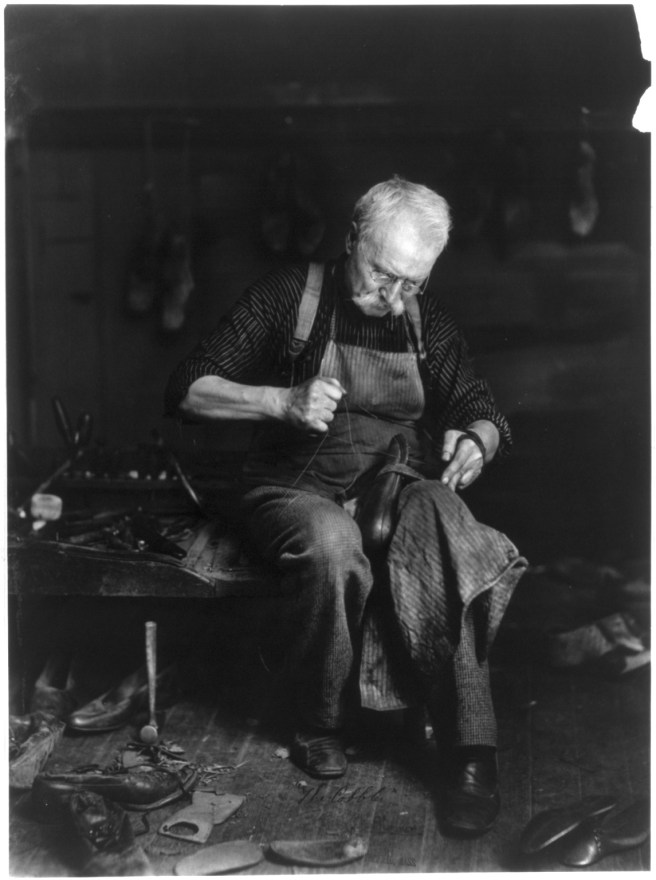
Today, instead of procuring our needs directly or through someone we know, we trudge off into an abstract man-made environment to be treated as children and told to perform an obtuse task or two or twenty. And in exchange for giving up our time, we get slips of paper (or more likely, digits only readable to a computer on a plastic card) that confirm that we have performed our work and are now in a position to gather food, shelter, clothing, heat, etc. from a middle-man where profits are almost never seen by the makers.

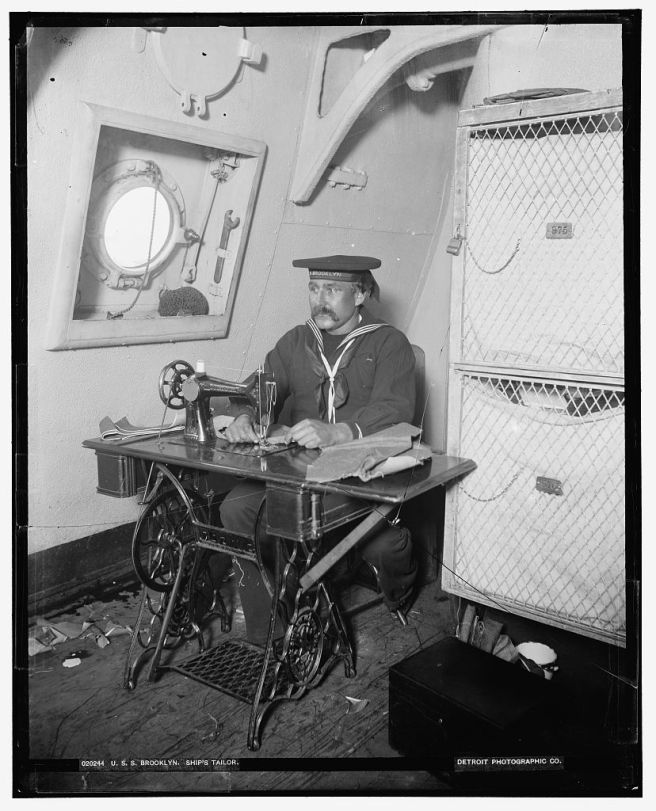
Creating things like fire, rope, or cutting tools, not to mention shoes or housing will baffle most modern people. Weaving a blanket, sewing a shirt, or butchering an animal are simply out of the question for most of us in the western world. Many of these activities will get you strange looks at best or a call to the authorities at worst. This mindset means that most of us can’t feed or cloth ourselves any longer even if we really want to.
 Makers are the hope. We’re out there. Doing things and making stuff. Fending for ourselves in an hostile but lethargic world of expected and nearly enforced consumerism. Once you realize the machine doesn’t work, you can realize it doesn’t really exist.
Most of my adult life, I’ve noticed an interesting paradox. Typical wage-slaves who proudly give 50 hours per week to a faceless and unappreciative mechanism are convinced that the dreamers and the creators are just a bunch idlers and flâneurs when it’s, in fact the lifestyle that they really envy. If it isn’t recognized as drudgery, somehow it’s not real work. But how much do we really need to be happy?

As a side note, many modern philosophers trace this thinking directly to the Protestant Reformation when, as they claim, much of the fun was beaten out of life and holidays were things to be frowned upon. But here I digress.
The internet actually gives me hope, especially seeing the wonderful documentaries of real craftsmen and makers around the world that are emerging from obscurity. Maybe to many, Makers are just a novelty. Something to be ogled at. But knowing there are others out there looking for a deeper purpose and a better existence makes me feel a little better about humanity.

Let’s be realistic; most modern folks wouldn’t opt to live as hunter gatherers as their ancestors did, but maybe we can reach a better balance with our lives than to adopt the imposed role as absolute consumers. And hopefully conscience people can do some good things along the way. Maybe by thinking outside the consumer mindset and choosing to build our homes, make our own socks and shirts, ride a bike, and hunt our meat we can make a difference by both our action and our inaction.
In the words of Samuel Johnson, “To do nothing is within everyone’s power.”

Remember: “An idle mind is a questioning, skeptical mind. Hence it is a mind not too bound up with ephemeral things, as the minds of workers are. The idler, then, is somebody who separates himself from his occupation: there are many people scarcely conscious of living except in the exercise of some conventional occupation”
Robert Louis Stevenson, idler extraordinaire.
 Why not go make something? Your great grandparents did.
P.S. Pardon the Friday late night ramblings. My disdain for the modern world is heightened at the end of a ridiculous week at work.
Making a Traditional Turning Saw, part 1
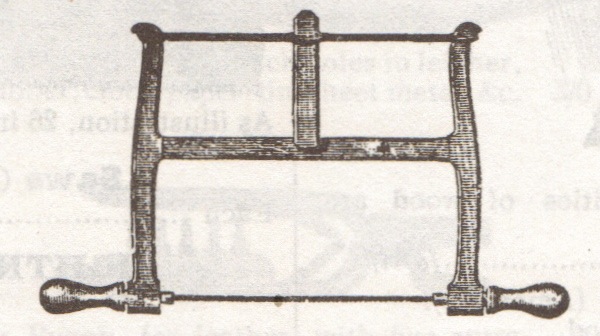
Bucksaws, bowsaws, and other frame saws are often lumped together into a single category in modern American or British English (unless you happen to be a traditional hand woodworker of course). And why should anyone care anyway? Bucksaws are replaced by chainsaws, bowsaws have become cheap, pot-metal, throw away abominations, and turning saws are replaced by band saws, scroll saws, saber saws, or even cheap coping saws.
The firewood bucksaw is the biggest of this family and one I’m glad to have in my toolkit. Yes, I still own a chainsaw but find I use it less and less in favor of the quiet bucksaw that takes no petroleum and spews out no noxious fumes. I have read that most homes kept a big bucksaw handy as the easiest means of creating firewood and I can certainly understand why this would rank above the axe for cutting logs to length.
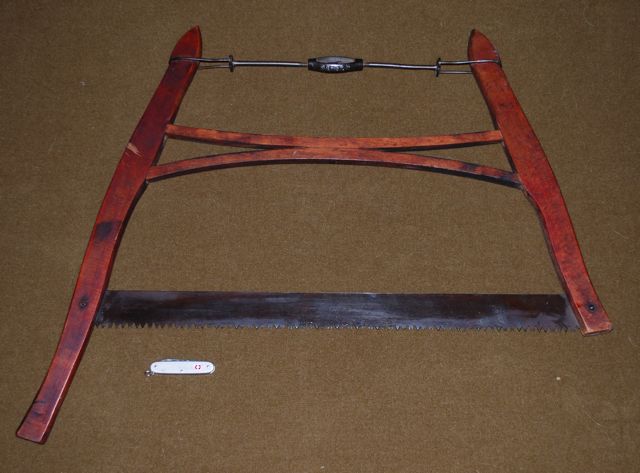
Skipping even the practicality of being able to make your own excellent tools for a few dollars (or less if you are energetic), there is a great beauty and practicality in this ancient design that our ancestors hit upon a couple thousand years ago. The basic premise of this design is to create a structure that will put a very thin strip of serrated metal under immense tension to simulate the stiffness of a much thicker material.
I regret that we’ve come to a point in our history where making a tool is odd, yet making something with our tools is not (yet). Where working for hours at some other thing, we get tokens of cash to purchase something we could have made ourselves in far less time and probably less energy spent. I believe Thoreau was on to this sort of thinking.
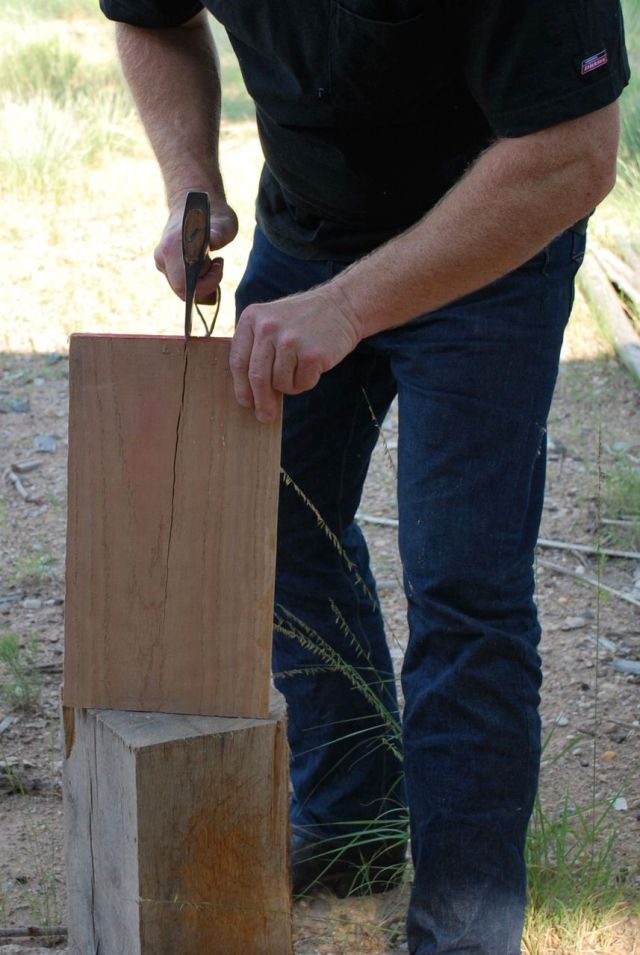
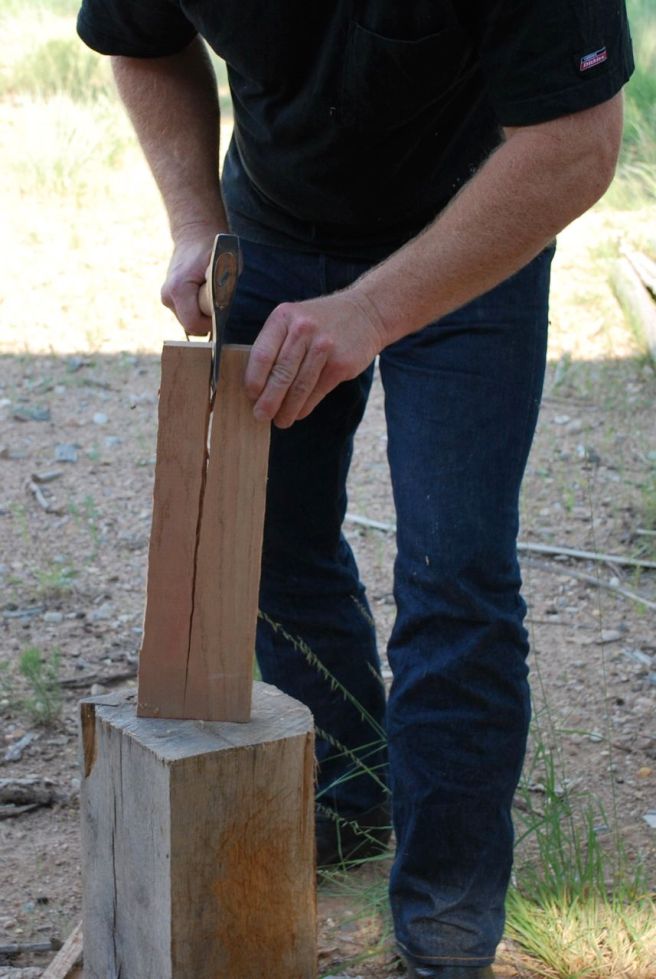
Choosing a length of straight-grained oak in this case, an axe is, by far, the fastest method of reducing it into the constituent pieces for the saw parts. This is far faster and better than sawing, creates no noise or dust, and ensures that each part is exactly in alignment with the grain.
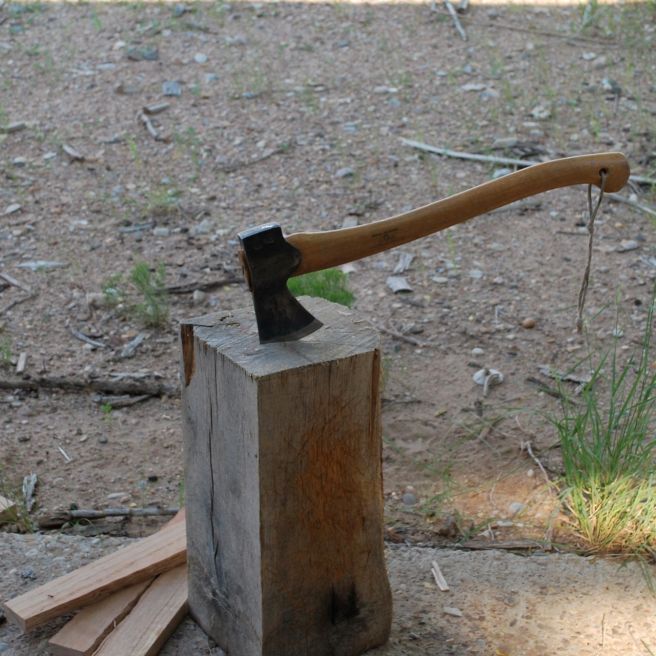
For a quick and dirty saw, these could be worked almost instantly into the mortice and tenon. However, as we always intend to make a tool we will cherish and pass on, some shaping is in order with an eye for form and comfort.

I have a file of templates I keep from past projects so I don’t have to continually reinvent these things and I highly recommend this. I find it helpful to write the details on the card stock, as well as label and date them (the notes on the one above are on the underside). Now comes the somewhat tedious task of shaping the arms for which I didn’t take a photo (maybe I’ll remember next time). I saved a few minutes by using the belt sander to taper the upper portions of the arms to save on shaping later.

After marking up the arms, I cut the mortices with a bench chisel. These are easier than many people think but do take a very sharp chisel and a little practice.

I used a 5/16″ doweling bit for this as it leaves a very clean, precise hole for the 1/4″ brass rod to run through and turn freely.
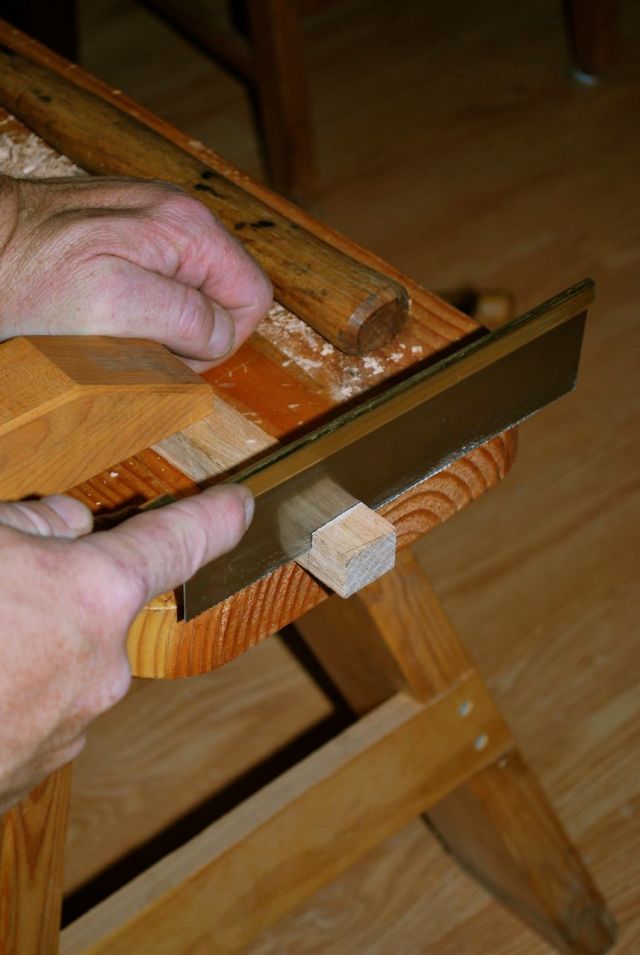
Cutting the tenon is very easy if the lumber is split precisely with the grain as opposed to sawn out on a table saw (ignoring the natural grain). After the cheeks are cut, its a quick matter to pop off the waste with a sharp chisel.
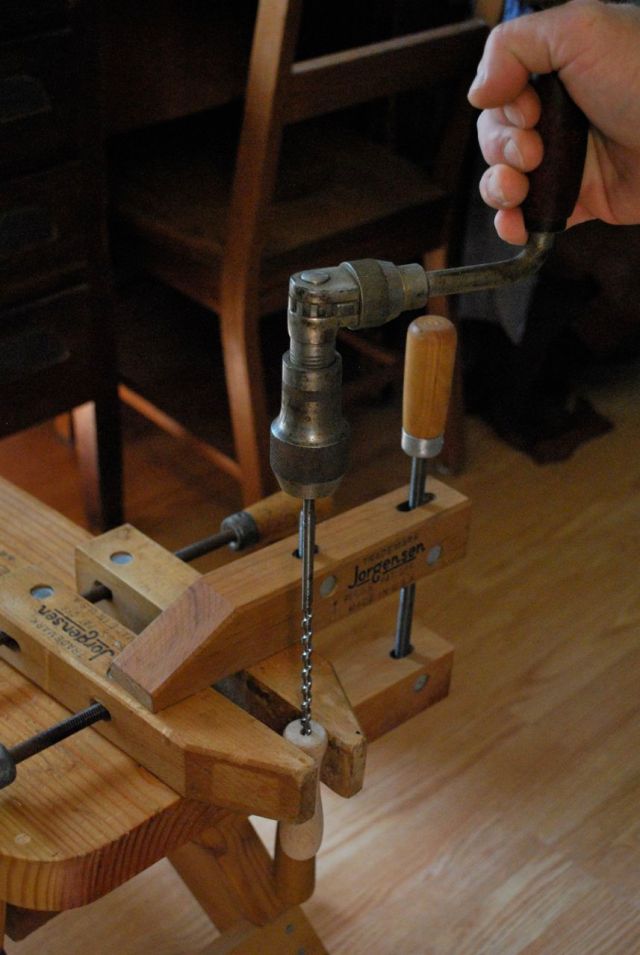
I used a spare file handle for the primary handle. A 1/4″ hole is augured about 1 1/2″ deep for the 1/4” brass rod that will become the connection for the blade.

The rod is driven into the handle and will be cross-pinned for security.
Come back for Part 2.
Bucksaw Again
For this project I moved my little operation into the living room of the house. Creating sawdust and wood chips for the dogs to track around in their boredom is a real bonus. But, on to the show…
Making a Bucksaw for carpentry, bushcraft, or just because they’re cool.
 The little bucksaw I built last winter had never been “finished” even though I’ve been using it for a while now. Having a few hours to spare I pulled out the knives, rasps, and scraper and decided to finish this once and for all before getting down to the next project.

I hope to put this together soon as a sort of “Instructable” for making frame saws, buck saws, and turning saws but for now, this will have to do. Although common enough for the last couple millennia, frame saws have lost their place in the tool kits of carpenters and craftsmen, having been replaced by sabre saws, band saws, and the like. There is a lot of beauty in the old design and a serviceable saw can be built in a short time with very few tools. In fact, the one pictured here cost about $4 for the partial band saw blade, maybe a dollar for the screws and a few bucks for the long-toothed firewood blade. The lumber was created from a less-than-perfect bow stave; a well-seasoned shagbark hickory bodged down to about 7/8″ thick. The genius of this design is that it allows for an extremely thin blade to be stretched very tight for ease of work and a very clean cut.

A new, high quality band saw blade can be purchased for under $14 from a decent hardware store. The above is a Delta brand 1/2″ blade with 6 teeth-per-inch (TPI) and is only 2/100ths of an inch thick. That makes for very little waste which can be especially valuable when working harder to acquire materials like antler or bone.
 Band saw blades are made in a continuous loop and are great for what they do but the first thing we need is to break the loop. The metal is extremely hard, and fairly brittle which works to our advantage. The edge of a sharp bastard file, like that pictured above can be used to score cross the blade. You don’t need to cut all the way through, but just make a solid scratch across the surface. Then the blade can be snapped by hand, making sure to not put any unnecessary bends in the blade. Drilling the holes in the ends is the tough part. As I said, the metal is very hard so, either you can use a punch to make a starter spot and drill through as is (but this will severely dull most drill bits), or the ends can be gently annealed in a forge or with a torch and drilled soft.
 Here are all the components of the new buck saw with the new linseed oiled surface glaring in the sun. The tensioner can be made from any strong cord (in this case 550 paracord), but any strong line can be built up or bailing wire will work (but is a little low-class and ugly and difficult to remove quickly). The spreader bar (the horizontal piece) is morticed into the legs but is not fastened by anything other than the tension on the whole system. Thus, the whole saw can be taken down in a few seconds and stuck into a toolbox or backpack for easy travel.
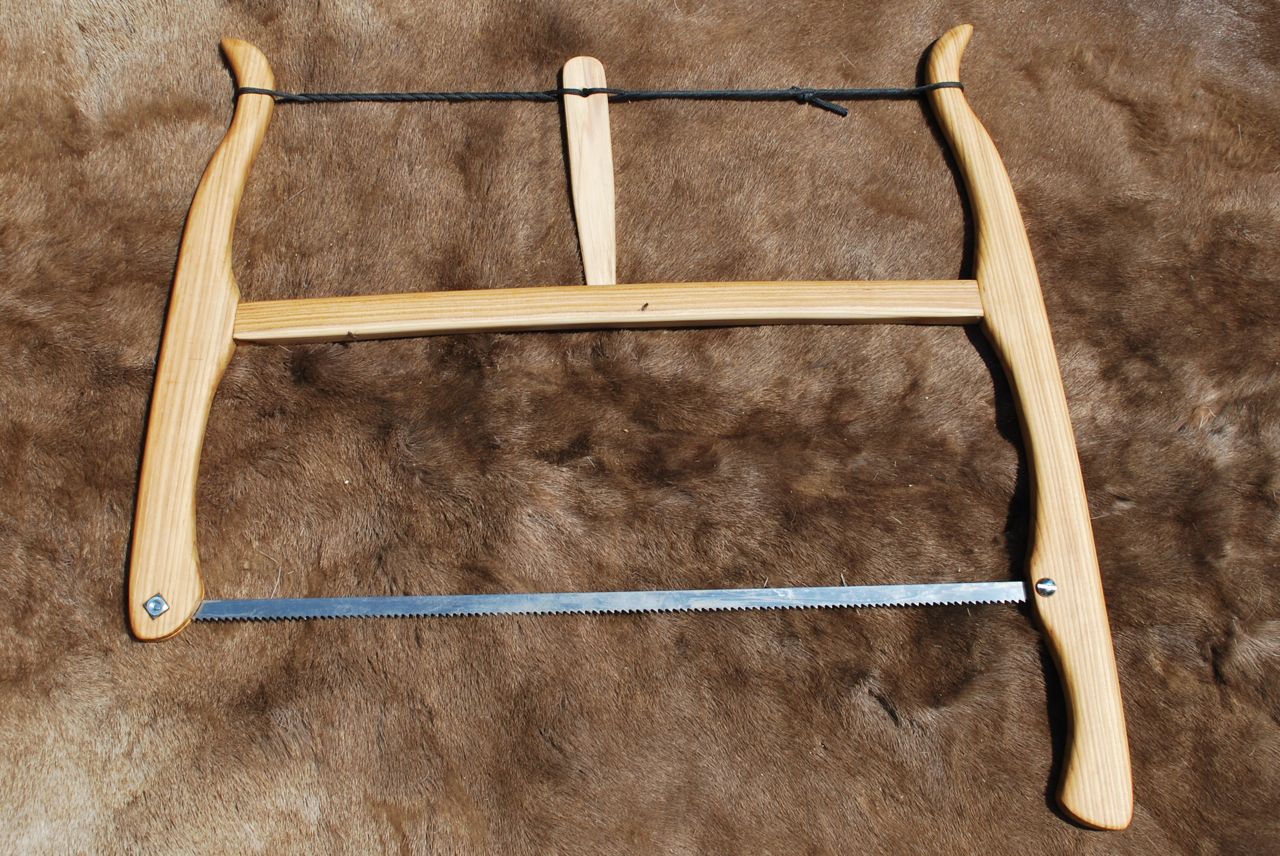 Above is the assembled saw under tension and ready to cut. A good question was already asked as to “why the spreader is curved in this case?” Because this was made from real wood, split with and axe, following the grain. I could have worked to straighten it for looks but I like the fair curve it created and, as it has no bearing on the function, left it as is.
Hope this helps anyone wanting to make a saw like this. Maybe I can offer this as a short, one day class at Rabbitstick or Winter Count soon.
Up soon: a turning saw.
Speaking of Distance Archery
653 meters!

Mónus József here is a multiple record-holder in Hungarian traditional long-distance archery. In an archery contest in inner Mongolia, he made a successful 653m shot (nearly half a mile) with his home-made bow.
Click the link to see the original page or HERE for more information about Hungary.
Lynx Vilden; a Documentary
Lynx is certainly one of the coolest people I know. An amazing person on so many levels. Here is a 53 minute documentary (mostly in French) about her lifestyle and teaching. Very well done and I’m glad, on the web.
Chariot Birman
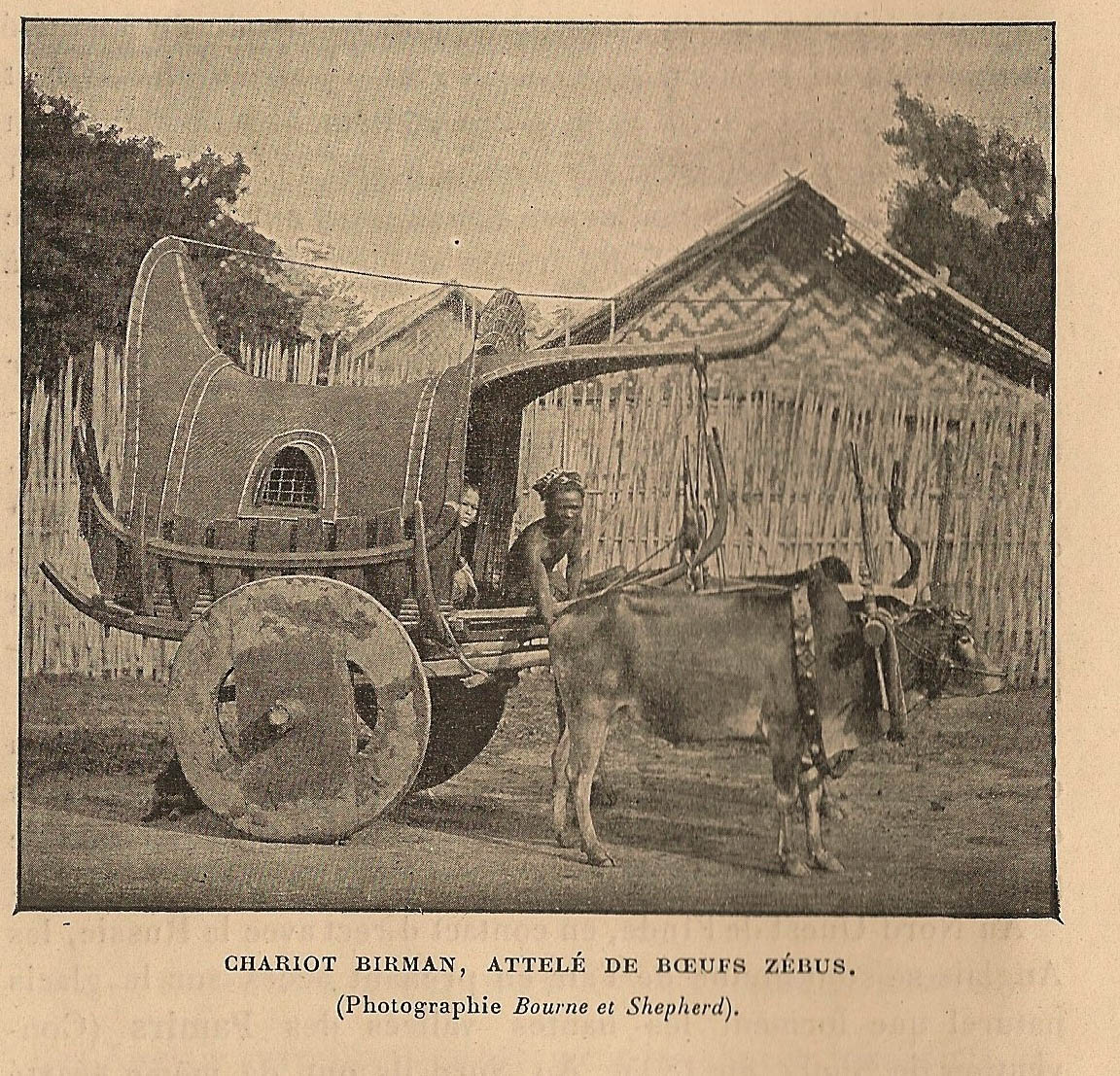 What a great wagon. I wish my creativity could approach this level of beauty.
Crafts

The Wood Turner
A great short film about a bowl being turned on a treadle lathe.
Info from the Vimeo Page:
Shot in a couple of hours on 2 separate afternoons, this is Leo who lives in a yurt with his partner and a variety of animals on the edge of Exmoor in the UK.
He is a craftsman of many talents, and this film shows him turning a piece of wood into a beautiful bowl using a traditional foot powered lathe (which he also built himself).
We started shooting on the first afternoon, but one of his sheep escaped, so we had to shoot the rest the following afternoon. Unfortunately, the weather was far from perfect and was actually raining lightly.
It doesn’t take him long to turn one of these bowls, and watching him work was a real pleasure.
Music –
Conversations with Angels – Luke Richards
Inner Dream – Barrie Gledden.
All shot using Canon 7D with EF 24 -105, f4 lens.
 Preindustrial Craftsmanship