Mythopoeia

by J.R.R Tolkien, an important and deep poem:

To one [C.S. Lewis] who said that myths were lies and therefore worthless, even though ‘breathed through silver’.

Philomythus to Misomythus

You look at trees and label them just so,
(for trees are ‘trees’, and growing is ‘to grow’);
you walk the earth and tread with solemn pace
one of the many minor globes of Space:
a star’s a star, some matter in a ball
compelled to courses mathematical
amid the regimented, cold, inane,
where destined atoms are each moment slain.

At bidding of a Will, to which we bend
(and must), but only dimly apprehend,
great processes march on, as Time unrolls
from dark beginnings to uncertain goals;
and as on page o’er-written without clue,
with script and limning packed of various hue,
an endless multitude of forms appear,
some grim, some frail, some beautiful, some queer,
each alien, except as kin from one
remote Origo, gnat, man, stone, and sun.
God made the petreous rocks, the arboreal trees,
tellurian earth, and stellar stars, and these
homuncular men, who walk upon the ground
with nerves that tingle touched by light and sound.
The movements of the sea, the wind in boughs,
green grass, the large slow oddity of cows,
thunder and lightning, birds that wheel and cry,
slime crawling up from mud to live and die,
these each are duly registered and print
the brain’s contortions with a separate dint.
Yet trees are not ‘trees’, until so named and seen
and never were so named, tifi those had been
who speech’s involuted breath unfurled,
faint echo and dim picture of the world,
but neither record nor a photograph,
being divination, judgement, and a laugh
response of those that felt astir within
by deep monition movements that were kin
to life and death of trees, of beasts, of stars:
free captives undermining shadowy bars,
digging the foreknown from experience
and panning the vein of spirit out of sense.
Great powers they slowly brought out of themselves
and looking backward they beheld the elves
that wrought on cunning forges in the mind,
and light and dark on secret looms entwined.

He sees no stars who does not see them first
of living silver made that sudden burst
to flame like flowers beneath an ancient song,
whose very echo after-music long
has since pursued. There is no firmament,
only a void, unless a jewelled tent
myth-woven and elf-pattemed; and no earth,
unless the mother’s womb whence all have birth.
The heart of Man is not compound of lies,
but draws some wisdom from the only Wise,
and still recalls him. Though now long estranged,
Man is not wholly lost nor wholly changed.
Dis-graced he may be, yet is not dethroned,
and keeps the rags of lordship once he owned,
his world-dominion by creative act:
not his to worship the great Artefact,
Man, Sub-creator, the refracted light
through whom is splintered from a single White
to many hues, and endlessly combined
in living shapes that move from mind to mind.
Though all the crannies of the world we filled
with Elves and Goblins, though we dared to build
Gods and their houses out of dark and light,
and sowed the seed of dragons, ’twas our right
(used or misused). The right has not decayed.
We make still by the law in which we’re made.

Yes! ‘wish-fulfilment dreams’ we spin to cheat
our timid hearts and ugly Fact defeat!
Whence came the wish, and whence the power to dream,
or some things fair and others ugly deem?
All wishes are not idle, nor in vain
fulfilment we devise — for pain is pain,
not for itself to be desired, but ill;
or else to strive or to subdue the will
alike were graceless; and of Evil this
alone is deadly certain: Evil is.

Blessed are the timid hearts that evil hate
that quail in its shadow, and yet shut the gate;
that seek no parley, and in guarded room,
though small and bate, upon a clumsy loom
weave tissues gilded by the far-off day
hoped and believed in under Shadow’s sway.

Blessed are the men of Noah’s race that build
their little arks, though frail and poorly filled,
and steer through winds contrary towards a wraith,
a rumour of a harbour guessed by faith.

Blessed are the legend-makers with their rhyme
of things not found within recorded time.
It is not they that have forgot the Night,
or bid us flee to organized delight,
in lotus-isles of economic bliss
forswearing souls to gain a Circe-kiss
(and counterfeit at that, machine-produced,
bogus seduction of the twice-seduced).
Such isles they saw afar, and ones more fair,
and those that hear them yet may yet beware.
They have seen Death and ultimate defeat,
and yet they would not in despair retreat,
but oft to victory have tuned the lyre
and kindled hearts with legendary fire,
illuminating Now and dark Hath-been
with light of suns as yet by no man seen.

I would that I might with the minstrels sing
and stir the unseen with a throbbing string.
I would be with the mariners of the deep
that cut their slender planks on mountains steep
and voyage upon a vague and wandering quest,
for some have passed beyond the fabled West.
I would with the beleaguered fools be told,
that keep an inner fastness where their gold,
impure and scanty, yet they loyally bring
to mint in image blurred of distant king,
or in fantastic banners weave the sheen
heraldic emblems of a lord unseen.

I will not walk with your progressive apes,
erect and sapient. Before them gapes
the dark abyss to which their progress tends
if by God’s mercy progress ever ends,
and does not ceaselessly revolve the same
unfruitful course with changing of a name.
I will not treat your dusty path and flat,
denoting this and that by this and that,
your world immutable wherein no part
the little maker has with maker’s art.
I bow not yet before the Iron Crown,
nor cast my own small golden sceptre down.

In Paradise perchance the eye may stray
from gazing upon everlasting Day
to see the day illumined, and renew
from mirrored truth the likeness of the True.
Then looking on the Blessed Land ’twill see
that all is as it is, and yet made free:
Salvation changes not, nor yet destroys,
garden nor gardener, children nor their toys.
Evil it will not see, for evil lies
not in God’s picture but in crooked eyes,
not in the source but in malicious choice,
and not in sound but in the tuneless voice.
In Paradise they look no more awry;
and though they make anew, they make no lie.
Be sure they still will make, not being dead,
and poets shall have flames upon their head,
and harps whereon their faultless fingers fall:
there each shall choose for ever from the All.

21st Century Sea Chest

This is not furniture worthy of the great builders like Peter Follansbee, Chris Schwartz, or Chris Hall.  However, it is a piece of functional furniture created from nearly all recycled materials and will hopefully be with me for the rest of my life.  I’ve wanted a sea chest for about as long as I’ve known they exist.  These are the unit of personal possessions of the old mariners during the heyday of wooden ships and work well as a low table.  I’ve put off building one for many years now as I’m fairly lazy at heart (and intimidated by the huge number of dovetails and other joinery involved).  But I’m also a schemer and a planner…

DSC_0001When I took up my current post it had a fairly rocky start and I prepared for the worst.  Instead of filling my small house with bulky furniture, I built nearly everything from dimensional lumber, primarily 1 x 12″ pine as it is ultimately recyclable.  While rearranging the house over the winter I decided to remove a large set of shelves that were not being used very well.  This left me with a hefty pile of very dry, aged pine that now needed a purpose.  I decided these would just about serve to make a trunk of some sort and convinced myself to knock up a sea chest.

DSC_0002Being a 21st century guy without huge swaths of time for fine woodworking, I built this fancy box without any complex joinery, just stainless steel fasteners and wood glue.  The only purchased materials were the hinges, hasp, and Cabot’s Wood Finish (color: Midnight).  So, for a few bucks, a few weekends and evenings, and a little labor, I now have a sea chest to hold my coveted earthly possessions.

DSC_0004The chest is based on several 18th and 19th century sea chests I have seen with a lift out tray and a solid box for small objects.  The outer dimensions of the chest are 34 1/2″ x 19″ deep x 18″ high giving an internal volume of nearly 8700 cubic inches or a little over 5 cubic feet.  That is about two large backpacks worth of space for possessions.  Not too bad.

DSC_0005I should note that some scraps from the barn were added to complete the project.  The strakes that hold the handles are oak and the floor of the chest is made from tongue-and-groove yellow pine, left over from previous projects.  At the time of this post, I consider the chest about 90% complete.  The 5/8″ manilla handles will soon be covered with leather, and the lid support will be replaced with something a little nicer (it is just black para-cord at the moment).  Also, the interior needs a finish, probably shellac, to avoid the off-gassing of regular varnish.

I hope this motivates someone else to forgo garbage, mass-produce, pressboard furniture.  It is more than possible to make something worthwhile and lasting from the poor end of the lumber yard.

Retrospective

The Evolution of the Vardo and where did it begin?

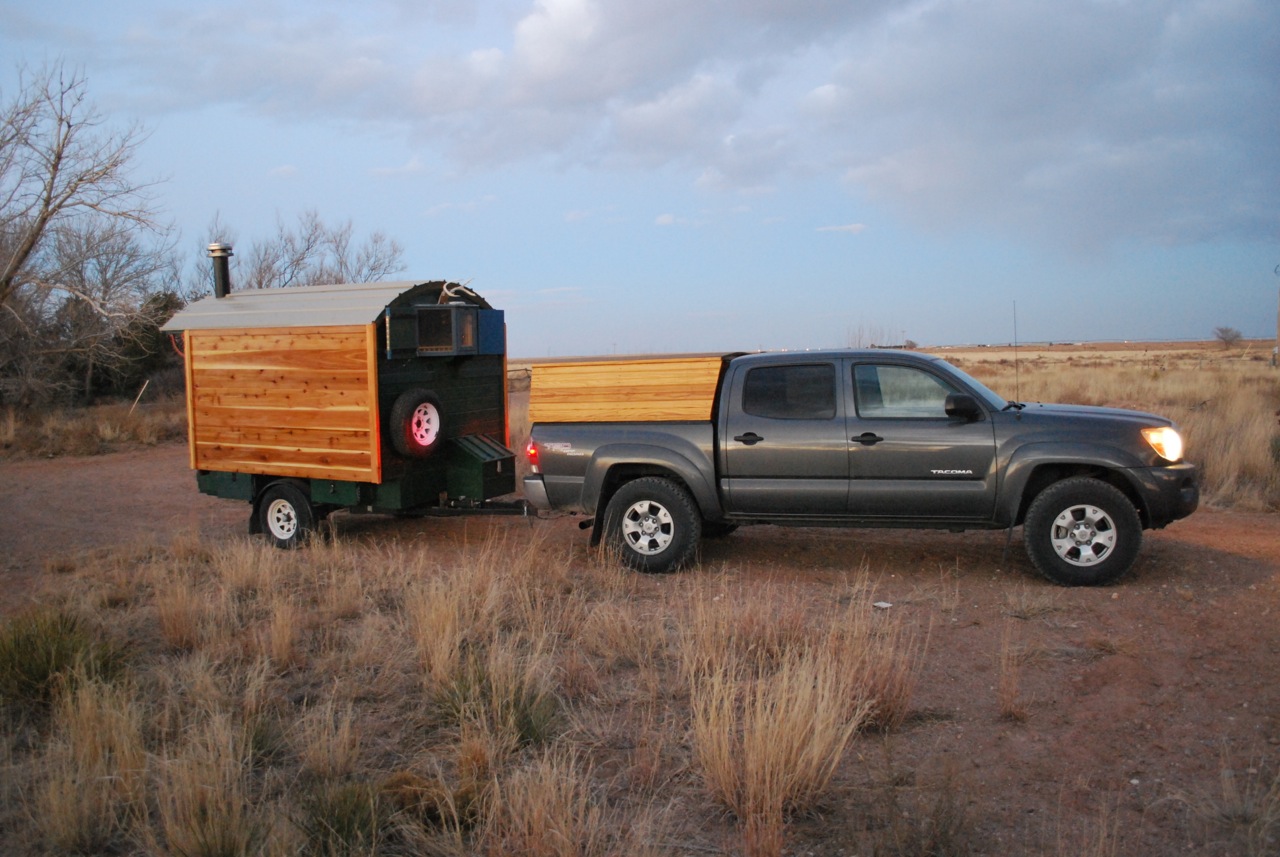
I think it’s time for a response to some of the correspondence generated from the Vardo known as the Snail that is chronicled on this blog.  It’s my home on the road and a big part of my life.

Safety Check!
Ready for the Road.

First of all, thanks for all the positive comments and discussions started by this odd-ball pet project of mine.  I was hesitant enough even starting it much less chronicling it on the web for all-and-sundry to see.  As far as the detractors go, I don’t really mind well-thought-out comments that criticize the wagon but needless commentary on how it “should have” been done is really a waste of space here.  I won’t compromise my design to fit someone else’s idea an RV they want to have.  Build one, show the world, we’ll all be inspired in that way.  (And no, I will not build one for you at this time.  You can buy this one or steal my plans for free).

As the vardo passed 4 years old this month and comes up to it’s 20,000 mile mark, some changes are in the works.  Nothing too major.  Just tidying up the loose ends and finishing all the bits that never happened.  It’s time to reassess.  New siding, some windows, lots of finishing touches to make it more livable.  Updates to follow.

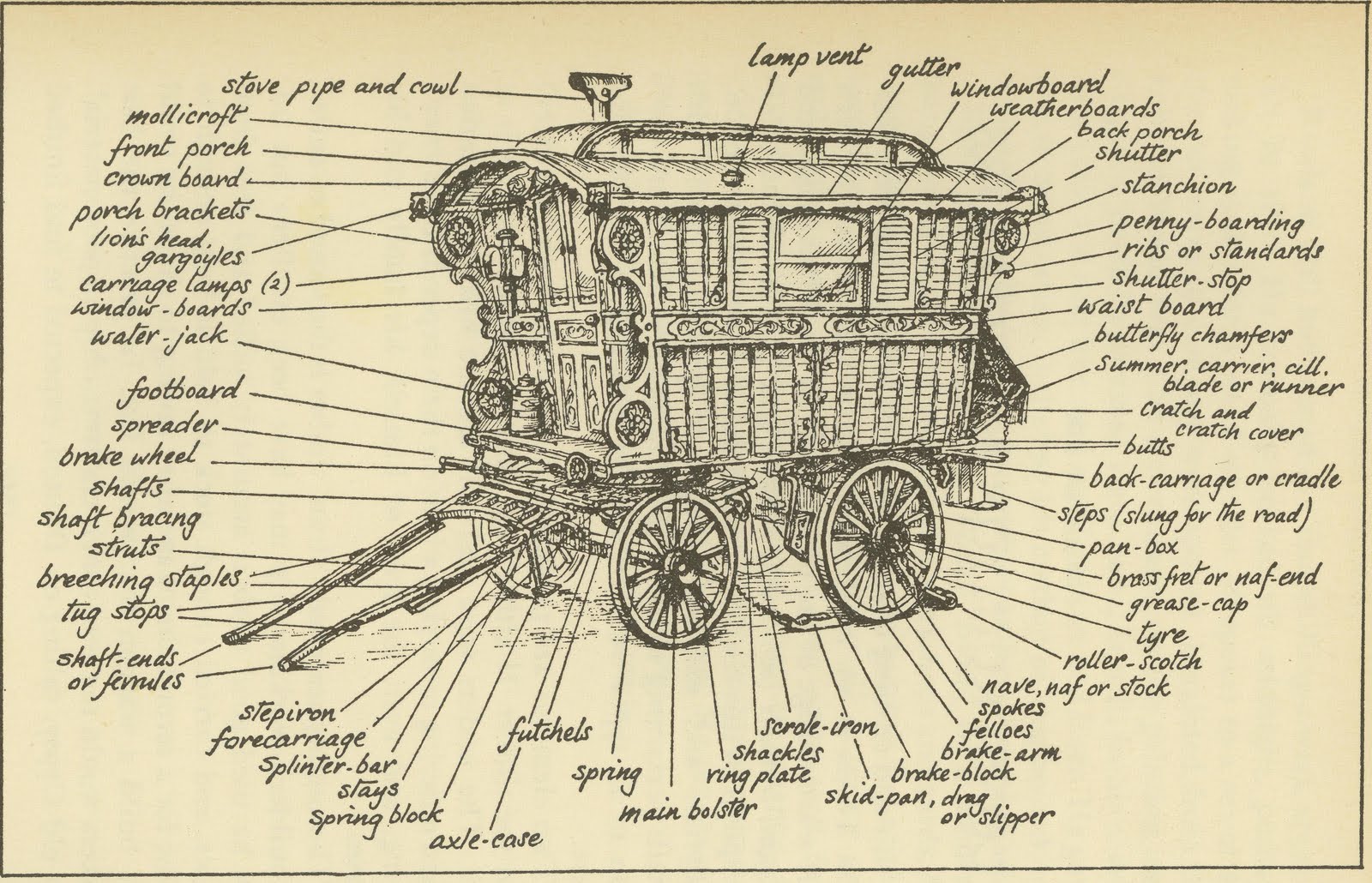
So where did this project begin?  Long ago, while pondering the cargo trailer and pickup truck I owned and thinking about rolling homes I read the book English Gypsy Caravan: Its Origins, Builders, Technology and Conservation by Cyril Henry Ward-Jackson and Denis E. Harvey and I thought it would be great to tow something like this behind a truck.  It showed the design of the vardo in all it’s glory.  Unlike the BenRoys, the “slouchies” and teardrops I had considered the old fashioned “showman” or “Gypsy” vardo had a classy look and feel that a woodworker can appreciate and all the amenities of home, if rather spartan for some tastes.

From the English Gypsy Caravan.

The question was: Can I make this work at highway speeds?  It seemed unlikely but I am hard-headed.  The internet was no help at that point as I couldn’t find anyone with a similar design online so I looked to the library.  Little help there but there was plenty of information documenting old-time wagons if one were willing to chase down the leads.  And so it began.  The more I looked at the plans, the more I thought this could really work.

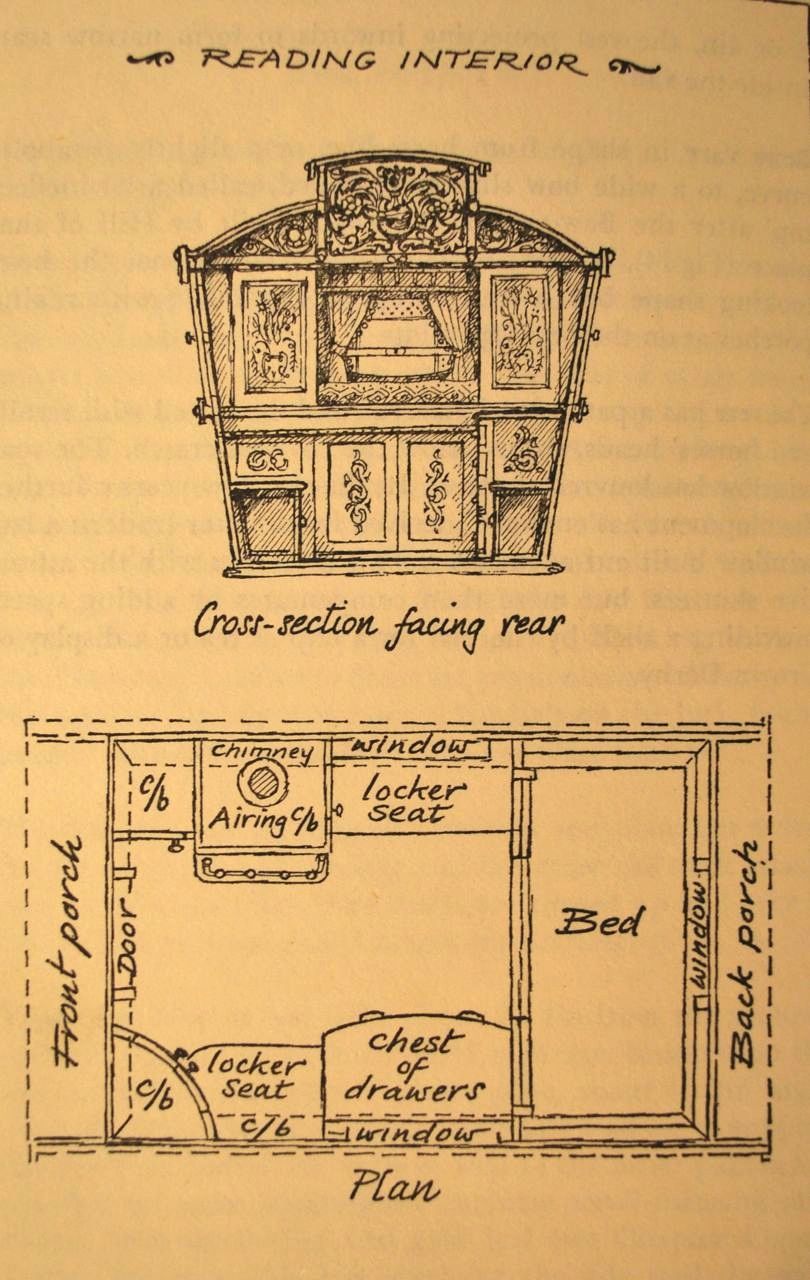
ReadingFloor

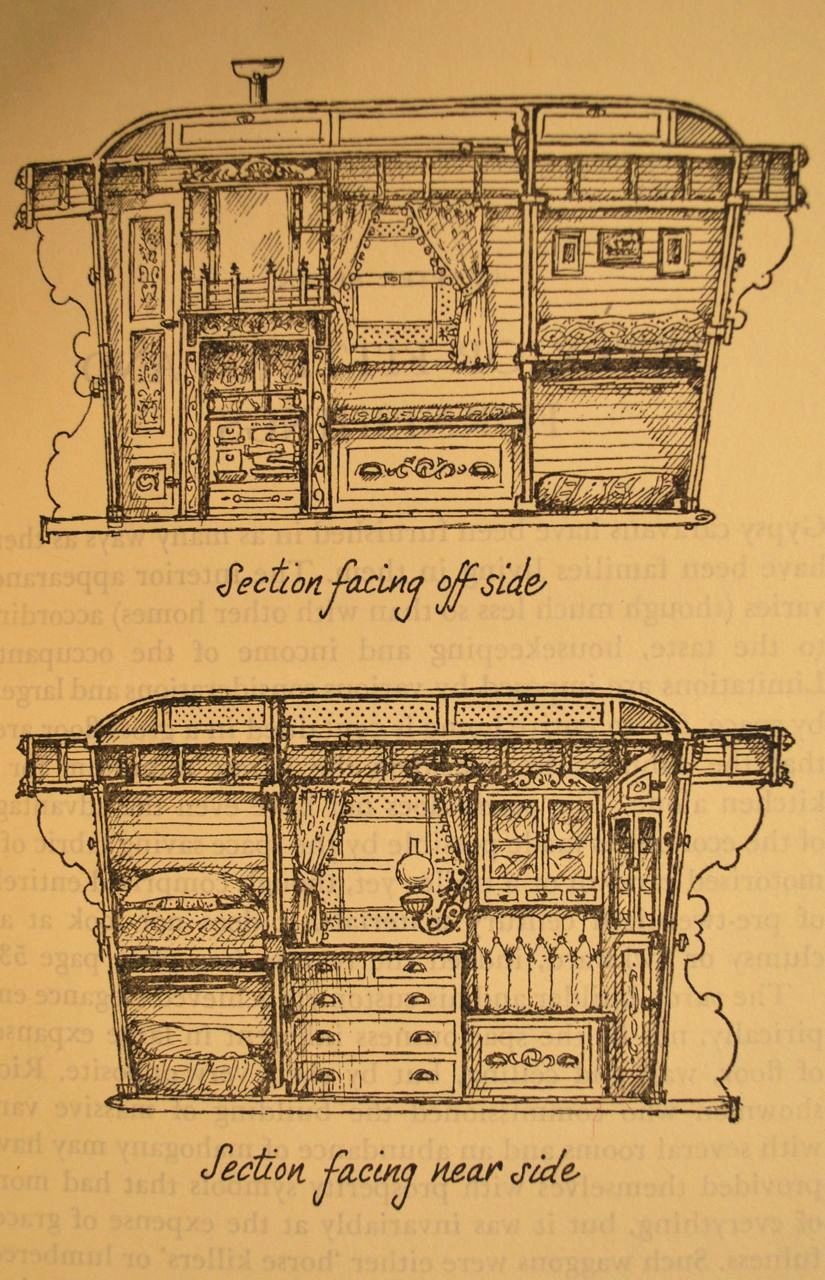
I am a firm believer in looking to the past for solutions.  Maybe it’s the skeptic in me but I think most of our modern answers are based on what someone wants to sell us, not what is the right way to do something.  I’m not against innovation.  But how can I improve on a layout like this?  Remember, most real living is done outdoors, not confined in the house.

ReadingInt I admit, I dumbed down the 19th century workmanship to fit a modern time and financial budget but the inspiration was there.   From these drawings, my home was born.

More sketches, the evolution of the design and more of this babble can be found on the “Sketches” page or a complete photo log of the build can be seen HERE.

Ultra Minimalists, Part 3

For the Ultra Minimalists, Part 1, click here.

More Historic Minimalists – religious wanderers from the East

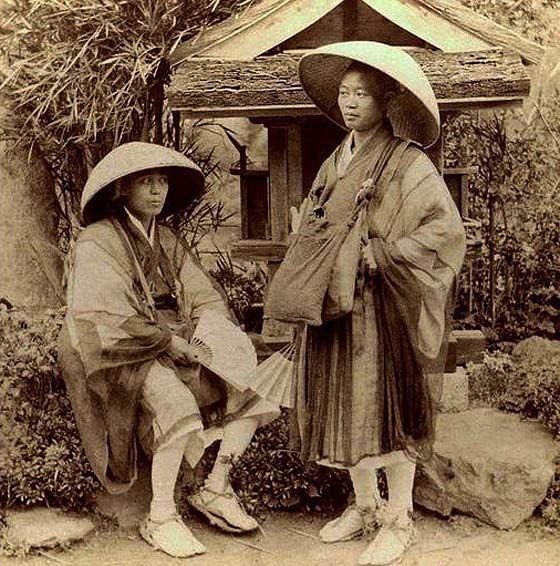
Japanese_pilgrimWandering Monks part 1 – The Buddhist monks that travel much of the year throughout Asia are about as minimalist as one can reasonably get.  Early Buddhist monks were instructed to own, as based on the Pali Canon, a very simple set of eight items.  Things have, of course, changed over time and religious wanderers have changed with it.

  • outer robe
  • inner robe
  • thick double robe for winter
  • alms bowl for gathering food and eating
  • razor for shaving
  • needle and thread for repairs
  • belt
  • water strainer for removing impurities from drinking water

Everything thing else was communal or gifted to them, including food.

ThaiMonkWandering Buddhist Monks part 2 – Things have changes in the past 2,500 years and the natural hardships of a traveler’s life warranted a few additions to an allowable kit of possessions.  A revised and more modernized version adds a few more necessities (not everyone is up to the task of living in real poverty or misery; also, the communities of non-mendicants have some expectations about cleanliness, etc.).  So in addition to the above eight possessions, the monks carry:

  • Bowl
  • Three robes, inner, outer, and warm
  • Bathing cloth
  • Umbrella, some sects mention a small tent as well
  • Mosquito net
  • Kettle for water
  • Water filter
  • Razor
  • Sandals
  • Small candles
  • Candle lantern

It should be remembered, these monks were part of a Sangha (intentional community of Buddhists) so there were communal objects for the rainy season when they weren’t traveling and there is a long tradition of charity towards holy men that we no longer practice in the West (other than tax exemption for churches and the National Football League).

PilgrimslargeWandering Buddhist Monks part 3 – Of course, the world changes and the esoteric lifestyle adapts with it.  Modern Buddhist mendicant monks might carry a few extra things in order to live reasonably within the modern world.  This becomes a very realistic list for the modern traveler.  Over many centuries, it became apparent that being acceptable and able to fit into society in general was an important thing.  Good appearance, cleanliness, and preparedness helps one not be a burden on the community.  I understand the need to fit-in and remain incognito when appropriate.  After all, isn’t that what our daily costumes achieve?

Later realists again modified the kit of the wandering Buddhist mendicants in eight types of personal utensils or belongings (adapted, in part from RAHU website, Singapore).  There are a total of 8 necessary requisites of the Buddhist monk garments and utensils. I big part of the teachings of the Buddha are concerned with an intentional, non-harmful, and simple life.

  • Mantle Robe – Traditionally made by the acolyte himself, but may also be a gift.
  • Sarong (Sabong) – This is a simple, unadorned under garment and is worn 24 hours a day.
  • Cotton Belt or Girdle
  • Shoulder Scarf – It is a long thick brownish-yellow scarf and regarded as a monk’s multipurpose cloth and is generally large enough to use as a blanket in winter. During a long trip or visit, this thick Sangkati can be folded and used as a cushion.
  • Black Alms Bowl with Lid
  • Razor
  • Needle and Thread
  • Water-strainer

In addition the initial eight things, some items have been added, not just for survival, but for the comfort and convenience as monks might find themselves as guests in a temple, in major cities, suburban settings, or the wilderness.

  • Three amenities are added for convenience: undershirt,  a small bathing loincloth for modesty, and a bath towel.  One cannot be filthy in a tight, modern setting.
  • Bedding – Still considered luxury items for the monk: grass mat, pillow, blanket, mosquito net, and a cushion for sitting.
  • Necessities for the traveler: hand bag (for carrying all this stuff), handkerchief, knitted hat, palm leaf fan, umbrella (for sun as much as rain), and sandals.
  • Eating utensils: Dish, Bowl, Spoon & Fork, Hand Towel, A set of Food Trays containing plates and bowls, Tiffin Carrier.
  • Hygiene and cooking – Drinking water must be cleansed of dirt and germs.  This is critical for good health.  Water is the only thing a monk can freely ask for or take as needed.  In that vein, several other tools are allowed and encouraged: stove, pot for boiling water, mug for hot water/tea, water glass, water jug/bottle, tea kettle, Thermos bottle for ice or hot water as needed.
  • Toiletries – Buddhist monks should be clean and have pleasant personalities. They need some necessary objects, the same as other people water container, soap, soap container, tooth brush, tooth paste, body towel, tissues, spittoon, medicinals.
  • Domestic Objects: These items should be available to help monks in case of emergency. lantern or electric lamp, flash light, alarm clock or watch.

The latter list is a very complete list of real essentials.  Having a codified list to pack from can be comforting, just like the lists the Boy Scouts still make for High Adventure programs.  Looking at a little knowledge gained by our predecessors goes a long way.

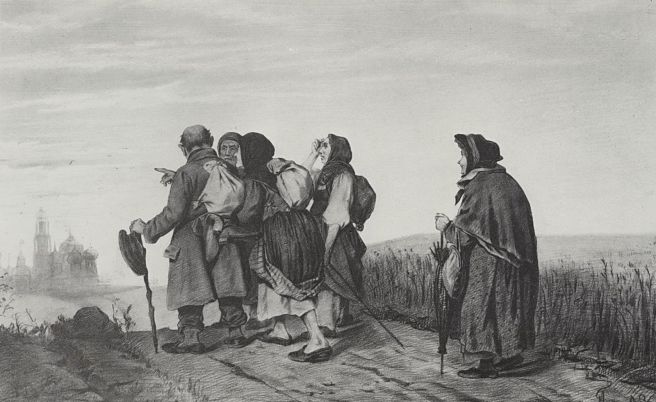
russkie-palomniki
Pilgrims on Pilgrimage – Vasily Perov (1834-1882)

Why  did I choose the Buddhists specifically for this example? Europeans have our own traditions, just without as much documentation.  We’re a free-form lot.  These folks certainly can sleep rough as need arose on a holy pilgrimage and don’t appear to be overburdened with stuff.

Matthew, Mark, and Luke all report that Jesus taught his disciples; “If you wish to be complete, go and sell your possessions and give to the poor, and you will have treasure in heaven”.

Coming next – Ultra Minimalists, Part 4 – Modern Minimalisma re-blog from Joshua Fields Millburn.

Ultra Minimalists, Part 1

Learning a thing or two from the past…Part 1, 21st century americans are not the first to minimalize.

kylixdonkey
How much stuff do we really need to lug through life?

This is a lengthy ramble.  So long in fact, that I have broken it into several posts to be trickled out over the coming days, weeks, or months.  Skip on to the fun stuff if you aren’t interested in Minimalist* philosophy.  There’s a lot of recent talk about Minimalism as a social movement.  Not long ago, it was associated with artists and aesthetes, wanderers, mystics, and philosophers.  That is to say, the fringe element, outsiders, and weirdos.  These things come in cycles and I think, as a backlash against generations of sell-out philosophy and the creation of a professional consumer class, many people are reaching for something new.

We come to learn that everything old is new again.

I’ve been looking into history and prehistory on a full-time basis for many decades now.  As hard to believe as it may be, I even get paid a salary to do it.  One of my professional interests involves tools, tool-kits, and strategies for surviving that various people have come up with for dealing with the world.  As a primitive skills-survival instructor and full-time frugalist I think it important to not reinvent a lifeway when we have millennia of ancestors who dealt with most of the same issues we do today.

San
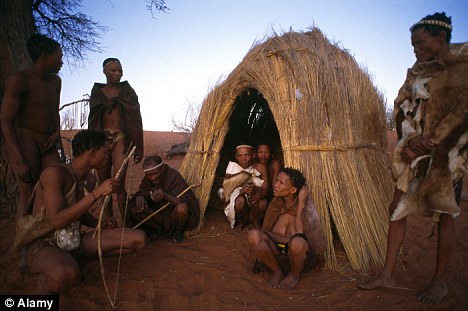
A San bushman demonstrating fire-making.  Ostrich egg canteen in the foreground.

For most humans, for most of our history, owning too much stuff has never really been an issue.  We had what we needed and either made what we needed or did without the things we didn’t have.  It brings a smile to my face to know that more than 2,400 years ago, well-to-do people in China, India, and the Middle East were contemplating the nature and evils of acquiring Stuff; even writing about it.  That’s not to say that I have immediate plans to become a wandering mendicant like a medieval friar (as appealing as that might sound to some) but I do have an interest in lightening my material load and some very specific goals for the coming year.

mendicant

My foundation as a minimalist – I have been thinking about what stuff a person needs to survive since I was a teenager.  Like virtually every young boy, I had grand ideas of escaping the family and traveling unhindered across the world.  I devoured Jack London and Mark Twain stories as a kid.  I loved the extensive and well-thought out gear lists provided in the Boy Scout Handbook, the Explorer’s Handbook, and the Philmont Guides.  I read Larry Dean Olsen’s great book of Outdoor Survival Skills and Colin Fletcher’s The Complete Walker.  I read about the mountain men of the fur trade, and always, took note of what they carried or didn’t seem to need.  I would copy lists into a notebook and ponder them while sitting in some boring high school class, making my own lists of what I have, what I need, and what I want.  This thinking encouraged me to work and save money to buy a better knife, backpack, or stove.  I was probably the only kid I knew who wanted, and got, a file and whetstone for Christmas one year (my grandpa was good that way).  My friends and I spent our teens and early twenties hiking and camping year round, mostly in the woods of the Ozarks in southern Missouri testing our mettle at that time in life time when all teenagers know they are invincible.  Some of us even made it to Europe, Asia, Africa, and beyond.

BooksIn a modern sense of survivalist, many people look to the military or the loonies of teh mainstream media.  Often, military service is the time when young men and women are introduced to such things for the first and only time.  Realistically however, the military itself acknowledges it’s shortcomings on a personal basis as (with the exception of a few special operations units) its entire system is dependent on lengthy and complex supply lines, support chains, and de-emphasis of the individual and personal decision making.  Military survival is therefore, approached as a means of keeping alive until help arrives.  Great for fighting a war, but not always so good when you are turned loose into the world.

Coming up next…Ultra Minimalists Part2.   Let’s look at a military example anyway: Romans.

legionary

* here are a few links to modern Minimalists of various ilks and philosophical merit.  A journey through these links will hint at the breadth and depth of people on different paths but moving in the same direction.

Read, research, think, and enjoy!

Go to Part 2

Learning from Masters (not me, just what I seek)

Using archaeology to find out hows things “should be” done?  A response to a common question, by George Thomas Crawford

I am regularly asked about my connection to archaeology and my interest in primitive technology.  I’ve also been chided by some people in the primitive tech community on behalf of other archaeologists because they (archaeologists) are not all directly interested in the primitive skills.  There is so much more to the anthropology of material culture and our human past than just the replicative technology.  It just happens to be what I’m into.

Many of my anthropological colleagues are way smarter and more focused than I am and go in for chemistry, microscopy studies, site and landform formation, human-animal interaction, plant-use, kinesiology, geology and humans, climate change, genetics, biocultural evolution, and a slew of other cool stuff that isn’t generally covered in the popular press.

But on that note, I scan journals and the web for hints at solutions to my own replicating attempts and experiential archaeology.  These are the masters.  For example: A person who earned his keep as an archer 4,500 years ago will know an infinite amount more about bows, arrows, strings, and animals than I could glean in a lifetime of the modern world.  Lucky for me, this type of thinking ties directly to how I want to live.  That is to say, in a style that predates, in many ways, the horrors and unforeseen consequences of the Industrial Revolution.  Not as a seeker of some non-existent Golden Age but as a searcher for the truth.  We have succeeded as a species in our present form for only a very short time so far, though we think of ourselves as lords and masters of all we survey.  We even create institutions and religions to reaffirm this and place ourselves where we see fit in this scheme.

Moving on – I was given some excellent advice by an old professor when I was in college that guided my wild academic wanderings for many years. Unfortunately I expect this sort of thinking would not go far with many students today.  The advice is essentially as follows.

– Assume that most everything you will imagine as a young scholar has been thought about, examined, and studied by your predecessors.  This does not mean to lose hope, just realize you have a long way to go and a high hurdle to cross. You can’t stand on the shoulders of giants without a serious climb.

1) For a student who truly wants to learn, it is now your full-time occupation whether that is college or not.  Scholar is a job.  You have chosen to not just take up space in a classroom and have your named checked off as attending.  Those people waste all of our time and you know who you are.  Best of luck, just don’t bother us.

2) It is your responsibility to teach yourself as much as possible.  This is done by filling your spare time by exposing yourself to knowledge not mindless entertainment.  Leave that to the zombies and the drones of the world.

A simple way to learn is to park yourself in the library and to peruse journals.  Not starting with today, but starting with research from a hundred years ago, or preferably more.  I was advised (and I did this) to pick up the earliest bound volumes of Nature, Antiquity, and American Antiquity and flip through every issue.  Read the Table of Contents.  Now, pick at least one article from each and read it.  Really read it.  You may not retain all of this information but it sticks with you in some form.  You will begin to see trends in how we think and study and write about what we do.

3) Stop worrying about what you will do for a job after college.  People obsessed with this are the most unsuccessful people I know.  If you truly just want to make money, drop out of college NOW and go learn a trade.  Be a welder, mechanic, or a carpenter*.  If you don’t want to contribute to society in any real way or are just of a greedy or slightly evil turn of mind, try banking or investment.  If you just want to slide through without too much effort or reward, try the federal government or other forms of middle management.  I see too much vocational thinking in the quest for knowledge and not enough seeking.

4) Finally, develop a passion for what you want to learn.  Hopefully this is obvious and has already happened to you but sometimes we need to be told.  If we don’t love what we do, this short life will be a very unhappy one (by “do” in this sentence, I don’t necessarily mean “how we earn our money” but what we identify as; e.g., potter, woodworker, musician, or knitter).

And a final caveat: I don’t think I am in any position give real advice to others but I do feel that maybe I should answer some of the questions I’ve become so adept at evading.  Have a great day and hopefully a happy life.

GTC

*I personally think this is critical to become a well-rounded person anyway.

Minimalism

huck-finn (1)

“I make myself rich by making my wants few.”

— Henry David Thoreau

For thousands of years, great minds have warned us against the acquisition of “Stuff”.  The more stuff we have, the more we’re obsessed with newer, better, more interesting stuff.  For about six or seven years now, I have been eliminating extraneous possessions; since before I had even heard of the Minimalist philosophy.  Long ago, I realized that possession and the grasping for possessions is a serious root of much of the world’s evil.  Greed drives our government.  Greed drives the whole crazy idea of banking; not the idea of doing something good or worthwhile, or even making ourselves happy or free.  Making money, buying junk, and paying to be entertained. This unholy trinity is the basis for most people’s lives and I don’t want to participate in that.

By most American’s standards, I own very little, but the next few months will see a serious change and a move toward absolute minimalism.  I’m posting this here to maybe inspire a few others to think about their possessions, what holds you down, and what makes you happy.  Every possession is an anchor.


Intelligence, something to think about

“Suppose my auto-repair man devised questions for an intelligence test. Or suppose a carpenter did, or a farmer, or, indeed, almost anyone but an academician. By every one of those tests, I’d prove myself a moron, and I’d be a moron, too. In a world where I could not use my academic training and my verbal talents but had to do something intricate or hard, working with my hands, I would do poorly. My intelligence, then, is not absolute but is a function of the society I live in and of the fact that a small subsection of that society has managed to foist itself on the rest as an arbiter of such matters.
”
Isaac Asimov, from What is Intelligence, Anyway?

Living Without Money

Not a new story, but one that seems to keep resurfacing.  Maybe there’s a crumb of wisdom that intrigues people about this concept.  Most people in the Western World have never, for a second, considered life without money, yet for most of the world, and nearly all of our history, this was the natural condition.

Can we all do it tomorrow? No. Can we move toward a less abstract, personally productive life? Yes.  Click the photo to read the short article or link below to visit the website and his book.

Headliner
Mark Boyle has a cuppa out the front of his caravan. He has forgone money and says he has found happiness.

“I believe the fact that we no longer see the direct repercussions our purchases have on the people, environment and animals they affect is the factor that unites these problems. The degrees of separation between the consumer and the consumed have increased so much that it now means we’re completely unaware of the levels of destruction and suffering embodied in the ‘stuff’ we buy.”

This is the most salient point that so many of us miss in our daily routine.

“Very few people actually want to cause suffering to others; most just don’t have any idea that they directly are. The tool that has enabled this separation is money, especially in its globalised format.”

“I am not anti anything. I am pro-nature, pro-community and pro-happiness. And that’s the thing I don’t get – if all this consumerism and environmental destruction brought happiness, it would make some sense. But all the key indicators of unhappiness – depression, crime, mental illness, obesity, suicide and so on are on the increase. More money it seems, does not equate to more happiness.”

Mark Boyle is the founder of the Freeconomy Community www.justfortheloveofit.org. The Moneyless Man, a book about his year without money, is available here and elsewhere on the web.

Makers to the Rescue

Makers, Dreamers, Builders, and Inventors, Unite:

reflections on saving our world

“Perpetual devotion to what a man calls his business, is only to be sustained by perpetual neglect of many other things. And it is by no means certain that a man’s business is the most important thing that he has to do”  Robert Louis Stevenson.

Coup_de_poing_acheléen

Humans are, by nature, makers of things.  That’s how we deal with the world…  or did, until the Industrial Revolution tore us away from our connection with the earth.  Somebody is still making all the stuff, of course, its just outsourced and corporatized,  repackaged, and branded.  Strangely, the stuff that should last, like clothes, housing, or tools are generally poorly made and often unfixable while the junk that should be disposable is made from plastics that will endure for a geologic age or poison our descendents.  But maybe, with a little effort, it doesn’t have to be this way.

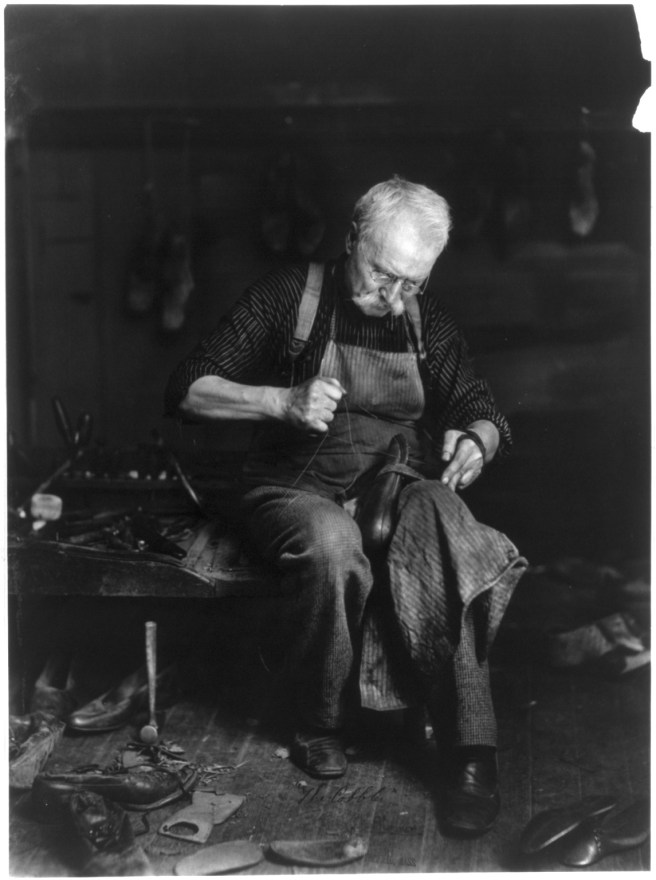
TheCordwainer

Today, instead of procuring our needs directly or through someone we know, we trudge off into an abstract man-made environment to be treated as children and told to perform an obtuse task or two or twenty.  And in exchange for giving up our time, we get slips of paper (or more likely, digits only readable to a computer on a plastic card) that confirm that we have performed our work and are now in a position to gather food, shelter, clothing, heat, etc. from a middle-man where profits are almost never seen by the makers.

FullApron
Hand Crafted Apron from THOSE WHO MAKE.

Creating things like fire, rope, or cutting tools, not to mention shoes or housing will baffle most modern people.  Weaving a blanket, sewing a shirt, or butchering an animal are simply out of the question for most of us in the western world.  Many of these activities will get you strange looks at best or a call to the authorities at worst.  This mindset means that most of us can’t feed or cloth ourselves any longer even if we really want to.

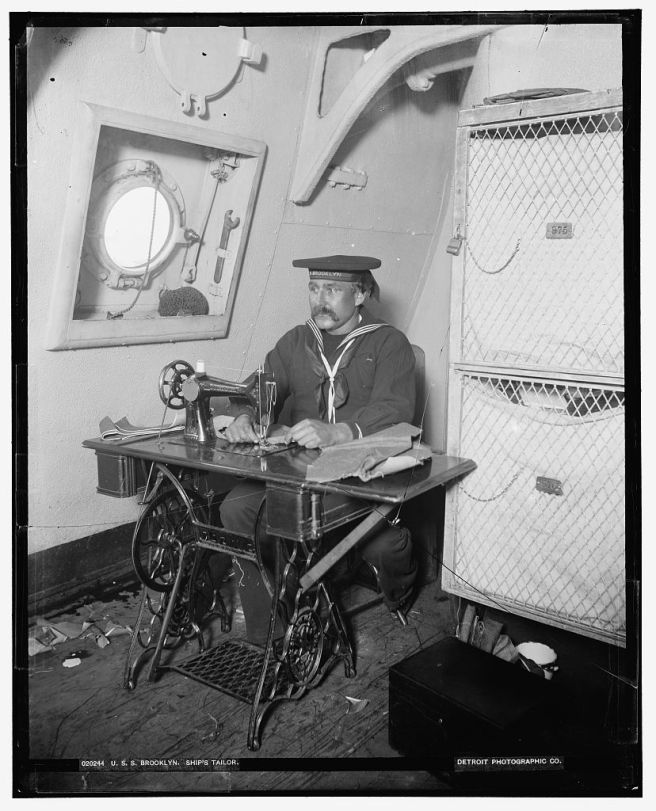
tailorMakers are the hope.  We’re out there.  Doing things and making stuff.  Fending for ourselves in an hostile but lethargic world of expected and nearly enforced consumerism. Once you realize the machine doesn’t work, you can realize it doesn’t really exist.

Most of my adult life, I’ve noticed an interesting paradox.  Typical wage-slaves who proudly give 50 hours per week to a faceless and unappreciative mechanism are convinced that the dreamers and the creators are just a bunch idlers and flâneurs when it’s, in fact the lifestyle that they really envy.  If it isn’t recognized as drudgery, somehow it’s not real work.  But how much do we really need to be happy?

hammock

As a side note, many modern philosophers trace this thinking directly to the Protestant Reformation when, as they claim, much of the fun was beaten out of life and holidays were things to be frowned upon.  But here I digress.

The internet actually gives me hope, especially seeing the wonderful documentaries of real craftsmen and makers around the world that are emerging from obscurity.  Maybe to many, Makers are just a novelty.  Something to be ogled at.  But knowing there are others out there looking for a deeper purpose and a better existence makes me feel a little better about humanity.

BicycleRepair
Repairing something is a first step toward making something.

Let’s be realistic; most modern folks wouldn’t opt to live as hunter gatherers as their ancestors did, but maybe we can reach a better balance with our lives than to adopt the imposed role as absolute consumers.  And hopefully conscience people can do some good things along the way.  Maybe by thinking outside the consumer mindset and choosing to build our homes, make our own socks and shirts, ride a bike, and hunt our meat we can make a difference by both our action and our inaction.

In the words of Samuel Johnson, “To do nothing is within everyone’s power.”

san

Remember: “An idle mind is a questioning, skeptical mind. Hence it is a mind not too bound up with ephemeral things, as the minds of workers are. The idler, then, is somebody who separates himself from his occupation: there are many people scarcely conscious of living except in the exercise of some conventional occupation”

Robert Louis Stevenson, idler extraordinaire.

stillWhy not go make something?  Your great grandparents did.

P.S. Pardon the Friday late night ramblings.  My disdain for the modern world is heightened at the end of a ridiculous week at work.