
Fire Kits, Fire Kits, and More Fire Kits
Adventures of an Imperfect Man In Search of a Handmade Life

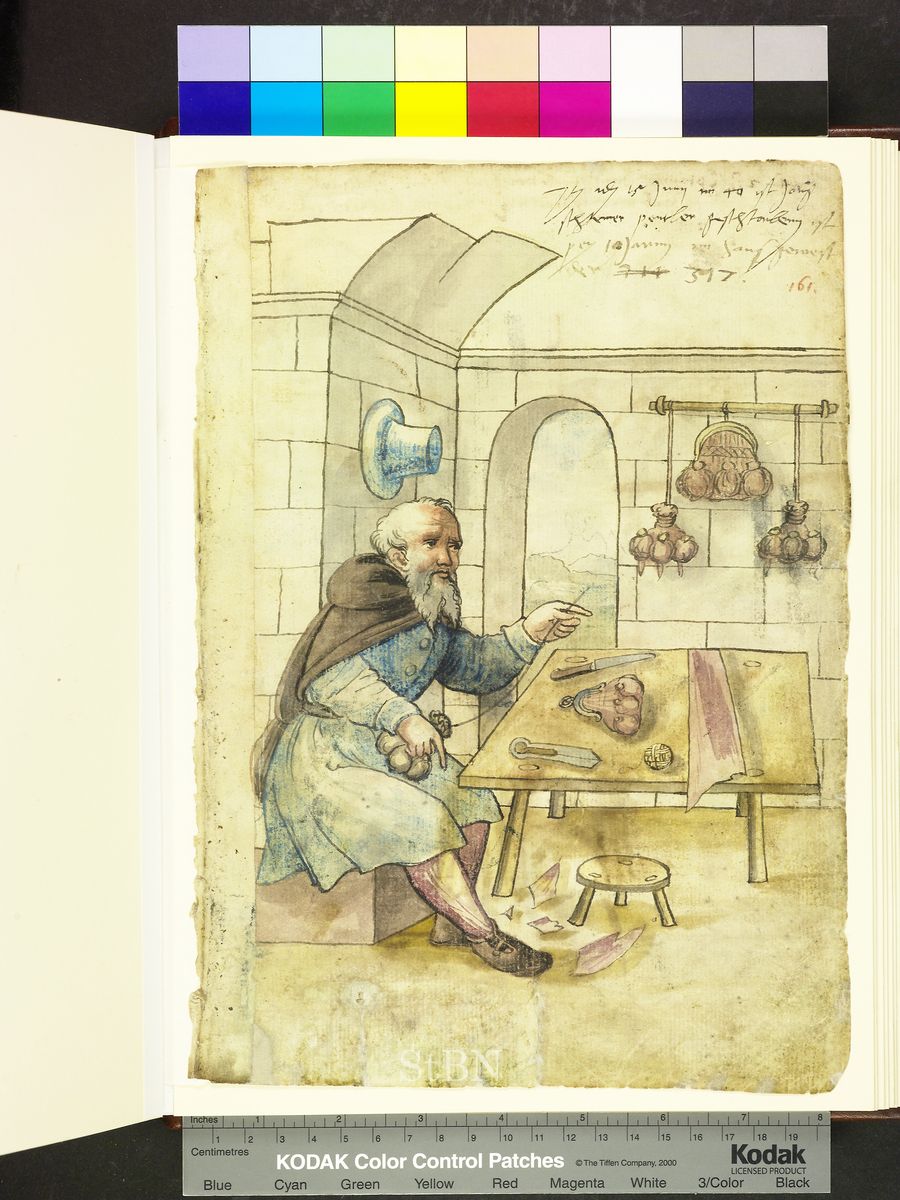
I’m dedicating the next few weeks to my small leatherwork business. When I’m making things with my hands and simple tools, I feel a real connection with our ancestors. It’s nice to get lost in the projects and learn new techniques along the way. When I’m away from this portion of my world it seems that there is a lag when restarting as the hands and mind relearn their movements and the order of things.
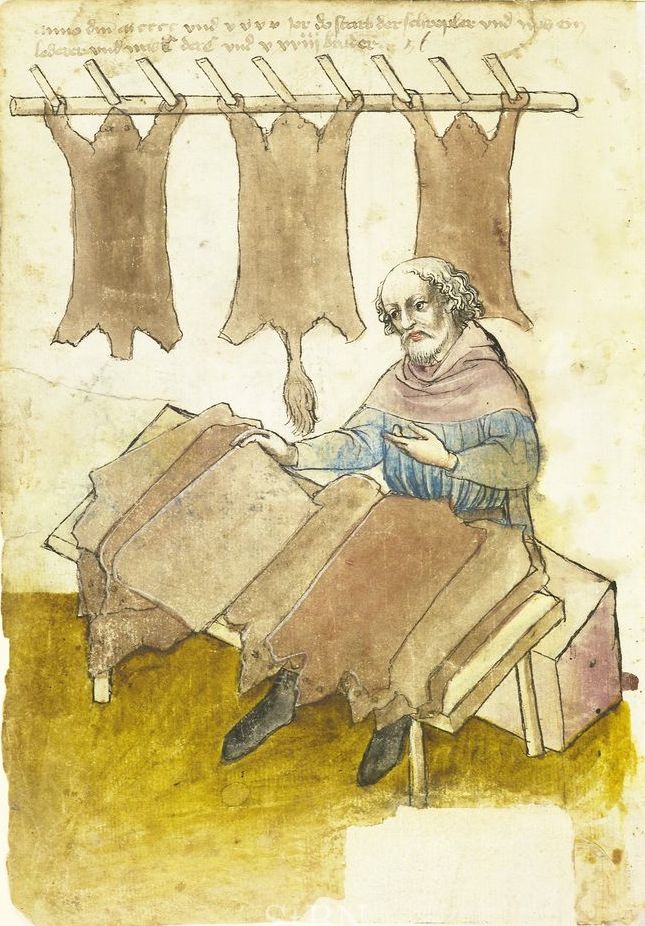
Hopefully, I’ll be able to restock the Etsy store with some exciting goods while the weather is cold. I’m looking forward to spring and the time to get out into the wild to gather materials and supplies from nature; a much overlooked time-consumer for the primitive technology teacher. And just maybe, we’ll be able to gather together again soon to share our skills and camaraderie of our community.
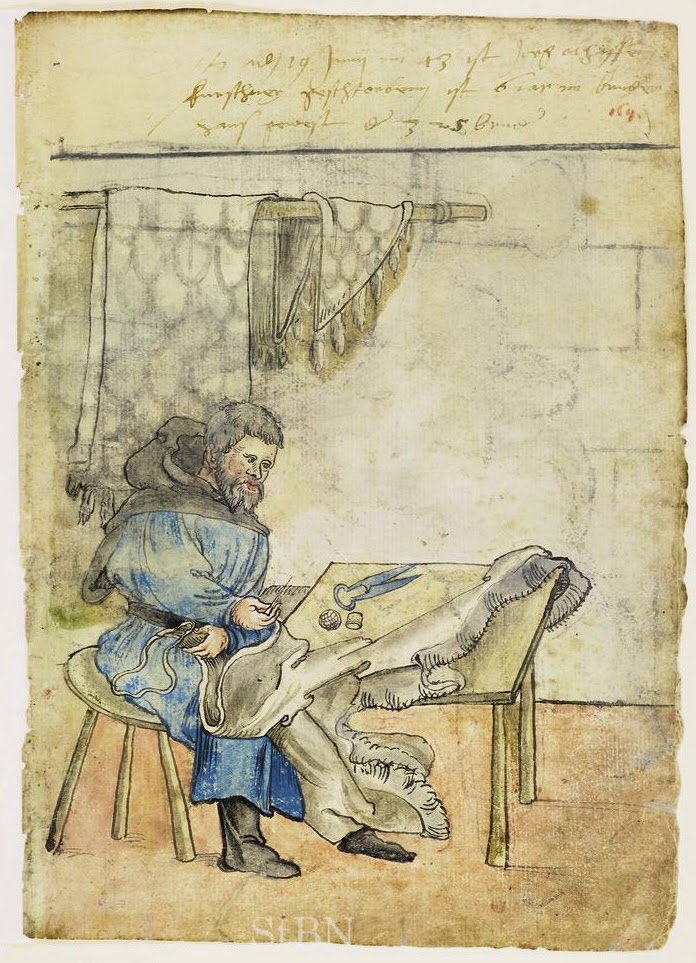
In the mean time, keep well and keep on making.
Sometimes it’s nice to have the security of a bag strapped closely to the body and not swinging around your neck and shoulders. This little 9 x 5 x 2 inch design has done quite well over the past year and has been a popular seller in the shop.


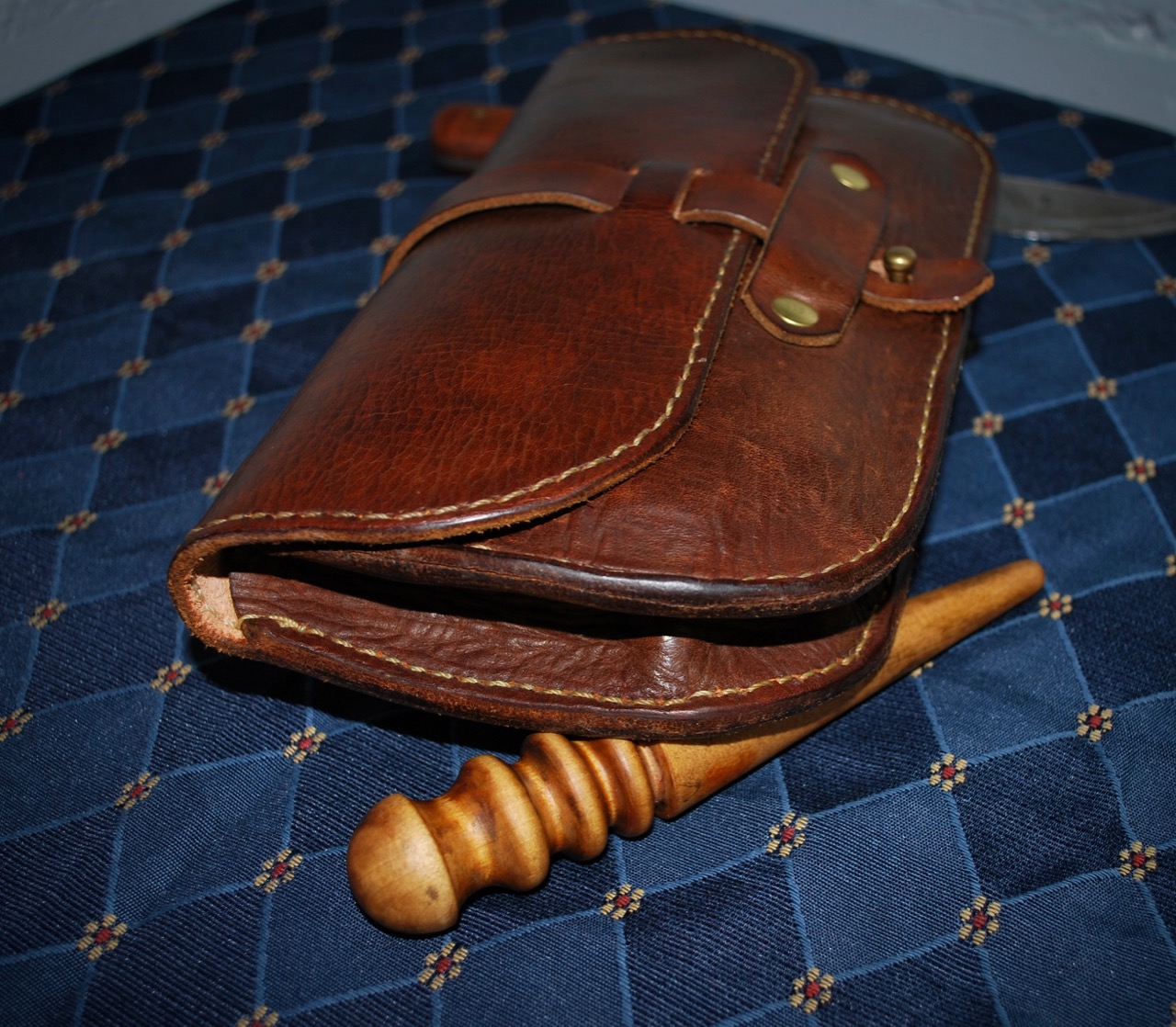
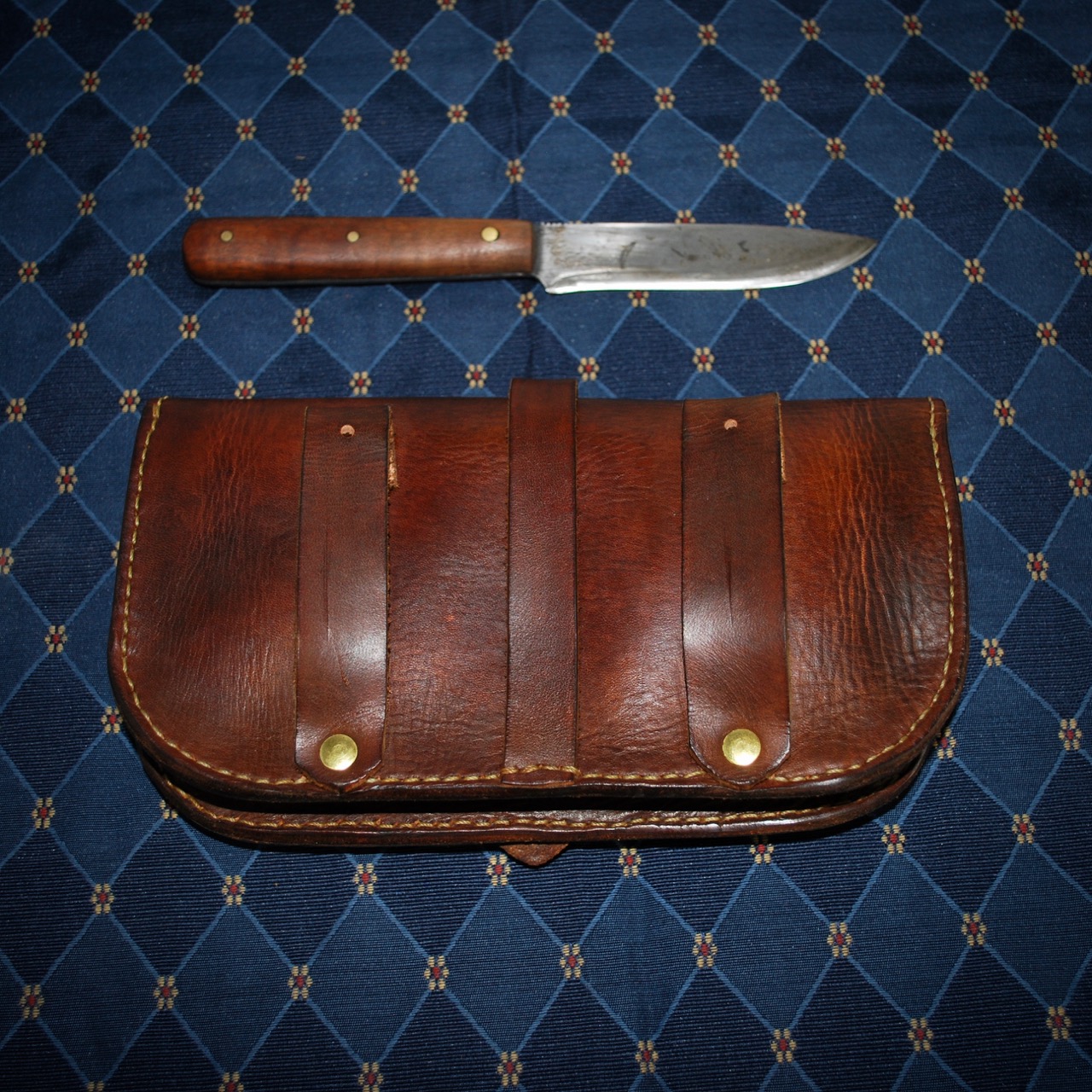
Available at Lost World Crafts on Etsy.
I’m re-sharing an older post of some experimental turnshoes I made quite a few years ago. These were based on some Scandinavian examples from the archaeological record. They came out pretty good for a first try. My only modification would be to tighten the width through the arch and lengthen the toe area slightly. I have since learned that this problem has been well-understood for centuries by shoe makers and is why modern shoe lasts often look long and narrow to the amateur eye.

Finally “finished” enough. These were rubbed down with a “tea” made from walnut juice, worn dry, and later oiled.
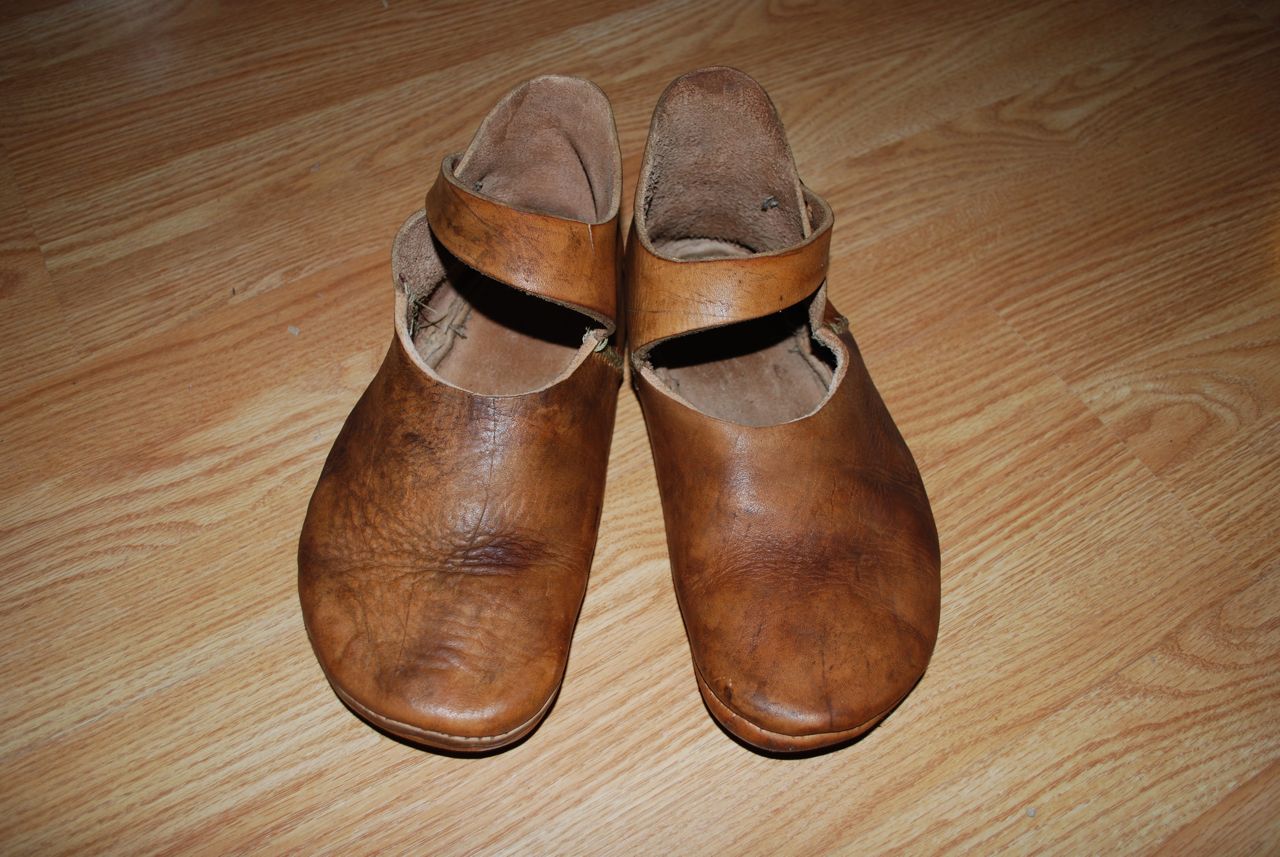
This was my first attempt at a proper turnshoe. Basically a variation on the shoes worn in Europe and parts of Asia from the Iron Age (ca. 500 B.C.) through the early modern times (ca. 1700s). This pair is made without a last (form) so construction is similar to other moccasin-type shoes. There are quite a large number of early shoes found in archaeological contexts in Europe so many designs are known. This is inspired by, but not slavish to, shoes found in the British Isles and Scandinavia in the early part of the last millennium.
I was sorry to not document the pattern making but, as can be figured, the upper is a single piece side-seam make by wrapping the foot, marking a rough outline of the plane where the upper meets the sole, cutting off the wrapping, and cutting to shape. Really, I’ll try to make record of this in the future but, for now, I suspect there are other tutorials out there. Besides sewing, the turning is definitely the toughest job as this was some very thick, tough leather.


 A sheef of pecok arwes, bright and kene,
Under his belt he bar ful thriftily,
(wel koude he dresse his takel yemanly:
His arwes drouped noght with fetheres lowe)
Geoffrey Chaucer, The Canterbury Tales, Prologue, The Yeoman, lines 104-7.
Here is a great little instruction set on how to make a European Medieval-style belt bag. You see these in paintings and illustrations on just about every traveler. Not only will you come out with a nice bag but it is a fine and simple introduction into leather working and sewing. All makers need to start somewhere and this might be the right project.
 Old style bushcraft: a medieval possible pouch
During the Middle Age was common carrying small items like coins, keys, inside pouches or purses attached to the belt.
There are many archaeological and iconographical documents, you can search for your favorite patterns, but there is a model that in my opinion, is one of the best for a bushcrafter.
View original post 298 more words
Tinsmiths were the sheet metal workers of the preindustrial days in Europe, the Middle East, and Asia. This almost certainly includes Africa as well but I haven’t been able to find any depictions yet. These craftsmen created many everyday objects and mended all sorts of metal.
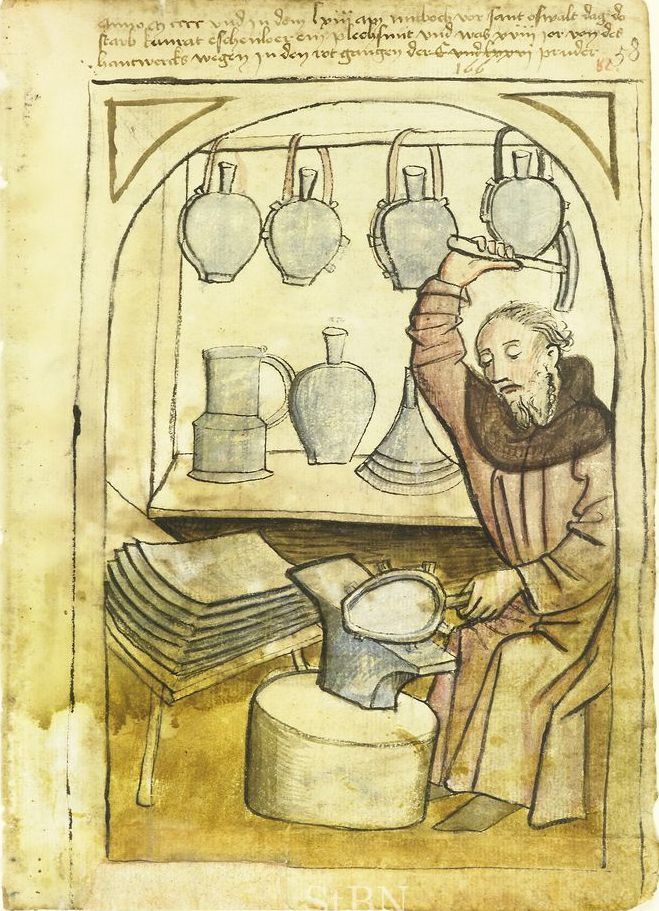 Here we see a smith creating a flask. I doubt he would be whacking it from that height but old images of carpenters and smiths use this convention to show the movement. Behind him are some of his wares including a pitcher, something shaped like a bottle, and a pile of funnels. A stack of prepared metal sheets sits on a table next to him.
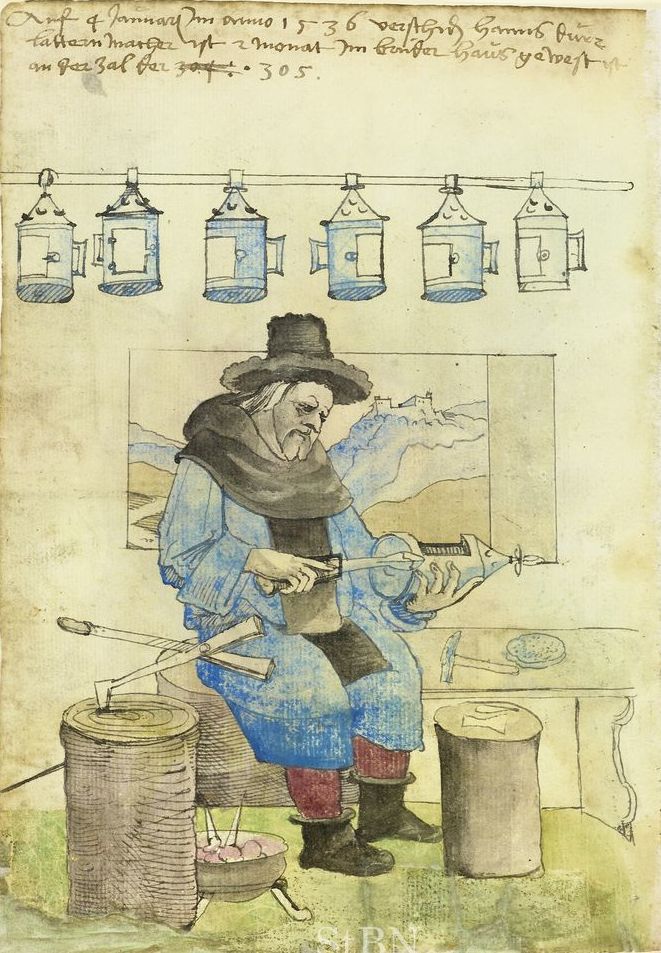 The lantern maker has more great tools. He is set up in front of the window for light. His work surfaces are stumps but his bench is a fancy trestle type, not the typical tenon leg affair one normally sees from this period of history. In this image, the smith is in the act of soldering the base onto the lantern. This is the oldest image I have found, so far, of a soldering iron in use. The little three-legged pot on the floor is a brazier, holding coals to heat the iron and he has a pretty nifty stake tool on the bench. I think it’s a shears but please correct me if I’m wrong on that one.
Prior to power sawmills and corporate lumber production, much of the carpenter’s project time was filled with simply making trees into boards. Most illustrations I have found of preindustrial carpenters feature someone hewing, planing, or chiseling with the occasional scene of sawing a board to length or width.
An image is just as much about what is chosen for inclusion as that is left out.
I love to ponder the details of old illustrations and paintings to really see what the artist was trying to show us. These images are no doubt biased in what they choose to show; and for good reason. There is a semiotic tradition in Medieval illustration to choose certain symbols to denote specific trades or historical characters and it should be remembered that the illustrators are not necessarily experts with the trade they are depicting.
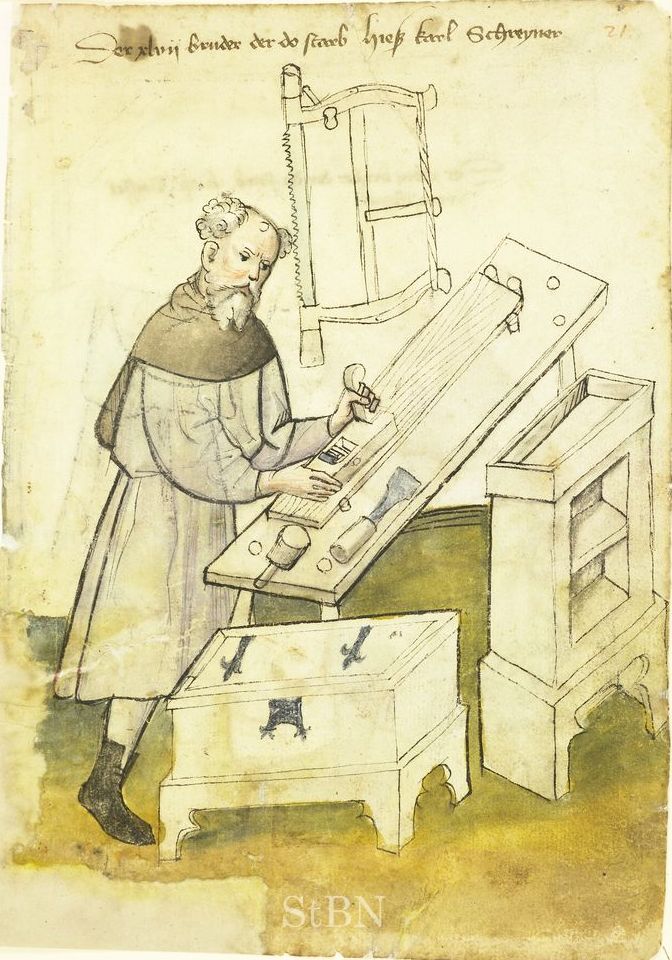
Here we have the same carpenter from a previous post dated to around 1414.
The foreground holds a familiar skirted six-board chest with iron hinges and an escutcheon plate around the presumed locking mechanism. Either he is building these or perhaps it holds his tools. Beside it is a nice little cabinet of similar construction. He is working on a simple European bench with through-tenon legs, popular since the later Iron Age. His board is secured simply by four bench dogs.
Only four hand tools are shown. The frame saw, plane, chisel, and mallet. No doubt his dividers, straight edge, and winding sticks are in the box.

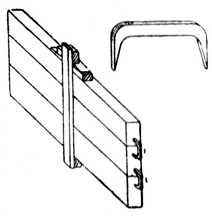
Just for fun, here’s another carpenter from about a hundred years later hewing a board to size with a bearded broad-axe. The work sits on a pair of saw horses with the typical tenon legs. Also, note the iron dogs used to secure the board to the horses. Living in the era of screw clamps, we don’t use these as much but they are still occasionally found holding boards while being glued like so:
And finally, a late 16th century carpenter cross-cutting a plank. I like this image as it depicts more tools, though in less detail. Chisels, hammers, and a square hang on the wall, a plane sits in the background, and the broad-axe sits on the floor next to the hewing stump. The frame saw hasn’t changed at all. I don’t know if the supprt under the board is unique but it appears to be stepped to hold planks at graduated levels. Pretty nifty if you ask me. And finally, a couple of details about the clothes; I love the sagging stockings and the patched elbow of his shirt. Definitely dressed for work.

Bag maker and salesman from the 15th century. This should inspire some Medieval era artisans out there.
 Cutting board and leather knife.


 Preindustrial Craftsmanship