
The left, as it is, finished. A great learning project. The pattern making is slowly improving.
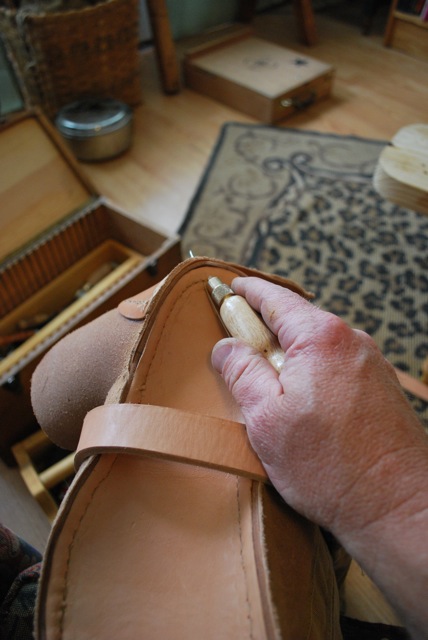
Stitching down the sole.

Turning the upper.

Drying before finishing the upper. Next will be attaching the outer sole and heel.
Adventures of an Imperfect Man In Search of a Handmade Life

The left, as it is, finished. A great learning project. The pattern making is slowly improving.
Stitching down the sole.
Turning the upper.
Drying before finishing the upper. Next will be attaching the outer sole and heel.
The upper is turned, now attaching the sole. This is very much an experiment but so far it is coming along better than expected. It is a style from early modern shoe construction, with a lot of similarities to the archaeological finds from the Mary Rose but with a modernized upper. This style of construction bridges the gap between Medieval turnshoes and fully lasted ones and dates from around A.D. 1545. Ah, the good old days.
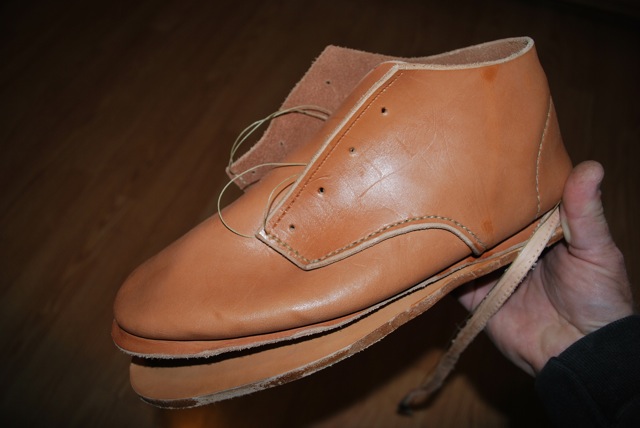 Not a great photo perhaps but construction photos will be uploaded if and when this project is successfully completed.
Coming soon…
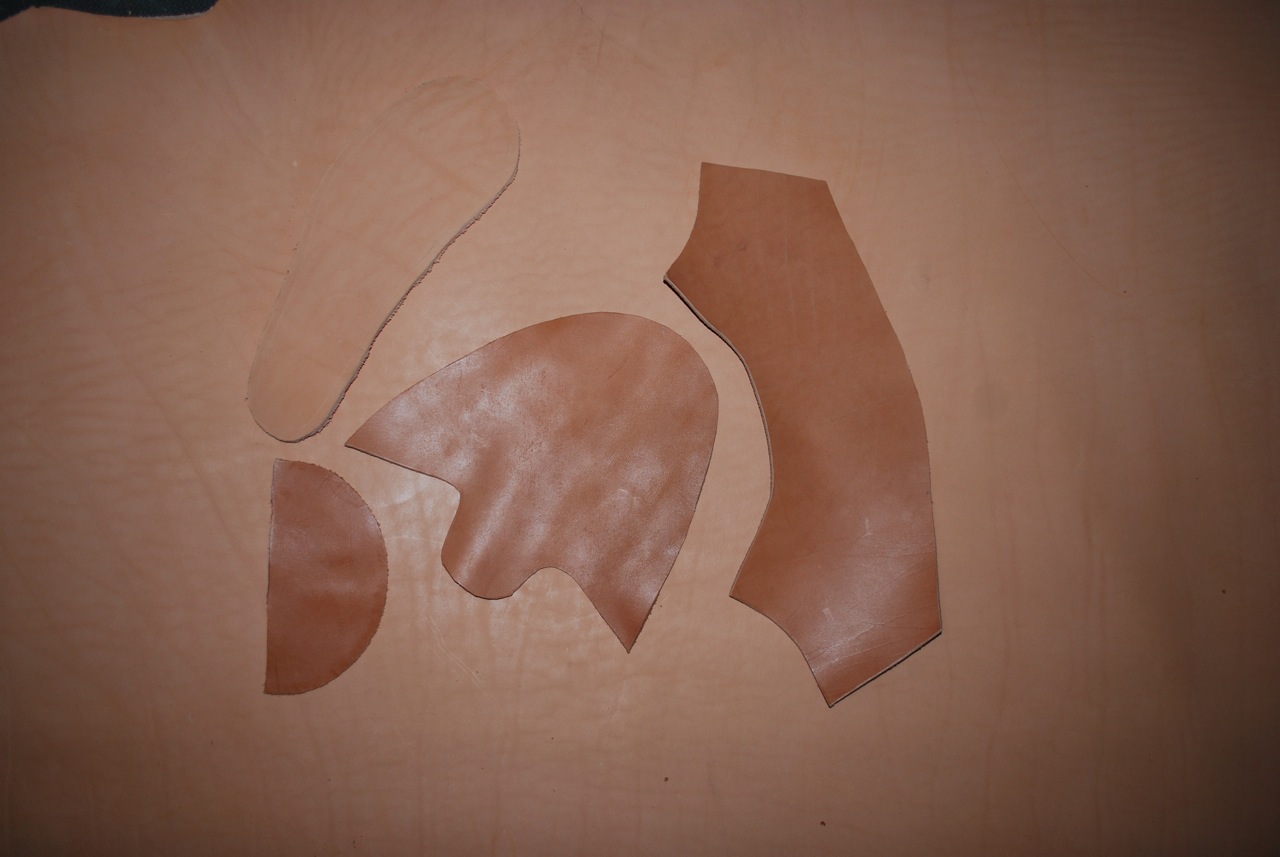 Too busy sewing to post!

The soles finally attached.

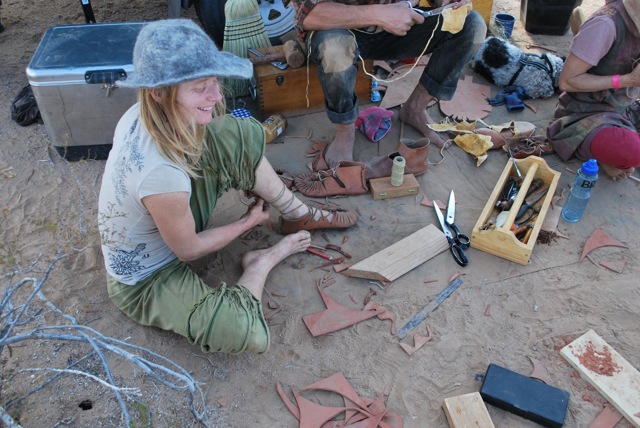
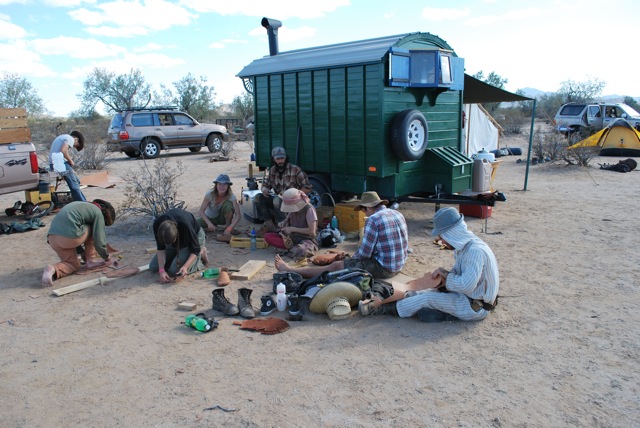
A few photos of the vardo in the desert at this year’s Winter Count. Along side the usual survival skills, I also taught another simple shoe class.
 Click the photo to see more uploaded images of the little vardo in action.
This ghillie shoe class was busy again and I think we had about 16 participants. It’s always more work for the students than I think it will be as many have not had much experience working and cutting leather. I think they all came out great though.

As if the evenings weren’t busy enough. I had the urge to create something large from leather. This is probably my biggest project of this type to date. It’s a bit heavy compared to lightweight nylon of modern packs but it will probably outlive me.
 It took the better part of an oak tanned cow side and some harness leather for the straps. It was a load of work for somebody as lazy as I am but an interesting puzzle to design and put together.
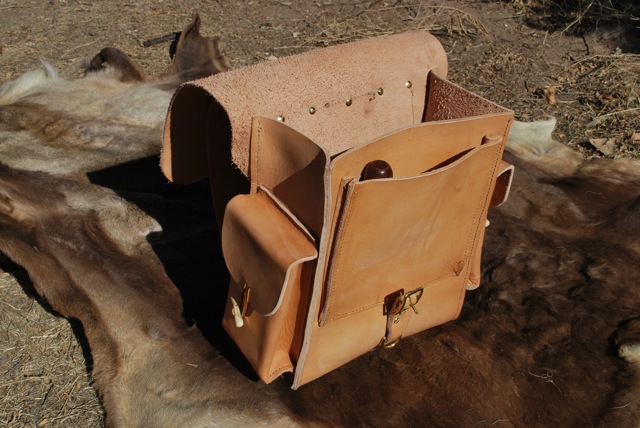 It can hold a long weekend’s worth of goodies or a laptop, small SLR camera bag, and field gear.
 It will darken and become much softer with some neatsfoot oil.
 Oiled and ready to use.
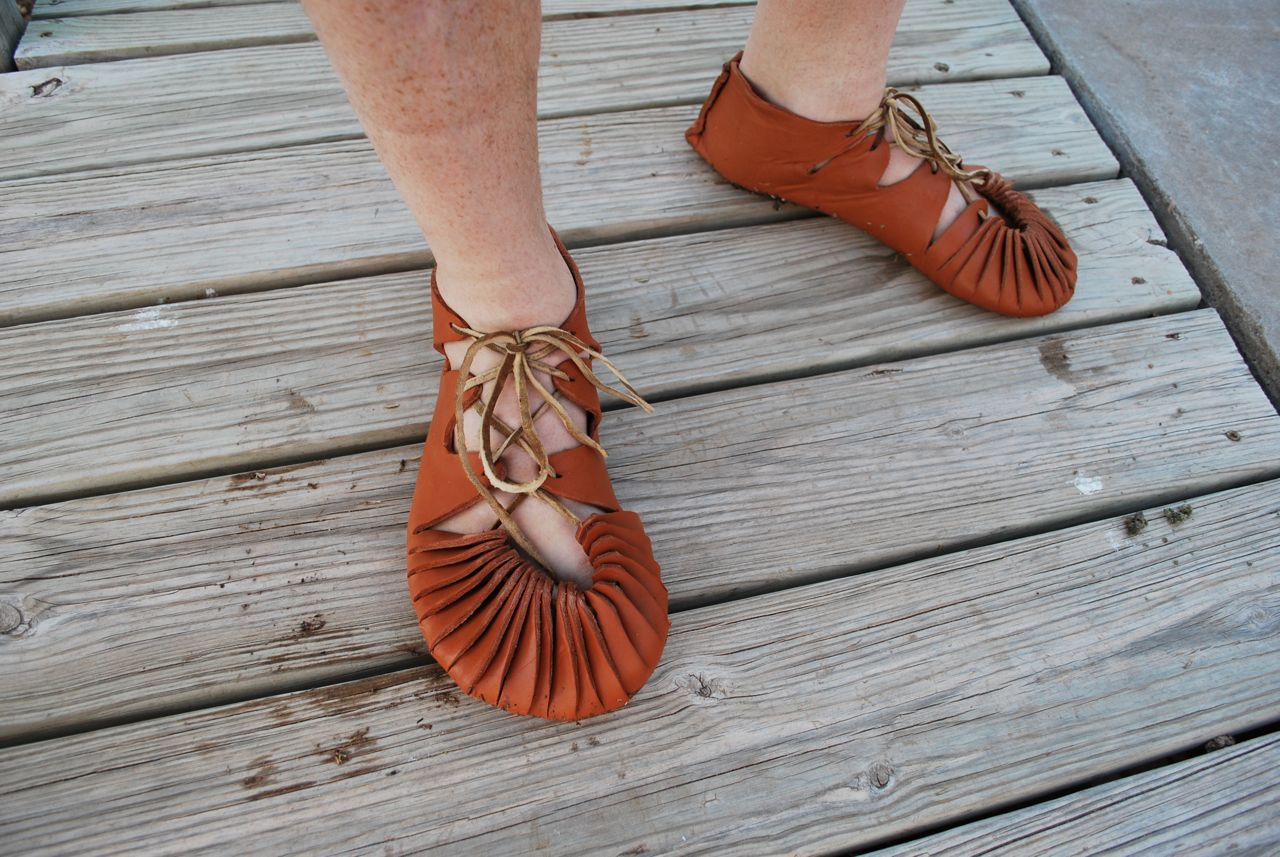
I am all about the DIY. After making a pair of sandals for Winter Count this year (I arrived with only work boots) I got re-interested in making shoes. I have made many moccasins for woods walking, especially when I was into mountain man and F & I re-enactment and decided to make some new ghillies. I like these because there is almost no sewing and I think they are cool. Much of Europe wore a variation of this theme for millenia. I then took it as a veritable sign when I saw this on the Instructables web page: http://www.instructables.com/id/Viking_shoes/. Even though these are listed as Viking style, I think they are commonly associated with their Celtic cousins in Scotland, Wales, and Ireland. And they are very nearly the same as Roman carbatina. Essentially, a basic European shoe.
I made a set of these many years ago with a little instruction from an acquaintance and they were great. These new ones are a little more thought out and I will likely make a better pair based on what I learned here. Click photos for larger picture.



 Preindustrial Craftsmanship