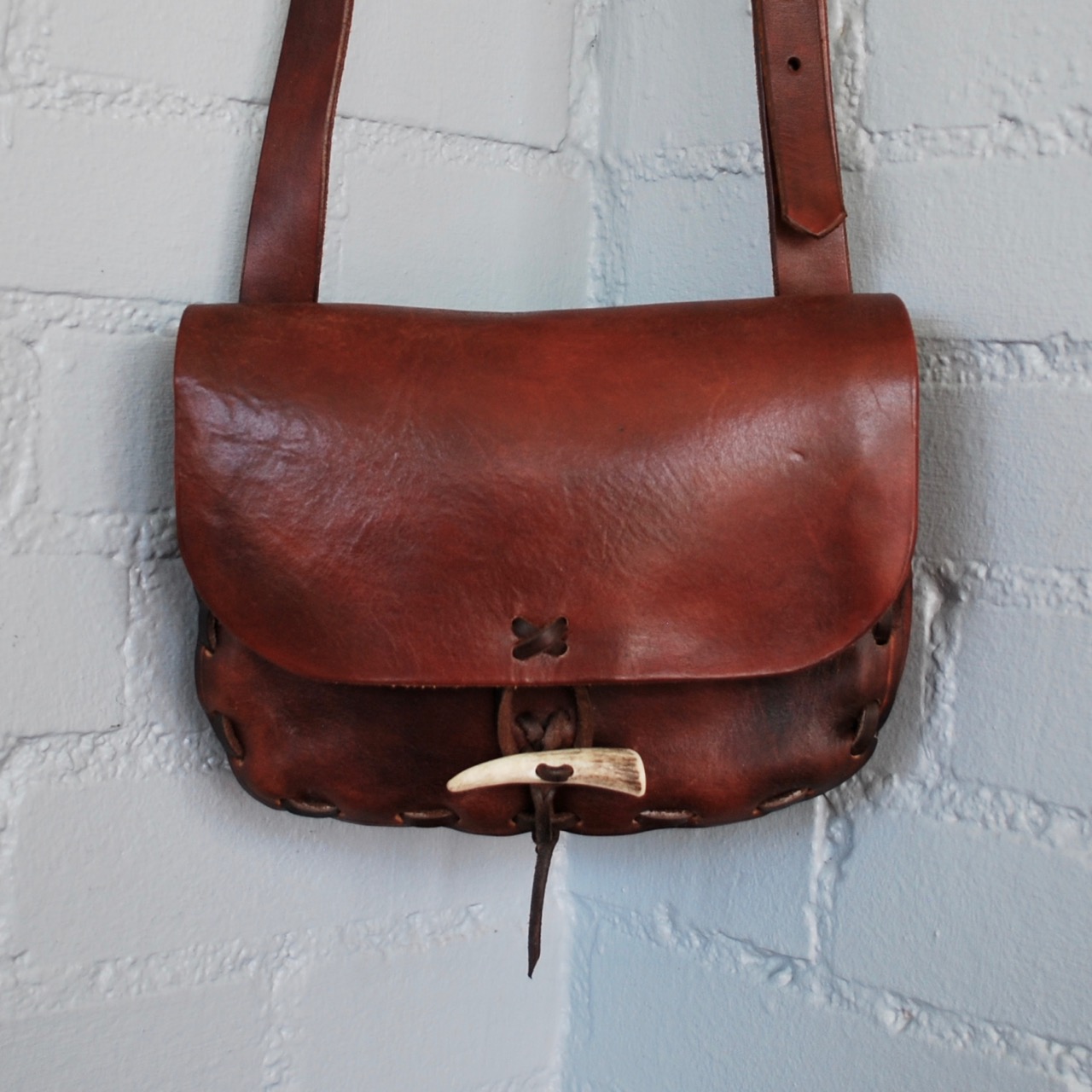
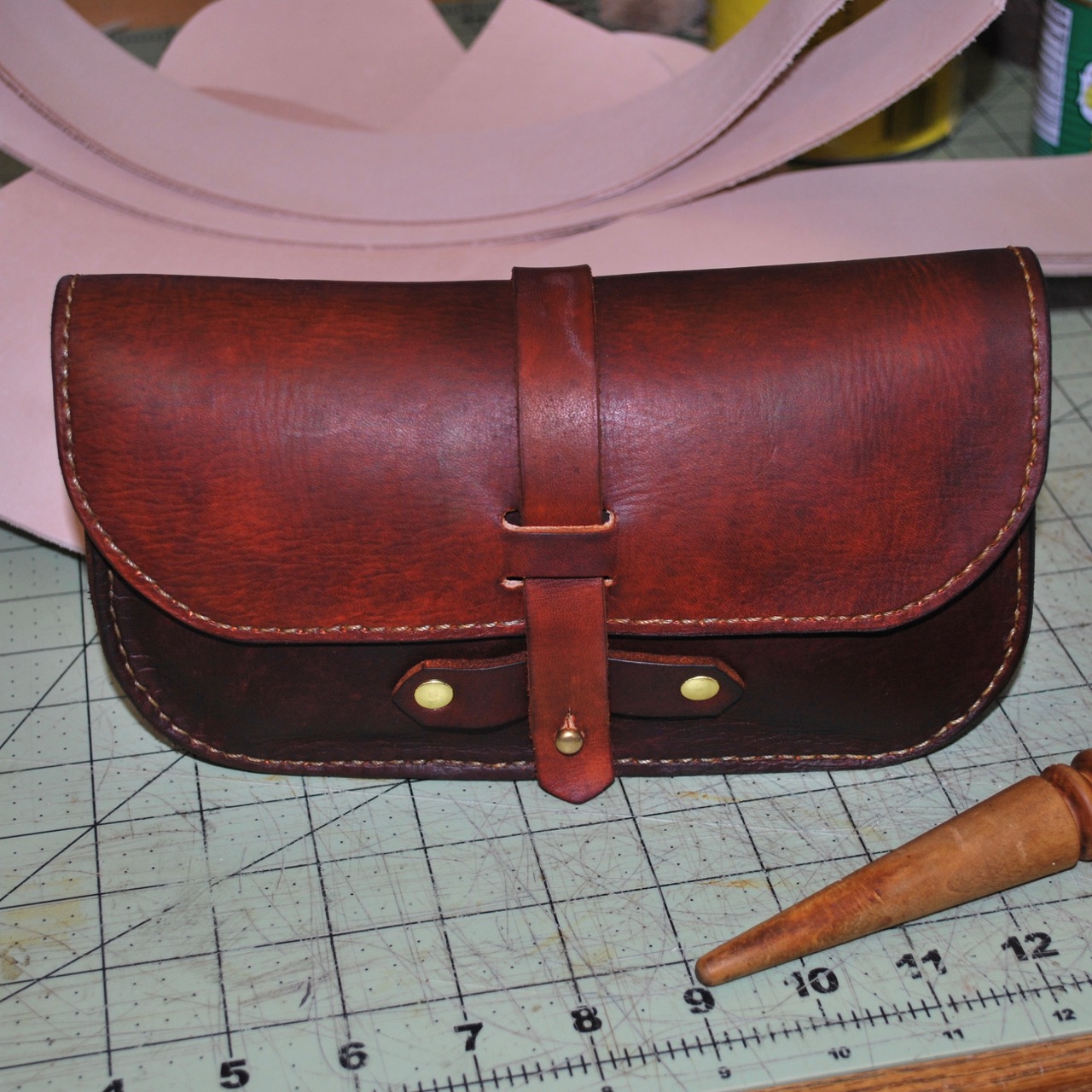
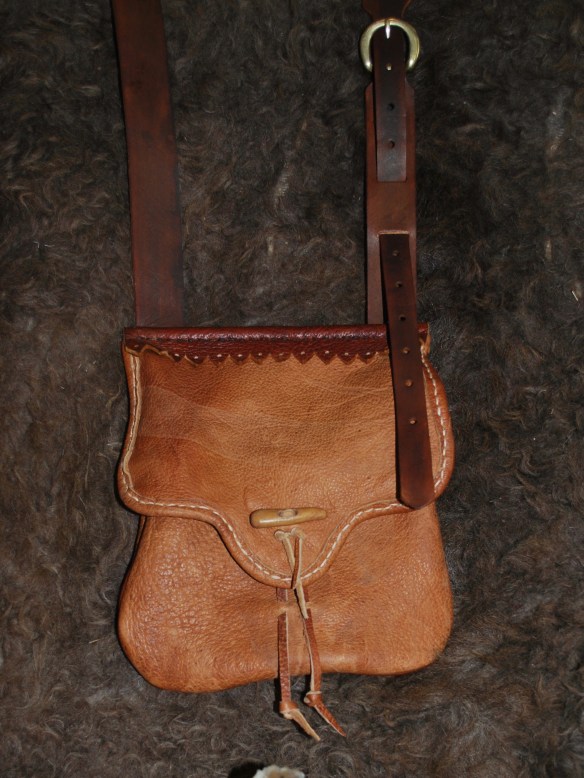
I think of this type of bag as a forager bag, mainly because it is the type I carried in the late 80s while working on a High Adventure summer program teaching outdoor skills. It’s really just a classic shooting bag; the type that could be found just about anywhere in North America or Europe for the past three hundred years in similar form.
7 ounce Hermann Oak leather is thick but supple. Antler toggle closure keeps contents secure.
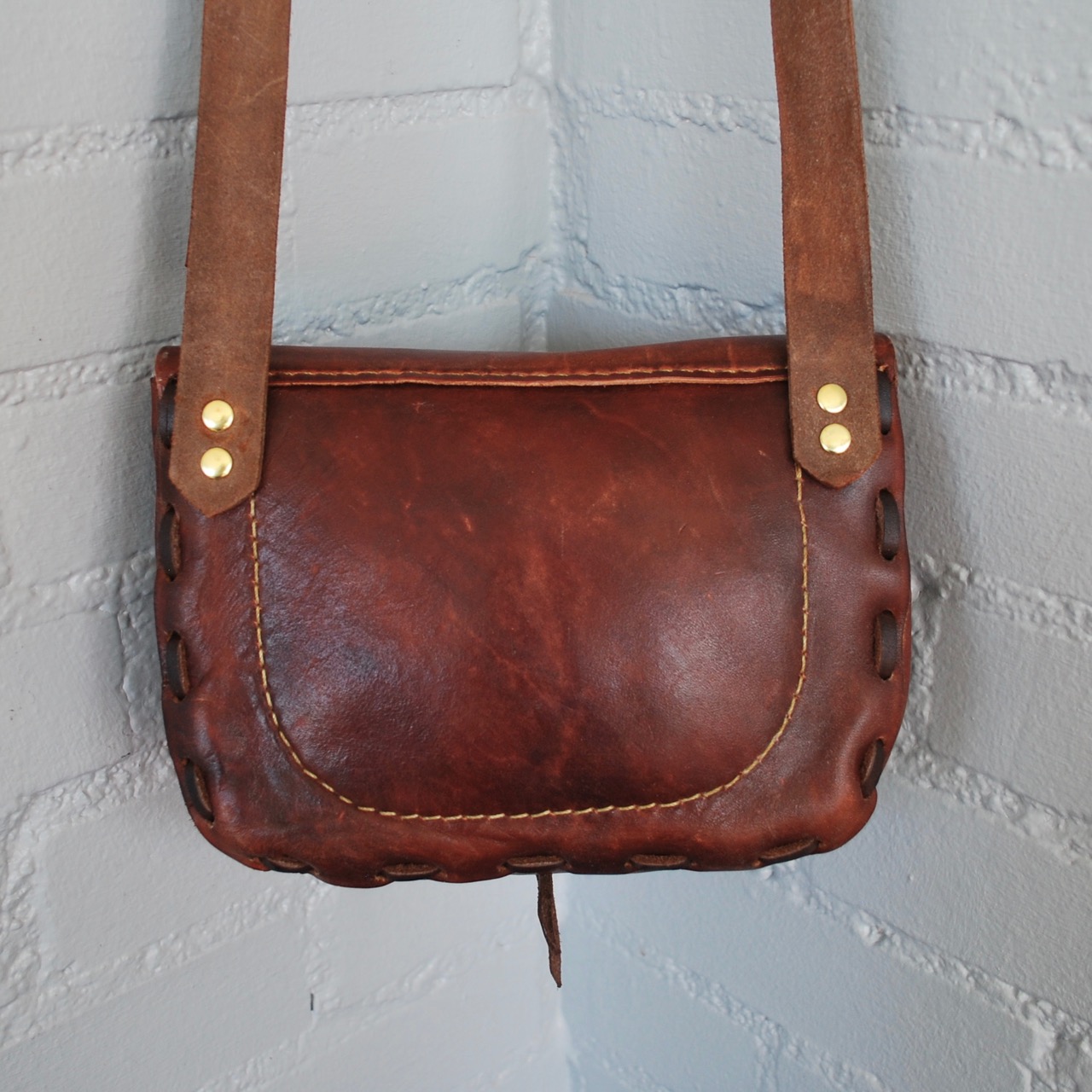
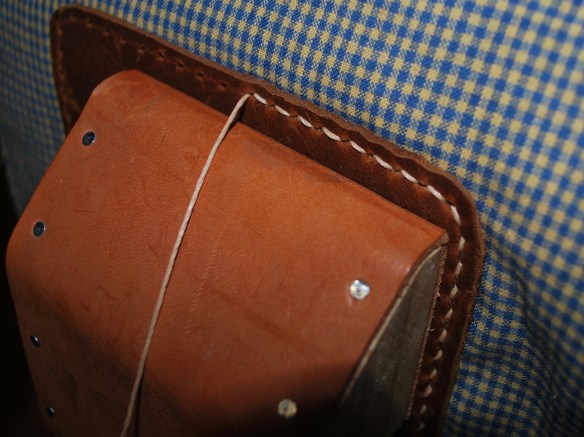
Double needle saddle stitching for flap and pocket.
Interior pocket to separate small items.
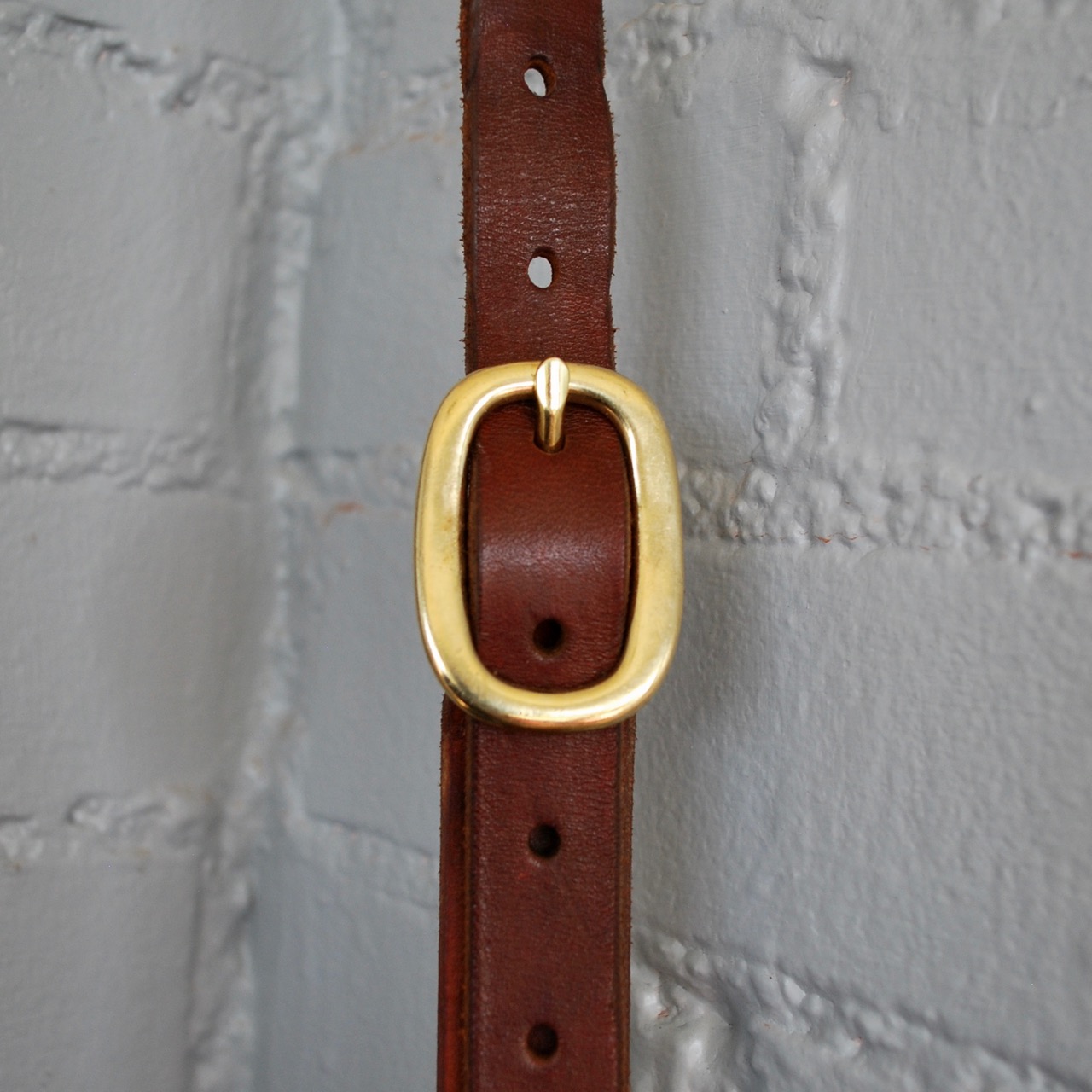
Heavy, harness brass buckle and pure brass rivets complete the bag.
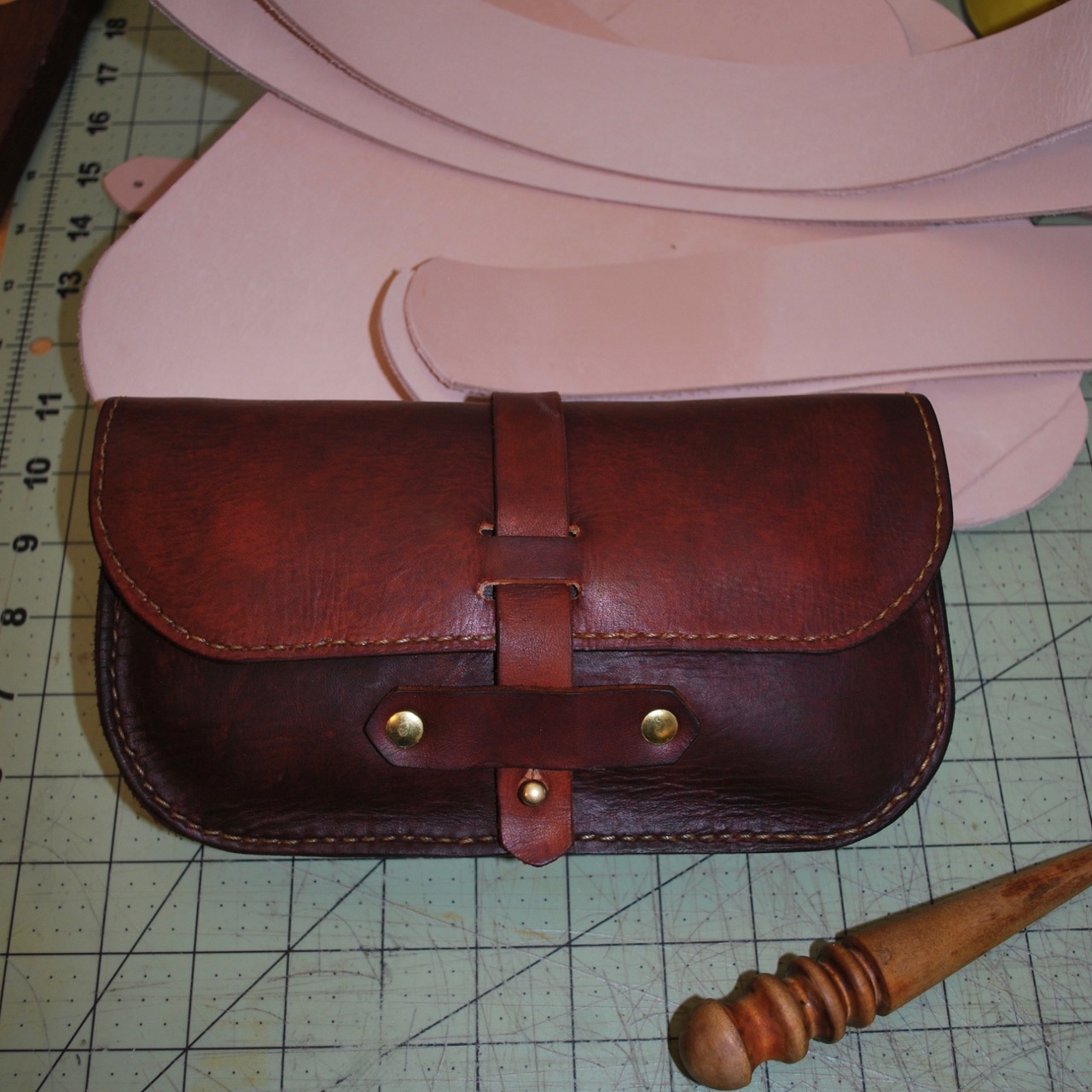
It takes a lot of work to prototype a new bag design. To get just the right shape and proportion, find the right materials, and choose the appropriate construction technique is a big deal; especially if it’s going to be done well.
The completed prototype. I’m very happy with this design.
I wanted something that looked like it appeared out of the preindustrial world of the 18th century or before. As an archery person, I think I take my personal style from the “what would Robin Hood wear?” collection. But honestly, this one owes much of its design to the military belt pouches of the early musket days.
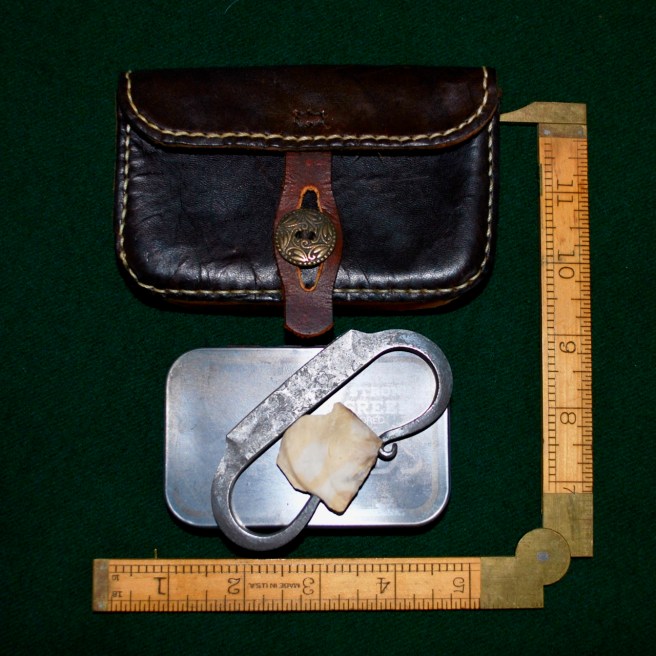
What do I plan to use it for you ask? I wanted something that would accommodate a few essentials including a fire kit, compass, notebook, spoon, whetstone and the like.
So if you follow along here you have seen several bags just like this one posted in the past year and so far, they have sold like hotcakes, as they say. It is a popular shape, size, and design so I think this will become a mainstay in my shop.
It is a very adaptable design as well and could be fitted with internal pockets, a wrist strap or d-rings and become a clutch purse or removable backpack pocket in its own right.
I like to add a little character and variety, even if I’m just making the same thing again and again. I want to believe that this is what my ancestors would have done, toiling away in the craft to make a living. It keeps things interesting and more human than the soulless, mass-produced consumables.
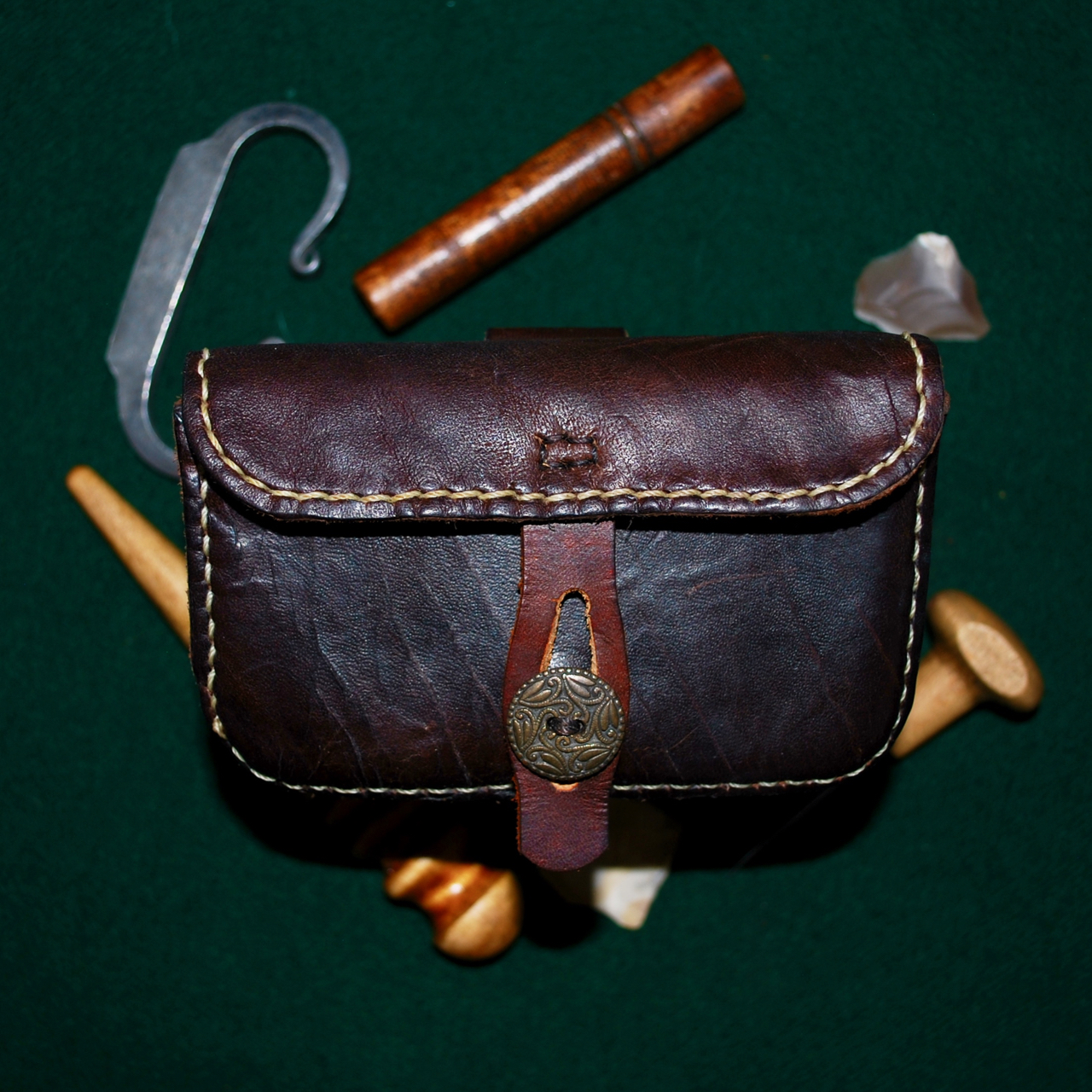
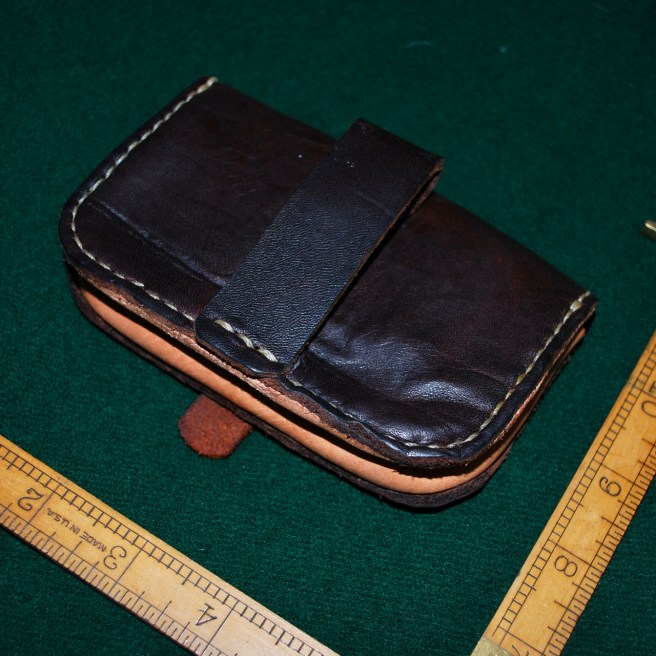
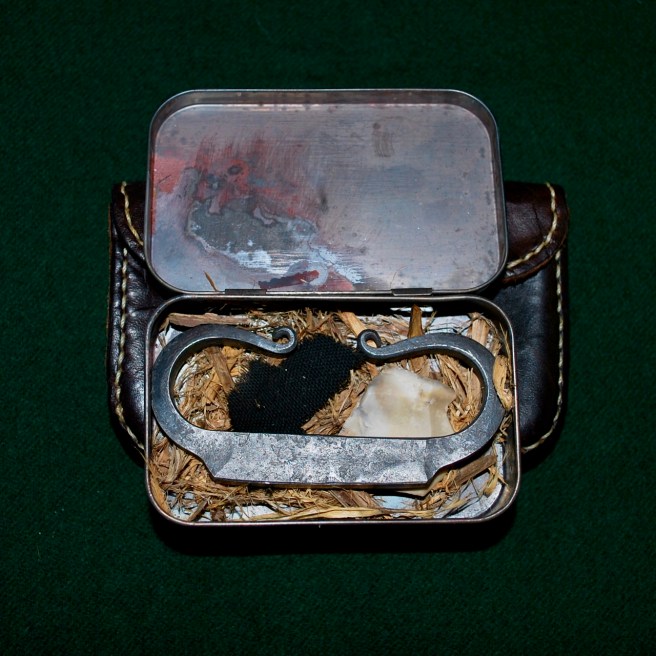
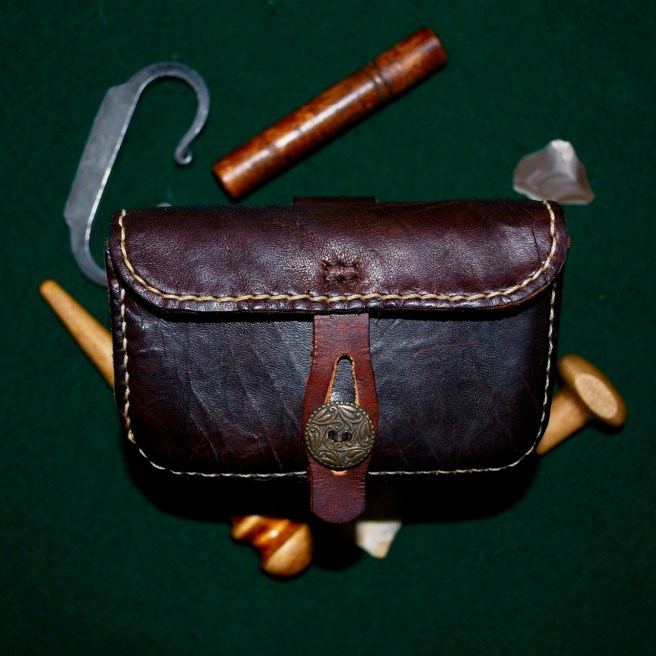
Here’s the most recent fire-kit with another beautiful vintage button. This will be sold through the Etsy shop at LostWorldCrafts: https://www.etsy.com/shop/LostWorldCraftsMade from 7 oz. Hermann Oak leather drum-dyed for the brown part and natural for gusset.
Thanks for looking. If you are interested, these generally don’t last a day on Etsy so check it out soon if you want one. Please follow the shop if you would like to keep up with the latest offerings.
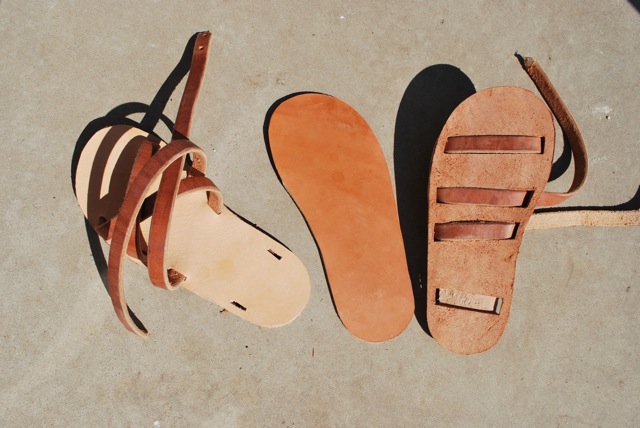
If you have ever taken a class with me you might know that all the intimidating sewing isn’t as bad as it looks. The sole is three layers thick but the use of a good, sharp awl makes the double needle sewing go quickly. A lot more work goes into these than I would have initially thought but I really think they come out great in the end. It took several pairs to get the pattern just right but research into design and construction led me to this final design. The sole is three layers thick (or more historically) and have been made this way in Europe and North Africa for more than 2,000 years.
The thickness of additional layers isn’t just to provide safety for the feet but the central layer provides a path for the straps to travel through without lumping under the feet. The parts consist of an insole (medium weight oak tan leather), mid-sole to allow tunneling the straps through, and an outer sole, in this case, leather. The straps are 48″ per foot plus the heel yoke.
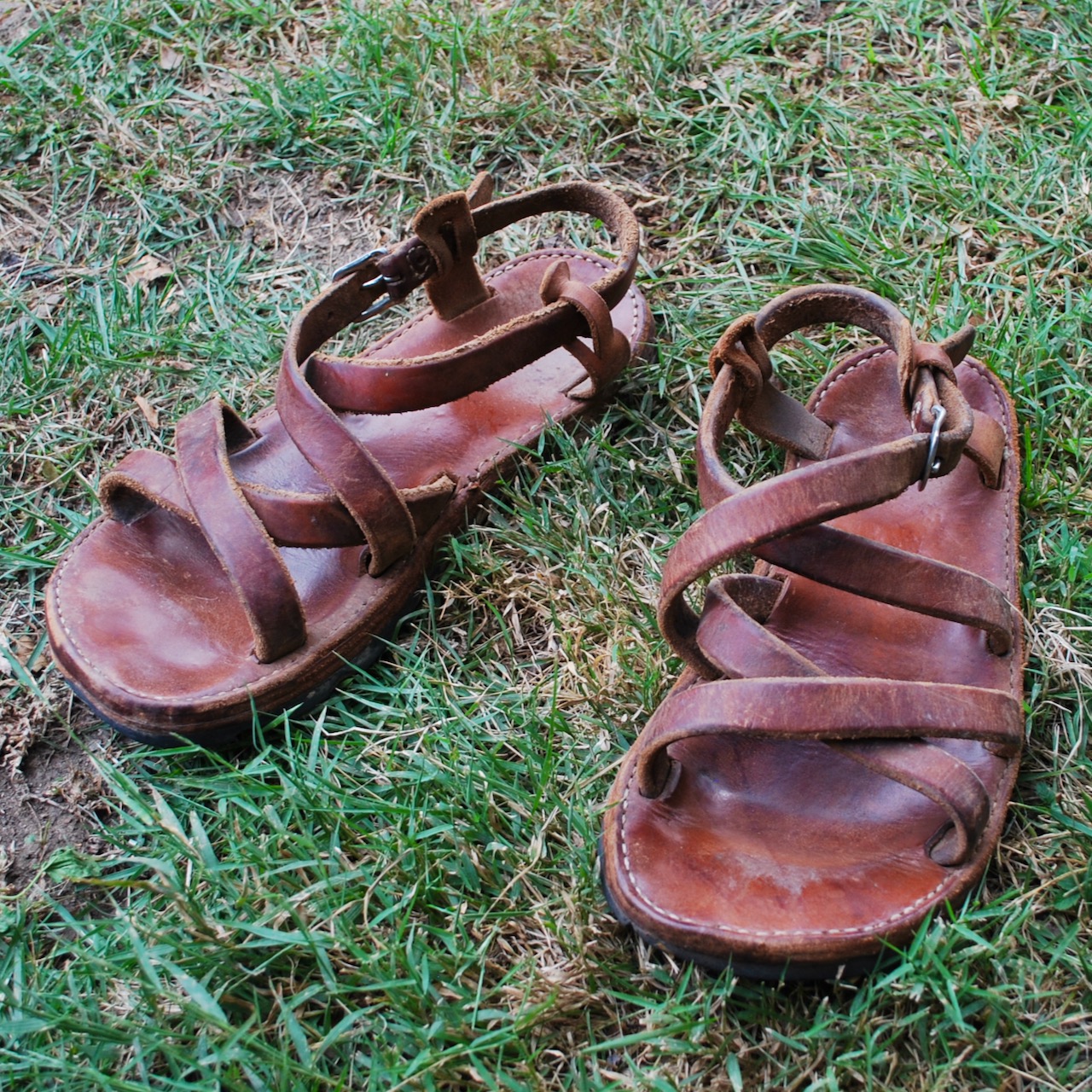
This is how they looked when I thought I was finished. Shortly after, I added buckles and have since been through a few more soles. Currently they are shod with rubber.
Nine years on and still going strong. The patina that good leather takes on cannot be simulated. They get a coat of dubbin every six months or so but otherwise, need little care. I hope to get back to a time when I can wear them daily again.
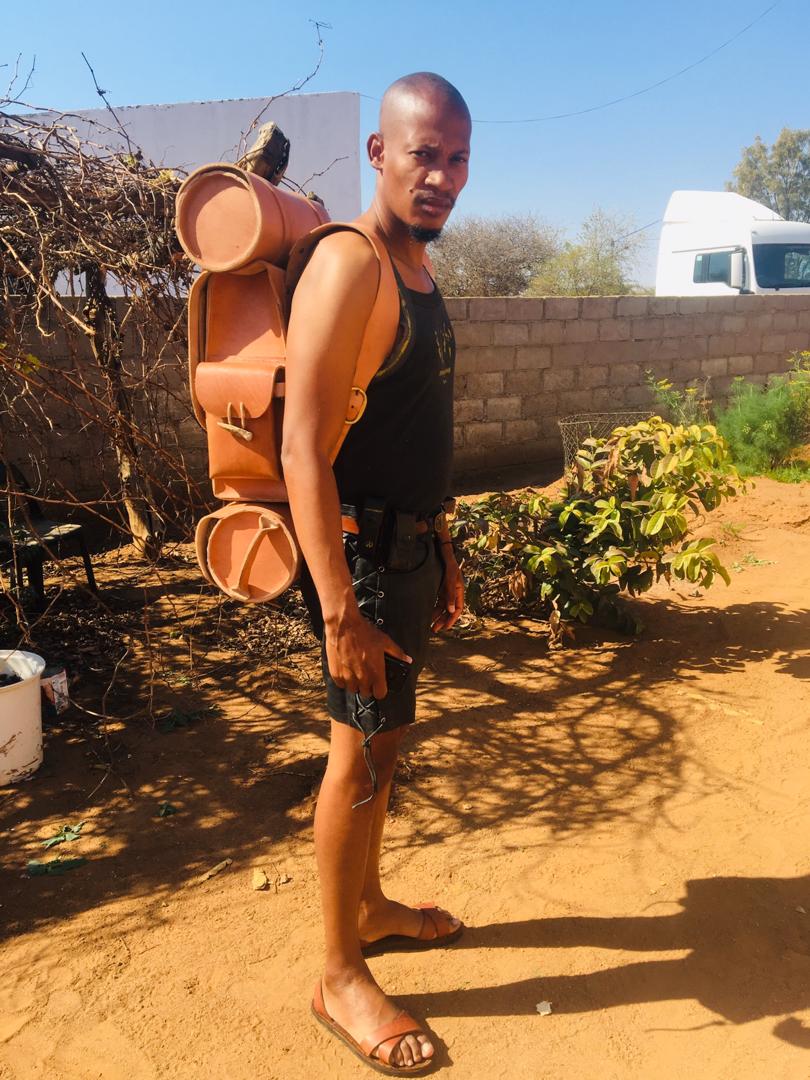
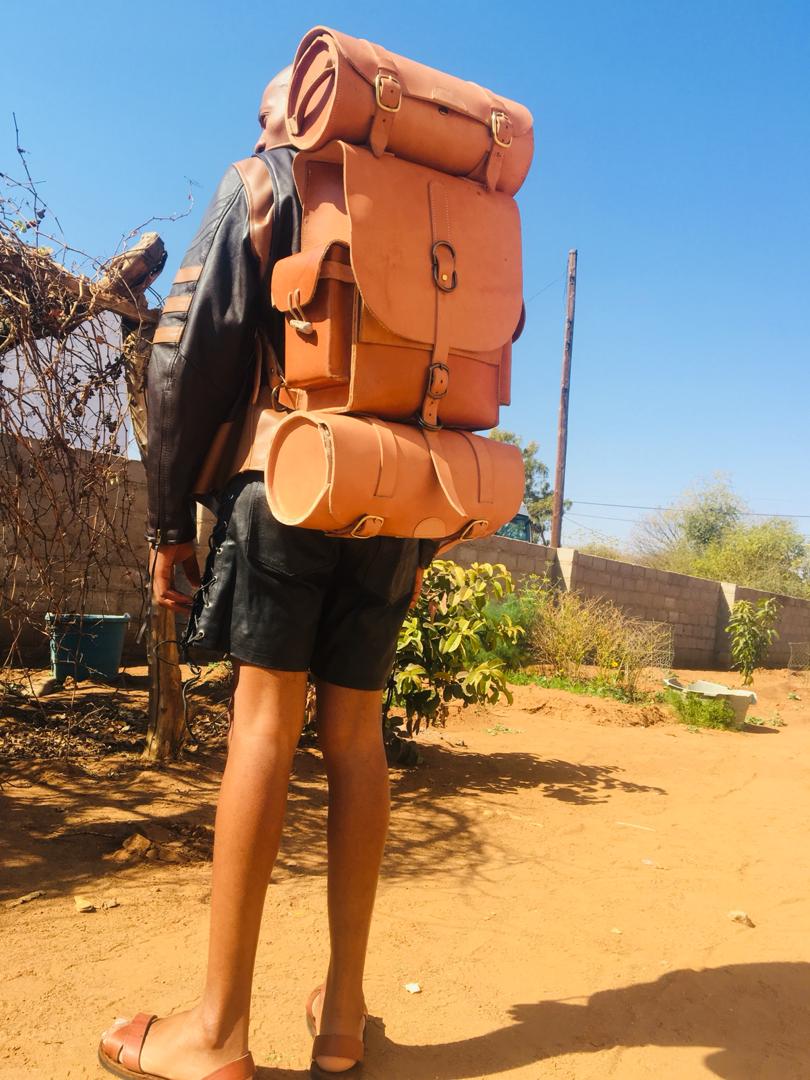
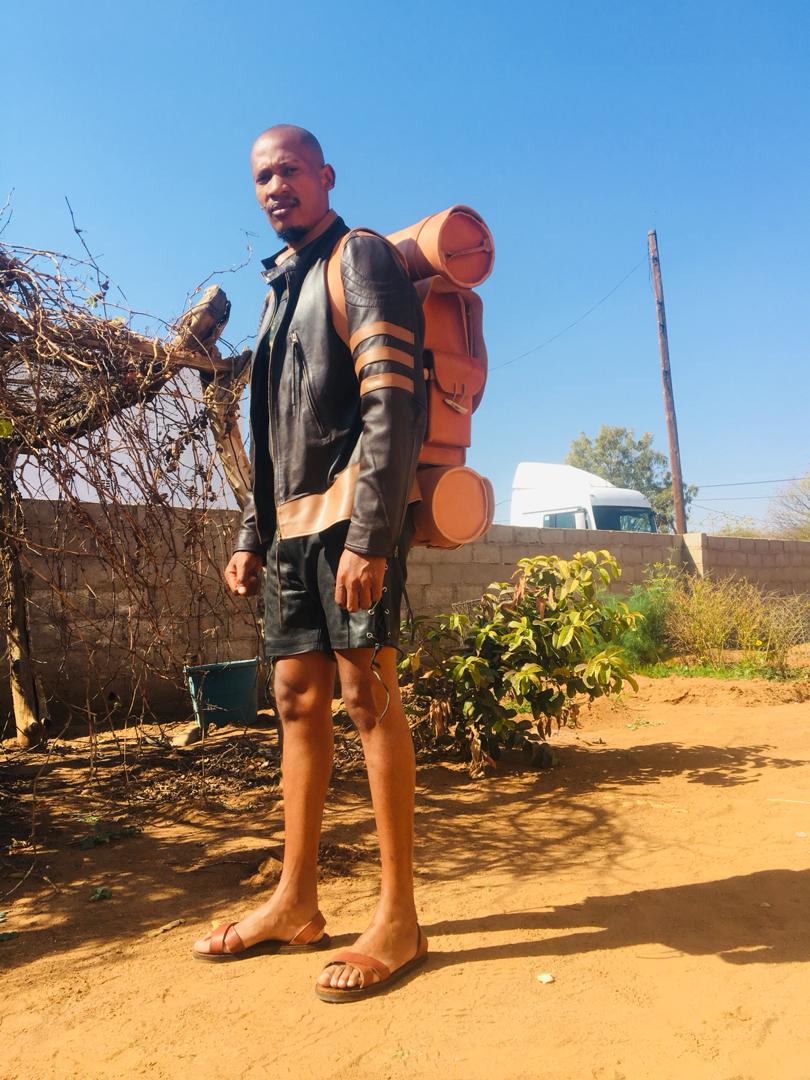
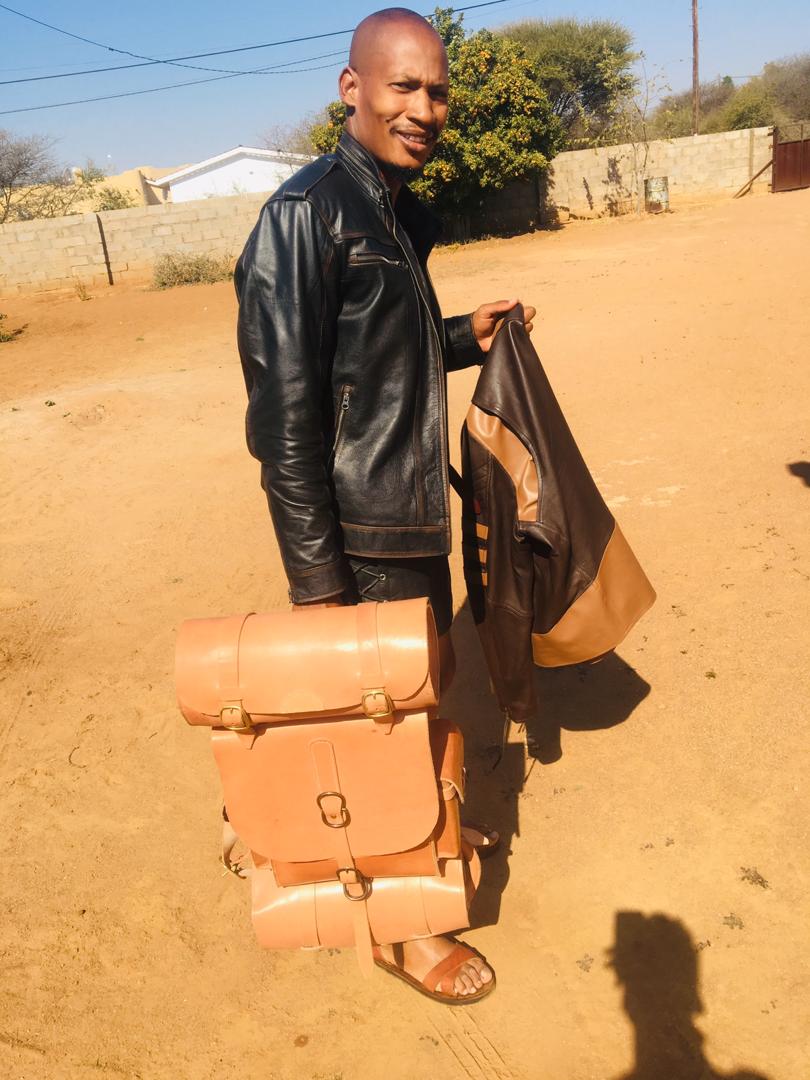
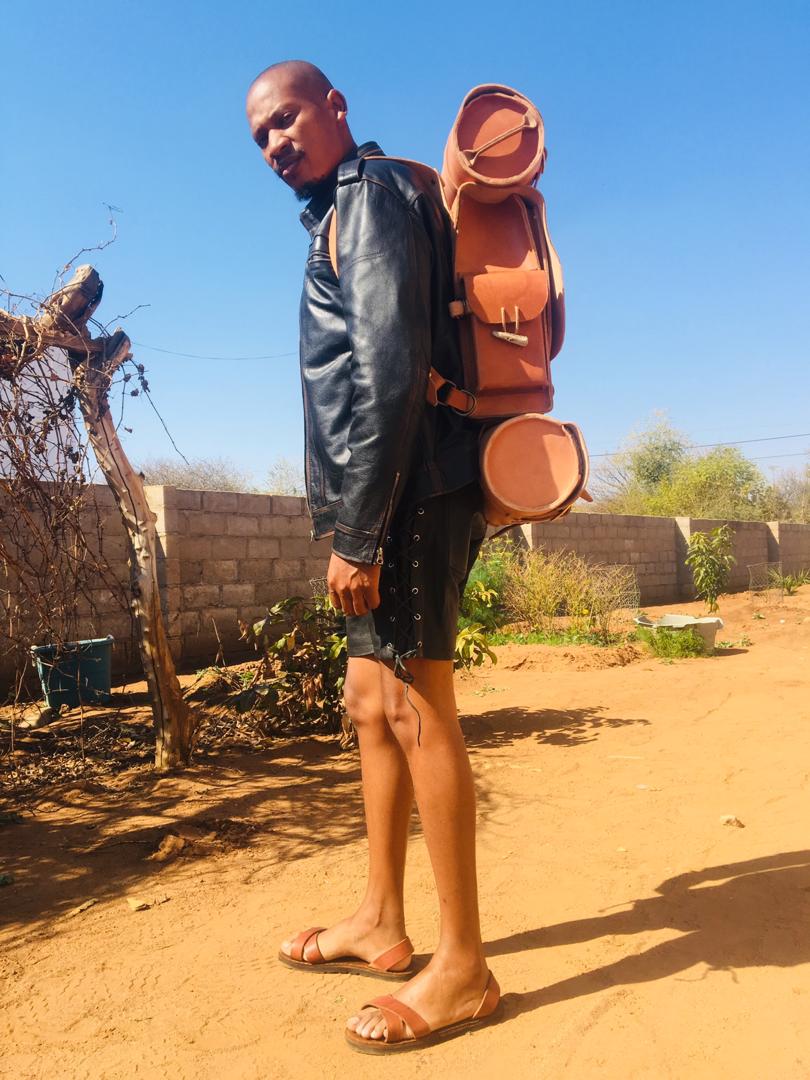
One of the better things about modern communication is the ability to meet and talk to people from nearly all parts of the globe. I have been in communication with Jacob from Botswana for years now and he has shared some photos of the beautiful backpack he made based on my earlier design. That one now resides in Montana and I hope serves some function for its owner. My personal pack has since been replaced by this one and is my new favorite piece of gear. But enough about me.
Right now, according to Google Maps, I am about 13,670 km (8,494 mi) from central Botswana and am unlikely to ever make it there, though not for lack of wanting to. However, the internet allowed us to connect across a vast distance in space and share ideas with strangers who have common interests.
Anyway, here is Jacob’s very own leather rucksack and the two portmanteaus inspired by this post to carry his gear into the bush of southern Africa. I suspect a backpack like this will outlive us all and become a fine heirloom to pass on to the next generation. Thank you so much for sharing these Jacob. I hope it serves you well for many years.
Few words are needed to show this project. It is a Kentucky Hunter style pouch of a style popular throughout the 17th and 18th centuries in America. Its antecedents come from Britain and mainland Europe but changed with the times as North America was colonized.
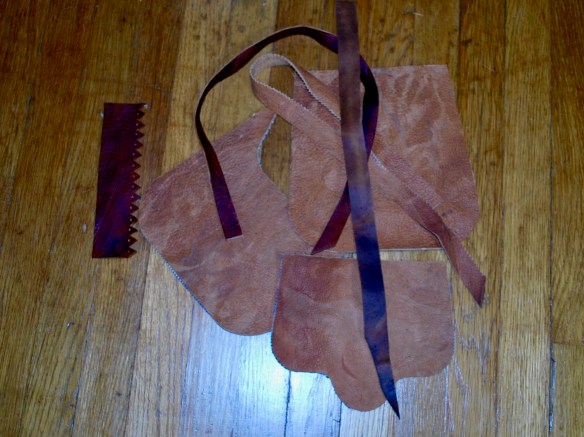
Most of the components cut out and ready for sewing.
In the days before the common man had trouser pockets he still had a fair few things to carry, especially while out foraging in the forest. Men and women have carried some sort of bag to hold their essentials for as long as we have supplemented our inadequate selves with tools. Things such as food, fire making supplies, sewing kit, or ammunition.
After lining with a medium-weight cotton fabric, the interior pocket is sewn in.
The poor man’s hunting pouch is essentially a single pocket bag with one or more internal pockets to separate out the smaller items.
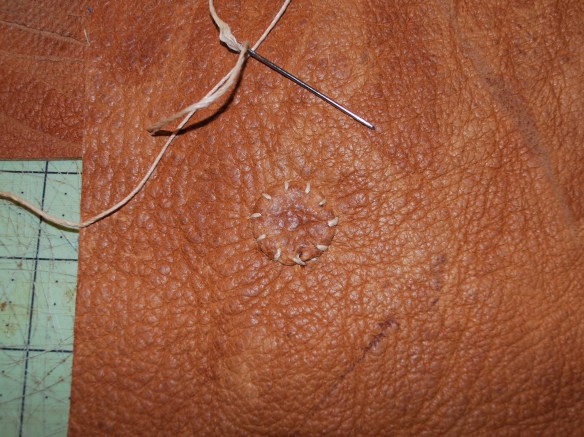
Closing a bullet hole in the hide.
I chose some bark tanned elk from Joe Brandl as it is sturdy but with a very soft feel.
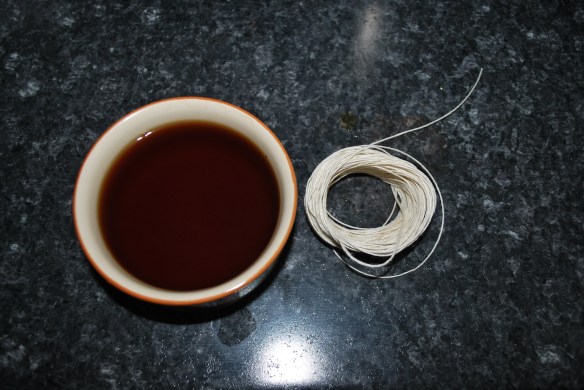
When using real linen, I often soak it overnight in a hot cup of tea before drying and waxing. This gives a nice reddish-brown color.
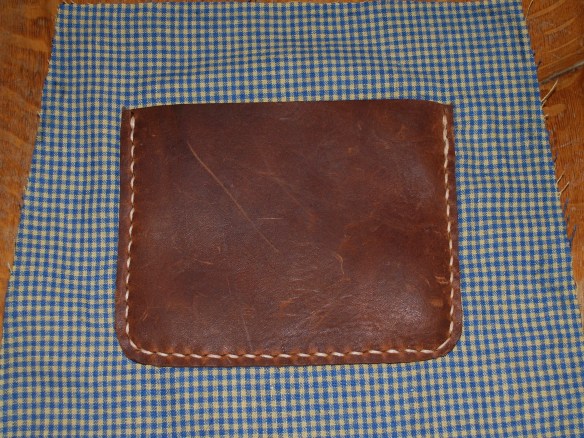
Pocket complete.
The body is sewn with a welt to create a tight seam and edging is added to stiffen the pocket and flap.
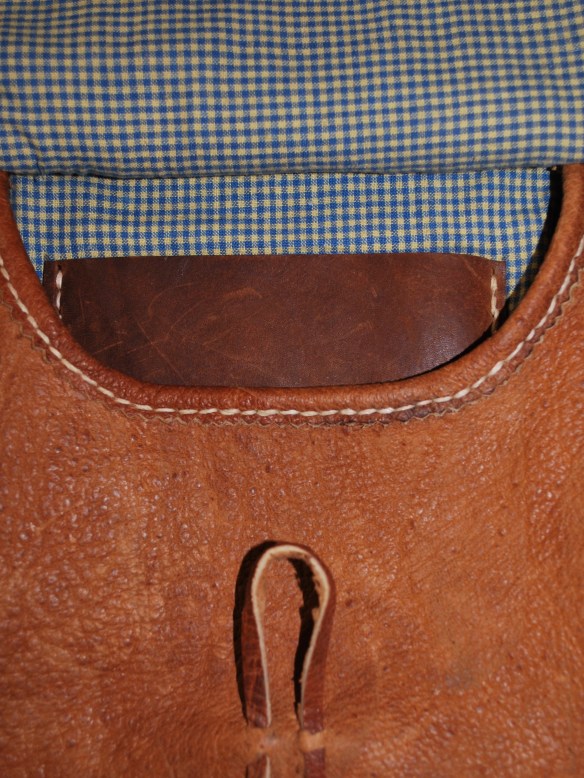
Edge-binding and the reveal of the interior pocket.
The inside pocket makes small items accessible that might otherwise be lost in the bottom of the bag. When shooting black powder, this pocket is a must.
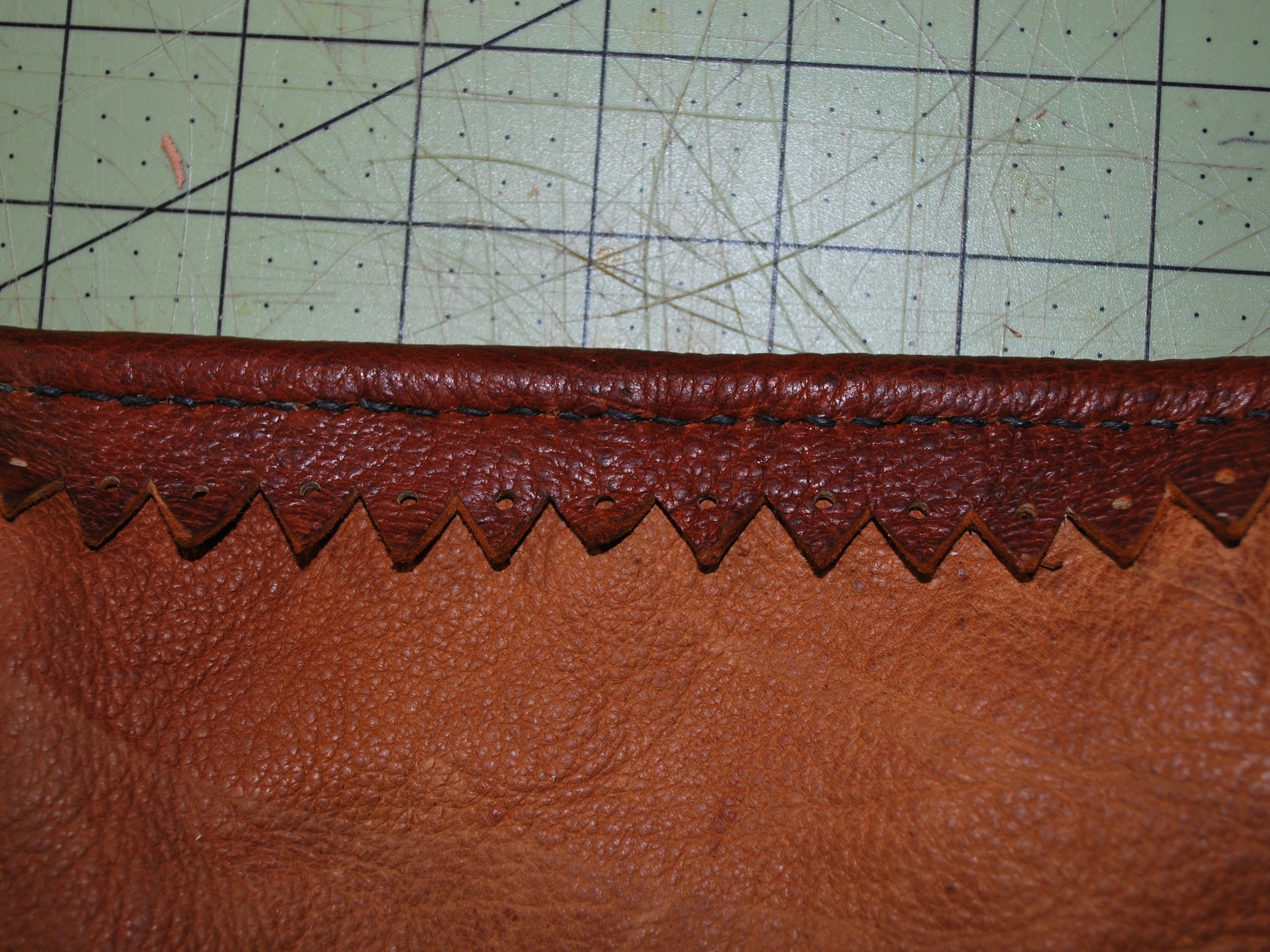
Hand-pinked and pierced binding at the top of the bag.
People have been adding fringe, ruffles, and other decorations to seams and edges for as long as there have been makers.
This type of bag is designed to stay closed without any fastener but it is good to have a way to really secure the flap when traveling. This simple closure is a type that I like for a rustic bag. The toggle is carved from antler and is secured by a simple loop.
Completed bag with strap and buckle.
Finally, a shoulder strap is added. This one is 7 oz. veg tanned cowhide and adjusts by more than 12 inches. This will accommodate most people but more importantly will adjust with the seasons as heavier or lighter clothes are worn. The buckle is solid brass and will never rust.
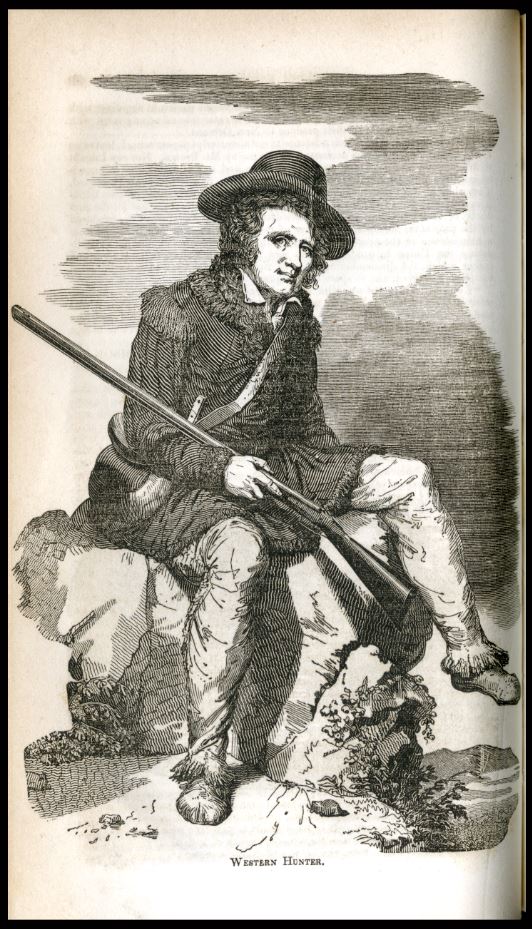
Typical attire of the early frontiersman. Nearly always armed for hunting and protection, our gentleman here sports three essential items; gun, powder horn, and hunter’s pouch. “Western Hunter.” Illustration credit: Lewis Collins, History of Kentucky, 1850.
This bag and others are available in my Etsy shop linked here:
This post came from looking through a few class photos from Rabbitstick several years ago based on an inquiry. This is one of the years I taught my favorite sandal design, an ancient one though still cleverly marketed as a modern style.
I call them saint sandals as they look like something you would see on a medieval depiction of some holy wanderer from Europe or the Middle East. To me, these are the greatest sandals I have ever owned.
This design is a good introduction to leather working and specifically, making footwear, which can be a bit more complex than most people know. Shoes really need to fit well in order to not cause pain or damage to the feet so an open design is a good way to start on this craft.
As I make them, the sewing is fairly minimal and can be eliminated entirely with the use Barge Cement. The sewing makes them a stronger design and I think adds a sense if beauty and craftsmanship to the final product. It is also a good introduction to double needle saddle stitching.
With a little dedication, these can be made in a long half day and are ready for use immediately.
Thank you to all the patient students who have learned this and taken home to teach others. I look forward to this class each time I offer it.
Once again, I am producing some large, traveler’s wallets. While some are waiting their finishing touches, here’s the first of six. They are all of the same general size and design but each has some variation in shape and closure type.
A simple wrap closure. This can accommodate a bulging wallet.
I think my dying is improving. Having read more on the subject, I’ve been able to create a nice overall finish. The dye is applied in many diluted layers and hand rubbed to force it into the leather.
The right size for many applications.
The leather is from a 6 – 7 ounce vegetable tanned cowhide that was a real beauty. The side was just shy of 30 square feet. To start working the nine foot long hide, I had to move my operation into the kitchen and onto the floor for initial cuts. Maybe someday I’ll have a shop table big enough to accommodate something this size again.
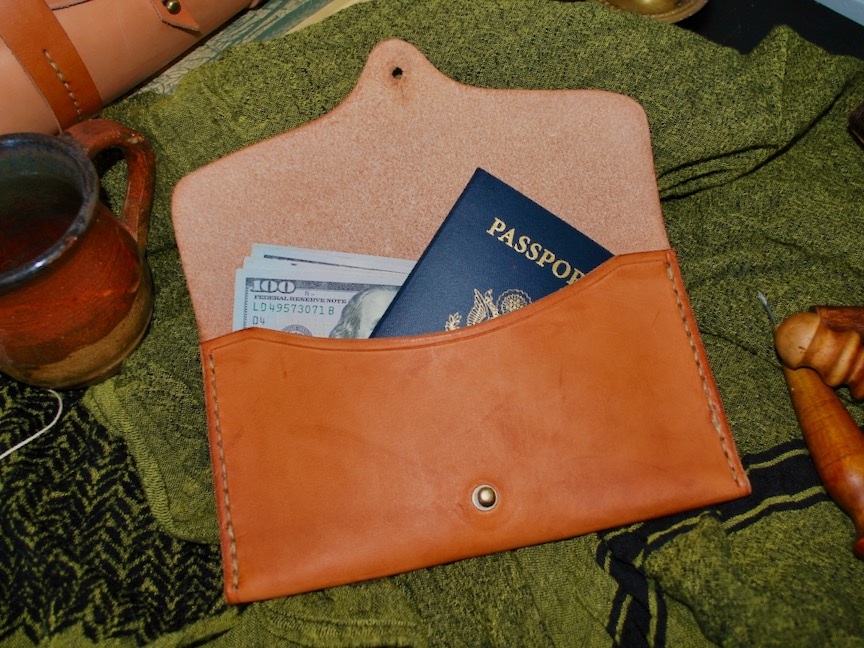
The interior divider provides four pockets. Big enough to hold a load of cash, passport, and the separated slots are sized for standard identification or credit cards.
This wallet is perfect for keeping everything in one place for log term travel or to be used as a small clutch purse.
Edges are burnished to give a finished look and the body has been waxed with all-natural dubbin.
The thread is heavyweight bookbinder’s linen in dark gray (nearly black) so is absolutely period correct for the reenactors out there.
If you are interested in this or some of our other work, check out our Etsy shop, look at the previous sales, and read the reviews.
This is a recipe for high productivity in the workshop.
Hot off the workbench.
Fortunately, I have a fairly large stockpile of leather and supplies to see me through my projects as I find inspiration in different projects. I am leaning toward things that have been popular in the past years but if anyone has ideas or suggestions, I will gladly consider them.
Sam Browne button in solid brass.
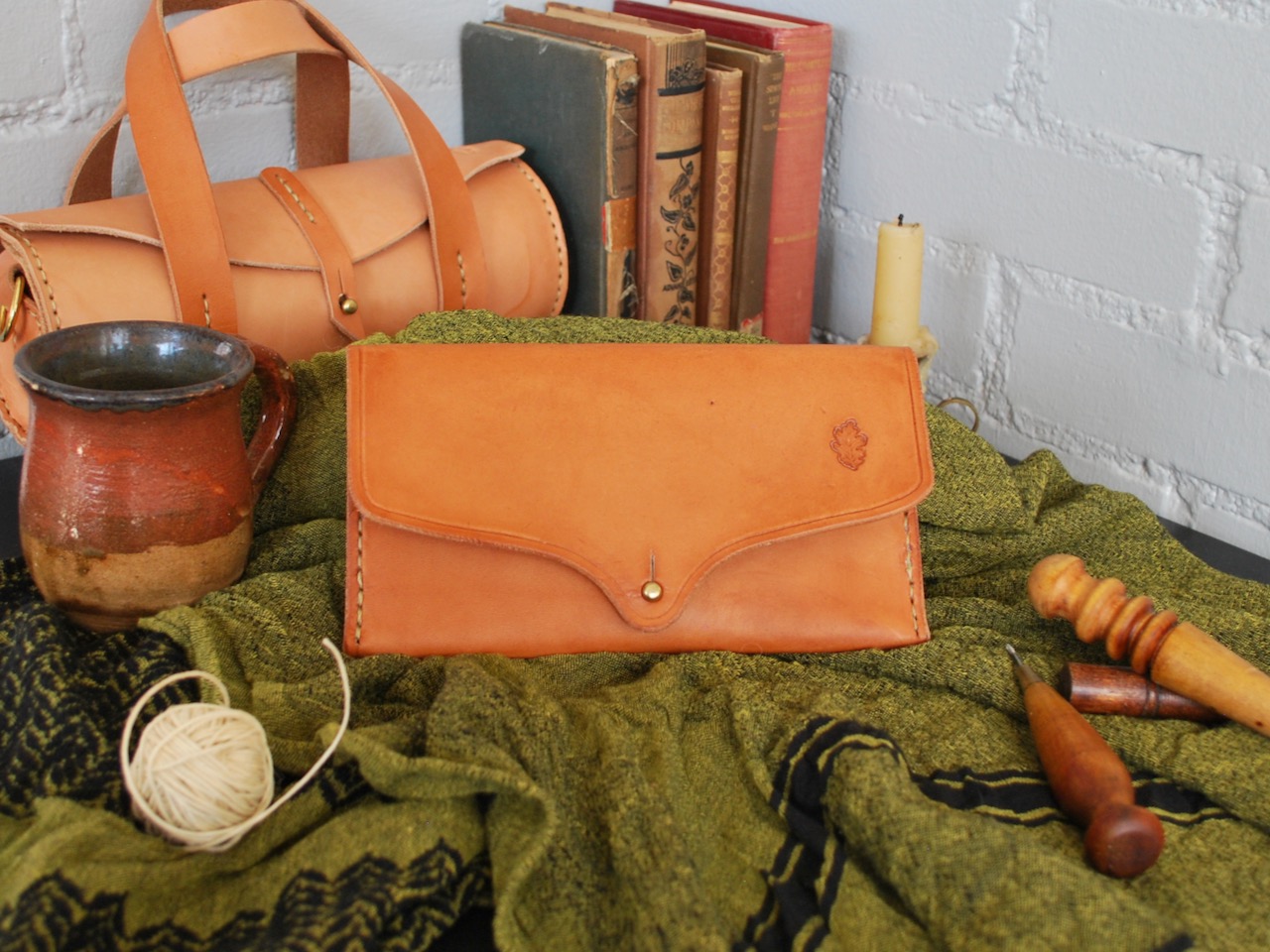
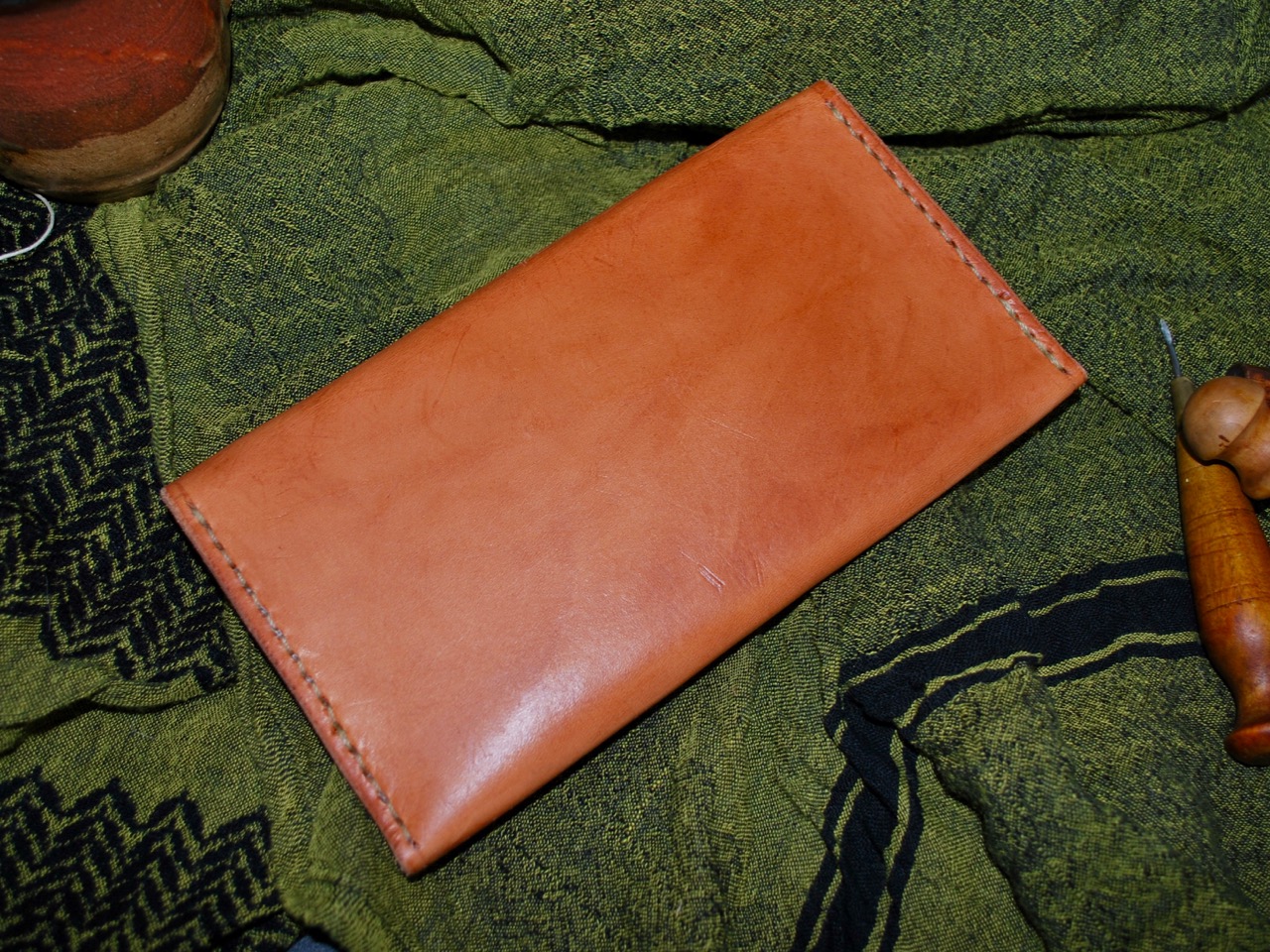
This is my travel wallet design. It’s a simple clutch-style document case to keep things safely stowed when you want more than a card wallet.
Simple, rugged design.
No frills but elegant in its own way, this one was left natural color and rubbed with dubbin (a mix of neatsfoot oil and beeswax). Full-grain veg-tanned leather like this ages beautifully and takes on a golden brown patina. This wallet should outlive its owner.
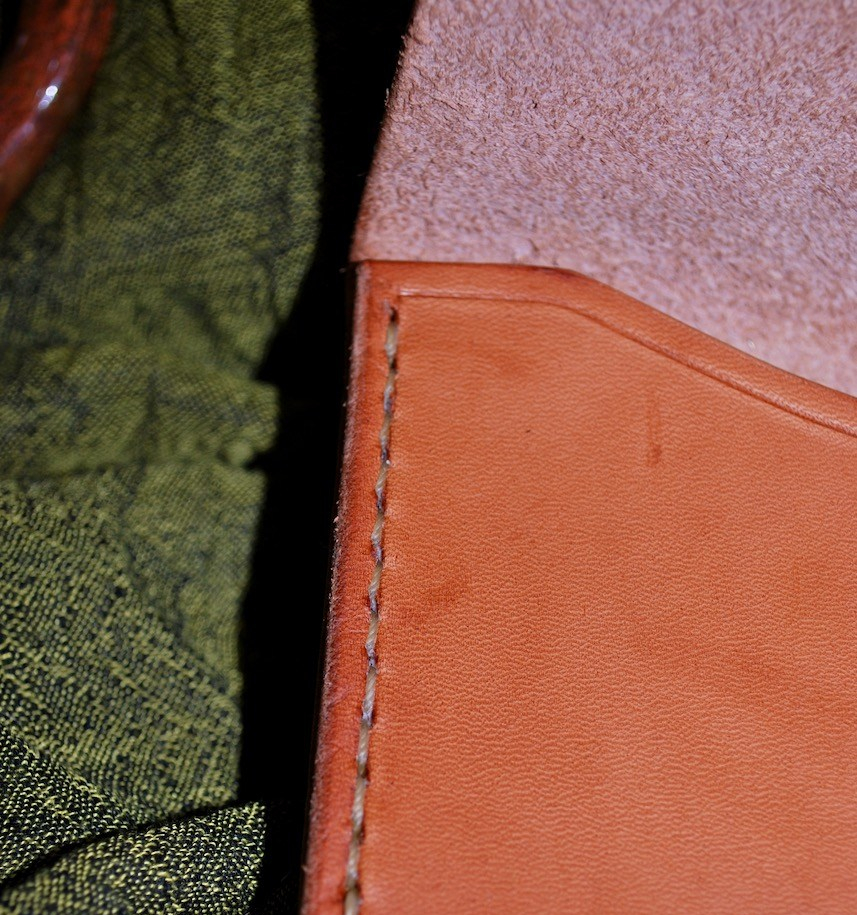
Hand stitching.
As always, the stitching is double-needle saddle-stitch for strength and hard-wearing. If you are interested in this or similar goods, please check out our new Etsy shop at https://www.etsy.com/shop/LostWorldCrafts or just click the banner below. We hope to have the site fully running and stocked with new goodies in the coming weeks.
















 Preindustrial Craftsmanship