Does this mean we should neglect our intellect? Absolutely not.
In fact, the opposite. We should strive to cultivate both mind and body to become the most perfect specimen we can become, daily.
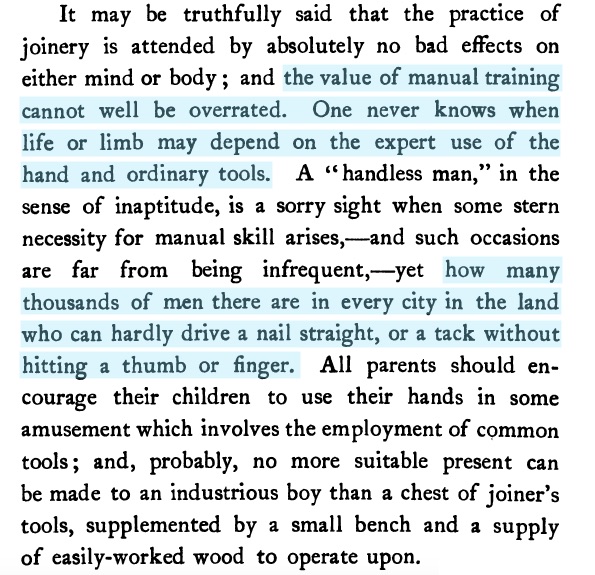
I came across this passage while reading a bit this morning from Amateur Joinery in the Home (1916) by George and Berthold Audsley and thought it would be worthwhile to share.
There is a lot of good advice here but the above sentences stuck with me while taking the morning walk. “One never knows when life or limb may depend on the expert use of the hand and ordinary tools.” This could be applied to so many facets of an interesting life and is the basis of human survival that has put us where we are for a million years.
I have been using the down time afforded us by the events of 2020 to catch up on an ever-growing list of books and articles I have been amassing for decades. When I was working in archaeology full-time, the hundreds of pages of reading most weeks necessary just to keep current pushed many other interests into side avenues. I hope you all are using your time in a way that works well for you. In the mean time, this book is available for anyone with an interest in tools and working with their hands. It may even inspire new projects.
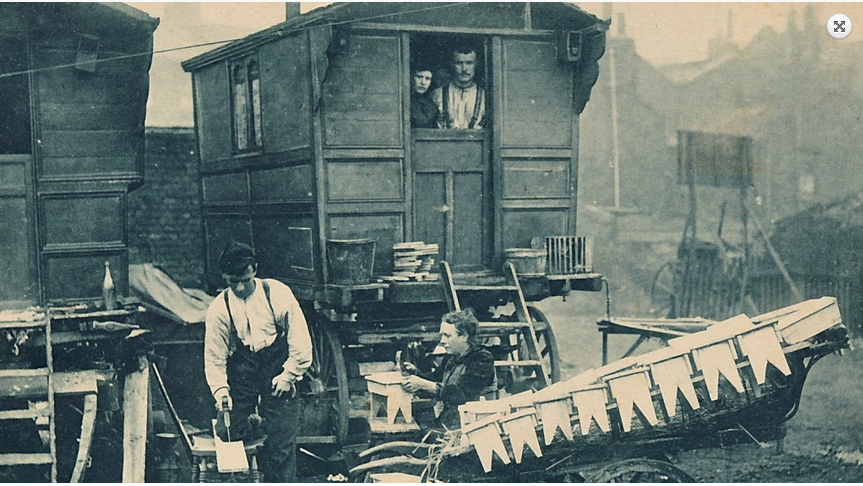
In Britain and Ireland, the Romany Gypsys and the Traveller community are often associated with low-skilled work such as scrap dealers, horse traders, musical entertainers, or more nefarious activities outside the societal norms. However, there were plenty of skilled craftsmen and craftswomen providing goods and services to people around the country.
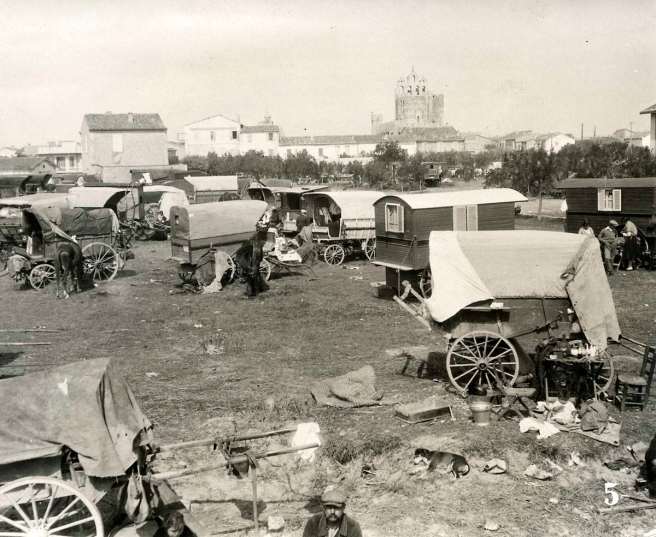
Below is an image of a couple, working together making footstools outside their vardo while another couple looks on from the comfort of their wagon.
Gypsy carpenters making small and large stools for market. From an early 20th century postcard. Source: Romany and Traveller Family History Society.
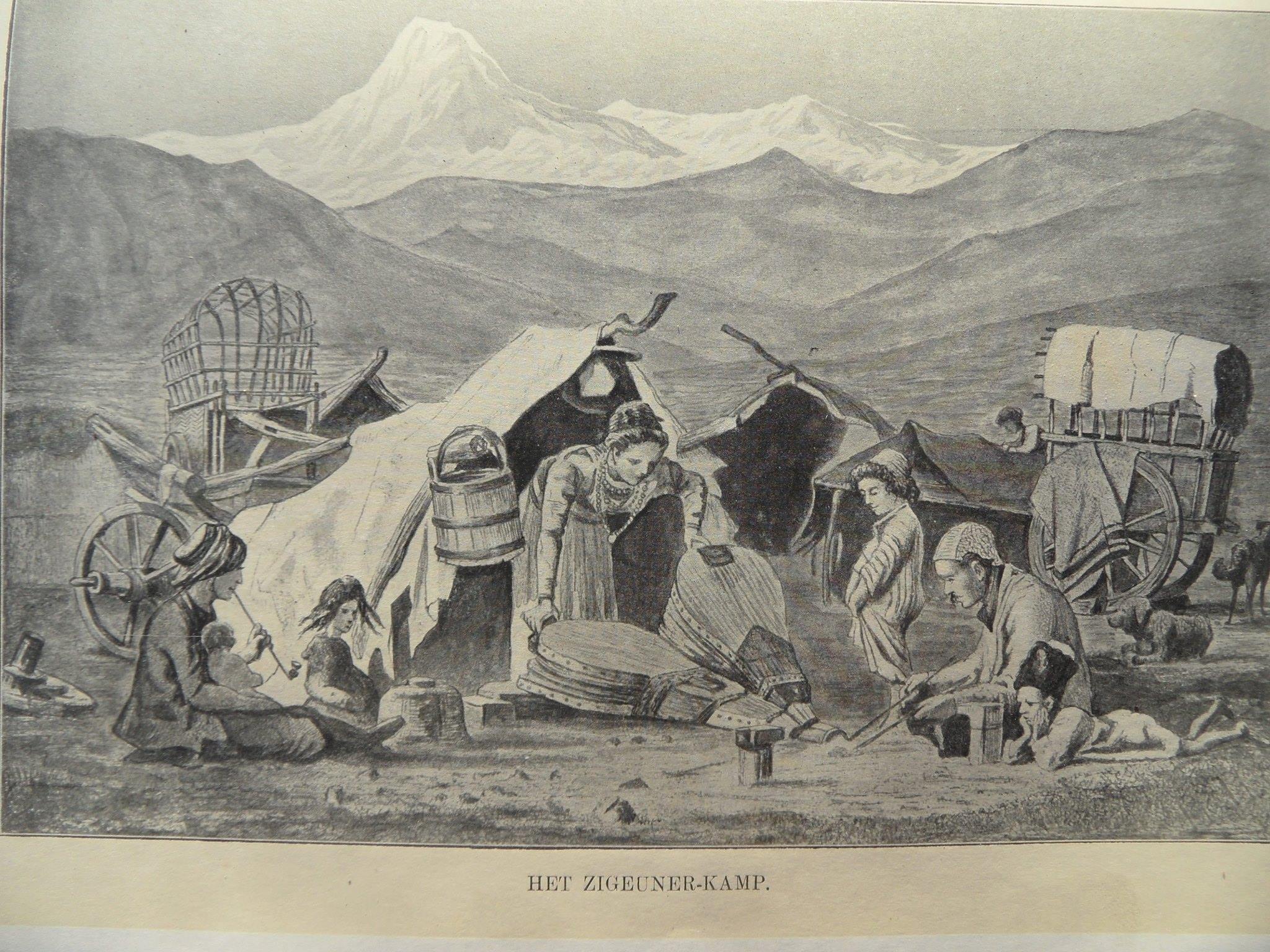
Other Gypsy families were blacksmiths, basket weavers, or similar occupations that could be taken on the road, required little stock or overhead, and could be performed independently or with a minimum of family help.
There is something magical about fitting two or more pieces of wood together.
Before the advent of mechanical fasteners, joinery reigned supreme. At that pre-industrial time is was the cheapest, fastest and strongest way of building with wood. As nails, bolts and screws became less expensive they began to displace joinery for building with wood. Mechanical fasteners required less skill and were faster. Thus the products produced became less expensive and the structural and aesthetic compromises were accepted as “progress”. Machines too brought an end to joinery’s reign. Some joints that can be “easily” cut by hand are either impossible to cut with a machine or the setup is too costly. So joinery was simplified or abandoned to accommodate mass production.
I have no intention of delving into a philosophical diatribe on the pros and cons of the industrial revolution. My intent with the preceding was to…
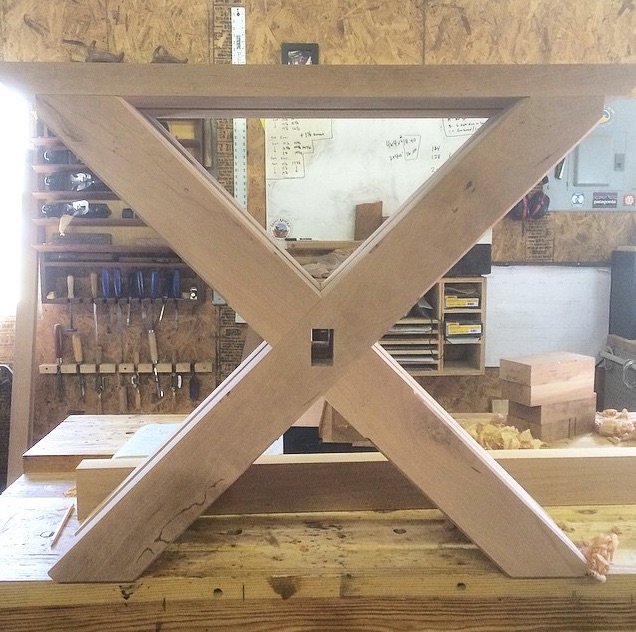
Here’s a beautiful trestle table coming together in Andy Rawls’ studio; spotted on his Tumblr this morning.
Seeing this makes me realize I can’t wait to get some projects done over the three day weekend. It makes me a little sad to say something like that. Choosing a job for pay instead of a love for what you do every day. Of course, the grass always looks greener…
This will be one solid table and will last for ages if treated well. This kind of craftsmanship has slipped away from most of our daily lives. You won’t find this at a big chain furniture store. Have a look at more of his remarkable work by clicking the link below.
I have been re-studying joinery, amongst other things, recently and am currently deep in Moxon’sThe Art of Joinery. I have built many structures in my life and documented quite a few for historic preservation. Last night, I made it through another oldie from the 1920s Woodwork Joints by William Fairham which really set my stagnant mind in motion.
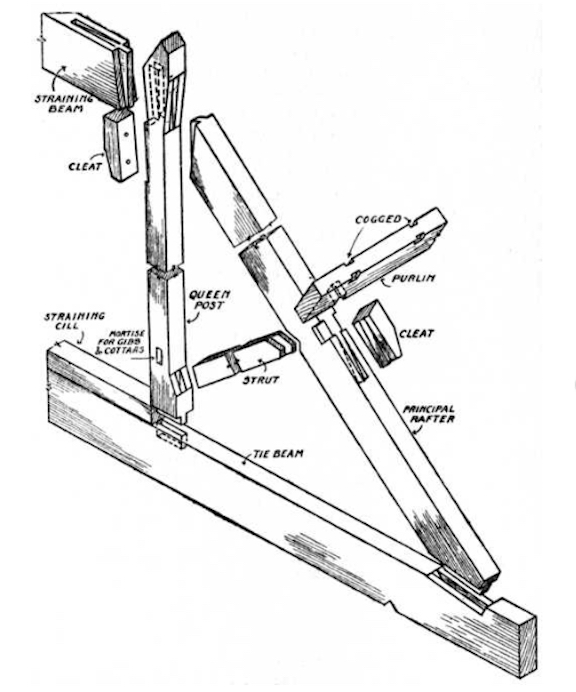
Queen Post Roof Truss schematic from William Fairham’s Woodwork Joints (1921, revised n.d.).
I know the image isn’t the sharpest but this, to me, shows the level of quality and craftsmanship we have lost in our pursuit of speed, simplicity, and the dumbing down of our trades. Nothing in this truss is complex in-and-of-itself but requires some layout skills with straight-edge and dividers, not to mention hand skills with saw and chisel. Few fasteners are required in this type of construction as it depends on the joinery locking the system together.
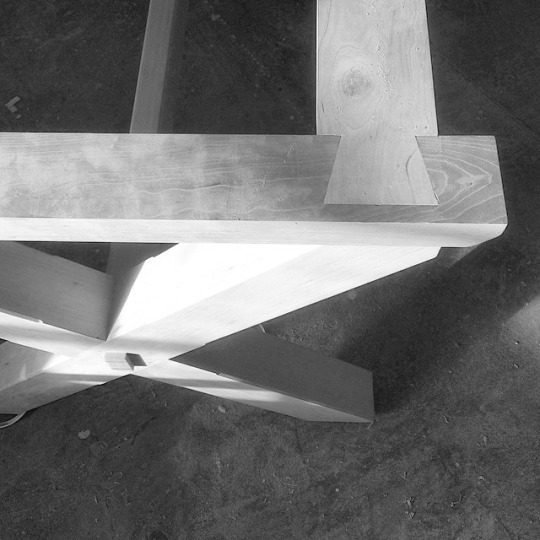
A compound-cut, stopped bridle joint used in roof truss construction. A common alternative to the above mortise joint. Not as complicated as it sounds but very solid indeed.
I have read several misguided web sites on woodworking recently lauding Japanese and other Asian-style building techniques for their use of joinery and lack of metal fasteners. Yes, they are remarkable, just not unique to Asia. This type of construction is the reason many centuries-old buildings still stand today.
“Japanese” tenon joint.
Very little under the sun is new technology. The above joint is a locking corner known as a Japanese corner tenon. I have no idea if this really filtered into western construction from Japan but it is a pretty neat looking joint.
Struts mortised to king post.
Rafters mortised to king post.
All the complicated joints are a lot of fun and interest, but in reality, learning the basic mortise and tenon (with the myriad variations) will allow for the creation of most building structures.
Half lapped top rails “through-pinned”.
Even simple half-lap joints are structurally sound with some thought towards design. The above pinned and half-lapped joint can be found in historic structures tying the top rails of simple buildings together and is also seen in a straight wall run, not just on corners. This simple timber joint is perfect for small outbuildings, sheds, and chicken coups.
Notching, used to tie purlins tight to rafters.
Cogging, an old-fashioned way of setting joists.
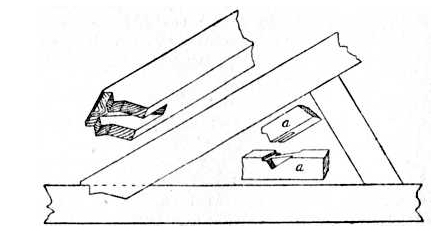
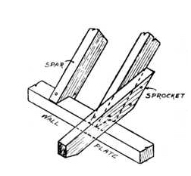
Finally, a few simple joints you may still see used are simple notching, cogging, and bird-mouth joints.
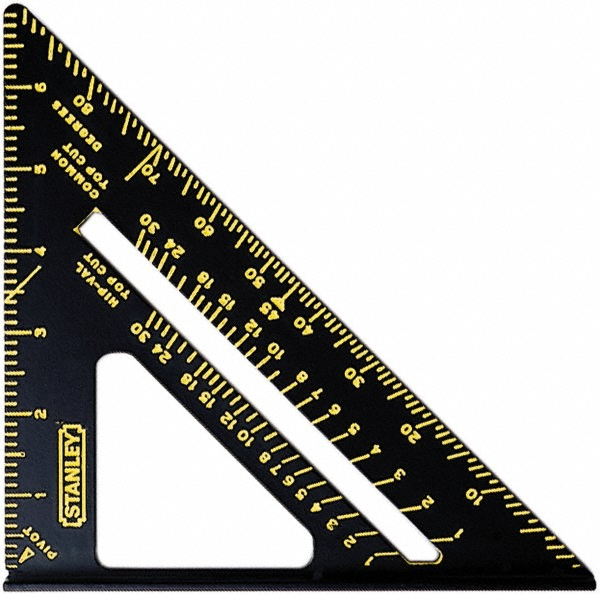
When I was a young laborer in high school and beyond, laying out and cutting accurate bird-mouths and rafter angles were the tests that separated “the men from the boys” as it were. Some people could never really get their heads around the angles, even with the ingenious, and simple layout square; many a builder’s best friend.
This post took a bit of a rambling turn but more on this subject will certainly follow for good or bad. I’m always learning, so bear with me as I work through the process on my keyboard and in my head.
“Rooted in my love of Mathematics and geometric simplicity, I create visually strikingly pieces of wood art that are also household items.”
Beautiful work. I love the detail in the finger joints. You can find more of his excellent work here: Affine Creations. Here are a few of his other projects.
Graham Haydon of the Joiner’s Workbench shows a fun experiment while showing off his new dovetail saw from Skelton Saws. Graham joins a couple 1 x 6’s in three minutes and does a pretty good job of it. This is what I imagine some apprentice doing back in the pre-industrial era when he’s showing off his newly mastered skills to the master or a shop rival. There is no real point for the speed other than to demonstrate how little time and effort is really necessary to form a traditional wood joint. This is definitely upping my interest in perfecting traditional joinery.
Instructions from a real master craftsman. I am completely hooked on dovetails and the timing for this couldn’t be better. This is a real class-like instructional video and I can hardly express my appreciation for his work. It’s over a half hour long but worth the watch.
From the YouTube description:
“The dovetail is the essential box joint. It is the strongest way to join two pieces of wood at the corner. Although there are many variations on a theme with this joint mastering the most simple form is the most difficult and important step.
To find out more about Paul Sellers and the project he is involved with visit https://paulsellers.com.”
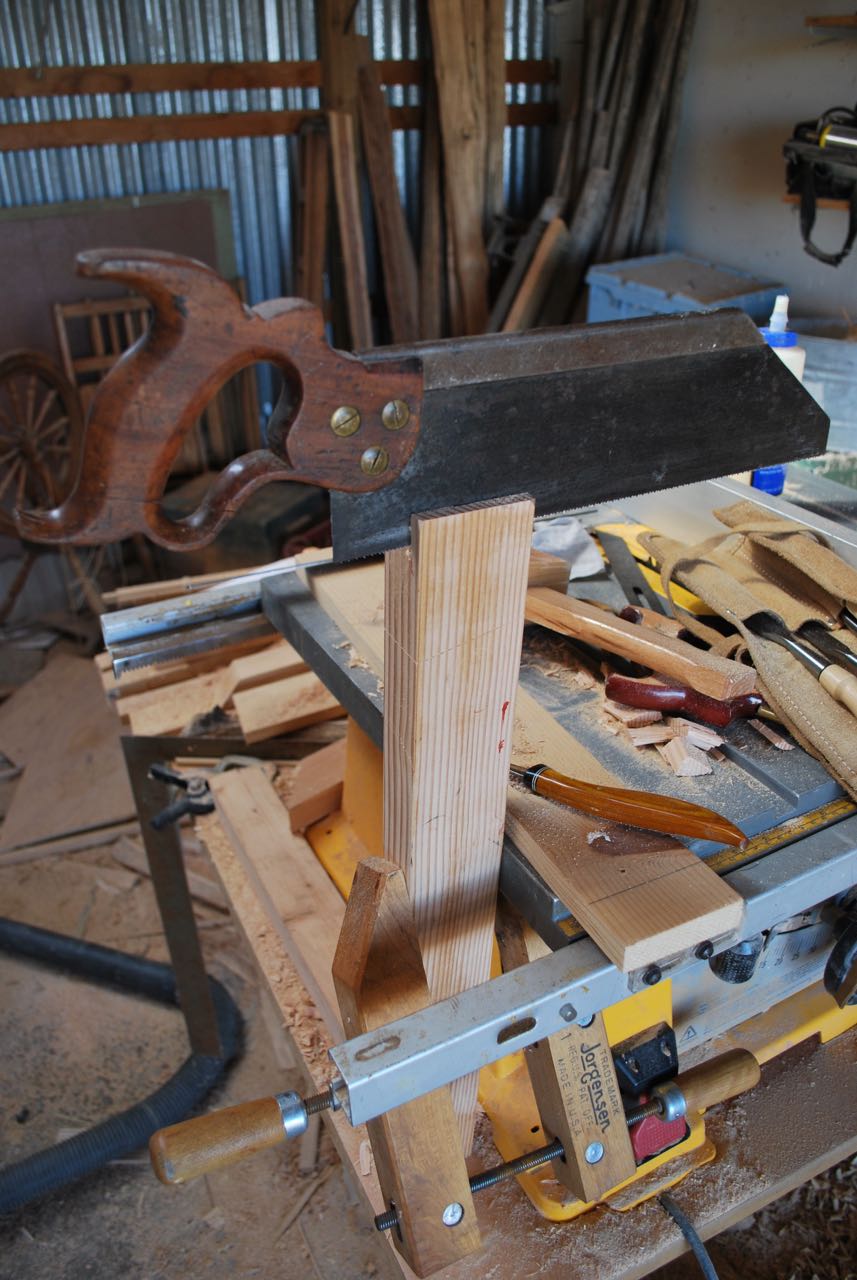
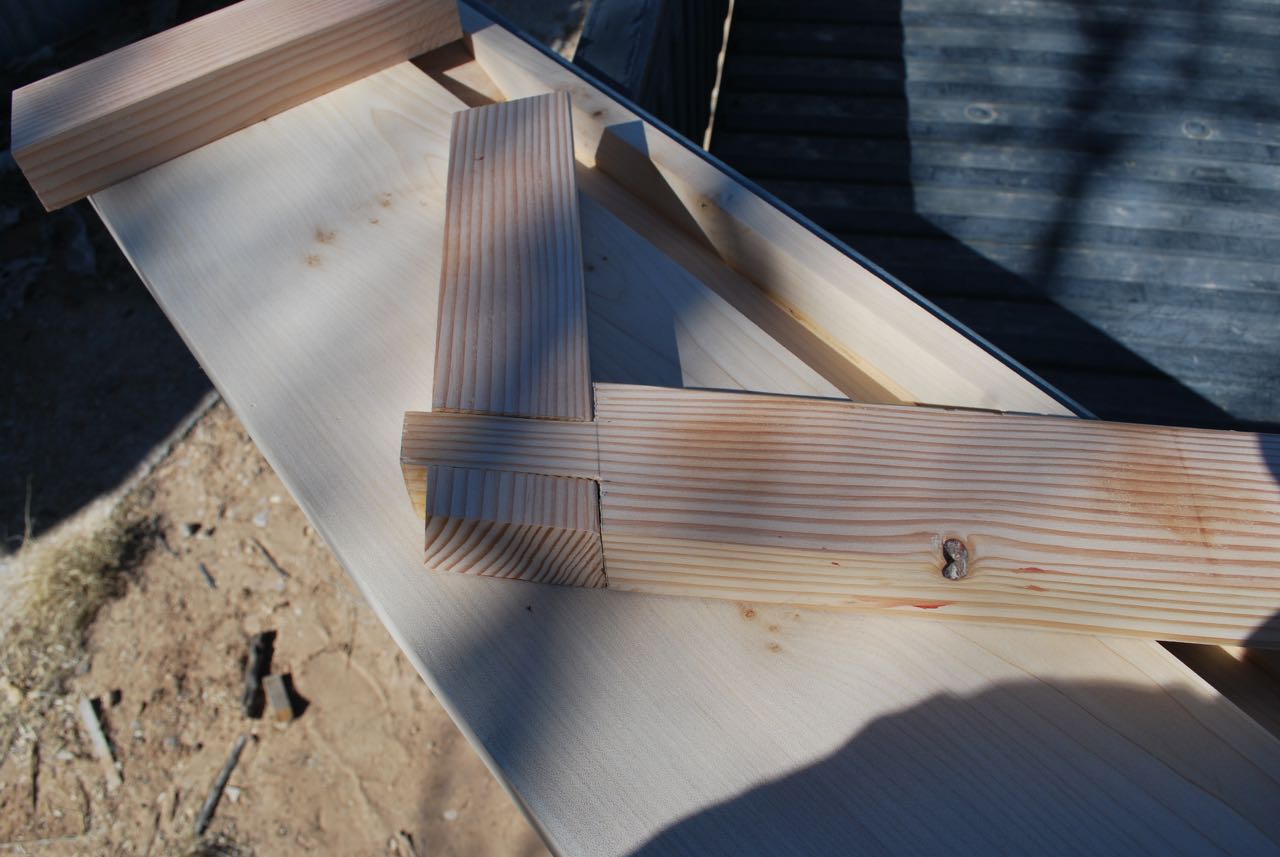
Some aged fir being integrated into a new portable workbench. No longer having a proper work bench, the table saw becomes the focus of the little shop. Flat surface, sturdy place to clamp, it does the trick. Yes, that is blood from a chisel nick. First dovetail on the saw bench. A little experiment in my free time.









 Graham Haydon
 Preindustrial Craftsmanship